A Rare Sentencing Reversal on Evidentiary Failing – Update for November 18, 2022

We post news and comment on federal criminal justice issues, focused primarily on trial and post-conviction matters, legislative initiatives, and sentencing issues.

WHEN ‘SOME’ CAN BE ENOUGH

Antwain Moore was sentenced to 120 months for multiple drug offenses. One factual foundation for the sentence was the district court’s finding that the 56 grams of methamphetamine found in Antoine’s house were 100% pure. At sentencing, Antwain submitted an affidavit from a chemist that slammed the DEA’s lab technique for measuring purity as pure bunk.

madscientist221118The district court was unimpressed. When the DEA argued that the defendant’s expert affidavit was “not conclusive that the government’s procedures were improper or led to a bad result” and that “the DEA’s testing procedures are well accepted in the scientific community.” After all, the government said, Antwain could have retested the methamphetamine himself, but he did not.

On appeal, Antoine argued that a chemist’s affidavit he submitted met the “some evidence” standard sufficient to call into doubt the government’s purity claim, especially where the government did not bother to rebut his expert’s claim with evidence of its own.

Antwain’s chemist said in his affidavit that the DEA’s purity test method, comparing the meth sample to a reference graph could not yield a reliable result. Instead, the chemist said, the meth had to be tested against an actual meth sample of known purity. If Antoine’s argument was right, his guideline sentencing range would fall from 130-162 months in prison to 77-96 months.

He got slammed with 120 months.

Last week, the 7th Circuit reversed. “If Antwain had done nothing more by way of objection,” the Circuit said, “he would have offered what we have repeatedly described as only a ‘bare denial’ of the presentence report information, which ordinarily is not enough to shift the burden of production or to require a hearing.”

destroyevidence200615But Antwain did offer more than a bare denial. “He offered the opinion of an independent expert about the reliability of the DEA’s test results. Dr. Beauchamp explained that the DEA’s results were potentially inexact and inconsistent, pointing out in particular that the DEA’s report did not enable him to determine whether the purity level of drugs was consistent throughout the 55.6 grams.” To rebut this, the DEA offered only an evidence-free argument.

Noting that Antwain “has a due-process right to be sentenced based on reliable information,” the 7th ruled that the district court was wrong to hold that “there was no indication here or no evidence before the Court that the DEA protocols are not reliable.” In fact, the only evidence in the record was that those protocols were unreliable.

“The government submitted DEA test results that were not supported by any affidavit,” the Circuit wrote. “When the reliability was questioned in Dr. Beauchamp’s affidavit, the government chose to rest on an assumption that the district court adopted: that the DEA has reliable and generally accepted methods of testing drug purity. We assume that’s probably true as a general matter, but in a particular case, a defendant whose liberty is at stake is entitled to hold the government to its burden of proof by a preponderance of reliable evidence. An unsupported assumption does not tell us anything about whether test results in a particular case can reasonably be relied upon.”

Hearsayevidence210809The 7th held that “when the government relies on hearsay — such as the laboratory results here — and a defendant raises a plausible objection about whether its contents are indeed reliable, the government can reasonably be required to provide more of a foundation.”

Antwain’s case was remanded for resentencing.

United States v. Moore, Case No. 21-2485, 2022 U.S. App. LEXIS 30831 (7th Cir., Nov. 7, 2022)

– Thomas L. Root

SCOTUS to Review Identity Theft Overreach Claim – Update for November 17, 2022

We post news and comment on federal criminal justice issues, focused primarily on trial and post-conviction matters, legislative initiatives, and sentencing issues.

SCOTUS WILL DECIDE MEANING OF IDENTITY THEFT

The aggravated identity theft statute (18 U.S.C. § 1028A) provides in part that anyone who “knowingly transfers, possesses, or uses, without lawful authority, a means of identification of another person shall, in addition to the punishment provided for such felony, be sentenced to a term of imprisonment of 2 years.”

Who could be opposed to that? Everyone knows what identity theft is. Computer hacking, tricking old people, credit card skimming… those bums have it coming, and § 1028A is what’s going to give it to them.

Except… as with any good federal statutory idea, there are those people who will run it into the ground. Look at the PATRIOT Act.  Everyone in Congress thought the expanded police powers were a wonderful thing, because of course law enforcement would never use those tools against Americans in plain vanilla criminal cases.  It was only the terrorists who needed to look out.

The same with identity theft.  You may think you know what identity theft is, using some other person’s identity in the process of committing another crime. David Dubin was convicted of Medicaid fraud. He was also convicted under 18 U.S.C. § 1028A for aggravated identity theft, Federal prosecutors contend that Dubin’s use of his patient’s name on false Medicaid claims violated the aggravated identity statute, adding an extra two years to his one-year sentence for fraud.

Dubin’s conviction and sentence were upheld by the 5th Circuit in a very divided en banc decision, but last week, the Supreme Court granted review.

IDthief221117In an amicus brief supporting grant of certiorari, The National Association of Criminal Defense Lawyers complained that the 5th Circuit, “disregarding this Court’s directive, the reasoning of the majority of its sister circuits that have considered the issue, and the statute’s title and unmistakable purpose, the 5th Circuit adopted the broadest possible reading of Sec. 1028A to bring appellant’s conduct within the statute. This approach defies common sense and sanctions the ill-advised prosecutorial overreach that this Court has continually rejected.”

The case will be decided by the end of next June.

Dubin v. United States, Case No. 22-10, 2022 U.S. LEXIS 4925 (Nov. 10, 2022) (certiorari granted)

– Thomas L. Root

Adding a Dollop of Uncertainty to the Already Conflicted Anders Brief – Update for November 14, 2022

We post news and comment on federal criminal justice issues, focused primarily on trial and post-conviction matters, legislative initiatives, and sentencing issues.

3RD CIRCUIT MUDDLES ANDERS BRIEF STANDARDS

Many prisoners have become belatedly familiar with the concept of the Anders brief, an appellate brief filed by an attorney looking to be relieved of further representation because he or she believes the defendant has no decent issues to raise. In the brief, which takes its name from the Supreme Court case Anders v. California, the attorney is expected to identify potential issues and explain while raising them would be frivolous.

The inverse of an Anders brief, where the lawyer wants to be found innocent by arguing that his client is guilty.

If a defendant’s lawyer files an Anders brief, the defendant is entitled to file a pro se response, arguing that the issues have merit or that the attorney has missed other issues that are solid. If the appeals court accepts the Anders brief arguments, the appeal is dismissed. If the appeals court finds the Anders argument deficient, the defendant’s appeal will go forward, usually with a new attorney representing the prisoner.

I have never thought much of the Anders procedure.  The notion that the attorney for the defense is arguing to an appellate court that his or her client’s appeal is meritless seems to me to be the very antithesis of zealous representation. Add to that the very real psychological aspect: the attorney has decided to bail from the case, meaning that the entire approach of the brief is to convince the court that the lawyer should be released rather than the client.

In law school, we were taught the difference between legal briefs and legal memoranda. A brief was used to argue that your client’s case should win. On the other hand, a memorandum was intended to be a dispassionate recitation of the facts and law, a document to be used in the office to assess the strengths and weaknesses of a client’s case and develop a strategy for achieving the best outcome for the client.

An Anders brief should really not be a brief at all, but rather a memorandum. At a minimum, it’s hard to advocate for your own interests and against your client’s – which, after all, is what an Anders brief does – while trying to appear that that’s not what you’re trying to do. Writing the Anders brief as a memorandum instead of a brief, however, while fairer to the client is less fair to the lawyer (if we should care about that). The memorandum should not advocate for one position over another, which is exactly what the attorney is trying to accomplish in arguing that he or she should be permitted to walk from the case.

paradox221114On top of all of that, attorneys filing Anders briefs confront a paradox. “On the one hand,” as the 3rd Circuit held last week, “to discharge her obligations under Anders, precedent and our Local Rules require counsel to identify all issues that might ‘arguably support’ the defendant’s appeal – only to explain why those issues are frivolous. On the other hand, we have advised that counsel need not raise every frivolous issue. That paradox is even more confounding where a defendant subsequently files a pro se brief raising frivolous issues that counsel did not address.”

Gang-banger Rick Langley got charged with a crack cocaine distribution conspiracy.  He made a plea deal with the government to plead to one count for a recommended 60-month sentence. At sentencing, the court calculated that his Guidelines sentencing range was really more like 110-137 months, but in deference to the plea deal, the Court sentenced him to the 60 months he had agreed to.

The case was pretty plain vanilla, and just about any appellate attorney would agree there was not much to work with on appeal. But Rick wanted to appeal, so the Court appointed a lawyer to represent Rick’s tilt at the windmill.  Rick’s lawyer asked to withdraw and filed an Anders brief.

That is, if your lawyer's name is Jack...
That is, if your lawyer’s name is Jack…

Last week, the 3rd Circuit accepted the brief and let Rick’s lawyer hit the road. Admitting that its prior decisions on Anders briefs were all over the map, the 3rd explained “that counsel’s failure to address issues raised in her client’s pro se brief does not render an Anders brief inadequate per se. It may be relevant, however, in illustrating a more general failure to identify and discuss potentially appealable issues, in highlighting counsel’s failure to raise non-frivolous issues identified by the defendant, or in otherwise demonstrating that counsel has failed to provide sufficient indicia that she thoroughly searched the record and the law in service of her client.”

The Circuit admitted that “what constitutes ‘sufficient indicia’ of a conscientious examination cannot be laid down in a formulaic manner, as it will vary with the nature of the proceedings in the district court.”

So, the 3rd said, the adequacy of your attorney’s excuse for abandoning your appeal is a lot like Potter Stewart’s definition of obscenity: the court will know it when it sees it.

United States v. Langley, Case No. 21-2114, 2022 U.S. App. LEXIS 30809 (3d Cir., Nov. 7, 2022)

– Thomas L. Root

Federal Criminal Justice Reform May Still Have a Pulse – Update for November 14, 2022

We post news and comment on federal criminal justice issues, focused primarily on trial and post-conviction matters, legislative initiatives, and sentencing issues.

STILL HOPE FOR CRIMINAL JUSTICE REFORM

hope170313As of today, the Democrats have retained control of the Senate and may even keep the House of Representations (although that is still up in the air). In the House, the Republicans still need six seats to win while the Democrats need 13, but that’s a far cry from last Thursday, when the Dems were down 36 seats to the Republicans’ 7-seat deficit.

Reason reported that “while rising crime created headwinds for candidates who supported criminal justice reform, the apocalyptic reaction never quite materialized… Despite predictions that rising violent crime would sink candidates that backed criminal justice reforms, those candidates mostly survived Tuesday night’s elections.”

So there remains a glimmer of hope that criminal justice reform issues that remain unfinished as of the end of this Congress in January will be resurrected for the next 2-year legislative session.

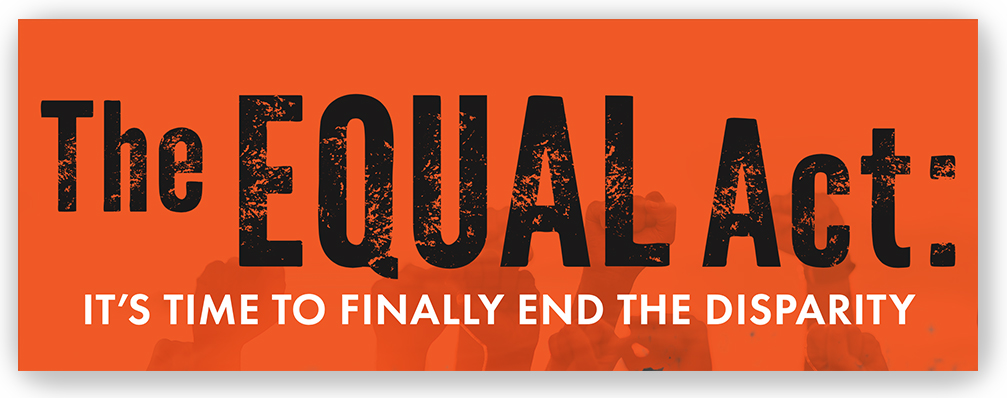
At the same time, there are hints that the lame-duck session – which begins today for at least another 17 legislative days before Christmas – will take up two bills ready for Senate passage, the EQUAL Act (S.79) and MORE Act (HR.3617)

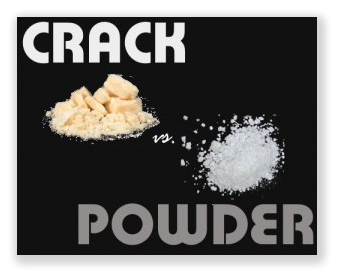
lameduck221114Princeton University Professor Udi Ofer, former ACLU Deputy National Political Director, said last Thursday that in “the lame duck session… I can see some popular bipartisan reforms pass Congress, including on criminal justice reform. The EQUAL Act, which would end the sentencing disparities between crack and powder cocaine, has more than 10 Republican co-sponsors in the Senate so it can withstand a filibuster and seems ripe for some action this lame-duck session. Same could hold true for federal marijuana reform.”

Last Monday, President Biden – who looks a lot stronger today than he did a week ago – again called on Congress 

to end once and for all the racially discriminatory crack-powder cocaine sentencing disparity and make the change fully retroactive. This step would provide immediate sentencing relief to the 10,000 individuals, more than 90% of whom are Black, currently serving time in federal prison pursuant to the crack/powder disparity.

As we reported last week, even if the next Congress is divided, Marijuana Moment said, “there would still be a range of legislative possibilities for cannabis reform, including (most optimistically) descheduling.”

marijuana160818Because key players like Senate Majority Leader Chuck Schumer (D-NY) and Senate Finance Committee Chairman Ron Wyden (D-OR) are likely to retain their positions and are dedicated to marijuana reform, “they have pretty good leverage over the House if they want to bring them to the table on the issue,” Marijuana Moment reported.

Washington Post, Democrats keep control of the Senate with win in Nevada (November 12, 2022)

Real Clear Politics, 2022 House Races (November 14, 2022)

Reason, The Crime Backlash Mostly Failed To Materialize on Election Night (November 9, 2022)

Princeton University School of Public and International Affairs, SPIA Reacts: Scholarly insights on the mid-term elections (November 10, 2022)

The White House, The Biden-⁠Harris Administration Advances Equity and Opportunity for Black Americans and Communities Across the Country (November  6, 2022)

Marijuana Moment, Here’s What The Midterm Congressional Election Results Could Mean For Federal Marijuana Reform (November 10, 2022)

– Thomas L. Root

Election Leads to Legislative Uncertainty for Pot Reform – Update for November 11, 2022

We post news and comment on federal criminal justice issues, focused primarily on trial and post-conviction matters, legislative initiatives, and sentencing issues.

HOPE FOR MARIJUANA REFORM IN CONGRESS DIMS, BUT POT PROGNOSTICATORS SEE A TWO-YEAR HORIZON FOR RESCHEDULING

marijuana-dc211104The Republicans own the House, the Democrats own the Senate. That seems to be the likeliest scenario right now. In the House, the Republicans need seven more seats of the still-contested seats, the Democrats need 26. In the Senate, the Republicans and Democrats each need two of the three yet-undecided races.

A divided 118th Congress is the likeliest outcome. Even so, Marijuana Moment reports, “there would still a range of legislative possibilities for cannabis reform, including (most optimistically) descheduling.”

Because key players like Senate Majority Leader Chuck Schumer (D-NY) and Senate Finance Committee Chairman Ron Wyden (D-OR) are likely to retain their positions and are dedicated to marijuana reform, “they have pretty good leverage over the House if they want to bring them to the table on the issue,” Marijuana Moment reported.

But the Senate is even more unlikely to force a Republican-controlled House to take up a comprehensive legalization bill such as the Cannabis Administration and Opportunity Act (CAOA), S.4591, that the Democrat-controlled House has been to convince the Senate to take up the Marijuana Opportunity, Reinvestment and Expungement (MORE) ActH.R. 3617.

marijuana220412There still could be some Congressional action in the upcoming lame-duck session – which begins on Monday for 17 legislative days before the end of the year – but it’s likely President Biden will want to ramrod as many as his initiatives as he can while he still owns both houses of Congress.

Nevertheless, marijuana advocates among the House membership has scheduled a hearing for Tuesday to discuss bipartisan marijuana reform issues at the federal and state level.

The House Oversight Civil Rights and Civil Liberties Subcommittee posted a notice of the meeting on Tuesday, as voters in states across the country head to the polls to decide on cannabis legalization ballot measures.

The congressional meeting, titled, “Developments in State Cannabis Laws and Bipartisan Cannabis Reforms at the Federal Level,” will take place on November 15. Witness have not yet been announced.

It’s not clear if the hearing will focus on any specific pieces of federal marijuana reform legislation, but Rep. Nancy Mace (R-SC), who serves as the GOP ranking member on the panel, previously told Marijuana Moment that she had received a “promise” from leadership that her States Reform Act (SRA), H.R. 5977, would be taken under consideration in the panel.

marijuana221111That legislation would end federal marijuana prohibition while taking specific steps to ensure that businesses in existing state markets can continue to operate unencumbered by changing federal rules. National Law Journal reported last week that a panel of legal experts it consulted marijuana will be re-scheduled as a Schedule II or III drug by January 20, 2025.

Early last month, President Biden ordered government agencies to study removal of marijuana from the Controlled Substances Act drug schedule.

One expert said it is unlikely cannabis will be descheduled altogether. “I don’t think the federal government will be ready by then to relinquish control over a drug it has categorized by the CSA as one of the most dangerous drugs on the streets for over 50 years.”

Marijuana Moment, Here’s What The Midterm Congressional Election Results Could Mean For Federal Marijuana Reform (November 10, 2022)

Marijuana Moment, Congress Will Hold A Marijuana Hearing One Week After Five States Vote On Legalization Ballot Measures (November 8, 2022)

National Law Journal, Editor’s Roundtable: A New Biden Doctrine? (October 31, 2022)

– Thomas L. Root

‘You Can’t Just Make Stuff Up,’ Two Courts Tell BOP – Update for November 10, 2022

We post news and comment on federal criminal justice issues, focused primarily on trial and post-conviction matters, legislative initiatives, and sentencing issues.

TWO EARLY HABEAS DECISIONS ON FSA CREDITS AND DETAINERS ARE POSITIVE

maketherules221110The Federal Bureau of Prisons has been refusing to award earned-time credits (ETCs) for prisoners who complete evidence-based programs to reduce recidivism (EBRRs) where the inmates have detainers, whether for immigration, pending charges or other sentences to be served. Challenges to the practice are in their early stages, but right now decisions on the merits stand at prisoners 2, BOP 0.

Explainer: When another agency or court wants a prisoner – either for service of a sentence, a pending charge, or so it can start deportation proceedings – a “detainer” is filed with the prison authority informing it that the prisoner is to be turned over to the detaining entity when his or her sentence is complete.

The BOP honors detainers, and refuses to place prisoners with detainers in minimum-security camps or send them home to halfway houses or home confinement at the end of their sentences.

When Congress passed the First Step Act, there was an 11th-hour flurry of amendments that severely narrowed the number of prisoners eligible to get credit for completing EBRRs. Prisoners whose crimes included carrying guns, fentanyl, certain leadership roles, sex offenses… by the time Republican fire-breathers like Ted Cruz and Tom Cotton were done, at least 64 different categories of prisoner were excluded from the ETC program, constituting about half of all federal prisoners.

But their programming penuriousness has a flip side: by detailing so many exclusions, Congress strongly implied that the BOP had not been delegated any authority to concoct its own list of additional exclusions.

Notably, the ETC exclusions mention nothing about detainers.  But that hasn’t stopped the BOP from asserting that it has the discretion to declare the inmate ineligible for early release “because the BOP is entitled to interpret the FSA to allow it to deny application of earned ETCs to those federal inmates who have pending criminal charges or a detainer.”

The very early returns are in, and the BOP is losing. In a California district court case, the BOP declared an inmate with low recidivism ineligible to have his earned ETCs applied to his sentence due to two pending Missouri criminal cases. The BOP told the court that the agency has the discretion to declare the inmate ineligible for early release “because the BOP is entitled to interpret [First Step] to allow it to deny application of earned ETCs to those federal inmates who have pending criminal charges or a detainer.”

words221110The magistrate’s recommended decision in Jones v. Engleman rejected the BOP’s position, holding that it is fundamental that a statute’s “words generally should be interpreted as taking their ordinary, contemporary, common meaning at the time Congress enacted the statute. Agencies exercise discretion only in the interstices created by statutory silence or ambiguity; they must always give effect to the unambiguously expressed intent of Congress.”

“Here,” the Magistrate Judge ruled, “there are no such interstices, because the relevant portions of the [First Step Act] are not ambiguous or incomplete and Congress’s intent is clearly expressed through mandatory statutory language. The language of the [First Step Act] shows that Congress made a conscious choice to do three things. One, by its use of ‘shall be applied’ and ‘shall transfer”‘language in Section 3632(d)(4)(C), Congress made the application of earned ETCs to effect early release mandatory for prisoners “eligible” under Section 3624(g). Two, by Section 3624(g), Congress spelled out the prerequisites for a prisoner to be ‘eligible,’ which have been described earlier and do not contemplate any additional criteria or precondition to release akin to the Pending Charges Exclusion. Third, by Section 3632(d)(4)(C), Congress explicitly determined which prisoners are “ineligible” to have the [First Step Act]’s ETC and early release provisions applied to them, and none of these expressly delineated categories include prisoners who have pending charges or detainers.”

(After the Jones v. Engleman recommended decision, the BOP decided that inmate Jones didn’t have a detainer after all, so the District Court did not adopt that part of the recommended decision  due to mootness).

myrules221110In a New Jersey case, an inmate with a pending Pennsylvania parole detainer was denied his ETCs because under BOP rules, he was ineligible for halfway house or home confinement due to the detainer. The District Court ruled that the First Step Act’s list of prisoners ineligible for ETCs left no room for the BOP to add other categories. The Court held:

If… the warden determines that Petitioner’s earned TCs should be applied to early supervised release, rather than prerelease custody to a residential reentry center or home confinement, there is no statutory provision or BOP regulation that precludes application of TCs toward early supervised release of prisoners who have state detainers lodged against them. As Petitioner suggested, the provisions regarding detainers in BOP Program Statement 7310.04 apply only to prerelease custody to residential reentry centers and home confinement. As Respondent points out, however, supervised release is different because it does not involve BOP custody…

There is bound to be much more litigation over whether the BOP may deny prisoners with detainers from using ETC credits for shortened sentences. These early decisions suggest that courts will be skeptical of BOP efforts to expand the list of people being denied ETCs.

Jones v. Engleman, Case No 2:22-cv-05292, 2022 U.S.Dist. LEXIS 185635 (C.D. Cal., Sept. 7, 2022)

Jones v. Engleman, Case No. 2:22-cv-05292, 2022 U.S.Dist. LEXIS 185029 (C.D. Cal., Oct. 7, 2022)

Moody v. Gubbiotti, Case No 21-12004, 2022 U.S.Dist. LEXIS 181399 (D.N.J., Oct. 3, 2022)

– Thomas L. Root

Some BOP Tidbits From Last Week – Update for November 8, 2022

We post news and comment on federal criminal justice issues, focused primarily on trial and post-conviction matters, legislative initiatives, and sentencing issues.

LAST WEEK IN THE BOP

sexualassault211014Deputy Attorney General Lisa Monaco told Department of Justice  officials last Wednesday that prosecutors must use “all available tools” to hold BOP employees who sexually abuse women in their custody accountable, including employing a new law that has a maximum sentence of 15 years.

“The Department’s obligation to ensure the safety and wellbeing of those in our custody is enduring,” Monaco wrote. Her memo, obtained by NPR, “follows a high-level review this year that uncovered hundreds of complaints about sexual misconduct by Bureau of Prisons employees over the past five years, but only 45 federal prosecutions during that same period.”

The working group identified weak administrative discipline against some prison workers — and flaws in how prosecutors assessed reports of abuse.

Meanwhile, Sen. Richard Durbin (D-IL), chairman of the Judiciary Committee, issued a statement that last week’s “DOJ report on pervasive sexual abuse in our nation’s federal prisons is evidence of the desperate need for reform. The new Director, Colette Peters, needs to show resolve and Congress needs to back her efforts to clean up this sorry mess.”

peters220929BOP Director Colette Peters continued her charm offensive last week, sitting for a lengthy interview with Government Executive magazine. Despite the DOJ Inspector General’s report the week before criticizing the BOP for reflexively disbelieving inmates and whitewashing staff misconduct, Peters said, “We are partnering with the inspector general. I’ve met with him multiple times now to ensure that we’re holding individuals accountable. I’ve met with the U.S. attorneys and asked the same thing: that they take these employee cases very seriously, both because those individuals need to be held accountable, but the person working next to that individual needs to know that their work is valued and that when people are making bad choices, that they’ll be held accountable, so that the employee remaining is safe and secure.”

Peters noted that the BOP will fill 40 additional in its Office of Internal Affairs to address sexual assault backlogs.

Peters also told Government Executive, “[T]here’s a huge perception out there that [First Step Act] implementation didn’t happen or didn’t happen when it was supposed to. But as I review the outcomes and the deliverables we’ve delivered, the programming is happening…While there might have been bumps along the way, the agency has been working really hard to ensure that [First Step Act] implementation happens both at headquarters and in the institutions.”

ombudsman221108I reported last month that Sens Jon Ossoff (D-GA) and Mike Braun (R-IN) had introduced legislation, the Federal Prison Oversight Act (S. 4988) that would establish an independent DOJ ombudsman to investigate the health, safety, welfare, and rights of BOP inmates and staff and create a hotline for relatives and representatives of inmates to lodge complaints. A companion bill, H.R.9009, was introduced in the House by Rep. Lucy McBath (D-GA).

A week ago, Sen. Ossoff told Capital Beat News Service that the bill’s prospects for passage during the Congressional lame-duck session after this week’s mid-term elections “are favorable because it has bipartisan support.”

NPR, Guards who sexually abuse inmates haven’t been punished harshly enough, DOJ memo says (November 3, 2022)

Office of Richard Durbin, Durbin Statement On New Report On Sexual Misconduct By Bureau Of Prisons Staff (November 4, 2022)

Government Executive, We’re Not ‘Shawshank Redemption’: New Federal Prisons Director Tackles the Bureau’s Reputation (November 2, 2022)

Capital Beat News Service, U.S. Sen. Jon Ossoff sees ‘signs of improvement’ at Atlanta federal penitentiary (October 26, 2022)

– Thomas L. Root

There are Three Sides to Every Story in Jones v. Hendrix Argument – Update for November 7, 2022

We post news and comment on federal criminal justice issues, focused primarily on trial and post-conviction matters, legislative initiatives, and sentencing issues.

A CONSEQUENTIAL SUPREME COURT ARGUMENT

The Supreme Court (SCOTUS) heard oral argument last Tuesday in Jones v. Hendrix, probably the most important federal criminal case of this Court year. No matter what a federal prisoner might have been convicted of, the outcome of Jones may affect his or her ability to get relief if a higher court someday reinterprets the statute of conviction in a way to make the inmate innocent of the offense.

The problem seems simple enough: Say you were convicted in 2010 of marijuana possession, a low-level state felony. You got probation. Six years later, the Feds convict you of being a felon in possession of a gun (violation of 18 USC § 922(g)(1)).

gamesetmatch221107After conviction, you file a post-conviction habeas corpus motion under 28 USC § 2255, arguing that because the state legislature had amended the marijuana statute you had violated a year after you were convicted, you thought you were no longer a felon. But at the time you file your § 2255 motion, the law in your Circuit (just like the law in every other Circuit in the nation) says whether you knew you were a felon doesn’t matter. The district court denies your § 2255 motion, and the Court of Appeals refuses to grant you a certificate of appealability.

Game, set, match.

But then, a year later, SCOTUS holds in Rehaif v. United States that whether you knew you were a felon when you possessed the gun really does matter. Rehaif changed how every court in the country was interpreting § 922(g), but 28 USC § 2244 – the law governing your right to file a second § 2255 motion in order to take advantage of Rehaif – only lets you do so if a constitutional issue is involved.

So there is no way to get the right to file a second § 2255, and so you sit – innocent of breaking the law but in prison anyway – without recourse.

Not so fast. There is a “saving clause” subsection, 28 USC § 2255(e), that lets you bring your Rehaif claim in a 28 USC § 2241 petition for habeas corpus if the § 2255 “remedy… is inadequate or ineffective to test the legality of [your] detention.”

Jones v. Hendrix explores precisely when it is that the § 2255 remedy becomes “inadequate or ineffective to test the legality” of a conviction. Many circuits hold that the saving clause permits you to bring a § 2241 petition when you have already brought a § 2255 and when a subsequent change in statutory interpretation means you are actually innocent of your conviction.

In the past, the § 2255(e) saving clause has gotten prisoners out from under 18 USC § 924(c) convictions after the 1995 Bailey v. United States decision reinterpreted that statute, from money laundering convictions after SCOTUS’s 2008 United States v. Santos decision redefined money laundering, and drug sentence enhancements after the 2011 4th Circuit United States v. Simmons decision, to mention just a few.

But a few Circuits – such as the 8th, 10th and 11th – have held that a § 2255 is not an ineffective remedy as long as the prisoner could have raised the same issue in his or her § 2255 motion, even if all of the law in all the circuits foreclosed the claim.

guns200304That’s what happened to Marcus Jones. He was convicted of felon-in-possession well before Rehaif was decided, but his jury was never told that the government had to prove he knew about his prohibited status. Only after Marcus lost his § 2255 motion (in which he did not raise the jury issue because every circuit in America held that such an instruction was unnecessary) did the Supremes decide Rehaif.

After Rehaif was handed down, Marcus filed a § 2241 petition that claimed he was innocent of the felon-in-possession offense because he thought his eleven prior felonies had been expunged. His district court and later the 8th Circuit held that Marcus could have raised the jury instruction claim in his § 2255 motion despite the futility of doing so, and therefore the § 2255 was not an ineffective remedy. Therefore, the 8th said, the § 2255(e) saving clause would not let Marcus file his § 2241 petition.

By the time SCOTUS got the case, the Dept of Justice refused to support the 8th Circuit’s reasoning. That meant the Supremes heard three arguments last week. Marcus’s lawyer argued that § 2255 is not an effective remedy if the law of the circuit dooms the petitioner’s argument right out of the gate. The Government agreed but said that the saving clause should apply only where all of the evidence – not just what was put into the record – showed the petitioner was actually innocent, (the government’s position being that Marcus might have believed one felony had been expunged, but not that all eleven had been).

The Supreme Court appointed an attorney to argue the third argument, the 8th Circuit’s position. That lawyer contended that Congress meant what it said in § 2244, and if a change in statutory interpretation was intended to justify another stab at post-conviction relief just like a constitutional decision does, Congress would have said so.

gordianknot221107Justices Sotomayor, Kagan, and Jackson appeared to be doing the most at last week’s oral argument “to untangle the Gordian knot,” according to SCOTUSBlog, “[t]he court’s conservative majority [being], by comparison, relatively muted.” Nevertheless, Justices Alito and Barrett joined Justice Jackson in “pepper[ing] the DOJ lawyer “with questions about how the government’s reading would work in practice and how a district court would apply it to a variety of scenarios beyond a Rehaif claim.”

Whose argument the Justices will favor (if any of them) is unclear. As SCOTUSBlog put it, “In the Supreme Court’s habeas corpus jurisprudence, the answer is never simple.”

Oral Argument, Jones v. Hendrix (Case No. 21-857, November 1, 2022).

SCOTUSBlog, In habeas case, the liberal justices try to untangle a complex statute (November 2, 2022)

– Thomas L. Root

BOP Agrees to Do What It Always Should Have Been Doing – Update for November 4, 2022

We post news and comment on federal criminal justice issues, focused primarily on trial and post-conviction matters, legislative initiatives, and sentencing issues.

LOMPOC COVID CLASS ACTION SUIT SETTLES

release161117The two-year-old class action lawsuit against the Federal prison complex at Lompac, California, over COVID mismanagement ended last week with a stipulation by the parties that the Federal Bureau of Prisons will transfer eligible inmate class members to CARES Act home confinement in accordance with an earlier preliminary injunction, with substantial weight given to COVID-19 risk factors and without denying anyone based solely on the amount of time served or the nature of a prior offense.

The BOP also agreed to perform daily symptoms checks for people placed in quarantine, screen inmate class members working in communal spaces for COVID-19 symptoms, and ensure that those isolated in the SHU are treated differently from those housed there for punitive reasons, including providing access to clocks, radio, reading materials, personal property, and commissary.

The inmate class lawyers, working pro bono from the LA office of the 340-lawyer firm Manatt, Phelps and Phillips, argued that the nature of overcrowded prison settings prevented social distancing or taking other recommended COVID precautions. They argued the BOP had failed to follow the Attorney General’s order to maximize the release of at-risk individuals to home confinement, thus violating their 8th Amendment rights.

As a result, the lawsuit alleged, the virus spread to 60% of those in custody, over 1,200 people at the overcrowded facility, The suit sought declaratory and injunctive relief for improved conditions of confinement, as well as a writ of habeas corpus for release.

deadcovid210914The Court issued a preliminary injunction in July 2020 requiring the BOP to immediately review a provisional class of people over 50 years old or who had underlying COVID morbidity health conditions for home confinement and to promptly transfer eligible people to their homes. Subsequent orders prohibited the BOP from denying people home confinement based solely on the basis of the amount of time served or the nature of a prior offense. About 250 people have been transferred to CARES Act home confinement from Lompoc since the preliminary injunction was issued.

In a related report, the Santa Barbara Independent reported last week that the estate of Mohamed Yusuf, who was serving the final year of a 132-month sentence at USP Lompoc when he died of COVID-19, is pursuing a wrongful death action against the prison for allegedly allowing him to die of COVID without providing proper medical care.

Yusuf was 37 years old, married with three children, and in “sturdy health” when he tested positive for the coronavirus on May 7, 2020, the lawsuit states. At the time, in the early days of the pandemic, the prison complex was experiencing a massive outbreak that ultimately killed five inmates and infected more than 1,200, more than any other BOP facility. The suit alleges that “while correctional staff knew of the Decedent’s dire need for help, they did not provide prompt and appropriate care and assistance, and some joked about the matter, going so far as to call the Decedent a ‘faker’ and a ‘wimp’.”

covidtest200420Why does any of this matter? The nation is bracing for another wave of COVID-19 just as a surge in new Omicron subvariants has raised concern among scientists. The Centers for Disease Control and Prevention released data last week showing that BQ.1 and its brother BQ.1.1 now account for over 10% of US cases, while BF.7 accounts for another 5%.

“Within a few weeks, things could look upside down,” according to John Swartzberg, an infectious disease and vaccinology expert at the University of California, Berkeley. If the subvariants keep spreading at the same rate, they could overtake BA.5 as the nation’s most prevalent SARS-CoV-2 strain. Globally, mutations also include contenders such as the Omicron subvariant XBB, which is suspected of being able to evade vaccines.

Just this morning, The New York Times reported that the recent decline in Covid-19 cases across the United States has started to level off. “Coronavirus-related hospitalizations are ticking up in a number of states, including Arizona, Indiana, Illinois, Nevada, Nebraska, Oklahoma, South Dakota and Wisconsin. And there have been a variety of unnerving headlines about the immune evasion and increased transmissibility of the next round of coronavirus subvariants.”

BOP, Lompoc, COVIYesterday, White House chief medical advisor Dr. Anthony Fauci said the COVID deaths, which average more than 2,600 per week, remain too high. At the same time, he said, the new omicron variants are knocking out key tools used to protect the most vulnerable.

As of yesterday, the BOP reported that COVID was present in 70% of its institutions, with 238 inmates and 318 staff ill with the virus.

Order re Joint Motion for Approval of Settlement, ECF 863, Torres v Milusnic, Case No. 2:20cv4450 (C.D.Cal., October 11, 2022)

Manatt, Manatt Secures Settlement in Pro Bono Class Action Lawsuit For Prison Health and Safety (October 25, 2022)

Santa Barbara Independent, Estate of Terrorist Killed by COVID in Lompoc Prison Sues Warden, Staff (October 26, 2022)

National Geographic, Why Omicron subvariants BQ.1 and BQ.1.1 are poised to take over in the U.S. (October 18, 2022)

The New York Times, New Covid Variants Are Circulating. Here’s What to Know. (November 4, 2022)

CNBC, U.S. faces pandemic crossroads with Covid deaths still too high and new omicron variants emerging, Fauci says (November 3, 2022)

– Thomas L. Root

Sentencing Commission Rolls Up Its Sleeves – Update for November 3, 2022

We post news and comment on federal criminal justice issues, focused primarily on trial and post-conviction matters, legislative initiatives, and sentencing issues.

USSC SETS GUIDELINE AMENDMENT PRIORITIES

The U.S. Sentencing Commission held its first meeting in 46 months last Friday, voting in a 20-minute session to adopt priorities for the Guidelines amendment cycle that ends Nov 1, 2023.

USSC170511The USSC lost its quorum due to term expirations of multiple members in December 2018, just as the First Step Act was signed into law. That meant the commission was unable to revise the Guidelines just as First Step changes required modifications that would have prevented conflicting judicial interpretations, especially in the application of 18 USC § 3582(c)(1)(A) sentence reduction motions, commonly called “compassionate release” motions.

The compassionate release statute requires judges to consult USSG § 1B1.13, Guidelines policy on granting compassionate releases, but § 1B1.13 was written for a time when only the Bureau of Prisons could bring compassionate release motions. Most but not all Circuits have ruled that § 1B1.13 is not binding on district courts until it is amended, but the 11th has ruled that it is binding, the 8th has studiously avoided deciding the question, and others – such as the  3rd, 6th and 7th – have held that district judges cannot consider First Step Act changes in sentencing law that would result in much lower sentences when deciding compassionate release motions.

U.S. District Judge Carlton Reeves (S.D. Mississippi), chairman of the Commission, said implementing the First Step Act through revisions to the federal sentencing guidelines would be the USSC’s “top focus.”

Other changes in the Guidelines, such as to the drug tables, could result from First Step’s lowering of drug mandatory minimums.

responsibility221103Additional priorities for the coming year include resolving circuit conflicts over whether the government may withhold a motion for a third acceptance-of-responsibility point just because a defendant moved to suppress evidence before pleading guilty and whether an offense must involve a substance actually controlled by the Controlled Substances Act to qualify as a “controlled substance offense,”

The USSC will also consider amendments to the Guidelines career offender chapter that would provide an alternative to the “categorical approach” in determining whether an offense is a “crime of violence” or a “controlled substance offense.

First Step also made changes to the “safety valve,” which relieves certain drug trafficking offenders from statutory mandatory minimum penalties, by expanding eligibility to some defendants with more than one criminal history point. A USSC press release says the Commission “intends to issue amendments to § 5C1.2 to recognize the revised statutory criteria and consider changes to the 2-level reduction in the drug trafficking guideline currently tied to the statutory safety valve.”

marijuana220412The only addition to the Commission’s previously-published list of proposed priorities that came out of the meeting was consideration of possible amendments on whether, and to what extent, people’s criminal history for marijuana possession can be used against them in sentencing.

The cannabis item was added and adopted after President Joe Biden issued a mass marijuana pardon proclamation.

The Commission’s priorities only guide what it will be working on for the Nov 2023 amendment cycle. Expect amendment proposals by late January, followed by a public comment period, and final amendments by May 1. After that, the Senate has 6 months to reject any of the amendments (a very rare occurrence). Amendments not rejected will become effective Nov 1, 2023.

Reuters, Newly-reconstituted U.S. sentencing panel finalizes reform priorities (October 28, 2022)

US Sentencing Commission, Final Priorities for Amendment Cycle (October 5, 2022)

US Sentencing Commission, Commission Sets Policy Priorities (October 28, 2022)

Marijuana Moment, Federal Commission Considers Changes To How Past Marijuana Convictions Can Affect Sentencing For New Crimes (October 28, 2022)

– Thomas L. Root