Tag Archives: felon-in-possession

5th Circuit Signals Fresh Attack on Felon-In-Possession Constitutionality – Update for July 27, 2026

We post news and comment on federal criminal justice issues, focused primarily on trial and post-conviction matters, legislative initiatives, and sentencing issues.

We note that this is our 2,000th post on this blog, an effort that took us 10 years and 8 months to accomplish. Of course, 2,000 is not significant in any number system other than a base 10 (in binary, it’s 0b11111010000), but we are commemorating it anyway.

IS THE FIFTH CIRCUIT GUNNING FOR FELON-IN POSSESSION?

Two felon-in-possession decisions from the 5th Circuit last week suggest that a Supreme Court battle over the constitutionality of 18 USC § 922(g)(1) – the statute that prohibits felons from possessing guns and ammo – is all but inevitable.

In June, Curtis Squire, a convicted drug dealer, lost his argument that § 922(g)(1) was unconstitutional as applied to his situation, one in which a gun was found in his house. He argued that keeping a gun at home for defense was a right enshrined in American history, even for people who otherwise were prohibited by colonial law from carrying a firearm. For good measure, he also claimed that the statute violated the 2nd Amendment on its face and that it was unconstitutional under the Commerce Clause.

ICYMI, the Commerce Clause, Article 1, Section 8, Clause 3 of the Constitution, gives Congress the power “to regulate commerce with foreign nations, among states, and with the Indian tribes.” Congress has often used the Commerce Clause to justify exercising power over the activities of states and their citizens, leading to significant controversy regarding the balance of power between the federal government and the states.

Ever wonder why § 922(g) only applies to guns and ammo that have traveled in interstate commerce?  It’s because without an interstate commerce nexus, federal law cannot limit the mere possession of a gun. That’s why § 922(g)(1) can’t prevent a convicted felon from building a gun at home. It’s why a § 922(g) prosecution always features testimony from some ATF agent that the gun at issue crossed state lines before falling into the defendant’s hands.

Sometimes the interstate nexus is too attenuated. In Curtis’s case, he argued that his possession of the gun – which was manufactured in Massachusetts or Brazil or somewhere other than Louisiana – was too insignificant to “substantially affect” interstate commerce. Thirty years ago, the Supreme Court struck down the Gun Free School Zones Act of 1990 (which made possession of a gun in a local school zone a federal crime) in United States v. Lopez. Lopez held that Congress exceeded its constitutional authority under the Commerce Clause because possessing a gun in a local school zone is not an economic activity that substantially affects interstate commerce.

The 5th Circuit blew past Curt’s Lopez argument with a footnote, holding that the Commerce Clause challenge was foreclosed by its decision in United States v. Diaz. The Panel went on to rule that Curtis was dangerous because of his drug trafficking offense, “which places him in a class of dangerous felons that our regulatory tradition permits legislatures to disarm.”

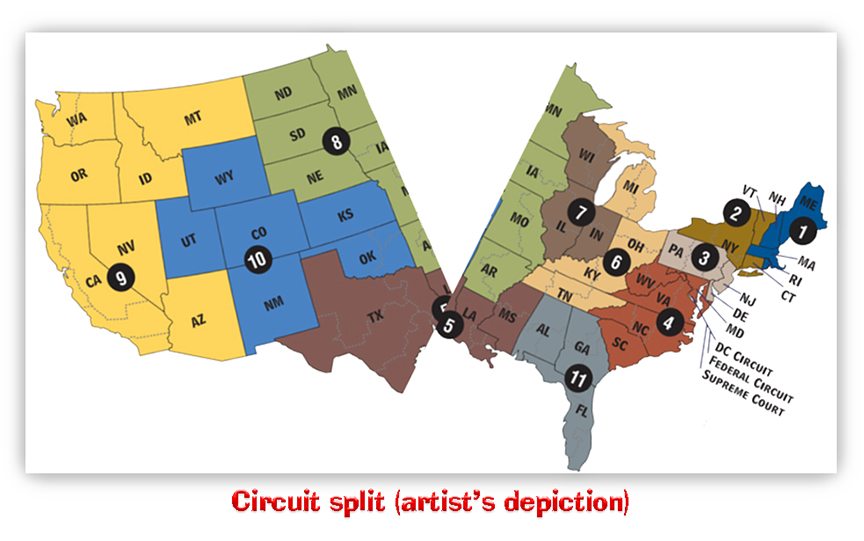
Last week, the 5th Circuit granted en banc review to the decision. Rehearing en banc has the case reheard by all 17 judges in active service on the 5th Circuit and as many of the seven judges on senior status as want to join in. Contrary to inmate lore, en banc review rarely granted, generally about two-tenths of 1% a year of all cases. En banc review is used to reverse prior circuit precedent or where the circuit’s position conflicts with other circuits.

In Curt’s case, enough judges found the question of whether § 922(g)(1) exceeds Congress’s authority under the Commerce Clause debateable to hear the case.

The 5th Circuit invalidated a § 922(g)(1) conviction in a more conventional style last week, holding that the felon-in-possession law was unconstitutional as applied to Talanzo Debrow.  Tal’s  prior felony conduct took place in May 2019, arising out of a traffic stop on a stolen vehicle in which he was the driver. Talanzo attempted to flee the traffic stop, but, in doing so, he “shifted the car twice to ram into the troopers’ cars.” Tal pled guilty to aggravated criminal damage to property in violation of Louisiana Revised Statute 14:55(A).

After he did his time, police caught Talanzo with a gun. He was charged with a violation of § 922(g)(1) felon-in-possession.

The district court ruled that the felon-in-possession was constitutional, but last week, the 5th reversed. Tal argued that § 922(g)(1) was unconstitutional as applied to him because his conviction only related to damage to property. The government argued that Talanzo’s “underlying facts rise to the level of lifetime dangerousness” and that the Louisiana state he was convicted under itself was a crime of violence.

The 5th Circuit ruled that the predicate crime of aggravated property damage was a property crime, not a crime of violence. It looked at the statute categorically, and refused to look at the uncharged conduct of ramming police cars: “The government principally asks us to affirm a § 922(g)(1) conviction on the basis of conduct underlying the predicate, as opposed to the predicate itself… The relevant consideration is a defendant’s prior convictions…’,” the Circuit held, “not unproven conduct charged contemporaneously with a defendant’s § 922(g)(1) indictment or prior conduct that did not result in a felony conviction.”

Talanzo’s case suggests one route to invalidating a § 922(g)(1) conviction. But a reversal in Curtis’s case – if it comes – would be a huge change in application of the most-used federal law on firearms on the books. 

United States v. Squire, Order (5th Cir. July 20, 2026)

United States v. Diaz, 116 F.4th 458 (5th Cir. 2024)

United States v. Squire, 177 F.4th 614 (5th Cir. 2026)

United States v. Lopez, 514 U.S. 549 (1995)

United States v. Debrow, Case No 25-30380, 2026 USAppLEXIS 21976 (5th Cir. July 23, 2026)

The Reload, Appeals Court to Reconsider Foundation of Federal Gun Control (July 26, 2026)

~ Thomas L. Root

A Kick In the Fundament for Felon-in-Possession? – Update for June 30, 2026

We post news and comment on federal criminal justice issues, focused primarily on trial and post-conviction matters, legislative initiatives, and sentencing issues.

READING IS FUNDAMENTAL. GUNS MAY BE, TOO.

The word “fundamental” is fundamental to a lot of what we do. But as a vulgar kid, I was delighted to find out that the root word here – fundament – also meant “buttocks” or even “anus.” What a hoot that was for me back in 7th grade, when such knowledge carried a lot of juvenile humor with it.

Buttocks aside, “fundamental” carries significant constitutional implication, and the Supreme Court’s deliberate and repeated use of it in last week’s Wolford v. Lopez decision was no accident. In Wolford, the high court held that Hawaii’s restrictive firearms-carry law – that made a person lawfully packing heat get permission from any private owner from a neighbor to a store owner before entering the property – violated the 2nd Amendment. While the holding seems to have nothing to do with felon-in-possession laws, it suggests that SCOTUS is slowly moving toward a decision that 18 USC § 922(g)(1) can be unconstitutional when applied to nonviolent felons.

Writing in his Sentencing Law and Policy blog last week, Ohio State University law professor Doug Berman noted that the Wolford v Lopez opinion repeatedly referred to the right to possess a gun for self-defense as a “fundamental right” cited in District of Columbia v. Heller, the 2008 decision that is the great grandfather of modern 2nd Amendment jurisprudence.

Berman suggests the use of the term is no accident:

In this Wolford ruling (as well as last week’s Hemani ruling), the Justices are now acting and talking like the 2nd Amendment is to be regarded and safeguarded like other ‘fundamental Bill of Rights guarantees.’ But if that is true, I do not see how federal and state felon lifetime dispossession laws can be categorically upheld as consistent with the 2nd Amendment. I am unaware of any other fundamental constitutional right — or even fundamental common-law right such as the right of self-defense — that a person could forever lose on the basis of a prior conviction. Would anyone seriously claim that 1st Amendment protected activity, such as writing a book or going to church, could be permanently criminalized by governments if and whenever a person had a prior conviction? If that seems crazy under the 1st Amendment, it would seem modern doctrine also makes it crazy under the 2nd Amendment.

Berman called on SCOTUS to take[] up this issue and… explain what the “fundamental right recognized in Heller” fully means.

It’s not like the Court hasn’t had a chance to do so, as excellent vehicles like Vincent v. United States had been on the relist before whimpering to a certiorari denial.  But like the old Brooklyn Dodgers plaint put it (especially appropriate as the Supremes leave town this week for summer recess), “Just wait until next year…”

Maybe.

Wolford v. Lopez, Case No. 24-1046, 2026 U.S. LEXIS 2720 (June 25, 2026)

United States v. Hemani, Case No. 24-1234, 2026 U.S. LEXIS 2559 (June 18, 2026)

District of Columbia v. Heller, 554 U.S. 570 (2008)

Sentencing Law and Policy, If truly a “fundamental right,” how can lifetime felon bans on gun possession square with the 2nd Amendment? (June 25, 2026)

~ Thomas L. Root

When ‘Danger is My Business,’ 2nd Amendment Offers Scant Protection – Update for June 9, 2026

We post news and comment on federal criminal justice issues, focused primarily on trial and post-conviction matters, legislative initiatives, and sentencing issues.

HOME IS WHERE THE GUN IS

Curtis Squire had his home searched after a shooting occurred nearby. Police did not find the gun used in the crime, but they did find a different gun. Curtis, who had previous state convictions for conspiracy to possess and distribution of heroin, was charged with being a convicted felon in possession of a gun, a violation of  18 USC § 922(g)(1).

Curtis argued that § 922(g)(1) was unconstitutional under the 2nd Amendment as applied to him, because keeping a gun at home for self-defense was different than taking it out in public, and the history of gun legislation in America recognized as much. He also argued that a drug offense was not inherently violent and was not the kind of crime punished in colonial days by gun confiscation.

Last week, the 5th Circuit disagreed, admitting that Curt’s argument was “novel” but disposing of it nonetheless because what Curtis was convicted of doing – drug dealing – was inherently a dangerous undertaking.

The Circuit held:

[T]he home-based distinction [Squire] attempts to draw within our Nation’s historical tradition is mugged by the reality that our historical laws support his disarmament, even in the special confines of his home. While the Constitution safeguards the core right to keep and bear [arms] inside the home, see District of Columbia v. Heller, 554 U.S. 570, 625-28 (2008), it does not dislocate the government’s regulatory power to strip certain groups of this right, “Congress is entitled to make categorical judgments,” Vidal v. Elster, 602 U.S. 286, 319 (2024) (Barrett, J., concurring in part), including a values-based policy judgment that convicted drug traffickers, such as Squire—whose conviction involved an “inherently dangerous activity,” United States v. Kimble, 142 F.4th 308, 317 (5th Cir. 2025) —may be disarmed under § 922(g)(1) consistent with our historical tradition. That conclusion does not rest upon an “individualized assessment” that Squire is “dangerous,” based on some amorphous understanding of the word. See id. at 318; see also United States v. Mitchell, 160 F.4th 169, 187 (5th Cir. 2025) (“Rahimi did not sweepingly proclaim that ‘dangerousness’ is the new standard for Second Amendment challenges.”). Nor does it reflect a freewheeling judicial balancing of rights and safety. See New York State Rifle & Pistol Ass’n v. Bruen, 597 U.S. 1, 26 (2022) (explaining the “Constitution demands” that courts jettison “interest balancing” in favor of history and tradition). Instead, Squire’s dangerousness is premised solely on his drug trafficking offense, which places him in “a class of dangerous felons that our regulatory tradition permits legislatures to disarm.” Kimble, 142 F.4th at 318 (emphasis added).

United States v. Squire, Case No. 25-30324, 2026 U.S.App. LEXIS 15873 (5th Cir., June 2, 2026)

~ Thomas L. Root
Supreme Court Rebuffs DOJ on Felon-In-Possession Review – Update for May 4, 2026

We post news and comment on federal criminal justice issues, focused primarily on trial and post-conviction matters, legislative initiatives, and sentencing issues.

SLEEPER

An under-the-radar § 922(g)(1) case may portend big changes coming in the world of 2nd Amendment and felon-in-possession.

All eyes have been on the United States v. Hemani decision, due in the next eight weeks or so. Hemani asks whether 18 USC § 922(g)(3) – which bans illegal drug abusers from having guns – violates the 2nd Amendment’s guarantee of the right to bear arms. But last week, SCOTUS quietly denied the government review of a 5th Circuit decision that held the felon-in-possession prohibition of § 922(g)(1) unconstitutional as applied to a woman with a prior drug felony.

The felon-in-possession subsection of 18 USC § 922(g) prohibits anyone convicted of a felony, no matter how petty or how long ago, from possessing a gun or ammo.

In its April 27th orders list, the Supremes declined the Dept of Justice’s request to hear United States v. Doucet. The 5th Circuit ruled last December in an unpublished decision that Briani Doucet, a Louisiana woman convicted of a § 922(g)(1) felon-in-possession count based on a 2016 “attempted cultivation of marijuana” felony, should be acquitted on 2ndAmendment grounds. The DOJ had asked the Court to address its appeal after the justices issued a decision in Hemani.

None of the Supreme Court justices commented on the certiorari denial.

The Reload reported,

The denial marks a rare instance of the High Court refusing to show deference to the Justice Department in a case imperiling a federal law. It also deviates from the Court’s recent practice of holding appeals dealing with a similar subject matter to a forthcoming court decision and ordering them reconsidered once it has delivered a decision. Taken together, these departures could signal a potentially decisive ruling against the federal government’s current treatment of marijuana and firearms in Hemani.

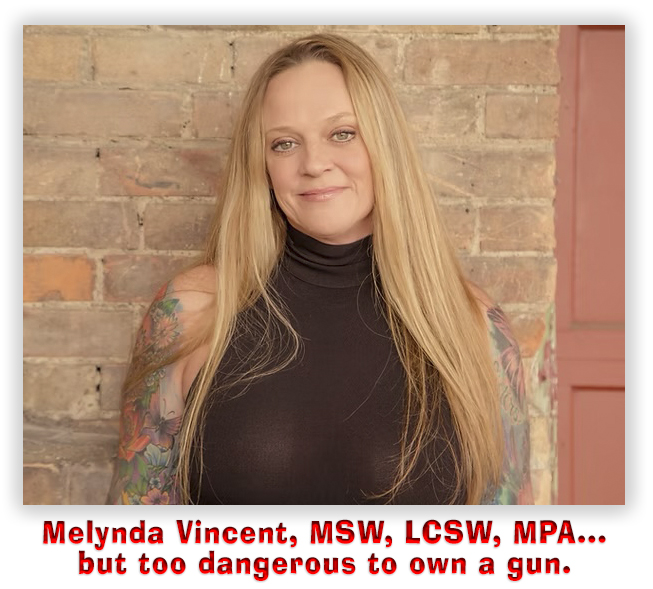
The cert denial is all the more puzzling because SCOTUS previously denied certiorari in a case going the other way, Vincent v. Bondi, two months ago. Melynda Vincent’s petition for certiorari asked whether 18 USC § 922(g)(1)’s felon-in-possession provision violates the 2nd Amendment by prohibiting her from having a gun. Vincent was convicted of bank fraud 15 years ago for writing some bad checks while in the throes of drug addiction. Since then, she cleaned up, graduated from a drug treatment program, earned an undergraduate degree and two graduate degrees, and founded the Utah Harm Reduction Coalition – a nonprofit organization for drug treatment and criminal-justice reform – as well as a mental health counseling service, Life Changes Counseling.

Melynda was the poster child for rehab, but the 10th Circuit ruled that applying § 922(g)(1) to her was consistent with the 2nd Amendment. Her petition for cert was one that many observers thought would be granted, or at least certainly should be granted.

United States v. Doucet, Case No. 25-1001(certiorari denied, April 27, 2026)

United States v. Hemani, Case No. 24-1234 (argued on March 2, 2026)

The Reload, SCOTUS Turns Away Weed and Guns Case Despite DOJ Request (April 28, 2026)

Vincent v. Bondi, Case No. 24-1155 (petition for certiorari denied March 2, 2026)

~ Thomas L. Root

Supremes Still Dodging § 922(g)(1) Constitutionality – Update for April 16, 2026

We post news and comment on federal criminal justice issues, focused primarily on trial and post-conviction matters, legislative initiatives, and sentencing issues.

922(g) CONSTITUTIONALITY STILL UNSETTLED

The Supreme Court last month denied certiorari to a dozen pending 18 USC § 922(g)(1) petitions for review filed by people who argued that the statute – which prohibits possession of guns by a variety of different classes of people from wife-beaters to dopers to ex-felons – violates the 2nd Amendment as applied to them. These included what I thought was the best felon-in-possession case before it, Vincent v. United States.

The Vincent petitioner had a felony bad-check charge from 15 years before, but had since beaten her substance abuse, obtained a master’s degree and opened her own substance abuse counseling clinic. The 10th Circuit held that § 922(g)(1) constitutionally prevented her from owning a gun. After multiple relistings, SCOTUS decided it would not use Vincent to address the limitations of § 922(g)(1).

Last week, SCOTUSBlog reviewed the status of Supreme Court gun litigation. With respect to § 922(g)(1), it noted that “Justice Amy Coney Barrett is already on record opining that § 922(g)(1) is unconstitutional as applied to individuals convicted of non-violent crimes. After all, the historical tradition recognized in Rahimi extends only to dangerous individuals.” Several lower courts have agreed.

There is a well-developed circuit split on the question. However, the justices seem to be opting to see how the lower courts decide cases in the wake of whatever guidance it will provide when it decides Hemani in the next 75 days.  

The government has been selective about seeking SCOTUS review in the felon cases it has lost in the lower courts, such as largely limiting itself to decisions involving drug use (most likely to be affected by the decision in Hemani). The United States has also argued that the court should await the results of a DOJ rulemaking to provide a process for ex-felons – such as President Trump – to win back their gun rights. But 2nd Amendment advocates argue that § 922(g)(1) is unconstitutional as applied to nondangerous felons, and a program that bestows gun rights on people the government deems deserving turns a constitutional right into a privilege.

Two weeks ago, the 7th Circuit ruled in two separate cases that 18 USC § 922(g)(1) was not unconstitutional on its face or as applied to a defendant. The Court cited a long list of cases from other circuits finding § 922(g) was consistent with the 2nd Amendment, and said, “It is enough to cite the decisions we have mentioned, plus United States v. Watson, which is being released contemporaneously. Watson and the decisions in other circuits say all that is necessary. As in Watson, we reserve decision on as-applied challenges by persons whose felony convictions do not suggest that firearms would be dangerous in their hands. Some courts of appeals allow such challenges; some do not; in this circuit the issue is open. For a person such as Prince, however, once the general validity of § 922(g)(1) has been established, there is nothing more to say.”

SCOTUSBlog, The who, what, and where of gun control (April 7, 2026)

United States v. Hemani, Case No. 24-1234 (argued March 2, 2026)

United States v. Prince, Case No. 23-3155, 2026 U.S.App. LEXIS 9596 (7th Cir. April 2, 2026)

United States v. Watson, Case No. 24-2432, 2026 U.S.App. LEXIS 9597 (7th Cir. April 2, 2026)

~ Thomas L. Root
A Pair and a Half of Shorts – Update for May 30, 2025

We post news and comment on federal criminal justice issues, focused primarily on trial and post-conviction matters, legislative initiatives, and sentencing issues.

Today, some shorts… just in time for warm summer weather.

shorts250530

SUMMER’S HERE – TIME FOR SOME SHORTS

Shocking News: BOP Healthcare Found Deficient – A report issued last week by the Dept of Justice Inspector General found that the BOP has failed to screen over a third of at-risk inmates for colorectal cancer (CRC). Between low screening offers and inmate refusals, less than half of average-risk inmates had a completed annual CRC screening.

healthbareminimum220603What’s more, out of a sample of 327 inmates, the IG found that around 10% had no documented follow-up after testing positive for CRC. Also, the Report found, the BOP lacked timeliness metrics for access to a colonoscopy for inmates with a positive CRC screening. The IG reported that “inmates in our sample waited an average of 8 months between a positive CRC screening and a colonoscopy.”

During the period covered by the Report, there were about 38,000 federal inmates who fell in the age range and “average risk” level for CRC. About 13,600 of them were not offered a screening, according to the Report.

BOP Director William K. Marshall III took time from being excited about a billion-dollar rebuild of Alcatraz (see below) to blame “longstanding staffing issues” for compromising efforts to screen inmates for colorectal cancer in certain facilities.

DOJ Inspector General, Evaluation of the Federal Bureau of Prisons’ Colorectal Cancer Screening Practices for Inmates and Its Clinical Follow-up on Screenings (Report 25-057, May 20, 2025)

Washington Post, Prisons bureau failed to screen inmates for colorectal cancer, watchdog says (May 20, 2025)

shorts250530

Sentencing Commission Releases 922(g) Data: About 7,500 people are convicted every year for 18 USC § 922(g) offenses, the US Sentencing Commission reported last week.

funwithnumbers170511The USSC said men accounted for 98% of all convictions, with 58% of them being black, 21% white and 17% Hispanic. The average age for defendants at conviction was 36 years old.

The defendants were overwhelmingly US citizens (95%). About 24% were Criminal History Category III and another 24% fell into Criminal History VI (the highest category).

USSC, Section 922(g) firearm offenses (May 22, 2025)

shorts250530

BOP Director Calls Rebuilding Alcatraz “Exciting Opportunity”: BOP Director William K. Marshall III, who has less than $200 million in his FY 2025 budget to make $3 billion in infrastructure repairs to existing prisons, told Fox News a week ago that his team is actively exploring the possibility of reopening Alcatraz, the 330-bed penitentiary on an island in San Francisco Bay.

excited250530Marshall called the project – a late-night idea President Trump hatched late on his inaptly-named “Truth Social” site a month ago – an “exciting opportunity” and one that aligns with the Trump administration’s law-and-order priorities.

Last week, KTVU-TV reported that estimates to make the repairs needed to reopen Alcatraz as a prison are close to $1 billion, plus another $40 million to $100 million a year in maintenance.

Corrections1, BOP director: Reopening Alcatraz is an ‘exciting opportunity’ (May 23, 2025)

KTVU, Bureau of Prisons director ‘excited’ about reopening Alcatraz as max-security prison (May 23, 2025)

– Thomas L. Root

Making “Good Enough” on 922(g)(1) the Enemy of 2nd Amendment Perfection – Update for May 19, 2025

We post news and comment on federal criminal justice issues, focused primarily on trial and post-conviction matters, legislative initiatives, and sentencing issues.

IS DOJ TRYING TO AVOID A SUPREME COURT 922(G)(1) CHALLENGE?

Voltaire wrote (roughly translated) that perfection is the enemy of good enough. Disturbing evidence is emerging that President Trump’s administration is adopting that standard in fighting to keep 18 USC § 922(g)(1) – the felon-in-possession ban that is the most enforced gun law on the federal books – in place.

perfectiongood250519Several DOJ Supreme Court filings last month urged SCOTUS to reject review of F-I-P cases asking whether § 922(g)(1) can be applied to nonviolent felons consistent with New York State Rifle & Postal Assn v. Bruen, arguing in part that the DOJ’s yet-unformed proposal to use 18 USC § 925(c) to restore gun rights for some felons is good enough.

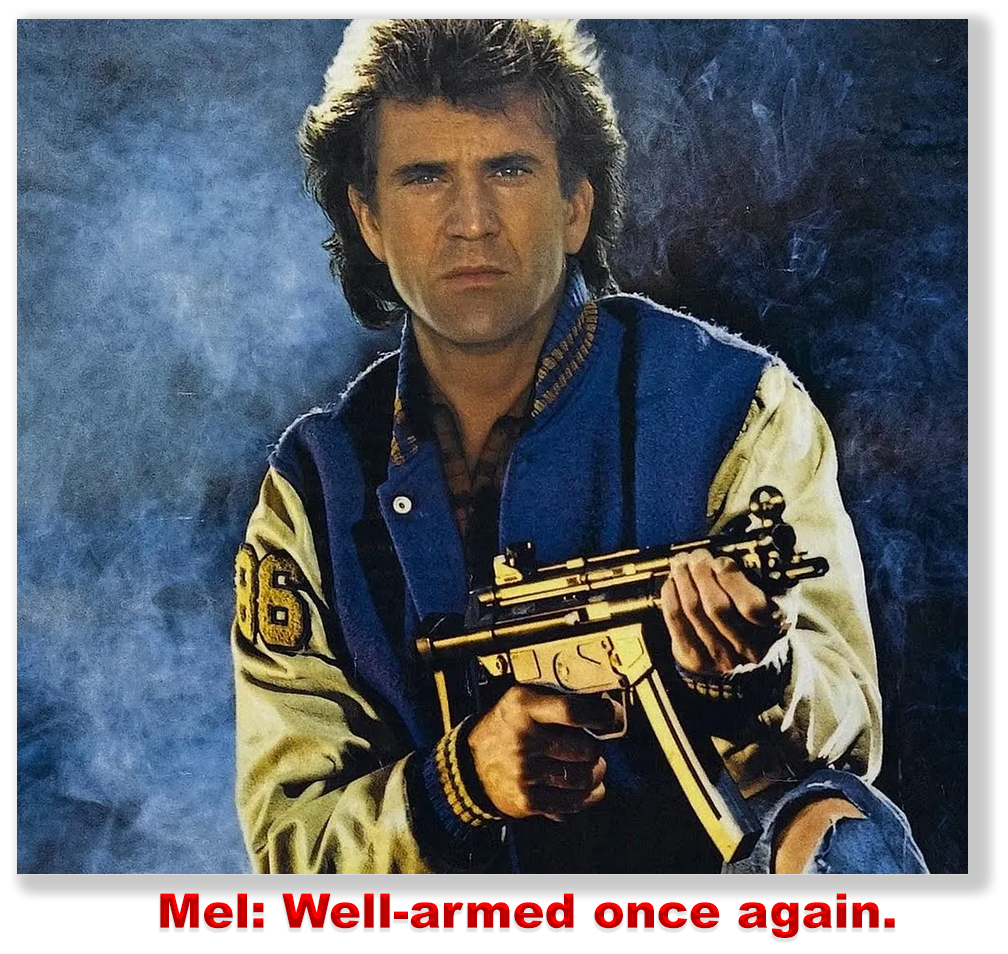
In March, DOJ ginned up an ad hoc rights restoration program to reward actor and Trump supporter Mel Gibson by giving him back his gun rights despite a domestic violence conviction. Opposition to the decision cost Pardon Attorney Elizabeth Oyer her job. Ultimately, the agency restored the gun rights of 10 people (including Gibson), noting cryptically that each person had submitted “materials… seeking either a pardon or relief from federal firearms disabilities, and it is established to [the Attorney General’s] satisfaction that each individual will not be likely to act in a manner dangerous to public safety and that the granting of the relief to each individual would not be contrary to the public interest.”

gibsingun250519DOJ has neither issued any regulations on how former felons might apply for gun rights restoration nor has it responded to multiple requests for details. But that has not stopped DOJ from citing this undisclosed and opaque process as an additional reason for the Supreme Court not to grant review in any felon-in-possession 2nd Amendment cases.

On April 25, Solicitor General John Sauer opposed a petition for cert from a 4th Circuit § 922(g)(1) as-applied denial. “Although there is some disagreement among the courts of appeals regarding whether § 922(g)(1) is susceptible to individualized as-applied challenges, that disagreement is shallow,” SG Sauer wrote, “[a]nd any disagreement among the circuits may evaporate given the Dept of Justice’s recent reestablishment of the administrative process under 18 USC § 925(c) for granting relief from federal firearms disabilities.”

The Reload, a gun law newsletter, said, “The Trump Administration’s preferred approach to gun rights for convicted felons [is] one that would grant a high degree of discretion and centralize the decision-making within the executive branch rather than through a widely applicable legal precedent, as gun-rights advocates have long sought in court. As a result, it may undermine many of the movement’s best cases by undercutting the claims of sympathetic plaintiffs.”

The Government seems to be deliberately avoiding picking a Supreme Court § 922(g)(1) fight that it doesn’t think it can win. I reported previously that DOJ decided against filing for cert after losing a 3rd Circuit en banc decision on § 922(g)(1)’s constitutionality. In a letter to the Senate Judiciary Committee, the Solicitor General said, “In the case of Bryan Range, a Pennsylvania man with a 30-year-old state misdemeanor conviction for understating his income on a food stamp application, the Third Circuit ruled the ban violated his Second Amendment rights… The Department of Justice has concluded that a petition for a writ of certiorari is not warranted in this case,” Solicitor General John Sauer wrote a letter sent to the Senate Judiciary Committee last month. “The Third Circuit’s decision is narrow, leaving § 922(g)(1) untouched except in the most unusual applications.”

Two weeks ago, the 9th Circuit in United States v. Duarte joined the 4th, 8th, 10th and 11th Circuits in refusing to distinguish between violent and non-violent criminals for the purposes of F-I-P constitutionality. The Reload said, “Assuming Duarte appeals the decision, which seems likely, it could present a compelling opportunity for the High Court to address the now deepened circuit split with the 3rd, 5th, and 6th Circuits, which have all recognized an ability for individualized challenges to the federal ban by non-violent offenders.”

melyndavincent250218Last week, a cert petition filed in Vincent v. Bondi may derail the DOJ’s efforts to avoid a Supreme Court reckoning on F-I-P. Melynda Vincent is the poster child for an as-applied challenge to § 922(g)(1), a woman who was convicted 17 years ago of felony bank fraud for passing a fraudulent $498 check when she was homeless and an addict. She got no jail time. Since then, she rehabbed, became a mom, earned several master’s degrees, and started her own rehab counseling firm. Nevertheless, § 922(g)(1) permanently keeps her from possessing a gun to protect her family.

The Reload said that SCOTUS may find ruling on F-I-P easier “by accepting a case like Vincent’s, where even most hardline gun-control advocates would have a difficult time arguing she is too dangerous for consideration.”

DOJ may oppose Vincent by arguing that its new § 925(c) gun rights restoration procedure, whatever it may be, is good enough to take care of her wish to possess a gun. But if § 922(g)(1) violates the 2nd Amendment as applied to Melynda Vincent, then some amorphous and opaque DOJ procedure to restore gun rights on the whim of the AG hardly cures the violation. What’s more, it means that some, if not many, of the tens of thousands of federal prisoners doing time for a potentially unconstitutional offense will be left out in the cold.

The “good enough” of a § 925(c) rights restoration will not be sufficient substitute for the “perfection” of a Supreme Court ruling on § 922(g)(1).

Opposition to Petition for Certiorari, Hunt v. United States, Case No 24-6818 (filed April 25, 2025)

The Reload, The Coming DOJ-SCOTUS Showdown Over Felon Gun Rights (May 18, 2025)

Solicitor General Letter to Sen Richard Durbin (April 11, 2025)

Petition for Certiorari, Vincent v. United States, Case No. 24-1155 (filed May 12, 2025)

– Thomas L. Root

Bryan Gets His Gun – Update for April 24, 2025

We post news and comment on federal criminal justice issues, focused primarily on trial and post-conviction matters, legislative initiatives, and sentencing issues.

GOVERNMENT ENDS RANGE V. ATTY GENERAL NOT WITH A BANG BUT A WHIMPER

fudd250424Last December, the 3d Circuit held that the 18 USC 922(g)(1) felon-in-possession statute was unconstitutional as applied to Bryan Range. Bryan’s recent criminal history included nothing more than a few traffic tickets and fishing without a license, but a quarter century before, he was convicted of making a false statement to get food stamps for his hungry family. That was enough to trigger the F-I-P prohibition on his possessing a gun.

The en banc opinion held in essence that a prior nonviolent offense that qualified under 18 USC 922(g)(1) to prohibit someone from possessing a gun violated the 2nd Amendment. Applying New York State Rifle & Pistol Association v. Bruen and United States v. Rahimi, the Circuit held that Bryan

remains one of ‘the people’ protected by the 2nd Amendment, and his eligibility to lawfully purchase a rifle and a shotgun is protected by his right to keep and bear arms. More than two decades after he was convicted of food-stamp fraud and completed his sentence, he sought protection from prosecution under § 922(g)(1) for any future possession of a firearm. The record contains no evidence that Range poses a physical danger to others. Because the Government has not shown that our Republic has a longstanding history and tradition of depriving people like Range of their firearms, 922(g)(1) cannot constitutionally strip him of his 2nd Amendment rights.

This was not the case’s first rodeo. An en banc opinion held the same for Bryan in June 2023, but the Biden Dept of Justice sought Supreme Court review. While the petition was pending, the Supreme Court handed down Rahimi, a case that held that temporarily disarming someone subject to a domestic protection order complied with the 2nd Amendment. SCOTUS remanded all pending 2nd Amendment challenges on its docket – including Range – for reconsideration in light of Rahimi.

gun160711The 3d Circuit ruled that the end of 2024 that nothing in Rahimi changed its position on Bryan’s 2nd Amendment right to buy a hunting rifle. I was fairly sure that the government would head to the Supreme Court again in order to protect America from the dangerous likes of Bryan. Indeed, the DOJ sent signals that it was seriously considering doing just that.

In mid-March, President Trump’s Acting Solicitor General asked the Supreme Court for extra time to decide what to do with Range, reporting that she

has not yet determined whether to file a petition for a writ of certiorari in this case. The additional time sought in this application is needed to continue consultation within the government and to assess the legal and practical impact of the Court of Appeals’ ruling. Additional time is also needed, if a petition is authorized, to permit its preparation and printing.

SCOTUS obliged with an extension until last Tuesday (April 22).

With no fanfare, DOJ let the revised deadline pass without a petition for certiorari being filed. This means that the Range decision is final, and in the 3d Circuit at least, people who have been convicted of nonviolent felonies now have a path to restore their gun rights.

What the DOJ decision not to challenge Range at the Supreme Court might mean for the broader question of the as-applied constitutionality of 922(g)(1) is less clear. It could be that DOJ’s compliance with President Trump’s executive order to lessen the burden on 2nd Amendment rights has led it to permit jurisprudence to develop that ties F-I-P to dangerousness rather than the existence of a prior conviction. It could also be a strategic decision that Range was not the hill the government wanted to die on, and that there are better cases in the SCOTUS pipeline (Duarte, perhaps) for the government to use to draw a line in the F-I-P sand.

circuitsplit220516Ohio State University law professor Doug Berman, writing last December in his Sentencing Law and Policy blog, suggested that “[b]ecause this Range ruling creates a clear circuit split on the constitutionality of 18 USC 922(g)(1) in some settings, I would expect to see an appeal to the Supreme Court by the U.S. Dept of Justice. But maybe the new incoming [DOJ] officials might not want to test the application and reach of the 2nd Amendment in this particular ‘narrow’ case.”

Regardless of the DOJ’s reasons for taking a pass on Range, the en banc decision is now final, and Bryan can have his gun. What is more, the finality is an incremental but very clear step toward resolving the question of how Bruen and Rahimi limit the reach of F-I-P. Certainly, people in 3rd Circuit with F-I-P convictions may have a path open to them (albeit one with procedural hurdles to cross) to challenge their 18 USC § 922(g)(1) convictions.

Dept of Justice, Application for an Extension of Time Within Which to File a Petition for a Writ of Certiorari to the United States Court of Appeals for the Third Circuit, Case No. 24A-881 (March 12, 2025)

Range v. Attorney General, 124 F.4th 218 (3d Cir., December 23, 2024)

Sentencing Law and Policy, En banc 3rd Circuit again finds federal felon-in-possession ban unconstitutional as applied to Bryan Range (December 23, 2024)

– Thomas L. Root

A Change in DOJ Approch to 922(g)(1)? – Update for April 11, 2025

We post news and comment on federal criminal justice issues, focused primarily on trial and post-conviction matters, legislative initiatives, and sentencing issues.

CURIOUS DEVELOPMENT(?) ON § 922(g)(1)

You may remember that the leading case on whether the 18 USC § 922(g)(1) felon-in-possession (F-I-P) statute complies with the 2nd Amendment is the 3rd Circuit decision, Range v. Garland (now renamed in honor of new Attorney General Pam Bondi).

gunfreezone170330Bryan Range, disqualified from owning a gun because of a conviction 25 years ago, sued the government, arguing that F-I-P was unconstitutional as applied to his case, because his conviction was non-violent – a food-stamp false statement case – and it was 25 years in the past. The 3rd Circuit agreed in an en banc opinion in 2023, and the government took it to the Supreme Court.

SCOTUS remanded it for further consideration in light of United States v. Rahimi. Last December, the 3rd Circuit again found F-I-P unconstitutional as applied to Bryan’s situation.

Late last month, Bondi filed for a 30-day extension to decide whether to ask the Supreme Court to accept the case for review. She said, “The Acting Solicitor General has not yet determined whether to file a petition for a writ of certiorari in this case. The additional time sought in this application is needed to continue consultation within the government and to assess the legal and practical impact of the court of appeals’ ruling…”

On February 7, President Trump gave Bondi 30 days to submit a policy plan for enacting pro-gun reforms. Nearly two months later, nothing has been done.

gun160711Trump directed that “[w]ithin 30 days of the date of this order, the Attorney General shall examine all orders, regulations, guidance, plans, international agreements, and other actions of executive departments and agencies (agencies) to assess any ongoing infringements of the 2nd Amendment rights of our citizens, and present a proposed plan of action to the President, through the Domestic Policy Advisor, to protect the Second Amendment rights of all Americans.”

The 30-day due date for that report would have been March 9th, but that day came and went without any movement from Bondi or the White House. When this omission got some attention, the Department of Justice told ABC News that the deadline was extended to March 16. That date passed, too, with no report. Since then, according to The Reload, DOJ has not produced the report or provided any updates as to when it will be released.

gibsongun250411However, the New York Times reported a week ago that the DOJ was about to restore gun rights to actor Mel Gibson and 9 other people. The Times said, “The decision, which also applies to nine others, was approved by Attorney General Pam Bondi, according to the people, who spoke on the condition of anonymity for fear of retaliation. The specifics are expected to be published in The Federal Register…”

Attorney General, Bondi v. Range, Case No. 24A881 (March 12, 2025)

White House, Executive Order – Protecting 2nd Amendment Rights (February 7, 2025)

The Reload, Where Is the DOJ’s Second Amendment Report? (April 6, 2025)

New York Times, Mel Gibson’s Gun Rights to Be Restored by Justice Dept. (April 3, 2025)

– Thomas L. Root

Another Incremental Victory for Felon-In-Possession – Update for March 31, 2025

We post news and comment on federal criminal justice issues, focused primarily on trial and post-conviction matters, legislative initiatives, and sentencing issues.

5TH CIRCUIT UPHOLDS FELON-IN-POSSESSION CONSTITUTIONALITY AS APPLIED TO DEFENDANT WITH VIOLENT PAST

The 5th Circuit last week upheld the constitutionality of 18 USC § 921(g)(1)’s felon-in-possession statute as applied to a defendant with a prior aggravated battery conviction.

Comparing the battery offense to Colonial era “armed and affray” laws, the Circuit ruled that the 2nd Amendment permits disarming people like the defendant, Jeremy Schnur.

violent160620The 5th said Jeremy’s “violent aggravated battery conviction is analogous to, and arguably more dangerous than, the ‘prototypical affray [which] involved fighting in public,’ the precursor to the ‘going armed’ laws punishable by arms forfeiture… These affray and going armed laws were intended to “mitigate demonstrated threats of physical violence similar to that displayed by Schnur when he perpetrated the aggravated battery offense [and] supports a tradition of disarming individuals like Schnur pursuant to § 922(g)(1), whose underlying conviction stemmed from the threat and commission of violence.”

The 5th’s approach continues to suggest that those with nonviolent felonies in their background cannot be held subject to the felon-in-possession statute consistent with the 2nd Amendment. This approach has been adopted by the 3rd Circuit in Range v. Atty General and suggested by the 6th Circuit in United States v. Williams. The same question is currently on en banc review in the 9th Circuit’s United States v. Duarte.

United States v. Schnur, Case No. 23-60621, 2025 U.S. App. LEXIS 7030 (5th Cir. March 26, 2025)

– Thomas L. Root