Tag Archives: 18 usc 922(g)

‘Dopers With Guns’ Decision Disappoints the Narratives – Update for June 19, 2026

We post news and comment on federal criminal justice issues, focused primarily on trial and post-conviction matters, legislative initiatives, and sentencing issues.

SUPREMES AVOID BROAD BRUSH ON HEMANI

Everything these days comes with a narrative. The Knicks only lose one game since April because President Trump was there, but win the next game because Taylor Swift brings the magic. Antifa “operatives” spiked the Reflecting Pool with algae before being arrested by Park Police.

Narratives attach to Supreme Court cases as well.

Yesterday, SCOTUS decided that 18 USC § 922(g)(3) – which prohibits people who illegally use controlled substances from possessing guns – could be unconstitutionally applied in certain uses. Defendant Ali Hemani was caught with cocaine, some weed and a gun in his home, and charged under § 922(g)(3). The US District Court for the Eastern District of Texas threw out the case, holding that making gun possession a felony because Ali liked to blow a little dope violated his 2nd Amendment right to keep and bear arms. The 5th Circuit agreed.

The high court’s decision is a “rollicking opinion” that is “worth a read,” the Wall Street Journal said this morning. “Yet it provides few hints of how to draw the line in tougher cases.”

President Trump’s Dept of Justice brought the case to the Supreme Court. The narrative was that DOJ thought it had the perfect unsympathetic defendant, a dual US and Pakistani citizen who had ties to the Iranian Revolutionary Guard Corps and went to Iran to honor Iranian general Qasem Soleimani, killed by a US drone strike. The government claimed Ali’s mother was seen on video saying she hoped her sons would become martyrs for Iran. The narrative was that SCOTUS thought that slamming a bum like Ali would be an easy lift.

Others (including me) thought that the Supreme Court could use a slam-dunk 2nd Amendment case like finding Ali Hemani, who used a little recreational pot and owned a Glock, was constitutionally protected, as a springboard to addressing the stickier questions about the constitutionality of § 922(g)(1), the subsection that bans all felons from ever possessing a gun.

Yesterday, the Court disappointed both narratives, holding in a 9-0 opinion that as applied to Ali, § 922(g)(3) violated his 2nd Amendment rights. The opinion, by Justice Neil Gorsuch, was painfully minimalist:

In many respects, this case is a narrow one. We do not address efforts to ban addicts… or those presently intoxicated, from possessing a firearm. We do not address other prophylactic laws Congress might adopt after determining that users of a particular drug pose a special risk of misusing firearms… We do not address 18 U.S.C. § 922(g)(1)’s provision disarming individuals convicted of felonies (often including drug-related ones). Ibid. We do not even address whether the government could bring a prosecution under § 922(g)(3) accompanied by individualized proof that the defendant’s use of marijuana (or any other drug) renders him a danger to himself or others. Or proof that a certain drug always renders its users dangerous because of its potency or for some other reason. None of those issues is before us and we do not pass on them either way.

Not that other Justices were unwilling to raise other issues. Justices Samuel Alito and Elena Kagan, the two who concurred in the judgment only, complained that they wanted to see a narrower opinion. Justices Ketanji Brown Jackson and Sonia Sotomayor spend five pages of their own blasting the New York State Rifle & Pistol Assn. v. Bruen test – on which modern 2nd Amendment jurisprudence turns – as a “failed… experiment” that should be overturned.  Justice Clarence Thomas was expansive in a different direction, writing his own concurring opinion that all of § 922(g) stretches the Commerce Clause too far: “Congress cannot regulate the possession of every thing that ever traveled across state lines.”

Now packing heat legally….

So Hemani is a win for what Ohio State University law professor Doug Berman estimates to be the “few thousand people have been convicted and sentenced under § 922(g)(3) in the last decade, and there could be many thousands more with such a conviction on their records. But, as just noted, Hemani does not necessarily make all these convictions suspect unless the case facts are similar to those in Ali Hemani’s prosecution.”

For those who hoped the case would be a blaze on the trail to getting the 2nd Amendment read into § 922(g)(1), however, Hemani falls short.

United States v. Hemani, Case No. 24-1234, 2026 U.S. LEXIS 2559 (June 18, 2026)

Sentencing Law and Policy, How many (thousands of) 922(g)(3) convictions are now suspect after Hemani? (June 18, 2026)

~ Thomas L. Root

When ‘Danger is My Business,’ 2nd Amendment Offers Scant Protection – Update for June 9, 2026

We post news and comment on federal criminal justice issues, focused primarily on trial and post-conviction matters, legislative initiatives, and sentencing issues.

HOME IS WHERE THE GUN IS

Curtis Squire had his home searched after a shooting occurred nearby. Police did not find the gun used in the crime, but they did find a different gun. Curtis, who had previous state convictions for conspiracy to possess and distribution of heroin, was charged with being a convicted felon in possession of a gun, a violation of  18 USC § 922(g)(1).

Curtis argued that § 922(g)(1) was unconstitutional under the 2nd Amendment as applied to him, because keeping a gun at home for self-defense was different than taking it out in public, and the history of gun legislation in America recognized as much. He also argued that a drug offense was not inherently violent and was not the kind of crime punished in colonial days by gun confiscation.

Last week, the 5th Circuit disagreed, admitting that Curt’s argument was “novel” but disposing of it nonetheless because what Curtis was convicted of doing – drug dealing – was inherently a dangerous undertaking.

The Circuit held:

[T]he home-based distinction [Squire] attempts to draw within our Nation’s historical tradition is mugged by the reality that our historical laws support his disarmament, even in the special confines of his home. While the Constitution safeguards the core right to keep and bear [arms] inside the home, see District of Columbia v. Heller, 554 U.S. 570, 625-28 (2008), it does not dislocate the government’s regulatory power to strip certain groups of this right, “Congress is entitled to make categorical judgments,” Vidal v. Elster, 602 U.S. 286, 319 (2024) (Barrett, J., concurring in part), including a values-based policy judgment that convicted drug traffickers, such as Squire—whose conviction involved an “inherently dangerous activity,” United States v. Kimble, 142 F.4th 308, 317 (5th Cir. 2025) —may be disarmed under § 922(g)(1) consistent with our historical tradition. That conclusion does not rest upon an “individualized assessment” that Squire is “dangerous,” based on some amorphous understanding of the word. See id. at 318; see also United States v. Mitchell, 160 F.4th 169, 187 (5th Cir. 2025) (“Rahimi did not sweepingly proclaim that ‘dangerousness’ is the new standard for Second Amendment challenges.”). Nor does it reflect a freewheeling judicial balancing of rights and safety. See New York State Rifle & Pistol Ass’n v. Bruen, 597 U.S. 1, 26 (2022) (explaining the “Constitution demands” that courts jettison “interest balancing” in favor of history and tradition). Instead, Squire’s dangerousness is premised solely on his drug trafficking offense, which places him in “a class of dangerous felons that our regulatory tradition permits legislatures to disarm.” Kimble, 142 F.4th at 318 (emphasis added).

United States v. Squire, Case No. 25-30324, 2026 U.S.App. LEXIS 15873 (5th Cir., June 2, 2026)

~ Thomas L. Root
10th Circuit Says 2nd Amendment Inquiry on § 922(g) Should Focus on Future Dangerousness – Update for September 8, 2025

We post news and comment on federal criminal justice issues, focused primarily on trial and post-conviction matters, legislative initiatives, and sentencing issues.

MINORITY REPORT

A divided 10th Circuit panel last week added a disturbing gloss onto the issue of the constitutionality of 18 U.S.C. § 922(g) (which prohibits felons, drug users and others from possessing guns), suggesting that courts should consider a defendant’s future dangerousness in an “as applied” challenge to whether the 18 USC § 922(g)(3) prohibition on unlawful drug users possessing guns violates the 2nd Amendment.

The Circuit’s approach is reminiscent of the Tom Cruise dystopian movie “Minority Report,” where the police arrested people for crimes they had yet to commit.

Jared Harrison, who worked at a marijuana dispensary and apparently liked to sample the product, was charged with violating § 922(g)(3), which prohibits firearm possession by “any person… who is an unlawful user of or addicted to any controlled substance.” The Western District of Oklahoma federal district court dismissed the indictment, holding that § 922(g)(3) – as applied to non-intoxicated weed users like Jared (who was not high when he was pulled over and arrested) – violated the 2nd Amendment.

The 10th Circuit reversed.

In the wake of the Supreme Court’s decision in United States v. Rahimi, the 10th noted, “the appropriate [2ndAmendment] analysis involves considering whether the challenged regulation is consistent with the principles that underpin our regulatory tradition.” The Circuit complained that the district court found that “our historical tradition of firearm regulation is limited to disarming those who have acted dangerously in the past.  But we conclude, contrary to the district court, disarming those believed to pose a risk of future danger is consistent with a “principle[] that underpin[s] our regulatory tradition.”

The government argued that “for those who unlawfully use marijuana, like Mr. Harrison, research ‘amply demonstrate[s] a connection between marijuana use specifically and violence.'” Jared, on the other hand,  contended “marijuana users are not in a class of dangerous people.” The 10th said that to determine whether § 922(g)(3) as applied to Jared was “consistent with” the government’s dubious claim, it “must show non-intoxicated marijuana users pose a risk of future danger,” and it remanded the case to the district court for additional fact-finding.

It’s tough to accurately predict future criminality. As the dissenting judge put it, “the district court was correct to reject the government’s invitation to strip away Mr. Harrison’s 2nd Amendment rights based only on abstract statistics and “projected” dangerousness. Remanding for factfinding on these issues puts a tremendous burden on Mr. Harrison, one which is inappropriate given that it is the government’s burden to justify § 922(g)(3)’s application in response to his 2ndAmendment challenge.”

United States v. Harrison, Case No. 23-6028, 2025 U.S.App. LEXIS 21978 (10th Cir. Aug 26, 2025)

~ Thomas L. Root

Surprising Support for DOJ Gun Rights Proposal – Update for July 1, 2025

We post news and comment on federal criminal justice issues, focused primarily on trial and post-conviction matters, legislative initiatives, and sentencing issues. 

DEMOCRATS SPLIT ON RESTORING FELON GUN RIGHTS

Jake Fogleman of The Reload, a weekly report on the politics of gun control, reported last weekend that the Dept of Justice’s proposal to reauthorize the long-dormant gun rights restoration process for people convicted of nonviolent felonies appears to be pitting federal and local Democrats against one another.

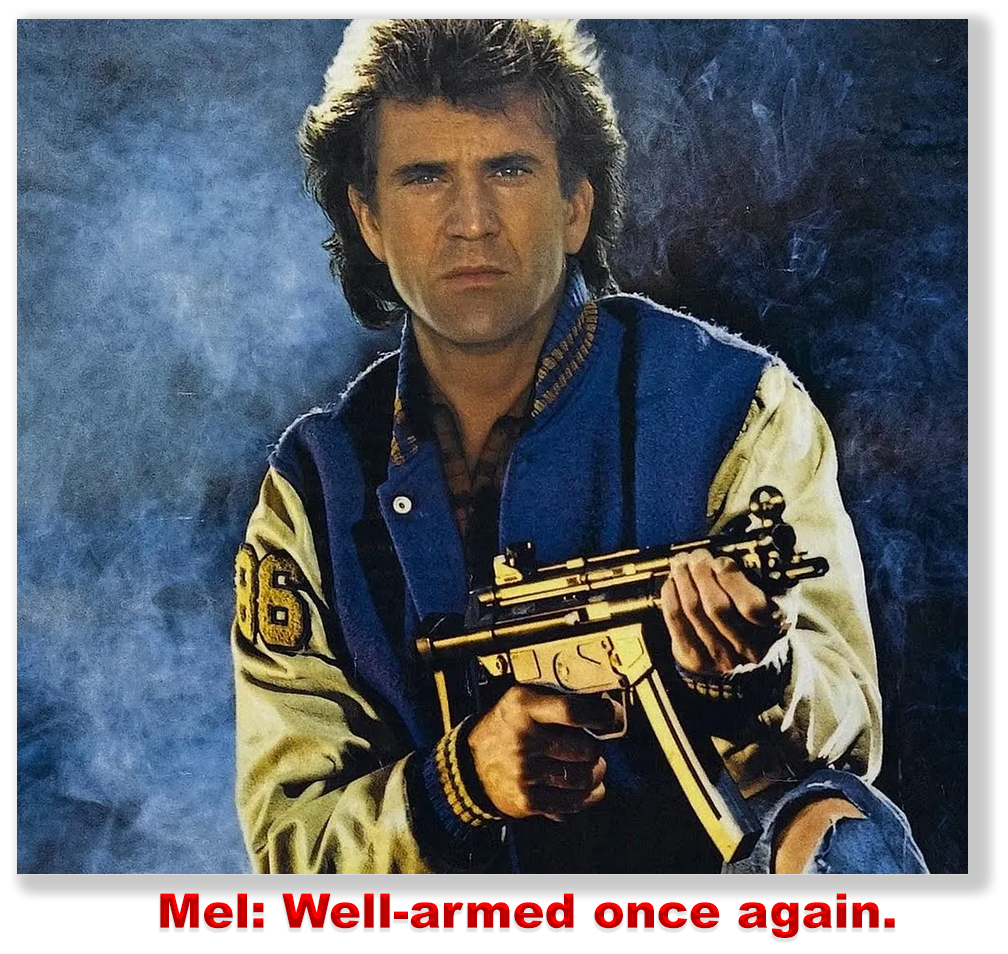
Last February, President Donald Trump ordered a review of federal gun policy. One of the first proposals to come from that review was a proposed rulemaking to let DOJ use 18 USC § 925 to restore gun rights, essentially waiving 18 USC § 922(g) for those people. The initial recipient of this administrative grace, even before the rulemaking began, was actor and Trump supporter Mel Gibson, disqualified from gun possession by a prior domestic violence conviction.

In the comment period just ended, 16 Democratic state attorneys general – including those representing liberal bastions like California, Hawaii, Illinois, Connecticut and New Jersey – submitted a letter supporting the proposal (subject to what The Reload called “numerous caveats… intended to ensure that no one truly dangerous is able to make it through the process”). But their letter was surprisingly sympathetic to the resurrection of the process.

“While there is no constitutional requirement that mandates any particular form of firearms rights restoration by states or the federal government, as a policy matter, we believe that our residents’ lives should not be defined by the worst mistakes of their pasts,” the letter said.

On the other hand, six Democratic senators and representatives filed comments arguing that the proposed rule is an unlawful exercise of executive power being done to “help violent criminals regain firearms.”

“Given the pervasiveness of gun violence in our nation, this Administration should not be circumventing Congress’s authority to prioritize restoring firearm privileges to individuals convicted of serious or violent crimes,” the Congressional letter said. “Our country is plagued by an epidemic of gun violence.”

The Reload suggested that “part of the driving force behind the rift, at least for those who oppose the new process, [may be] over who is pursuing the new federal policy. Democratic officials, particularly those in Congress, have been under intense pressure from their constituents to demonstrate their resistance to the Trump Administration’s aggressive executive actions in its second term. It’s possible that, under different political circumstances, the lawmakers now vocally opposed to the move might have been more amenable to the idea… In an era in which the Democratic coalition has largely homogenized around a set of hardline gun restrictions, and in which the question of gun rights for felons has primarily been confined to the courts, it is notable to see new differences of opinion on the question emerge in the political arena.”

No doubt, having a rational, consistent means of restoring gun rights to people subject to 922(g) is a good idea. My concern, however, is that adoption of such a plan may make DOJ unwilling to press for a Supreme Court resolution on the constitutionality of 18 USC § 922(g)(1) as applied to nonviolent felons. DOJ already refused to seek certiorari on Range v. Bondi, the 3rd Circuit en banc decision that stands as the best case for limiting § 922(g)(1). That case now binds courts in Pennsylvania, New Jersey and Delaware, but without a SCOTUS decision, it lacks nationwide applicability and, perhaps more important, does not support a 28 USC § 2244 motion to bring a second or successive § 2255 motion.

That procedural fact leaves thousands of prisoners unable to challenge the constitutionality of their convictions in the post-Bruen world.

The Reload, Analysis: Is Rights Restoration for Convicts a New Dividing Line on Guns for Democrats? (June 29, 2025)

DOJ, Withdrawing the Attorney General’s Delegation of Authority (March 20, 2025)

Letter from 16 State Attorneys General (June 18, 2025)

Letter from Rep Rosa DeLauro et al (June 18, 2025)

 – Thomas L. Root

A Pair and a Half of Shorts – Update for May 30, 2025

We post news and comment on federal criminal justice issues, focused primarily on trial and post-conviction matters, legislative initiatives, and sentencing issues.

Today, some shorts… just in time for warm summer weather.

shorts250530

SUMMER’S HERE – TIME FOR SOME SHORTS

Shocking News: BOP Healthcare Found Deficient – A report issued last week by the Dept of Justice Inspector General found that the BOP has failed to screen over a third of at-risk inmates for colorectal cancer (CRC). Between low screening offers and inmate refusals, less than half of average-risk inmates had a completed annual CRC screening.

healthbareminimum220603What’s more, out of a sample of 327 inmates, the IG found that around 10% had no documented follow-up after testing positive for CRC. Also, the Report found, the BOP lacked timeliness metrics for access to a colonoscopy for inmates with a positive CRC screening. The IG reported that “inmates in our sample waited an average of 8 months between a positive CRC screening and a colonoscopy.”

During the period covered by the Report, there were about 38,000 federal inmates who fell in the age range and “average risk” level for CRC. About 13,600 of them were not offered a screening, according to the Report.

BOP Director William K. Marshall III took time from being excited about a billion-dollar rebuild of Alcatraz (see below) to blame “longstanding staffing issues” for compromising efforts to screen inmates for colorectal cancer in certain facilities.

DOJ Inspector General, Evaluation of the Federal Bureau of Prisons’ Colorectal Cancer Screening Practices for Inmates and Its Clinical Follow-up on Screenings (Report 25-057, May 20, 2025)

Washington Post, Prisons bureau failed to screen inmates for colorectal cancer, watchdog says (May 20, 2025)

shorts250530

Sentencing Commission Releases 922(g) Data: About 7,500 people are convicted every year for 18 USC § 922(g) offenses, the US Sentencing Commission reported last week.

funwithnumbers170511The USSC said men accounted for 98% of all convictions, with 58% of them being black, 21% white and 17% Hispanic. The average age for defendants at conviction was 36 years old.

The defendants were overwhelmingly US citizens (95%). About 24% were Criminal History Category III and another 24% fell into Criminal History VI (the highest category).

USSC, Section 922(g) firearm offenses (May 22, 2025)

shorts250530

BOP Director Calls Rebuilding Alcatraz “Exciting Opportunity”: BOP Director William K. Marshall III, who has less than $200 million in his FY 2025 budget to make $3 billion in infrastructure repairs to existing prisons, told Fox News a week ago that his team is actively exploring the possibility of reopening Alcatraz, the 330-bed penitentiary on an island in San Francisco Bay.

excited250530Marshall called the project – a late-night idea President Trump hatched late on his inaptly-named “Truth Social” site a month ago – an “exciting opportunity” and one that aligns with the Trump administration’s law-and-order priorities.

Last week, KTVU-TV reported that estimates to make the repairs needed to reopen Alcatraz as a prison are close to $1 billion, plus another $40 million to $100 million a year in maintenance.

Corrections1, BOP director: Reopening Alcatraz is an ‘exciting opportunity’ (May 23, 2025)

KTVU, Bureau of Prisons director ‘excited’ about reopening Alcatraz as max-security prison (May 23, 2025)

– Thomas L. Root

Bryan Gets His Gun – Update for April 24, 2025

We post news and comment on federal criminal justice issues, focused primarily on trial and post-conviction matters, legislative initiatives, and sentencing issues.

GOVERNMENT ENDS RANGE V. ATTY GENERAL NOT WITH A BANG BUT A WHIMPER

fudd250424Last December, the 3d Circuit held that the 18 USC 922(g)(1) felon-in-possession statute was unconstitutional as applied to Bryan Range. Bryan’s recent criminal history included nothing more than a few traffic tickets and fishing without a license, but a quarter century before, he was convicted of making a false statement to get food stamps for his hungry family. That was enough to trigger the F-I-P prohibition on his possessing a gun.

The en banc opinion held in essence that a prior nonviolent offense that qualified under 18 USC 922(g)(1) to prohibit someone from possessing a gun violated the 2nd Amendment. Applying New York State Rifle & Pistol Association v. Bruen and United States v. Rahimi, the Circuit held that Bryan

remains one of ‘the people’ protected by the 2nd Amendment, and his eligibility to lawfully purchase a rifle and a shotgun is protected by his right to keep and bear arms. More than two decades after he was convicted of food-stamp fraud and completed his sentence, he sought protection from prosecution under § 922(g)(1) for any future possession of a firearm. The record contains no evidence that Range poses a physical danger to others. Because the Government has not shown that our Republic has a longstanding history and tradition of depriving people like Range of their firearms, 922(g)(1) cannot constitutionally strip him of his 2nd Amendment rights.

This was not the case’s first rodeo. An en banc opinion held the same for Bryan in June 2023, but the Biden Dept of Justice sought Supreme Court review. While the petition was pending, the Supreme Court handed down Rahimi, a case that held that temporarily disarming someone subject to a domestic protection order complied with the 2nd Amendment. SCOTUS remanded all pending 2nd Amendment challenges on its docket – including Range – for reconsideration in light of Rahimi.

gun160711The 3d Circuit ruled that the end of 2024 that nothing in Rahimi changed its position on Bryan’s 2nd Amendment right to buy a hunting rifle. I was fairly sure that the government would head to the Supreme Court again in order to protect America from the dangerous likes of Bryan. Indeed, the DOJ sent signals that it was seriously considering doing just that.

In mid-March, President Trump’s Acting Solicitor General asked the Supreme Court for extra time to decide what to do with Range, reporting that she

has not yet determined whether to file a petition for a writ of certiorari in this case. The additional time sought in this application is needed to continue consultation within the government and to assess the legal and practical impact of the Court of Appeals’ ruling. Additional time is also needed, if a petition is authorized, to permit its preparation and printing.

SCOTUS obliged with an extension until last Tuesday (April 22).

With no fanfare, DOJ let the revised deadline pass without a petition for certiorari being filed. This means that the Range decision is final, and in the 3d Circuit at least, people who have been convicted of nonviolent felonies now have a path to restore their gun rights.

What the DOJ decision not to challenge Range at the Supreme Court might mean for the broader question of the as-applied constitutionality of 922(g)(1) is less clear. It could be that DOJ’s compliance with President Trump’s executive order to lessen the burden on 2nd Amendment rights has led it to permit jurisprudence to develop that ties F-I-P to dangerousness rather than the existence of a prior conviction. It could also be a strategic decision that Range was not the hill the government wanted to die on, and that there are better cases in the SCOTUS pipeline (Duarte, perhaps) for the government to use to draw a line in the F-I-P sand.

circuitsplit220516Ohio State University law professor Doug Berman, writing last December in his Sentencing Law and Policy blog, suggested that “[b]ecause this Range ruling creates a clear circuit split on the constitutionality of 18 USC 922(g)(1) in some settings, I would expect to see an appeal to the Supreme Court by the U.S. Dept of Justice. But maybe the new incoming [DOJ] officials might not want to test the application and reach of the 2nd Amendment in this particular ‘narrow’ case.”

Regardless of the DOJ’s reasons for taking a pass on Range, the en banc decision is now final, and Bryan can have his gun. What is more, the finality is an incremental but very clear step toward resolving the question of how Bruen and Rahimi limit the reach of F-I-P. Certainly, people in 3rd Circuit with F-I-P convictions may have a path open to them (albeit one with procedural hurdles to cross) to challenge their 18 USC § 922(g)(1) convictions.

Dept of Justice, Application for an Extension of Time Within Which to File a Petition for a Writ of Certiorari to the United States Court of Appeals for the Third Circuit, Case No. 24A-881 (March 12, 2025)

Range v. Attorney General, 124 F.4th 218 (3d Cir., December 23, 2024)

Sentencing Law and Policy, En banc 3rd Circuit again finds federal felon-in-possession ban unconstitutional as applied to Bryan Range (December 23, 2024)

– Thomas L. Root

Another Incremental Victory for Felon-In-Possession – Update for March 31, 2025

We post news and comment on federal criminal justice issues, focused primarily on trial and post-conviction matters, legislative initiatives, and sentencing issues.

5TH CIRCUIT UPHOLDS FELON-IN-POSSESSION CONSTITUTIONALITY AS APPLIED TO DEFENDANT WITH VIOLENT PAST

The 5th Circuit last week upheld the constitutionality of 18 USC § 921(g)(1)’s felon-in-possession statute as applied to a defendant with a prior aggravated battery conviction.

Comparing the battery offense to Colonial era “armed and affray” laws, the Circuit ruled that the 2nd Amendment permits disarming people like the defendant, Jeremy Schnur.

violent160620The 5th said Jeremy’s “violent aggravated battery conviction is analogous to, and arguably more dangerous than, the ‘prototypical affray [which] involved fighting in public,’ the precursor to the ‘going armed’ laws punishable by arms forfeiture… These affray and going armed laws were intended to “mitigate demonstrated threats of physical violence similar to that displayed by Schnur when he perpetrated the aggravated battery offense [and] supports a tradition of disarming individuals like Schnur pursuant to § 922(g)(1), whose underlying conviction stemmed from the threat and commission of violence.”

The 5th’s approach continues to suggest that those with nonviolent felonies in their background cannot be held subject to the felon-in-possession statute consistent with the 2nd Amendment. This approach has been adopted by the 3rd Circuit in Range v. Atty General and suggested by the 6th Circuit in United States v. Williams. The same question is currently on en banc review in the 9th Circuit’s United States v. Duarte.

United States v. Schnur, Case No. 23-60621, 2025 U.S. App. LEXIS 7030 (5th Cir. March 26, 2025)

– Thomas L. Root

St. Vincent Must Remain Unarmed, 10th Says – Update for February 18, 2025

We post news and comment on federal criminal justice issues, focused primarily on trial and post-conviction matters, legislative initiatives, and sentencing issues.

ADDING TO THE 922(g)(1) MAYHEM…

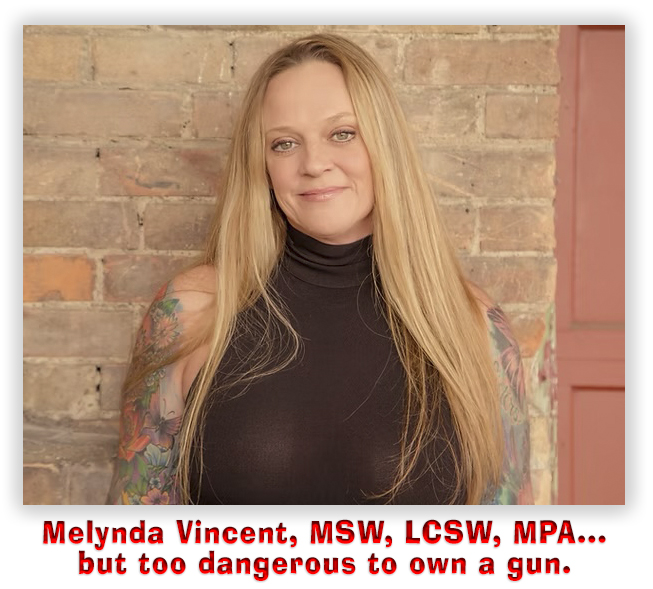
melyndavincent250218You may remember Melynda Vincent, a woman convicted of bank fraud 15 years ago for writing some bad checks while in the throes of drug addiction. Since then, Melynda cleaned up, graduated from a drug treatment program, earned an undergraduate degree and two graduate degrees, and founded the Utah Harm Reduction Coalition – a nonprofit organization for drug treatment and criminal-justice reform – and a mental health counseling service, Life Changes Counseling.

She’s a poster child for rehabilitation. No, more than that, maybe for sainthood, someone who turned a horrific past and debilitating addiction into something that will benefit countless people (and make society safer).  A therapist who has ‘walked the walk’ the people she counsels are on right now.

In 2021, Melynda sued to be allowed to own a gun. No matter that she might be a saint. The 10th Circuit held that 18 USC § 922(g)(1)’s felon-in-possession prohibition on gun possession was constitutional as applied to her. After all, she was a felon and that was the end of the story.

At the time, Melynda took her argument to the Supreme Court. SCOTUS sat on her petition for certiorari (along with the government’s request that the high court review the 3d Circuit’s Range decision), and then finally GVR’d her, sending the case back to the 10th for reconsideration in light of United States v. Rahimi.

‘Hint, hint,’ SCOTUS seemed to be saying to the Circuit, ‘take a look at her ‘dangerousness’ before you rubber-stamp a denial based on pre-Rahimi law.

Last week, the 10th ignored the hint. It held that despite New York State Rifle & Pistol Assn v. Bruen and despite Rahimi, its 2009 decision in United States v. McCane that § 922(g)(1) was constitutional when applied to any felon in any situation was still good law. The Circuit relied “on the Supreme Court’s 2008 statement in District of Columbia v. Heller that it was not ‘cast[ing] doubt on longstanding prohibitions on the possession of firearms by felons’” and Rahimi’s recognition of “the presumptive lawfulness of these longstanding prohibitions,” quoting Heller.

“Longstanding?” Prior to 1961, no federal law would have prohibited someone in Melynda’s situation from possessing guns. As the first Range opinion noted, “modern laws have no longstanding analogue in or national history and tradition of firearm regulation.”

The 10th noted that the 4th, the 8th and the 11th Circuits also “have held that Rahimi doesn’t abrogate their earlier precedents upholding the constitutionality of § 922(g)(1).”

stvincentB250218Melynda is as sympathetic a felon-in-possession petitioner as anyone could find, maybe even more so than Bryan Range (who, after all, had one ticket for fishing without a license ticket in the 25 years since his food stamp conviction). If § 922(g)(1)‘s felon-in-possession prohibition does not violate the 2nd Amendment as applied to St. Melynda Vincent, the “presumptive lawfulness of these longstanding prohibitions” must be an irrebutable one.

Expect Melynda’s request for Supreme Court review to drop onto the SCOTUS docket before Memorial Day.

Vincent v. Bondi, Case No 21-4121, 2025 USAppLEXIS 3179 (10th Cir. Feb 11, 2025)

– Thomas L. Root

Dangerousness (and More) and 922(g) Constitutionality – Update for February 14, 2025

We post news and comment on federal criminal justice issues, focused primarily on trial and post-conviction matters, legislative initiatives, and sentencing issues.

3RD CIRCUIT’S TROUBLING SUGGESTIONS ON 922(g)(1)

Following its en banc Range v Attorney General II decision– that the 18 USC 922(g)(1) felon-in-possession (F-I-P) statute violates the 2nd Amendment where it prohibits a person with a single disqualifying but nonviolent fraud conviction 25 years before from owning a gun – the 3d Circuit earlier this week remanded a similar case for the trial court to inquire into whether the petitioner had a history of dangerousness.

dice161221Restaurateur George Pitsilides’ hobby is high-stakes poker, an avocation that extended into sports betting and hosting illegal poker tournaments. He was convicted 25 years ago of placing sports bets with a Pennsylvania bookie – law-breaking that must seem quaint to anyone watching Eli and Peyton Manning on the Fanduel ad during the Superbowl – conduct that disqualifies him from gun possession under the F-I-P statute.

In 2019, he sued the government for the right to own a gun, arguing among other things that the F-I-P statute violated the 2nd Amendment as applied to his situation. While the case was on appeal, the Supreme Court handed down decisions in New York State Rifle & Pistol Association v. Bruen and United States v. Rahimi, cases “which effected a sea change in 2nd Amendment law,” as the 3rd Circuity put it, and required that a record be made of George’s “dangerousness.”

nickdanger220426The Circuit held that while Rahimi and Range II “did not purport to comprehensively define the metes and bounds of justifiable burdens on the 2nd Amendment right, they do, at a minimum, show that disarmament is justified as long as a felon continues to “present a special danger of misusing firearms… in other words, when he would likely pose a physical danger to others if armed.” The appellate court observed that

[a]s evidenced by our opinion in Range II, the determination that a felon does not currently present a special danger of misusing firearms may depend on more than just the nature of his prior felony…. [W]e agree with the 6th Circuit: Courts adjudicating as-applied challenges to 922(g)(1) must consider a convict’s entire criminal history and post-conviction conduct indicative of dangerousness, along with his predicate offense and the conduct giving rise to that conviction, to evaluate whether he meets the threshold for continued disarmament. As Range II illustrated, consideration of intervening conduct plays a crucial role in determining whether application of 922(g)(1) is constitutional under the 2nd Amendment… Indeed, such conduct may be highly probative of whether an individual likely poses an increased risk of “physical danger to others” if armed.

The Circuit ruled that “while bookmaking and pool selling offenses may not involve inherently violent conduct, they may nonetheless, depending on the context and circumstances, involve conduct that endangers the physical safety of others. That assessment necessarily requires individualized factual findings.”

So what is so troubling about this ruling? A couple of things. First, the Pitsilides court described the en banc Range II decision as turning on several factors, including having “lived an essentially law-abiding life since” the 25-year-old crime, had no history of violence, “had never knowingly violated 922(g)(1)’s prohibition while subject to it, posed no risk of danger to the public, and then filed a declaratory judgment action seeking authorization to bear arms prospectively.” The holding suggests that whether the F-I-P statute can constitutionally be applied to a defendant depends on him or her first seeking government permission (in the form of a declaratory ruling) before possessing a gun.

f**kdraft250214Imagine this standard being applied to free speech: A state law making the wearing clothing emblazoned with the phrase “f**ck the draft” a crime because of the exhibition of an obscene word would violate the 1st Amendment only if the wearer had not violated the unconstitutional statute to begin with and had won a judicial holding that the statute was unconstitutional before donning the offending shirt. (The shirt was the featured garb in Cohen v. California).

The second problem is with the squishiness of the term “dangerousness.” As Ohio State law professor Doug Berman aptly described the issue in his Sentencing Law and Policy blog earlier this week:

I have dozens of questions about how a “dangerousness” standard is to apply in the 2nd Amendment context, and I will flag just a few here.

For starters, there are many folks who were clearly dangerous, and were convicted of possibly dangerous crimes in their twenties, who thereafter mature and are no clearly longer dangerous years later. Do these folks have 2nd Amendment rights? More broadly, data show that women as a class are much less likely to commit violent crimes than men, so does this suggest women with criminal records are more likely to have 2nd Amendment rights than men because they are, generally speaking, less dangerous? And, procedurally, who has burden on the issue of “dangerousness” in civil and criminal cases? I assume Pitsilides will have to prove by a preponderance that he is not dangerous in this civil case that he brought, but does the Government now need to prove dangerousness beyond a reasonable doubt in every 18 USC 922(g) criminal prosecution?

The F-I-P “as applied” 2nd Amendment battle is just warming up.

Pitsilides v. Barr, Case No. 21-3320, 2025 U.S. App. LEXIS 3007 (3d Cir. Feb. 10, 2025)

Sentencing Policy and Law, Third Circuit panel states “Second Amendment’s touchstone is dangerousness” when remanding rights claim by person with multiple gambling-related offenses (February 12, 2025)

– Thomas L. Root

Trump Executive Order Hints At Felon-In-Possession About Face – Update for February 10, 2025

We post news and comment on federal criminal justice issues, focused primarily on trial and post-conviction matters, legislative initiatives, and sentencing issues.

PRESIDENT (AND FELON) TRUMP MAY CARE ABOUT § 922(g)(1)

OK, President Trump is a convicted felon. But millions of Americans know how easy it is to end up with that label.

Because Trump is now a guy surrounded by men and women with guns but not himself allowed to touch one due to 18 USC § 922(g)(1) – the felon-in-possession statute – I have been speculating for a few months about whether his personal stake in being able to again pack his personalized “Trump .45” Glock would cause him to do something about the issue of F-I-P constitutionality.

Trumpgun250113The 3d Circuit has underscored its view that § 922(g)(1) can be unconstitutional as applied to a nonviolent felon (Range v. Attorney General) and the 6th Circuit has hinted that it feels the same (United States v. Williams). The 9th Circuit said as much in United States v. Duarte, but that holding is on en banc review and probably won’t survive. Some other circuits have gone the other way.

After New York State Rifle & Pistol Association v. Bruen and United States v. Rahimi, there’s been little doubt that the “as applied” 2nd Amendment question that swirling around the F-I-P statute will reach the Supreme Court sooner rather than later. Likewise, the Dept of Justice’s intractable opposition to any loosening of gun restrictions has been a feature of every court challenge of § 922(g), not just F-I-P but also drug user in possession, person-under-indictment in possession and domestic abuser-in-possession.

trumpglock45250210Last Friday, Trump issued an executive order that strongly hints that the DOJ will soon be changing its views. The EO directed Pam Bondi, the new Attorney General, to “examine all orders, regulations, guidance, plans, international agreements, and other actions of executive departments and agencies (agencies) to assess any ongoing infringements of the 2nd Amendment rights of our citizens and present a proposed plan of action to the President… to protect the 2nd Amendment rights of all Americans.” The EO specifically orders her to review “[t]he positions taken by the United States in any and all ongoing and potential litigation that affects or could affect the ability of Americans to exercise their 2nd Amendment rights.”

This does not mean that the DOJ will drop its opposition to any or all of the varied “prohibited person in possession” issue raised by § 922(g), even whether F-I-P is constitutional as applied to a nonviolent defendant whose convictions are a quarter century old like Bryan Range. But it is a clear signal that the next SCOTUS § 922(g) case may feature a much kinder, gentler DOJ that we’ve seen so far.

White House, Executive Order: Protecting Second Amendment Rights (February 7, 2024)

Range v. Attorney General, 124 F.4th 218 (3d Cir. 2024)

United States v. Williams, 113 F.4th 637 (6th Cir. 2024)

United States v. Duarte, 108 F.4th 786 (9th Cir. 2024)

– Thomas L. Root