
We post news and comment on federal criminal justice issues, focused primarily on trial and post-conviction matters, legislative initiatives, and sentencing issues.

HEY, ALASKA! THIS BUD’S FOR YOU…
 Fourteen years ago, a long-time bush pilot got hired to fly a woman into a remote Inuit town where her husband was postmaster. As a surprise, she packed a few cases of Budweiser and Busch Light for him (because the town was dry).
But the town was not just dry. It was as dry as the Atacama. In fact, the town ordinances outlawed bringing any alcoholic beverage into the town.
In the 1980s, Alaska authorized municipalities and villages to declare themselves “dry villages.” Since then, some have voted simply to regulate the sale of alcohol, limiting it to restaurants, package stores, and the like. Others prohibit selling alcohol but not possessing it. A few would make Carrie Nation blush, banning the sale, importation, and possession of alcohol altogether.
For the hard-core teetotalers in the most restrictive villages, Alaska state law lends a hand, making it a crime to “knowingly send, transport, or bring an alcoholic beverage” there. Alaska Stat. § 04.11.499(a). The resulting penalties depend on the amount of alcohol and the defendant’s status as a repeat offender. Transporting 12 gallons of beer or having two booze-hauling prior makes the crime a class C felony. On the other end of the spectrum, first-time offenders who transport less than 12 gallons are guilty of only a class A misdemeanor (three days in jail and a $1,500 fine).
But then, there’s forfeiture. Using a plane to transport the hooch subjects the aircraft to mandatory forfeiture — no matter the quantity and no matter the seriousness of the offense. § 04.16.220(a)(3)(C).
State troopers inspected bush pilot Ken Jouppi’s Cessna 206 Stationair before he took off from Fairbanks with his passenger, the wife of the postmaster in very rural Beaver, Alaska (110 miles from Fairbanks by air, because there’s no other way to get there). Beaver, population 48, sits on the north bank of the Yukon River. To suggest that there’s not much “there” there is an understatement.
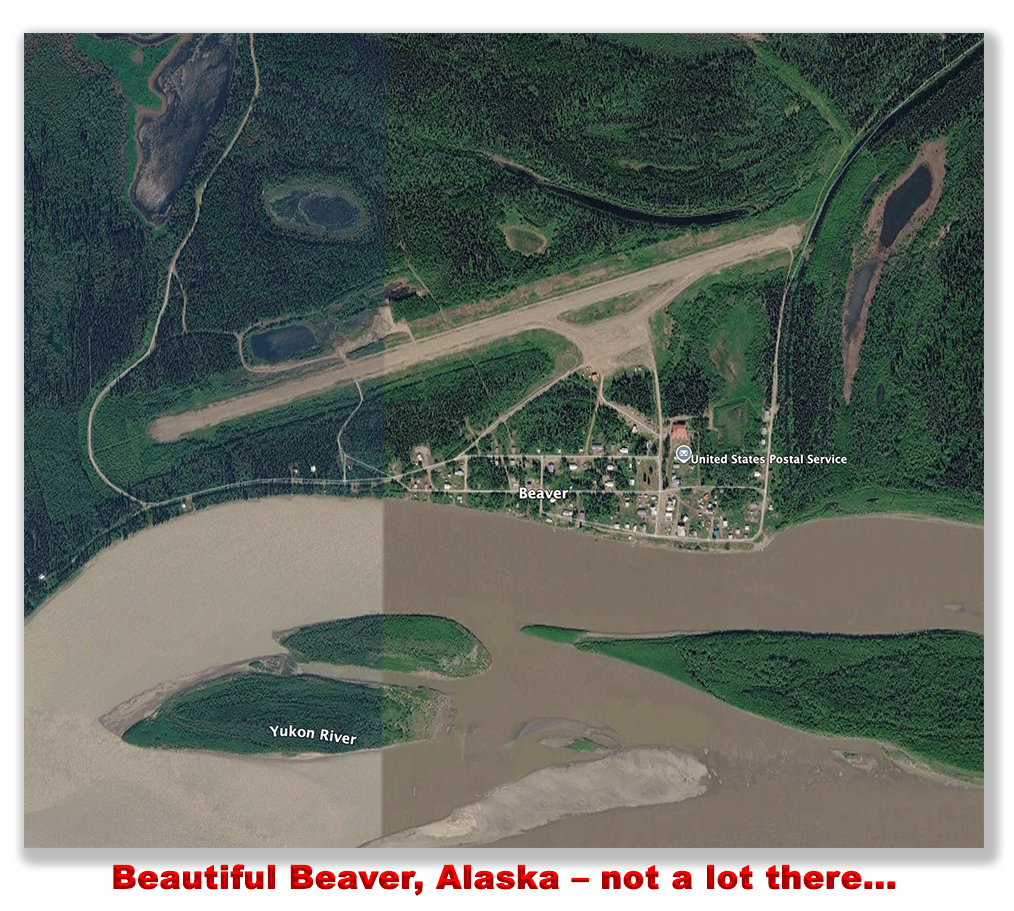
Ken says he didn’t know that his passenger had stuffed her cargo with Budweiser and Busch, a couple of cases worth. There is probably a backstory here, because the Alaska State Police seemed to know what they were looking for when they swarmed the plane as Ken awaited departure and seized the beer. Somehow, they knew…
Ken was convicted of a misdemeanor and sentenced to three days in jail and a fine. State prosecutors also asked that he be required to forfeit his plane, but the trial judge declined.
 The state appealed that decision. Last year, the Alaska Supreme Court ruled that the state’s seizure of Ken’s plane was not an excessive fine. (While it’s hard to say the plane’s value, which the filings in the case estimate at $95,000, older Stationairs than Ken’s are offered online for $185,000). No matter, the Alaska Supreme Court said: the harm caused by alcohol in rural Alaska is so great that severe punishment is not disproportionate.
Last week, the SCOTUS agreed to hear the case, which asks whether forfeiture of Ken’s livelihood implicates the Excessive Fines Clause of the 8th Amendment. The issue is whether, in determining when a fine contravenes the Excessive Fines Clause, courts may consider the gravity of the underlying offense purely in the abstract or should consider the gravity of the specific defendant’s wrongdoing.
The case will be argued in the fall.
Jouppi v. Alaska, Case No. 25-246 (cert. granted July 20, 2026)
Alaska Beacon, Alaska bush pilot’s bootlegging case heads to the US Supreme Court later this year (July 20, 2026)
~ Thomas L. Root