Tag Archives: commutation

Who to Buy, Who to Influence For Trump Clemency – Update for May 28, 2026

We post news and comment on federal criminal justice issues, focused primarily on trial and post-conviction matters, legislative initiatives, and sentencing issues.

NAVIGATING CLEMENCY IN THE ERA OF TRUMP II

In a long New York Times magazine article, former federal prosecutor Jeffrey Toobin provides some lesser-known facts about President Trump’s clemency process, which he describes as a “quasi-royal quasi-selling of indulgences” that “has created an extraordinary free-for-all as supplicants try to make their cases in any way they can.”

What has emerged is what the article calls “a sort of common law of Trump pardons, as those who pay attention learn how to argue and to whom.”

(“Clemency” is a catchall term that includes pardons, which invalidate a criminal conviction, and commutations, which free a recipient from prison but leave intact the conviction.)

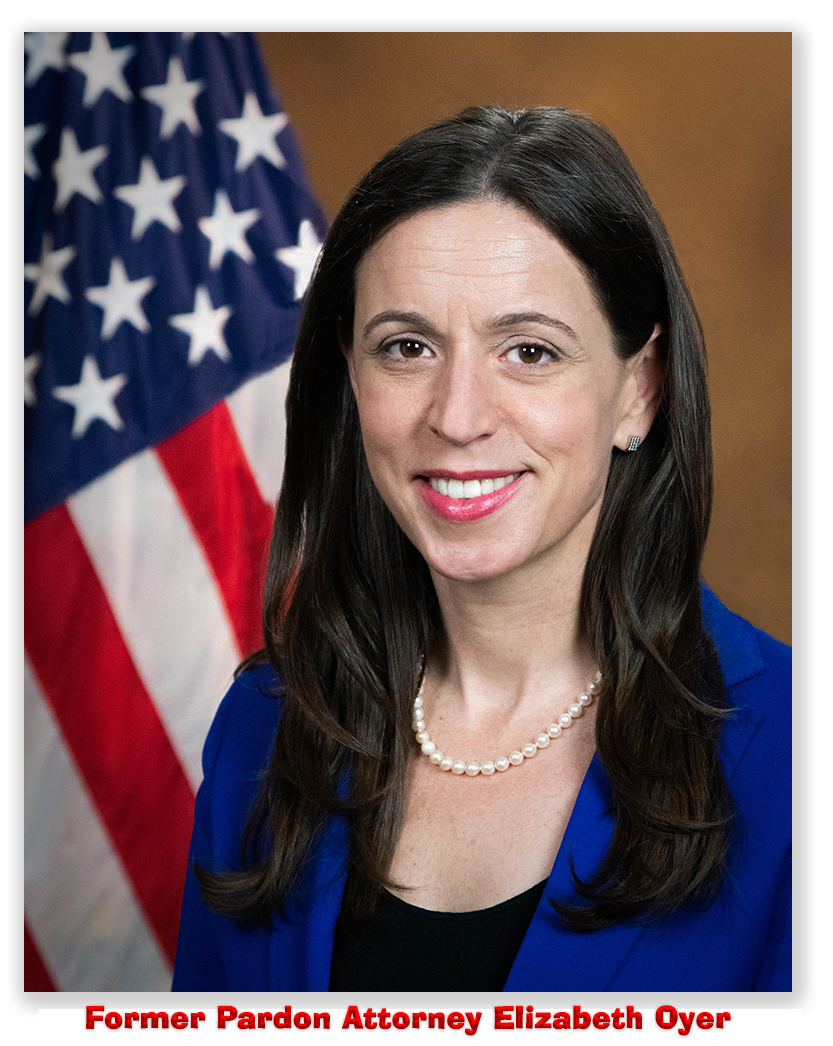
Changes in the Dept of Justice Office of Pardon Attorney (OPA) website have obscured the number of pending clemency applications, but The Times reports that a tally by Elizabeth G. Oyer, who was Pardon Attorney during the Biden administration, shows more than 20,000 clemency requests are pending now. This compares with about 5,000 at the end of the Biden term and eclipses the 18,000 on file at the end of Biden’s first year in office.

The Trump clemency process is a departure from tradition. Prior to 2025, people seeking a pardon or commutation would submit written applications to the OPA, typically an apolitical appointee. For commutations, OPA would consult with some or all of the Bureau of Prisons, the US Attorney’s Office that prosecuted the case, the judge that sentenced the petitioner, the victim, and people supporting the petition. Applications that made the cut would be sent to the White House, where a group of staff members would review the petitions. Their views were then conveyed to the president, who makes the final decision.

Pardons traditionally were not considered until the applicant had been out of prison for at least five years. Even now, OPA’s pardon application specifies that pardons are only for people who have completed their sentences. Nevertheless, favored people are being pardoned right out of active prison sentences. In some cases, pardons are granted before trials have occurred or sentences have even begun.

Toobin, author of the February 11, 2025, book, The Pardon: The Politics of Presidential Mercy, identifies the people reviewing clemency applications in the White House as While House counsel David Warrington, his deputy Sean Hayes, and White House chief of staff Susie Wiles. “The president is going to take Susie’s advice over David’s every time,” Toobin quotes a lawyer for a successful pardon applicant as having said. “David has taken the position of trying to be no-drama. He doesn’t want to cause problems, and the knives have not come out for him because he goes about his business that way.”

Trump’s Pardon Attorney, Ed Martin, has no significant criminal law experience to speak of, a fact that didn’t keep the President from nominating him to be US Attorney for the District of Columbia, one of the two highest-profile US Attorney slots in the nation. However, Martin represented a number of January 6, 2021, Capitol rioters, and his “views and conduct were so extreme that he was unconfirmable for the permanent post, even in the Republican-controlled Senate,” as Toobin put it.

Trump then named Martin Pardon Attorney, where Martin explained his clemency recommendations in a social media post as being “No MAGA left behind.” One of the first pardon applications Martin pushed through was of a longtime supporter and former Virginia sheriff named Scott Jenkins, who got a full pardon last Memorial Day,  24 hours before he was to self-surrender to serve a 120-month sentence for a federal bribery conspiracy conviction.

New York magazine reported in February that Martin is uninterested in the Pardon Attorney position and apparently appears at the office about once a week.  “He’s just not there that much,” the staffer said.

Trump created a White House position known as the pardon czar, to which he appointed Alice Marie Johnson in February 2025. During Trump’s first term, he granted clemency to Johnson for her 1996 crack conspiracy life sentence after Kim Kardashian lobbied him for the commutation. Trump later made it a full pardon when Johnson spoke in support of his candidacy at the 2020 Republican National Convention.

Johnson has said that as pardon czar, she looks for other federal inmates who were punished in a similarly excessive way and recommends them to the president for clemency.  Toobin said, “To date, Johnson’s influence seems limited. Since 2016, Trump has pardoned dozens of people convicted of white-collar crimes like fraud, but few who were, like Johnson herself, low-level participants in narcotics conspiracies.”

So how to go about clemency in the Trump era? Political influence, large contributions to Trump-backed political action committees, or even knowing the right people, all help. But for the vast majority of the 20,000 “pardon seekers, then, the question became which of the two — Martin or Johnson — offered the best route for success. According to people who have engaged in the process, the answer appears clear: neither. ‘The safe thing to do is go through the formal application process… You file the papers with Ed Martin’s office, and you make sure Alice Johnson knows it’s there. But they don’t have the power to deliver anything. They can give you a sense of how things stand, but they are not deciders.’”

In any given case, Toobin concludes, “the chaotic structure of the Trump White House might produce a different answer. Indeed, according to people who have been involved in the process, there is often a desperate search for ties, however tenuous, to any of the leading players. ‘Everyone knows Trump often listens to the last person who talked to him,” a consultant for a pardon seeker said. “So the goal is to get to as many people in the room when he’s thinking about pardons.’”

Last fall, Trump pardoned Changpeng Zhao, founder of crypto-currency network Binance. Binance has been a crucial backer of the Trump family’s crypto venture, World Liberty Financial, which has earned the Trumps at least $1.2 billion since 2024. However, last week, the Wall Street Journal reported in the runup to the current Iran conflict, Binance “made $850 million in transactions over two years” for Iran to collect on the sale of sanctioned oil.

The New York Times, How to Get a Pardon in Trump’s Washington (May 22, 2026)

DOJ, Pardon Application

Toobin, Jeffrey, The Pardon: The Politics of Presidential Mercy (February 11, 2025)

New York magazine, Trump’s Pardon Office Is ‘Totally Decimated’ The team has been virtually replaced by highly paid lobbyists and friends of the president. (February 27, 2026)

Wall Street Journal, Iran Moved Billions Through Binance to Fund Regime – Continuing Into This Month (May 21, 2026)

~ Thomas L. Root

Trump Plan to Pardon 250 on America’s 250th Is Rumored – Update for May 18, 2026

We post news and comment on federal criminal justice issues, focused primarily on trial and post-conviction matters, legislative initiatives, and sentencing issues.

250 PARDONS BY JULY 4TH?

The Wall Street Journal reported last week that White House officials are considering a plan for President Trump to issue 250 pardons in the next several months in commemoration of the USA’s 250th birthday (nominally July 4, 2026, although argument can be made for other dates).

The plan is still reportedly in preliminary discussions, and no one has said that the action would be solely pardon (the forgiveness of a conviction) as opposed to commutation of sentence  (reduction or elimination of imprisonment, fine or restitution without wiping out the underlying conviction).

Trump, himself a convicted felon (although still on appeal in New York state court), has granted clemency more than 2,000 times in his last term and so far this term. The number is only half of the clemencies granted by President Biden, who commuted the sentences of people home on the CARES Act after the incoming Trump Administration signaled that those people would be returned to prison, pardoned people convicted of marijuana possession offenses in the past (none of whom was in prison when the pardon issued), and commuted death sentences of 38 of the 40 people on federal death row (changing the sentences to life in prison without chance of release).

Trump’s clemencies, although fewer in number than Biden’s, have been more controversial. Biden caught flak for pardoning his son and his family. But Trump’s outright pardon on Inauguration Day of 1,500 January 6th rioters, followed by pardons of people connected to his movement or related to wealthy donors to his campaign, have “garnered criticism from both sides of the aisle and encouraged some high-profile candidates to openly campaign to have their convictions or alleged crimes wiped away with a signature,” the Wall Street Journal said.

Trump’s clemency policies, not to mention his appointment of Alice Marie Johnson as White House clemency czar, have resulted in a land rush of clemency petitions. About 5,100 petitions were filed in 2024. The next year, more than three times as many (about 16,150) came in.

The Dept of Justice Office of Pardon Attorney no longer reports the number of petitions currently pending. At the end of March last year, the last data available, over 10,000 petitions were pending, and that was before an additional 13,000 were received.

Meanwhile, anonymously sourced rumors abound. One is that some in the White House worry about announcing any clemency before the November midterm elections. Others predict that Trump could announce 250 “acts of mercy” on June 14, which is both Flag Day and his birthday, or on July 4. One White House official said there are always ongoing discussions about how to carry out Trump’s priorities, but no decision has been made.

St. Thomas School of Law Professor Mark Osler, a federal clemency expert, “has watched with increasing frustration as his clients’ petitions go unanswered. He described the pardon attorney as ‘a zombie office, in the sense that they’re assigning numbers to cases that come in, but it’s not clear that anything’s happening beyond that’,” according to a New Yorker article published a few weeks ago.

“Rather than receiving good or bad news for clients, Osler said, ‘you simply don’t hear. There’s no up, and there’s no down. And so, when they call from prison, or they write, I have to tell them it’s pending. But really, that means it’s being ignored’.”

Osler said that the clemencies that bother him the most are those “that have gone to the people who are fabulously wealthy. These are the people who have been advantaged by so much. With my students, we’ve told the stories of people who are fabulously poor and are being ignored.”

Wall Street Journal, White House Explores 250 Pardons to Mark America’s 250th Birthday (May 13, 2026)

Dept of Justice, Office of Pardon Attorney (May 17, 2026)

New Yorker, Donald Trump’s Pardon Economy (April 27, 2026)

~ Thomas L. Root

A “Totally Decimated” DOJ Pardon Office Sidelined by “Corrupt” Clemency Process – Update for March 2, 2026

We post news and comment on federal criminal justice issues, focused primarily on trial and post-conviction matters, legislative initiatives, and sentencing issues.

PARDON OUR MESS AT THE OFFICE OF PARDON ATTORNEY

The Dept of Justice Office of Pardon Attorney has always been rather opaque. Last week, we got a glimpse of President Trump’s OPA, and what we saw was not good.

Under the Constitution, the President holds unreviewable clemency power. However, since 1789, various government offices have provided the President with administrative support for the exercise of executive clemency. In 1865, a DOJ office was formally delegated the responsibility of assisting the President in vetting clemency petitions. It became the “Office of Pardon Attorney” in 1894. Historically, presidents have relied on OPA’s pardon review process to rely on the pardon attorney process before making pardons, but they are not required to do so.

OPA used to apply five standards for someone to be considered for clemency, including conduct since conviction, seriousness of the offense, acceptance of responsibility for the crime, the extent of punishment already suffered (especially collateral consequences), and references from other people who could attest to the applicant’s good character and rehabilitation.

Not anymore. A troubling New York magazine article last week detailed the mess that OPA has become, and the implications for federal prisoners without rich parents or powerful friends.

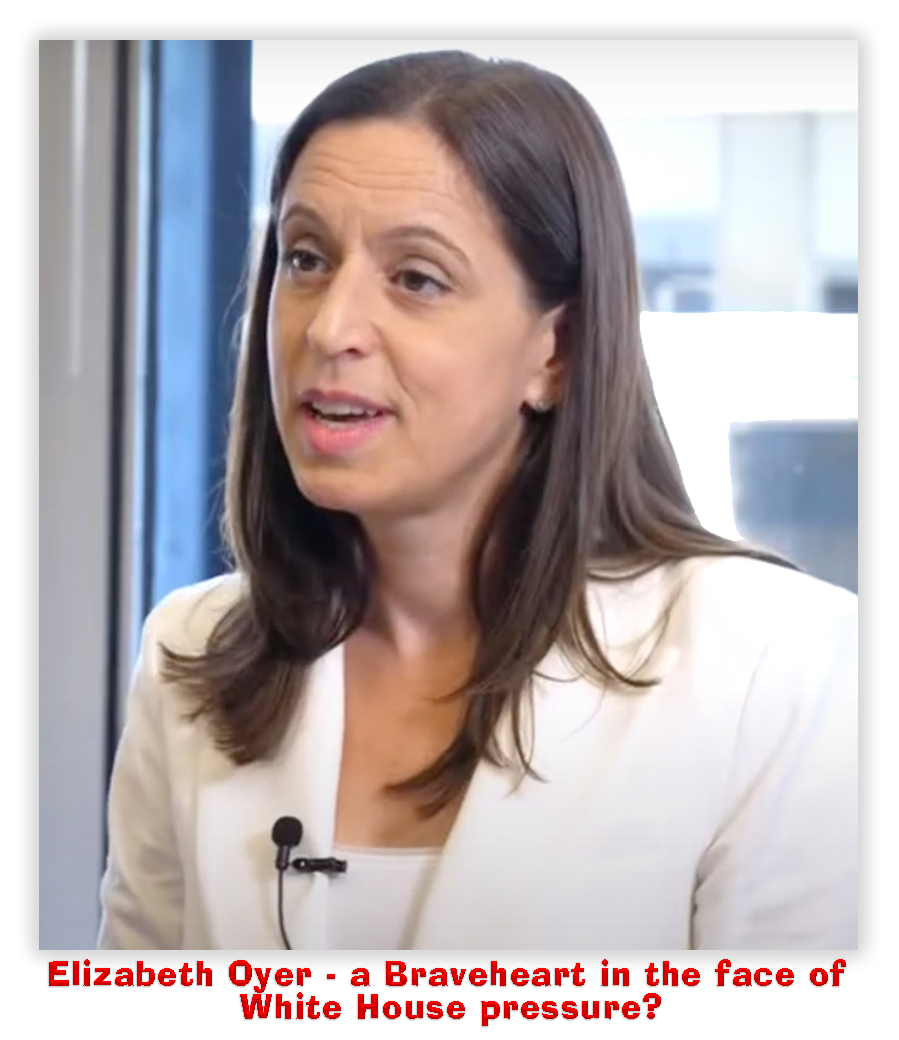
Elizabeth Oyer, who headed OPA when Trump came into office, was the first former public defender to serve as Pardon Attorney. Her staff of 45 was responsible for reviewing the cases of thousands of offenders to determine who was worthy of clemency. But within hours of President Trump taking office, “she was cut out of the process, which was rerouted from the top down.” Oyer told New York that she began learning about Trump clemency grants “when they popped up in the news.”

Oyer was fired last March when she refused to agree that actor and friend of Trump Mel Gibson should have his gun rights restored. Gibson was disqualified under 18 USC § 922(g)(9) because of a misdemeanor conviction for violence against his ex-girlfriend and the mother of his 1-year-old daughter at the time.  New York described Oyer’s firing as “a death knell for the office, according to some former staffers.”

“The office has been totally decimated,” an ex-staffer was quoted as saying. The office is down from 45 to about 15 employees. Many took buyouts when Elon Musk’s DOGE offered them last April. “Others,” New York said, “quit rather than stick around in an office where their work was being ignored.” (DOJ, of course, denies that OPA has been sidelined).

Two people appear to be in charge. Alice Marie Johnson, the “pardon czar” Trump appointed a year ago – a former federal prisoner serving life for a cocaine trafficking conspiracy before Trump commuted her sentence in 2018 (and later upgraded her to a full pardon) – works out of the White House. “Some ex-staffers hoped Johnson would maintain the office’s mission-based work…” one former OPA employee said. “But I don’t know that she has a staff,” says another former employee.

The official head of OPA is Edward Martin, named Pardon Attorney as a consolation prize after he was found to be too controversial to pass the Senate appointment process to be US Attorney for Washington, D.C. New York reported that Martin is uninterested in the Pardon Attorney position and apparently appears at the office about once a week.  “He’s just not there that much,” the staffer said.

The best way to obtain clemency in the current environment is to pay big in order to go around OPA. Lobbying for clemency is big business. Billionaire Changpeng Zhao, who violated money-laundering prevention statutes at his crypto exchange, Binance, was pardoned last fall, about a month after hiring the lobbying firm of Donald Trump Jr.’s friend Ches McDowell. The cost for a month’s lobbying? $450,000. (It helped that Binance was also a major backer of the Trump family’s cryptocurrency stablecoin). Nursing-home magnate Joseph Schwartz paid conservative lobbyists nearly $1 million last April to lobby for a pardon on tax-fraud charges; by November, Schwartz was free.

“Attorneys close to Trump are now seeking fatter fees,” New York reported. “Rudy Giuliani was reportedly shopping around a $2 million price last year. One former pardon-office lawyer… said they were hearing lobbyists go as high as $5 million to work their connections in the White House.”

Last Tuesday, in his State of the Union address, Trump asked that Congress “pass tough legislation to ensure that violent and dangerous repeat offenders are put behind bars and importantly, that they stay there.” Trump is not a friend of federal inmates who have neither connections nor a lot of money. Yet I hear weekly from prisoners believing that Trump is about to grant a large number of commutations to federal prisoners.

Not likely. All that is certain is that OPA has been broken and made irrelevant by the White House. “It’s heartbreaking,” one attorney who left OPA shortly after Oyer was fired told New York. “It’s not that they’re doing it differently that makes it heartbreaking. It’s that it’s corrupt.”

New York magazine, Trump’s Pardon Office Is ‘Totally Decimated’ The team has been virtually replaced by highly paid lobbyists and friends of the president. (February 27, 2026)

Politico, Trump showcases gruesome stories throughout the night (February 24, 2026)

~ Thomas L. Root

‘Fortunate Sons’ and Clemency In The Trump Era – Update for January 22, 2026

We post news and comment on federal criminal justice issues, focused primarily on trial and post-conviction matters, legislative initiatives, and sentencing issues.

TRUMP PARDONS 13, COMMUTES 8

For those who think that the old can be new again, recall Creedance Clearwater Revival’s 1969 protest song, Fortunate Son, and lay those lyrics next to President Donald Trump’s clemencies granted last week to 13 people (pardons) and 8 people (sentence commutations).

The pardons included five people who had served their sentences years ago, one woman whom Trump had pardoned five years ago for a fraud who was now indicted for a new fraud, and three currently facing a political bribery scandal in Puerto Rico.

The commutations included one mortgage fraud defendant serving 62 months and seven drug cases, two of whom were serving life sentences and four others serving 20 years or more.

One of the commutations went to James Phillip Womack — son of Arkansas Republican Congressman Steve Womack — who was sentenced in May of last year to eight years behind bars after being convicted of methamphetamine distribution.

The clemencies garnering the most reporting were pardons of Puerto Rico’s former governor, Wanda Vázquez Garced, who pled guilty last year in a federal public corruption case, and her two co-defendants, her aide Mark Rossini and billionaire Venezuelan-Italian banker Julio Martin Herrera Velutini.

Herrera Velutini’s daughter, Isabel Herrera, donated $2.5 million in December 2024 and $1 million last July to the pro-Trump political action committee MAGA Inc., according to public records. A White House official told CBS News that the donations had nothing to do with the pardon.

In a related story, the Washington Post reported yesterday that the pardoned January 6th defendants are demanding return of restitution payments paid as part of their criminal sentences. A judge ruling on a demand of one of them, Yvonne St. Cyr (who served half of her 30-month sentence before being pardoned), said in an order returning her $2,270.00), “Sometimes a judge is called upon to do what the law requires, even if it may seem at odds with what justice or one’s initial instincts might warrant. This is one such occasion.”

The Post said, “The ruling revealed an overlooked consequence of Trump’s pardon for some Jan. 6 offenders: Not only did it free them from prison but it emboldened them to demand payback from the government. At least eight Jan. 6 defendants are pursuing refunds of the financial penalties paid as part of their sentences, according to a Post review of court records… Others are filing civil lawsuits against the government seeking millions of dollars, alleging politically tainted prosecutions and violations of their constitutional rights. Hundreds more have filed claims accusing the Justice Department, the FBI and other law enforcement agencies of inflicting property damage and personal injuries, according to their lawyer.”

Washington Monthly observed last week that

It is safe to say that Trump’s abuse of the pardon power has no parallel in American history. Almost every president has granted a few that seem dodgy in retrospect; many have used them as an instrument of partisan politics; a few have used them as instruments of corruption. But in extent and scale, Trump’s pardons fall well below the subterranean ethical floor established even over the past 50 years. In pardoning 1,500 rioters convicted of involvement in the January 6 insurrection, Trump showed contempt for the law enforcement officers who protected the Capitol, and the system of government they preserved. His other pardons, from crypto fraudsters to foreign drug lords, reek with contempt for the very idea of law. Trump is also the first president to claim the power to undo a predecessor’s pardons, and the first to claim the power to pardon an offender convicted by a state, not the federal government. 

DOJ, Pardon and Commutations (January 15, 2026)

CBS, Trump Pardons Puerto Rico’s former governor Wanda Vázquez (January 16, 2026)

KATV, Trump commutes prison sentence of congressman’s son convicted in federal drug case (January 17, 2026)

Washington Post, They ransacked the U.S. Capitol and want the government to pay them back (January 20, 2026)

Washington Monthly, Amnesty Transactional (January 14, 2026)

~ Thomas L. Root

No One’s Pardoning Trump’s Use of Pardon Power – Update for January 8, 2026

We post news and comment on federal criminal justice issues, focused primarily on trial and post-conviction matters, legislative initiatives, and sentencing issues.

NO ONE’S HAPPY ABOUT PRESIDENT TRUMP’S EPIC CLEMENCY PARADE

If there is a unifying thread of reaction to President Trump’s unprecedented train of pardons and commutations in 2025, it’s one of disquiet.

Trump granted clemency this year to over 1,600 people. The biggest tranche was the first one – 1500-plus people getting clemency (14 just commutations, the rest pardons) for the January 6, 2021, riot. Since then, he has commuted another 13 sentences and pardoned 72 others. For a range of figures, Trump said he viewed them as victims of an unfair justice system. Some were tied to his newfound interest in cryptocurrency or shared in his 2020 election grievances, while another (a Texas developer involved in bid-rigging) was simply brought up to Trump during a round of golf with a Republican buddy.

Twenty of the pardons went to businessmen, 16 to politicians, five to celebrities, 24 to anti-abortion activists, and 12 to people convicted of other non-drug offenses.  Only eight were for drug crimes, and those included the guy who started the Silk Road deep-web drug bazaar and a former Honduran president.

More than half of the acts of clemency for named individuals relate to prosecutions pursued by the Biden Dept of Justice — in addition to the Jan 6 cases.

Even Fox News was critical, saying, “While presidents of both parties have long used their pardon power in controversial ways, Trump’s clemency activity in 2025 stood out for its volume and for the deal-making style that has been a defining feature of his approach to power.” Fox listed Trump’s most controversial clemencies as including the Jan 6 rioters, Texas congressman Henry Cuellar (bribery charges, not yet to trial), the Chrisleys, former congressman George Santos (widespread fraud), and former Honduran president Juan Orlando Hernandez (serving a 45-year sentence for the same charges just made this past weekend against Nicholas Maduro and his wife).

Attorney Mitch Jackson, writing on Substack, said Trump had “corruptly commodified one of the most potent parts of the presidency and turned it into a product to be sold to the highest bidder.”

The scheme works like this: People seeking clemency pay about $1 million to hire well-placed lobbyists within the administration who then work to secure a pardon from Trump. If those pardons are successful, the person receiving clemency may also pay a six-to-seven-figure “success fee” after the president signs the paperwork guaranteeing their release, according to the essay.

In one instance, Donald Trump, Jr., introduced a lobbyist named Ches McDowell to the president while McDowell was seeking a pardon for Changpeng Zhao, the billionaire founder of Binance. Binance reportedly paid $800,000 to McDowell for the work and then offered a success fee of more than $5 million once Zhao was freed.

Trump pardoned Zhao, who had been convicted of money laundering, last October. Whether a success fee was paid, and if so for how much, has not been reported. However, Rep Maxine Waters (D-CA) claimed that Zhao “spent months lobbying Trump and his family while funneling billions into Trump’s personal crypto company,” World Liberty Financial. Reports indicate Binance parked $2 billion in WLFI’s stablecoin, generating about $80-87 million annually. The Trump family owns 60% of WLFI, meaning that Binance’s deposit meant the family could receive $48-52 million in passive income.

Jackson wrote:

In Donald Trump’s Washington, freedom has a price tag. The presidential pardon, one of the most serious powers granted by the Constitution, now looks like a product on a shelf. Picture what this means in real life. If you or someone you love faced an unjust sentence, would you have a million dollars for a broker. Most families do not. Your petition would sit in a stack, waiting for a formal review that can take years. Meanwhile, a billionaire pays for a direct line, and the request reaches the President through a family member at a ceremony. The system looks less like equal justice and more like a private club with a cover charge.

A cottage industry has arisen of lobbyists seeking clemency for a wide variety of clients. David Schoen, one of Trump’s former impeachment lawyers is following the same pardon playbook that has rewarded allies of the president and been driven by a desire for political retribution.

Schoen is representing two mobsters who were sentenced to life in 1992. In a Christmas Eve letter to Trump, Schoen sought clemency by arguing that they had been unfairly convicted by prosecutor Andrew Weissmann—a foe of Trump’s who led FBI director Robert Mueller’s special counsel team that investigated Russian interference in the 2016 election.

Wall Street Journal, A Visual Breakdown of Trump’s Pardon Spree (December 10, 2025)

Raw Story, ‘Disturbing’: Lawyer exposes how Trump shredded a ‘core promise’ of American law (December 28, 2025)

Benzinga, Trump Pardoned 3 Crypto Felons In 10 Months—Here’s What Each One Cost (January 2, 2026)

Fox News, Deal-making clemency: Inside Trump’s most disputed pardons of 2025 (December 30, 2025)

Free Press, Ex-Trump Lawyer Lobbies to Free Mobsters Prosecuted by an Enemy of the President (December 31, 2025)

~ Thomas  L. Root

A Compassionate Release Win for Commutees – Update for January 6, 2026

We post news and comment on federal criminal justice issues, focused primarily on trial and post-conviction matters, legislative initiatives, and sentencing issues.

COMMUTATION DOESN’T NEGATE COMPASSIONATE RELEASE

In 2012, Jonathan Wright was sentenced to life imprisonment after a federal drug conviction. In 2024, he filed an 18 USC § 3582(c)(1) compassionate release motion based on First Step Act changes in 21 USC § 841(b)(1)(A)  mandatory minimum sentences.

The district court reduced Jon’s sentence to 420 months followed by 10 years of supervised release but never addressed Jon’s argument that his prior Arkansas convictions no longer qualified as predicate offenses for his sentence enhancement.

Jon appealed, arguing that the district court should have reduced his sentence even more. While the appeal was pending, President Joe Biden commuted Jon’s sentence to 330 months last January.

The government argued that Biden’s commutation should moot Jon’s appeal, and even if it didn’t, the Arkansas statute’s overly broad definition of controlled substance should nevertheless be read to be consistent with federal law.

Last week, the 8th Circuit gave Jon a late stocking stuffer.

Although the Circuits are split on the question, the 8th ruled that Biden’s commutation did not moot Jon’s compassionate release motion. The President’s power to commute criminal sentences derives from the Constitution – the Article II power to “grant Reprieves and Pardons.” “A commuted sentence,” the Circuit held, “does not become ‘an executive sentence in full’ but instead remains a judicial sentence – but one that the executive will only enforce to a limited extent.

As for Jon’s prior convictions under Arkansas § 5-64-401, the 8th observed that the statute incorporated a state Dept of Health regulation that defined a “narcotic drug” to include all cocaine isomers, while federal felony drug offenses encompass only optical and geometric cocaine isomers. Circuit precedent holds that a state drug statute that criminalizes even “one additional isomer” of cocaine beyond what the federal statute proscribes cannot produce a predicate felony drug offense for federal sentencing purposes.

The Circuit ruled that the district court’s decision to not consider that Jon’s priors no longer counted under § 841(b)(1)(A) when ruling on his compassionate release motion “was based on an erroneous legal conclusion and accordingly was an abuse of discretion.” When resentencing Jon on remand, the 8th directed, the “district court is required only to considerthat Jon ‘s prior convictions no longer qualify as predicate offenses for his sentence enhancement. The district court is not required to accept this point as a reason to further reduce Jon’s sentence.”

This opinion is significant, ruling in essence that at least in the 8th Circuit, changes in the law creating gross disparities between the existing sentence and the sentence if imposed today have a substantial role in the compassionate release calculus.

United States v. Wright, Case No. 24-2057, 2025 U.S. App. LEXIS 33882 (8th Cir. December 30, 2025)

~ Thomas  L. Root

A Year of Presidential Clemencies Bring Little Hope for Federal Prisoners- Update for December 29, 2025

We post news and comment on federal criminal justice issues, focused primarily on trial and post-conviction matters, legislative initiatives, and sentencing issues.

CLEMENCY YEAR IN REVIEW

The conservative Washington Examiner last week reviewed President Trump’s unprecedented first-year clemency record of more than 1,600 people. The report was not favorable.

The lesson from over 11 months of Trump’s pardons and commutations is clear: if you don’t have rich parents, a MAGA flag and hat, or a means of enriching the Trump family, your odds of clemency rival those of winning the Powerball.

“On his first day back in office, Trump issued sweeping pardons for those tied to the Jan. 6 attack on the U.S. Capitol,” the Examiner wrote. “In November, he also moved preemptively to pardon several political allies, including Rudy Giuliani, former chief of staff Mark Meadows, and attorneys Sidney Powell and John Eastman, even though none were facing federal criminal charges at the time.”

The Examiner then listed Trump’s five most controversial clemency actions. Top of its list was the clemency for drug black market operator Ross Ulbricht last February, whom Trump promised to pardon when he pitched the Libertarian Party convention in 2024 for political support. Trump paid off within a month of taking office.

Second on the list was the pardon of Changpeng Zhao, founder of Binance, the world’s largest cryptocurrency exchange. Zhao was sentenced to four months in prison in April 2024 after pleading guilty to money laundering. Zhao and Binance have been key supporters of the Trump family’s crypto enterprises.

Third was former congressman George Santos, a serial liar sentenced in April to seven years in federal prison after pleading guilty to fraud and identity theft. Santos served about four months in a camp before being pardoned. The Examiner also cited this month’s pardon of former Honduran president Juan Orlando Hernandez, who had been serving a 45-year sentence at USP Hazelton for a massive drug trafficking operation that moved more than 400 tons of cocaine into the United States. Reports at the time suggested Trump sought to influence the Honduran presidential election, going on at the time.

For the final pardon on its “top five” list the Examiner noted this month’s pardon of Rep Henry Cuellar (D-TX), charged but not yet convicted of bribery and money laundering. In a Truth Social post, Trump said he never spoke to Cuellar or anyone in his family, but he felt good about “fighting for a family that was tormented by very sick and deranged people – They were treated sooo BADLY!” Of course, Cuellar is a Democrat, which makes it unlikely that a Biden Administration Dept of Justice would have targeted him unfairly.

Ironically, Trump responded in fury a few days after the pardon, as Cuellar filed to run again as a Democrat rather than turning Republican out of “loyalty” to the President.

The Washington Post reported that at least 20 people who have received clemency from Trump so far this year were also forgiven of restitution totaling tens of millions of dollars. For some, restitution was more onerous than the sentence. Paul Walczak, a health care executive convicted of willfully failing to pay over $4 million in taxes withheld from his employees and willfully failing to file individual tax returns, was sentenced in April to 18 months in prison. He was pardoned before serving a day, wiping out his $4 million restitution obligation to the IRS.

The common thread connecting almost all of Trump’s clemencies is that the beneficiaries had committed offenses with political import, had money ties to Trump or were supporters of the President.  The Jan 6 rioters fell into the first category. Walczak’s pardon came after his mother had raised millions of dollars for Trump’s campaigns and was involved in an effort to sabotage President Biden’s 2020 campaign by publicizing the addiction diary of his daughter Ashley, an episode that The New York Times said “drew law enforcement scrutiny.”

Trevor Milton, convicted of lying to investors to pump the stock of his company, electric vehicle maker Nikola, was sentenced to four years in prison and over $600 million  In discussing the pardon, which left investors high and dry, In describing his decision to pardon Milton, Trump said, “And they say the thing that he did wrong was he was one of the first people that supported a gentleman named Donald Trump for president. He supported Trump. He liked Trump.”

The transactional nature of Trump’s presidency was brought home a few weeks ago in an unusual quid pro quo raised in a video last week by former Pardon Attorney Elizabeth Oyer. You may recall that the Obama Administration brought a sprawling fraud case against FIFA and over 30 other defendants. The remnants of that case are now in front of the Supreme Court in petitions for certiorari brought by two defendants.

Earlier this month, world soccer organization FIFA announced a new “peace prize” that would be bestowed on a recipient who has taken “exceptional and extraordinary actions for peace and by doing so have united people across the world.” The inaugural FIFA “Peace Prize,” unsurprisingly, was awarded to President Trump on December 5.

Four days later, the DOJ filed a F.R.Crim.P. 48 motion to dismiss the indictment “in the interests of justice.”   In a Facebook post, Oyer reported that the dismissal came over the objection of the line prosecutor who had obtained the convictions.  She said, “This is a huge deal because it could also unravel dozens of other convictions of soccer officials and sports executives. It could also mean that the government has to return hundreds of millions of dollars in penalties paid by these people. It’s also a big deal because it’s an example of corruption at work. In Trump’s America, justice can be bought: all it takes is a shiny object or a large check.”

Washington Examiner, Trump’s five most controversial pardons of 2025 (December 25, 2025)

Washington Post, Trump’s pardons wipe out payments to defrauded victims (December 19, 2025)

New York Times, Trump Pardoned Tax Cheat After Mother Attended $1 Million Dinner (May 27, 2025)

CNN, What is the FIFA Peace Prize and why did Donald Trump win? (December 5, 2025)

Facebook, Days after FIFA gave him a medal, Trump’s DOJ started dismantling a major corruption prosecution (December 22, 2025)

~ Thomas L. Root

Deja Vu All Over Again – Update for December 8, 2025

We post news and comment on federal criminal justice issues, focused primarily on trial and post-conviction matters, legislative initiatives, and sentencing issues.

TRUMP TRIES TO VOID BIDEN CLEMENCIES

I have previously reported that last Tuesday, President Trump wrote on his inaptly-named “Truth Social” that he was declaring an untold number of President Biden’s clemencies to be of “no further force or effect” because Trump said the proclamations had been signed with an autopen as opposed to being “directly signed by Crooked Joe Biden.”

(Trump’s reference to Biden as “crooked” has a certain ‘pot calling the kettle black‘ quality to it, but we’ll leave that alone for now).

Forgive me for reprinting the portions of this post you may have already read. I built on last Thursday’s content for LISA’s newsletter to federal prisoners and their families published last night, and it seemed to me that there was enough new content to warrant a partial repost. Like the great philosopher Yogi Berra said, “It’s deja vu all over again.”

Tuesday night, Trump ranted on Truth Social that he was voiding all pardons and commutations that were signed by Biden with an autopen:

“Any and all Documents, Proclamations, Executive Orders, Memorandums, or Contracts, signed by Order of the now infamous and unauthorized “AUTOPEN,” within the Administration of Joseph R. Biden Jr., are hereby null, void, and of no further force or effect. Anyone receiving “Pardons,” “Commutations,” or any other Legal Document so signed, please be advised that said Document has been fully and completely terminated, and is of no Legal effect.”

Trump has often claimed that Biden used the autopen, a mechanical device that allows signatures without a person using their hand, because of the former president’s physical and mental frailty. Biden issued 4,245 acts of clemency during his four years in office, more than any other US president since the start of the 20th century, according to Pew Research Center. Before leaving office last January, he issued several pardons — including for family members — and commuted sentences for about 1,700 drug offenders.

No one has reported whether Biden used an autopen to sign any of the pardons or commutations, but that has not deterred Trump from claiming he did.

Most of the clemencies were commutations rather than pardons. Biden only issued 80 individual pardons, but he did issue “pardons by proclamation” which affected entire classes of people. The pardons by proclamation included one for former military service members convicted of violating a ban on gay sex and people convicted of certain federal marijuana nontrafficking offenses.

David Super, a constitutional and administrative law professor at Georgetown University, told Government Executive last spring that “the Constitution does not require signatures for pardons. It simply says the president has the power to pardon.”

“So if President Biden wanted to simply verbally tell someone they’re pardoned, he could do that. It wouldn’t have to be in writing at all,” he said. “Administratively, of course, we want things in writing… but there’s no constitutional requirement.”

If Trump were to try to rearrest someone who received clemency in order to return them to prison, legal experts predict the actions would be unlikely to stand. “I can’t imagine the court saying that it wasn’t a valid pardon because of the autopen issue,” Stanford University Law School professor Bernadette Meyler told The Daily Signal. “Biden made statements regarding these pardons, so it would be hard to show that they weren’t a decision of the President.”

To reverse the pardons, DOJ would have to act, and the courts would have to resolve the question. “If Biden never authorized it, it’s an invalid pardon anyway,” Paul Kamenar, counsel for the National Legal and Policy Center, explained.

Ironically, Trump’s recent pardon of people “for conduct relating to support, voting… or advocacy for or of any slate or proposed slate of Presidential electors… in connection with the 2020 Presidential Election” is so vague and limitless that it could apply to thousands of people. In an Eastern District of Pennsylvania case of a man accused of voting both in Pennsylvania and Florida back in 2020 (he says he voted for Trump in both places), the defendant has moved to dismiss the indictment by claiming the pardon applies to him, too.  The Dept of Justice has argued in that case that it’s up to Attorney General Pam Bondi and Pardon Attorney Edward Martin to decide who, and which possible crimes, Trump actually meant to cover.

Politico reported last week that there’s neither historical nor modern precedent for a president to delegate his pardon power to subordinates on a pardon this vaguely worded. In fact, it is remarkably similar to what Trump has accused Biden of having done.

Other clemency issues will be more difficult to litigate if it means reincarceration or returning old penalties, said John Malcolm, director of the Meese Center for Legal and Judicial Studies at The Heritage Foundation.

“This is totally unprecedented territory,” Malcolm told The Daily Signal. “Normally pardons and grants of clemency, for example, are not subject to challenge since a president’s pardon power is plenary.”

“Here, the issue will be litigated when Trump takes some action that runs contrary to what Biden did–such as seeking to reincarcerate someone who was pardoned or granted clemency or setting an execution date for one of the 37 death row inmates whose sentences Biden commuted–and then we’ll see what a court does,” Malcolm added.

Trump’s move is a key first step. “The bigger threat that President Trump has brought to the public’s attention is the idea of unelected staffers exercising power they don’t have,” Stewart Whitson of the Foundation for Government Accountability told The Daily Signal. “It could be at the behest of a well-funded organizations or even foreign funding pushing unelected bureaucrats to act.”

Newsweek, Trump Says All Pardons, Commutations Signed by Biden Autopen ‘Terminated’ (December 2, 2025)

Government Executive, Trump says he is voiding Biden executive actions signed with autopen (December 1, 2025)

Stanford Law School, Why Trump Can’t ‘Void’ Biden’s Pardons Because of Autopen (March 17, 2025)

Government’s Opposition to Defendant’s Motion to Dismiss the Indictment (ECF 23), United States  v. Weiss, Eastern District of Pennsylvania, filed November 28, 2025

Politico, DOJ claims it has the power to decide who gets Trump’s sweeping 2020 pardon (December 4, 2025)

Daily Signal, What’s Next After Trump Voids Biden Autopen Orders? (December 4, 2025)

~ Thomas L. Root

I Really Do Hate To Say ‘I Told You So’ – Update for December 4, 2025

We post news and comment on federal criminal justice issues, focused primarily on trial and post-conviction matters, legislative initiatives, and sentencing issues.

TRUMP TRIES TO VOID BIDEN CLEMENCIES

On Tuesday, I warned that President Trump wrote last week on the inaptly-named “Truth Social” that he considered “[a]ny document signed by Sleepy Joe Biden with the Autopen, which was approximately 92% of them,” to be of “no further force or effect.” Trump said he was overturning all the executive orders under the Biden administration and “anything else that was not directly signed by Crooked Joe Biden.”

I speculated that “anything else” might include clemencies, but that Trump had not yet tried to void any of them. But that was Tuesday morning. On Tuesday night, Trump ranted on Truth Social that he had voided all pardons and commutations that were signed by his predecessor, President Joe Biden, with an autopen:

Any and all Documents, Proclamations, Executive Orders, Memorandums, or Contracts, signed by Order of the now infamous and unauthorized “AUTOPEN,” within the Administration of Joseph R. Biden Jr., are hereby null, void, and of no further force or effect. Anyone receiving “Pardons,” “Commutations,” or any other Legal Document so signed, please be advised that said Document has been fully and completely terminated, and is of no Legal effect. Thank you for your attention to this matter!

Trump has repeatedly claimed without citing any evidence that Biden’s use of the autopen, a mechanical device that allows signatures without a person using their hand, resulted from the former president’s physical and mental frailty. Biden issued a record 4,245 acts of clemency during his four years in office, more than any other US president since the start of the 20th century, according to the non-partisan Pew Research Center. It is not known whether Biden used an autopen to sign pardons.

Before leaving office in January, Biden issued several pardons — including for family members he said he wanted to shield from politically motivated investigations — and commuted sentences for a number of nonviolent drug offenders. Trump, known for his criticism of political rivals, has repeatedly seized on Biden’s use of the autopen to sign official documents during his presidency.

Most of the clemencies were commutations rather than pardons. Biden only issued 80 individual pardons, but he did issue “pardons by proclamation” which affected entire classes of people. The pardons by proclamation included one for former military service members convicted of violating a ban on gay sex and people convicted of certain federal marijuana nontrafficking offenses.

David Super, a constitutional and administrative law professor at Georgetown University, told Government Executive last spring that “the Constitution does not require signatures for pardons. It simply says the president has the power to pardon.”

“So if President Biden wanted to simply verbally tell someone they’re pardoned, he could do that. It wouldn’t have to be in writing at all,” he said. “Administratively, of course, we want things in writing. It makes things a lot simpler, but there’s no constitutional requirement.”

If Trump were to try to prosecute or arrest someone who received clemency in order to return them to prison, legal experts predict the actions would be unlikely to stand. “I can’t imagine the court saying that it wasn’t a valid pardon because of the autopen issue,” says Stanford University Law School professor Bernadette Meyler. “Biden made statements regarding these pardons, so it would be hard to show that they weren’t a decision of the President.”

Of course, as he has already demonstrated, Trump is unlikely to shrink from trying to reimprison someone simply because no one believes his power extends to such an action.

Newsweek, Trump Says All Pardons, Commutations Signed by Biden Autopen ‘Terminated’ (December 2, 2025)

Government Executive, Trump says he is voiding Biden executive actions signed with autopen (December 1, 2025)

Time, Why Trump Can’t ‘Void’ Biden’s Pardons Because of Autopen (March 17, 2025)

~ Thomas L. Root

Most Recent Pardons Don’t Bode Well For Federal Clemency – Update for December 2, 2025

We post news and comment on federal criminal justice issues, focused primarily on trial and post-conviction matters, legislative initiatives, and sentencing issues.

PARDONS FROM THE SUBLIME TO THE WEIRD

President Trump conducted the annual turkey pardon on the Tuesday before Thanksgiving, sparing “Waddle” and “Gobble” from the processing house.

At the same time, he extended the pardon to the Peach and Blossom, the two turkeys President Biden pardoned last year. Trump contended that Biden’s pardon of the birds was invalid because it was signed with an autopen instead of by Biden himself.

“The turkeys known as Peach and Blossom last year have been located, and they were on their way to be processed, in other words to be killed, but I stopped that journey and I am officially pardoning them,” Trump said.

Last Friday, Trump wrote on Truth Social: “Any document signed by Sleepy Joe Biden with the Autopen, which was approximately 92% of them, is hereby terminated, and of no further force or effect. The Autopen is not allowed to be used if approval is not specifically given by the President of the United States.” 

Trump also said that he has now overturned all the executive orders under the Biden administration and “anything else that was not directly signed by Crooked Joe Biden.”

Unless it’s an autopen doing the signing

It is not clear what “anything else that was not directly signed by Crooked Joe Biden” might include, such as clemencies. However, any notion that pardons might be excluded was undercut by Trump’s comments during the turkey pardon. Trump has previously suggested that Biden’s clemencies were illegal, but he has not yet tried to void any of them. His recent actions suggest that such an attempt is not out of the question.

Trump continues to issue clemencies one at a time, even where doing so contradicts his policies. In a Saturday social media post, Trump said that drug cartels present one of the most pressing dangers to the USA, saying in a social media post that airspace above and surrounding Venezuela should be considered “CLOSED IN ITS ENTIRETY.”

But this pronouncement followed Trump’s Friday social media announcement of a pardon for Juan Orlando Hernández, former president of Honduras, who was convicted of drug trafficking charges and has 35 years to go on his 45-year federal sentence.

The New York Times said, “The two posts displayed a remarkable dissonance in the president’s strategy, as he moved to escalate a military campaign against drug trafficking while ordering the release of a man prosecutors said had taken “cocaine-fueled bribes” from cartels and “protected their drugs with the full power and strength of the state — military, police and justice system.”

Trump said he had issued the pardon to Hernández because “they gave him 45 years because he was the president of the country — you could do this to any president on any country.”  Trump said that friends had alerted him to the wrongs done to Hernández: “Many people that I greatly respect” had told him Hernández had been “treated very harshly and unfairly.”

“Why would we pardon this guy and then go after Maduro for running drugs into the United States,” wrote Sen. Bill Cassidy (R., La.) on X. “Lock up every drug runner! I don’t understand why he is being pardoned.”

Meanwhile, just in case you think Trump’s pardon czar Alice Marie Johnson has gone dormant, she said in a Thanksgiving social media post that Trump had commuted the 7-year sentence of a private equity executive who had served less than two weeks for his role in what prosecutors described as a $1.6 billion scheme that defrauded thousands of victims.

David Gentile reported to prison on November 14th and suffered horribly in a minimum-security camp for nearly two weeks before being released on Thanksgiving Eve, according to the BOP. Alice Johnson said that she was “deeply grateful to see David Gentile heading home to his young children” and called it an “act of mercy.”

A White House official used the old refrain of “Biden something something,” suggesting that the Biden administration’s Ponzi scheme claim against Gentile’s company – good enough to convince a unanimous jury – was nevertheless “profoundly undercut by the fact that GPB had explicitly told investors what would happen… At trial, the government was unable to tie any supposedly fraudulent representations to Mr. Gentile.” The White House official spoke on condition of anonymity due to not being authorized to speak on the topic.

Ironically, we have always advised people seeking clemency that arguing the unjustness of their conviction was strongly disfavored.  Apparently, that’s the case no longer.

ABC News, Trump’s turkey pardoning turns political, but Waddle and Gobble are spared (November 25, 2025)

NBC, Trump ‘cancelling’ Biden executive orders signed by autopen (November 28, 2025)

New York Times, In Announcing Pardon of Drug Trafficker While Threatening Venezuela, Trump Displays Contradictions (November 29, 2025)

Wall Street Journal, He Was Convicted of Running a Narco State. Now Trump Plans to Pardon Him. (December 1, 2025)

Reuters, Trump frees former GPB Capital CEO after Biden admin’s Ponzi scheme sentence (November 30, 2025)

X.com, Alice Marie Johnson – All Grace (November 27, 2025)

~ Thomas L. Root