Tag Archives: second amendment

Supremes Still Dodging § 922(g)(1) Constitutionality – Update for April 16, 2026

We post news and comment on federal criminal justice issues, focused primarily on trial and post-conviction matters, legislative initiatives, and sentencing issues.

922(g) CONSTITUTIONALITY STILL UNSETTLED

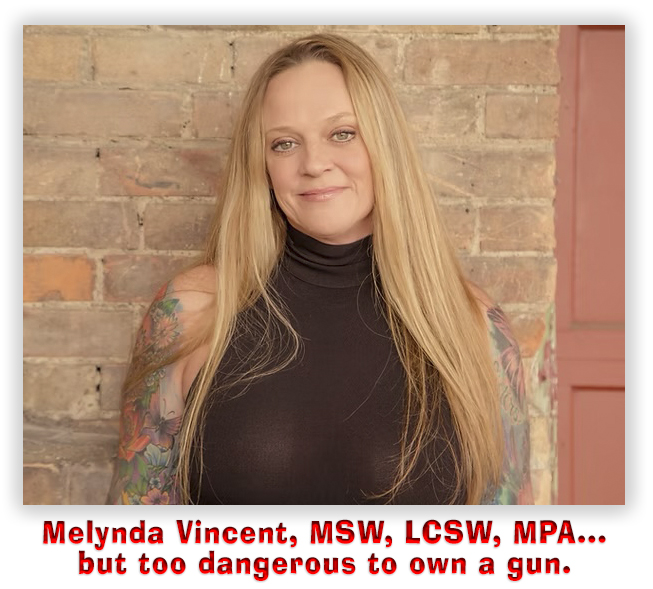
The Supreme Court last month denied certiorari to a dozen pending 18 USC § 922(g)(1) petitions for review filed by people who argued that the statute – which prohibits possession of guns by a variety of different classes of people from wife-beaters to dopers to ex-felons – violates the 2nd Amendment as applied to them. These included what I thought was the best felon-in-possession case before it, Vincent v. United States.

The Vincent petitioner had a felony bad-check charge from 15 years before, but had since beaten her substance abuse, obtained a master’s degree and opened her own substance abuse counseling clinic. The 10th Circuit held that § 922(g)(1) constitutionally prevented her from owning a gun. After multiple relistings, SCOTUS decided it would not use Vincent to address the limitations of § 922(g)(1).

Last week, SCOTUSBlog reviewed the status of Supreme Court gun litigation. With respect to § 922(g)(1), it noted that “Justice Amy Coney Barrett is already on record opining that § 922(g)(1) is unconstitutional as applied to individuals convicted of non-violent crimes. After all, the historical tradition recognized in Rahimi extends only to dangerous individuals.” Several lower courts have agreed.

There is a well-developed circuit split on the question. However, the justices seem to be opting to see how the lower courts decide cases in the wake of whatever guidance it will provide when it decides Hemani in the next 75 days.  

The government has been selective about seeking SCOTUS review in the felon cases it has lost in the lower courts, such as largely limiting itself to decisions involving drug use (most likely to be affected by the decision in Hemani). The United States has also argued that the court should await the results of a DOJ rulemaking to provide a process for ex-felons – such as President Trump – to win back their gun rights. But 2nd Amendment advocates argue that § 922(g)(1) is unconstitutional as applied to nondangerous felons, and a program that bestows gun rights on people the government deems deserving turns a constitutional right into a privilege.

Two weeks ago, the 7th Circuit ruled in two separate cases that 18 USC § 922(g)(1) was not unconstitutional on its face or as applied to a defendant. The Court cited a long list of cases from other circuits finding § 922(g) was consistent with the 2nd Amendment, and said, “It is enough to cite the decisions we have mentioned, plus United States v. Watson, which is being released contemporaneously. Watson and the decisions in other circuits say all that is necessary. As in Watson, we reserve decision on as-applied challenges by persons whose felony convictions do not suggest that firearms would be dangerous in their hands. Some courts of appeals allow such challenges; some do not; in this circuit the issue is open. For a person such as Prince, however, once the general validity of § 922(g)(1) has been established, there is nothing more to say.”

SCOTUSBlog, The who, what, and where of gun control (April 7, 2026)

United States v. Hemani, Case No. 24-1234 (argued March 2, 2026)

United States v. Prince, Case No. 23-3155, 2026 U.S.App. LEXIS 9596 (7th Cir. April 2, 2026)

United States v. Watson, Case No. 24-2432, 2026 U.S.App. LEXIS 9597 (7th Cir. April 2, 2026)

~ Thomas L. Root

Bo, Beer and Beatdowns: ‘How Dangerous is 922(g)(1) Defendant? – Update for March 23, 2026

We post news and comment on federal criminal justice issues, focused primarily on trial and post-conviction matters, legislative initiatives, and sentencing issues.

6th CIRCUIT EXPANDS ABILITY TO CHALLENGE FELON-IN-POSSESSION CONSTITUTIONALITY

Bo Hostettler is not a quick learner.  After doing 48 months in prison for being a felon in possession of a gun, a violation of 18 USC § 922(g)(1), Bo got caught while on supervised release with, you guessed it, a gun.

Charged again as a felon in possession, Bo argued that 922(g)(1) violated his 2nd Amendment rights, both on its face and as applied to his circumstances. His District Court agreed and dismissed the charges.

The Government appealed to the 6th Circuit. While the appeal was pending, the Circuit re-examined its 2nd Amendment jurisprudence in light of Bruen and Rahimi. The result of that was United States v. Williams, a 2024 decision in which the 6th upheld § 922(g)(1)’s constitutionality  “on its face and as applied to dangerous people. However, we explained that when the government disarms people on a class-wide basis, like it does for felons under § 922(g)(1), individuals must have a reasonable opportunity to prove that they don’t fit the class-wide generalization.”

The Williams court focused on the defendant’s prior convictions for aggravated robbery and attempted murder as “most probative of the defendant’s dangerousness... because they require violence against another person [and] provide at least strong evidence that the individual is dangerous. But even where a defendant has committed those types of crimes, we recognized that 922(g)(1) might be susceptible to an as-applied challenge depending on the unique circumstances of the offenses committed.”

In Bo’s case, the 6th said, the burden lies with him to show he is not dangerous. The district court must consider hisentire criminal history,  not just his felony convictions; and the fact that he was caught with a gun while on supervised release is “potentially relevant.”

The government argued that Bo’s criminal history recited in his Presentence Report was sufficient to prove Bo was dangerous. But the Circuit said that the PSR criminal history contained no information about the underlying circumstances or details of his criminal conduct in those convictions. “Without that information,” the 6th held, “the district court was unable to make the ‘individualized assessment of dangerousness’ that our precedent requires.”

The Circuit remanded Bo’s case to the district court ‘to engage in the requisite factfinding,’ where Bo will have the opportunity to essentially retry all of his prior convictions – misdemeanor and felony – to prove his lack of dangerousness.

Still, this case is important, because the Circuit has provided defendants a roadmap to prove lack of dangerousness, and that map suggests that mere labels – such as “theft” or “assault” yield to the facts of the offense. 

I recall an out-of-town man visiting my hometown about 30 years ago who had the bad luck to be black while enjoying a beer in one of our seedier establishments. Five not-so-black patrons who had consumed too much beer and not enough lessons in racial tolerance harassed him, finally calling him out back to teach him a lesson.

Sadly for the harassers, the black patron was a Marine Corps Force Recon veteran. All five tough guys were whimpering on the ground by the time the police arrived.

Our local prosecutor, understanding that the black out-of-towner did not vote in county elections, but the families of the five attackers did, charged the Marine vet with five counts of assault. The vet finally pled to one Ohio 5th-degree felony assault and got no prison time.

He also undoubtedly never came to this county again.

Hostettler seems to suggest that if the veteran wanted to own a gun, defending himself in a three-to-one contest (if you’re thinking ‘five-to-one’, see this) should be the kind of facts that convince the court that the Marine just wanted to drink his beer.

United States v. Hostettler, Case No 24-3403, 2026 USAppLEXIS 8328 (6th Cir. March 20, 2026)

United States v. Williams, 113 F.4th 637 (6th Cir. 2024)

~ Thomas L. Root

Medical Malpractice, Drunk Judges, Armed Dopers – Update for February 5, 2026

We post news and comment on federal criminal justice issues, focused primarily on trial and post-conviction matters, legislative initiatives, and sentencing issues.

ARE THESE SHORTS LEGAL?

Some legal case shorts from the last week:

(1)  BOP Pays Out on Inmate Death from Medical Malpractice –  George Thacker reported to FCI Edgefield camp for a 33-month sentence on December 9, 2022. On Christmas Day, he was so doubled over in pain that he could hardly walk. Instead of performing an exam or medical tests, health services staff gave him ibuprofen and sent him back to his unit.

George died the next day from complications due to a perforated duodenal ulcer and peptic ulcer disease. George’s daughter (who is executor of George’s estate) hired legal counsel and sued the BOP under the Federal Tort Claims Act, alleging medical malpractice.

Last week, George’s daughter and the US Attorney for South Carolina reached an agreement for the government to pay $750,000 to settle the claim. A petition was filed Tuesday seeking the court’s final approval on the settlement.

Motion to Approve Settlement and Legal Fees, Docket Entry 28, Wesolowski v. United States, Case No 6:25-cv-6675 (January 27, 2026)

Chattanooga Times Free Press, $750K settlement pending in former Rhea County executive’s 2022 death (January 29, 2026)

(2)     Will He Recommend RDAP for Himself? – U.S. District Judge Thomas Ludington (Eastern District of Michigan) goes to trial at the end of this month on a charge that he crashed a car while “super drunk” near his northern Michigan vacation home.

Last October, Judge Ludington, allegedly crashed his 2019 Cadillac CT6 into two traffic signs near Petoskey, disabling his Caddy and triggering at least one airbag.

He was charged on counts of operating a motor vehicle while intoxicated and operating with a high blood-alcohol content. The “super drunk charge” is punishable by up to 180 days in jail, a $700 fine, 360 hours of community service, and vehicle immobilization. In Michigan, a person is considered drunk with a blood-alcohol level hits 0.08. A person is considered super drunk when BAC hits 0.17. 

mLive, Federal Bay City judge charged in ‘super drunk’ crash in northern Michigan (January 27, 2026)

(3) 5th Circuit declares § 922(g)(1) unconstitutional as applied to defendant Charles Hembree was convicted of being a felon in possession of a firearm in violation of 18 USC § 922(g)(1) because of a single prior felony conviction for simple possession of methamphetamine. On appeal, Chuck argued that § 922(g)(1) was unconstitutional as applied to his situation.

Last week, the 5th Circuit agreed that convicting Chuck of § 922(g)(1) violated the 2nd Amendment. The Circuit ruled that there was no historical evidence that people possessing contraband that didn’t pose a danger to others were prohibiting from owning guns.

The 5th held that for possessing something prohibited to trigger prohibition on possessing a gun, the item had to be a weapon or something similar that harmed or could harm other people.

United States v. Hembree, Case No 24-60436, 2026 U.S.App. LEXIS 2051 (5th Cir. January 27, 2026)


~ Thomas L. Root

March Will Bring Cherry Blossoms and Supreme Court Arguments – Update for January 5, 2026

We post news and comment on federal criminal justice issues, focused primarily on trial and post-conviction matters, legislative initiatives, and sentencing issues.

SCOTUS SCHEDULES ARGUMENT ON TWO CRIMINAL CASES OF NOTE

The Supreme Court has issued its February oral argument schedule, including two cases of substantial interest to federal defendants and prisoners.

The two arguments actually fall the first week of March, not in February… but then this is the Supreme Court, where the last week of next June will still be “October Term 2025.” Nevertheless, we can be confident that before the cherry blossoms bloom along the Tidal Basin, we may have some idea of the high court’s thinking on two consequential criminal cases now before it.

The cases:  First, the one not getting much press but arguably the more important of the two is Hunter v. United States, a case that asks whether a federal appeals court properly dismissed a Texas man’s appeal of a mandatory-medication condition when he had waived his right to appeal as part of his plea agreement, but the judge who imposed the condition told him that he had a right to appeal.

The importance is this: Something like 94% of federal criminal cases end in guilty pleas, and virtually all of those pleas are entered pursuant to a written plea agreement between the defendant and the government. And virtually all of those agreements have the defendant agreeing to waive his or her rights to appeal, to file post-conviction attacks on their conviction and sentences, and to give up other rights – such as to seek compassionate release or even bring a Freedom of Information Act request for records from the government.

The Hunter issues before the Supreme Court include what, if any, are the permissible exceptions to waiver in a plea agreement, now generally recognized as only being claims of ineffective assistance of counsel or that the sentence exceeds the statutory maximum. A second issue is whether an appeal waiver applies when the sentencing judge advises the defendant that he or she has a right to appeal and the government does not object.

The Supreme Court case getting more attention is United States v. Hemani, in which the government is challenging a 5th Circuit ruling that 18 USC § 922(g)(3) – that prohibits an “unlawful user” of a controlled substance from possessing a gun – violates the 2nd Amendment as applied to the defendant. Mr. Hemani was a regular marijuana user but was not high while in physical possession of his handgun.`

Law Professor Joel Johnson, a former Supreme Court litigator with the Dept of Justice, recently argued in a SCOTUSBlog post that the Supreme Court could easily dispose of the Hemani case by relying on the rule of lenity instead of the 2ndAmendment. He said, “If the court decides that the law applies only to people who are armed while intoxicated, the 2nd Amendment concerns largely vanish. There is stronger historical support for disarming someone who is high – and thus not of sound mind – than there is for disarming someone who happened to smoke a joint last weekend but is no longer impaired.”

Also in a SCOTUSBlog post, NYU Law Professor Danial Harawa argued for a revival of the rule of lenity:

Congress has enacted thousands of criminal laws, many written broadly and enforced aggressively. With an overly bloated criminal code, lenity should function as a meaningful check – a reminder that punishment must rest on clear legislative authorization… At bottom, the rule of lenity is about who bears the risk of uncertainty in the criminal law. For most of the court’s history, that risk fell on the government. When Congress failed to speak clearly, defendants were entitled to the benefit of the doubt. If it wanted, Congress could rewrite the law to clarify its reach. There is no cost for congressional imprecision, however, and thus no real need for Congress to legislate carefully and clearly. When lenity is weakened, the cost of ambiguity shifts from the government to defendants, and the result is more defendants. Given the pedigree and importance of this rule, the Supreme Court needs to resolve when the rule applies sooner rather than later.

Second Amendment advocates and scholars hope that Hemeni will advance the 2nd Amendment debate begun by Heller, Bruen, and Rahimi. But even if it does not, it may provide some enduring guidance on the rule of lenity, an issue of less sexiness but perhaps more import to criminal law.

SCOTUSblog, Court announces it will hear case on gun rights among several others in February sitting  (January 2, 2026)

Hunter v. United States, Case No. 24-1063 (oral argument set for March 3, 2026)

United States v. Hemani, Case No, 24-1234 (oral argument set for March 2, 2026)

SCOTUSblog, An off-ramp for the court’s next big gun case (December 18, 2025)

SCOTUSblog, Reviving Lenity (December 26, 2025)

~ Thomas  L. Root

Another Circuit Invalidates Felon-in-Possession in Nonviolent Case – Updatebfor January 2, 2026

We post news and comment on federal criminal justice issues, focused primarily on trial and post-conviction matters, legislative initiatives, and sentencing issues.

5TH CIRCUIT HOLDS 922(g)(1) IS UNCONSTITUTIONAL AS APPLIED TO NONVIOLENT FELON

Ed Cockerham pled guilty for the Mississippi felony of failing to pay child support. He was sentenced to five years of probation, but he could have gotten up to five years in prison. He got his child support paid and was released from probation.

Subsequently, he was caught in possession of a gun, which put him in violation of 18 USC § 922(g)(1) based solely on the child support conviction. The district court refused to hold that § 922(g)(1) was unconstitutional as applied to his case. Ed appealed.

Two weeks ago, the 11th Circuit held that § 922(g)(1) violated the 2nd Amendment as applied to Ed’s Case. The Circuit observed that “historical tradition unquestionably permits the Government to disarm violent criminals… [but] history does not support the proposition that felons lose their 2nd Amendment rights solely because of their status as felons.”

In Ed’s case, he had fully paid the child support debt for which he was convicted at the time he was found in possession of a firearm. “So there’s no historical justification to disarm him at that moment,” the 5th ruled, “never mind for the rest of his life.” While other evidence suggested that Ed might be violent (he had been arrested for assault in the past), the Circuit said the 5th Circuit focuses “on the nature of the predicate offense rather than on the defendant’s broader criminal history or individual characteristics.”

The holding is consistent with the 3rd Circuit’s holding in Range v. Attorney General and the 6th Circuit’s United States v. Williams holding.  It is diametrically opposed to decisions of the 8th, 9th and 10th Circuits. The 10th Circuit case – Vincent v. United States – is on its third Supreme Court relist

United States v. Cockerham, Case No. 24-60401, 2025 U.S. App. LEXIS 33001 (5th Cir., December 17, 2025)

~ Thomas L. Root

10th Circuit Says 2nd Amendment Inquiry on § 922(g) Should Focus on Future Dangerousness – Update for September 8, 2025

We post news and comment on federal criminal justice issues, focused primarily on trial and post-conviction matters, legislative initiatives, and sentencing issues.

MINORITY REPORT

A divided 10th Circuit panel last week added a disturbing gloss onto the issue of the constitutionality of 18 U.S.C. § 922(g) (which prohibits felons, drug users and others from possessing guns), suggesting that courts should consider a defendant’s future dangerousness in an “as applied” challenge to whether the 18 USC § 922(g)(3) prohibition on unlawful drug users possessing guns violates the 2nd Amendment.

The Circuit’s approach is reminiscent of the Tom Cruise dystopian movie “Minority Report,” where the police arrested people for crimes they had yet to commit.

Jared Harrison, who worked at a marijuana dispensary and apparently liked to sample the product, was charged with violating § 922(g)(3), which prohibits firearm possession by “any person… who is an unlawful user of or addicted to any controlled substance.” The Western District of Oklahoma federal district court dismissed the indictment, holding that § 922(g)(3) – as applied to non-intoxicated weed users like Jared (who was not high when he was pulled over and arrested) – violated the 2nd Amendment.

The 10th Circuit reversed.

In the wake of the Supreme Court’s decision in United States v. Rahimi, the 10th noted, “the appropriate [2ndAmendment] analysis involves considering whether the challenged regulation is consistent with the principles that underpin our regulatory tradition.” The Circuit complained that the district court found that “our historical tradition of firearm regulation is limited to disarming those who have acted dangerously in the past.  But we conclude, contrary to the district court, disarming those believed to pose a risk of future danger is consistent with a “principle[] that underpin[s] our regulatory tradition.”

The government argued that “for those who unlawfully use marijuana, like Mr. Harrison, research ‘amply demonstrate[s] a connection between marijuana use specifically and violence.'” Jared, on the other hand,  contended “marijuana users are not in a class of dangerous people.” The 10th said that to determine whether § 922(g)(3) as applied to Jared was “consistent with” the government’s dubious claim, it “must show non-intoxicated marijuana users pose a risk of future danger,” and it remanded the case to the district court for additional fact-finding.

It’s tough to accurately predict future criminality. As the dissenting judge put it, “the district court was correct to reject the government’s invitation to strip away Mr. Harrison’s 2nd Amendment rights based only on abstract statistics and “projected” dangerousness. Remanding for factfinding on these issues puts a tremendous burden on Mr. Harrison, one which is inappropriate given that it is the government’s burden to justify § 922(g)(3)’s application in response to his 2ndAmendment challenge.”

United States v. Harrison, Case No. 23-6028, 2025 U.S.App. LEXIS 21978 (10th Cir. Aug 26, 2025)

~ Thomas L. Root

5th Circuit on the Gun Possession “Dangerousness” Bandwagon – Update for September 5, 2025

We post news and comment on federal criminal justice issues, focused primarily on trial and post-conviction matters, legislative initiatives, and sentencing issues.

5TH CIRCUIT SUGGESTS 922(g)(1) CAN’T APPLY TO NONVIOLENT OFFENDERS

Earnest Clark was on probation for a state aggravated assault with a gun charge when he was caught with yet another gun. He challenged his conviction for being a felon-in-possession (18 USC § 922(g)(1)) as violating his 2nd Amendment rights.

Last week, the 5th Circuit upheld his conviction but in a way that provides a roadmap for such “as-applied” challenges. (An “as-applied” challenge argues that while the F-I-P statute may not always violate the 2nd Amendment, it does violate the 2nd Amendment as it is applied to the individual facts of the defendant’s case).

The 5th agreed that Ernie’s conduct – possessing a gun – was plainly covered by the 2nd Amendment. However, the Circuit held, disarming him was consistent with the nation’s historical tradition of firearm regulation. Ernie’s predicate felony of aggravated assault with a firearm was a violent crime. The appellate court ruled that disarming people with violent criminal histories is consistent with historical tradition. Even if Ernie’s offense involved only negligent discharge of a firearm, it still fell “within the tradition” of disarming people who menace others with firearms or disrupt public order.

What’s more, the 5th held, Earnest possessed the gun while on probation, and § 922(g)(1) is constitutional when applied to those who possess firearms while on probation or supervised release.

The case strongly suggests that, consistent with the 2nd Amendment, someone with a nonviolent conviction who is not on probation cannot be convicted of F-I-P. What’s more, the decision advances the national trend of drawing a constitutional line between violent and nonviolent predicate offenses in F-I-P cases.

United States v. Clark, Case No. 24-60531, 2025 U.S.App. LEXIS 21452 (5th Cir. August 21, 2025)

~ Thomas L. Root

The Guns of August Come Early – Update for July 21, 2025

We post news and comment on federal criminal justice issues, focused primarily on trial and post-conviction matters, legislative initiatives, and sentencing issues.

ONE TOKE OVER THE 2ND AMENDMENT LINE?

Remember how your mother scolded you to take good care of your stuff? The lesson didn’t stick with college student Erik Harris. A few days after he bought two handguns in close succession, Erik got “really drunk” and high at a party. One of his guns disappeared.

As soon as Erik sobered up, he reported the gun stolen and bought a replacement. Incidentally, on each purchase, Erik indicated on the ATF form that he was not an “unlawful user of or addicted to marijuana.”

When Erik’s missing gun turned up in a felon’s possession, police questioned Erik. Remember how your mother told you that the policeman is your friend? That lesson did stick with Erik… to his detriment.

Erik admitted to the cops that he smoked weed regularly, including earlier that same day. He acknowledged that he probably was an “unlawful user” of marijuana and that maybe he wasn’t completely “honest”  when he filled out the ATF form.

Remember that bit you’ve heard in the police shows on TV about “you have the right to remain silent?” That’s not just a right, it’s a pretty darn good idea. Honesty turned out not to be the best policy for Erik. The government charged him with three counts of possessing a gun as an “unlawful [drug] user” under 18 USC § 922(g)(3) and another three counts under § 922(a)(6) for lying to buy each one. Erik got convicted.

Last week, the 3rd Circuit held that § 922(g)(3) didn’t violate the 2nd Amendment on its face because it is completely constitutional to deny guns to unlawful drug users who could pose a risk to others if armed. The nation’s founding-era laws temporarily disarmed people who were dangerously drunk or mentally ill, because their impaired mental state posed a risk to others. Section 922(g)(3)’s temporary restriction on gun rights is analogous to these historical restrictions, the Circuit said, because it addresses a similar problem, the risk of danger due to an altered mental state and imposes a similar burden of temporary disarmament.

But § 922(g)(3) might not apply to Erik, the 3rd conceded, because the District Court did not find that his frequent marijuana use increased the risk that he could not handle guns safely. “Whether Harris’s § 922(g)(3) conviction is constitutional turns on many facts unanswered by the existing record,” so it remanded the case for fact-finding, including on how recently he had smoked prior to gun possession, whether the pot affected his judgment and impulse control, or caused psychosis, and marijuana’s long-term physical and mental effects.

The significance of the decision is the 3rd Circuit’s use once again of an individual dangerousness analysis – like it did in Range – to decide whether § 922(g) was constitutional as applied in a particular situation.

United States v. Harris, Case No. 21-3031, 2025 U.S.App. LEXIS 17293 (3d Cir. July 14, 2025)

– Thomas L. Root

Another Incremental Victory for Felon-In-Possession – Update for March 31, 2025

We post news and comment on federal criminal justice issues, focused primarily on trial and post-conviction matters, legislative initiatives, and sentencing issues.

5TH CIRCUIT UPHOLDS FELON-IN-POSSESSION CONSTITUTIONALITY AS APPLIED TO DEFENDANT WITH VIOLENT PAST

The 5th Circuit last week upheld the constitutionality of 18 USC § 921(g)(1)’s felon-in-possession statute as applied to a defendant with a prior aggravated battery conviction.

Comparing the battery offense to Colonial era “armed and affray” laws, the Circuit ruled that the 2nd Amendment permits disarming people like the defendant, Jeremy Schnur.

violent160620The 5th said Jeremy’s “violent aggravated battery conviction is analogous to, and arguably more dangerous than, the ‘prototypical affray [which] involved fighting in public,’ the precursor to the ‘going armed’ laws punishable by arms forfeiture… These affray and going armed laws were intended to “mitigate demonstrated threats of physical violence similar to that displayed by Schnur when he perpetrated the aggravated battery offense [and] supports a tradition of disarming individuals like Schnur pursuant to § 922(g)(1), whose underlying conviction stemmed from the threat and commission of violence.”

The 5th’s approach continues to suggest that those with nonviolent felonies in their background cannot be held subject to the felon-in-possession statute consistent with the 2nd Amendment. This approach has been adopted by the 3rd Circuit in Range v. Atty General and suggested by the 6th Circuit in United States v. Williams. The same question is currently on en banc review in the 9th Circuit’s United States v. Duarte.

United States v. Schnur, Case No. 23-60621, 2025 U.S. App. LEXIS 7030 (5th Cir. March 26, 2025)

– Thomas L. Root

2nd Amendment May Be Gunning for Felon-In-Possession – Update for January 13, 2025

We post news and comment on federal criminal justice issues, focused primarily on trial and post-conviction matters, legislative initiatives, and sentencing issues.

IS SCOTUS TEEING UP § 922(g)(1)?

What would you call someone who is prohibited from possessing a gun but is surrounded by a heavily armed detail?

For now, you’d be right to say it’s a federal inmate on a U.S. Marshal Service prisoner transport. But after next week, you’d be equally correct to say, “President Trump.”

Trumpgun250113

After his January 10 New York sentencing, Trump has something in common with the approximate 10 million Americans prohibited from possessing guns by 18 USC § 922(g)(1), the so-called felon-in-possession statute. Although convicted of 34 of the most anodyne felonies imaginable – paying off a porn star to keep an embarrassing story quiet during his presidential campaign and then hiding the payment as a “legal fee” – Trump is forever prevented from having a gun or ammo by the F-I-P statute, no different from a murderer or drug dealer or tax evader or food stamp fraudster.

This is important because the issue of whether § 922(g)(1) can ban everyone ever convicted of a felony from possessing guns consistent with the 2nd Amendment – a question that is increasingly splitting the federal circuits – may be on the cusp of being accepted for Supreme Court review.

F-I-P “probably does more to combat gun violence than any other federal law,” Justice Samuel Alito proclaimed in his 2019 Rehaif v. United States dissent. “It prohibits the possession of firearms by, among others, convicted felons, mentally ill persons found by a court to present a danger to the community, stalkers, harassers, perpetrators of domestic violence and illegal aliens.”

gunfreezone170330Justice Alito’s soaring if evidence-free endorsement of § 922(g) came several years before the Supreme Court’s 2022 New York State Rifle & Pistol Assn. v. Bruen and last June’s United States v. Rahimi decisions suggested that whatever the efficacy of § 922(g), its constitutionality was dubious.

After Rehaif, SCOTUS remanded a host of pending § 922(g) petitions for review for application of its standards. Now, many of those cases – and several fresh ones – are coming back to the Supreme Court. In one of those cases, United States v. Daniels, the 5th Circuit ruled in 2023 that § 922(g)(3) – that prohibited drug users from possessing guns – violated the 2nd Amendment. The government sought SCOTUS review, and the high court remanded the court for reconsideration in light of Rahimi. Last week, the 5th Circuit upheld its earlier decision that Mr. Daniels, although using pot about every other day, could not be prevented from owning a gun under the 2nd Amendment when Bruen and Rahimi standards were applied to his situation.

Last week, The New York Times wrote about the coming battle over whether the F-I-P statute comports with the 2nd Amendment, and – if so – to what extent. The Times observed that Bruen and Rahimi “interpreted the 2nd Amendment in a way that puts major parts of the [F-I-P] law at risk and has left lower courts in, as one challenger put it, a ‘state of disarray.’”

Bruen and Rahimi held that if the conduct addressed by a gun law falls within the 2nd Amendment’s protection – like possession of a gun or ammo certainly does – then the law that regulates that conduct must comport with the principles underlying the 2nd Amendment.

“For example,” Rahimi explained, “if laws at the founding regulated firearm use to address particular problems, that will be a strong indicator that contemporary laws imposing similar restrictions for similar reasons fall within a permissible category of regulations. Even when a law regulates arms-bearing for a permissible reason, though, it may not be compatible with the right if it does so to an extent beyond what was done at the founding. And when a challenged regulation does not precisely match its historical precursors, “it still may be analogous enough to pass constitutional muster.”

angels170726The question is no mere angels-on-the-head-of-a-pin argument. Over 7,000 people were convicted under § 922(g)(1) in FY 2022. The last head count (taken in 2010) found more than 19 million Americans have felony convictions and are thus disqualified from possessing guns under § 922(g)(1).

Last month, the 3rd and 4th Circuits issued opinions on the constitutionality of F-I-P, with each coming out differently on the issue. An en banc decision in United States v. Duarte is pending in the 9th Circuit. Today, SCOTUS denied review to Dubois v. United States, where the defendant was convicted of F-I-P for a 10-year-old marijuana possession felony. Instead, the Supreme Court GVR-ed the case for 11th Circuit reconsideration in light of Rahimi. 

whac-a-mole922-250113Regardless of SCOTUS action in Dubois, the § 922(g)(1) issue is ripe for review. Even before any government request that may be filed asking for Supreme Court review of Range v. Attorney General, there are no fewer than 15 petitions for certiorari pending on F-I-P constitutionality. Ohio State law professor Doug Berman, writing in his Sentencing Law and Policy blog, said last week, “[T]here is a wide array of churning lower-court litigation assailing gun restrictions well beyond federal criminal prohibitions in 18 USC § 922(g), and so it is certainly possible that the Justices might take up disputes over restrictions on types of guns or other regulatory matters before addressing federal possession prohibitions again. In addition, because the incoming Trump administration could be more supportive of a more expansive view of the 2nd Amendment, the Supreme Court’s approach to § 922(g) disputes might get influence by some new advocacy coming soon from the Justice Department.”

Certainly, the fact that the new President himself is disqualified from possessing any of the nearly 5 million guns owned by the very government he will again command in a week may influence the position his Dept. of Justice takes in any Supreme Court F-I-P litigation.

New York Times, Courts in ‘State of Disarray’ on Law Disarming Felons (January 6, 2025)

New York State Rifle & Pistol Assn. v. Bruen, 597 U.S. 1 (2022)

Rehaif v. United States, 588 U.S. 225 (2019)

United States v. Rahimi, 602 U.S. 680 (2004)

United States v. Daniels, Case No. 22-60596, 2025 U.S. App. LEXIS 208 (5th Cir. January 6, 2025)

Sentencing Law and Policy, What kind of Second Amendment case will be next for SCOTUS after Bruen and Rahimi? (January 8, 2025)

– Thomas L. Root