Tag Archives: compassionate release

First They Treat You Bad… Then They Lie – Update for April 7, 2026

We post news and comment on federal criminal justice issues, focused primarily on trial and post-conviction matters, legislative initiatives, and sentencing issues.

NOTE TO GOVERNMENT LAWYER – DON’T TAKE THE BOP’S WORD FOR ANYTHING

You may remember the awful case of Frederick Bardell, the Federal Bureau of Prisons inmate whose colon cancer was ignored by the BOP until it was too late, and then, when the court ordered compassionate release, dumped him on the sidewalk in front of DFW Airport, expecting the wheelchair-bound man to board and change planes to get home.

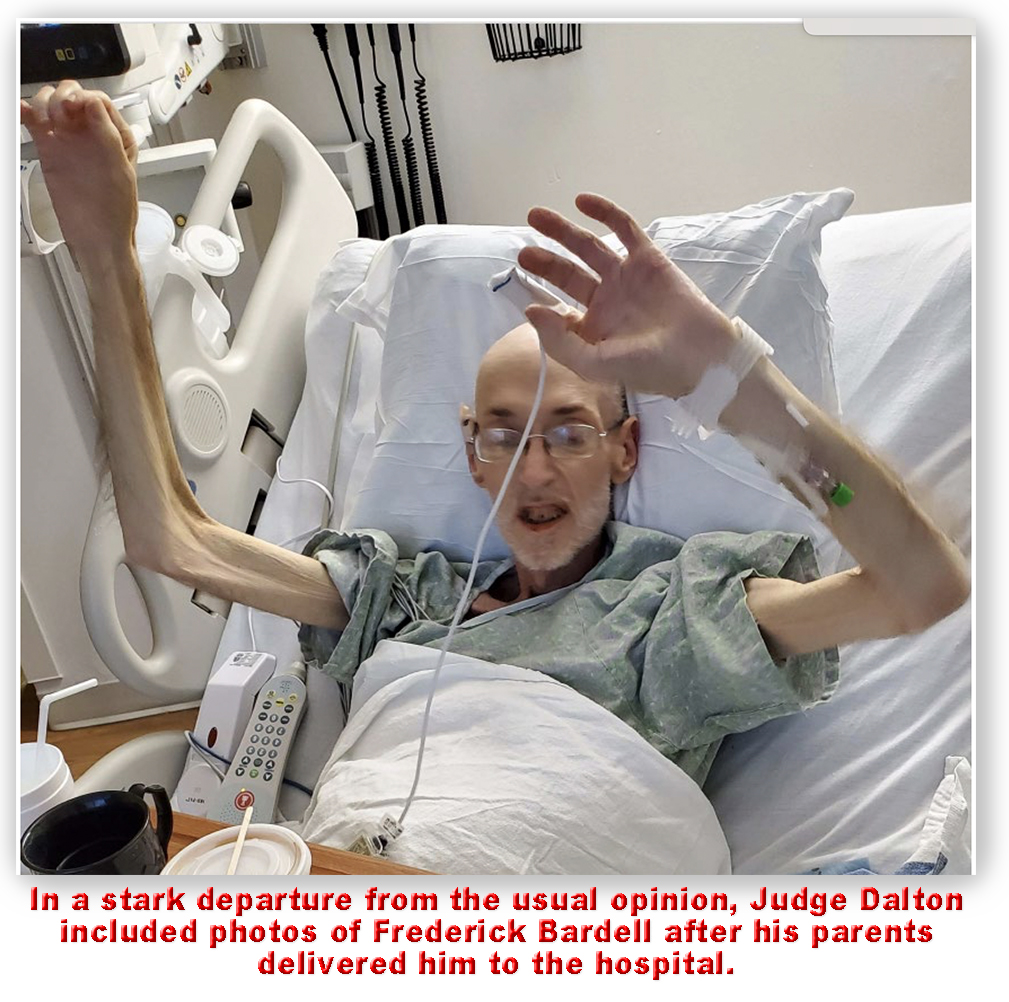
Mr. Bardell made it only through the kindness of strangers. When his parents met at the Jacksonville airport, they took him straight to the hospital. Mr. Bardell died there a week later.

Senior US District Judge Roy Dalton was furious, holding the FCI Seagoville warden in contempt and asking the Dept of Justice Inspector General to look into it. The IG issued a Report a few months ago concluding that the BOP’s delayed scheduling of urgent medical appointments led to Mr. Bardell’s “death by treatable cancer.” Contributing to the debacle, the IG found, was the “DOJ’s reliance on the BOP’s representations without further Inquiry.”

The BOP’s inferior healthcare has reared up to bite another inmate, but unfortunately for the Bureau, the inmate had been sentenced by Judge Dalton. Justina Holland sought compassionate release for an untreated medical problem, with the Government predictably denying that there was any emergency. The Court told the BOP he would grant Justina’s compassionate release if the agency didn’t get her to a breast surgeon within a month. The BOP sent her to the wrong specialist, and when an appointment with the right one was made, so much time had elapsed that she wouldn’t get in until May. When the Judge ordered the government to produce Justina’s complete medical file (including an urgent referral to a specialist from the first week in January), he got Epstein-file treatment: a lot of pages, but the critical pages, the smoking guns – such as the doctor’s urgent referral – were missing.

Last week, Judge Dalton granted Justina’s compassionate release motion. He did not mince words:

The failure to provide inmates with urgent medical care is now a well-documented problem with the BOP. See OIG Report at 50–51. Three months ago, with lumps in both breasts and bleeding from the nipples, Ms. Holland received an urgent referral for a doctor’s appointment to check for cancer. She still has not seen a doctor. The BOP’s repeated failures—to timely provide Ms. Holland with an appointment, to get her to the right doctor, even to collect her complete medical records—self-evidently show that Ms. Holland has an extraordinary and compelling medical circumstance qualifying her for compassionate release.

The Judge blasted BOP healthcare: “Nothing seems to move the nation’s federal prison system operators to improve their response to the urgent medical needs of the federal prison population,” he wrote. “Court orders go unread or ignored. OIG reports are dismissed, recommendations unheeded. Sanctions brook no change. Outside medical referrals are like Solzhenitsyn’s sick bay in the Soviet Gulag: a coveted but nearly inaccessible refuge for which only prisoners near death qualify for admission.”

He was equally blunt about the BOP’s reputation for truthfulness: Department of DOJ attorneys must be mindful in dealing with the BOP to ensure they comply with their duty of candor to the Court. A client who repeatedly fails to comply with court orders and OIG recommendations falls into the ‘trust but verify’ category of governmental agencies. There can be no presumption of regularity. The BOP will emerge unscathed, while the Government’s lawyer—and most importantly, the inmate—will carry the scars of its misfeasance.”

The BOP’s habits of misrepresenting inmate healthcare is hardly new.  But the agency should probably avoid trying its prevarications and half-truths on the same judge more than once.  This attempt did not end well for the agency (but Justina was granted compassionate release, and is presumably getting timely healthcare once again).

So there’s one winner here…

Order (Doc 207), United States v. Holland, Case No. 6:20-cr-86 (MD Fla, March 31, 2026)

NOTUS, A Federal Judge Compared the U.S. Prison System to a ‘Soviet Gulag’ Over Inmate Health Concerns (April 3, 2026)

~ Thomas L. Root

‘Random Compassion’ Wasting A Resource, Former DOJ Official Says – Update for March 27, 2026

We post news and comment on federal criminal justice issues, focused primarily on trial and post-conviction matters, legislative initiatives, and sentencing issues.

COMPASSIONATE RELEASE NEEDS SERIOUS STUDY

Jonathan Wroblewski, a former ex officio member of the US Sentencing Commission, director of Harvard Law School’s Semester in Washington Program, and longtime federal prosecutor and defense attorney, wrote in a Substack column last week that the disparities and under-utilization of compassionate release require comprehensive review by the Sentencing Commission.

Professor Mark Osler wrote a few months ago that President Trump’s use of the pardon power is like a driver who uses a “classic Jag to knock down an old house by slamming it into a wall again and again and again as a crowd gathers, aghast. It is a terrible use of a beautiful machine.”

Wroblewski suggests that compassionate release has similarly always been a beautiful machine, even as it was practiced for more than 30 years following the enactment of the Sentencing Reform Act. Its misuse prior to the First Step Act lay in the Bureau of Prisons’ chary use of the authority. Now, the misuse lies in its inconsistent implementation even as it has morphed into something much more than just a means to send dying prisoners’ home. Wroblewski writes that now, compassionate release serves a broader function,

with the Sentencing Commission authorizing sentence reductions for those suffering from a serious physical or medical condition or a serious functional or cognitive impairment, or experiencing deteriorating physical or mental health because of the aging process. Sentence reductions are authorized for the old, for those with acute challenging circumstances, victims of abuse, and those serving an unusually long sentence that would today be different on account of a change in the law. There’s even a catch-all provision for other circumstances that are “similar in gravity” to those articulated in the Guidelines. Interestingly, there’s nothing about penitence or contrition.

But compassionate release is used seldomly and inconsistently. The BOP is holding than 10,000 people aged 61 or older. The National Council on Aging reports that almost all adults in the United States age 65 or older have at least one chronic medical condition, 40% are obese, and significant numbers have COPD, diabetes, or cancer. Of course, many studies report that older adults in prison are significantly more likely to experience serious medical conditions or disabilities, with cognitive impairments, for example, being twice as prevalent compared to their peers living in community settings. There are undoubtedly many hundreds, if not thousands of federal prisoners who are, as described in the Commission’s policy statement on compassionate release, “suffering from a serious physical or medical condition, a serious functional or cognitive impairment, or experiencing deteriorating physical or mental health because of the aging process that substantially diminishes the ability of the defendant to provide self-care . . .

About one person dies in BOP custody each day. The BOP admit that deaths are due to “cancer,” “pulmonary,” “cardiac,” “blunt trauma,” “hanging,” and “drug overdose.” There almost certainly are dozens — or hundreds — of BOP prisoners “suffering from a terminal illness,” Wroblewski wrote, such as “metastatic solid-tumor cancer, amyotrophic lateral sclerosis (ALS), end-stage organ disease, and advanced dementia,” as described by the Commission in its compassionate release policy.

Data show that the longer someone is in BOP custody, the more likely it is that they will be granted compassionate release. The primary reason given by judges for granting compassionate release is rehabilitation, although the Sentencing Commission reports that “[i]n all cases where the court gave rehabilitation as a reason for the granted motion, the court also gave one or more other reasons.”

Subject to a Supreme Court decision in a pending case, thousands of BOP prisoners with long sentences will also be subject to the “changes in law” provision of compassionate release, although the precise number is impossible to calculate. Many will experience changes in family circumstances during their years of incarceration.

Wroblewski wrote that from the data, “I would expect a couple of thousand compassionate release motions would meet the Commission standards each year (an educated guess, really).” Yet Sentencing Commission data for FY 2024 show only about 2,700 inmates filed for compassionate release and of those, only 391 of the motions were granted:

But when you look just a little deeper, the data are quite troubling. They show tremendous disparities in the application of compassionate release, strongly suggesting that compassionate release is not being implemented with the certainty and fairness in meeting the purposes of sentencing required by the Sentencing Reform Act. The disparities evident from the Commission data ought to be studied further by the Commission to determine whether they are indeed unwarranted and whether further adjustments need to be made to compassionate release policy.

Wroblewski noted substantial disparities in compassionate release grants. While the Middle and Southern Districts of Florida processed 11% of the total motions filed nationwide, they only had 4% of the total number of defendants sentenced nationwide that year. Eight districts that sentenced 4.5% all defendants reported zero compassionate release motions filed. These districts collectively sentenced 2,818 defendants in FY 2024 or about 4.5% of the total.

The rate at which motions are granted varies dramatically across the country as well. “Among the districts that reported more than 20 motions filed in FY 2025,” Wroblewski wrote, “the grant rate varied from zero to 56%. In the District of Maryland, for example, judges granted 31 pct of the 95 compassionate release motions filed there, while judges in the Northern District of Ohio granted just 2.5% of the 80 motions filed, and judges in the Eastern District of Wisconsin granted zero motions of the 35 filed there.”

Although the longer a prisoner has been locked up, the greater the chance a compassionate release motion will be granted, the number of motions filed by long-serving prisoners is relatively few. And while the BOP must be asked to bring the compassionate release motion before the prisoner files it himself or herself, the BOP moved for compassionate release only 19 times during the year (out of over 2,700 filed).

Wroblewski argued, “Given the number of elderly, the number of deaths in the Bureau of Prisons, the number of long sentences being served, it seems virtually impossible that the Bureau of Prisons is applying the compassionate release statute consistently as the Commission intended.”

Substack, What’s Really Going on with Compassionate Release? (March 19, 2026)

~ Thomas L. Root

11th Circuit Defines “Available Caregiver” for Compassionate Release – Update for February 23, 2026

We post news and comment on federal criminal justice issues, focused primarily on trial and post-conviction matters, legislative initiatives, and sentencing issues.

I’M AVAILABLE

One extraordinary and compelling reason for grant of compassionate release under 18 USC 3582(c)(1) is that the prisoner has a loved one – child, spouse, sibling, parent – who is incapacitated by illness or injury and needs a caregiver.  The catch is that (except in case of a spouse) the prisoner must be the “only available caregiver” for the family member under Guidelines 1B1.13(b)(3)(C).

No one has been quite sure what constitutes the “only available caregiver.” Last week, the 11th Circuit became the first appellate court to weigh in on the question.

Rufino Robelo-Galo petitioned his sentencing court for compassionate release, arguing that he was the “only available caregiver” for his incapacitated father. The district court found that Rufino’s son, Elmer, was available to help the incapacitated dad, and, as a result, Rufe was not the only available caregiver. The court denied the compassionate release motion, and Rufino appealed.

Last week, the 11th Circuit upheld denial of the compassionate release motion. To prove extraordinary and compelling reasons for grant of compassionate release under USSG 1B1.13(b)(3)(C) – the incapacitated family member provision – the Circuit ruled that an inmate must demonstrate that no other person is both qualified and free to provide the needed care.

“Whether an alternative caregiver is both qualified and free, the 11th said, “will turn on the unique facts of a particular case, but we identify several factors that district courts should consider in making that assessment.” Those may include

    • whether legal barriers (such as immigration status or active duty military) prevent the potential caregiver from providing care;
    • whether physical or logistical barriers exist to caregiving, such as geographic distance (which“may render caregiving impracticable depending on the circumstances. A potential caregiver who lives across the country is less free to care for an incapacitated relative than a potential caregiver who lives in a neighboring town;”
    • whether knowledge or capability-based barriers (such as language or specialized skills) might affect the caregiver’s qualifications;
    • whether “familial dynamics or relationship history” – such estrangement or history of abuse – may bear on an alternative caregiver’s availability. The Circuit noted that “evidence that a family member or friend has previously cared for the incapacitated person supports a finding that the family member or friend is available;” and
    • whether economic, financial, or employment-related barriers would impact a caregiver’s availability.

In this case, Rufus argued that none of his five children was available to serve as the grandfather’s caregiver. One child was deceased; one’s whereabouts were unknown; two lived in the United States and could not relocate to Honduras; and the remaining child – Elmer – lived in Honduras but was four hours away. Elmer could not travel back and forth to care for his grandfather because he did not have a car, Elmer could not accommodate his grandfather in his own home because of space constraints, and that Elmer could not relocate to his grandfather’s home because he would not be able to find work and provide for his own children.

The district court, however, reasoned that because Elmer was “within hours of the incapacitated family member,” Rufus was not “the only available caregiver for his incapacitated father… [and] that “a finding of compassionate release cannot rest solely on avoiding such inconvenience for a convicted inmate’s family.”

Being the first Circuit case to address the meaning of “available caregiver” in detail, the 11th’s decision will undoubtedly become the “go-to” ruling on the question across other circuits.  Anyone filing a compassionate release motion arguing an incapacitated family member should address the factors identified by Rufus’s court.

United States v. Robelo-Galo, Case No. 24-12128, 2026 U.S.App. LEXIS 4650 (11th Cir. February 17, 2026)

~ Thomas L. Root

Inspector General Faults BOP Treatment of Dying Inmate – Update for January 13, 2026

We post news and comment on federal criminal justice issues, focused primarily on trial and post-conviction matters, legislative initiatives, and sentencing issues.

REST IN PEACE, FRED BARDELL

Do you remember Frederick Bardell?

You should not forget him.

Mr. Bardell was a BOP prisoner whose medical and release mistreatment by the Federal Bureau of Prisons were acts, as described by U.S. District Court Judge Roy Dalton (Middle District of Florida) in an October 2022 Order,  “indifferent to… human dignity.”

Fred was housed at FCI Seagoville when he developed an intestinal mass that turned into metastatic colon cancer. Although a BOP medical expert determined that Fred “ha[d] a high likelihood” of having colon cancer “with likely metastasis to the liver,” the BOP did nothing.

An outside specialist said later that if Fred had gotten prompt treatment when the mass was first found, he would have had a 71% chance of recovery. But prompt treatment is simply not how BOP healthcare rolls.

As LISA reported at the time, Fred’s first compassionate release motion (filed under 18 USC § 3582(c)(1)(A)) was denied after the BOP falsely assured the court that Fred could receive adequate care in custody. Judge Dalton later wrote, “As we now know, it was not true that Mr. Bardell could receive adequate care in custody. And, regrettably, his condition was indeed terminal.”

Fred’s second compassionate release motion filed three months later – supported by an affidavit from an oncologist that Fred was likely dying of cancer – was granted. The Court ordered him released as soon as the Probation Office and Fred’s attorney worked out a release plan.

The BOP didn’t wait for a release plan. After forcing Fred’s parents to pay $500 for an airline ticket, the BOP dumped Fred – who by then was “skin and bones, wheelchair dependent, and bladder and bowel incontinent” – on the airport curb without even a wheelchair. Only with the aid of strangers was Fred able to get on the plane, change planes in Atlanta, and arrive, his clothes soaked with blood and feces, in Jacksonville. His parents took him straight to a hospital, where he died nine days later.

Judge Dalton was outraged, holding the Seagoville warden in contempt, not for the negligent medical care but for the heartless way the prison dumped Fred at the airport:

The BOP as an institution and Warden Zook as an individual should be deeply ashamed of the circumstances surrounding the last stages of Mr. Bardell’s incarceration and indeed his life. No individual who is incarcerated by order of the Court should be stripped of his right to simple human dignity as a consequence.

The judge found that the BOP’s actions were “inconsistent with the moral values of a civilized society and unworthy of the Department of Justice of the United States of America.”

A special master appointed by Judge Dalton confirmed that prison officials allowed an incarcerated man to waste away from highly treatable cancer and misrepresented key facts about his health care to a court. After that, the judge referred the matter to the DOJ Office of the Inspector General.

Last week, the Inspector General concluded that “serious failures by multiple levels of staff” at Seagoville led to Fred’s death from colon cancer. The OIG “identified job performance and management failures at multiple levels within FCI Seagoville, from line staff through the Warden. We also identified problems with the BOP’s medical care of inmates, handling of compassionate release requests due to medical circumstances, and handling of compassionate release orders.”

The OIG found that severe understaffing led to six months of delays in scheduling a colonoscopy for Fred, despite symptoms, tests, and scans showing that he likely had advanced colon cancer. As his condition worsened, staff denied his requests for a compassionate release without fully reviewing his medical records and then misrepresented the adequacy of treatment he was receiving to a federal judge. And when that judge finally ordered Bardell’s release, no fewer than nine BOP officials and employees failed to read the court’s order and thus violated the Judge’s directive to wait until a release plan had been approved. The Report said, “The hastiness of the BOP’s handling of Bardell’s release was extremely concerning because the BOP did not take measures to ensure his safe and compassionate transport in light of his medical condition.”

The OIG also said that “the BOP’s handling of Bardell’s request for a reduction in sentence [RIS] was deficient, and the government’s related representations to the Court that there was ‘no indication’ that Bardell could not ‘receive adequate care in custody’ were inconsistent with what we learned during the course of our investigation and review.”

The canard that a compassionate release is unnecessary because there is ‘no indication’ that an inmate cannot ‘receive adequate care in custody’ is one common to government oppositions to medical-condition compassionate release RIS requests. The OIG tears the fig leaf from these representations. In Fred’s case, the Inspector General’s report found,

that the government’s inaccurate representations were the result of the government’s reliance on the BOP’s RIS decision, which we found to be based on a seriously deficient process within the BOP, and [Assistant United States Attorney Emily C. L.] Chang’s honest, although nonexpert, understanding of the limited records provided by the BOP. While we believe that it would have been prudent for Chang to consult with BOP medical professionals, other BOP employees, or other medical experts to better understand the BOP medical records, Bardell’s medical condition, and the BOP’s ability to care for him, we noted that Department procedures in place at the time did not require her to speak with such individuals.

‘It’s so because we say it’s so,’ the BOP says in an ipse dixit run wild…

Those familiar with litigation involving BOP conduct are all too aware of the government’s unquestioning reliance on the Bureau’s ipse dixit pronouncements. Whether the OIG’s implicit doubt that doing so is appropriate will change anything is probably unlikely.

DOJ OIG, Investigation and Review of the Federal Bureau of Prisons’ Conditions of Confinement and Medical Treatment of Frederick Mervin Bardell and Related Representations to the Court, Upon Referral by Senior U.S. District Judge Roy B. Dalton, Jr. (January 6, 2026)

Reason, Inspector General Report Finds Serious Failures Led to an Inmate Wasting Away From Treatable Cancer (January 6, 2026)

New York Times, Judge Holds Prison Officials in Contempt for Treatment of Terminally Ill Inmate (October 13, 2022)

LISA, BOP Mistreatment of Inmate Dying of Cancer Sparks Outrage (October 17, 2002)

~ Thomas L. Root

A Compassionate Release Win for Commutees – Update for January 6, 2026

We post news and comment on federal criminal justice issues, focused primarily on trial and post-conviction matters, legislative initiatives, and sentencing issues.

COMMUTATION DOESN’T NEGATE COMPASSIONATE RELEASE

In 2012, Jonathan Wright was sentenced to life imprisonment after a federal drug conviction. In 2024, he filed an 18 USC § 3582(c)(1) compassionate release motion based on First Step Act changes in 21 USC § 841(b)(1)(A)  mandatory minimum sentences.

The district court reduced Jon’s sentence to 420 months followed by 10 years of supervised release but never addressed Jon’s argument that his prior Arkansas convictions no longer qualified as predicate offenses for his sentence enhancement.

Jon appealed, arguing that the district court should have reduced his sentence even more. While the appeal was pending, President Joe Biden commuted Jon’s sentence to 330 months last January.

The government argued that Biden’s commutation should moot Jon’s appeal, and even if it didn’t, the Arkansas statute’s overly broad definition of controlled substance should nevertheless be read to be consistent with federal law.

Last week, the 8th Circuit gave Jon a late stocking stuffer.

Although the Circuits are split on the question, the 8th ruled that Biden’s commutation did not moot Jon’s compassionate release motion. The President’s power to commute criminal sentences derives from the Constitution – the Article II power to “grant Reprieves and Pardons.” “A commuted sentence,” the Circuit held, “does not become ‘an executive sentence in full’ but instead remains a judicial sentence – but one that the executive will only enforce to a limited extent.

As for Jon’s prior convictions under Arkansas § 5-64-401, the 8th observed that the statute incorporated a state Dept of Health regulation that defined a “narcotic drug” to include all cocaine isomers, while federal felony drug offenses encompass only optical and geometric cocaine isomers. Circuit precedent holds that a state drug statute that criminalizes even “one additional isomer” of cocaine beyond what the federal statute proscribes cannot produce a predicate felony drug offense for federal sentencing purposes.

The Circuit ruled that the district court’s decision to not consider that Jon’s priors no longer counted under § 841(b)(1)(A) when ruling on his compassionate release motion “was based on an erroneous legal conclusion and accordingly was an abuse of discretion.” When resentencing Jon on remand, the 8th directed, the “district court is required only to considerthat Jon ‘s prior convictions no longer qualify as predicate offenses for his sentence enhancement. The district court is not required to accept this point as a reason to further reduce Jon’s sentence.”

This opinion is significant, ruling in essence that at least in the 8th Circuit, changes in the law creating gross disparities between the existing sentence and the sentence if imposed today have a substantial role in the compassionate release calculus.

United States v. Wright, Case No. 24-2057, 2025 U.S. App. LEXIS 33882 (8th Cir. December 30, 2025)

~ Thomas  L. Root

SCOTUS Oral Argument Lacks Compassion for Compassionate Release Cases – Update for November 17, 2025

We post news and comment on federal criminal justice issues, focused primarily on trial and post-conviction matters, legislative initiatives, and sentencing issues.

ARE YOU DISRESPECTING ME?

An uncomfortable number of Supreme Court justices last Wednesday questioned whether the United States Sentencing Commission overstepped its authority when it amended USSG § 1B1.13(b)(6) to hold that changes in mandatory minimum laws – even when not retroactive – and concerns about actual innocence could be part of a court’s consideration when weighing an 18 USC § 3582(c)(1)(A) compassionate release motion.

I learned as a young lawyer (many years ago) that trying to predict the outcome of an appellate case based on the oral argument was a fool’s errand. Still, the nearly three hours of argument last Wednesday on what should be or should not be extraordinary and compelling reasons judges must consider in granting § 3582(c) sentence reductions provided little reason for optimism.

The issue was whether extraordinary and compelling reasons include factors like trial errors or nonretroactive changes in the law.  Lawyers for Daniel Rutherford and John Carter, two inmates seeking such sentence reductions, argued that the Commission was within its legal authority to say that courts could consider whether the First Step Act’s nonretroactive changes to gun and drug mandatory minimums would have resulted in lesser sentences in their cases.

In a third case, Fernandez v. United States, a district court had granted Joe Fernandez compassionate release in part because the judge felt “disquiet” about the conviction due to questions about whether the witness who had fingered Joe had lied to save his own skin. The 2nd Circuit Court of Appeals rejected the compassionate release, arguing that Joe’s innocence claim should have been brought up in a 28 USC § 2255 habeas challenge instead.

A § 3582(c)(1) sentence reduction, known a little inaccurately as “compassionate release,” permits courts to reduce criminal sentences in certain cases. Before 2018, the Bureau of Prisons was the only entity that could file a motion for such consideration, but the First Step Act eliminated that requirement. The Sentencing Commission is charged by 28 USC § 994(t) with the responsibility for defining what constitutes an extraordinary and compelling reason, and has expanded such to include medical conditions, family circumstances and age. The compassionate release guideline amendment in November 2023 adopted a broader view of compassionate release factors that included changes in the law that would have made a prisoner’s sentence much shorter if those changes had been in force when he got sentenced.

During Wednesday’s arguments, the only Justice of the nine expressing sympathy for Rutherford, Carter, and Fernandez was Ketanji Brown Jackson. All of the others seemed concerned that the changes in USSG § 1B1.13(b)(6) thwarted Congress’s will, would result in a flood of compassionate release motions, and would permit an end-run on § 2255.

Jackson maintained that the § 2255 and compassionate release considerations were not mutually exclusive. Instead, Jackson said compassionate release was intended to work as a safety valve.

“The question is, ‘safety valve for what?” Justice Elana Kagan countered. “Not every safety valve is a safety valve for everything.”

Justice Sonia Sotomayor said a district judge’s doubts about a jury verdict shouldn’t be used as a factor in compassionate release claims. “It happens to every district court judge,” she said. “There’s a case where you really struggle, but can we, in the facts of this case, denote that that is an extraordinary circumstance?”

Justice Neil Gorsuch contended that the judge’s own feelings, even if reasonable, should have nothing to do with the defendant’s circumstances for compassionate release. “I thought, in our legal system, the jury’s verdict on the facts is not something a court can impeach unless it’s clearly erroneous,” Gorsuch said. He suggested that the Commission had been “disrespectful” by substituting its own position on retroactivity for Congress’s.

In the Fernandez case, the Court appeared uneasy with allowing judges to consider factors that also fall under the federal habeas statute. Kagan said that habeas claims face harsh limitations and questioned whether inmates might use compassionate release as an end-run around those prohibitions.

Justice Samuel Alito observed, “The First Step Act was obviously heavily negotiated… and retroactivity is, of course, always a key element in the negotiations. Congress specifically says this is not going to be retroactive to those cases where sentences have already been imposed. And then the [Sentencing] Commission, though, then comes in and says we’re now going to give a second look for district judges to revisit those sentences…”

Justice Amy Coney Barrett asked whether a judge’s disagreement with the mandatory minimums could be enough justification for a compassionate release grant. David Frederick of Kellogg Hansen Todd Figel & Frederick PLLC, representing Rutherford, replied that even if a judge thinks a sentence is too harsh or if it would have been lower after the sentencing reforms, the Sentencing Commission’s guidelines require other factors, like a prisoner’s age, health and family situation, to be part of the overall picture.

Chief Justice John Roberts worried that the Sentencing Commission was opening the floodgates to applications for compassionate release. Currently, the 3rd, 5th, 6th, 7th, 8th and D.C. circuits have ruled that the Commission’s interpretation exceeds its authority and is wrong, while the 1st, 4th, 9th and 10th circuits have allowed courts to consider the disparity between pre- and post-First Step Act sentences.

Writing in his Sentencing Law and Policy blog, Ohio State University law professor Doug Berman – who filed an amicus brief supporting Rutherford, Carter and Fernandez – was pessimistic about the outcome of the cases:

But the Justices seem poised to concoct some new legal limits on equitable sentence reduction motions, though it remains unclear exactly how they will decide to legislate from the bench in this context. There was some interesting discussion during the Fernandez case about which of various possible restrictions relating to § 2255 that the government wanted the Justices to enact. And in Rutherford/Carter, the Justices expressed in various ways which sentencing statutes they thought might create implicit limits on the bases for sentencing reductions. Just how the Justices decide to act as lawmakers and policymakers in this setting will be interesting to see.

Bloomberg Law observed, “The court’s decisions in the cases could have a chilling or stimulating effect on compassionate release petitions. The Sentencing Commission reports they have increased dramatically since passage of the First Step Act and the pandemic, with more than 3,000 filed across the country last year.”

A decision is not expected until next spring.

Fernandez v. United States, Case No. 24-556 (Supreme Court oral argument November 12, 2025)

Rutherford v. United States, Case No. 24-820 (Supreme Court oral argument November 12, 2025)

Carter v. United States, Case No. 24-860 (Supreme Court oral argument November 12, 2025)

Law360, Justices Hint Early Release Factors ‘Countermand’ Congress (November 12, 2025)

WITN-TV, Supreme Court to weigh limits on compassionate release (November 12, 2025)

Courthouse News Service, Supreme Court disquieted by increased judicial discretion over compassionate release (November 12, 2025)

Sentencing Law and Policy, Justices seem eager to concoct limits on grounds for sentence reductions, but what new policy will they devise?  (November 12, 2025)

Bloomberg Law, Justices Eye Scope of Compassionate Release ‘Safety Valve’  (November 12, 2025)

~ Thomas L. Root

Innocence, Disparity, and Judge-Made Law on Tap at SCOTUS – Update for November 11, 2025

We post news and comment on federal criminal justice issues, focused primarily on trial and post-conviction matters, legislative initiatives, and sentencing issues.

COMPASSIONATE RELEASE WEEK

Tomorrow, federal compassionate release takes center stage as the Supreme Court hears oral argument in Fernandez v. United States and Rutherford v. United States.

What Does Compassion Have to Do With Innocence?      Fernandez asks whether a combination of “extraordinary and compelling reasons” that may warrant a discretionary sentence reduction under 18 USC § 3582(c)(1)(A) can include reasons that might also be a basis for a 28 USC § 2255 motion to vacate a conviction or sentence (such as a complaint that defense counsel failed to raise an obvious Guidelines mistake at sentencing).

I wrote about the Fernandez case when the 2nd Circuit sent the guy back to prison in 2024, and the lengthy fact pattern is worth revisiting. Suffice it to say here that Joe’s district court acknowledged the validity of the jury’s verdict and Joe’s sentence, while nevertheless holding that “jury verdicts, despite being legal, also may be unjust” and concluding that questions about Joe’s innocence, together with the stark disparity between Joe’s sentence and those of his co-defendants, constituted extraordinary and compelling circumstances under § 3582(c)(1)(A) warranting as sentence reduction to time served.

The 2nd Circuit reversed, holding that Joe’s sentencing disparity was not an extraordinary and compelling reason to reduce his sentence “under the plain meaning of the statute,” and that concerns that Joe might be innocent had to bow to the fact that the post-conviction remedy afforded by 28 USC § 2255 “places explicit restrictions on the timing of a habeas petition and the permissibility of serial petitions… Neither of these restrictions appl[ies] to a § 3582 motion.”

The 5th and 10th Circuits agree with the 2nd  Circuit. The 1st and 9th do not.

That Was Then, This is Now:         Rutherford asks an even more basic question: whether the Sentencing Commission – which was delegated the authority by Congress to define what circumstances are “extraordinary and compelling” reasons for compassionate release under 18 USC § 3582(c)(1) – can hold that a nonretroactive change in the law (such the First Step Act’s change in 18 USC § 924(c) to eliminate stacking can be a reason for a compassionate release.

Section 403 of the First Step Act of 2018 reduced penalties for some mandatory minimum sentences for using guns in some crimes. The change, however, was not retroactive. Because of the changes, someone sentenced on December 20, 2018, for two counts of carrying a gun while selling marijuana on two different days got a minimum sentence of 30 years. The same sentence imposed two days later would have resulted in a minimum sentence of 10 years.

Under 28 USC § 994(t), the Sentencing Commission is charged by Congress with defining what constitutes an “extraordinary and compelling reason” for compassionate release. Congress placed only one limit on the Commission’s authority: “Rehabilitation of the defendant alone shall not be considered an extraordinary and compelling reason.”

In its 2023 revamping of the compassionate release guideline, the Commission adopted subsection 1B1.13(b)(6), stating that if a defendant had received an unusually long sentence and had served at least 10 years, a change in the law may be considered in determining whether he or she has an extraordinary and compelling reason for a § 3582(c)(1)(A) sentence reduction.

The Rutherford issue, simply enough, is whether the Commission exceeded its authority in making a nonretroactive change in the law a factor to be considered (along with others) in a § 3582(c)(1)(A) sentence reduction.

A RICO Claim?:   Ohio State University law professor Doug Berman noted in his Sentencing Law and Policy blog that an argument in last week’s Supreme Court argument on supervised release (Rico v. United States) goes to the heart of the issues at stake in Rutherford and Fernandez. During the argument, Justice Gorsuch observed that Congress appears to be better situated to resolve the conflict by amending the law, because “the alternative is for us to create a fugitive tolling doctrine pretty whole cloth… And so we’re going to have to come up with a whole common law doctrine here to supplement what the [law] already says.”

   xxxxxxxxxxxxxxNot that RICO…

Berman observed that the Fernandez and Rutherford circuit courts “have been inventing limits on compassionate release motions pretty much out of ‘whole cloth’ and are in the (messy) process of coming up ‘with a whole common law doctrine here to supplement what the [applicable statute] already says.’” Berman argues, “I understand why circuit courts are inclined to invent judge-made limits on compassionate release motions, but that’s not their role in this statutory sentencing context. Congress makes sentencing law based on its policy judgments, and it has also expressly tasked the expert U.S. Sentencing Commission with ‘promulgating general policy statements… [describing] reasons for sentence reduction.’ 28 USC § 994(t). If the government does not like how this law is written or gets applied, it should be making its case for legal change to Congress and/or the Sentencing Commission, not to the Supreme Court.”

Berman noted that in Koon v. United States, the Supreme Court 30 years ago said that “it is inappropriate for circuit judges to be developing a “common law” of sentencing restrictions when that’s a job only for Congress and the Sentencing Commission. That Justice Gorsuch is focused on similar concerns in another statutory sentencing context seems significant.”

Fernandez v. United States, Case No. 24-556 (oral argument Nov 12, 2025)

Rutherford v. United States, Case No. 24-820 (oral argument Nov 12, 2025)

Sentencing Law and Policy, Do Justice Gorsuch’s concerns about judge-made law foreshadow big issue in compassionate release cases? (November 5, 2025)

Koon v. United States, 518 US 81 (1996)

~ Thomas L. Root

A Refreshing Pair of Compassionate Release Rulings – Update for July 15, 2025

We post news and comment on federal criminal justice issues, focused primarily on trial and post-conviction matters, legislative initiatives, and sentencing issues.

TWO CIRCUITS SHOW SOME COMPASSION

The 1st and 4th Circuits have both issued significant compassionate release decisions in the last two weeks.

Under 18 USC § 3582(c)(1), a sentencing court can grant a sentence reduction – known colloquially if not quite precisely as “compassionate release” – to a federal prisoner if the court finds “extraordinary and compelling reasons” for a sentence reduction, the reduction is consistent with Sentencing Commission policies, and that release would be consistent with the sentencing factors listed in 18 USC § 3553(a). Since passage of the First Step Act in 2018, a prisoner may bring a motion for compassionate release himself or herself.

What constitute “extraordinary and compelling reasons” are defined in the Guidelines at USSG § 1B1.13.

The 4th Circuit ruling first: Richard Smith has served about half of his 504-month crack cocaine conspiracy and stacked 18 USC § 924(c) sentences. He filed for compassionate release, citing his advanced age, poor health, rehabilitation efforts,  and the disparity between his current sentence and the one he would receive for the same conduct if sentenced today.

The district court found that there were “extraordinary and compelling reasons” to grant the compassionate release motion, but in weighing the 18 USC § 3553 factors, the court concluded that “[r]eleasing Smith would not reflect the seriousness of the offense conduct, promote respect for the law, provide just punishment for the offense, or deter criminal conduct.” The district court noted Dick’s prior state convictions for drugs and domestic battery and complained that the estimated amount of crack cocaine used by the original sentencing judge “was low.” The judge refused to consider the non-retroactive First Step Act amendments to 18 USC § 924(c) and for good measure, said that even if he did consider the changes, “they would not overcome the finding that the § 3553(a) factors weigh against a sentence reduction.”

Last week, the 4th Circuit reversed the district court and remanded with instructions to let Dick go home. First, it held that the sentence disparity created by the First Step Act’s elimination of “stacked” mandatory minimums under § 924(c) can constitute an “extraordinary and compelling reason” under 18 USC  § 3582(c)(1)(A)(i) (thus suggesting the Sentencing Commission’s compassionate release guideline 1B1.13(b)(6) is lawful). The issue of whether (b)(6) – which authorizes a district court to consider nonretroactive changes in the law as part of an “extraordinary and compelling reason” analysis – exceeds Sentencing Commission authority is currently before the Supreme Court in Rutherford v. United States and will be decided next spring.

Second (and more significant for compassionate release movants), the Circuit concluded that the district court’s rote recitation of § 3553 factors “fail[ed] to recognize that the relevant § 3553(a) factors clearly favor release.” Dick was no recidivism risk, the 4th said, no matter what his criminal history in the last century might have been, due to “his advanced age and serious medical conditions. Smith was 66 years old at the time he filed his renewed motion for compassionate release. He is 71 years old today… Moreover, Smith suffers from black lung disease, an irreversible respiratory impairment resulting from his years as a coal miner. Smith has also been diagnosed with COPD, emphysema, pre-diabetes, a liver cyst, and a heart rhythm disorder. He is totally disabled and a portion of his right lung has been removed.”

Dick only had two minor disciplinary infractions in 20 years, completed dozens of vocational classes and participated in drug treatment programs. He worked his way down from high security to low. “This is not the picture of an unremorseful defendant bent on causing future harm even if he was physically able,” the 4th said.

The Circuit noted that “the district court determined, without elaboration, that a reduced sentence would fail to ‘deter criminal conduct.’ But this ignores that, by the time of his release, Smith will have already served nearly 25 years of his 42-year sentence. The prospect of 25 years of prison time serves as a powerful deterrent against the conduct—which was undoubtedly serious—for which Smith was convicted and sentenced.”

Meanwhile, Edison Burgos filed for compassionate release on the grounds that the BOP was failing to treat his hypertension and obstructive sleep apnea. The district court held that Eddie was getting “adequate medical, dental and psychological care” and denied his motion. Two weeks ago, the 1st Circuit reversed, holding that the district court had “overlooked the undisputed evidence demonstrating that, almost one year after Ed’s sleep apnea diagnosis and despite his ongoing severe hypertension, the BOP had yet to provide him with the established treatment for sleep apnea.”

The BOP argued that the fact that Ed’s medical records show that a “second sleep study was listed as an ‘urgent’ priority…”  was “sufficient evidence that the BOP was adequately treating him for sleep apnea.”  The 1st ripped that fig leaf away:

Even if we overlook that the “urgent” sleep study had yet to be conducted as of Dr. Venuto’s second letter to the court, however, a sleep study is a diagnostic tool: The only treatment for sleep apnea discussed in Burgos-Montes’s medical records is a CPAP machine… Indeed, as we have explained, in April 2022, an outside cardiologist recommended that Burgos-Montes receive a CPAP machine “ASAP” to treat his sleep apnea, without suggesting that additional diagnostic testing was needed. And Dr. Venuto acknowledged that as of July 2022, Burgos-Montes had still not received a CPAP machine.

The Circuit ruled that “the record is clear that nearly a year after Burgos-Montes received a sleep apnea diagnosis, months after a consulting cardiologist recommended that he receive a CPAP machine “ASAP,” and even after his transfer to a higher-level care facility, the BOP had yet to provide Burgos-Montes with a CPAP machine or any other sleep apnea treatment. And there is no dispute that untreated sleep apnea for a patient like Burgos-Montes, who also suffers from severe hypertension, could amount to an ‘extraordinary and compelling’ reason to grant compassionate release.”

United States v. Smith, Case No. 24-6726, 2025 U.S.App. LEXIS 16565 (4th Cir. July 7, 2025)

Rutherford v. United States, Case No. 24-820 (cert. granted June 6, 2025)

United States v. Burgos-Montes, Case No. 22-1714, 2025 U.S.App. LEXIS 16048 (1st Cir. June 30, 2025)

– Thomas L. Root

Sentence Reduction: Like Vegas But Without Free Drinks – Update for May 16, 2025

We post news and comment on federal criminal justice issues, focused primarily on trial and post-conviction matters, legislative initiatives, and sentencing issues.

SENTENCE REDUCTION ODDS AREN’T GREAT, USSC DATA SHOW

dice161221The United States Sentencing Commission released some interesting retrospective data on Wednesday, showing that winning sentence reductions based on retroactive Guidelines is not necessarily a sure bet.

While you’re losing in a casino, you’re often given free drinks. In federal court, not so often…

In November 2023, the Commission adopted Amendment 821, which changed how criminal history is calculated for purposes of figuring a defendant’s advisory sentencing range. The USSC did away with “status points,” the extra two criminal history points applied when a new offense is committed while the offender is on parole, supervised release, or probation. On the other end of the spectrum, the Commission decided that a defendant who had zero criminal history points was entitled to a two-level reduction in his or her Total Offense Level.

The structure of the process for winning a sentence reduction based on Guidelines changes that are deemed retroactive is governed by 18 USC § 3582(c)(2). If the defendant is eligible (which is not the slam-dunk you might think it is), the district court is nevertheless entitled to determine with almost unreviewable discretion whether the offender deserves all of the break offered by the new lower Guideline, some of the break, or none at all.

funwithnumbers170511Since the Commission’s change in status points became effective, 15,177 federal inmates (9.6% of the prison population) have applied for reduction. Of those, district courts across the nation granted 36%, only about a third of the motions filed. Out of districts with more than 100 applications filed, Eastern Wisconsin was the toughest (97.2% denied), with Southern Iowa, Southern New York, Minnesota, and Eastern Arkansas in second place, all around an 80% denial rate. Maryland (93.8% approval rate), Kansas (66.1% approval), and Northern Alabama (61.0% approval) were the best.

Defendants who sought the zero-point criminal history reduction hardly fared better. Out of 11,749 applications (7.4% of the inmate population) to have the Guidelines 2-level reduction applied, only 32.2% received reductions. Out of districts with more than 100 applications filed, Arizona (91.2% denied), followed by Southern Iowa (89.7% denied) and South Dakota (88.3% denied) were the worst places for a prisoner to be. The best place to get a status point reduction was South Dakota (88.3% denied), with Eastern Texas (64.0% approval rate), Middle Florida (61.1% approval), and New Jersey (47.7% approval) as runners up.

compeddrink2400716The Commission also released compassionate release numbers through March 2025. Since the inception of inmate-filed motions under 18 USC § 3582(c)(1)(A) – the so-called compassionate release motion – with passage of the First Step Act in December 2018, 12,916 motions have been filed, with 13.7% granted. Through March 2025, the success rate has held roughly steady – 89 such motions have been granted, 13.4% of the total filed.

US Sentencing Commission, Part A of the 2023 Criminal History Amendment Retroactivity Data Report (May 14, 2025)

US Sentencing Commission, Part B of the 2023 Criminal History Amendment Retroactivity Data Report (May 14, 2025)

US Sentencing Commission, Compassionate Release Data Report, Preliminary Fiscal Year 2025 Cumulative Data through 2nd Quarter (May 14, 2025)

– Thomas L. Root

6th Circuit Holds Sentencing Commission Went Too Far On Compassionate Release – Update for April 28, 2025

We post news and comment on federal criminal justice issues, focused primarily on trial and post-conviction matters, legislative initiatives, and sentencing issues.

6TH CIRCUIT STRAINS TO INVALIDATE COMPASSIONATE RELEASE CHANGE-IN-THE-LAW CATEGORY

dontthink220919A three-judge 6th Circuit panel took a wrecking ball to the Sentencing Commission’s compassionate release statute last week, joining the 3rd and 7th Circuits in invalidating the “extraordinary and compelling” reason that the defendant was serving years and years more than Congress now believes he deserves.

The compassionate release statute, 18 USC § 3582(c)(1)(A), allows a court to reduce a prison sentence for “extraordinary and compelling reasons.” Congress authorized the Sentencing Commission to define what constitutes an extraordinary and compelling reason, and the USSC did so in the revised USSG § 1B1.13 adopted in November 2023. The reasons included medical reasons, family circumstances, and prisoner abuse.

The “extraordinary and compelling reason” at issue in last week’s case is set out in USSG § 1B1.13(b)(6). It holds that a nonretroactive change in the law can present a reason warranting a sentence reduction if a prisoner has served at least 10 years of “an unusually long sentence,” and there is a “gross disparity” between the inmate’s sentence and the sentence that would apply if nonretroactive changes in the law since the original sentencing were given retroactive effect. Even then, it’s not automatic. Instead, § 1B1.13(b)(6) directs the court to fully consider “the defendant’s individualized circumstances.”

bunnygun190423The best example of such a sentence is where someone has been convicted of multiple 18 USC § 924(c) sentences for using a gun in drug crimes or crimes of violence. Congress intended that if Donnie Drugseller had been convicted of a § 924(c) and served his mandatory five years, only to get out and do the same thing again, the second § 924(c) would carry a minimum of 25 years. This makes perfect sense: we should learn from our experiences, and that includes Donnie learning that he shouldn’t carry a gun.

Poor drafting, however, resulted in a statute requiring that Donnie, who carried a gun while selling drugs on Monday and did it again on Tuesday, receive two “stacked” § 924(c) counts–one for each day–and be sentenced for 30 years mandatory and consecutive years. That would be five years for Monday’s gun and 25 more years for Tuesday’s.

Congress did not ever intend that, fixing its mistake in a revised § 924(c) included in the First Step Act. Now the statute does what it was always meant to do, applies the 25-year sentence only if Donnie had been convicted of a § 924(c) crime prior to committing the second one. Under the changed law, Donnie’s sentence would have been 10 years (five for Monday and five more for Tuesday).

However, for political reasons, the § 924(c) change was not made retroactive to reach sentences imposed before the First Step Act was passed. In last week’s Bricker decision, the 6th Circuit conceded that this left people like Donnie, who were sentenced before First Step,

serving prison sentences that are much longer than the sentences of new inmates who committed the exact same crimes. Recognizing the unfairness, the Commission decided that the disparity was… a factor worth considering when deciding whether an individual old-timer had an “extraordinary and compelling reason” for early release. That is understandable and even laudable. The question is whether the Commission has the authority to do that under the law, particularly the Constitution.

Back before the 2023 adoption of the new § 1B1.13, the 6th Circuit held in United States v. McCall that “the that the phrase ‘extraordinary and compelling’ in § 3582(c)(1)(A)(i) is clear and unambiguous” and that nonretroactive legal changes in the law could not be considered extraordinary and compelling reasons for a sentence reduction:

The Circuit panel held that under the Constitution’s separation of powers, the Commission lacked the “power to overrule a Circuit Court’s interpretation of a statute” or to adopt a policy statement that contradicts a federal statute: “[T]he Commission cannot overrule McCalls determination about the plain text of the statute by promulgating a contradictory policy statement… we conclude that the Commission overstepped its authority and issued a policy statement that is plainly unreasonable under the statute and in conflict with the separation of powers. We therefore hold that USSG § 1B1.13(b)(6) is invalid.

In her dissent, Judge Stranch vigorously disagreed, arguing that “the majority opinion misapprehends recent Supreme Court precedent on administrative law, misconstrues this court’s opinion in… McCall, and ignores the plain language of several statutes to read constraints into a statutory scheme where none exist.”

badjudge171016Writing in his Sentencing Law and Policy blog, Ohio State University law professor Doug Berman blasted the Bricker decision as “another reminder that courts can and often will ignore textualism principles when it leads to a policy outcome that they dislike.” He notes that “the panel majority in Bricker [is] inventing much broader non-textual limits on compassionate release than did the Third Circuit in United States v. Rutherford… That ruling is the subject of a pending cert petition, and Bricker surely increases the odds that cert on this issue will be eventually granted. But… I am quite unsure whether congressional text or judicial policy preferences would ultimately prevail on this matter at SCOTUS.”

United States v. Bricker, Case No. 24-3286, 2025 U.S.App. LEXIS 9538 (6th Cir. April 22, 2025)

United States v. McCall, 56 F.4th 1048 (6th Cir. 2022)

Sentencing Law and Policy, Deepening circuit splits, divided Sixth Circuit panel decides to “look beyond” statutory text to rewrite compassionate release limits (April 24, 2025)

United States v. Rutherford, 120 F.4th 360 (3d Cir. 2024)

– Thomas L. Root