FCI Dublin Is A Neverending Shop of Horrors – Update for July 18, 2025

We post news and comment on federal criminal justice issues, focused primarily on trial and post-conviction matters, legislative initiatives, and sentencing issues.

SAME OL’ SAME OL’, DUBLIN SPECIAL MASTER TELLS COURT

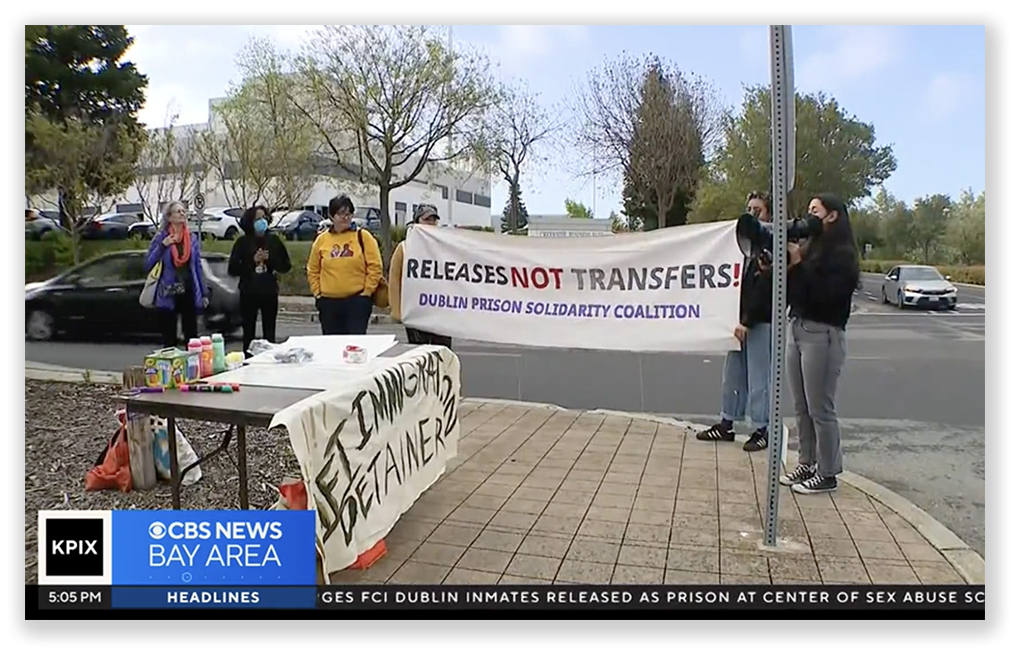
The female prisoners who were subject to sexual abuse at FCI Dublin and whose treatment by the BOP is still be monitored by US District Court for the eastern District of California are still complaining of being sexually assaulted, retaliated against and not getting medical care at more than a dozen federal facilities across the country, according to a report filed by Wendy Still, appointed special master by the court to monitor BOP compliance with the lawsuit’s settlement agreement.

Still, the former chief Alameda County probation department officer, is monitoring the former Dublin inmates with a team that includes a doctor, nurse and a prison rape expert.

“The report found significant deficiencies and affirms much of what survivors of BOP already know,” Kara Janssen, an attorney at Rosen, Bien, Galvan and Grunfeld, told KTVU-TV. “That the problems that came to light at FCI Dublin were symptoms of larger, systemic problems throughout BOP.”

The report, the first monthly report to be issued (covering April 2025), chronicled continued sex abuse, lack of medical care, and retaliation being experienced by former Dublin alums spread throughout the BOP system that began even as they were moved from Dublin in an evacuation under the nose of the District Court that made Saigon in April 1975 look orderly.

Still’s authority to assess BOP care came as part of a 2023 class action lawsuit and subsequent consent decree filed on behalf of about 600 incarcerated women at FCI Dublin, where 10 correctional officers have now been charged with sex crimes; seven of them so far have been found guilty, convicted and sentenced to prison themselves.

There are 305 women in the lawsuit class who are still incarcerated in 15 BOP prisons across the country.

The report’s findings include, for example:

Unprofessional and retaliatory behavior has also been reported on the part of medical providers, nurses, and emergency medical technicians. Providers have been reported to tell Class Members they should feel lucky they are getting care since they are illegal aliens or criminals. Shockingly, it is alleged that providers have also told Class Members that they should not expect special care because they are from “Dublin” and that no amount of “whining to lawyers” will get them care more expeditiously. Lastly, it is not clear that front line providers have retained professional independence and as a result, there appear to be instances when facility protocols or directive outweigh clinical professional judgement.

Meanwhile, the hits surrounding the FCI Dublin “rape club” just keep on coming. On June 26, former BOP employees Jeffrey Wilson and Lawrence Gacad became the ninth and tenth FCI Dublin employees to be charged, charged in the sexual abuse scandel that led to Dublin’s closure in 2024.

KTVU, Sex assault, retaliation complaints still persist across U.S. prisons, special master finds in 1st report (July 2, 2025)

Public Monthly Status Report For Rating Period March 31, 2025 – April 30, 2025, California Coalition for Women Prisoners v FBOP Consent Decree, Case No 4:23-cv-04155  (ND Cal, released June 30, 2025)

Thomas L. Root

BOP’s ‘Big, Beautiful’ Budget – Update for July 17, 2025

We post news and comment on federal criminal justice issues, focused primarily on trial and post-conviction matters, legislative initiatives, and sentencing issues.

MONEY, THAT’S WHAT I WANT

Slate magazine published a piece a week ago complaining that “the Trump administration has thrown the lives of incarcerated people into chaos—especially the more than 150,000 people under the jurisdiction of the Federal Bureau of Prisons.”

Slate admitted that the BOP’s crisis has been “long-standing,” with issues ranging from crumbling infrastructure to sexual assault to severe staffing shortages. However, Slate argued, “incarcerated people and BOP experts say that in just a few short months, the Trump administration has exacerbated this crisis. He has implemented major pay cuts, issued confusing and short-sighted orders, directly targeted vulnerable incarcerated populations, and haphazardly slashed funding for crucial initiatives.”

The Slate article hit the streets only a day after Trump signed the Big Beautiful Bill Act (HR 1)  which passed Congress by the thinnest of margins. But it turns out that the bill may undercut any of the damage that Slate has laid at the President’s feet.

Last week, BOP Director William K. Marshall III issued a video message to staff in which he noted that HR1 “provides $3 billion in staffing support over several years… for hiring of new staff and the salary and benefits for current employees “as well as “”funding for training which will address a critical need of our employees.” The $3 billion will be spread over five years “which equates to approximately $600 million a year through Sep 30, 2029.”

The BBB also provides $2 billion “for the maintenance and repairs” of BOP facilities, which carry a price tag of almost $3 billion but a maintenance budget – before BBB – of about $150 million. Marshall said the $2 billion will be used to “tackle major repair projects that prioritize those that involve life safety security and operational agency. It is a major step forward in reducing the maintenance backlog and enhancing our facilities to meet the standards we expect in our own homes…”

The BBB’s $5 billion is a one-shot funding that will expire September 30, 2029. However, money to meaningfully address crumbling infrastructure and full staffing – which should lead to ending the frequent lockdowns and augmentation that disrupts programming – may benefit prisoners as much as it does staff.

Slate, A Surprise Target of Trump’s Cutbacks Is Devastating One Specific Population (July 5, 2025)

BOP, Director’s Message (July 11, 2025)

HR1, The Big Beautiful Bill Act (July 4, 2025)

Thomas L. Root

A Refreshing Pair of Compassionate Release Rulings – Update for July 15, 2025

We post news and comment on federal criminal justice issues, focused primarily on trial and post-conviction matters, legislative initiatives, and sentencing issues.

TWO CIRCUITS SHOW SOME COMPASSION

The 1st and 4th Circuits have both issued significant compassionate release decisions in the last two weeks.

Under 18 USC § 3582(c)(1), a sentencing court can grant a sentence reduction – known colloquially if not quite precisely as “compassionate release” – to a federal prisoner if the court finds “extraordinary and compelling reasons” for a sentence reduction, the reduction is consistent with Sentencing Commission policies, and that release would be consistent with the sentencing factors listed in 18 USC § 3553(a). Since passage of the First Step Act in 2018, a prisoner may bring a motion for compassionate release himself or herself.

What constitute “extraordinary and compelling reasons” are defined in the Guidelines at USSG § 1B1.13.

The 4th Circuit ruling first: Richard Smith has served about half of his 504-month crack cocaine conspiracy and stacked 18 USC § 924(c) sentences. He filed for compassionate release, citing his advanced age, poor health, rehabilitation efforts,  and the disparity between his current sentence and the one he would receive for the same conduct if sentenced today.

The district court found that there were “extraordinary and compelling reasons” to grant the compassionate release motion, but in weighing the 18 USC § 3553 factors, the court concluded that “[r]eleasing Smith would not reflect the seriousness of the offense conduct, promote respect for the law, provide just punishment for the offense, or deter criminal conduct.” The district court noted Dick’s prior state convictions for drugs and domestic battery and complained that the estimated amount of crack cocaine used by the original sentencing judge “was low.” The judge refused to consider the non-retroactive First Step Act amendments to 18 USC § 924(c) and for good measure, said that even if he did consider the changes, “they would not overcome the finding that the § 3553(a) factors weigh against a sentence reduction.”

Last week, the 4th Circuit reversed the district court and remanded with instructions to let Dick go home. First, it held that the sentence disparity created by the First Step Act’s elimination of “stacked” mandatory minimums under § 924(c) can constitute an “extraordinary and compelling reason” under 18 USC  § 3582(c)(1)(A)(i) (thus suggesting the Sentencing Commission’s compassionate release guideline 1B1.13(b)(6) is lawful). The issue of whether (b)(6) – which authorizes a district court to consider nonretroactive changes in the law as part of an “extraordinary and compelling reason” analysis – exceeds Sentencing Commission authority is currently before the Supreme Court in Rutherford v. United States and will be decided next spring.

Second (and more significant for compassionate release movants), the Circuit concluded that the district court’s rote recitation of § 3553 factors “fail[ed] to recognize that the relevant § 3553(a) factors clearly favor release.” Dick was no recidivism risk, the 4th said, no matter what his criminal history in the last century might have been, due to “his advanced age and serious medical conditions. Smith was 66 years old at the time he filed his renewed motion for compassionate release. He is 71 years old today… Moreover, Smith suffers from black lung disease, an irreversible respiratory impairment resulting from his years as a coal miner. Smith has also been diagnosed with COPD, emphysema, pre-diabetes, a liver cyst, and a heart rhythm disorder. He is totally disabled and a portion of his right lung has been removed.”

Dick only had two minor disciplinary infractions in 20 years, completed dozens of vocational classes and participated in drug treatment programs. He worked his way down from high security to low. “This is not the picture of an unremorseful defendant bent on causing future harm even if he was physically able,” the 4th said.

The Circuit noted that “the district court determined, without elaboration, that a reduced sentence would fail to ‘deter criminal conduct.’ But this ignores that, by the time of his release, Smith will have already served nearly 25 years of his 42-year sentence. The prospect of 25 years of prison time serves as a powerful deterrent against the conduct—which was undoubtedly serious—for which Smith was convicted and sentenced.”

Meanwhile, Edison Burgos filed for compassionate release on the grounds that the BOP was failing to treat his hypertension and obstructive sleep apnea. The district court held that Eddie was getting “adequate medical, dental and psychological care” and denied his motion. Two weeks ago, the 1st Circuit reversed, holding that the district court had “overlooked the undisputed evidence demonstrating that, almost one year after Ed’s sleep apnea diagnosis and despite his ongoing severe hypertension, the BOP had yet to provide him with the established treatment for sleep apnea.”

The BOP argued that the fact that Ed’s medical records show that a “second sleep study was listed as an ‘urgent’ priority…”  was “sufficient evidence that the BOP was adequately treating him for sleep apnea.”  The 1st ripped that fig leaf away:

Even if we overlook that the “urgent” sleep study had yet to be conducted as of Dr. Venuto’s second letter to the court, however, a sleep study is a diagnostic tool: The only treatment for sleep apnea discussed in Burgos-Montes’s medical records is a CPAP machine… Indeed, as we have explained, in April 2022, an outside cardiologist recommended that Burgos-Montes receive a CPAP machine “ASAP” to treat his sleep apnea, without suggesting that additional diagnostic testing was needed. And Dr. Venuto acknowledged that as of July 2022, Burgos-Montes had still not received a CPAP machine.

The Circuit ruled that “the record is clear that nearly a year after Burgos-Montes received a sleep apnea diagnosis, months after a consulting cardiologist recommended that he receive a CPAP machine “ASAP,” and even after his transfer to a higher-level care facility, the BOP had yet to provide Burgos-Montes with a CPAP machine or any other sleep apnea treatment. And there is no dispute that untreated sleep apnea for a patient like Burgos-Montes, who also suffers from severe hypertension, could amount to an ‘extraordinary and compelling’ reason to grant compassionate release.”

United States v. Smith, Case No. 24-6726, 2025 U.S.App. LEXIS 16565 (4th Cir. July 7, 2025)

Rutherford v. United States, Case No. 24-820 (cert. granted June 6, 2025)

United States v. Burgos-Montes, Case No. 22-1714, 2025 U.S.App. LEXIS 16048 (1st Cir. June 30, 2025)

– Thomas L. Root

Horowitz Leaves DOJ Inspector General Post – Update for July 11, 2025

We post news and comment on federal criminal justice issues, focused primarily on trial and post-conviction matters, legislative initiatives, and sentencing issues.

BOP INMATES LOSE A CHAMPION

DOJ Inspector General Michael Horowitz, one of the only federal government inspectors general to survive President Trump’s January purge, has left his position to become IG of the Federal Reserve.

Bloomberg Law reports that Horowitz’s departure “has former officials and lawyers worried that an era of robust, independent oversight of law enforcement is ending at the worst possible moment.”

Horowitz’s successor will face a growing pile of complaints seeking probes into top DOJ officials and White House efforts to shrink the IG’s budget by 28%. As the DOJ’s largest agency by employees and the second largest by budget (next to the US Attorneys’ offices), the BOP has drawn substantial oversight from Horowitz. Well before the Federal Prison Oversight Act passed, mandating regular inspections of BOP facilities, Horowitz began sending teams to prisons for surprise audits. The IG’s office added detail and official gravitas to many of the complaints that inmates have lodged for years.

Some in the IG and whistleblower communities told Bloomberg Law that they hope Horowitz’s veteran deputy,  William M. Blier, takes over the iG office and maintains “the office’s reputation for bipartisan accountability.” Blier is running things for the time being, but some fear that a new appointee will be a puppet.

“Mr. Horowitz personified a public servant who followed the evidence wherever it led, regardless of political party,” said Tom Devine, legal director at the Government Accountability Project, which represents whistleblowers cooperating with the IG’s office. “He will be sorely missed because he will be the last credible official source of factfinding at the Department of Justice.”

Bloomberg Law, Veteran DOJ Watchdog’s Exit Spurs Fears of Lax Trump Oversight (June 27, 2025)

– Thomas L. Root

Vincent Case Has Sights on SCOTUS Review – Update for July 10, 2025

We post news and comment on federal criminal justice issues, focused primarily on trial and post-conviction matters, legislative initiatives, and sentencing issues.

‘CAN’T IGNORE THIS ONE,’ PARTIES MAY TELL SCOTUS IN 922(g)(1) CASE

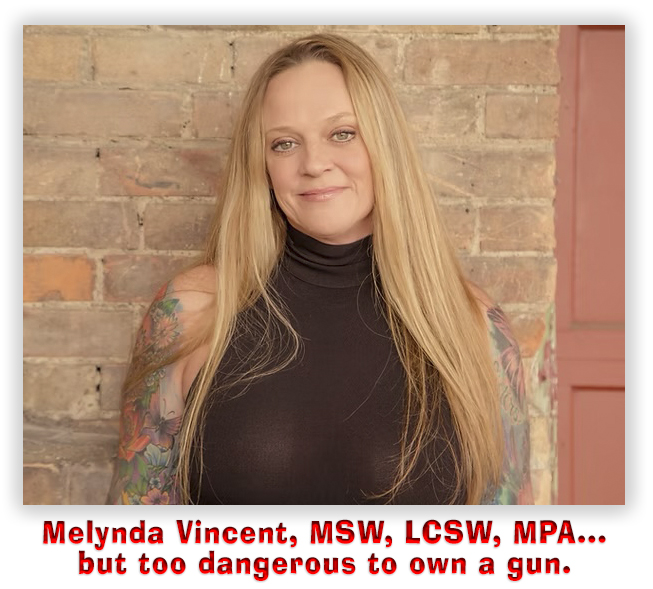
I have written before about Melynda Vincent, a woman convicted of bank fraud 15 years ago for writing some bad checks while in the throes of drug addiction. Since then, Melynda has cleaned up, graduated from a drug treatment program, earned an undergraduate degree and two graduate degrees, and founded the Utah Harm Reduction Coalition – a nonprofit organization focused on drug treatment and criminal-justice reform – as well as a mental health counseling service, Life Changes Counseling.

In February, the 10th Circuit said, “So what? You still can’t own a gun.” Melynda has filed for Supreme Court certiorari, and she has picked up both the Federal Public Defenders and the National Rifle Association as amici (filing briefs in support of her petition).

Most interesting is this: the DOJ was due to oppose her petition in June. It got an extension until July 11 and then last week asked for and got a second extension until August 11

It may be that DOJ, opposed to such petitions in the past but lately avoiding the issue (as in not seeking certiorari in the 3rd Circuit Range case), does not yet know what to do.

I have said before that Vincent is the best case out there to put the constitutionality of 18 USC § 922(g)(1) in front of the Justices. The DOJ’s position on this is something to watch closely.

Vincent v. Bondi, Case No. 24-1155 (petition for certiorari pending)

– Thomas L. Root

Inspector General Blasts BOP Use of Restraints – Update for July 8, 2025

We post news and comment on federal criminal justice issues, focused primarily on trial and post-conviction matters, legislative initiatives, and sentencing issues.

RESTRAINTS KILL, MAIM INMATES THROUGH IMPROPER USE, IG SAYS

The Dept of Justice Office of Inspector General reported in a memorandum last week that BOP policies governing the use of physical restraints on inmates are inadequate.

BOP policy allows the use of restraints to gain control of disruptive inmates, ranging from ambulatory restraints that allow limited freedom of movement to four-point restraints and waist chains that render prisoners immobile from the neck down. Policy dictates that restraints are to be used only as a last resort and never as a method of punishment.

A 2022 Marshall Project/NPR investigation uncovered restraint abuses at USP Thomson. “Specifically,” the report said, “many men reported being shackled in cuffs so tight they left scars, or being ‘four-pointed’ and chained by each limb to a bed for hours, far beyond what happens at other prisons and in violation of bureau policy and federal regulations.” A subsequent  Marshall Project/NPR investigation last December reported on dozens of similar restraint abuse allegations of prolonged shackling and abuse at USP Lee.

The IG said it had received “numerous allegations every year regarding abuse, mistreatment, or injury of inmates in connection with the use of restraints, including four-point restraints.”  Between August 2022 and August 2023, complaints about four-point restraints alone numbered in the “dozens.”

Multiple complaints alleged inmates “suffered nerve damage or other long-term injuries due to the prolonged use of restraints. For example, one inmate suffered long-term scarring and was provisionally diagnosed with carpal tunnel syndrome due to ongoing complaints of wrist numbness after being held in four-point restraints for over 3 days…” The IG said, “[A]nother inmate suffered severe injury requiring the amputation of part of the inmate’s limb after being held in a combination of ambulatory restraints and a restraint chair for over 2 days.”

“The inmate’s injury worsened to the point of needing hospitalization and amputation despite medical checks occurring at time intervals that complied with policy,” the memo stated. “The medical checks were completed by different medical staff who did not discuss the progression of the inmate’s injuries between shifts, and there were no photographs or video recordings to document that a medical check was actually performed and to show the progression of the inmate’s injuries.”

In another case, the IG said, a prisoner was “placed in a restraint chair with restraints on both wrists and both ankles for more than 2 days and then, less than 2 hours after being released from restraints, sprayed by BOP staff with pepper spray following an alleged altercation with a cellmate and placed back in the restraint chair for another approximately 5 hours until being discovered unresponsive.” The autopsy listed the cause of death as “Vaso-Occlusive Crisis due to Sickle Cell Disease Complicating Oleoresin Capsicum Use and Prolonged Restraint Following Altercation.”

The memo recommended improving guidelines and training on the use of restraints, strengthening reporting requirements, and requiring audio and video recording of health checks of inmates in restraints.

DOJ Inspector General, Notification of Concerns Regarding the Federal Bureau of Prisons’ Policies Pertaining to the Use of Restraints on Inmates (June 30, 2025)

The Marshall Project and NPR, How the Newest Federal Prison Became One of the Deadliest (May 31, 2022)


Thomas L. Root

Supremes Dump on Bivens As They Head for the Beach – Update for July 7, 2025

We post news and comment on federal criminal justice issues, with a primary focus on trial and post-conviction matters, legislative initiatives, and sentencing issues.

THE BEATINGS WILL CONTINUE

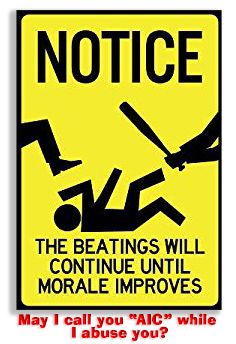
Time was, the joke went ‘the beatings will continue until morale improves.’ Now, it’s just ‘the beatings will continue…’

Bureau of Prisons inmate Andrew Fields alleged that guards at USP Lee repeatedly assaulted him after restraining him and placing him in solitary confinement, including ramming his head into the concrete wall and attacking him with a security shield.

Arguing that the COs’ excessive force violated his 8th Amendment right to be free from cruel and unusual punishment, Andy sued under Bivens v. Six Unknown Named Agents of Federal Bureau of Narcotics, the 1971 Supreme Court ruling that permitted a man to sue for a 4th Amendment violation when federal agents performed a warrantless search of his home and then strip-searched him at a courthouse. Bivens established the right implied in the Constitution to sue government employees for violating individual constitutional rights.

By the time the 1980s came around, the Supreme Court started to have second thoughts about Bivens. Since then, the Court has left Bivens standing in name only. In 2017, for example, the justices ruled in Ziglar v. Abbasi that Bivens remedies apply only to unreasonable searches and seizures by federal agents rather than civil rights claims based on the conditions of confinement.

In 2022, SCOTUS limited Bivens further in Egbert v Boule. There, the Court ruled that Bivens could not apply to a claim if the case involved an “extension” of Bivens into a “new context” that is “different in a meaningful way from previous Bivens cases decided by this Court,” and whether “special factors… counsel hesitation about granting the extension.

For the “special-factors” analysis, the Egbert Court asked broadly whether judicial intrusion into a “given field” is inappropriate. The question was whether it was appropriate to imply a Bivens action should apply to Border Patrol agents generally. Because border protection implicates national security, the Court ruled, it was more appropriate to leave the authorization of any remedy to Congress.

While the facts in Andy’s case were disputed, the officers argued that they were carrying out their duties in a high-risk environment and that allowing lawsuits like this to proceed would open the door to constant litigation, potentially interfering with prison safety and discipline. Andy was thrown out of district court, which held that Ziglar and Egbert meant he could not sue BOP correctional officers just because they repeatedly kicked the crap out of him. But on appeal, the 4th Circuit disagreed, finding that no “special factors counseled against extending Bivens” to a case based on excessive force by prison guards.

In last week’s unsigned opinion, the Supreme Court reinstated the District Court dismissal. “This case arises in a new context, and ‘special factors’ counsel against recognizing an implied Bivens cause of action for 8th Amendment excessive-force violations. To begin with, Congress has actively legislated in the area of prisoner litigation but has not enacted a statutory cause of action for money damages. In addition, extending Bivens to allow an 8th Amendment claim for excessive force could have negative systemic consequences for prison officials and the ‘inordinately difficult undertaking’ of running a prison. Moreover,” SCOTUS said, referring to the BOP administrative remedy system, “an alternative remedial structure already exists for aggrieved federal prisoners. The existence of such alternative remedial procedures counsels against allowing Bivens suits even if such procedures are ‘not as effective as an individual damages remedy.”

Andy’s lawyer stated in a subsequent press release, “Forbidding courts from redressing a constitutional violation is wrong, and it is especially dangerous in this day and age to immunize federal executive officials from accountability for their actions.”

Goldey v. Fields, Case No. 24-809, 2025 U.S. LEXIS 2572 (June 30, 2025)

Reason, Federal Prison Guards Allegedly Beat an Inmate to a Pulp. The Supreme Court Says He Can’t Sue (July 3, 2025)

 Thomas L. Root

Shorts for a Summer Holiday Weekend – Update for July 3, 2025

We post news and comment on federal criminal justice issues, focused primarily on trial and post-conviction matters, federal prison issues, legislative initiatives, and sentencing issues.

With this post, we celebrate our 1,800th blog since we put up our first newsletter back when Nino Scalia was still a Supreme Court Justice and Joe Biden was Vice President.

STOLEN DATA, LOUSY FOOD, BUDGET CUTTING – JUST ANOTHER WEEK AT THE BOP

Oops: Over 320 gigabytes of inmate data may have been hacked from Federal Bureau of Prisons computers, Cybernews announced last week.

On a popular data leak forum, hackers claim that some of the data was taken as recently as June 20th. It may include names, register and social security numbers, incident reports, release plans and medical records, Cybernews reported last week.

Cybernews said BOP told it, “We’re aware of the claims and are investigating their legitimacy.”

Cybernews, Massive breach exposes US Federal Bureau of Prisons, hacker claims (June 27, 2025)


Inspector General Reports on BOP Food Services: The DOJ Inspector General issued a report last week detailing inspections of BOP food service facilities at FCI Mendota, FCI Pollock, USP McCreary, FCI Marianna, MCC Chicago and FCI Allenwood.

The IG said, “USP McCreary and FCI Marianna had the greatest number of deficiencies. When considering the overall volume and nature of the deficiencies, we also determined that USP McCreary’s deficiencies were the most significant of all the institutions we inspected. In comparison, FCC Allenwood and MCC Chicago had the fewest deficiencies of the institutions we inspected, and we came away with a positive impression of their food service operations.”

Three of the six facilities were marked down for sanitation. A fourth, FCC Pollock, had a malfunctioning freezer. The Report said, “Ultimately, many of the issues we observed are manifestations of longstanding BOP-wide issues the OIG has previously identified, including ineffective contraband mitigation, insufficient security camera coverage, staff shortages, and failing infrastructure. The DOJ OIG’s body of BOP oversight work has previously identified these as significant enterprise-wide challenges for the BOP…”

DOJ Inspector General, Concurrent Inspections of BOP Food Service Operations (Report 25-062, June 17, 2025)

Administration Seeks to Cut Out New Kentucky Prison in BOP Budget: The DOJ is seeking to claw back $500 million earmarked for a new medium-security federal prison in Letcher County in a DOJ FY 2026 budget that nevertheless proposes a 2.8% increase in the BOP’s budget in order to add about 600 correctional officers.

The June 13 budget request proposes to rescind construction funding for the proposed prison that Representative Hal Rogers (R-KY) has worked to bring to Letcher County since 2006. The BOP moved forward last year with acquiring land for the project, but the Trump Administration now seeks to rescind funding for the project.

DOJ proposes that the BOP receive $8.869 billion, up from this year’s $8.629 million, for operations starting in October 2025.

DOJ Budget FY 2026 Budget and Performance Proposal (June 13, 2025)

Kentucky Lantern, Trump administration moves to rescind $500 million for federal prison in Letcher County (June 23, 2025)

– Thomas L. Root

Surprising Support for DOJ Gun Rights Proposal – Update for July 1, 2025

We post news and comment on federal criminal justice issues, focused primarily on trial and post-conviction matters, legislative initiatives, and sentencing issues. 

DEMOCRATS SPLIT ON RESTORING FELON GUN RIGHTS

Jake Fogleman of The Reload, a weekly report on the politics of gun control, reported last weekend that the Dept of Justice’s proposal to reauthorize the long-dormant gun rights restoration process for people convicted of nonviolent felonies appears to be pitting federal and local Democrats against one another.

Last February, President Donald Trump ordered a review of federal gun policy. One of the first proposals to come from that review was a proposed rulemaking to let DOJ use 18 USC § 925 to restore gun rights, essentially waiving 18 USC § 922(g) for those people. The initial recipient of this administrative grace, even before the rulemaking began, was actor and Trump supporter Mel Gibson, disqualified from gun possession by a prior domestic violence conviction.

In the comment period just ended, 16 Democratic state attorneys general – including those representing liberal bastions like California, Hawaii, Illinois, Connecticut and New Jersey – submitted a letter supporting the proposal (subject to what The Reload called “numerous caveats… intended to ensure that no one truly dangerous is able to make it through the process”). But their letter was surprisingly sympathetic to the resurrection of the process.

“While there is no constitutional requirement that mandates any particular form of firearms rights restoration by states or the federal government, as a policy matter, we believe that our residents’ lives should not be defined by the worst mistakes of their pasts,” the letter said.

On the other hand, six Democratic senators and representatives filed comments arguing that the proposed rule is an unlawful exercise of executive power being done to “help violent criminals regain firearms.”

“Given the pervasiveness of gun violence in our nation, this Administration should not be circumventing Congress’s authority to prioritize restoring firearm privileges to individuals convicted of serious or violent crimes,” the Congressional letter said. “Our country is plagued by an epidemic of gun violence.”

The Reload suggested that “part of the driving force behind the rift, at least for those who oppose the new process, [may be] over who is pursuing the new federal policy. Democratic officials, particularly those in Congress, have been under intense pressure from their constituents to demonstrate their resistance to the Trump Administration’s aggressive executive actions in its second term. It’s possible that, under different political circumstances, the lawmakers now vocally opposed to the move might have been more amenable to the idea… In an era in which the Democratic coalition has largely homogenized around a set of hardline gun restrictions, and in which the question of gun rights for felons has primarily been confined to the courts, it is notable to see new differences of opinion on the question emerge in the political arena.”

No doubt, having a rational, consistent means of restoring gun rights to people subject to 922(g) is a good idea. My concern, however, is that adoption of such a plan may make DOJ unwilling to press for a Supreme Court resolution on the constitutionality of 18 USC § 922(g)(1) as applied to nonviolent felons. DOJ already refused to seek certiorari on Range v. Bondi, the 3rd Circuit en banc decision that stands as the best case for limiting § 922(g)(1). That case now binds courts in Pennsylvania, New Jersey and Delaware, but without a SCOTUS decision, it lacks nationwide applicability and, perhaps more important, does not support a 28 USC § 2244 motion to bring a second or successive § 2255 motion.

That procedural fact leaves thousands of prisoners unable to challenge the constitutionality of their convictions in the post-Bruen world.

The Reload, Analysis: Is Rights Restoration for Convicts a New Dividing Line on Guns for Democrats? (June 29, 2025)

DOJ, Withdrawing the Attorney General’s Delegation of Authority (March 20, 2025)

Letter from 16 State Attorneys General (June 18, 2025)

Letter from Rep Rosa DeLauro et al (June 18, 2025)

 – Thomas L. Root

Less than Meets the Eye – Update for June 30, 2025

We post news and comment on federal criminal justice issues, focused primarily on trial and post-conviction matters, legislative initiatives, and sentencing issues.

A TRULY SHORT STACK

A week ago, I reported that BOP Director William K. Marshall III had announced the dawning of a new day in the use of First Step Act credits (FTCs) and the Second Chance Act. Among his several promises was that his new policy “ensures that FSA Earned Time Credits and SCA eligibility will be treated as cumulative and stackable, allowing qualified individuals to serve meaningful portions of their sentences in home confinement when appropriate.”

It turns out that the new memo doesn’t exactly say “cumulative and stackable”. Instead, it directs that “[i]n addition to FTCs for those individuals who have earned less than 365 days of FTCs, staff must also consider adding up to an additional 12 months of prerelease time under the SCA, based on the five-factor review.”

Under the heading “The Rules Are Clear,” a number of institutions last week issued guidance that doubled down on the memo. The “guidance” stated, “For individuals who have earned less than 365 days of FSA time credits towards supervised release, staff must also consider adding up to an additional 12 months of pre-release time under the SCA based on the five-factor review. The FSA Time Credit Worksheet for time under the SCA defaults to and will remain “zero” until your Unit Team inputs the pre-release time as determined based on the five-factor review. The number will range from zero to 12 months.”

Notwithstanding the heading, the only thing “clear” in all of this is the implication that, despite what the Director said, people who have more than 365 FTCs to be used toward prerelease custody will probably not be getting any SCA time whatsoever.

Practically speaking, no one with a sentence of under 46 months will earn any FTCs that go to prerelease custody. That’s because it is only mathematically possible to earn 365 days in a sentence of that length, after being adjusted for good time granted under 18 USC § 3624(b). All of the 46-monthers’ FTCs will be used up in cutting their sentences by 12 months. It will take a sentence of at least 74 months before a prisoner has accumulated more than 365 additional FTCs to be used toward more halfway house or home confinement. So the people with the most time – more than 74 months – being the ones most likely to benefit from the stacking, who will feel the impact of the non-stacking “stacking.”

Much of the problem arises from the tension between First Step and the SCA. Under the “five-factor review” (set out in 18 USC § 3621(b)), inmates are placed in halfway house not as a reward but rather because they need the prerelease custody time to give them “a reasonable opportunity to adjust to and prepare for the reentry.” 18 USC § 3624(c). First Step, on the other hand, treats halfway house/home confinement as a reward for earning FTCs. There’s nothing wrong with either approach, but the problem comes in mixing the two: despite all the fine talk about time being “cumulative and stackable,” the five-factor review applied to someone who is already entitled to 12 months in a halfway house as an incentive under the FSA is very unlikely to need any more than that amount of time there to have “a reasonable opportunity to adjust to and prepare for the reentry.”

The “five-factor review” will and probably should disqualify anyone with 12 months of prerelease custody under the FSA from any additional SCA prerelease time. If 12 months in a halfway house isn’t enough to prepare an inmate for release into the community, then (1) he or she probably is not rated as having a low chance of recidivism to begin with, and thus is ineligible to use any accumulated FTCs; and (2) will not make it in society once released.

I got email from an inmate last week denouncing the institutional guidance as “a very inmate-unfriendly interpretation of how FSA and SCA interact (despite the FSA saying time limits on SCA don’t apply and that FTCs should be in addition to other incentives).” But SCA halfway house was never meant to be an incentive, but rather was intended to be a tool for people who needed the transition time and services of a halfway house.

For now, the Director’s new policy suggests that we’ll see a lot more FSA prerelease time served on home confinement. That’s probably good for the BOP and prisoner alike. However, despite the “stackable and cumulative” talk, there is little reason to think that the “five-factor review” will result in stacked FSA and SCA prerelease custody time than it did before.

BOP, Bureau of Prisons Issues Directive to Fully Implement First Step Act and Second Chance Act (June 17, 2025)

BOP, Memorandum on Use of Home Confinement as a Release Option (June 17, 2025)

BOP, Home Confinement and Pre-Release Placement Updates (June 25, 2025)

– Thomas L. Root