Santa Courts Deliver Post-Conviction Coal – Update for December 18, 2025

We post news and comment on federal criminal justice issues, focused primarily on trial and post-conviction matters, legislative initiatives, and sentencing issues.

A CHRISTMAS LIST

A few appellate court holdings for your stocking (even if they seem to be lumps of coal):

Incompetence Here and There: Airrion Blake was convicted of tax fraud. Two months after his conviction, his attorney was thrown off the roster of attorneys allowed to practice in the 7th Circuit after “flagrantly disregard[ing]” the district court’s instructions in a civil case that “raise[d] serious concerns about his professional competence.”

Airrion filed a 28 USC § 2255 petition claiming that his lawyer’s disciplinary proceedings should negate any presumption that he was professionally competent in Airrion’s case. Last week, the 7th Circuit disagreed, reaffirming that ineffective assistance claims require case-specific analysis.

The court found that while Airrion’s lawyer misunderstood Brady obligations, Airrion failed to show how that prejudiced his case. Airrion admitted on the stand that his tax return was false, and ample evidence supported his conviction. Thus, there was no reasonable probability that correcting counsel’s errors would have changed the outcome.

Blake v. United States, Case No. 23-2399, 2025 U.S.App. LEXIS 32146 (7th Cir. Dec. 9, 2025)

No Need To Double Count: Jefferson Washington was convicted of a drug offense in 2020. His sentencing range would have been 24-30 months, but he was held to be a Guidelines career offender, making his sentencing range 151-188 months.

A few years later, the 4th Circuit held that Jeff’s predicate offenses did not qualify for career offender status. Jeff filed for compassionate release under 18 USC § 3582(c)(1)(A), arguing that the gross sentence disparity between what he got in 2020 and what he would get today was an extraordinary and compelling reason for a reduction, and that the same disparity should be considered when the court weighed the 18 USC § 3553(a) sentencing factors.

The district court denied relief.

It agreed that Jeff had demonstrated that he had an extraordinary and compelling reason for a sentence reduction based on the “enormous disparity” between the career offender Guidelines range at sentencing and what it would be if his career offender status were eliminated. Despite that determination, the court ruled that compassionate release was not justified under the § 3553(a) sentencing factors because of Jeff’s “significant criminal history” – dating back some thirty years and including a collection of non-violent and violent offenses showed “disrespect for the law.” The court held that Jeff’s commendable rehabilitative efforts weren’t enough to convince it that he posed ‘a reduced danger to himself or his community.” Jeff argued that his time served was more than the top end of his guidelines if he had been sentenced today, but the court didn’t discuss that argument in its decision denying Jeff’s compassionate release motion.

“We… reject Washington’s argument that the court abused its discretion by failing to explicitly address the sentencing Guidelines range disparity… as part of its § 3553(a) discussion,” the 4th Circuit held. “[D]istrict courts are not required to restate views expressed in its “extraordinary and compelling” analysis in its § 3553(a) analysis. And… on appellate review… we consider the totality of [the court’s] statements rather than view them in isolation.”

The 4th ruled that the “district court’s reasoning demonstrates that it was fully aware of the extent of the sentencing disparity at issue here and that it factored in Washington’s favor… [N]othing required the district court to… readdress this same point when considering the other statutory factors relevant to its decision whether to grant relief… [B]ecause the record demonstrates that the district court understood and explicitly engaged with Washington’s Guidelines range disparity as part of its decision to deny relief, it was not required to repeat the same information twice.”

United States v. Washington, Case No. 23-7036, 2025 U.S.App. LEXIS 32550 (4th Cir. Dec. 12, 2025)

Hurts so Bad: If there is any recurring theme in Bureau of Prisons prisoner care, it’s the BOP’s consistent failure to give any credence to inmate health complaints, too often until it’s much too late to prevent permanent injury or death.

Troy Williams filed a compassionate release motion claiming that the Bureau of Prisons had failed to adequately treat his medical condition by not testing his blood enough to ensure the medicine was working and that lockdowns were preventing treatment.

The district court found that the BOP medical treatment may have been inadequate, but it wasn’t that inadequate. Just sort of inadequate, and not inadequate enough to warrant intervention. Last week, the 6th Circuit agreed.

The Circuit said that while the BOP provided a declaration from its Health Services clinical director, Troy provided no “expert medical testimony” to connect sporadic and inadequate blood testing with any harm to his health. The evidence showed that even during a period with less than the recommended monthly testing, his numbers remained within an acceptable range and his doctors did not adjust his drug dosage.“ Given the overall record, the 4th said, the district court did not clearly err in finding that the frequency of Williams’s blood testing did not present a “risk of serious deterioration” to his health.

Troy also argued that lockdowns were preventing the facility from adequately treating him, but his medical records showed only one blood test was missed. He cited a third-party investigation of the prison that reported that frequent lockdowns interfered with medical care. As the government points out, however, there is only one documented instance in Williams’s voluminous medical records of a lockdown interfering with his blood testing. The BOP’s declaration and medical records got more credit than the third-party report, a decision that the appellate court held was not clearly erroneous.

The suggestion that compassionate release movants may need their own expert witnesses to counter the BOP’s self-serving medical declarations is troubling, raising a financial bar to relief that not many people can afford to overcome.

United States v. Williams, Case No. 25-3241, 2025 U.S.App. LEXIS 32556 (6th Cir. Dec. 12, 2025)

~ Thomas  L. Root
Sentencing Commission Finally Tackles Meth Guidelines – Update for December 16, 2025

We post news and comment on federal criminal justice issues, focused primarily on trial and post-conviction matters, legislative initiatives, and sentencing issues.

LISAStatHeader2small.jpg

SENTENCING COMMISSION PROPOSES LONG-AWAITED METH GUIDELINES AMENDMENT

There was a time when the US Sentencing Commission held a work meeting in January during which it would sort through ideas for the coming November’s amendments, adopting some options for public comment. After a few months of written comments and public sessions, the USSC would roll out the proposed amendments just in time for its May 1 deadline to get the package to Congress.

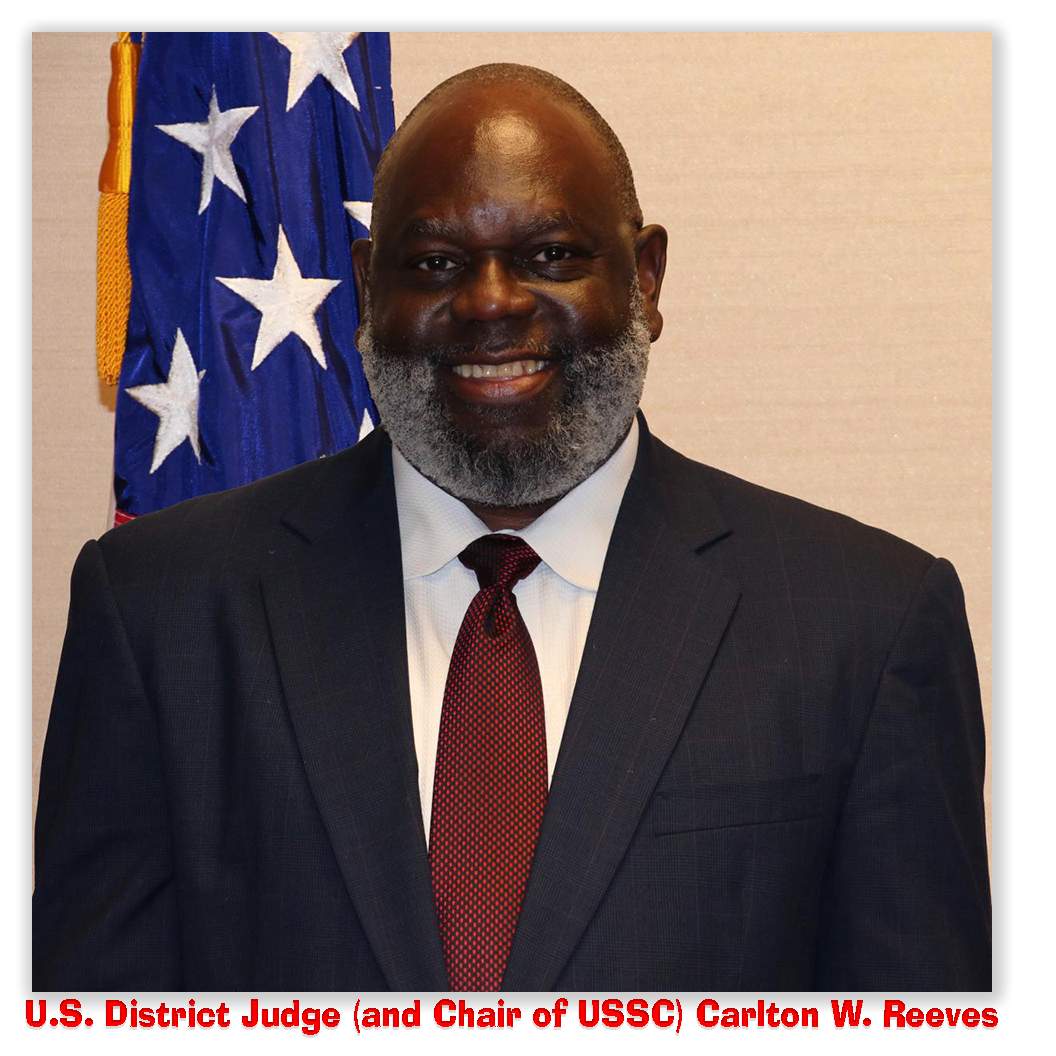
Under USSC Chairman Carlton W. Reeves, a US District Judge from the Southern District of Mississippi, the schedule seems to have been accelerated. That’s not a bad thing. But at the same time, the meetings these days seem much shorter and bereft of any meaningful discussion. I’ve seen speed dating encounters last longer.

Last Friday, in a 25-minute session, the Commission adopted for public comment a 194-page proposal to amend guidelines in nine areas. For prisoners, the most important of these to prisoners would be the options to change the methamphetamine guidelines. One proposal (Option 1) is to simply eliminate the Guidelines distinction among a meth mixture, meth (actual), and high-purity ice. All meth would be scored the same.

An alternative option (Option 2) would be to keep the distinctions in the current meth Guidelines but offer reductions for people who had minor roles, who qualified for the 18 USC § 3553(f) safety valve, or who were involved only because of family relationships or duress.

For theft and economic crimes, the Commission wants public comment on a proposal to raise the loss tables (which drive the offense level) by an average of 40%, both to simplify application and to adjust for inflation (which was done last 11 years and a lot of price hikes ago – up about 31% since 2016, according to one cost-of-living calculator).

In a separate proposal, the USSC seeks comment on a proposal to “simplify” the USSG § 2B1.1 loss table by reducing it from 16 levels to 7, with jumps of 4 points for each level. Additionally, the Commission suggests a new § 2B1.1 enhancement to reflect noneconomic harm to victims, such as physical, psychological harm, emotional, and reputational damage, or invasion of privacy.

More interesting is a USSC request for comment on redefinition of the “sophisticated means” enhancement. Currently, “sophisticated means” is widely applied by courts to virtually any economic offense more complex than stealing a Salvation Army kettle. The Commission seeks to return the “sophisticated means” enhancement to what was originally intended, “committing or concealing an offense with a greater level of complexity than typical for an offense of that nature” and provide further guidance for courts to use when determining whether conduct fits the definition.

Finally, the USSC has suggested a post-offense rehabilitation adjustment when a defendant shows pre-sentencing positive behavior or rehabilitation, such as voluntary efforts at rehabilitation or attempts to make things right with the victims.

No one already sentenced should get hopes up yet. None of the proposals has been suggested to be retroactive. That decision usually only comes after the proposed amendments are adopted in April. The Commission has a pending study on how to decide retroactivity, and a number of proposals for retroactivity of specific changes are bottled up awaiting the results of the retroactivity policy review.

Public comment closes February 10, 2026. Comments may be submitted through the USSC portal or in writing to U.S. Sentencing Commission, One Columbus Circle, NE, Suite 2-500, Washington, DC 20002-8002, Attn: Public Affairs – Proposed Amendments.

USSC Public Meeting (December 12, 2025)

USSC, Proposed Amendments to the Sentencing Guidelines (Preliminary) (December 12, 2025)

~ Thomas  L. Root

Trump Rumored to Plan Marijuana Rescheduling – Update for December 15, 2025

We post news and comment on federal criminal justice issues, focused primarily on trial and post-conviction matters, legislative initiatives, and sentencing issues.

TRUMP TO LOOSEN POT SCHEDULING?

You may recall that President Joe Biden made a big deal about rescheduling marijuana from a Schedule I controlled substance to Schedule III. This de-escalation of weed would have loosened a lot of the Controlled Substances Act restrictions and might have led to changes in mandatory minimum sentences and easing of marijuana Guidelines.

Biden didn’t get it done by the end of 2024 as promised, and his departure from the White House seemed to have brought the effort to a standstill.

President Trump ruminated about easing pot regulation this past summer. Late last week, rumors exploded in Washington that President Trump is expected to issue an executive order as soon as today that would allow for reclassification of marijuana, a White House official (who remained anonymous because he was not authorized to speak about it) told reporters.

Trump is expected to push the government to reduce regulation of the plant and its derivatives to the same level as some common prescription painkillers and other drugs, the Washington Post reported. The anticipated executive order is expected to direct federal agencies to pursue reclassification, the people said.

Reclassification will not decriminalize marijuana, but it would ease barriers to research and may drive Congress and the Sentencing Commission to reconsider sentence levels for the drug.

Although the President cannot reclassify pot by executive order, he can direct the Dept. of Justice to cancel a pending administrative hearing and issue the final rule.

The Post said that in a call last Wednesday between Trump and House Speaker Mike Johnson (R-LA), Johnson expressed skepticism about the plan, but Trump “ended the call appearing ready to go ahead.”

CNBC, Trump expected to sign executive order to reclassify marijuana as soon as Monday, source tells CNBC; pot stocks surge (December 12, 2025)

Washington Post, Trump seeks to cut restrictions on marijuana through planned order (December 11, 2025)

~ Thomas L. Root

Journalist ISO BOP Source – Update for December 12, 2025

We post news and comment on federal criminal justice issues, focused primarily on trial and post-conviction matters, legislative initiatives, and sentencing issues.

PROPUBLICA LOOKING FOR BOP WHISTLEBLOWERS

The investigative journalism nonprofit ProPublica is inviting BOP employees and others with “sensitive information” about the agency to provide their stories to ProPublica.

Reporter Keri Blakinger, who has been investigating the federal prison system for several years, wrote that she is “especially interested in tips about the leadership’s priorities, contracting and budget decisions, and concerns about wrongdoing or abuses of power. And I’m always interested in any documents or data you can share to paint a fuller picture of what’s going on inside the bureau.”

Blakinger broke the story several weeks ago that BOP correctional officers were abandoning the agency after bonuses were canceled, the union contract was scrapped, and the staff was deprived of basic needs from toilet paper to food. Many were lured away by better pay at Immigration and Customs Enforcement.

Three weeks ago, Blakinger reported that Deputy Director Joshua Smith’s video announcing the return of “significantly enhanced” retention incentives and one-time bonuses, paid for in part from savings from the canceled union contract – angered BOP union officials, who said the video was “designed to create a narrative that the union was the problem” and that canceling the contract somehow “fixed” it.

Blakinger wrote, “If you are a current prison employee or you have particularly sensitive information to share, you can contact me directly through Signal at KeriB.123.”

ProPublica, Do You Work at a Federal Prison? Help ProPublica Investigate the Federal Prison System (November 26, 2025)

BOP, Video Message from the Deputy Director: A Bureau on the Brink (November 19, 2025)

~ Thomas L. Root

Flattery, Politics, Money – It’s What a Pardon Requires – Update for December 11, 2025

We post news and comment on federal criminal justice issues, focused primarily on trial and post-conviction matters, legislative initiatives, and sentencing issues.

LESSONS FOR CLEMENCY APPLICANTS – CONTACTS AND MONEY HELP

President Donald Trump’s clemencies continued last week with beneficiaries including former congressman Henry Cuellar (D-TX) and his wife, and entertainment venue developer Tim Lieweke, accused of rigging bids for a $375 million basketball arena built for the University of Texas. None had gone to trial yet.

Trump claimed on Truth Social that the Cuellars’ bribery prosecution was the result of his speaking out against former President Joe Biden’s immigration policy. As for Lieweke, the pardon came after his lawyer, former Rep. Trey Gowdy (R-SC) (who hosts a Fox News program), sold Trump on the pardon while playing a round of golf with him.

“There’s nothing conventional about Trump’s pardoning,” said Margaret Love, former U.S. pardon attorney. “You don’t know whether he’s got a personal interest in the case, whether [it is] because of the nature of the offence — he’s concerned with bribery and financial crimes convictions.”

This year, roughly 10,000 federal prisoners have filed clemency petitions through the Office of Pardon Attorney. Only 10 of those have been granted. In previous administrations, OPA filtered a select few pardon applications to the president, and presidents only occasionally circumvented that process. With Trump, OPA seems to be where clemency petitions go to die. So how does an inmate get a leg up?

    • First, as Axios reported last week, “serious criminal conduct matters far less than whether the defendant pledges loyalty, flatters the president or aligns with his ideological project.” Honduran president Juan Orlando Hernández, pardoned the week before, wrote a fawning letter calling Trump’s accomplishments “historic” and gushing that “Mr. President, you and I also shared something deeper, a profound love for our countries. We are men of faith, patriots, willing to risk our lives for the safety of our people.”
    • Second, blame Biden. Trump said that Henry Cuellar had been prosecuted by Biden because he objected to Biden’s “open border” policies. The Honduran President complained that his case was brought “only because the Biden-Harris DOJ pursued a political agenda to empower its ideological allies in Honduras…”
    • Third, hire the right people. The Honduran President got Trump buddy Roger Stone to convince the President to issue the pardon. Lieweke had hired Gowdy’s law firm for representation in the criminal case.
    • Fourth, money always helps. Beyond paying people with presidential access, donating to a Trump cause may help. Last April, Trump pardoned Paul Walczak for tax crimes after Walczak’s mother attended a $1-million-per-person fundraiser at Mar-a-Lago.

New York Times columnist Sam Sifton wrote last week that “with Trump, it often comes down to winning him over — or at least his family or closest advisers. And because there are many ways to get in his good graces — donating to his political committees, helping fund the construction of the White House ballroom, having one of his friends vouch for you — there is a cottage industry of lawyers and lobbyists seeking to exploit those avenues.”

Saikrishna Prakash, a University of Virginia law professor who writes about the presidential pardon power, said last week that Trump is “enamored with this power precisely because it’s unchecked.”

Politico, Henry Cuellar will seek reelection as a Democrat after Trump pardon (December 3, 2025)

Wall Street Journal, A Round of Golf Changed Trump’s Tone on the Concert Industry (December 6, 2025)

Wall Street Journal, Trump’s Pardon for Cocaine Juan (December 2, 2025)

Axios, Trump wields pardons as purest form of power (December 3, 2025)

Financial Times, ‘Why are we letting this guy go?’ Donald Trump’s pardons upend US justice system (December 5, 2025)

New York Times, Who Gets a Presidential Pardon? (December 4, 2025)

~ Thomas L. Root

Low Sentence Undoes § 2255 Prejudice – Update for December 9, 2025

We post news and comment on federal criminal justice issues, focused primarily on trial and post-conviction matters, legislative initiatives, and sentencing issues.

LAWYER’S ERROR ON GUIDELINES NOT ALWAYS PREJUDICIAL, 11TH SAYS

In 2016, Cecil Buckner pled guilty to several Hobbs Act violations and 18 USC § 924(c) counts. The presentence report classified him as a Guidelines career offender because Cecil had two prior felony convictions for a controlled substance offense. The combined statutory minimum sentence for his § 924(c) convictions was 384 months. The PSR calculated a career-offender range of 535 to 572 months’ imprisonment. Without the career-offender classification, Cecil’s guideline range would have been 504 to 534 months.

At Cecil’s sentencing, no one objected to the PSR. The district court adopted it as its findings of fact and imposed a 414-month prison sentence, reducing it by 121 months because the § 924(c) mandatory sentence was so long that it amounted to an essentially life sentence.

Later, in a 28 USC § 2255 petition, Cecil argued that the PSR was wrong in classifying him as a career offender and that his lawyer had been ineffective for failing to object to the error. Without the mistake, Cecil says, the bottom of his Guidelines range would have been 31 months lower.

It has always been generally accepted that an incorrect Guidelines calculation is enough to show § 2255 prejudice, that is, a reasonable probability of a different outcome. But last week, the 11th Circuit said this presumption is not carved in stone.

The Circuit held that the application of an erroneous Guideline range may not be dispositive on the prejudice prong when the district court gives “a detailed explanation… mak[ing] it clear that the judge based the sentence… on factors independent of the Guidelines.” Here, the district court sentenced Cecil based on factors independent of his career-offender classification, imposing a sentence of 414 months of imprisonment, only 30 months more than the mandatory 384 months for the two § 924(c)s.

Because the district court arrived at Cecil’s sentence by balancing his life expectancy with the “terror” and “fear” that he inflicted upon his victims, the 11th held, Cecil had “not established a reasonable probability that his sentence would have been different if counsel had objected to his career-offender classification.”

Buckner v. United States, Case No. 24-10001, 2025 U.S.App. LEXIS 31479 (11th Cir., December 3, 2025)

~ Thomas L. Root

Deja Vu All Over Again – Update for December 8, 2025

We post news and comment on federal criminal justice issues, focused primarily on trial and post-conviction matters, legislative initiatives, and sentencing issues.

TRUMP TRIES TO VOID BIDEN CLEMENCIES

I have previously reported that last Tuesday, President Trump wrote on his inaptly-named “Truth Social” that he was declaring an untold number of President Biden’s clemencies to be of “no further force or effect” because Trump said the proclamations had been signed with an autopen as opposed to being “directly signed by Crooked Joe Biden.”

(Trump’s reference to Biden as “crooked” has a certain ‘pot calling the kettle black‘ quality to it, but we’ll leave that alone for now).

Forgive me for reprinting the portions of this post you may have already read. I built on last Thursday’s content for LISA’s newsletter to federal prisoners and their families published last night, and it seemed to me that there was enough new content to warrant a partial repost. Like the great philosopher Yogi Berra said, “It’s deja vu all over again.”

Tuesday night, Trump ranted on Truth Social that he was voiding all pardons and commutations that were signed by Biden with an autopen:

“Any and all Documents, Proclamations, Executive Orders, Memorandums, or Contracts, signed by Order of the now infamous and unauthorized “AUTOPEN,” within the Administration of Joseph R. Biden Jr., are hereby null, void, and of no further force or effect. Anyone receiving “Pardons,” “Commutations,” or any other Legal Document so signed, please be advised that said Document has been fully and completely terminated, and is of no Legal effect.”

Trump has often claimed that Biden used the autopen, a mechanical device that allows signatures without a person using their hand, because of the former president’s physical and mental frailty. Biden issued 4,245 acts of clemency during his four years in office, more than any other US president since the start of the 20th century, according to Pew Research Center. Before leaving office last January, he issued several pardons — including for family members — and commuted sentences for about 1,700 drug offenders.

No one has reported whether Biden used an autopen to sign any of the pardons or commutations, but that has not deterred Trump from claiming he did.

Most of the clemencies were commutations rather than pardons. Biden only issued 80 individual pardons, but he did issue “pardons by proclamation” which affected entire classes of people. The pardons by proclamation included one for former military service members convicted of violating a ban on gay sex and people convicted of certain federal marijuana nontrafficking offenses.

David Super, a constitutional and administrative law professor at Georgetown University, told Government Executive last spring that “the Constitution does not require signatures for pardons. It simply says the president has the power to pardon.”

“So if President Biden wanted to simply verbally tell someone they’re pardoned, he could do that. It wouldn’t have to be in writing at all,” he said. “Administratively, of course, we want things in writing… but there’s no constitutional requirement.”

If Trump were to try to rearrest someone who received clemency in order to return them to prison, legal experts predict the actions would be unlikely to stand. “I can’t imagine the court saying that it wasn’t a valid pardon because of the autopen issue,” Stanford University Law School professor Bernadette Meyler told The Daily Signal. “Biden made statements regarding these pardons, so it would be hard to show that they weren’t a decision of the President.”

To reverse the pardons, DOJ would have to act, and the courts would have to resolve the question. “If Biden never authorized it, it’s an invalid pardon anyway,” Paul Kamenar, counsel for the National Legal and Policy Center, explained.

Ironically, Trump’s recent pardon of people “for conduct relating to support, voting… or advocacy for or of any slate or proposed slate of Presidential electors… in connection with the 2020 Presidential Election” is so vague and limitless that it could apply to thousands of people. In an Eastern District of Pennsylvania case of a man accused of voting both in Pennsylvania and Florida back in 2020 (he says he voted for Trump in both places), the defendant has moved to dismiss the indictment by claiming the pardon applies to him, too.  The Dept of Justice has argued in that case that it’s up to Attorney General Pam Bondi and Pardon Attorney Edward Martin to decide who, and which possible crimes, Trump actually meant to cover.

Politico reported last week that there’s neither historical nor modern precedent for a president to delegate his pardon power to subordinates on a pardon this vaguely worded. In fact, it is remarkably similar to what Trump has accused Biden of having done.

Other clemency issues will be more difficult to litigate if it means reincarceration or returning old penalties, said John Malcolm, director of the Meese Center for Legal and Judicial Studies at The Heritage Foundation.

“This is totally unprecedented territory,” Malcolm told The Daily Signal. “Normally pardons and grants of clemency, for example, are not subject to challenge since a president’s pardon power is plenary.”

“Here, the issue will be litigated when Trump takes some action that runs contrary to what Biden did–such as seeking to reincarcerate someone who was pardoned or granted clemency or setting an execution date for one of the 37 death row inmates whose sentences Biden commuted–and then we’ll see what a court does,” Malcolm added.

Trump’s move is a key first step. “The bigger threat that President Trump has brought to the public’s attention is the idea of unelected staffers exercising power they don’t have,” Stewart Whitson of the Foundation for Government Accountability told The Daily Signal. “It could be at the behest of a well-funded organizations or even foreign funding pushing unelected bureaucrats to act.”

Newsweek, Trump Says All Pardons, Commutations Signed by Biden Autopen ‘Terminated’ (December 2, 2025)

Government Executive, Trump says he is voiding Biden executive actions signed with autopen (December 1, 2025)

Stanford Law School, Why Trump Can’t ‘Void’ Biden’s Pardons Because of Autopen (March 17, 2025)

Government’s Opposition to Defendant’s Motion to Dismiss the Indictment (ECF 23), United States  v. Weiss, Eastern District of Pennsylvania, filed November 28, 2025

Politico, DOJ claims it has the power to decide who gets Trump’s sweeping 2020 pardon (December 4, 2025)

Daily Signal, What’s Next After Trump Voids Biden Autopen Orders? (December 4, 2025)

~ Thomas L. Root

USSC To Propose 2026 Guidelines Amendments Next Week – Update for December 5, 2025

We post news and comment on federal criminal justice issues, focused primarily on trial and post-conviction matters, legislative initiatives, and sentencing issues.

SENTENCING COMMISSION SETS DECEMBER MEETING ON 2026 AMENDMENTS

The United States Sentencing Commission announced last Monday that it would hold a public meeting on Friday, December 12, 2025, at which it is likely to vote to publish some proposed guideline amendments.

Policy priorities – which may or may not be reflected in proposed amendments – include revisiting the penalty structure in the USSG § 2D1.1 drug guidelines, including issues of methamphetamine purity. They also suggest the possible restructuring the § 2B1.1 theft/fraud guidelines “to ensure the guidelines appropriately reflect the culpability of the individual and the harm to the victim, including (A) reassessing the role of actual loss, intended loss, and gain; (B) considering whether the loss table in § 2B1.1 should be revised to simplify application or to adjust for inflation,” as well as role in the offense and victim impact.

US Sentencing Commission, Public Meeting set for December 12, 2025 (November 24, 2025)

US Sentencing Commission, Final Priorities for Amendment Cycle (90 FR 39263, August 14, 2025)

~ Thomas L. Root

I Really Do Hate To Say ‘I Told You So’ – Update for December 4, 2025

We post news and comment on federal criminal justice issues, focused primarily on trial and post-conviction matters, legislative initiatives, and sentencing issues.

TRUMP TRIES TO VOID BIDEN CLEMENCIES

On Tuesday, I warned that President Trump wrote last week on the inaptly-named “Truth Social” that he considered “[a]ny document signed by Sleepy Joe Biden with the Autopen, which was approximately 92% of them,” to be of “no further force or effect.” Trump said he was overturning all the executive orders under the Biden administration and “anything else that was not directly signed by Crooked Joe Biden.”

I speculated that “anything else” might include clemencies, but that Trump had not yet tried to void any of them. But that was Tuesday morning. On Tuesday night, Trump ranted on Truth Social that he had voided all pardons and commutations that were signed by his predecessor, President Joe Biden, with an autopen:

Any and all Documents, Proclamations, Executive Orders, Memorandums, or Contracts, signed by Order of the now infamous and unauthorized “AUTOPEN,” within the Administration of Joseph R. Biden Jr., are hereby null, void, and of no further force or effect. Anyone receiving “Pardons,” “Commutations,” or any other Legal Document so signed, please be advised that said Document has been fully and completely terminated, and is of no Legal effect. Thank you for your attention to this matter!

Trump has repeatedly claimed without citing any evidence that Biden’s use of the autopen, a mechanical device that allows signatures without a person using their hand, resulted from the former president’s physical and mental frailty. Biden issued a record 4,245 acts of clemency during his four years in office, more than any other US president since the start of the 20th century, according to the non-partisan Pew Research Center. It is not known whether Biden used an autopen to sign pardons.

Before leaving office in January, Biden issued several pardons — including for family members he said he wanted to shield from politically motivated investigations — and commuted sentences for a number of nonviolent drug offenders. Trump, known for his criticism of political rivals, has repeatedly seized on Biden’s use of the autopen to sign official documents during his presidency.

Most of the clemencies were commutations rather than pardons. Biden only issued 80 individual pardons, but he did issue “pardons by proclamation” which affected entire classes of people. The pardons by proclamation included one for former military service members convicted of violating a ban on gay sex and people convicted of certain federal marijuana nontrafficking offenses.

David Super, a constitutional and administrative law professor at Georgetown University, told Government Executive last spring that “the Constitution does not require signatures for pardons. It simply says the president has the power to pardon.”

“So if President Biden wanted to simply verbally tell someone they’re pardoned, he could do that. It wouldn’t have to be in writing at all,” he said. “Administratively, of course, we want things in writing. It makes things a lot simpler, but there’s no constitutional requirement.”

If Trump were to try to prosecute or arrest someone who received clemency in order to return them to prison, legal experts predict the actions would be unlikely to stand. “I can’t imagine the court saying that it wasn’t a valid pardon because of the autopen issue,” says Stanford University Law School professor Bernadette Meyler. “Biden made statements regarding these pardons, so it would be hard to show that they weren’t a decision of the President.”

Of course, as he has already demonstrated, Trump is unlikely to shrink from trying to reimprison someone simply because no one believes his power extends to such an action.

Newsweek, Trump Says All Pardons, Commutations Signed by Biden Autopen ‘Terminated’ (December 2, 2025)

Government Executive, Trump says he is voiding Biden executive actions signed with autopen (December 1, 2025)

Time, Why Trump Can’t ‘Void’ Biden’s Pardons Because of Autopen (March 17, 2025)

~ Thomas L. Root

Most Recent Pardons Don’t Bode Well For Federal Clemency – Update for December 2, 2025

We post news and comment on federal criminal justice issues, focused primarily on trial and post-conviction matters, legislative initiatives, and sentencing issues.

PARDONS FROM THE SUBLIME TO THE WEIRD

President Trump conducted the annual turkey pardon on the Tuesday before Thanksgiving, sparing “Waddle” and “Gobble” from the processing house.

At the same time, he extended the pardon to the Peach and Blossom, the two turkeys President Biden pardoned last year. Trump contended that Biden’s pardon of the birds was invalid because it was signed with an autopen instead of by Biden himself.

“The turkeys known as Peach and Blossom last year have been located, and they were on their way to be processed, in other words to be killed, but I stopped that journey and I am officially pardoning them,” Trump said.

Last Friday, Trump wrote on Truth Social: “Any document signed by Sleepy Joe Biden with the Autopen, which was approximately 92% of them, is hereby terminated, and of no further force or effect. The Autopen is not allowed to be used if approval is not specifically given by the President of the United States.” 

Trump also said that he has now overturned all the executive orders under the Biden administration and “anything else that was not directly signed by Crooked Joe Biden.”

Unless it’s an autopen doing the signing

It is not clear what “anything else that was not directly signed by Crooked Joe Biden” might include, such as clemencies. However, any notion that pardons might be excluded was undercut by Trump’s comments during the turkey pardon. Trump has previously suggested that Biden’s clemencies were illegal, but he has not yet tried to void any of them. His recent actions suggest that such an attempt is not out of the question.

Trump continues to issue clemencies one at a time, even where doing so contradicts his policies. In a Saturday social media post, Trump said that drug cartels present one of the most pressing dangers to the USA, saying in a social media post that airspace above and surrounding Venezuela should be considered “CLOSED IN ITS ENTIRETY.”

But this pronouncement followed Trump’s Friday social media announcement of a pardon for Juan Orlando Hernández, former president of Honduras, who was convicted of drug trafficking charges and has 35 years to go on his 45-year federal sentence.

The New York Times said, “The two posts displayed a remarkable dissonance in the president’s strategy, as he moved to escalate a military campaign against drug trafficking while ordering the release of a man prosecutors said had taken “cocaine-fueled bribes” from cartels and “protected their drugs with the full power and strength of the state — military, police and justice system.”

Trump said he had issued the pardon to Hernández because “they gave him 45 years because he was the president of the country — you could do this to any president on any country.”  Trump said that friends had alerted him to the wrongs done to Hernández: “Many people that I greatly respect” had told him Hernández had been “treated very harshly and unfairly.”

“Why would we pardon this guy and then go after Maduro for running drugs into the United States,” wrote Sen. Bill Cassidy (R., La.) on X. “Lock up every drug runner! I don’t understand why he is being pardoned.”

Meanwhile, just in case you think Trump’s pardon czar Alice Marie Johnson has gone dormant, she said in a Thanksgiving social media post that Trump had commuted the 7-year sentence of a private equity executive who had served less than two weeks for his role in what prosecutors described as a $1.6 billion scheme that defrauded thousands of victims.

David Gentile reported to prison on November 14th and suffered horribly in a minimum-security camp for nearly two weeks before being released on Thanksgiving Eve, according to the BOP. Alice Johnson said that she was “deeply grateful to see David Gentile heading home to his young children” and called it an “act of mercy.”

A White House official used the old refrain of “Biden something something,” suggesting that the Biden administration’s Ponzi scheme claim against Gentile’s company – good enough to convince a unanimous jury – was nevertheless “profoundly undercut by the fact that GPB had explicitly told investors what would happen… At trial, the government was unable to tie any supposedly fraudulent representations to Mr. Gentile.” The White House official spoke on condition of anonymity due to not being authorized to speak on the topic.

Ironically, we have always advised people seeking clemency that arguing the unjustness of their conviction was strongly disfavored.  Apparently, that’s the case no longer.

ABC News, Trump’s turkey pardoning turns political, but Waddle and Gobble are spared (November 25, 2025)

NBC, Trump ‘cancelling’ Biden executive orders signed by autopen (November 28, 2025)

New York Times, In Announcing Pardon of Drug Trafficker While Threatening Venezuela, Trump Displays Contradictions (November 29, 2025)

Wall Street Journal, He Was Convicted of Running a Narco State. Now Trump Plans to Pardon Him. (December 1, 2025)

Reuters, Trump frees former GPB Capital CEO after Biden admin’s Ponzi scheme sentence (November 30, 2025)

X.com, Alice Marie Johnson – All Grace (November 27, 2025)

~ Thomas L. Root