Tag Archives: Hunter

Guns, Drugs and Appellate Waivers – Update for March 9, 2026

We post news and comment on federal criminal justice issues, focused primarily on trial and post-conviction matters, legislative initiatives, and sentencing issues.

SUPREME COURT HAS PRISONER-FRIENDLY WEEK…

The Supremes heard oral arguments in two cases last week, and while it is always perilous to predict the outcome from what happens in oral argument, the signs favor two pro-prisoner decisions.

In the closely-watched United States v. Hemani case, the government sought review of a 5th Circuit holding that 18 USC § 922(g)(3) – which prohibits drug abusers from possessing guns – could be applied to a gun owner who smoked pot a few times a week consistent with the 2nd Amendment.

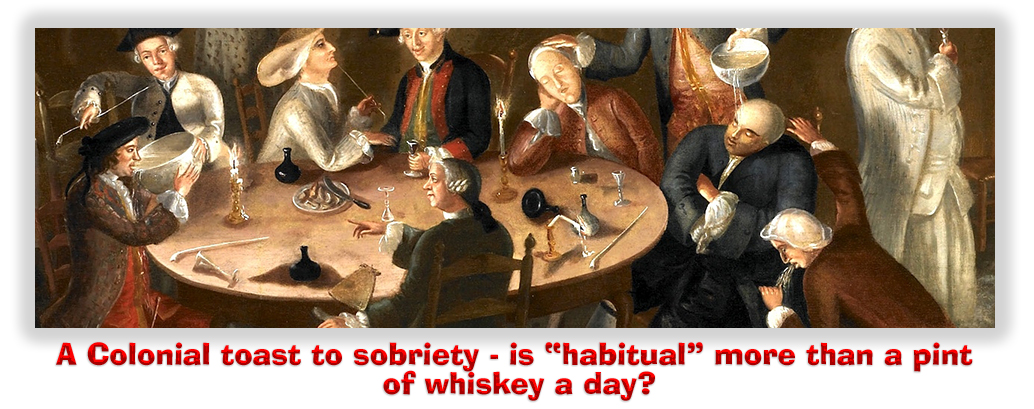
Attorneys for the government compared § 922(g)(3) to colonial-era laws that disarmed “habitual drunkards.” However, Justice Neil Gorsuch wondered whether Hemani even qualified as a “habitual user” of marijuana. Gorsuch observed that the term “habitual drunkard” carried a very different meaning in early American history, because people generally drank alcohol in great quantity. “John Adams,” Gorsuch said, “took a tankard of hard cider with his breakfast every day,” while “James Madison reportedly drank a pint of whiskey every day.”

And if those Founding Fathers were not “habitual drunkards,” Gorsuch asked, “then what do we know about Mr. Hemani? We know he uses marijuana … about every other day… [W]e don’t even know the quantity of how much he uses every other day.”  And the federal government, Gorsuch said, “has not been able to define what a user is.”

A majority of the justices seemed to agree that § 922(g)(3) may be overbroad, lumping together occasional drug users with people addicted to drugs who threaten public safety. “Is it the government’s position that if I unlawfully use Ambien or I unlawfully use Xanax, then I become dangerous?” Justice Amy Coney Barrett asked the government’s attorney. “What is the government’s evidence that using marijuana a couple times a week makes someone dangerous?” she added.

If the Hemani opinion focuses on “dangerousness,” it may advance arguments that nonviolent felons should not be subject to § 922(g)(1). Politico, however, warned that it is “unclear whether the justices will use the case against Ali Hemani to issue another major ruling on when the government can intrude on the 2nd Amendment right to bear arms.”

A case that has drawn lesser interest (but is maybe more consequential for defendants) is Hunter v. United States. Hunter asks what exceptions exist to federal defendants’ waivers of their right to appeal, language that appears in virtually every one of the 94% of federal cases that end with a guilty plea every year.

SCOTUSBlog reported that “[t]he justices seemed poised to endorse more exceptions than just the two the government endorsed – ones for ineffective assistance of counsel in entering into a plea agreement and for sentences above the statutory maximum. A number of justices also expressed misgivings about relying on contract law to define exceptions to appellate waivers… and a majority seemed likely to hold, at a minimum, that a defendant could escape from an appellate waiver when enforcing it would result in a “miscarriage of justice…”

The National Law Journal observed that DOJ’s “hard line on enforcing plea bargained waivers of appeal took U.S. Supreme Court justices aback,” even suggesting that if a district court were avowedly racist at sentencing, an appeal waiver would prevent the defendant from getting any relief.

Writing last week in his Sentencing Law and Policy blog, Ohio State University law prof Doug Berman argued that broad sentencing appeal waivers “insulate all sorts of sentencing errors from scrutiny and review, and they seem fundamentally inconsistent with the decision by Congress in the Sentencing Reform Act of 1984 to provide both defendants and the government with the right… to seek appellate ‘review of an otherwise final sentence’.”

Berman wrote that he “was pleased to discover at least one Justice (Justice Jackson) seemed drawn to the idea that broad sentencing appeal waivers were void as against public policy, and I was even more pleased that it was not clear that any Justice was eager to embrace the government’s suggestion that broad sentencing appeal waivers were subject to almost no exceptions. I predict the majority of the Court will end up between these extremes, and I am already looking forward to seeing what the middle ground will be.”

United States v. Hemani, Case No. 24-1234 (oral argument March 2, 2026)

Politico, Supreme Court wrestles with gun ban for drug users (March 2, 2026)

SCOTUSBlog, Supreme Court skeptical of law banning drug users from possessing firearms (March 2, 2026)

New York Times, Supreme Court Appears Skeptical of Law Banning Drug Users From Owning Guns (March 2, 2026)

Hunter v. United States, Case No. 24-1063 (oral argument March 3, 2026)

SCOTUSBlog, Justices poised to adopt exceptions to federal criminal defendants’ appellate waivers (March 6, 2026)

National Law Journal, ‘Racist Sentencing Judge?’: DOJ Stuns Supreme Court With Stance on Appeal Waivers (March 4, 2026)

Sentencing Law and Policy, Broad array of Justices express broad concerns about broad appeal waivers in Hunter oral argument (March 3, 2026)

~ Thomas L. Root

March Will Bring Cherry Blossoms and Supreme Court Arguments – Update for January 5, 2026

We post news and comment on federal criminal justice issues, focused primarily on trial and post-conviction matters, legislative initiatives, and sentencing issues.

SCOTUS SCHEDULES ARGUMENT ON TWO CRIMINAL CASES OF NOTE

The Supreme Court has issued its February oral argument schedule, including two cases of substantial interest to federal defendants and prisoners.

The two arguments actually fall the first week of March, not in February… but then this is the Supreme Court, where the last week of next June will still be “October Term 2025.” Nevertheless, we can be confident that before the cherry blossoms bloom along the Tidal Basin, we may have some idea of the high court’s thinking on two consequential criminal cases now before it.

The cases:  First, the one not getting much press but arguably the more important of the two is Hunter v. United States, a case that asks whether a federal appeals court properly dismissed a Texas man’s appeal of a mandatory-medication condition when he had waived his right to appeal as part of his plea agreement, but the judge who imposed the condition told him that he had a right to appeal.

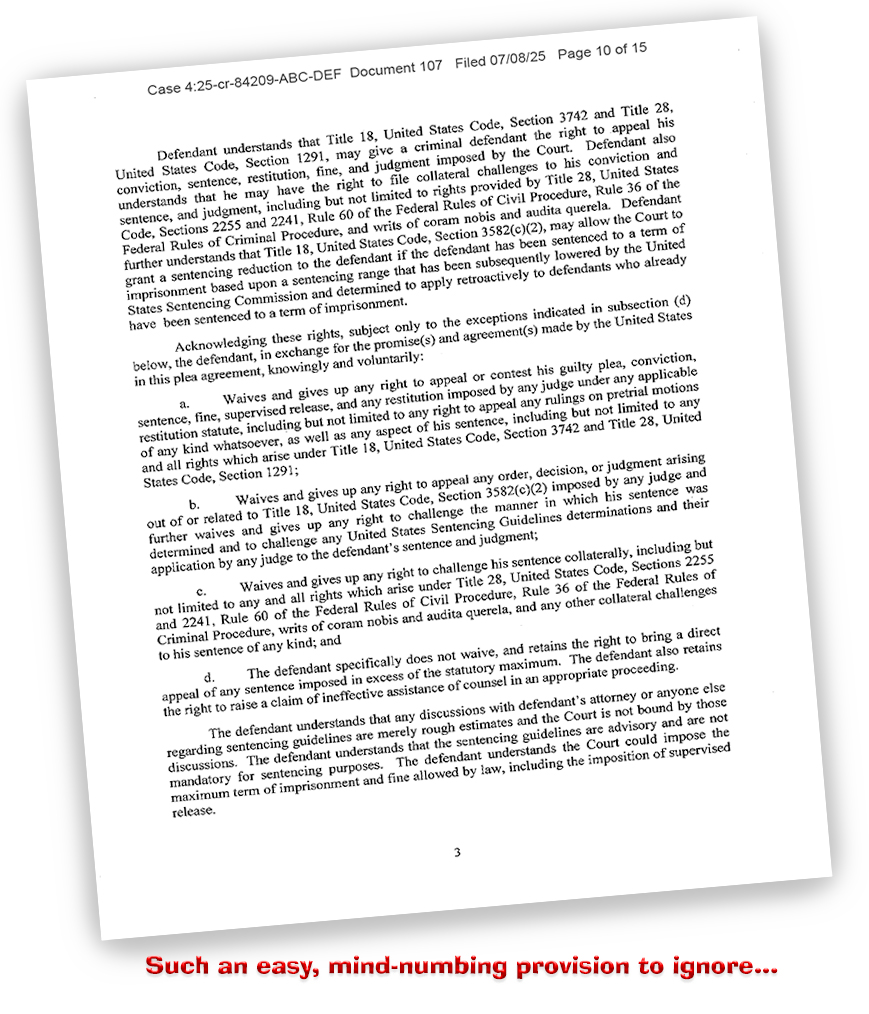
The importance is this: Something like 94% of federal criminal cases end in guilty pleas, and virtually all of those pleas are entered pursuant to a written plea agreement between the defendant and the government. And virtually all of those agreements have the defendant agreeing to waive his or her rights to appeal, to file post-conviction attacks on their conviction and sentences, and to give up other rights – such as to seek compassionate release or even bring a Freedom of Information Act request for records from the government.

The Hunter issues before the Supreme Court include what, if any, are the permissible exceptions to waiver in a plea agreement, now generally recognized as only being claims of ineffective assistance of counsel or that the sentence exceeds the statutory maximum. A second issue is whether an appeal waiver applies when the sentencing judge advises the defendant that he or she has a right to appeal and the government does not object.

The Supreme Court case getting more attention is United States v. Hemani, in which the government is challenging a 5th Circuit ruling that 18 USC § 922(g)(3) – that prohibits an “unlawful user” of a controlled substance from possessing a gun – violates the 2nd Amendment as applied to the defendant. Mr. Hemani was a regular marijuana user but was not high while in physical possession of his handgun.`

Law Professor Joel Johnson, a former Supreme Court litigator with the Dept of Justice, recently argued in a SCOTUSBlog post that the Supreme Court could easily dispose of the Hemani case by relying on the rule of lenity instead of the 2ndAmendment. He said, “If the court decides that the law applies only to people who are armed while intoxicated, the 2nd Amendment concerns largely vanish. There is stronger historical support for disarming someone who is high – and thus not of sound mind – than there is for disarming someone who happened to smoke a joint last weekend but is no longer impaired.”

Also in a SCOTUSBlog post, NYU Law Professor Danial Harawa argued for a revival of the rule of lenity:

Congress has enacted thousands of criminal laws, many written broadly and enforced aggressively. With an overly bloated criminal code, lenity should function as a meaningful check – a reminder that punishment must rest on clear legislative authorization… At bottom, the rule of lenity is about who bears the risk of uncertainty in the criminal law. For most of the court’s history, that risk fell on the government. When Congress failed to speak clearly, defendants were entitled to the benefit of the doubt. If it wanted, Congress could rewrite the law to clarify its reach. There is no cost for congressional imprecision, however, and thus no real need for Congress to legislate carefully and clearly. When lenity is weakened, the cost of ambiguity shifts from the government to defendants, and the result is more defendants. Given the pedigree and importance of this rule, the Supreme Court needs to resolve when the rule applies sooner rather than later.

Second Amendment advocates and scholars hope that Hemeni will advance the 2nd Amendment debate begun by Heller, Bruen, and Rahimi. But even if it does not, it may provide some enduring guidance on the rule of lenity, an issue of less sexiness but perhaps more import to criminal law.

SCOTUSblog, Court announces it will hear case on gun rights among several others in February sitting  (January 2, 2026)

Hunter v. United States, Case No. 24-1063 (oral argument set for March 3, 2026)

United States v. Hemani, Case No, 24-1234 (oral argument set for March 2, 2026)

SCOTUSblog, An off-ramp for the court’s next big gun case (December 18, 2025)

SCOTUSblog, Reviving Lenity (December 26, 2025)

~ Thomas  L. Root

SCOTUS Will Decide When a Waiver Has Been Waived  – Update for October 14, 2025

We post news and comment on federal criminal justice issues, focused primarily on trial and post-conviction matters, legislative initiatives, and sentencing issues.

WAVING GOODBYE TO WAIVER CONFUSION?

The Supreme Court last Friday granted review to a federal criminal case asking whether a plea agreement appeal waiver binds a defendant where the judge advised him that he had the right to appeal.

Munson Hunter pled guilty to aiding and abetting wire fraud. He signed a plea agreement that, among other things, provided that he was giving up his right to appeal.

At sentencing, a the judge imposed a mental health condition over the defendant’s objection and then told the defendant, “You have a right to appeal.”

Munson appealed the mental health condition to the 5th Circuit, which – pointing to his appeal waiver – dismissed the appeal.

SCOTUS will address two issues:

Whether the only permissible exceptions to a general appeal waiver are for claims of ineffective assistance of counsel or that the sentence exceeds the statutory maximum.

Whether an appeal waiver applies when the sentencing judge advises the defendant that he has a right to appeal, and the government does not object.

A Circuit split exists on the issue. In the 9th Circuit, if a sentencing judge advises a defendant of a right to appeal and the government fails to object, the appeal waiver in the plea agreement has no effect.

The Supreme Court will now settle the issue.

Hunter v. Texas, Case No 24-1063 (certiorari granted October 10, 2025)

SCOTUSBlog, Court grants criminal case on right to appeal (October 10, 2025)

~ Thomas L. Root