Martin is Pardon Attorney Short-Timer, CNN Reports – Update for February 9, 2026

We post news and comment on federal criminal justice issues, focused primarily on trial and post-conviction matters, legislative initiatives, and sentencing issues.

EDDIE, WE HARDLY KNEW YE

Edward Martin – the man who was too pro-Trump even for some Republican senators to serve as U.S. Attorney in the District of Columbia, being relegated instead to be Pardon Attorney and as Dept of Justice “weaponization” czar – has been quietly stripped of one title and is expected to step down as Pardon Attorney in the next few weeks.

The Wall Street Journal and other outlets reported last week that Martin has been stripped of his duties leading the so-called weaponization working group, formed early last year to take action against government employees deemed hostile to Trump or to conservative ideals.

Martin remains the Justice Department’s pardon attorney, where his duties included reviewing clemency applications and making recommendations to the president. Having once worked from an office department headquarters dubbed the “Freedom Suite,” he has relocated to the pardon attorney’s offices across town. Martin is expected to leave the department in coming weeks.

CNN reported that a DOJ review found that Martin improperly shared secret grand jury material in the investigation of the Senator Adam Schiff case, an investigation into an alleged (and dubious) mortgage fraud matter. CNN’s source said Martin initially falsely denied sharing grand jury material with unauthorized people, but emails soon surfaced showing that he had done so.

CNN said Martin “is expected to leave the department in the coming weeks, according to a source familiar with his plans.’

As Pardon Attorney, Martin prioritized clemency for people connected to the President and the MAGA movement, and people whose families have been major donors to the Trump campaign or projects. He proudly declared on the X formerly known as Twitter that his pardon policy was “No MAGA left behind.”

Martin’s signature clemency actions have been overwhelmingly partisan. Martin’s legal background included making a cottage industry of defending people charged with rioting and other offenses arising from the January 6th, 2001, march on the U.S. Capitol

Wall Street Journal, Trump Ally Ed Martin Loses Weaponization Czar Role (February 2, 2026)

CNN, Justice Department review found Trump ally Ed Martin improperly leaked grand jury material in probe of president’s foes (February 4, 2026)

CNN, Ed Martin: Trump’s one-time weaponization chief is expected to depart Justice Department in coming weeks (February 2, 2026)

~ Thomas L. Root
Where the Boys Aren’t – Update for February 6, 2026

We post news and comment on federal criminal justice issues, focused primarily on trial and post-conviction matters, legislative initiatives, and sentencing issues.

JUDGE BLOCKS BOP ON EXPOSING TWO WOMEN TO TRANS FEMALES

The Bureau of Prisons last week agreed to a permanent injunction keeping biological male inmates who identify as female separated from two female inmates at FMC Carswell, the BOP’s medical center for women in Ft. Worth, Texas.

Two named female plaintiffs sued the BOP last year, seeking an order that they would not have to “interact in private spaces with the male inmates housed at FMC Carswell. Those inmates include at least four sex offenders, a murderer, and a violent armed bank robber whose goal was to overthrow the United States government on behalf of the ‘Aryan Republican Army’,” according to the website Legal Insurrection.

The Order requires that as long as the two named plaintiffs are housed at  Carswell, the BOP is “permanently enjoined from permitting any male inmate to enter or remain in any privacy area (including showers, restrooms, changing areas, and dormitory spaces) to which either Plaintiff has access, such that Plaintiffs are not exposed to male inmates while showering, toileting, dressing or sleeping.”

Stipulated Order of Permanent Injunction (ECF 137), Fleming v. United States, Case No 4:25-cv-157 (NDTX, February 2, 2026)

Legal Insurrection, Texas Judge Issues Permanent Injunction in Case Keeping Males Away From Incarcerated Women (February 2, 2026)

~ Thomas L. Root

Medical Malpractice, Drunk Judges, Armed Dopers – Update for February 5, 2026

We post news and comment on federal criminal justice issues, focused primarily on trial and post-conviction matters, legislative initiatives, and sentencing issues.

ARE THESE SHORTS LEGAL?

Some legal case shorts from the last week:

(1)  BOP Pays Out on Inmate Death from Medical Malpractice –  George Thacker reported to FCI Edgefield camp for a 33-month sentence on December 9, 2022. On Christmas Day, he was so doubled over in pain that he could hardly walk. Instead of performing an exam or medical tests, health services staff gave him ibuprofen and sent him back to his unit.

George died the next day from complications due to a perforated duodenal ulcer and peptic ulcer disease. George’s daughter (who is executor of George’s estate) hired legal counsel and sued the BOP under the Federal Tort Claims Act, alleging medical malpractice.

Last week, George’s daughter and the US Attorney for South Carolina reached an agreement for the government to pay $750,000 to settle the claim. A petition was filed Tuesday seeking the court’s final approval on the settlement.

Motion to Approve Settlement and Legal Fees, Docket Entry 28, Wesolowski v. United States, Case No 6:25-cv-6675 (January 27, 2026)

Chattanooga Times Free Press, $750K settlement pending in former Rhea County executive’s 2022 death (January 29, 2026)

(2)     Will He Recommend RDAP for Himself? – U.S. District Judge Thomas Ludington (Eastern District of Michigan) goes to trial at the end of this month on a charge that he crashed a car while “super drunk” near his northern Michigan vacation home.

Last October, Judge Ludington, allegedly crashed his 2019 Cadillac CT6 into two traffic signs near Petoskey, disabling his Caddy and triggering at least one airbag.

He was charged on counts of operating a motor vehicle while intoxicated and operating with a high blood-alcohol content. The “super drunk charge” is punishable by up to 180 days in jail, a $700 fine, 360 hours of community service, and vehicle immobilization. In Michigan, a person is considered drunk with a blood-alcohol level hits 0.08. A person is considered super drunk when BAC hits 0.17. 

mLive, Federal Bay City judge charged in ‘super drunk’ crash in northern Michigan (January 27, 2026)

(3) 5th Circuit declares § 922(g)(1) unconstitutional as applied to defendant Charles Hembree was convicted of being a felon in possession of a firearm in violation of 18 USC § 922(g)(1) because of a single prior felony conviction for simple possession of methamphetamine. On appeal, Chuck argued that § 922(g)(1) was unconstitutional as applied to his situation.

Last week, the 5th Circuit agreed that convicting Chuck of § 922(g)(1) violated the 2nd Amendment. The Circuit ruled that there was no historical evidence that people possessing contraband that didn’t pose a danger to others were prohibiting from owning guns.

The 5th held that for possessing something prohibited to trigger prohibition on possessing a gun, the item had to be a weapon or something similar that harmed or could harm other people.

United States v. Hembree, Case No 24-60436, 2026 U.S.App. LEXIS 2051 (5th Cir. January 27, 2026)


~ Thomas L. Root

Shrinks Do A Runner And Other BOP Headaches – Update for February 3, 2026

We post news and comment on federal criminal justice issues, focused primarily on trial and post-conviction matters, legislative initiatives, and sentencing issues.

ROUGH WEEK FOR THE BOP

Last week began with The Marshall Project reporting that as of last spring, “just one in five federal prisons had a fully staffed psychology department… “[d]ozens of federal prisons nationwide had fewer than half the psychologists needed[and] at more than 10 prisons, there was one psychologist, or none.”

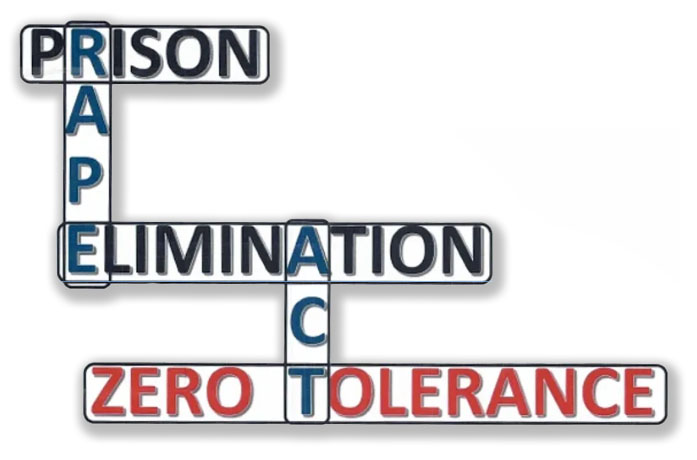
“Those are catastrophic numbers,” retired Bureau of Prisons psychologist Jill Roth, who served as national coordinator for the BOP’s prison rape elimination program until 2021, told TMP.  The report said that the BOP’s psychology program “used to be the envy of other correctional systems, according to psychologists who worked for the agency for decades. ‘BOP was a place psychologists were excited to work,’ Roth said. ‘It has changed.’”

TMP recounted that one BOP psychologist said he left a West Coast prison in May after he was the only staff psychologist for more than 700 people, saying that he feared that the care he could provide under those circumstances did not meet basic professional standards. “At some point it becomes unethical to continue to participate in that,” he was quoted as saying. “Can we provide this group of humans the care they’re entitled to? The answer is no. One person cannot ethically do that.”

The same day, the Dept of Justice Office of Inspector General issued its annual Top Management and Performance Challenges report to Congress, noting that the BOP “continues to face persistent challenges, most critically those presented by staffing shortages, deteriorating infrastructure, and the introduction of contraband. In recent years, deficiencies in the provision of healthcare to inmates and sexual abuse of inmates by BOP staff have emerged as additional significant challenges.”

Writing in Forbes, Walter Pavlo said, “Over the past two decades, the OIG has issued more than 100 reports documenting systemic problems at the BOP, and many of the same deficiencies appear year after year… Staffing shortages, deteriorating facilities, contraband, misconduct, and weak oversight have become familiar themes in the OIG’s annual Top Management and Performance Challenges reports. The latest report reiterates what oversight bodies have said repeatedly: the BOP’s problems are systemic, long-standing, and largely unresolved.”

The Government Accountability Office piled on the next day, reporting that for its study period of March through December 2024, the BOP has been failing in its First Step Act obligation to conduct needs assessments within required time frames, to use uniform methods to record when inmates decline to participate in a recommended program, and to keep program participation data. Most concerning, GAO found that as of the ends of 2024, the BOP had failed to apply all FSA credits to 70% of eligible inmates, and 54% of inmates received no prerelease custody credit for their earned FSA time.

GAO found that BOP generally applied all time credits toward supervised release but not for prerelease custody.

The report noted that BOP had implemented new planning tools in 2024 and 2025 to help staff anticipate upcoming transfers to prerelease custody and ensure incarcerated people receive their FSA time credits, and that GAO is currently examining BOP’s efforts to forecast capacity needs and provide sufficient halfway house and home confinement resources.

The Dept of Justice was required to issue annual FSA reports to Congress for five years after the Act passed. The last one was issued in June 2024. GAO recommended that Congress amend the law to require continued reports, because “without such information, Congress may be hindered in its decision making regarding the FSA.”

The Marshall Project, Amid ‘Catastrophic’ Shortage, Psychologists Flee Federal Prisons in Droves (January 26, 2026)

DOJ Inspector General, Top Management and Performance Challenges Facing the Department of Justice | 2025 (January 26, 2026) 

Forbes, The Bureau Of Prisons: When OIG Warnings Meet GAO Reality (January 28, 2026)

GAO, Federal Prisons: Improvements Needed to the System Used to Assess and Mitigate Incarcerated People’s Recidivism Risk, GAO-26-107268 (January 27, 2026)

~ Thomas L. Root

Retroactivity Lurks In USSC Proposed Amendments – Update for February 2, 2026

We post news and comment on federal criminal justice issues, focused primarily on trial and post-conviction matters, legislative initiatives, and sentencing issues.

SLEEPER

Back in 2024, the Sentencing Commission proposed a slate of four proposed Guidelines changes to be retroactive. However, at the USSC’s August 2024 meeting, the retroactivity for the four Guideline changes — covering acquitted conduct, gun enhancements, 18 USC § 922(g)/drug/18 § USC 924(c) joint convictions, and a beneficial change in the drug Guidelines — did not go forward because of philosophical differences in how to approach retroactivity.

US District Judge Carlton Reeves, chairman of the Commission, said, “Many have called for the Commission to identify clear principles that will guide its approach to retroactivity. After deep deliberation, we have decided to heed those calls. For that reason, we will not be voting on retroactivity today.”

Last year, the Commission considered whether 2025 changes in mitigating roles, drug offense, robbery and the definition of physical restraint should be made retroactive. Again, no decision was made.

Buried deep in the USSC’s 2026 request for public comment on proposed Guidelines amendments is a “sleeper” request for “public comment regarding whether, pursuant to 18 USC § 3582(c)(2) and 28 USC § 994(u), any proposed amendment published in this notice should be included… as an amendment that may be applied retroactively to previously sentenced defendants.” The Commission asks that public comment address all of the factors listed in USSG § 1B1.10: (1) the purpose of the amendment, (2) the magnitude of the change in the guideline range made by the amendment, and (3) the difficulty of applying the amendment retroactively to determine an amended guideline range under § 1B1.10(b)

Public comment is due February 10, 2026.

Unfortunately, the request does not solicit public comment on the Commission’s underlying approach to retroactivity, and thus, the current proceeding is unlikely to resolve the retroactivity backlog any time soon.

Sentencing Guidelines for U.S. Courts, 90 FR 59660, 59661 (December 19, 2025)

Epstein Becker Green, Recalibrating Economic Crime Sentencing: The U.S. Sentencing Commission’s Proposed Reforms to Section 2B1.1 and What They Mean for the Defense Bar (January 29, 2026)

~ Thomas L. Root

USSC Proposes Refinements on ‘Career Offender’ – Update for January 30, 2026

We post news and comment on federal criminal justice issues, focused primarily on trial and post-conviction matters, legislative initiatives, and sentencing issues.

SENTENCING COMMISSION FLOATS PROBATION, CAREER OFFENDER PROPOSALS

In a rare second round of proposals for amending the federal Sentencing Guidelines, the US Sentencing Commission today published three sets of options to perhaps add to the proposed amendments that will be sent to Congress on or before May 1st.

These proposals are in addition to several issued last month, and – if adopted – represent a substantial change toward judicial flexibility as well as a commonsense approach to what some think has become a tendency to label far too many defendants as “career offenders,” a designation that has a major inflationary effect on sentencing ranges.

Today’s proposals focus on substantially expanding the sentencing ranges that should be eligible for probation, home confinement, and “spilt sentences” (half in  prison, half on home confinement).  Currently, a defendant who has a sentencing range that starts at more than 12 months is presumptively doing it all in prison. More than six months takes probation off the table. The Commission proposes to dramatically increase the sentencing ranges for which judges may consider probation and split sentences, with the probation zone expanding to up to the 87-108 month stratum for people with no prior criminal history (and more modest expansions for those having criminal history).

More significant are proposed changes in the Guidelines that govern whether someone is considered a “career offender.” The Sentencing Reform Act of 1984 directs the Commission to ensure that “career offenders” receive sentences near the statutory maximum. The Commission’s definition of what constitutes a career offender, however, has caught many defendants in the net whose criminal histories do not suggest “career criminal” by any stretch of the imagination.

Under the current Guidelines, two minor state burglaries 14 years ago for which Donny Defendant served 60 days – with a spotless record since – would nevertheless qualify Donny as a career offender if he got convicted of buying a pound of pot to divide up and sell to friends.  His Guideline sentencing range – 8 to 14 months – would shoot up to 210-262 months because of those 14-year old state burglaries.

The long-awaited change in the “career offender” guidelines would abandon the current “categorical approach” to what prior convictions were crimes of violence or drug offenses, substituting instead a list of federal and state crimes that apply. Burglary would no longer apply, felonies of any kind for which the defendant served less than 90 days would not apply, and defendants would have a chance to show that some crimes of violence should not count because their conduct was completely nonviolent.

There are many options contained in the USSC’s latest proposal.  For instance, the Commission asks people to comment on whether the cutoff for not counting minor felonies should be a sentence of 30, 60 or 90 days.  The proposal also includes changes to address conflicts among federal circuits on aspects of the Guidelines and changes to

As with most USSC proposals, the document is lengthy, 56 pages of explanation and granular strikeouts and additions, as well as modifications to the human trafficking Guidelines “to provide enhanced penalties that better reflect the harms of certain human smuggling offenses.”

The proposals are out for public comment until March 18, 2026,

US Sentencing Commission, Public Hearing (January 30, 2026)

US Sentencing Commission, Proposed Amendments to the Sentencing Guidelines (Preliminary) (January 30, 2026)

~ Thomas L. Root

A Short Rocket – Update for January 29, 2026

We post news and comment on federal criminal justice issues, focused primarily on trial and post-conviction matters, legislative initiatives, and sentencing issues.

Today, some short takes from last week…

ICYMI…

Money, That’s What I Want – Bipartisan bills have been introduced in the Senate and House (S.3626 and H.R.7033) to address what sponsors called “historic and persistent staffing shortages at federal prisons” by providing a 35% salary increase to Bureau of Prisons correctional staff nationwide.

Sponsors are Sen Jeanne Shaheen (D-NH) and David McCormick (R-PA) in the Senate and Reps Dan Goldman (D-NY) and Rob Bresnahan (R-PA) in the House.

S.3626, A bill to amend title 5, United States Code, to improve recruitment and retention of Federal correctional officers (January 13, 2026)

H.R.7033 – Federal Correctional Officer Paycheck Protection Act of 2026 (January 13, 2026)

FedWeek, Bills Proposed to Boost Bureau of Prisons Pay by 35% (January 20, 2026)

The Plot Thickens Last week, I reported on a handful of clemencies issued to some fraudsters, some people with long-forgotten offenses, and a few drug defendants. One was a commutation granted to James Womack, whose 96-month meth distribution sentence was cut short after only a couple of years.

When I wrote the piece last week, Jim’s commutation didn’t seem to me to fit the “clemency for the rich and famous” theme coming from White House in the last year. But it turns out it does. Jimmy’s dad is Rep Steve Womack (R-AR), “a long-time Trump ally who was endorsed by the president during his most recent re-election campaign,” according to Daily Beast.

To make matters more complex, the White House said the commutation was in part due to Jim’s mother’s cancer diagnosis. Jim was released on Jan 15. His mother died three days later. While the circumstances are sad, federal prisoners losing parents, siblings and children while being imprisoned is all too common, while furloughs for final goodbyes and funerals – let alone commutations because of the loss – as rare as hen’s teeth.

Daily Beast, Trump Frees MAGA Rep’s Meth Dealer Son in Pardon Spree (January 17, 2026)

KATV, Terri Womack, wife of Arkansas Congressman Steve Womack, dies at 68 (January 20, 2026)


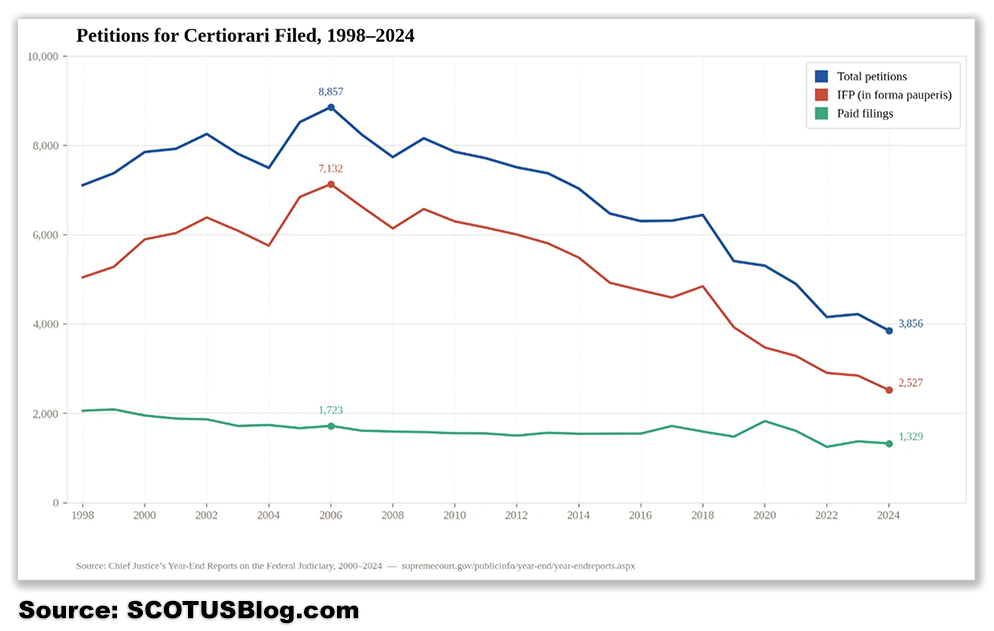
Justice Jackson Dissents IFP Denials – Last week, the Supreme Court denied Danny Howell, an Indiana state prisoner, leave to proceed in forma pauperis (IFP), holding that because “the petitioner has repeatedly abused this Court’s process,” he could not file any more petitions unless he prepaid the $300 filing fee. The decision is one of hundreds following the Court’s 1992 decision permitting such bans in Martin v DC Court of Appeals.

Martin was an abusive filer, submitting 54 IFP filings in 10 years. But Martin dissenters feared that what started as a rare step would turn out to be “merely the prelude” to a more habitual shutting of the courthouse doors.

Pointing out that Danny Howell had only filed six petitions over 14 years, Justice Jackson last week wrote that “[b]y my count, the Court has now invoked Martin hundreds of times to prospectively bar indigent litigants from filing in forma pauperis. We no longer wait for a petitioner to inundate the Court with frivolous filings. Instead, we reflexively ‘Martinize’ petitioners after only a few petitions… In my view, such a restriction foolishly trades a pound of values for an ounce of convenience… the Court now blocks indigent incarcerated individuals from ever more accessing our courthouse, just to avoid a minor administrative burden.”

Indiana ex rel. Howell v. Circuit Court, Case No 25-5557, 2026 U.S. LEXIS 495 (Jan 20, 2026)

Martin v. District of Columbia Court of Appeals, 506 U.S. 1 (1992) (per curiam).

~ Thomas L. Root

USSC May Be Looking At More Proposed Amendments – Update for January 27, 2026

We post news and comment on federal criminal justice issues, focused primarily on trial and post-conviction matters, legislative initiatives, and sentencing issues.

SENTENCING COMMISSION MAY ADD MORE PROPOSED GUIDELINE CHANGES THIS WEEK

Last month, the US Sentencing Commission announced a slate of Guideline changes it may want to pose to Congress on May 1. The announcement came almost a month earlier than its customary January rollout of proposed amendments.

Last week, the USSC announced a meeting this coming Friday (January 30, 2026) with an agenda that includes “possible vote to publish proposed guideline amendments.”

A second round of possible amendments is unprecedented in my memory (which stretches back nearly to the dawn of the Commission 37 years ago). Writing in Sentencing Law and Policy, Ohio State University law professor Douglas Berman expressed a theory for the surprise announcement: “I am not at all sure what to expect from the next set of proposed amendments from the Commission. But I am pretty sure that all the proposed guideline amendment activity this cycle is prompted, at least in part, by the real possibility that the USSC could lose its quorum at the end of 2026 and may not be able to make guideline amendments for perhaps some time after this amendment cycle. Interesting times.”

USSC, Public Notice of January 30, 2026, Meeting

Sentencing Law and Policy, US Sentencing Commission notices public meeting for publishing more proposed guideline amendments (January 22, 2026)

~ Thomas L. Root

SCOTUS Holds Restitution Is Criminal Sanction – Update for January 26, 2026

We post news and comment on federal criminal justice issues, focused primarily on trial and post-conviction matters, legislative initiatives, and sentencing issues.

CAPTAIN OBVIOUS SAYS RESTITUTION IS CRIMINAL PUNISHMENT

The ruling was short, simple, unanimous, and transpicuous to any federal defendant: last week, the Supreme Court ruled that restitution is a criminal penalty and not just some random civil judgment.

Thirty years ago, Holsey Ellingburg, Jr. robbed a Georgia bank with a sawed-off shotgun. He was convicted after a jury trial of 18 USC § 2113(a) and robbery and 18 USC § 924(c) using a firearm during a crime of violence.

Holsey served about 27 years in prison. By the time he got out in 2022, he had paid about $2,200 toward his $7,600 restitution obligation for the money he stole. His probation officer demanded that Holsey keep paying after his release. Holsey argued he didn’t have to.

Holsey’s restitution obligation arose under the Victim and Witness Protection Act of 1982. The VWPA only let courts collect restitution for 20 years after the judgment was entered, meaning that Holsey’s restitution obligation ended in about 2016. But sometime after Hosley’s robbery, Congress passed the Mandatory Victims Restitution Act. The MVRA extended a defendant’s obligation to pay restitution to “20 years after release from imprisonment.”

Holsey argued that the Constitution’s Ex Post Facto Clause of Article I, Section 9 of the Constitution applies to restitution orders. The Ex Post Facto Clause prohibits applying a new law that retrospectively criminalizes actions that were legal when committed or changes the punishment prescribed for a crime. The Government said restitution is not a criminal penalty but rather just a civil judgment to make a victim whole, so the MVRA could be applied to Holsey’s restitution obligation, even though it arose before the MVRA passed.

Last week, the Supreme Court disposed of the Government’s claim in a short 9-0 decision. Justice Kavanaugh wrote that “[r]estitution under the MVRA is plainly criminal punishment… Whether a law violates the Ex Post Facto Clause requires evaluating whether the law imposes a criminal or penal sanction as opposed to a civil remedy… When viewed as a whole, the MVRA makes abundantly clear that restitution is criminal punishment. The MVRA labels restitution as a “penalty” for a criminal “offense… Only a criminal defendant convicted of a qualifying crime may be ordered to pay restitution. Restitution is imposed at sentencing for that offense together with other criminal punishments such as imprisonment and fines. And at the sentencing proceeding where restitution is imposed, the Government, not the victim, is the party adverse to the defendant.”

Writing in the Sentencing Matters Substack on Ellingburg last fall, law professor Lula Hagos observed that

[c]riminal restitution — the money paid by a defendant to a victim — has grown into one of the most troubling, yet least examined, features of modern criminal sentencing… Restitution has quietly grown — both in scope and severity — into a sanction that can extend punishment for years, frequently without compensating victims… The Court will not be able to solve all criminal restitution’s woes in Ellingburg. But it should take the crucial step of acknowledging that criminal restitution is punishment subject to the Ex Post Facto Clause. Acknowledging restitution’s punitive nature would bring coherence to constitutional doctrine and prevent the government from imposing punishment without its safeguards…

As it is now, many Circuits hold that restitution cannot be challenged in a § 2255 motion because it is not a criminal sanction. Restitution is often imposed after the sentencing hearing in proceedings where the defendant is not present. The proofs needed to establish restitution are often quite thin. Ellingburg has the potential to change much of that.


Ellingburg v. United States, Case No 24-482, 2026 U.S. LEXIS 504 (January 20, 2026)

Substack, Punishment by Another Name (October 13, 2025)

~ Thomas L. Root

Ho-hum SCOTUS Civil Procedure Decision Strikes Blow for “Majestic Equality” – Update for January 23, 2026

We post news and comment on federal criminal justice issues, focused primarily on trial and post-conviction matters, legislative initiatives, and sentencing issues.

NOW SERVING: ‘BERK CHOY’ IN ERIE SAUCE

Jacques Anatole Francois Thibault wrote in Le Lys Rouge (what I otherwise thought was a dreadful novel when I was forced to read it as a callow youth) that

The law, in its majestic equality, forbids the rich as well as the poor to sleep under bridges, to beg in the streets, and to steal bread.

Like their noncustodial brethren, Federal prisoners who suffer from ham-handed medical care while in Bureau of Prisons custody have always been able to sue for medical malpractice. They must do so through the Federal Tort Claims Act (FTCA), which provides a legal framework for suing the United States in what otherwise is a plain-vanilla state law med-mal suit.

Most states have adopted in one form or another (by statute or in rules of civil proceeding) a requirement that a med-mal complaint must be supported by an “affidavit of merit,” a statement under oath by a medical expert that attests to the merit of the claim. The reason for such a requirement is to winnow out nonsensical malpractice claims early on to decrease the burden on the courts and the inconvenience to defendants and the insurance companies who defend them.

Sounds like a great idea! What could possibly go wrong?

Just this: Hiring a medical expert (almost always a licensed physician who also works as an expert witness) to review a med-mal complaint requires an upfront outlay of somewhere north of $5,000 to get the medical file read and the affidavit signed. Especially given the unforgiving statute of limitations binding FTCA plaintiffs (six months from denial of the administrative claim to filing the suit), these state “affidavit of merit” requirements shut down med-mal remedies for all but the wealthiest inmate filers.

The rich have to hire experts out of their pocket change if they want to bring an FTCA action. Seems only fair that the impoverished be required to do so as well. Ah, the law’s “majestic equality.”

Normally, a med-mal victim finds a lawyer (usually one who advertises on late-night TV) to take the case and front costs such as the expert’s fee. But prisoners do not, because their medical costs have been paid by the governments and juries don’t care much that prisoners – whose living costs are already being paid by the government – suffered some pain and inconvenience because of medical lunacy. Generally speaking, if a plaintiff’s lawyer cannot see $250,000 or more in likely damages, he won’t take the case no matter what his freeway billboard might say.

Add to that the fact that the government already has a stable of lawyers, so legal costs are not a factor in figuring out whether to settle, and the inmate has a case that attracting a lawyer to take it on for a percentage is a very tall order.

Over the years, I have worked on any number of unsuccessful arguments to district courts and courts of appeal that state laws and rules mandating “affidavits of merit” do not bind federal courts. Back in the day, when I was studying law by candlelight, we 1Ls pored over Erie Railroad Co. v. Tompkins, a civil procedure classic in which the Supreme Court ruled that in a civil case brought in federal court (where no federal statute applied), courts were to apply federal rules of procedure but state common law. Erie is a little more complex than that, but you get the gist: a med-mal plaintiff must use state med-mal law in proving that the doctor screwed up, but the rules governing how to proceed – from everything from what motions may be brought, how discovery is conducted, and how the defendant gets served – depends on the Federal Rules of Civil Procedure.

Harold Berk sued Dr. Wilson Choy in federal court for medical malpractice under Delaware state law. Section 6853 of Title 18, Delaware Code, required Harry to accompany his complaint with an affidavit of merit “signed by an expert witness, as defined in § 6854 of this title, and accompanied by a current curriculum vitae of the witness, stating that there are reasonable grounds to believe that there has been health-care medical negligence committed by each defendant.”  Harry claimed that Erie made § 6853 unenforceable in federal court because it is displaced by the Federal Rules of Civil Procedure. He lost in the district court and 3rd Circuit.

This week, however, the Supreme Court handed Harry a 9-0 win, turning Delaware’s statute into chopped ‘Berk Choy.”

The Court found the analysis to be simple. If a Federal rule governs a question arising in a civil action, it applies unless it exceeds statutory authorization or Congress’s rulemaking power. Here, the Court ruled, FRCivP 8 answers the question:  Rule 8 prescribes the information a plaintiff must present about the merits of his claim at the outset of litigation: “a short and plain statement of the claim showing that [he] is entitled to relief.” By requiring no more than a statement of the claim, the Court held, Rule 8 establishes “implicitly, but with unmistakable clarity that evidence of the claim is not required.”

Rule 12 reinforces the point, Justice Amy Coney Barrett wrote for the Court: “By providing only one ground for dismissal based on the merits — ‘failure to state a claim upon which relief can be granted,’ Rule 12(b)(6) — and prohibiting courts from considering “matters outside the pleadings” when evaluating whether a plaintiff has stated a claim,” the federal procedural rules ask only whether the complaint’s factual allegations, if taken as true, “state a claim to relief that is plausible on its face.”

Justice Barrett observed that the Supreme Court “has consistently rejected efforts by lower federal courts to require more information than Rule 8 requires. Delaware’s law and Rule 8 thus give different answers to the question whether Berk’s complaint can be dismissed as insufficient because it was unaccompanied by an affidavit.”

For federal prisoners and even impecunious pro se filers, this ruling is significant. They may still face a mountain to climb in proving their case, but at least they’ve crossed the foothills by getting on file without paying an enormous upfront cost.

Writing in SCOTUSBlog, Ronald Mann said that Berk v. Choy

is interesting in its own way because it draws on a vision of the federal rules that goes far beyond the text. Barrett easily could have written an opinion saying there is no direct conflict between the rules and Delaware law. In truth, the conflict is between Delaware law and the grand conception of what the federal rules are designed to accomplish: a system where the courthouse doors are wide open upon a simple statement of a claim. For its paean to that system, I suspect this opinion will be widely noted.

Berk v. Choy, Case No. 24-440, 2026 US LEXIS 497 (January 20, 2026)

Erie Railroad. Co. v. Tompkins, 304 US 64 (1938)

SCOTUSBlog.com, Justices reject state limits on malpractice actions for cases in federal court (January 21, 2026)

~ Thomas L. Root