We post news and comment on federal criminal justice issues, focused primarily on trial and post-conviction matters, legislative initiatives, and sentencing issues.

FOCUS SHARPENS ON CONSEQUENTIAL 5TH CIRCUIT FELON-IN-POSSESSION EN BANC
 You may remember the newsletter’s reporting on a 5th Circuit en banc proceeding over whether 18 USC § 922(g)(1) – the felon-in-possession statute – is unconstitutional, not under the 2nd Amendment but rather under the Commerce Clause.
All of the significant felon-in-possession litigation in the past few years has focused on whether the statute violates the 2nd Amendment as applied to nonviolent felons. This case, United States v. Squire, instead asks whether prohibiting people with prior felonies from possessing guns that traveled in interstate commerce violates the Commerce Clause.
In June, Curtis Squire, a convicted drug dealer, lost his argument that § 922(g)(1) was unconstitutional as applied to his situation, one in which a gun was found in his house. He argued that keeping a gun at home for defense was a right enshrined in American history, even for people who otherwise were prohibited by colonial law from carrying a firearm. For good measure, he also claimed the statute violated the 2nd Amendment on its face and was unconstitutional under the Commerce Clause.
The Commerce Clause, Article 1, Section 8, Clause 3 of the Constitution, gives Congress the power “to regulate commerce with foreign nations, among states, and with the Indian tribes.” Congress has often used the Commerce Clause to justify exercising power over the activities of states and their citizens, leading to significant controversy regarding the balance of power between the federal government and the states.
Section 922(g) only applies to guns and ammo that have traveled in interstate commerce, because without an interstate commerce nexus, federal law cannot limit the mere possession of a gun. That’s why § 922(g)(1) can’t prevent a convicted felon from building a gun at home. It’s why a § 922(g) prosecution always features testimony from some ATF agent that the gun at issue crossed state lines before falling into the defendant’s hands, and thus that the defendant’s firearm possession is somehow “in or affecting commerce,” as the statute puts it.
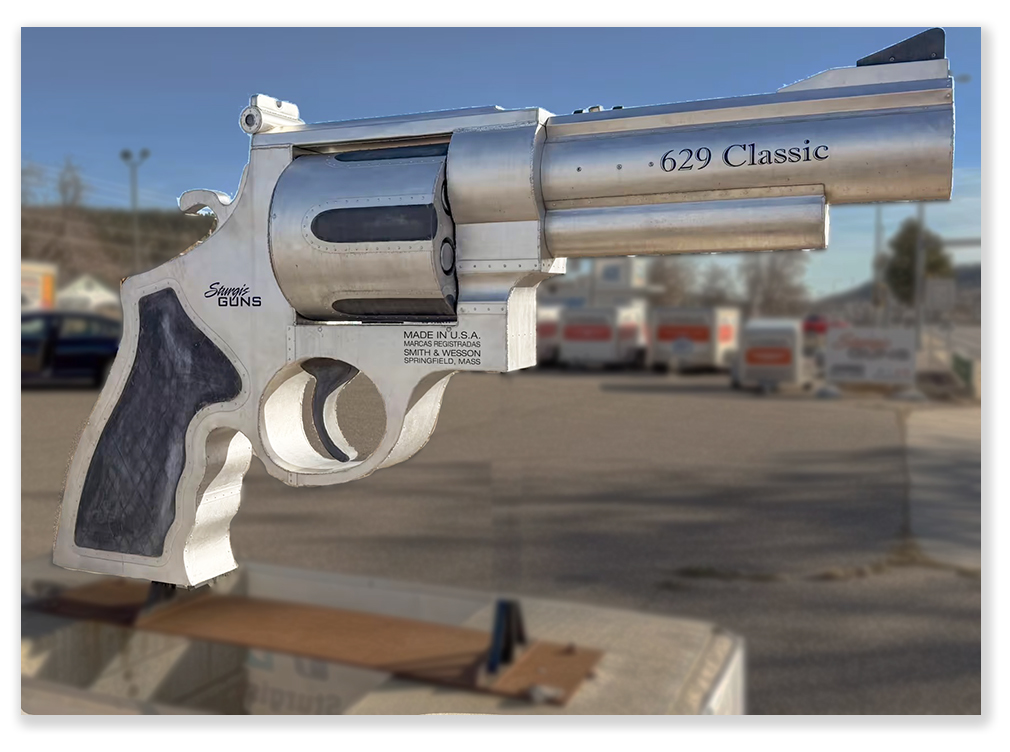
 In Curtis’s case, he argued that while the gun – which was manufactured in Massachusetts – once traveled in interstate commerce, his current possession of it in his bedroom was too insignificant to “substantially affect” interstate commerce. In United States v. Lopez some 30 years ago, the Supreme Court struck down the Gun-Free School Zones Act of 1990 (which made possession of a gun in a school zone a federal crime). Lopez held that Congress exceeded its constitutional authority under the Commerce Clause because possessing a gun in a local school zone is not an economic activity that substantially affects interstate commerce.
th Circuit held that Curtis’s Commerce Clause challenge was foreclosed by its decision in United States v, Diaz.
However, the 5th Circuit granted en banc review. Rehearing en banc has the case reheard by all 17 judges in active service on the 5th Circuit and as many of the seven judges on senior status as want to join in. Contrary to inmate lore, en banc review is rarely granted, generally about two-tenths of 1% a year of all cases. En banc review is used to reverse prior circuit precedent or where the circuit’s position conflicts with other circuits.
 In Curtis’s case, enough judges found the question of whether § 922(g)(1) exceeds Congress’s authority under the Commerce Clause to hear the case, one of only 14 decisions the 5th Circuit will take up en banc this year.
Last week, the Firearms Policy Coalition filed an amicus brief in the case arguing that the limitation in § 922(g) that the gun have traveled in interstate commerce was nothing more than a “jurisdictional hook” that was invalid given the historically narrow use of the term “commerce” when the Constitution was written and the admitted purposes of § 922(g), which was to control violent crime.
Controlling violent crime, the FPC argued, is an activity reserved to the states: the stated purpose of § 922(g) – where 39 states already have laws banning felons from possessing guns (although usually limited by the type of prior crime and for a stated period of time.
As is typically the case, the only evidence that Curtis Squire possessed a gun “in or affecting commerce” was that the weapon had at some point in its history crossed state lines. As the FPC notes, establishing that element is rarely difficult: “The government has proffered testimony that 95% of all guns in the United States have crossed state lines.”
“In other words,” Reason reported last week, “the constitutional rationale for making a federal case out of the pistol found in Squire’s living room is barely more demanding than requiring proof that the gun was made of metal. Can that possibly suffice to treat § 922(g)(1) as an exercise of the power to regulate interstate commerce?”
 The FPC thinks not. ‘Congress lacks the constitutional authority to ban the simple possession of a firearm by a felon,’ it says, citing two Supreme Court decisions that rejected Commerce Clause rationales for federal laws addressing violent crime.”
Last month, a woman in Philadelphia threw an ice cream cone at her husband (he probably had it coming). The ice cream was made in Hershey, Pennsylvania, and the cone was baked in Hermitage, Pennsylvania. But the paper wrapper on the cone was printed in Iowa. Applying Congress’s Commerce Clause theory, the woman’s possession of the ice cream cone was “in or affecting commerce.”
The Commerce Clause argument has great import for § 922(g) defendants. As well, it may affect other statutes that depend on interstate commerce as a jurisdictional hook, from arson to child porn to Travel Act to murder-for-hire.
Whatever the outcome of the en banc proceeding, it will undoubtedly end up at the Supreme Court.
United States v. Squire, Order (5th Cir. July 20, 2026)
United States v. Squire, 177 F4th 614 (5th Cir. 2026)
Firearms Policy Coalition, Amicus Brief in Case No. 25-30324 (September 10, 2026)
Reason, How a Street Brawl Led to a 5th Circuit Case That Casts Doubt on the Constitutionality of Many Federal Laws (September 11, 2026)
~ Thomas L. Root