Tag Archives: BOP

10th Circuit Finds 7-Year Old Inmate Suit Suddenly “Moot” – Update for March 15, 2024

We post news and comment on federal criminal justice issues, focused primarily on trial and post-conviction matters, legislative initiatives, and sentencing issues.

10th CIRCUIT GIVES “STRATEGIC PRISONER TRANSFERS” A LIFT

whoopass240315Just yesterday, I wrote about the BOP buying a whole crate of whoop-ass from a federal judge by shipping a prisoner beyond the court’s jurisdiction while a civil action was going on.

The 10th Circuit takes a much more sanguine view of the practice, it seems.

Michael Bacote has spent seven years litigating claims that the Federal Bureau of Prisons violated his 8th Amendment rights at ADMAX Florence by acting with deliberate indifference to his mental disability. Michael’s retained psychiatrist concluded that he had both an intellectual disability and a mental disorder. After BOP psychologists examined Michael in response to his psychiatrist’s report, they agreed. BOP policy forbids placing prisoners with Mike’s condition at Florence, so the BOP transferred him to the mental health unit at USP Allenwood.

Before the transfer, the district court dismissed Mike’s case, holding that he had not established that the BOP was deliberately indifferent. Michael appealed, but the transfer occurred while the appeal was pending.

medical told you I was sick221017Last week, the 10th Circuit tossed out his case as being moot. The Court said that “the doctrine of mootness rests on a simple principle: the controversy that existed at litigation’s commencement may dissipate before its conclusion.” The Court held that while Michael’s case was not constitutionally moot, it was “prudential[ly]” so. Prudential mootness concerns “not the power to grant relief but the court’s discretion in the exercise of that power.” Under this doctrine, the 10th said, “If the circumstances of a controversy become too attenuated, prudence counsels us not to reach the merits of the appeal.”

Because Mike was not at Florence anymore, Florence could no longer be deliberately indifferent to him. He had not sued in Pennsylvania for whatever he said Allenwood was doing to him, and there was nothing in the record that would let the 10th decide whether there was a constitutional violation there. “Finally, even if Mike has requested relief that could have a continuing effect,” the Circuit said, “this relief requires us to restrict the conduct of officials outside of this circuit. As a general principle, opinions handed down in one circuit do not bind other circuit courts.”

“We recognize Plaintiff’s concern that some could misinterpret this holding as a license for the BOP to concoct mootness by transferring litigant inmates.” But because Michael had not provided evidence the Bureau acted with an eye toward dismissing the case, the 10th said, “we need not answer” how to treat a strategic prisoner transfer.

habeasB191211Michael’s attorneys warned the precedent-setting opinion did not fully recognize the frequency of strategic prisoner transfers. “Functionally, publishing this decision gives prisons a roadmap for defeating the 10th Circuit’s jurisdiction during the litigation of an appeal,” Mike’s lawyers with the University of Denver’s Civil Rights Clinic said in a statement. “We’re very concerned that the court’s decision will negatively impact incarcerated persons’ ability to have their cases heard on the merits, as it’s difficult — sometimes impossible — for incarcerated litigants to prove that a prison transferred them due to litigation.”

Bacote v. BOP, Case No 22-1325, 2024 USApp LEXIS 5239 (10th Cir, March 5, 2024)

Colorado Politics, 10th Circuit opens door wider for courts to dismiss prisoners’ civil rights lawsuits (March 7, 2024)

– Thomas L. Root

‘The Rape Club’ Front Door Gets Kicked In – Update for March 14, 2024

We post news and comment on federal criminal justice issues, focused primarily on trial and post-conviction matters, legislative initiatives, and sentencing issues.

FBI EXECUTES SEARCH WARRANT AT FCI DUBLIN

And you thought your Monday mornings were lousy.

tigerseat240314Art Dulgov, the warden selected by the Federal Bureau of Prisons Central Office to clean up the sexual abuse cesspool that is FCI Dublin, started his week with over a dozen FBI agents armed with a search warrant swarming over his prison, seizing computers, documents and other evidence and seeking to interview employees, according to an Associated Press report.

The FBI said its agents were conducting “court-authorized law enforcement activity.” But it looked a lot like one agency of the Dept of Justice was raiding another agency of the Dept of Justice. As Rodney Dangerfield might have put it, ‘a tiger eating its young.’

Before the day ended, Warden Dulgov, Associate Warden Patrick Deveney, a captain and the executive assistant who oversaw the prison’s minimum-security satellite camp, were all unceremoniously walked off the compound by their employer.

Dulgov, only three months into his warden gig at Dublin, was the third leader of the low-security female prison since Warden Ray J. Garcia and a half dozen of his underlings were convicted of sexually assaulting multiple prisoners at the institution, which was known by BOP employees and prisoners there as the “rape club.”

Garcia was sentenced to 70 months. BOP records suggest that he is being housed in a non-BOP prison, with a release date set for 2028.

hitroad240314Dulgov and staff are not accused of sexual abuse, but rather of retaliating against an inmate who testified in January in a class-action lawsuit that alleges “horrific abuse and exploitation” at the prison, with rampant sexual assault of incarcerated persons, according to a court filing. However, it is not clear that this was the basis for the FBI search. That search warrant and the affidavit supporting it have not been made public.

After inmate Rhonda Fleming, herself a storied and frequent pro se litigator, accused a BOP lieutenant of retaliation in January testimony before US District Court Judge Yvonne Gonzalez Rogers, the prisoner was transferred to MDC Los Angeles despite the Court’s order that none of the inmate witnesses be removed from Dublin.

Judge Gonzalez Rogers later admonished an Assistant US Attorney representing the BOP for the transfer in defiance of her order, but accepting the excuse that the BOP misunderstood her directive. The Judge said she would have levied sanctions against the attorney earlier in her career as a federal judge, but settled on the warning instead: “I’ve been around long enough to know that lawyers make mistakes,” Gonzalez Rogers told the AUSA, who apologized for the transfer. “The point is: You need to follow my orders.”

I feel for the AUSA, who didn’t ask for the BOP as a client and probably was as shocked to learn Fleming had been transferred as was the Judge. After the Court learned of the transfer, the BOP got Fleming back to Dublin in record time.

After a January hearing at which Dublin inmates were among the witnesses, Judge Gonzalez Rogers made an unannounced inspection of FCI Dublin on Valentine’s Day. During this inspection, she spoke to about 100 inmates outside of the presence of BOP minders. Later, in an order, she said that the “first-hand communication will prove critical to resolving the pending motions (which will be done after full briefing).”

doitnow240314(The visit also resulted in a virtually unprecedented court order requiring that some physical conditions of the facility – including lack of hot water and the presence of mold and asbestos – be resolved “IMMEDIATELY,” with the Court itself employing the word “immediately” in all capital letters. The Court undoubtedly means it and is not to be trifled with).

The FBI search and management massacre are the latest developments in what the Los Angeles Times calls a “years-long scandal “ surrounding the facility:

Legal experts say what has happened at the federal prison is indicative of the worst aspects of institutions with abusers in their midst.

“There is no accountability with some public entities, and the sexual abuse keeps festering and festering until it blows up,” said attorney David Ring, who has handled high-profile sexual assault litigation involving schools, facilities and Hollywood studios.

“They tend to shuffle the offenders,” he said. “Officials in prisons can be the worst because they are so jaded that all the complaints fall on deaf ears about the guards.”

The Times reported that “a dozen new lawsuits” were filed against the BOP in Oakland federal court last week “alleging more mistreatment and sexual misconduct by staff.”

fbidublin240314
A BOP statement issued Monday characterized the removal of top Dublin staff as being “consistent with unprecedented and ongoing actions” to reform Dublin’s culture, and said that recent unspecified developments “have necessitated new executive employees be installed at the institution.” BOP Regional Director Nancy T. McKinney was installed on Monday as interim warden.

Kara Janssen, an attorney representing some Dublin inmates, said that the leadership changes at Dublin prison haven’t changed much. “This is not a proactive change in leadership,” said Janssen. “The only changes in leadership seem to come through criminal investigations.”

Associated Press, Warden ousted as FBI again searches California federal women’s prison plagued by sexual abuse (March 11, 2024)

Los Angeles Times, Warden is ousted as FBI raids California women’s prison known as the ‘rape club’ (March 12, 2014)

San Jose Mercury News, Warden ousted amid FBI raid at scandal-plagued FCI Dublin women’s prison (March 12, 2024)

KGO-TV, FBI raids Dublin prison plagued by sex abuse; pattern of immigrant women being targeted, lawyer says (March 12, 2024)

SFist, FBI Raids Dublin Women’s Prison, Warden and Three Others Ousted (March 11, 2024)

Forbes, Troubled Women’s Federal Prison Raided By FBI (March 12, 2024)

– Thomas L. Root

Congress Stiffs BOP Employees and Prisoners – Update for March 12, 2024

We post news and comment on federal criminal justice issues, focused primarily on trial and post-conviction matters, legislative initiatives, and sentencing issues.

CONGRESS MAKES BOP RIDE THE BACK OF THE “MINIBUS”

Moneyspigot200220The $460 billion spending bill that funds about half the federal government through September 30th was sent to President Biden last Friday, averting (yet another) government shutdown.

The bill includes six federal appropriations bills – the so-called “minibus” (as opposed to “omnibus”) provisions covering agriculture, energy, transportation and justice programs – must make Federal Bureau of Prisons Director Colette Peters wonder why she shouldn’t just skip the next congressional hearing to which she’s called in favor of a game of pickleball.

After she has explained, the employees’ union bosses have explained, the Government Accounting Office has explained, and the Dept of Justice Inspector General has explained that the BOP’s severe staffing shortfall and crumbling infrastructure can only be fixed by the application of money, Congress cut the BOP’s maintenance budget by 38%, from $180 million down to $110 million, well below the 2023 level.

What’s as bad, the budget leaves salaries flat “despite mounting concerns about safety and staffing at BOP,” according to Fed Manager. The minibus includes $8.4 billion for the agency — on par with fiscal 2023 and about $250 million below the White House’s initial proposal for 2024. 

AFGE Union Council of Prison Locals National President Brandy Moore White promptly condemned the bill: “Failing to provide the Bureau of Prisons with the funding it desperately needs to address staffing, safety, and security issues will make it even harder for employees to do their jobs and make our prisons more dangerous environments both for employees and inmates.”

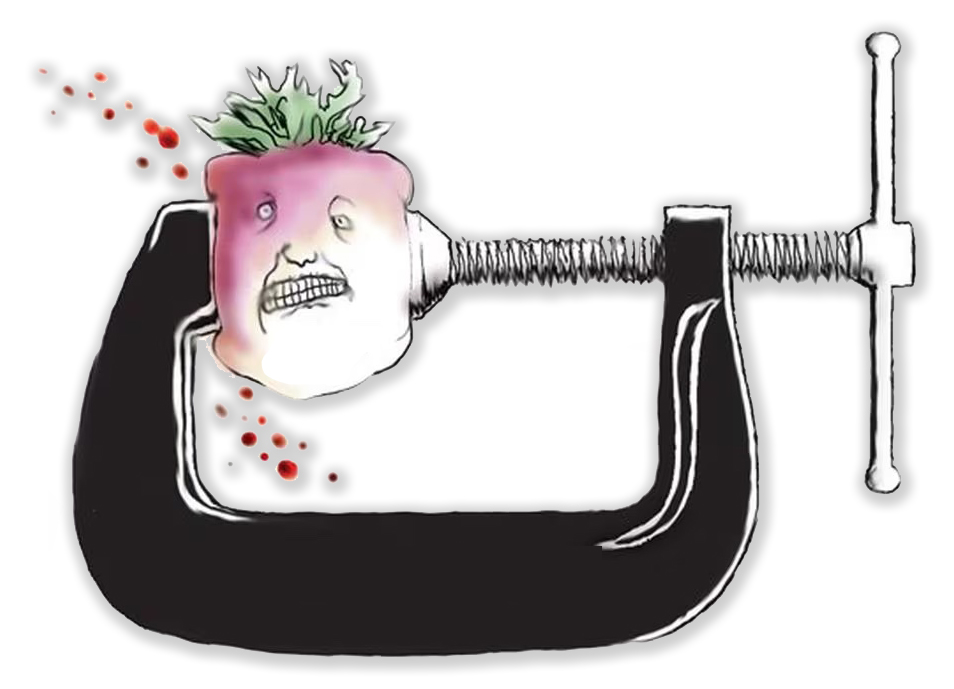
bloodturnip240312Certainly, this doesn’t make any BOP resolution to its staffing shortfall any easier. The staffing crisis affects everything from lockdowns to FSA credit programs. The maintenance budget cut will give Peters a chance to do more for less. Maybe get blood from a turnip. But more likely  just let her get chastised by Congressional grandstanders at hearings for not have the tools needed to get the job done. Tools that Congress refuses to provide.

New York Times, Senate Clears $460 Billion Bill to Avert Partial Shutdown, Sending It to Biden (March 8, 2024)

Fed Manager, Details on Spending Bills Released, as Congress Works to Avoid Shutdown (March 5, 2024)

Federal News Network, 6-bill minibus rewards some agencies, while slashing budgets for others (March 5, 2024)

AFGE, Budget deal fails to provide agency with needed funding to address staffing, safety, and security issues (March 6, 2024)

– Thomas L. Root

Senators Denounce BOP-ACA ‘Pas de Deux’ (Which Is A More Refined Way To Describe a ‘Circle Jerk’) – Update for March 7, 2024

We post news and comment on federal criminal justice issues, focused primarily on trial and post-conviction matters, legislative initiatives, and sentencing issues.

THREE SENATORS DEMAND BOP CUT TIES WITH ACA

I agonized over this story. Not because of the content, which is as unsurprising as it is deplorable. But rather, as I asked my wife of 45 years, is it appropriate to use the term “circle jerk” in the LISA Foundation posts?

circlejerk240307I mean, the term really fits. The Federal Bureau of Prisons pays the American Correctional Association to inspect its facilities. Well, not really. The BOP pays ACA to give glowing accreditations to its facilities. As a report issued by the Dept of Justice Inspector General last November found, the BOP doesn’t really want its prisons inspected by outsiders, even friendly outsiders like ACA inspectors. Rather, the BOP is quite happy to inspect itself and then report the results to the ACA, which issues its seal of approval based on the BOP’s self-evaluation.

Sort of like giving yourself a physical, telling the doctor the results, and having the physician issue a clean bill of health based on your evaluation. Or a highly choreographed pas de deux. Or maybe… yeah, sort of like a circle jerk. The BOP pays the ACA, the ACA lets the BOP OK itself, the BOP trumpets its accreditation to the public, and pays the ACA.

As my wife says, “You couldn’t make this s*** up.” A little salty, but a spot-on observation.

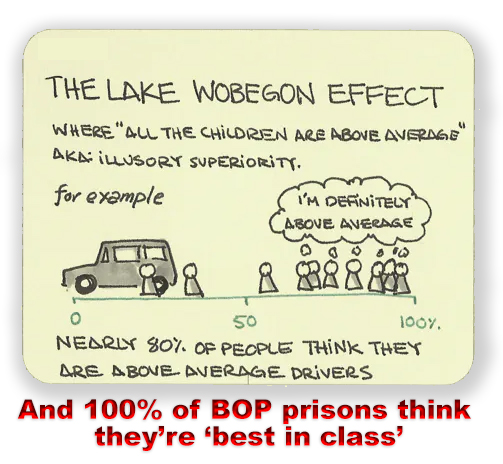
wobegon240307The IG’s report said that instead of providing an independent evaluation of BOP, the ACA “relied on the prisons’ own internal reports during reaccreditation reviews.” In other words, as the DOJ put it, “it appears the BOP is, in effect, paying ACA to affirm the BOP’s own findings.”

Last week, three US senators wrote to the Attorney General and BOP Director Colette Peters complaining that BOP reliance on the ACA for accreditation “has proven to be little more than a rubber stamp, and the BOP’s contract with the ACA has been a waste of taxpayer dollars. We urge the BOP not to renew its ACA accreditation contract when it expires.” The ACA contract, covering all of the BOP’s 122 facilities, is worth $2.75 million.

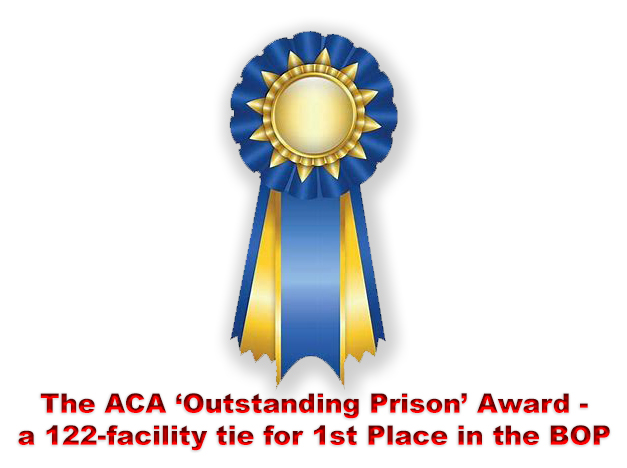
ACAaward240307The senators, Elizabeth Warren and Edward Markey (both D-MA) and Jeff Merkley (D-OR), complain that while “the ACA claims that ‘[a]ccreditation is awarded to the ‘best of the best’ in the corrections field,’ in practice, ACA accreditation is awarded to virtually every facility that pays the accreditation fee.” The letter argues that “given the critical need for meaningful oversight of BOP facilities and the ACA’s complete failure to provide it, the BOP should not renew its ACA contract after it ends in March 2024. The ACA’s accreditation system is ineffective at best, and at worst misleads the public to believe that a failing facility’s operations are adequate. We urge you to identify alternative means of oversight that involve genuinely independent, rigorous audits of each BOP facility.”

They are too polite to call it one big circle jerk. Which it is.

The Appeal, Nonprofit Prison Accreditor Perpetuates Abuse And Neglect, Senators Say (February 29, 2024)

Letter from Senator Warren et al. to Atty General and BOP Director (February 28, 2024)

Dept of Justice OIG, Audit of the Federal Bureau of Prisons’ Contract Awarded to the American Correctional Association (November 2023)

– Thomas L. Root

Peters May Be The One – Update for March 5, 2024

We post news and comment on federal criminal justice issues, focused primarily on trial and post-conviction matters, legislative initiatives, and sentencing issues.

PETERS BLUNT WITH SENATORS ABOUT BOP TROUBLES

No one who’s ever had a beef with what I publish in this blog – and there surely are a lot of people who have complaints – has ever accused me of being an apologist for the Federal Bureau of Prisons. But here goes…

cucumber240305Watching BOP Director Colette Peters testify before the Senate Judiciary Committee last week was a refreshing departure from her previous appearances and a downright treat after enduring years of painful appearances by her clueless predecessor Michael Carvajal.

“The Feds survey says the Federal Bureau of Prisons is the worst place to work in federal government, so we have a lot of work to do,”  Peters candidly told the Committee last Wednesday during the hearing Committee Chairman Richard Durbin (D-IL) called in response to a DOJ Inspector General report on inmate deaths in federal prison.

That report, issued two weeks before, found that systemic and operational failures contributed to scores of prisoner deaths over the years. Durbin convened the hearing to underscore the report findings that – among others – suicide accounted for over half of the deaths reviewed by the IG.

Sharing the witness stand with DOJ IG Michael Horowitz, Peters was the target of most of the senators’ questions. But unlike her stumbling performances in prior Congressional hearings, Peters was confident, direct and armed with facts and numbers during the 2-hour session. And when Sen John Kennedy (R-LA) hectored her in one of the most bizarre barrage of questions in recent memory, she cooly stared him down while undoubtedly controlling the urge to ask him who tied his shoes for him every morning.

But back to the hearing.

Paters laid most of the blame for the issues raised in the report on BOP’s chronic staffing shortages. She told the senators that the data on BOP correctional officers are “startling,” rattling off the stats:

One in three have symptoms of PTSD. That means more anxiety, more depression, [and] that means more reliance on substance abuse and higher levels of divorce. Over 90% are obese or in the overweight category, over 90% have hypertension or pre-hypertension… What we’re finding across the country, in some places they can leave the [BOP] and work for state corrections and make two to three times more, let alone the bonuses that we’re battling against at fast food organizations. So it is incredibly difficult… I also want to remind the committee that the average onboarding for law enforcement in this country is 21 weeks [of training] and our officers receive about six. It’s truly unfortunate.

psy170427The IG report found that a shortage of psychiatric services employees “strained the ability of staff” in facilities where prisoners died “to provide adequate care to mentally ill inmates.” This has been a chronic BOP problem, where a dearth of mental health resources has led to many people being underdiagnosed, a 2018 Marshall Project investigation found. In the Senate hearing, Horowitz noted that over 60% of people who died by suicide in federal prisons had been on the Mental Health Care Level 1, meaning the BOP had determined that they did not need regular care mental health care.

Peters and Horowitz both pointed to staffing shortages as a key driver of the problems. A lack of clinical staff like psychologists and corrections officers has been an endemic challenge in many BOP facilities, the Marshall Project reported last weekend.

Horowitz also suggested that the BOP’s problems may be more than just staffing. Talking about contraband, he that “we’ve had a staff search policy recommendation open for years that has not been implemented, the basic search policy for staff coming into the facility, that hasn’t happened, either…” Several senators cited a GAO report last month that the BOP has failed to implement 58 of 87 recommendations on improving restrictive housing (also known as Special Housing Units, or SHUs) practices.

Kennedy tried to beat up Peters with a theatrical performance accusing her of using the First Step Act to release 30,000 criminals, 12% of whom have been recidivists (as though the decision when to release prisoners is her responsibility). Punctuating his questions with dramatic eye rolls and sighs of “Wow,” Kennedy sought to blame Peters for releasing thousands of violent criminals to prey on helpless civilians.

Kennedy: “How many criminals have you released under the First Step Act?”

Peters: “We have about 30,000 individuals that have been released since the passage of the First Step Act.”

Kennedy: “All right, so you’ve released 30,000 criminals under the First Step Act, okay? . . . Before you released them, did you contact any of their victims to say, ‘We’re about to let this guy out’?”

Peters: “Senator, it’s my understanding that that notification happens through the U.S. Attorney’s Office, but I will check into that and get back to you.”

Kennedy: “You don’t know?”

Peters: “Senator, I don’t.”

Kennedy: “Wow. Okay, of the 30,000 criminals you let free, how many of them have come back, have committed a crime again, hurt somebody else?”

Peters: “So, that number is one that we’re still looking at as it relates to the recidivism rate for those that were released on the First Step Act.”

Kennedy: “You don’t have any idea?”

Peters: “No, Senator.”

The implication that Peters and the BOP should be responsible for victim notification – a duty of the US Attorneys offices – or maintaining recidivism records is risable. It’s like asking the Veterans Administration how much ammo the Defense Dept has.
tieshoes240305Beyond that, suggesting that somehow Peters was releasing BOP prisoners on her whim, rather than in response to the court-ordered sentences ending or statutory mandates requires a special kind of ignorance of the law unbecoming of a man who was Phi Beta Kappa and with years of experience as a lawyer. That makes his embarrassing performance all the more puzzling.

He did not embarrass Peters, who was calmly unfazed by his attack. Committee Chairman Richard Durbin (D-IL) finally braced Kennedy: “Don’t put your head in a bag… The First Step Act was a constructive reform of the penal system and I think it was a good idea and I stand by it.”

Sen Cory Booker (D-NJ) said the BOP has simply not been provided enough resources. “I have a lot of frustrations obviously with what’s going on. But I’ve watched you now as a professional struggle mightily to meet the demands that are put on you in a moment where Congress is not giving you the resources necessary to do your job,” Booker said.

Sen Chris Coons (D-DE) told Peters that she has “inherited a deeply troubled institution and I suspect you some days feel like your job is more akin to trying to change the direction of an aircraft carrier than lead an agile and well-resourced organization because the BOP is frankly neither and I appreciate the determination, openness and vigor with which you’ve approached this task.”

Almost half of the suicides took place in a “restrictive housing setting,” the IG Report said. Durbin told Peters that “despite the decrease in Bureau of Prisons total population since you were sworn in as director in August of 2022 the percentage and total of number of individuals and restricted housing is actually higher than it was at that time…”

shucell240212Peters said that almost 40%t of those who lived in restrictive housing did so by their own choice. Nevertheless, she admitted that “everyone who is in restrictive housing has or will suffer from some form of mental or physical damage. I think even those that are agreeing or wanting to be in restrictive housing need to be educated on the fact that that isn’t where they belong and that we need to be able to safely house them in [general population]. Just because they’re volunteering to be there doesn’t mean that the physical and mental wear and tear isn’t happening for them as well.”

“It’s time for solutions and change,” Durbin agreed. “The lives of hundreds of Americans in Bureau of Prisons custody are at risk.”

Roll Call, Federal prison director tells senators about staffing ‘crisis’ (February 28, 2024)

Capital News Service, Deaths in federal prisons draw fire from Senate panel (February 29, 2024)

DOJ, Office of Inspector General, Evaluation of Issues Surrounding Inmate Deaths in Federal Bureau of Prisons Institutions (February 15, 2024)

The Marshall Project, How Federal Prisons Are Getting Worse (March 2, 2024)

WHBF-TV, Senate Judiciary Committee grills Bureau of Prisons chief on staffing, inmate deaths (February 28, 2024)

Sen John Kennedy, Kennedy questions Bureau of Prisons on early release of criminals: “You don’t have the slightest idea how many of them committed another crime and came back?” (February 28, 2024)

– Thomas L. Root

Private FSA Tool To Provide Prisoners Data the BOP Won’t – Update for March 4, 2024

We post news and comment on federal criminal justice issues, focused primarily on trial and post-conviction matters, legislative initiatives, and sentencing issues.

LOOKING FOR THE MAGIC DATE

Maybe the sweetest acronym a federal prisoner has ever heard – LDI – is at the heart of a new tool intended to provide all of the information (and more) that the Federal Bureau of Prisons promised with the PRD (projected release date) calculation it has now apparently abandoned.

wise240304LDI – shorthand for “Last Date Inside” – is “the date on which a federal prisoner should be released to pre-release custody (halfway house or home confinement),” according to Wise First Step. Based on an inmate’s most recent sentence computation and First Step Act time credit assessments, Wise says it “will develop a detailed report that outlines key dates you need to be aware of for you to advocate for your referral to pre-release custody.”

Complaints about BOP management of FSA credits – awarded for completion of programs that reduce recidivism – are legion. One prisoner said in an email that an Excel spreadsheet tool was released to case managers last week, but

it is problematic because the calculation tool must be updated every 30 days due to 10-15 FTC earned over that time cycle. This does nothing to ease the burden on Case Managers or help inmates plan accordingly. Even more problematic is the fact that the calculator does not take into account any of the days that will be earned while in pre-release custody… [What’s more,] RRM offices are not accepting “projected days” earned while waiting for the RRM submission to come back.

Another inmate said, “We were also told that sometime in January 2024, we would have access to the PRD on Trulincs [inmate computer system]. Of course, none of that has happened. Now the case managers are telling us that the FSA projected release would NOT help you once you received your 1 year off AND we are not going to have access to the PRD. It has been ‘shelved indefinitely’.”

The BOP announced last December that it was releasing a “Conditional Release Calculator” that provided “needed information regarding the potential positive impact of earning Federal Time Credits (FTC) towards advancing an individual’s release date,” but that calculator reflected only time “applied toward advancing the individual’s transfer to supervised release and an earlier release from FBOP custody,” not transfer to halfway house or home confinement. When in halfway house and home confinement, a prisoner remains in BOP custody.

data240304The major issue in FSA credit application right now is halfway house availability. Writing in Forbes last January, Walter Pavlo observed that inmates are being denied the right to spend their credits because “the BOP does not have room in halfway houses to monitor those who have rightfully earned First Step Act credits. The result, thousands of prisoners languish in expensive institutions rather than being placed in community halfway houses.” The First Step Act uses mandatory language, requiring the BOP to place the qualifying inmates in halfway house or home confinement, but agency officials are shrugging their shoulders in feigned helplessness because halfway houses are refusing transfers.

Inmates have been hitting a wall when trying to remedy the denials in court. Just last week, a court threw out a complaint because the petitioner had provided no facts showing that he “has been denied all opportunity to earn time credits, that he has credits to apply, or that he has been denied the ability to apply earned credits to supervised release or another form of prerelease custody.” Another district court ruled against a prisoner, holding that he “fails to include any factual allegations supporting his claim that he was otherwise qualified under Section 3624 of the FSA… for prerelease custody or supervised release.” A decision earlier last month held that “Assuming that petitioner is entitled to a total of 740 days of credits between his prerelease custody and release, his accrued credits are not equal to the remainder of his prison term. He is therefore not eligible to apply FSA time credits at this time…”

itsadate240304Using a proprietary system it has tested over the past six months, Wise will provide a series of dates that tell inmates when to begin advocating for halfway house/home confinement, when to pursue administrative remedies, and when the prisoner’s LDI falls. Wise says in its program description, “The individualized details in this report have enabled hundreds of inmates to accelerate the process for transfer out of prison.”

Wise First Step can be contacted at (202) 921-0200 and email (accepting Corrlinks) at sarah@wisefirststep.org.

Wise First Step Program

BOP, Conditional FSA Release Date Calculator (December 5, 2023)

Forbes, The Bureau of Prisons’ Halfway House Problem (January 16, 2024)

Cuong Mach Tieu v. United States, Case No. 2:23-cv-2858, 2024 U.S. Dist. LEXIS 34442 (E.D. Cal., February 27, 2024)

Cook v. Peters, Case No. 3:23CV2211, 2024 U.S. Dist. LEXIS 32754 (N.D. Ohio, February 26, 2024)

Urenda v Warden, Case No 2:23-cv-1410, 2024 U.S. Dist. LEXIS 22513 (E.D. Cal., February 7, 202e)

BOP Director On Senate Judiciary Hot Seat Tomorrow – Update for February 27, 2024

We post news and comment on federal criminal justice issues, focused primarily on trial and post-conviction matters, legislative initiatives, and sentencing issues.

JUDICIARY COMMITTEE WANTS ANSWERS ON BOP INMATE DEATHS

critic160816The impact of a trio of government reports berating the Federal Bureau of Prisons continued to reverberate last week. A scheduled appearance of BOP Director Colette Peters and her new nemesis, Dept of Justice Inspector General Michael Horowitz, before the Senate Judiciary Committee tomorrow promises that the cascade of criticism will continue pouring down on the agency..

A February 6 Government Accountability Office report chastised the BOP for implementing fewer than half of prior GAO recommendations on the use of restrictive housing (such as the SHU and Communications Management Units). The report blamed the BOP for failing to “assign[] responsibility for implementing these recommendations to the appropriate officials.”

A February 15 DOJ Office of Inspector General report found that “a combination of recurring policy violations and operational failures” – including deficiencies in inmate assessments and Mental Health Care Level assignments, holding inmates at risk for suicides in single cells, lack of urgency in responding to medical emergencies, and poor after-the-fact recordkeeping – contributed to inmate deaths.

A companion management advisory also issued on February 15 advised the BOP of the OIG’s “concerns” about the “inadequacy” of BOP policies on retaining records of rounds made by SHU COs “to ensure the preservation of those original documents as evidence when allegations of misconduct are raised.”

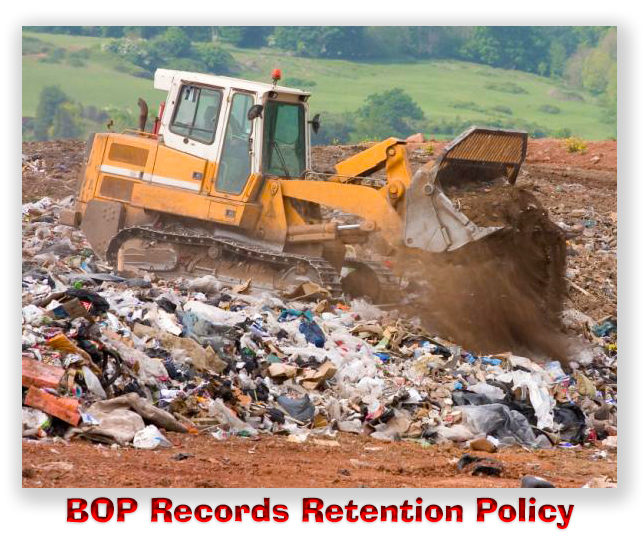
documentretention240227A Washington Post opinion column by Joe Davidson, who covers federal government issues in the Federal Insider, flayed the BOP as “an agency in crisis.” “The Federal Bureau of Prisons has been a profoundly broken agency for a very long time now,” he quoted David C. Fathi, American Civil Liberties Union National Prison Project director, as saying.

Laura Rovner, director of the University of Denver’s Civil Rights Clinic, who has represented isolated prisoners, is quoted as saying the BOP “is lacking the ability or the will to change, possibly both of those things.”

Last week, Government Executive – a publication aimed at federal managers – reported that the IG found “wildly different document retention standards, ranging from as little as one month to the recommended six months, to as long as 10 years.” The report itself noted that “OIG has conducted numerous investigations of allegations that BOP employees falsified round documentation; thus, such documentation is often important evidence in criminal investigations and prosecutions,” Horowitz wrote. “If documentation related to potential staff misconduct, such as mandatory round logs, are only retained for six months, such evidence may be destroyed before the discovery that a crime occurred.”

bureaucraticgobbledygook24019In her response, Peters called the inspector general’s findings “troubling” and agreed with all of the report’s recommendations, though she stressed that the misconduct cited was one by a “very small percentage of the approximately 35,000 employees . . . who continue to strive for correctional excellence every day.”

Sen Dick Durbin (D-IL), who chairs the Judiciary Committee, has been a supporter of Director Peters but said this month that he was “extremely disappointed” and “disheartened” that BOP officials “have not implemented multiple recommendations to curb restrictive housing. This issue has been studied extensively, and now is the time for action.”

bureaucracybopspeed230501Committee members expressed some frustration with Ms. Peters at the BOP oversight hearing last October for the agency’s habit of being nonresponsive to their written questions, many of which have gone unanswered for over a year. It is unlikely that her effort to palm problems off onto “a very small percentage” of employees or to mouth platitudes about “35,000 employees… who continue to strive for correctional excellence every day” will let her leave the hearing unscathed.

Senate Judiciary Committee, Hearing on Examining and Preventing Deaths of Incarcerated Individuals in Federal Prisons (set for February 28, 2024)

GAO, Bureau of Prisons: Additional Actions Needed to Improve Restrictive Housing Practices (February 6, 2024)

DOJ OIG, Evaluation of Issues Surrounding Inmate Deaths in Federal Bureau of Prisons Institutions (February 15, 2024)

DOJ OIC, Notification of Concerns Regarding Federal Bureau of Prisons’ Policies Pertaining to Special Housing Unit Logs Used to Record Mandatory Rounds and the Retention Period for the Original Logs (February 15, 2024)

Washington Post, Watchdog reports cite long-standing crises in federal prisons (February 23, 2024)

Govt Executive, Federal prison employees falsified logs in case where inmate committed suicide, IG says (February 21, 2024)

– Thomas L. Root

BOP’s Ambitious “Framework for the Future’s” Overshadowed Launch – Update for February 22, 2024

We post news and comment on federal criminal justice issues, focused primarily on trial and post-conviction matters, legislative initiatives, and sentencing issues.

IG REPORT RAINS ON DIRECTOR’S PARADE

rainparade240222The tsunami of the Inspector General’s bad news (which I reported on Monday) threatened to wash away BOP Director Colette Peters’ rollout earlier last week of the agency’s “Framework for the Future,” an ambitious and obese plan “encompassing seven goals and over 180 unique initiatives… set to redefine the Bureau’s operations,” according to the BOP press release, which gushed:

The Executive Team, consisting of Regional Directors, Assistant Directors, and key figures from within the Director’s office, is personally overseeing these initiatives. Their unwavering commitment is geared towards propelling the agency forward, fostering a humane and secure environment, and preparing individuals for successful reentry into communities.

The BOP told employees in a video message last week that Peters had introduced the “Framework for the Future” and “engage[d] and empower[ed] the agency’s dedicated workforce with details about the seven goals.”

somebull240222C’mon, Ms. Peters, please empower your dedicated PR flacks to spare us the bureaucratic happy talk BS, And while we’re at it, seven goals?  One hundred eighty unique initiatives? Let’s keep it simple.

Writing in Forbes, Walter Pavlo said, “Peters was given a mandate by Congress to improve the BOP but many of those needed improvements have been problems for years. Office of Inspector General and Government Accountability Office have both authored scathing reports on the BOP. Peters, who appeared on 60 Minutes earlier this month, understands that the BOP cannot continue to operate inefficiently, and in some cases inhumanely, as it has for decades.”

Pavlo says many believe that Peters is “the agent of change needed to overhaul the BOP… which has been plagued by employee misconduct… increases in healthcare costs, understaffing, and infrastructure decay. The BOP has also had difficulty implementing the First Step Act… Delays in implementation have been caused by early misinterpretation of the law, computer glitches and a shortage of halfway house capacity.”

“The BOP has challenges and now Peters has outlined a plan to overcome them,” Pavlo says, but he warns that “it will not be easy.”

listenup240222Peters has taken a deliberate approach to the problems, which are legion. During her first year as Director, Peters conducted “listening sessions,” including the novel but quite reasonable requirement for wardens of the BOP’s 122-odd facilities to listen to former prisoners, crime victims, subordinates in prison management and line workers, and advocates for change in the system. Writing in a Federal News Network story, Pavlo and attorney Alan Ellis predicted that “[i]t will take another year to judge the new direction Peters wants to take the agency, but expect her to double down on her message of a more humane federal prison system.”

Last summer, Senate Minority Leader Mitch McConnell (R-KY) and Senator Charles Grassley (R-Iowa) proposed making the director of the Bureau of Prisons a Senate-confirmed position in S.2284, the Federal Prisons Accountability Act of 2023. The same measure has been filed in the House of Representatives as H.R.4138 by Rep. Glenn Thompson (R-PA), a member of the House BOP Reform Caucus.

Pavlo and Ellis observed that “Director Peters has enjoyed a long honeymoon with lawmakers, but they will be looking for results in 2024 — and so will many prisoners and BOP staff members.”

Bureau of Prisons, Reforming the Federal Bureau of Prisons (February 12. 2024)

Forbes, Bureau of Prisons Director Lays Out Goals For Improving Agency (February 13, 2024)

Federal News Network, The Bureau of Prisons and the challenges going into 2024 (February 21, 2024)

S.2284 – Federal Prisons Accountability Act of 2023

– Thomas L. Root

BOP Negligence Causes Inmate Deaths, DOJ Says – Update for February 19, 2024

We post news and comment on federal criminal justice issues, focused primarily on trial and post-conviction matters, legislative initiatives, and sentencing issues.

DEPT OF JUSTICE BLASTS BOP NEGLIGENCE IN PREVENTING INMATE DEATHS

fail200526Chronic failures by the Federal Bureau of Prisons have contributed to the deaths of hundreds of inmates, the Dept of Justice’s Inspector General concluded last Thursday in a report that CNN called “blistering.”

The Report found that

a combination of recurring policy violations and operational failures contributed to inmate suicides, which accounted for more than half of the 344 inmate deaths reviewed. We identified deficiencies in staff completion of inmate assessments, which prevented some institutions from adequately addressing inmate suicide risks. We also found potentially inappropriate Mental Health Care Level assignments for some inmates who later died by suicide. More than half of the inmates who died by suicide were single-celled, or housed in a cell alone, which increases inmate suicide risk.

DOJ Inspector General Michael Horowitz said, “Today’s report identified numerous operational and managerial deficiencies, which created unsafe conditions prior to and at the time of a number of these deaths.

The media were more savage: “A combination of negligence, operational failures and a blundering workforce has contributed to hundreds of inmate deaths in federal custody,” The Washington Post wrote.

CNN said that

For years, the embattled Bureau of Prisons has been the subject of accusations by politicians, prisoner advocacy groups for mistreating or neglecting inmates.

The Justice Department itself has issued scathing rebukes against BOP, outlining serious mistakes that have led to the deaths of high-profile inmates like notorious Boston gangster and convicted murderer James “Whitey” Bulger, who was killed shortly after being transferred to a new prison, and financier Jeffrey Epstein, who died by suicide in his jail cell.

But the circumstances that led to Bulger and Epstein’s deaths are emblematic of wide-ranging and recurring issues within the federal prison system that affect hundreds of inmates across the country, the DOJ’s Office of Inspector General found in its report that outlined a system in crisis failing to protect its charges.

NPR was terser: “The BOP is a mess.”

Many of the Report’s findings have applicability beyond the suicide issue. The IG said that “some institution staff failed to coordinate efforts across departments to provide necessary treatment or follow-up with inmates in distress.” Staff deficiencies in responding to medical emergencies “ranged from a lack of urgency in responding, failure to bring or use appropriate emergency equipment, unclear radio communications, and issues with naloxone administration in opioid overdose cases.”

failuretocommunicate221027The Report found deficiencies extended to after-action documentation. “The BOP was unable to produce documents required by its own policies in the event of an inmate death for many of the inmate deaths we reviewed,” the Report said. “The BOP requires in-depth After-Action Reviews only following inmate suicides but not for inmate homicides or deaths resulting from accidents and unknown factors. The BOP’s ability to fully understand the circumstances that led to inmate deaths and to identify steps that may help prevent future deaths is therefore limited.”

The Report examined four categories of BOP non-medical deaths between 2014 and 2021, suicide, homicide, accident, and unknown factors (where the BOP could not determine the cause of death). Of the 344 non-medical deaths during that time period, 54% were suicides, 26% were homicides, 16% were accidents. Under four percent were from unknown factors. Most of the suicides occurred when inmates were locked up in single cells.

The BOP’s non-medical death count climbed 68% between 2014 and 2021 while the prison population fell 27%. In 2014, there were 38 inmate deaths by unnatural causes. In 2021, that number was 57 inmates.

The Report noted that the BOP has policies in place to prevent inmate suicides. But it found “numerous instances of potentially inappropriate” mental health assessments for inmates who later killed themselves. What’s more, BOP staff “did not sufficiently conduct required inmate rounds or counts in over a third of inmate suicides,” and they sometimes “failed to communicate with each other and coordinate efforts across departments to provide necessary treatment or follow-up with inmates in distress,” the Report found.

Many BOP facilities failed to run suicide drills mandated by policy (required three times a year, once for each shift), the Report said. Thirty-five percent of BOP facilities “were unable to provide evidence that they conducted a single mock suicide drill from 2018 through 2020.”
inmatesuicidedeath240219In one suicide case cited by the Report, BOP staff claimed to have searched a cell three times — including the day before the suicide — but found no contraband. After the prisoner died by a self-inflicted overdose, a search of the cell he had been in turned up 1,000 pills, the IG said.

The BOP continues to grapple with a severe staffing shortage, ‘which has a ripple effect across the agency’s institutions,” NBC said. Correctional Officers work multiple shifts and healthcare workers are “augmented” to serve as COs, being pulled from their regular duties. “That translates into less mental health care for inmates,” NPR reported.

“At one facility,” Government Executive reported, “psychiatric staff were reassigned daily for two months straight. In another case, a facility did not have any psychological services personnel on staff… Half of [one] facility’s nursing positions were unfilled. At another facility, employees worked double shifts for three consecutive days. Personnel on staff are often undertrained, the IG found, with the bureau’s after-action reviews identifying insufficient training as an issue in 42% of deaths. They are also improperly disciplined, with employees themselves telling the IG the process was too lengthy and ineffective.

The BOP continues to struggle to keep facilities free of contraband drugs and weapons, which contributed to nearly a third of inmate deaths in the Report.

Sen Richard Durbin (D-IL), chairman of the Senate Judiciary Committee, has scheduled BOP Director Colette Peters and DOJ Inspector General Horowitz to testify on February 28th in a Committee hearing focused on federal inmate deaths.

“It is deeply disturbing that today’s report found that the majority of BOP’s non-medical deaths in custody could have been prevented or mitigated by greater compliance with BOP policy, better staffing, and increased mental health and substance abuse treatment,” Durbin said in a statement. “Accountability across the Bureau is necessary and long overdue.”

The IG recommended several changes to BOP procedure, including developing strategies to ensure that inmate mental health is properly evaluated, that prison staff is taught to use defibrillators and naloxone, and to develop procedures that require inmate death records to be consistently prepared.

bureaucraticgobbledygook24019

A BOP spokesperson told CNN last week that the agency “acknowledges and concurs with the need for improvements” and is “dedicated to implementing these changes to ensure the safety and well-being of those in our custody.”

Sure it is, provided its staff isn’t being asked to make rounds, conduct drills or fill out reports.

CNN, DOJ watchdog report finds chronic failures by Bureau of Prisons contributed to the deaths of hundreds of inmates (February 15, 2024)

Dept of Justice, DOJ OIG Releases Report on Issues Surrounding Inmate Deaths in Federal Bureau of Prisons Institutions (February 15, 2024)

NPR, DOJ watchdog finds 187 inmate suicides in federal prisons over 8-year period (February 15, 2024)

Government Executive, Understaffing and mismanagement contributed to hundreds of deaths in federal prisons (February 16, 2024)

NBC, Bureau of Prisons failed to prevent nearly 200 deaths by suicide, DOJ watchdog finds (February 15, 2024)

Washington Post, IG report finds deadly culture of negligence and staffing issues at federal prisons (February 15, 2024)

– Thomas L. Root

Pay Us More And Everything Will Be Fine – Update for February 16, 2024

We post news and comment on federal criminal justice issues, focused primarily on trial and post-conviction matters, legislative initiatives, and sentencing issues.

MONEY, THAT’S WHAT I WANT…

moneythatswhat231128Brandy Moore White, president of the union council representing 30,000 BOP employees, wrote in The Hill last week that the crumbling BOP infrastructure, “a rise in inmates deploying more sophisticated methods to smuggle illegal items into prisons,” and a lack of staff together “pose a real and significant threat to the health and safety of the 35,000 federal employees who work at the agency as well as the 158,000 inmates currently in custody.”

“The number of BOP officers and staff has fallen precipitously over the past seven years, from 43,369 staff at the beginning of 2016 to around 35,000 today — a 20% decline,” she wrote. But that only tells half the story, since the Bureau of Prisons can’t even maintain the lower level of staffing that Congress has authorized… One of the agency’s main workforce challenges is that the salaries paid to federal correctional officers pale in comparison to what employees can earn at other federal law enforcement agencies, at state and local agencies, and even some retail chains.”

Ruben Montanez-Mirabal, Patrick Shackelford, Quandelle Joseph, Perry Joyner, Brian Jenkins, Shauna Boatright. These are just a few of Ms. Moore White’s union rank-and-file BOP employees to have been convicted in the past few years of smuggling contraband into federal prisons. She might want to consider her own union members while she’s busy blaming inmates for the rise of contraband.

moneyhum170419Last week, Sens Bill Cassidy (R-LA), Richard Blumenthal (D-CT), and Bob Casey (D-PA) sponsored the Pay Our Correctional Officers Fairly Act, which will redefine BOP employees working in rural areas as being in higher-wage urban areas, thus boosting pay. Cassidy said the bill will “allow[]for competitive pay that better reflects the cost of living, commute times, alternative careers, and the hard work and dedication of BOP employees.”

A companion bill by the same name was filed in the House last May as H.R. 3199.

The Hill, The federal prison system is in crisis. Here are the top 3 reasons why (February 9, 2024 )

H.R. 3199, Pay Our Correctional Officers Fairly Act

S.___ (no number assigned), Pay Our Correctional Officers Fairly Act

– Thomas L. Root