Tag Archives: presumption of regularity

First They Treat You Bad… Then They Lie – Update for April 7, 2026

We post news and comment on federal criminal justice issues, focused primarily on trial and post-conviction matters, legislative initiatives, and sentencing issues.

NOTE TO GOVERNMENT LAWYER – DON’T TAKE THE BOP’S WORD FOR ANYTHING

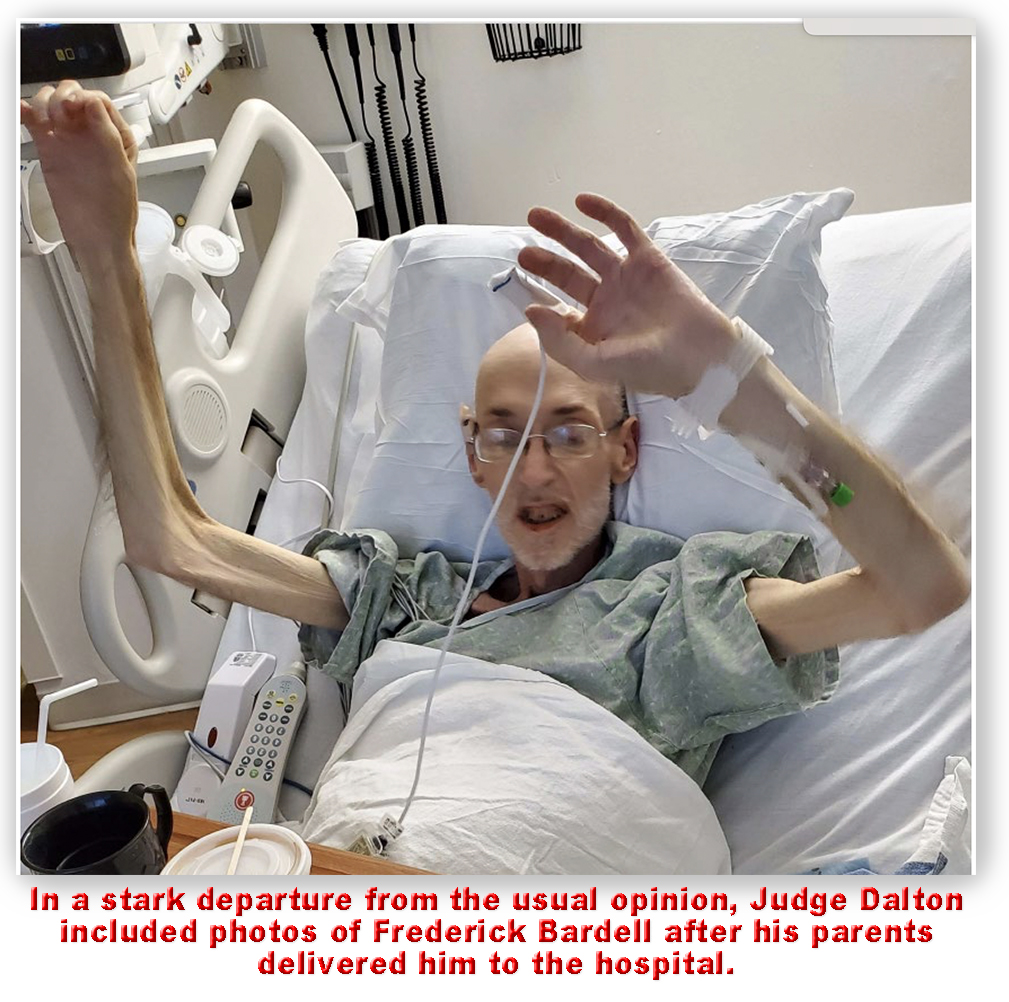
You may remember the awful case of Frederick Bardell, the Federal Bureau of Prisons inmate whose colon cancer was ignored by the BOP until it was too late, and then, when the court ordered compassionate release, dumped him on the sidewalk in front of DFW Airport, expecting the wheelchair-bound man to board and change planes to get home.

Mr. Bardell made it only through the kindness of strangers. When his parents met at the Jacksonville airport, they took him straight to the hospital. Mr. Bardell died there a week later.

Senior US District Judge Roy Dalton was furious, holding the FCI Seagoville warden in contempt and asking the Dept of Justice Inspector General to look into it. The IG issued a Report a few months ago concluding that the BOP’s delayed scheduling of urgent medical appointments led to Mr. Bardell’s “death by treatable cancer.” Contributing to the debacle, the IG found, was the “DOJ’s reliance on the BOP’s representations without further Inquiry.”

The BOP’s inferior healthcare has reared up to bite another inmate, but unfortunately for the Bureau, the inmate had been sentenced by Judge Dalton. Justina Holland sought compassionate release for an untreated medical problem, with the Government predictably denying that there was any emergency. The Court told the BOP he would grant Justina’s compassionate release if the agency didn’t get her to a breast surgeon within a month. The BOP sent her to the wrong specialist, and when an appointment with the right one was made, so much time had elapsed that she wouldn’t get in until May. When the Judge ordered the government to produce Justina’s complete medical file (including an urgent referral to a specialist from the first week in January), he got Epstein-file treatment: a lot of pages, but the critical pages, the smoking guns – such as the doctor’s urgent referral – were missing.

Last week, Judge Dalton granted Justina’s compassionate release motion. He did not mince words:

The failure to provide inmates with urgent medical care is now a well-documented problem with the BOP. See OIG Report at 50–51. Three months ago, with lumps in both breasts and bleeding from the nipples, Ms. Holland received an urgent referral for a doctor’s appointment to check for cancer. She still has not seen a doctor. The BOP’s repeated failures—to timely provide Ms. Holland with an appointment, to get her to the right doctor, even to collect her complete medical records—self-evidently show that Ms. Holland has an extraordinary and compelling medical circumstance qualifying her for compassionate release.

The Judge blasted BOP healthcare: “Nothing seems to move the nation’s federal prison system operators to improve their response to the urgent medical needs of the federal prison population,” he wrote. “Court orders go unread or ignored. OIG reports are dismissed, recommendations unheeded. Sanctions brook no change. Outside medical referrals are like Solzhenitsyn’s sick bay in the Soviet Gulag: a coveted but nearly inaccessible refuge for which only prisoners near death qualify for admission.”

He was equally blunt about the BOP’s reputation for truthfulness: Department of DOJ attorneys must be mindful in dealing with the BOP to ensure they comply with their duty of candor to the Court. A client who repeatedly fails to comply with court orders and OIG recommendations falls into the ‘trust but verify’ category of governmental agencies. There can be no presumption of regularity. The BOP will emerge unscathed, while the Government’s lawyer—and most importantly, the inmate—will carry the scars of its misfeasance.”

The BOP’s habits of misrepresenting inmate healthcare is hardly new.  But the agency should probably avoid trying its prevarications and half-truths on the same judge more than once.  This attempt did not end well for the agency (but Justina was granted compassionate release, and is presumably getting timely healthcare once again).

So there’s one winner here…

Order (Doc 207), United States v. Holland, Case No. 6:20-cr-86 (MD Fla, March 31, 2026)

NOTUS, A Federal Judge Compared the U.S. Prison System to a ‘Soviet Gulag’ Over Inmate Health Concerns (April 3, 2026)

~ Thomas L. Root

US Attorney’s Office ‘Losing the Trust’ of the Public – Update for March 24, 2026

We post news and comment on federal criminal justice issues, focused primarily on trial and post-conviction matters, legislative initiatives, and sentencing issues.

‘PANTS ON FIRE,’ FEDERAL JUDGE TELLS AUSA

A remarkable exchange occurred last week in a New Jersey courtroom.

Judge Zahid Quraishi was irate that a US Attorney’s Office made a sweetheart plea deal with a child porn defendant before discovering that he possessed a lot more porn of a much more disgusting nature than the government knew when it negotiated the plea agreement. As a result, the plea agreement allowed for a sentence that would max out at about a third of what the advisory guideline sentencing range turned out to be.

Back to Judge Quraishi: The Judge is the first Muslim to serve as a federal district judge. And he’s hardly the poster child for the “radical left lunatic” judges that President Trump regularly rails against. As an Army captain in the Judge Advocate General’s corps, Judge Quiraishi served in Iraq. Unusual for an Army lawyer, he was awarded a combat action badge, which suggests not only that he never had bone spurs, but that he “actively engag[ed] or [was] engaged by the enemy, and perform[ed] satisfactorily in accordance with prescribed rules of engagement.” Such as being shot at.

In civilian life, the Judge served as a lawyer for Immigrations and Customs Enforcement, as an Assistant US Attorney in the US Attorney’s Office for the District of New Jersey, and then as a US Magistrate Judge. In his spare time, Judge Quraishi taught courses on trial presentation at Rutgers Law School.

The Judge presumably knows his stuff, especially where the proper functioning of the US Attorney’s Office is concerned.

Previously, Judge Matthew Brann (Middle District of Pennsylvania, who brought into New Jersey to hear challenges to the US Attorney’s Office) had ruled that the US Attorney’s office was operating illegally after parking lot lawyer Alina Habba, Trump’s former personal lawyer, had been thrown out of office as US Attorney. Attorney General Pam Bondi appointed a triumvirate of attorneys to run the office in her place. Judge Brann found that appointment illegal, too.

Concerned about Judge Brann’s holding, Judge Quraishi – already furious that the US Attorney’s sloppy plea deal meant that he could not hammer Villafane with a sentence in excess of a half century – demanded that the AUSA be ready to answer questions at the sentencing hearing about who was running things. But the AUSA was able to offer only blandishments not based on personal knowledge, sort of what you might get if you asked a soldier in the trenches who was really managing the war effort back in Washington.

The AUSA’s equivocal answers caused the Judge to demand that the three acting heads of the office appear to testify. Exasperated, the Judge told the AUSA:

What you’ve told me today, what your representation is, which I don’t believe, by the way. I won’t believe it until you testify. That is what has happened to the credibility of your office. Generations of Assistant U.S. Attorneys had built the goodwill of that office for your generation to destroy it within a year.

The extraordinary rebuke came after the Judge told courtroom security officers to remove a supervisory AUSA from the courtroom because he hadn’t filed a notice of appearance and he just wouldn’t shut up. (In an in-your-face response, the AUSA – Mark Coyne, head of the Office’s Appellate Division – filed a notice of appearance the next day).

A DOJ spokesman said, “Unfortunately some judges are more interested in courtroom theatrics and constitutional overreach than promoting public safety. It is an especially troubling moment when a court chooses to sideline a case involving child exploitation.” This disingenuous criticism – the judge is angry that a US Attorney error prevents him from sentencing the defendant to a sentence three times longer than the deal the plea agreement includes – will probably only fan the flames.

So much for the presumption of regularity that US Attorneys have enjoyed from the courts for over 225 years.  As Judge Quirashi put it to the AUSA, ““You have lost the confidence and the trust of this court. You have lost the confidence and the trust of the New Jersey legal community, and you are losing the trust and confidence of the public.”

A final note: Yesterday, the New Jersey federal judges appointed a new interim US attorney, Robert Frazer, “a career prosecutor who federal court veterans said could bring some stability to an office that has been in chaos for much of the past year,” according to The New York Times.

According to a court filing, the Times said, Frazer’s appointment came after consultations between district court judges and the DOJ’s senior leadership.  Justice officials “reportedly welcomed his selection. That response itself represented a shift; other U.S. attorneys appointed by judges around the country during President Trump’s second term have been fired.”

Transcript, Doc 36, United States v. Villafane, Case No. 3:25-cr-00232 (March 16, 2026)

New York Times, Judge Ejects Federal Prosecutor From Court and Orders Bosses to Testify (March 17, 2026)

~ Thomas L. Root

Government Behaving Badly – Update for March 16, 2026

We post news and comment on federal criminal justice issues, focused primarily on trial and post-conviction matters, legislative initiatives, and sentencing issues.

‘THIS JOB SUCKS’ DESCRIBES THE CURRENT STATE OF DOJ

The wheels appear to be coming off the trucks at the Dept of Justice.

The Atlantic reported last month that DOJ had lost nearly 10,000 employees from Nov 2024 to Nov 2025. U.S. Attorneys’ offices have shed 14% of their workforce, a staggering one-year reduction unlike anything the department has seen in recent memory, former officials told The New York Times.

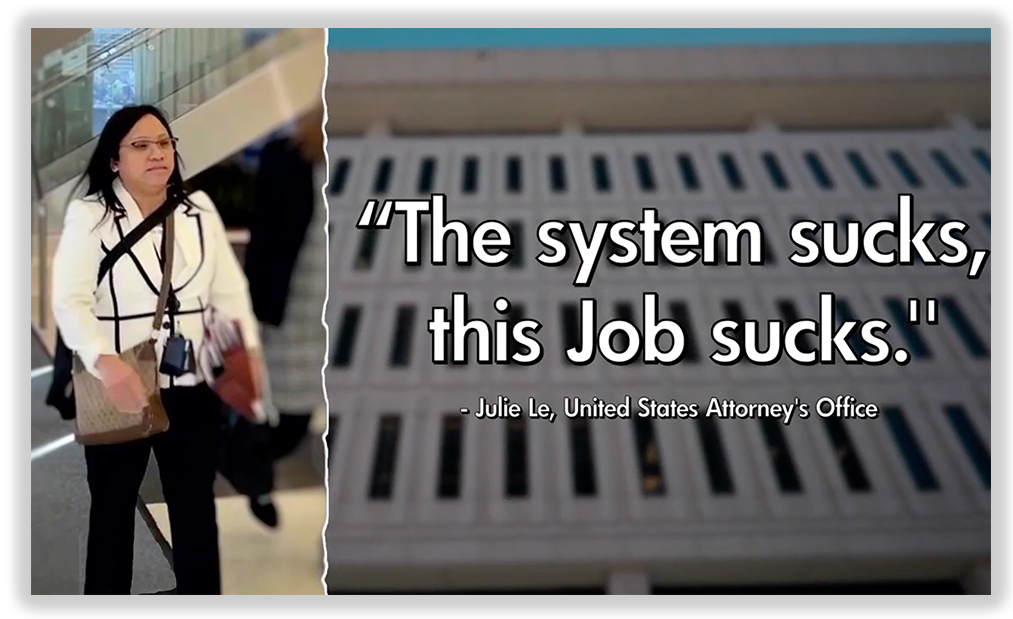
It’s not surprising. As (now former) AUSA Julie Le told a Minnesota district judge in open court, “The system sucks. This job sucks. I wish you could hold me in contempt so that I could get 24 hours of sleep.” Le had been assigned 88 cases in less than a month, according to an NBC News review of federal court records.

What’s worse for the government, the U.S. Attorneys’ offices – long a plum job for outstanding young lawyers – are facing serious recruiting problems. Chad Mizelle, a former chief of staff to Attorney General Pam Bondi, posted an unusual solicitation on the X formerly known as Twitter in early February:

“If you are a lawyer, are interested in being an AUSA, and support President Trump and anti-crime agenda, [direct message] me.”

The New York Times observed that the “post reflected the prevailing sentiment inside the department — that Mr. Trump has the right to hire only those willing to execute his agenda. It also highlighted the dynamic that appears to be contributing to the very staffing shortages Mr. Mizelle tried to address. The intermingling of law enforcement and political goals has made the department, long a magnet for platinum legal talent, an unappealing landing spot…”

The number of DOJ and AUSA applications is down significantly, officials told the Times, even as Trump loyalists have publicized vacancies through official and unconventional channels. One former prosecutor who served on a hiring committee in the U.S. Attorney’s offices for the Central District of California, said that candidates who expressed support for Trump policies were often ahead of applicants, even candidates with weak academic records and little litigation experience.

Meanwhile, the diminished numbers at DOJ and the U.S. Attorneys’ offices are being called on to do a lot more. The Atlantic said DOJ lawyers spent weeks vetting the Jeffrey Epstein files in response to the Epstein Files Transparency Act. The DOJ dedicated hundreds of lawyers, including more than 125 from the Southern District of New York, to reviewing over two million documents in the case.

“Add to that,” the Atlantic said, “a backlog of federal immigration cases and the ongoing legal fallout from the administration’s mass-deportation push, and the result is an organization that is thoroughly overwhelmed.”

In a rare ruling, in late February, Minnesota District Judge Paul A. Magnuson dismissed a felon-in-possession case under the Speedy Trial Act after prosecutors told the court that factors including a staffing shortage had prevented their office from meeting a deadline. The U.S. Attorney’s office has lost a significant number of experienced AUSAs who objected to the way DOJ was handling cases related to the immigration crackdown in the state.

The effect of all of this is becoming obvious. In New Jersey, the District Court forced the Acting U.S. Attorney to audit the government’s sorry record of compliance with court orders. In a filing last month, the government admitted to violating court orders 56 times in 574 immigration proceedings. The total included 18 missed deadlines and 10 failures to turn over evidence as ordered.

The presumption of regularity is a judicially created doctrine that grants the government an advantage not enjoyed by private litigants. The presumption directs courts, unless there is clear evidence to the contrary, that executive officials have “properly discharged their official duties” and that government agencies have acted with procedural regularity and with good-faith, non-pretextual reasons.

Courts and scholars are now wondering whether the government should continue to enjoy that presumption. The liberal website Just Security and the conservative Cato Institute have both questioned it in lengthy articles. The liberal blog Talking Points Memo said last month, “The pace of this important story is slow by dramatic standards, but by the somnambulant standards of the federal judiciary, the erosion of the credibility of the Justice Department, which took decades to establish and has all but vanished in one year under Trump II, is moving at lightning speed.”

Last month, District Judge Christine O’Hearn (District of New Jersey), wrote, “[T]he presumption of regularity and integrity previously and routinely afforded to the Executive branch and the United States Attorney’s Office has been undeniably eroded in this jurisdiction and across the country, and this Court will no longer blindly accept statements of fact from Respondents unless they are made under oath by an individual with personal knowledge…”

At the end of January, Minnesota Chief District Judge Patrick Schiltz issued an order that found that Immigration and Customs Enforcement had violated 96 court orders stemming from its crackdown in the state and had disobeyed more court orders in one month than “some federal agencies have violated in their entire existence.”

When U.S. Attorney Daniel Rosen emailed Judge Schiltz to complain that 96 violations was an exaggeration, Schiltz blasted back, warning Rosen that his office and ICE officials must comply with court orders or risk criminal contempt.

On March 5, the Minnesota Reformer reported that for a second time in a week, Rosen was ordered to appear before two different judges to explain why he should not be held in contempt for the government’s violations of court orders.

All of this is consequential for federal prisoners, who, on one hand, will experience more delay from more frequent government extensions but, on the other, may find government opposition to their motions less competently (and less honestly) done. To be sure, an inmate filer should be more vigorous in arguing that the government should receive no benefit from a presumption of good faith and regularity.

A final note on this incomplete listing of all of DOJ’s current travails: last week, a senior AUSA in the Eastern District of North Carolina was fired after filing a response in a civil action that included “fabricated quotations and misstatements of case holdings” and then made “false or misleading statements” about their origins, according to Bloomberg Law.

In a March 2 order, a District Court magistrate judge ordered the U.S. Attorney’s Office for the Eastern District of North Carolina senior leadership into court to explain why the entire office shouldn’t be held jointly responsiblefor the undisclosed and incredibly sloppy use of artificial intelligence in a court filing.

The AUSA told the Court that he had used AI to “catch up” on a draft filing and that the errors were accidental. But the Magistrate Judge looked at prior filings by the same AUSA and found similar errors. “It’s difficult to credit your response given what you’ve done here,” the Judge said. No presumption of regularity here…

The New York Times, 220,000 Fewer Workers: How Trump’s Cuts Affected Every Federal Agency (January 9, 2026)

NBC News, Government attorney who told judge in ICE case, ‘This job sucks,’ removed from detail (February 4, 2026)

The Atlantic, The DOJ Isn’t Built for This (February 19, 2026)

The New York Times, Demanding Support for Trump, Justice Dept. Struggles to Recruit Prosecutors (February 11, 2026)

Just Security, The “Presumption of Regularity” in Trump Administration Litigation (November 20, 2025)

Cato Institute, Do the Feds Still Merit the Court’s Presumption of Regularity? (January 5, 2026)

Talking Points Memo, Judges Big Mad at Trump DOJ in Wave of New Rebukes (February 23, 2026)

Declaration, Doc 21-1, Kumar v Soto, Case No. 2:26-cv-777 (D. New Jersey, filed February 13, 2026)

Order, Doc 10, Singh v Tsoukaris, Case No 1:26-cv-1531(D. New Jersey, filed February 20, 2026) 

Order, Doc 10, Juan TR v. Noem, Case No 0-26-cv-107 (D. Minn., filed January 26, 2026)

Minnesota Reformer, US Attorney Daniel Rosen defends himself, again, in contempt hearing for ICE order violations (March 5, 2026)

ABA Journal, Federal prosecutor resigns after AI errors found in court filing (March 11, 2026)

~ Thomas L. Root