We post news and comment on federal criminal justice issues, focused primarily on trial and post-conviction matters, legislative initiatives, and sentencing issues.

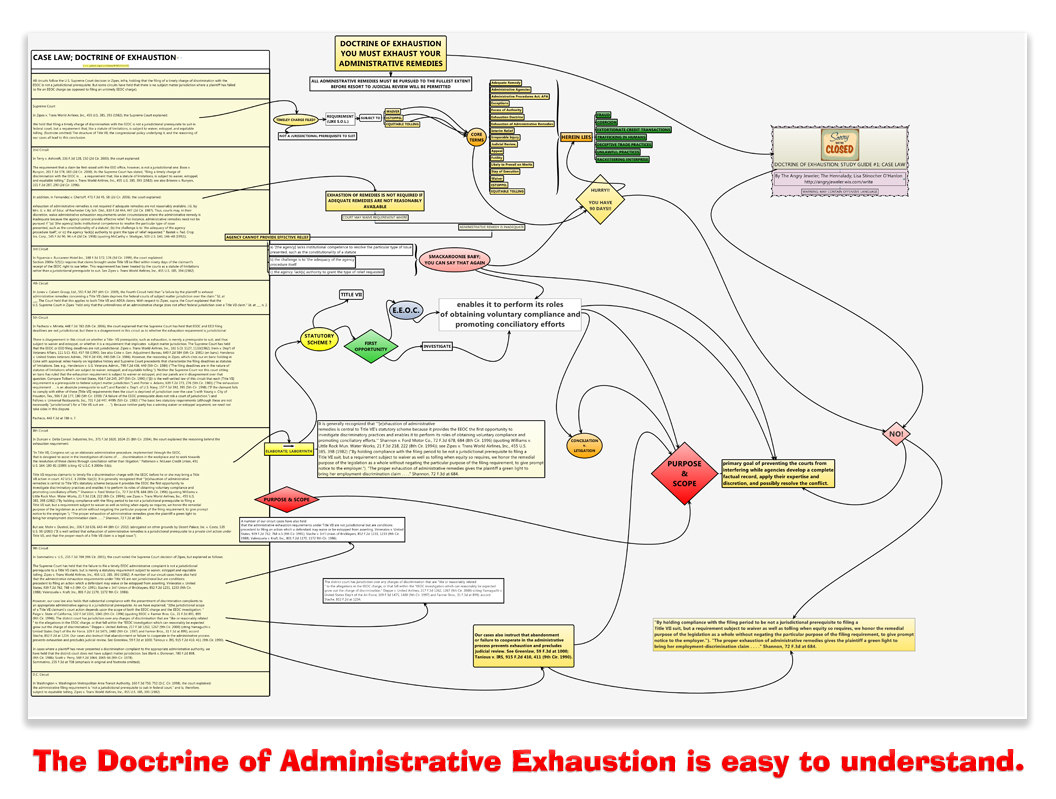
BOP ADMIN REMEDY PROCEDURE – THE HOUSE ALWAYS WINS
 A study by The Marshall Project and NPR published last week reported that the BOP’s grievance system – the BP-9, BP-10 and BP-11 – has inmate failure baked in.
I have not been this shocked by a revelation since learning that professional wrestling is fixed.
Reviewing BOP remedy filings for 2023, the latest year for which data are available, the study found that out of about 40,000 grievances filed in Fiscal Year 2023, 75% were rejected for being inconsistent with the BOP’s arcane procedural rules (too few copies of attachments provided, failure to enclose a copy of a lower-level denial, late filing). Of the 10,000 or so that made the procedural cut, only about 700 were granted.
Overall, the BOP’s grant rate is somewhere under 2% of the remedies filed. Like shooting craps with the house winning 49 out of 50 times.
The TMP/NPR report noted that the grievance process has gotten much worse in the past 20 years. The rate at which the Bureau granted grievances has fallen from just under 7% in 2000 to its current rate, a decline of 70% in 20 years.
“The program is intended to solve problems and be responsive to issues raised by inmates,” Randilee Giamusso, a BOP representative, wrote in an email to TMP/NPR, “and does not prevent inmates from pursuing litigation.”
Of course it doesn’t. And vandals are wrecking President Trump’s perfect beautification of the Reflecting Pool.
 The Prison Litigation Reform Act, passed in 1995, requires prisoners to complete all available administrative remedies as a condition of bringing suit. Other litigation, such as a petition for habeas corpus under 28 U.S.C. § 2241, requires exhaustion (but excuses it in rare cases where exhaustion would be futile, something that the BOP’s 2% approval rate should be considered to be “all the time”).
Contrary to Ms. Giamusso’s assurance, in Fiscal Year 2025 alone, over 1,770 federal court cases grappled with failure-to-exhaust-remedies claims raised by the government. In other words, the government uses failure-to-exhaust as a bludgeon to get inmate lawsuits dismissed on a regular basis.
The TMP/NPR study followed the medical travails of inmate Terri Mollica, whose serious condition was identified by physicians but needed surgery was withheld, and whose BP-9 was not answered for over 6 months. Mollica’s final level internal remedy to the BOP Central Office was never logged as received, leading to her lawsuit against the BOP being thrown out. The Circuit’s dry recitation of Terri’s history of trying to get the BOP to “solve problems and be responsive to issues raised by inmates” (as Ms. Giamusso so chirpily puts it) tells the story:
• On October 31, 2019, McGuire-Mollica filed an informal resolution form with the prison. She requested to “see a specialist/surgeon to determine the best course of action, within the next 30 days.” The next day, prison officials returned her form as unresolved.
• On December 4, 2019, McGuire-Mollica submitted a request for administrative remedy using a BP-9 form. She explained that she “ha[d] not received any treatment or additional consults for this problem” and renewed her request for “an outside specialist or surgeon.” On June 23, 2020, the acting warden responded to her request by confirming that she had a “scheduled appointment with an OB/GYN specialist.”
• On June 26, 2020, McGuire-Mollica filed an appeal using a BP-10 form. She continued to demand to see a surgeon. On December 21, 2020, the regional director denied her request because there was “no evidence of a May 2017 diagnosis of a malignant uterine growth” in her medical records and “[s]urgical intervention was not recommended.”
• On October 1, 2020, McGuire-Mollica mailed an appeal using a BP-11 form. McGuire-Mollica mailed this appeal before receiving the regional director’s response to her BP-10 form, but the regional director’s time to respond had already expired, which allowed the prisoner to “consider the absence of a response to be a denial.” She signed the BP-11 form and listed a certified mail tracking number on it. But prison officials contend that they never received the form, as the SENTRY database that tracks the status of all administrative grievances has no record of the BP-11 form being filed.
• On October 27, 2020, 26 days after she submitted the BP-11 form, McGuire-Mollica filed pro se a complaint in the district court. She alleged that the Bureau of Prisons and its officials had violated her rights under the Federal Tort Claims Act and the Eighth Amendment. And she attached exhibits to substantiate her claims, including copies of her administrative grievance filings and an affidavit alleging that “the officers/staff at this prison ha[ve] been tampering with [her] legal mail and denying [her] access to the Courts.”
• On July 1, 2022, McGuire-Mollica filed—still pro se—an amended complaint. She listed several prison staff and officials as defendants and described their involvement in the denial of her request.
• On October 19, 2023, the prison staff moved to dismiss the amended complaint. They contended that McGuire-Mollica failed to exhaust her administrative remedies… They argued that she did not complete the final step of the process of “appeal[ing] the response from the Regional Office to the General Counsel level.” McGuire-Mollica responded that she filed the BP-11 form when she submitted it to prison officials for mailing. And she explained that she “ha[d] done all administrative remedies that were available to her” because she could not “control the mail, whether the [Bureau]’s employees actually process or respond to the form, or even when or if the remedy is logged into the [Bureau] system.”
• On March 8, 2024, the magistrate judge granted the motion to dismiss. She explained that ‘[g]iven the clear conflict between the parties’ allegations, the court must accept as true McGuire-Mollica’s version of events—that she mailed her final appeal to the General Counsel.’ But… ‘although McGuire-Mollica properly completed and mailed her final appeal, it was never ‘logged into the Administrative Remedy Index as received’ and ‘[b]ecause her appeal was never received and logged into the Administrative Remedy Index, it was never considered ‘filed.’ She also dismissed the amended complaint because ‘when McGuire-Mollica filed her [original] complaint, the General Counsel’s time to respond had not expired’ such that ‘the administrative remedy process had not been completed.
So the BOP’s non-resolution of Terri’s problem only took a year. Seldom has a ‘no’ been delivered with such alacrity.
See how well it works, Ms. Giamusso?
 The 11th Circuit reinstated the case after attorneys for the MacArthur Justice Center proved that she had tried to follow every step, but officials had failed to record her final appeal.
The report noted that the BOP’s approval rate “appears to be far below that of many state corrections departments, the news organizations found, though departments track such data in different ways. In California, officials granted roughly 15% of grievances and appeals in 2023… In Georgia, nearly 13% of cases were “granted, partially granted or resolved” that year, according to the department. In Texas state prisons, over 4% of complaints and appeals processed that year were “resolved in inmate favor” — a very small portion, but about twice the BOP’s rate.
Ms. Giamusso told TMP/NPR that the agency is working on “updates and additional guidance” on the remedy procedure. However, nothing to that effect has been proposed in the Federal Register, suggesting that a fix – if one is being planned at all – is years away.
NPR, ‘Rejected’: How federal prisons stonewall grievances and deny care for years (June 17, 2026)
McGuire-Mollica v. Fed. Bureau of Prisons, 146 F.4th 1308, 1312-13 (11th Cir. 2025)
~ Thomas L. Root

 The Marshall Project and NPR published the second report in their investigation of the Federal Bureau of Prisons grievance procedures last week, this one focused on alleged BOP retaliation against prisoners filing grievances complaining of BOP staff violence and sexual abuse.
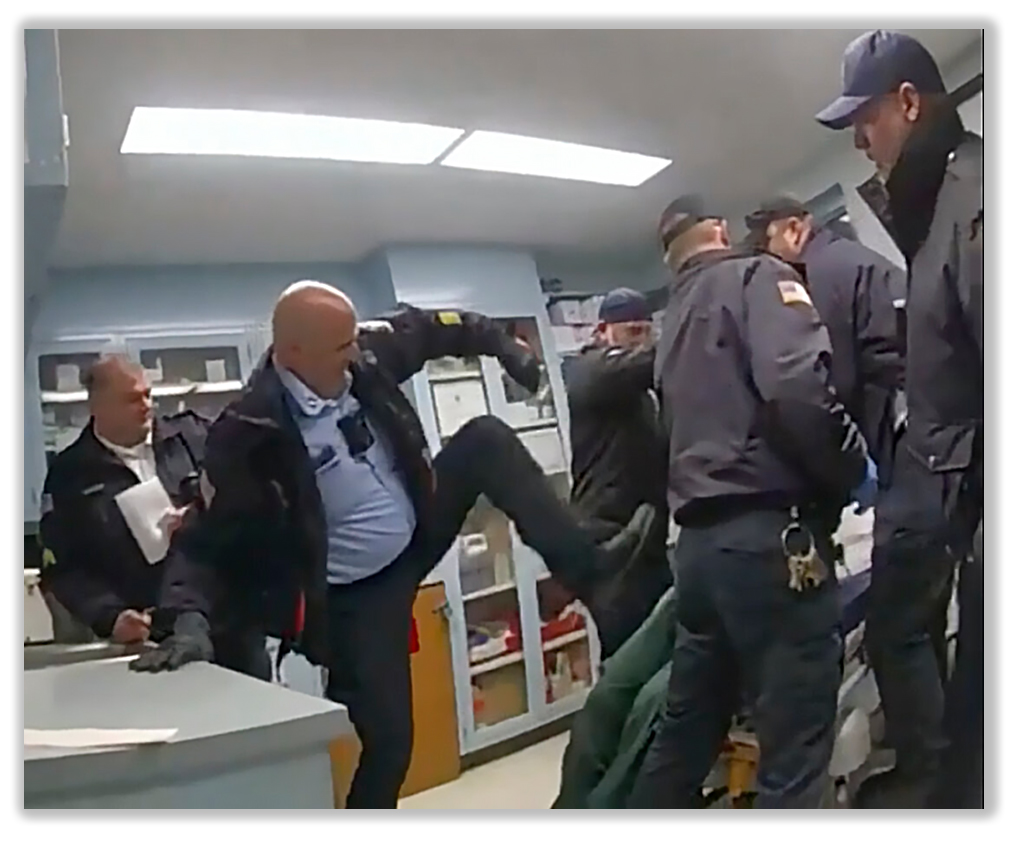 The report also quoted current and former BOP prisoners with a different view. “The grievance system is a joke,” said ex-inmate Jimmy Hodge. “If you’re grieving over abuse, they’re going to harass you, they’re going to assault you, but you’re never going to get relief.”