Tag Archives: FIRST STEP Act

Details Matter, 10th Circuit Says – Update for April 8, 2022

We post news and comment on federal criminal justice issues, focused primarily on trial and post-conviction matters, legislative initiatives, and sentencing issues.

DISTRICT COURT PUNT BLOCKED BY 10TH CIRCUIT

In 2004, Tony Burris was sentenced to 262 months on a crack cocaine charge, the low end of his Guidelines sentencing range. After the First Step Act was passed, Tony applied for his retroactive Fair Sentencing Act reduced sentence under First Step Section 404.

ghostdope220408The government opposed the motion, arguing that Tony’s Guidelines range remained the same because the calculation should be based on the quantity of crack cocaine attributed to him in the Presentence Report (typically stratospheric) rather than the smaller amount charged in the indictment. Recognizing that the parties raised an issue that had not yet been addressed by the 10th Circuit, the district court declined to resolve it and instead held that it would deny relief to Tony regardless of the correct Guidelines calculation.

Last week, the 10th Circuit reversed, holding that the district court was obligated to calculate Tony’s revised Guidelines range before denying relief on his Section 404 motion. “A defendant’s Guidelines range is the starting point and the initial benchmark of sentencing,” the Circuit ruled, and “a district court should begin all sentencing proceedings by correctly calculating the applicable Guidelines range.”

error161022The government argued that any error was harmless because the district court “looked at both proposed Guidelines ranges and concluded that it would deny the motion under either” one. The 10th rejected that contention, holding that while the district court may have said it would deny relief “whatever the result” of the correct Guidelines calculation, “our court has rejected the notion that district courts can insulate sentencing decisions from review by making such statements.” Here, the Circuit held, “the district court’s error, by its very nature, was not harmless; the district court’s exercise of discretion was untethered from the correct calculation of Tony’s revised Guidelines range.

United States v. Burris, Case No. 19-6122, 2022 U.S.App. LEXIS 8363 (10th Cir., Mar 30, 2022)

– Thomas L. Root

Sample-ing a First Circuit Compassionate Release Win – Update for February 21, 2022

We post news and comment on federal criminal justice issues, focused primarily on trial and post-conviction matters, legislative initiatives, and sentencing issues.

LET’S GO, BRANDON…

jrhigh220221I’m no fan of the current political meme “Let’s go, Brandon.” I think we can be critical of the incumbent President (or the former President, for that matter) without sounding like a lot of 7th-grade boys sitting in the back of the school bus.

But today, I mean it literally. Vermont-based Federal post-conviction attorney Brandon Sample (who has no connection with this blog other than the fact of his dedication to criminal defense and his skill in winning against sometimes-substantial opposition) swung for the fence on a First Circuit compassionate release appeal. Last week, he hit a walk-off homer.

Brandon’s client, Juan Ruvalcaba, was convicted of a sprawling drug-distribution conspiracy over 15 years ago and sentenced to life in prison. “Life” was the sentence that the 21 U.S.C. § 846 count required at that time because of Juan’s prior drug convictions.

In 2020, Juan asked his court for compassionate release under 18 U.S.C. § 3582(c)(1)(A)(i) because of COVID and his medical condition. He also argued that the fact that the mandatory minimum sentence for his drug conviction had been changed by the First Step Act – being dropped from life to 25 years – was an additional extraordinary and compelling reason for a sentence reduction.

henhouse180307A § 3582(c)(1)(A)(i) motion, for those of you who just came in, requires that a moving party show that there is one or more “extraordinary and compelling reason[s]” for a sentence reduction, and that, after considering the sentencing factors of 18 U.S.C. § 3553(a), a reduction is warranted. Time was only the Bureau of Prisons could bring such motions on behalf of inmates – sort of like letting the fox decide which chickens in the henhouse would be released to go “free-range” – but First Step changed that to let inmates file for compassionate release on their own.

The Sentencing Commission has defined what facts may constitute “extraordinary and compelling” reasons in a Policy Statement (USSG §1B1.13). However, because the Commission has been out of business for lack of a quorum since First Step changed the compassionate release statute in December 2018, the Policy Statement is still written as though only the BOP director is doing all of the filing.

Juan’s district court disagreed that the First Step change to his mandatory minimum could be an extraordinary and compelling reason for compassionate release. What’s more, the court held that it was obligated to follow the Sentencing Commission Policy Statement, which did not identify sentence length or a subsequent non-retroactive change in the sentencing statute as elements justifying a sentence reduction.

Brandon took Juan’s appeal to the 1st Circuit, and last week, that court joined a majority of other federal courts of appeal in holding that § 1B1.13 does not apply to prisoner-filed compassionate release motions. What’s more, the 1st Circuit ruled that a district court was free to consider that the prisoner is serving an over-long sentence that would not be mandatory had it been imposed after the First Step Act.

“The text of the current policy statement makes pellucid that it is ‘applicable’ only to motions for compassionate release commenced by the BOP,” the Circuit ruled. “To find the existing policy statement “applicable” to prisoner-initiated motions, we would need to excise the language referring to motions brought by the BOP. That would be major surgery and undertaking it would be well outside our proper interpretive province…. We may not ‘blue pencil’ unambiguous text to divorce it from its context.”

bluepencil220221The appeals court admitted that someday, the Sentencing Commission will be back in business and probably make § 1B1.13 relevant in a First Step world. Then, “district courts addressing such motions not only will be bound by the statutory criteria but also will be required to ensure that their determinations of extraordinary and compelling reasons are consistent with that guidance.” But until then, compassionate release will be interpreted “through the lens of the statutory criteria, subject to review on appeal.”

The 1st Circuit also held that an excessive sentence could be a reason for a sentence reduction, at least where a subsequent but non-retroactive change in the law had lowered a mandatory minimum. “Our view that a district court may consider the FSA’s prospective amendments to sentencing law as part of the ‘extraordinary and compelling’ calculus fits seamlessly with the history and purpose of the compassionate-release statute. In abolishing federal parole, Congress recognized the need for a ‘safety valve’ with respect to situations in which a defendant’s circumstances had changed such that the length of continued incarceration no longer remained equitable.”

Such a safety valve should “encompass an individualized review of a defendant’s circumstances and permit a sentence reduction — in the district court’s sound discretion — based on any combination of factors (including unanticipated post-sentencing developments in the law),” the Circuit ruled. Thus, a district court, reviewing a prisoner-initiated motion for compassionate release in the absence of an applicable policy statement, may consider any “complex of circumstances raised by a defendant as forming an extraordinary and compelling reason warranting relief.”

Juan still has to sell his district court on the wisdom of granting any sentence reduction on remand, but – judging from his appellate win – he probably has the lawyer who can do it, if anyone can. Go, Brandon!

United States v. Ruvalcaba, Case No. 21-1064, 2022 U.S.App. LEXIS 4235 (1st Cir., February 15, 2022)

– Thomas L. Root

Carvajel’s Subcommittee Swan Song – Update for February 7, 2022

We post news and comment on federal criminal justice issues, focused primarily on trial and post-conviction matters, legislative initiatives, and sentencing issues.

BOP DIRECTOR’S FINAL HOUSE OVERSIGHT HEARING LARGELY A MARSHMALLOW FIGHT

Marshmallow220207Bureau of Prisons Director Michael Carvajal dumped numbers on a largely uncritical House Subcommittee on Crime, Terrorism, and Homeland Security last Thursday, in what is likely the retiring Director’s final oversight hearing.

Committee chair Rep. Sheila Jackson-Lee (D-Texas) suggested fireworks to come when she opened the session wondering how the BOP could justify turning down inmates for compassionate release who later died of COVID. But the fireworks were largely a dud, as hard questions about criminal misconduct by BOP staff, lax security, and decrepit facilities – the reasons Associated Press gave for Carvajal’s resignation in the wake of Congressional pressure for his replacement – went unasked.

The Director’s play with numbers went unchallenged as well. His written statement reported that the Bureau has transferred more than 37,000 inmates to community custody, noting parenthetically that only about a quarter of those were transferred pursuant to the authority granted by the CARES Act. In his oral testimony, the Director truncated that to the BOP having “released over or transferred over 37,000 under the CARES Act to home confinement and community placement.”

The BOP has been bandying the 37,000 number about for a long time, used to lull legislators into thinking the agency had vigorously used its CARES Act authority. What it comes down to is that the BOP kept releasing people to halfway house/home confinement as usual but could only find under 7% of BOP inmates in custody who “qualified” for CARES Act placement over a 22-month period. The “qualifications” were those laid down by the Attorney General, with additional gloss (such as the inmate must have served 50% of his or her sentence). That means that 28,000 of that 37,000 number would have gone to halfway house or home confinement under normal end-of-sentence placement, even without the CARES Act.

Maybe the number misdirection doesn’t seem like such a big deal, but it’s emblematic of BOP culture. If the BOP’s professional judgment is that the CARES Act should be no more than the 7% solution, why not tell Congress “we released 9,000 people under the CARES Act, and if you wanted us to release more, you should have written the law differently.” Instead, the BOP leads with the 37,000 number, hoping that Congress doesn’t listen that carefully, and will think the BOP has done much more than it has. It is a tacit admission by the BOP that it knows it has been unreasonably chary in applying the CARES Act, and it hopes Congress doesn’t tumble to it.

pigfly220207Perhaps the next BOP director will be candid enough to own what his agency has done or not done with its authority. (See flying pig).

Carvajal also assured the Subcommittee that the BOP “continue[s] to screen inmates for appropriate placement on CARES Act” and that while the 50%-of-sentence standard is one of the “four hard criteria,” the BOP has “discretion – there usually is a higher-level review if the staff of the institution feels that it is appropriate outside of the CARES Act, we have procedures in place to review cases such as that…”  Call this the Manafort exception. Unfortunately, but for Paul Manafort’s CARES Act release in May 2020 (and former congressman Chaka Fattah in July 2020), the BOP has been steadfast in refusing to waive the 50% rule. It should be called the “who-you-know” exception.

who201229Responding to questions from Rep. Karen Bass (D-California), Carvajal said that 80% of the BOP staff was vaccinated, but only 95,000 out of 135,100 in-custody inmates had gotten the jab. His numbers are way off the BOP’s own website, which reports that 119,500 inmates are vaccinated – 78% – but only 70.4% of the BOP’s 36,739 employees have gotten the shot.

[Note to Mike: it’s easier to fudge the numbers when you’re not simultaneously making the real data available to anyone with a smartphone.]

Rep. Thomas Massie (R-KY) said the BOP had told his staff that 4,738 BOP employees (12.9% of the workforce) had gotten exemptions – mostly religious – from taking the vaccine, and groused that “it’s kind of it’s interesting that the inmates have more rights [to refuse vaccines] than the officers themselves.” No one knows what the Congressman might think if he knew the numbers Director Carvajal had given him were wrong. For what it’s worth, Congressman, if the BOP is getting rid of staff who refuse the vaccine, inmates would happily accept the same fate. 

One of the only tense moments in the hearing came when Rep. Cori Bush (D-MO) braced Carvajal on conditions brought to her attention by the National Council for Incarcerated and Formerly Incarcerated Women and Girls. Bush said:

In these emails, women in federal custody detail horrifying accounts of not being allowed to get out of their beds all day because of COVID lockdowns, being forced to eat expired food, having little to no access to medical services to treat cancers and other underlying conditions, having to pay $2.00 to file a sick complaint. This is all happening under your watch. These are complaints coming from not one or not two facilities but five different facilities, which makes clear that these issues are not isolated… These women cannot hold you accountable, Mr. Carvajal, they cannot, but we can, and I would like to use this opportunity to ask you questions that they cannot directly ask you out of fear of retaliation.

schultz220207The Director responded, “I’m not aware of those particular complaints, but I’m certainly interested in hearing from you and your staff so that we can look into them, because I find that – if that happened – I find it unacceptable.” He assured Bush that “we take all allegations seriously…” Not that I disagree – I would never dispute what the BOP director says – but I have hundreds of emails from inmates who beg to differ.

Carvajal explained to the legislators, “I’d like to stress something – we’re not here for punishment, the taking of their time by the courts and the criminal justice system, that’s the punishment, we’re here to house people that are remanded to our custody and more importantly to prepare them to reenter society, keep them safe while they’re here. We’re not here as punishment, that’s not how we look at this agency.”

The hearing had a few other bumps. Rep. Steve Cohen (D-TN) complained that the BOP “has unfortunately failed to protect the health of those within their custody and their staff from COVID-19 or address chronic understaffing [and] the BOP has also lacked transparency and vigor and implementing important criminal justice reforms such as the First Step Act.”

Jackson-Lee raised the reports filed by epidemiologist Homer Venters, M.D., on MDC Brooklyn and FCC Lompoc. She noted that “his investigation revealed [a] disturbing lack of access to care when a new medical problem is encountered…” Venters noted that at MDC Brooklyn, “it quickly became apparent that not only were many people reporting that their sick call requests, including COVID-19 symptoms, were being ignored, but that the facility was actually destroying their original request which violates basic correctional standards. [T]his is an accountability hearing… these are human beings deserving of respect and dignity, men and women…”

Carvajal said he was “aware of the report, we looked into it, we followed up, I won’t discuss that specific incident, but I will reassure you that each of our institutions has an outpatient health clinic that’s overseen by a board-certified physician and a medical director. We have outside oversight… If there’s a mistake made or something of that nature, we’re going to look into it and do something about it correct the issue.”

potemkin220207He did not mention and the Subcommittee did not note that the BOP’s “follow-up” consisted of vigorously contesting every aspect of Venters’ report in litigation over MDC Brooklyn.

It may not be much of a plan to testify before a subcommittee hoping that the legislators haven’t done their homework. But Director Carvajal seems to have capped his career doing just that, and with some success.

Statement of Michael Carvajal, House Committee on Judiciary (Feb 3, 2022)

Hearing, Oversight of the Federal Bureau of Prisons (Feb 3, 2022)

Fernandez-Rodriguez v. Licon-Vitale, 470 F.Supp.3d 323 (S.D.N.Y. 2020)

– Thomas L. Root

Forget I said What I said… – Update for January 13, 2022

We post news and comment on federal criminal justice issues, focused primarily on trial and post-conviction matters, legislative initiatives, and sentencing issues.

GLAD TO EAT MY WORDS

Victory220113Not more than an hour after I posted the blog below, the Dept of Justice issued a press release announcing that the Bureau of Prison had adopted a final rule for application of its earned-time credit program.

I practiced administrative agency law in Washington, D.C., for a long time, but I never have seen such an agency execute such an astounding about-face on a proposed rule between the Notice of Proposed Rulemaking and final order before.

It’s Christmas Day for inmates. I will take a dive into the new rule for a blog tomorrow.  For now, suffice it to say… wow.

Ignore the following:

BOP EARNED TIME CREDIT MEMO PORTENDS LITIGATION

delay190925The Federal Bureau of Prisons has been stalling full implementation of First Step Act earned time credits for three years now, but the clock runs out in a few days. By then, the BOP is supposed to have the earned-time credit program (which the BOP is calling “Federal Time Credits”) fully implemented.

Under the FTC program, prisoners who successfully complete recidivism reduction programming and productive activities are eligible to earn up to 10 days of FTCs for every 30 days of program participation. Minimum and low-risk inmates will get 15 days. But the list of programs and productive activities is limited, the list of eligible prisoners is even more limited, and the BOP has thus far fought inmates’ efforts to win any credit.

That has resulted in decisions such as an Oregon holding from November that the BOP’s belief that “may delay awarding time credits to inmates that complete qualifying programming until January 15, 2022, is contrary to the statute.”

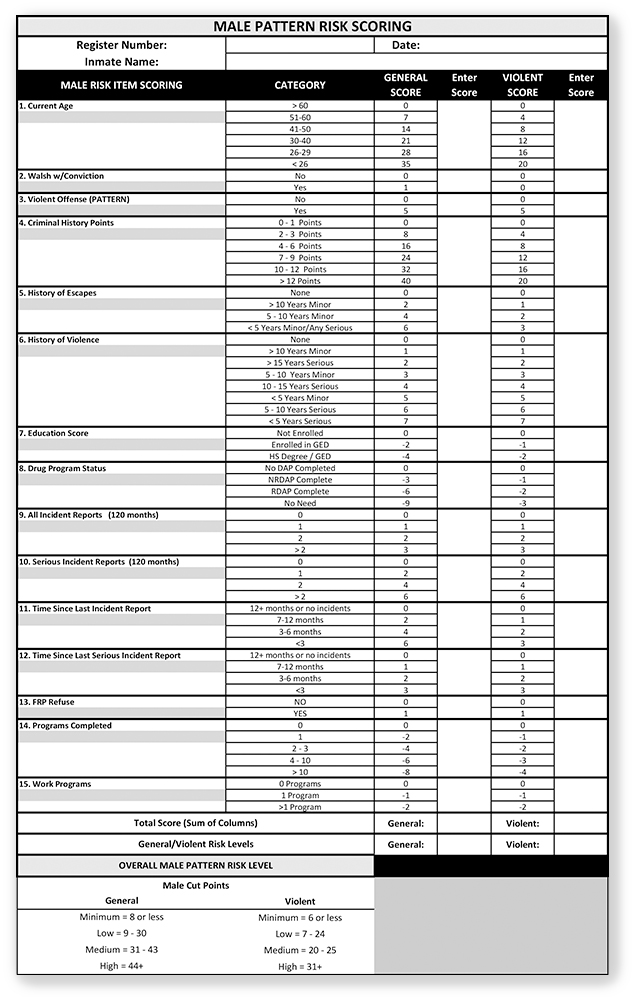
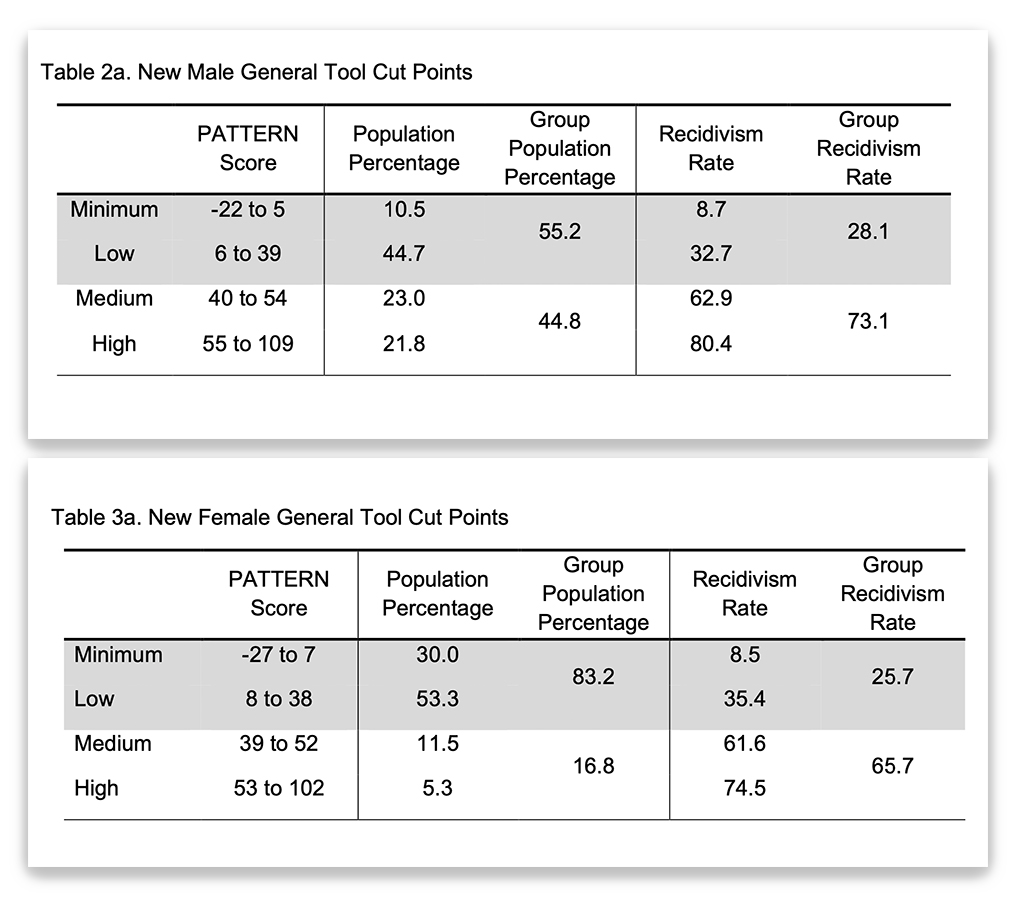
Forbes magazine last week published portions of an “internal memorandum posted at some prison camps.” The memo said that beginning in January 2022, the Bureau will begin applying FTC under this update. However, while inmates with high and medium PATTERN risk levels may earn FTC, only those with low and minimum levels may actually use them.

The BOP plans to apply the first 365 days of FTC time to early release, with “[a]ny FTC earned beyond that may be applied toward community placement.” The BOP plans to update sentence computations in the next few months, with the Bureau’s Designation and Sentence Computation Center to “prioritize based on those inmates we project to be immediate releases, beginning with inmates in community placement.”

confusion200424Forbes predicts that “far from clarifying things… implementation of [FTC]… will be almost impossible over the near term. This affects multiple levels of the criminal justice system; prisons, halfway houses, home confinement, and supervised release. It is an intricate web of agencies that manage the incarceration and supervision of hundreds of thousands of people in the federal criminal justice system. Thousands will file lawsuits whether they are in prison, halfway houses, home confinement, or supervised release, fighting for their right to a broadly defined, and subject to BOP discretion, FSA credit… This is going to be more complicated than anyone ever imagined.”

The great unsettled question is exactly what constitutes program participation. Inmates were jubilant when First Step passed, because everyone wrongly assumed that if one had an hour-long evening class four days a week for four weeks, he or she would have earned 16 days of programming credit on successful completion. But then the BOP proposed rule – which has not yet been adopted – holding that a day of program participation was equal to eight hours of programming. Under that metric, an hour a day four days a week for four weeks would be worth 16 hours, or two days of programming, not 16 days.

What was as bad, the credits for “productive activities” are capped. Working in UNICOR – the Federal prison industries – has a well-earned reputation for reducing recidivism. But credit for UNICOR work is limited to 500 hours. In other words, if one works in UNICOR for four months at 35 hours a week, he or she has amassed 500 FTC hours, which translates to 62 days, which translates to two months. Two months of FTC credit is worth 30 days off the sentence.

If the inmate works in UNICOR for 10 years (which would be about 17,500 hours), he or she would still get 30 days off his or her sentence. Is the favorable effect of 10 years of productive factory work on recidivism no different than four months? The BOP rule would seem to suggest so.

oddcouple210219As of today, the rulemaking proceeding has not been completed, yet another failure of the BOP to get anything done on time. What’s more, Senator Richard Durbin (D-Illinois), chairman of the Judiciary Committee, and Committee Ranking Member Senator Charles Grassley (R-Iowa) jointly blasted the proposed rule last May, asking the Attorney General to “reevaluate and amend the rule consistent with the statute’s goals of incentivizing and increasing program participation to reduce recidivism. Establishing robust programming and a fair system to earn time credits is critical to meeting the FSA’s goal of reducing recidivism.”

Durbin and Grassley are the fathers of the First Step Actsuggesting that perhaps they know what they meant when they wrote it.

Whether anyone listened has yet to be answered. It’s a cinch that if the BOP’s 8-hour-day rule gets adopted, there will be litigation.

Forbes, Implementation of The Criminal Justice Reform Law, First Step Act, Will Likely End Up In Court (January 5, 2022)

Cazares v. Hendrix, Case No 3:20-cv-02019, 2021 U.S. Dist. LEXIS 240776 (D. Ore., November 9, 2021)

Press release, Durbin, Grassley Press DOJ to Strengthen First Step Act Rule on Earned Time Credits to Incentivize Rehabilitation (May 5, 2021)

– Thomas L. Root

It’s Halftime for the 117th Congress, and Criminal Justice Reform Has Been Held Scoreless – Update for January 3, 2022

We post news and comment on federal criminal justice issues, focused primarily on trial and post-conviction matters, legislative initiatives, and sentencing issues.

WELL, 2021 WAS KIND OF DISAPPOINTING…

NYDTypwrtr220103We all had high hopes for criminal justice reform when President Biden took the White House, and the Democrats won control of the House and Senate. The year 2021 was widely seen as the end of a dark era and the beginning of a brighter one. As Reason magazine said last week, it wasn’t just the close of just any year. It was the end of 2020.

Over the last 12 months, politicians h some steps to advance justice reform. But as is the case with so many New Year’s expectations, quite a bit also stayed the same.

Since Biden’s inauguration, criminal justice reform has taken a back seat to his more prominent initiatives, last March’s American Rescue Plan, the Infrastructure Investment and Jobs Act in November, and the now seemingly-dead Build Back Better social-spending blowout.

Biden did issue an executive order canceling contracts with private prison operators, a nice change for the 14,000 people in those joints. And his Dept, of Justice finally reinterpreted the CARES Act to let people on home confinement stay there. He has promised clemency reform. But the real work is to be done in Congress, w has yet to progress.

If you stayed awake in high school, you recall that every Congress lasts two years. Any bill introduced in the 117th Congress – which began in January 2021 – will stick around until the 117th expires a year from today. That means that the reform bills now in front of Congress still have a chance.

On New Year’s Day, the San Francisco Chronicle called for a targeted bill to abolish mandatory minimums, said, “The good news is that criminal justice reform can be accomplished with relatively limited expenditures — compared to, for example, Build Back Better’s sweeping expansion of the social safety net. That gives it a fighting chance of passing in today’s barely Democrat-controlled Congress.”

marijuana-dc211104

A couple of bills before Congress would reduce but not eliminate mandatory minimums: the EQUAL Act (lowers minimums for crack to equal those of powder) has passed the House but hasn’t yet cleared committee in the Senate; the MORE Act (decriminalizes marijuana retroactively) has been approved by a House committee but has not been passed by the House or Senate; the First Step Implementation Act (makes First Step mandatory minimum reductions retroactive) and the Smarter Sentencing Act (reduces mandatory minimum penalties for certain nonviolent drug offenses only) have not even cleared committee in either the House or Senate.

While the House also passed the MORE Act to decriminalize marijuana, the measure has been dead on arrival in the Senate, where Senate Majority Leader Chuck Schumer (D-New York) announced plans to draft his own version of the bill. The Schumer bill has been released as a working draft but has yet to be formally introduced.

In the House, Republican Rep. Nancy Mace (South Carolina) introduced the first GOP-sponsored bill in Congress to legalize marijuana, hinting that there may be openness to a bipartisan solution in the future. If the Democrats fail to take advantage of the political opportunity in front of them, Forbes said last week, they risk ceding this issue to the Republicans if and when they take back control of Congress, possibly as soon as next year.

When the SAFE Banking Act, a marijuana bill, passed the House last year, it got 106 Republican votes, demonstrating that the GOP can deliver votes on cannabis legislation. But the MORE Act that passed the House in the last Congress – the one with criminal retroactivity – received only five Republican votes. The current MORE Act has collected only one Republican co-sponsor.

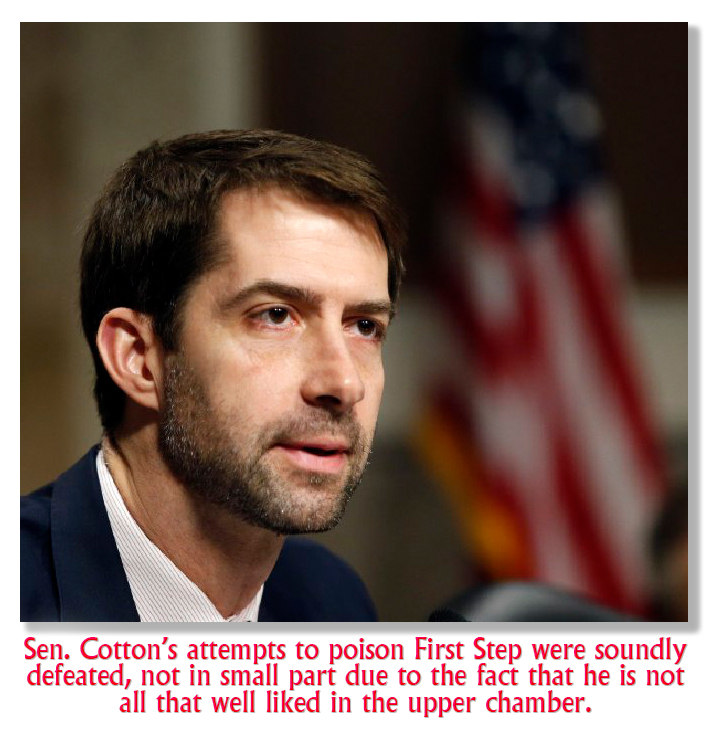
cotton181219The problem is that most bills spend months in committee with no movement, or they pass in the House only to the Senate before dying out. And with mid-terms putting all of the House and a third of Senate up for re-election in November and crime rates shooting up, getting legislators on board for criminal justice reform is going to be more challenging.

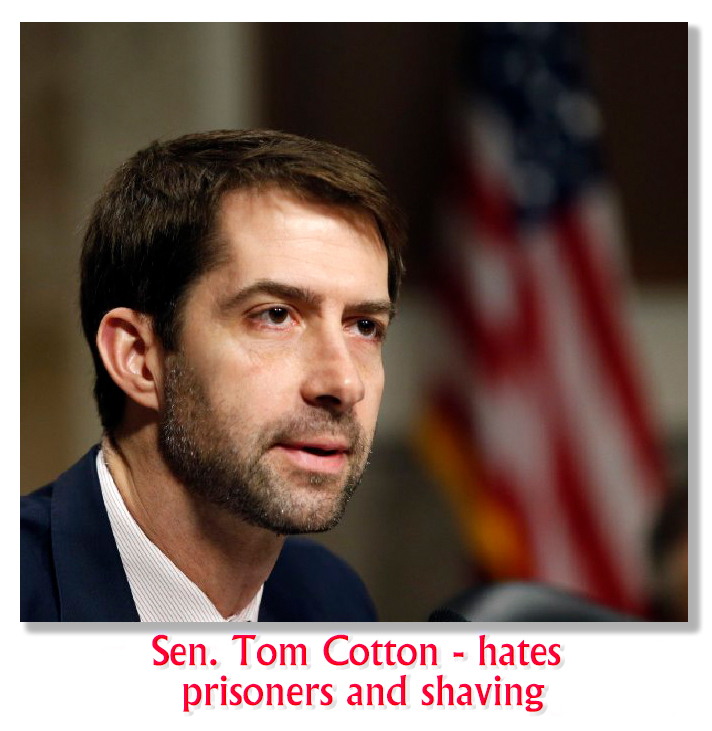
And then there are demagogues like Sen. Tom Cotton (R-Arkansas). Last week, he wrote in Real Clear Politics:

Unfortunately, soft-on-crime policies have been, at times, a bipartisan problem. In 2018, Republicans passed the pro-criminal First Step Act. That deeply flawed legislation reduced sentences for crack dealers and granted early release to some child predators, carjackers, gang members, and bank robbers. Ironically, this jailbreak bill even provided early release for those who helped prisoners break out of jail. This misguided push by Republicans to win applause from liberals strengthened the hand of radicals like George Soros. In a political environment where the parties compete for who can be more pro-criminal, the Democrats will always win.

People like Cotton make even common-sense federal criminal justice reform a hard sell.

Reason, In 2021, Qualified Immunity Reform Died a Slow, Painful Death (December 30, 2021)

Forbes, The Least Eventful Year for Marijuana (December 31, 2021)

San Francisco Chronicle, Biden’s agenda is stuck. It doesn’t have to be that way with criminal justice reform (January 1, 2022)

S. 79: EQUAL Act

H.R. 3617, MORE Act

S. 1013: Smarter Sentencing Act of 2021

S. 1014: First Step Implementation Act of 2021

Brookings Institution, The numbers for drug reform in Congress don’t add up (December 22, 2021)

Real Clear Politics, Recall, Remove & Replace Every Last Soros Prosecutor (December 20, 2021)

– Thomas L. Root

Biden Pardons Turkeys But No Prisoners – Update for November 22, 2021

We post news and comment on federal criminal justice issues, focused primarily on trial and post-conviction matters, legislative initiatives, and sentencing issues.

BIDEN ISSUES FIRST PARDONS… NO HUMANS MAKE THE LIST

turkey211122There was no shortage of complaints from criminal justice reform advocates last Friday as President Biden “pardoned” two turkeys with the rather vegan names of “Peanut Butter” and “Jelly” in a White House ceremony.

“Peanut Butter and Jelly were selected based on their temperament, appearance, and, I suspect, vaccination status,” Biden said. “Yes, instead of getting basted, these two turkeys are getting boosted.”

But when a reporter asked whether he would be pardoning “any people in addition to turkeys,” Biden treated the question as a joke. “You need a pardon?” the president quipped. He didn’t reply to a follow-up question about marijuana prisoners as he walked away from assembled journalists.

turkeyb161123The turkeys may not get roasted, but the President isn’t so lucky. Law professor and clemency expert Mark Osler wrote in the Minneapolis Star-Tribune that “those of us who work in the field of clemency are left with a bitter taste in our mouths. Biden’s pardon of those turkeys represents the first time he has shown any interest at all in clemency. The problem isn’t just that Biden isn’t granting any clemency, it’s that he isn’t denying any, either. Following the lead of his predecessor, former President Donald Trump, Biden is just letting requests sit.”

Osler cited the 18,000 pending clemency petitions – 16,000 more than when Obama took office – and the danger CARES Act people may be sent back to prison when the pandemic ends, as “two genuine crises unfolding in federal clemency.”

A few days earlier, Interrogating Justice complained that

President Joe Biden campaigned heavily on justice reform, including with the federal Bureau of Prisons. He acted swiftly after his inauguration by terminating private prisons that housed federal inmates. However, since then, there has been virtually nothing. Various justice-reform groups have called out the president for his apparent lack of action. Points of frustration start with the increased population of federal prisons, the BOP’s inept handling of the pandemic, the failure to apply First Step Act time credits and most recently the question of granting clemency to all prisoners who are at home confinement under the CARES Act. And these are just a few of the many issues that plague the BOP.

turkeyprison161114The Minneapolis Post argued that “

While campaigning for president last year, however, Biden promised sweeping changes to the criminal justice system. And Biden could not have been more clear that he was committed to reform — promising, “as president” to “strengthen America’s commitment to justice and reform our criminal justice system. Then Biden got elected. And he’s been busy with other things…”

The Hill called it Biden’s “do-nothing” approach to clemency, which

he seems to have delegated entirely to the DOJ… Most of the Democratic candidates for president endorsed this change because the DOJ had proven itself incapable of handling clemency impartially and efficiently for decades… So why doesn’t Biden take clemency away from DOJ and create the kind of advisory commission that President Ford used to aid him in processing a similar backlog of petitions from people with convictions for draft evasion during the Vietnam War? The only apparent answer is that Biden does not want to look like he is interfering with DOJ. But clemency should never have been in DOJ in the first place. It is there by historical accident — no state gives clemency decision-making power to the same prosecutors who bring cases in the first place because of the obvious conflict of interest problem it poses.

New York Times, Boosted, Not Basted: Biden Pardons 2 Turkeys in Thanksgiving Tradition (November 19, 2021)

New York Post, Biden laughs off question about clemency for humans before pardoning turkeys (November 19, 2021)

Minneapolis Star-Tribune, When it Comes to Human Pardons, Thanks for Nothing (November 19, 2021)

Interrogating Justice, The Biden Administration Has Gone Quiet on Justice Reform at the BOP (November 15, 2021)

Minneapolis Post, When will Biden make good on his promise to reform criminal justice? (November 15, 2021)

The Hill, Biden can’t let Trump’s DOJ legacy stifle reform (November 17, 2021)

 Thomas L. Root

Freaky Friday – Update for November 12, 2021

We post news and comment on federal criminal justice issues, focused primarily on trial and post-conviction matters, legislative initiatives, and sentencing issues.

NEWS OF THE WEIRD

What’s Done is Done: In the 1st Circuit, Junito Melendez was denied a First Step Act § 404 sentence reduction under the Fair Sentencing Act (FSA). Junito finished his prison sentence in 2007 and got off supervised release three years later. Unfortunately, after ten years as a free man, he is now facing a new drug conspiracy charge.

goingback211112Therein lies the problem. Junito was released from his prior 109-month sentence within 15 years of the current conspiracy charge, so he faces a mandatory 10-year minimum sentence under 21 USC § 841(b)(1)(B). But if the prior sentence were to be changed consistent with the FSA, his release date would have been much earlier, and it would thus have fallen well more than 15 years before the current case. Had that been the case, he’d be facing no mandatory minimum now.

The 1st Circuit turned him down, holding that the word “release” in 21 USC § 802(57), which defines a “serious drug felony,” focuses on the “historical facts of a defendant’s sentence when determining whether § 802(57)‘s definition is met.” Regardless of what a different, shorter sentence might have yielded, the historical fact is that Junito was released in 2007. What’s more, the Circuit said, “Congress used the phrase ‘serious drug felony’ in the statute, signaling its intent for the backward-looking language of § 802(57)… to apply to the 10-year mandatory minimum.”

There just ain’t no shortening a sentence that’s already completely in the past tense.

I Should Have Been Watching Him While He Was Watching Me: Jason Sheppard, on supervised release after a drug sentence, discovered that his girlfriend had developed a cozy “personal relationship” with his probation officer, one Jeff Sciarrino. That’s one way to keep tabs on your supervisee, we suppose.

[Read the salacious details here]

Needless to say, the discovery did not enhance Jason’s relationship with his girlfriend. They broke up over her cheatin’ heart.

breakingup211112In his grief, Jason moved for early termination of supervised release under 18 USC § 3583(e), arguing that the breakup “was negatively impacting his rehabilitation, thereby undermining any utility in continued supervision.” Jason made the rather obvious claim to the district court that “the probation officer was never concerned with [his] rehabilitation and appears to use his position for his own personal interests.”

The district court denied Jason’s motion, and last week the 3rd Circuit agreed. It held the District Court acted within its discretion to conclude that  Probation Officer Sciarrino’s amorous misconduct “has little to do with whether Sheppard should continue under the supervision of a different officer.”

The Circuit criticized the District Court, however, for holding that the PO’s misconduct “actually undermines” Jason’s motion for early termination, because the upset may interfere with Jason’s mental health treatment.” The Circuit said, “the District Court’s order includes an inference that Sheppard is responsible not only for his own conduct, but also must shoulder any and all negative repercussions from the misconduct of his probation officer. This inference is improper… when evaluating a motion for early termination, a district court, particularly in the absence of holding an evidentiary hearing, may not impute a probation officer’s alleged improper actions to a defendant serving a term of supervised release, so as to justify continued (or additional) rehabilitative oversight.”

Nevertheless, the Court was not very happy with the U.S. Probation Office:

A probation officer’s communications of such a “personal” nature with an assigned defendant’s significant other are not only entirely inappropriate and unprofessional, but they also undermine the primary objective of supervised release – i.e., “to facilitate the integration of offenders back into the community rather than to punish them.” It also challenges the role of probation officers as trusted government officials who, in performing their duties, are “supposed to have in mind the welfare of the probationer…” In Sheppard’s case, his probation officer implicated Sheppard’s personal life in his own — and to such a degree that, according to Sheppard, it caused him to break up with his live-in girlfriend, with whom he considered to be in a “lifelong commitment.” If this is not the antithesis to assisting Sheppard in transitioning back into the community, and having his “welfare” in mind, we do not know what is.
supervisedleash181107In all candor, I am constrained to note that even when Probation Officers act appropriately, they provide little benefit to supervisees beyond what Probation Officer Lothario provided to Jason. Supervised release is largely a snare for the unwary supervisee, with a sorry record of violating about one of three post-release folks entrusted to the Probation Office’s care.

United States v. Melendez, Case No 20-1575, 2021 U.S.App. LEXIS 31858 (1st Cir., October 22, 2021)

United States v. Sheppard, Case No 20-3088, 2021 U.S.App. LEXIS 32722 (3d Cir., November 3, 2021)

– Thomas L. Root

Hey, Bud, Look What the House Judiciary Committee Lit Up – Update for October 8, 2021

We post news and comment on federal criminal justice issues, focused primarily on trial and post-conviction matters, legislative initiatives, and sentencing issues.

BUT WAIT, THERE’S MORE…

marijuanahell190918We reported last Friday on the House passage of the EQUAL Act. In our glee over the potential redress of the racially disparate crack-to-powder laws, we overlooked the House Judiciary Committee’s approval of the Marijuana Opportunity, Reinvestment and Expungement (MORE) Act, H.R. 3617, on a 26-15 vote.

All Democrats on the Committee supported the bill while all but two Republicans opposed it.

Among other measures, the bill removes marijuana from the Controlled Substances Act, changes that “are retroactive and shall apply to any offense committed, case pending, conviction entered, and, in the case of a juvenile, any offense committed, case pending, or adjudication of juvenile delinquency entered before, on, or after the date of enactment of this Act.

The bill still has to be approved by the House, as well as facing an uphill fight in the evenly-divided Senate. There is no timeline for full House or Senate action.

crackpowder160606Meanwhile, Sen. Richard Durbin (D-IL), Chairman of the Judiciary Committee, Sen. Charles Grassley (R-IA), and others last week introduced the Terry Technical Correction Act, which clarifies that individuals convicted of the lowest level crack offenses before the Fair Sentencing Act passed can apply for its retroactive application under Section 404 of the First Step Act. The same bill was introduced simultaneously in the House by bipartisan cosponsors led by Rep. Jerrold Nadler (D-NY) and Rep. Sheila Jackson-Lee (D-TX).

The bill seeks to amend the text of First Step Section 404 to make people sentenced for crack offenses prior to the passage of the Fair Sentencing Act eligible for sentence reductions even where they were sentenced under 21 USC 841(b))(1)(C), which has no mandatory minimum sentence, thereby undoing the Supreme Court’s Terry v. United States decision of last June. The bill has not yet been scheduled for a committee hearing.

House Judiciary Committee, Chairman Nadler Statement for the Markup of H.R. 3617, the MORE Act of 2021 (September 30, 2021)

H.R. 3617, MORE Act of 2021

Press Release, Senators Introduce Legislation to Correct Scotus Ruling on Retroactivity of Crack Cocaine Sentencing Reform (October 1, 2021)

House Judiciary Committee, Bipartisan Judiciary Committee Members Introduce Legislation to Clarify Retroactivity of Crack Cocaine Sentencing Reform (October 1, 2021)

– Thomas L. Root

Happy New Year! – Update for October 4, 2021

We post news and comment on federal criminal justice issues, focused primarily on trial and post-conviction matters, legislative initiatives, and sentencing issues.

WE’RE BA-A-A-CK…

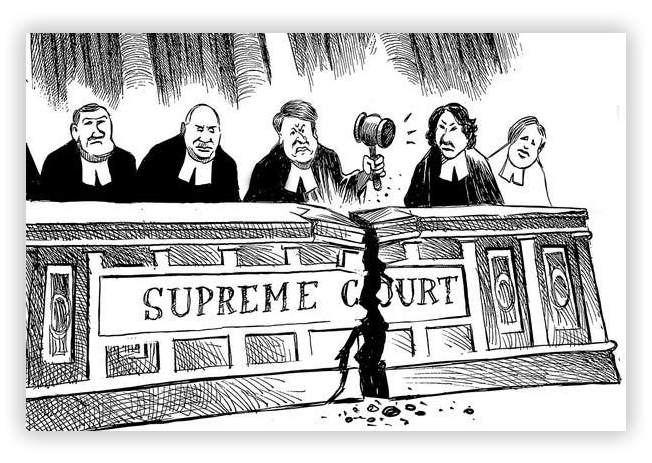
happynewyear211004… the nine Supreme Court justices will say this morning, the first Monday in October and the first day of the Court’s new year. The high court begins its new term – which lasts until June 30, 2022 but is known as “October Term 2021” – with hearing arguments on one federal criminal issue and granting review to another.

First, the grant of certiorari. Last week at its annual “long conference,” where the Court disposed of over 1,200 petitions seeking review of lower court decisions, the Supremes granted review to a First Step Act case. Back when Congress passed the Fair Sentencing Act of 2010 to reduce the disparity crack and powder cocaine sentences, it did not make the Fair Sentencing Act retroactive to the thousands of crack sentences already imposed.

In Section 404 of the 2018 First Step Act, Congress granted retroactivity at the discretion of the defendant’s sentencing judge, but did not specify any standards for the judge to apply in deciding whether to reduce a sentence. The question raised in Concepcion v. United States is whether, when a court is deciding whether to resentence a defendant under the Fair Sentencing Act, the court must or may consider intervening developments (such as prison record or rehabilitation efforts), or whether such developments only come into play (if at all) only after courts conclude that a sentence reduction is appropriate.

FSAsplit190826

The 3rd, 4th, 10th, and DC circuits have held that district courts must consider all subsequent facts, and not just the changes to statutory penalties, when conducting Fair Sentencing Act resentencings. But in the 1st, 2nd, 6th, 7th and 8th circuits are only required to adopt the revised statutory maximum and minimum sentences for crack cocaine spelled out in the Fair Sentencing Act. In the 5th, 9th, and 11th circuits, district courts are prohibited from considering any intervening case law or updated sentencing guidelines, and are not required to consider any post-sentencing facts during resentencings.

Don’t expect a decision before June 2022.

Now, for today’s argument. The Supreme Court will begin its term hearing argument in Wooden v United States. Defendant Wooden broke into a storage facility and stole from 10 separate storage units many years ago. When he was found in possession of a gun years later, the district court sentenced him under the Armed Career Criminal Act to 15 years, because it found that he committed three violent offenses – the breaking into the 10 storage units – “on occasions different from one another.” The Court of Appeals agreed, arguing that the crimes were committed on separate “occasions” because “Wooden could not be in two (let alone ten) of [the storage units] at once.”

BettyWhiteACCA180503This has long been the worst aspect of the ACCA, itself as well-meaning but lousy law. A number of circuits hold that crimes are committed on different “occasions” for ACCA purposes when they are committed “successively rather than simultaneously.” Other circuits, however, looked beyond temporality and instead considered whether the crimes were committed under sufficiently different circumstances.

The Supreme Court will resolve the Circuit split. A decision is expected early next year, and – if the Court agrees defendant Wooden, a number of people serving ACCA sentences may be filing 28 USC § 2255 or 28 USC § 2241 petitions seeking reduced sentences.

Wooden v. United States, Case No. 20-5279 (Supreme Ct., argued Oct 4, 2021)

Concepcion v. United States, Case No. 20-1650 (Supreme Ct., certiorari granted Sep 30, 2021)

Law360, Supreme Court Will Seek To Solve Crack Resentencing Puzzle (September 30, 2021)

SCOTUSBlog.com, What’s an “occasion”? Scope of Armed Career Criminal Act depends on the answer. (October 1, 2021)

– Thomas L. Root

Police Reform Goes Down; EQUAL Act May Be Next – Update for September 27, 2021

We post news and comment on federal criminal justice issues, focused primarily on trial and post-conviction matters, legislative initiatives, and sentencing issues.

NO GOOD NEWS ON CRIMINAL JUSTICE REFORM

good-bad-news-400pxDemocratic and Republican negotiators in the Senate last Wednesday called off talks aimed at overhauling police tactics and accountability, with the lawmakers unable to reach a compromise in the wake of nationwide protests sparked by the killings of Black Americans by law-enforcement officers.

Sen. Cory Booker (D-NJ) said, “In the end we couldn’t do it, if you just take some of those issues of transparency, professional standards and accountability, we couldn’t get there.”

The implications for criminal justice reform are significant. If the two parties can’t get together on reforms most everyone believes are needed, other reform measures could be stillborn. Last week, Sen Charles Grassley (R-Iowa) – one of the two sponsors of the First Step Act – said that the EQUAL Act, which will reduce penalties for crack to match those for powder cocaine, doesn’t have enough support in the Senate to pass. Attempting to eliminate the disparity, Grassley said last week, would jeopardize the likelihood he and Sen. Richard Durbin (D-Illinois) can get the 60 votes needed to bring the justice reform bills to the floor. Among Republican colleagues, it’s a non-starter, he said.

compromise180614“Does that mean that there’s not some possibility for compromise? I would be open to that, but I’m going to have to get enough Republicans to go along to make sure we don’t scuttle the other good provisions we have,” Grassley said.

Although optimistic about prospects for his justice reforms, such as the First Step Implementation Act and the COVID-19 Safer Detention Act, Grassley acknowledged the looming challenge is “dealing with all the other things that are on the agenda right now and have been all year.” He anticipates Democratic Senate Majority Leader Chuck Schumer (D-NY) will give Durbin and him time to debate and pass their package this fall. “But with the progress of negotiations and floor time and all the other stuff that’s in the news more often than this is, I think it could be delayed into 2022,” Grassley said.

Grassley’s realistic appraisal is in stark contrast to the hopeful tone in yesterday’s New York Daily News. William Underwood, whose life sentence was cut by compassionate release and who now works with The Sentencing Project, wrote that while “bipartisanship on Capitol Hill is in short supply these days, these bills can pass the Senate with broad support from both parties. Passing these two bills would acknowledge that each and every one of us, when given the opportunity, can be better than the worst thing we have ever done.”

marijuana160818One piece of hopeful news came last week with the House of Representatives passing the National Defense Authorization Act. Tucked into that bill were provisions of the SAFE Banking Act, which would protect banks by prohibiting regulatory actions to keep them from servicing legitimate marijuana businesses. Passage suggests that action to normalize the sale and use of marijuana may continue, and lead to retroactive changes in federal criminal pot laws.

Wall Street Journal, Bipartisan Police-Overhaul Talks End With No Deal (September 22, 2021)

Sioux City Journal, Grassley skeptical of GOP support for cocaine penalty reforms (September 20, 2021)

Marketwatch, House includes cannabis banking measure in defense bill (September 22, 2021)

New York Daily News, Bend Open the Prison Bars (September 26, 2021)

– Thomas L. Root