Tag Archives: FIRST STEP Act

Nothing Extraordinary about a 312-Year Robbery Sentence, 3rd Circuit Says – Update for September 8, 2021

We post news and comment on federal criminal justice issues, focused primarily on trial and post-conviction matters, legislative initiatives, and sentencing issues.

A LARGELY UGLY COMPASSIONATE RELEASE DECISION FROM THE THIRD CIRCUIT

guns200304The 3rd Circuit last week joined eight other federal circuits in holding that an inmate-filed compassionate release motion is not limited by the Sentencing Guidelines § 1B1.13 policy statement. That was the good news, the only good news.

Eric Andrews is serving a 312-year sentence for a string of armed robberies, with almost all of that time due to stacked 18 USC § 924(c) convictions. If he had been sentenced after passage of the First Step Act, his § 924(c) sentences would have amounted to 91 years, still impressive but possibly a survivable sentence. But because the First Step changes were not retroactive, Rick’s only course was to file a compassionate release motion under 18 USC § 3582(c)(1)(A)(i) arguing that his excessive sentence length and the First Step Act changes were the “extraordinary and compelling reasons” supporting grant of the motion.

The district court denied Rick, and last week, the 3rd Circuit agreed.

The appeals court held that “the duration of a lawfully imposed sentence does not create an extraordinary or compelling circumstance… Considering the length of a statutorily mandated sentence as a reason for modifying a sentence would infringe on Congress’s authority to set penalties.”

41475-Forever-Is-A-Long-TimeLikewise, the 3rd ruled, a nonretroactive change to mandatory minimums “cannot be a basis for compassionate release. In passing the First Step Act, Congress specifically decided that the changes to the 924(c) mandatory minimums would not apply to people who had already been sentenced.” Applying rules of statutory construction to the First Step Act, the Circuit said, “we will not construe Congress’s nonretroactivity directive as simultaneously creating an extraordinary and compelling reason for early release. Such an interpretation would sow conflict within the statute… We join the 6th and 7th Circuits in reaching this conclusion.”

Ohio State University law professor Doug Berman, writing in his Sentencing Law and Policy blog, makes a telling point:

The very first sentence of the Andrews ruling has a Kafka-esque “only in America” quality to it: “Eric Andrews is serving a 312-year sentence for committing a series of armed robberies when he was nineteen.” That a person at age 19 can get a 312-year sentence for a series of robberies strikes me as quite extraordinary and quite compelling, but the district court did not see matters that way. Specifically, as described by the panel opinion, the district court decided that “the duration of Andrews’s sentence and the nonretroactive changes to mandatory minimums could not be extraordinary and compelling as a matter of law.” Of course, there is no statutory text enacted by Congress that sets forth this “as a matter of law.” But the Third Circuit panel here blesses the extra-textual notion that courts can and should invent some new categorical exclusions “as a matter of law” regarding what might qualify as extraordinary and compelling.

noquorum191016The Second, Fourth, Fifth, Ninth and Tenth Circuits have held the contrary to this opinion, which perhaps puts some wind in Thomas Bryant’s pending petition to the Supreme Court for review of the 11th Circuit’s denial of his compassionate release motion. That petition is ripe for decision at the end of this month at the Supreme Court’s “long conference.” Of course, a reconstituted Sentencing Commission could solve this circuit split by rewriting USSG § 1B1.13, but that would require that the Sentencing Commission first be repopulated with new members. President Biden has thus far shown no more interest than did his predecessor in appointing new members. By December, the Commission will have been without a quorum for three years.

United States v. Andrews, Case No 20-2768, 2021 US App LEXIS 26089 (3d Cir. August 30, 2021)

Sentencing Law and Policy, Third Circuit invents some extra-textual limits on what might permit a sentence reduction under 3582(c)(1)(A) (August 30, 2021)

– Thomas L. Root
Two Circuits Liberalize Fair Sentencing Act Reductions – Update for August 24, 2021

We post news and comment on federal criminal justice issues, focused primarily on trial and post-conviction matters, legislative initiatives, and sentencing issues.

TWO FAIR SENTENCING ACT CASES GO FOR THE PRISONERS

Last week saw two unsurprising but welcome Fair Sentencing Act decisions.

In the 11th Circuit, Tony Gonzalez was serving a 51-month supervised release sentence. Originally convicted in 2005, Tony served 76 months for a crack cocaine conviction. Released in 2015, he got tripped up on substance abuse during his supervised release term and was sent back to prison.

addiction210825Tony filed for a Fair Sentencing Act retroactive sentence reduction based on § 404 of the First Step Act. His district court denied him for a couple of reasons, one of which was that he wasn’t currently serving a sentence for crack cocaine, but instead for violating his supervised release.

Last week, the 11th joined the 4th and 6th Circuits “in holding that a sentence imposed upon revocation of supervised release is eligible for a sentence reduction under § 404(b) of the First Step Act when the underlying crime is a covered offense within the meaning of the Act… Thus, the district court had the authority to consider his motion for a sentence reduction just as if he were serving the original custodial sentence. So Mr. Gonzalez is eligible for a sentence reduction under the First Step Act.”

Meanwhile, in the 8th Circuit, Jack Robinson – who was doing life for a crack offense in which he had been tagged for over 2 kilos of crack – had been denied a Fair Sentencing Act reduction by his district court. The district judge ruled that “Robinson would have been subject to the same mandatory life sentence had the Fair Sentencing Act been in effect at the time he committed the covered offense… because the revised version of § 841(b)(1)(A)(iii) provided for a mandatory life sentence if the defendant was convicted for 280 grams or more of crack cocaine and had two or more prior felony drug offense convictions,” and thus reasoned that the court was deprived “of the discretion to reduce Robinson’s sentence under the First Step Act.”

Last week, the 8th Circuit reversed. “This reasoning is contrary to the principle that the First Step Act applies to offenses, not conduct,” the Circuit said, meaning that Jack’s statutory “sentencing range under the First Step Act is dictated by the movant’s offense of conviction, not his relevant underlying conduct… Therefore, Jack’s offense of conviction — not the underlying drug quantity — determines his applicable statutory sentencing range.

life161207At his initial sentencing, Jack faced a mandatory term of life imprisonment because he was convicted and sentenced for conspiracy to distribute at least 50 grams of crack and because he had two prior drug felonies. “Under the Fair Sentencing Act,” the Circuit said, “the statutory sentencing range for his conspiracy to distribute 28 grams or more of crack cocaine, including his prior convictions, is now not less than 10 years and not more than life. Thus, the district court erred as a matter of law when it relied on the sentencing court’s drug quantity finding of 2.35 kilograms of crack cocaine to determine Jack’s applicable statutory sentencing range under the Fair Sentencing Act and the First Step Act.

United States v. Gonzalez, Case No 19-14381, 2021 U.S.App. LEXIS 24765 (11th Cir., August 19, 2021)

United States v. Robinson, Case No 20-1947, 2021 U.S.App. LEXIS 24603 (8th Cir., August 18, 2021)

– Thomas L. Root

Who Knows What Joe’s Thinking? – Update for August 17, 2021

We post news and comment on federal criminal justice issues, focused primarily on trial and post-conviction matters, legislative initiatives, and sentencing issues.

ADMINISTRATION HINTS AT DRUG CLEMENCY (MAYBE)

Biden Press Secretary Jen Psaki started hearts and tongues fluttering last week when she said the Administration was looking at clemency for federal drug offenders.

clemencypitch180716“The president is deeply committed to reducing incarceration and helping people successfully reenter society,” Psaki said in a press briefing. “And he said too many people are incarcerated — too many are black and brown — and he’s therefore exploring multiple avenues to provide relief to certain nonviolent drug offenders, including through the use of his clemency power.”

As a candidate, Biden said in 2019 that he wanted to release “everyone” in prison for marijuana, but Psaki has referred questions on whether he will do so to the Justice Department, saying last April it was “a legal question.”

The New York Post reported that “Psaki’s remark thrilled clemency advocates who have been pushing for Biden to commute prison sentences and issue pardons early in his term, which is uncommon for presidents. Clemency advocate Amy Povah said, “We are elated that President Biden has expressed an interest in using his executive clemency power with an emphasis upon drug cases.”

caresbear210104Meanwhile, other advocates feel frustrated that Biden has done nothing on a matter as small as addressing the status of people on CARES Act home confinement. Last Wednesday, Senators Richard Durbin (D-Illinois) and Cory Booker (D-New Jersey) wrote to President Biden, urging him to act on keeping CARES Act home confinees at home. They suggested, in part, that the Bureau of Prisons could “provide relief for certain individuals through prerelease home confinement, under 18 USC § 3624(c)(2), and the Elderly Home Detention Pilot Program, pursuant to 34 USC 6054l(g). For those who do not qualify for those provisions, BOP can recommend, and DOJ should support, compassionate release pursuant to 18 USC § 3582(c)(l)(A). Compassionate release is authorized whenever extraordinary and compelling reasons warrant a sentence reduction, and the once-in-a-century global pandemic that led to these home confinement placements certainly constitutes such an extraordinary and compelling circumstance.”

Reuters last week reported that the Justice Department had asked an Oregon federal judge on Tuesday to deny a bid by federal inmates to qualify for early release through First Step earned time credits. Prosecutors argued that no programs or activities completed by the inmates qualified for earned time credits.

Reuters said, “The rift could increase pressure on the Justice Department, which is under fire from civil rights advocates for its inaction to prevent BOP from sending thousands of federal inmates back to prison once the pandemic emergency is lifted.”

At issue is a provision from the 2018 First Step Act, which aims to ease harsh sentencing for non-violent offenders and reduce recidivism. The BOP may award 10 or 15 days’ credit for every 30 days of participation in recidivism-reduction or activities such as academic classes or certain prison jobs.

In a November 2020 proposed rule, the BOP defined a day of participation as eight hours and limited the menu of qualifying programs.

recid160321One issue is the BOP’s definition of a day of participation as 8 hours. “The math speaks for itself,” federal defenders wrote in a January 2021 letter to BOP. “It would take 219 weeks, or over 4 years to earn a full year of credit under the BOP’s proposed rule.”

In Tuesday’s case, the lead plaintiff has held prison jobs such as a painter and an HVAC worker and completed courses such as anger management, entrepreneurship, and a residential drug abuse program. But the government argued that none of those programs is on the BOP’s EBRR program list.

“If HVAC work doesn’t qualify, what kinds of jobs do?” asked Magistrate Judge John Acosta, noting the program’s goal of reducing recidivism and facilitating reintegration into society.

“The ones that are identified by the Bureau of Prisons,” AUSA Jared Hager replied, noting the inmates have “not shown entitlement to any credit.” The list of qualifying programs and activities will be updated by Attorney General Merrick Garland, he added.

Similar suits are on file in federal courts throughout the country.

Finally, JDSupra.com reported last week that Senate Majority Leader Chuck Schumer (D-New York) has partnered with Senate Finance Committee Chairman Ron Wyden (D-Oregon) and Sen Booker to draft comprehensive federal cannabis reform legislation, which the sponsors plan to introduce this fall.

marijuanahell190918The measure, called the Cannabis Administration and Opportunity Act (the CAOA), would – among other matters – would require the federal government to expunge any arrest or conviction for a non-violent federal cannabis offense, and allow any person serving a criminal justice sentence for a non-violent federal cannabis offense to move for sentence reduction. After the hearing, the court would be required to expunge each arrest, conviction, or adjudication for a non-violent federal cannabis offense.

The drafting of the bill is in its early stages. The sponsors are actively soliciting comments prior to CAOA’s introduction. Comments may be submitted through September 1, 2021, at Cannabis_Reform@finance.senate.gov.

New York Post, Biden ‘exploring’ clemency for federal drug crimes, Psaki says (August 11, 2021)

Letter from Senators Durbin and Booker to President Biden (August 12, 2021)

Reuters, U.S. Justice Dept clashes with inmates over credits to shave prison time (August 10, 2021)

JDSupra.com, US Senators Seeking Input on Comprehensive Federal Cannabis Reform Legislation (August 11, 2021)


– Thomas L. Root

You Can’t Imagine What Never Was in Sec. 404 Resentencing, 10th Says – Update for July 1, 2021

We post news and comment on federal criminal justice issues, focused primarily on trial and post-conviction matters, legislative initiatives, and sentencing issues.

COULDA, WOULDA, SHOULDA

JCoulda210701ason Broadway got caught with 488 grams of crack in 2007. He was indicted for having more than 50 grams (which triggered a 10-year statutory minimum under 21 USC § 841(b)(1)(A)) and admitted to the full 48 grams in a plea deal. He got 262 months under the then-applicable Guidelines.

As you recall, the Fair Sentencing Act of 2010 reduced the disparity between crack and powder from a 100:1 ratio to 18:1, making the difference in sentences imposed based on the amount of drug at issue much less. But it was not until the First Step Act passed in 2018 that the Fair Sentencing Act changes could be applied retroactively to people like Jason, who had been sentenced prior to 2010.

Jason applied for a sentence reduction under First Step Section 404, arguing that his statutory mandatory minimum sentence had been reduced by the Fair Sentencing Act. But the district court turned him down, pointing out the government could have indicted him for 488 grams but did not, and he probably would have admitted to all those drugs anyway, and a jury should have convicted him if he had gone to trial (which he did not), and because Jason was a career offender, his Guideline max of “life” would not have changed.

Jason was denied on a “coulda, woulda, shoulda” analysis.

Last week, the 10th Circuit reversed. The Circuit that for the district judge to reach his conclusion, he had to assume that if the Fair Sentencing Act had been in effect, Jason would have been indicted for more than 280 grams (the new cutoff for the 10-year minimum sentence), and if he had been indicted for more than 280 grams he would have pled to it, and if he had pled to it he would not have made a sentencing objection to the 488 grams the government said he had possessed.

lookback210701“To impose a reduced sentence as if the Fair Sentencing Act were in effect at the time the offense was committed is inherently backward-looking,” the 10th held, “but it should not require the amount of speculation necessitated by looking to a defendant’s underlying conduct, even if stipulated. Courts are not time machines which can alter the past and see how a case would have played out had the Fair Sentencing Act been in effect. We doubt Congress would have imposed such a futile role for us.”

Thus, the Circuit ruled, the District Court had to consider the statutory minimum attached to the offense of conviction (more than 50 grams) – not what could have been but never was – and should calculate Jason’s corrected Guidelines range after the passage of the Fair Sentencing Act before considering whether the sentencing factors of 18 USC § 3553(a) argued against a reduction.

United States v. Broadway, Case No. 20-1034, 2021 U.S.App. LEXIS 18506 (10th Cir., June 22, 2021)

– Thomas L. Root

SCOTUS to Congress: ‘Say What You Mean’ – Update for June 21, 2021

We post news and comment on federal criminal justice issues, focused primarily on trial and post-conviction matters, legislative initiatives, and sentencing issues.

TERRY V. UNITED STATES: ‘OH, THAT’S BAD! NO, THAT’S GOOD…’

If you remember Sam the Sham and the Pharaohs, you probably have a Medicare card in your wallet. After “Wooly Bully,” Sam and band – traveling around in a 1952 packard hearse – recorded a few other hits, the last of which was the rather confusing 1973 balled “Oh That’s Good, No That’s Bad.”

samsham210618The plot – such as it is – had Sam describing a series of events in his love life, each one sounding either like a victory that was actually a defeat or a defeat that was actually a victory. Such could be the story of this week’s Supreme Court decision in Terry v. United States, in which the petitioner – sentenced for a crack offense prior to the 2010 Fair Sentencing Act – argued that his 21 USC 841(b))(1)(C) sentence was covered by Section 404 of the First Step Act, and that he was thus entitled to be resentenced.

A quick review: drug sentences are imposed under 21 USC 841(b)(1). The worst sentences – based on quantity of drugs involved – are imposed by § 841(b)(1)(A). Lesser quantities are punished by § 841(b)(1)(B). If the indictment does not specify any minimum quantity of drugs sold, the sentence is imposed by § 841(b)(1)(C). Not surprisingly, the (b)(1)(A) sentences are the harshest, starting at a mandatory minimum of 10 years and increasing based on the number of prior drug and violent crimes committed or other factors (such as if a drug user died from drugs you provided).

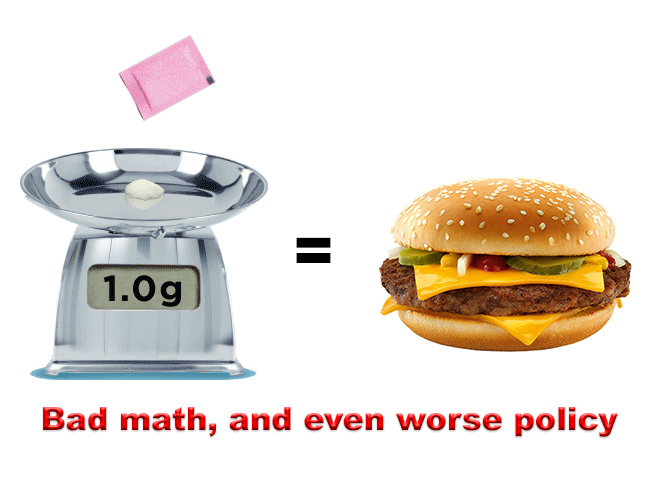
Before 2010, crack cocaine was assessed for sentencing purposes at 100 times the weight of powder. That meant that 10 grams of crack (about two teaspoons) was sentenced as if it were 2.2 lbs (a kilo) of powder cocaine. The ratio was Congress’s knee-jerk reaction to the early 90s belief that crack was a powerful scourge destroying our inner cities. Of course, the fact that it was mostly sold in the inner cities led to most of the defendants who were hammered by incredibly long sentences were black.

crack-coke200804

The Fair Sentencing Act recognized the disparate impact of the 100:1 ratio by reducing it to a mere 18:1 (proponents wanted a 1:1 ratio, but compromised to gain enough Senate support for passage). The FSA modified the amounts of crack needed to trigger the mandatory minimums in § 841(b)(1)(A) and (b)(1)(B) accordingly. Where a mere 5 grams (one teaspoon) of crack would buy a defendant a minimum five years, now that mandatory sentence required 28 grams. The prior 50-gram minimum for a (b)(1)(A) sentence became 280 grams.

At the same time, the FSA was made to be prospective only (not retroactive) to secure enough Republican votes to pass.

Eight years later, First Step § 404 corrected the non-retroactivity, making anyone who, before August 2010, had “a violation of a Federal criminal statute, the statutory penalties for which were modified by section 2 or 3 of the Fair Sentencing Act of 2010.” As of last month, over 3,700 prisoners have won reduced sentences from application of First Step § 404.

teaspoon210618That brings us to the strange case of Taharick Terry. in 2008, Tarahrick, then in his early 20s, was arrested in Florida for carrying just under 4 grams of crack cocaine. He was sentenced under 21 U.S.C. § 841(b)(1)(C), which carried no mandatory minimum, because the crack he possessed didn’t make the then-applicable § (b)(1)(B) 5-year mandatory minimum. But while he had no statutory minimum, he did have enough priors to qualify as a “career offender” under the Sentencing Guidelines. As a “career offender,” Taharick was hammered with a maximum Criminal History Category and offense level, yielding a 188-month sentence.

Taharick applied for § 404 relief, but his district judge turned him down. Taharick’s offense did not carry a “statutory penalt[y] which were modified by section 2 or 3 of the Fair Sentencing Act of 2010.” Before the FSA, the mandatory minimum for a § (b)(1)(C) was zero. After the FSA, it remained zero. Therefore, the district court ruled, Taharick was not entitled to use § 404 for resentencing.

badgood210618Just as briefs on Terry were due in the Supreme Court last March, the Biden Justice Department surprised the Supreme Court by announcing that it would no longer defend the district court’s holding that Taharick could not get resentenced under § 404. The Supremes had to scramble, quickly appointing a private lawyer to argue the government’s former position. Dozens of amicus briefs arguing for Taharick’s relief – including one by Senators Richard Durbin, Charles Grassley, Cory Booker, and Mike Lee – opposed the district court’s narrow reading of the statute.

Sam the Sham might have crooned, “Oh, that’s good!”  After all of that, how could Taharick possibly lose? 

This is how: Earlier this week, the Supremes ruled 9-0 that the statute says what it says. The Court held that the language under which Taharick was sentenced was not modified by the sentencing-reform statutes. Although the change to levels above (b)(1)(C) would suggest that the punishment of lower amounts of drugs should also be read differently, the low-level provisions were not “modified.” The district court read it exactly the way Congress wrote it. And that was that.

Sam might croon, “Oh, that’s bad.”

But the decision was fascinating because of the Justices’ dueling histories of the law. Justice Clarence Thomas, who wrote the opinion, presented one that noted how even Black leaders were in favor of harsh crack laws when the 100:1 ratio was enacted. Concurring Justice Sonia Sotomayor focused more on the unfulfilled social-program support that was to be the carrot that came with the 100:1 stick.

Justices arguing racial justice? “Oh, that’s good.”

mob210618If you believe popular media coverage of the Terry decision – which I think was preordained by a common-sense reading of § 404 – you would conclude that the decision was a social disaster wrought by racist Justices. “Supreme Court ruling on crack sentences ‘a shocking loss,’ drug reform advocates say,” NBC howled. “SCOTUS deals a gutting blow to federal criminal justice reform,” The Week moaned. Even Reuters signaled its disapproval that the chary Supreme Court did not elect to help out defendants (as though it were a legislature and not a court): “U.S. Supreme Court declines to expand crack cocaine reforms.”

But the Terry decision’s unanimity suggests that nonpartisan judging rather than motivated interpretations underlay the decision. If Congress meant to reach (b)(1)(C) cases, it should say what it means. It did not do so. Lousy draftsmanship? Perhaps just the rush to get First Step passed in the final hours of the 115th Congress? Those were hectic times. The logical inference is that Congress failed. And that’s bad.

But maybe the Terry decision’s good. Already, commentators are arguing that Terry should spur Congress to get down to passing significant criminal justice reform. The Supremes handed the Biden Administration a “humiliating loss” after the DOJ’s 11th-hour flip-flop. Sens. Durbin and Grassley cannot be happy that their position was summarily rejected. Reps. Cori Bush (D-Mo.) and Bonnie Watson Coleman (D-N.J.) announced this week that they will introduce the Drug Policy Reform Act, which would decriminalize all drugs, expunge existing records and allow for re-sentencing, and invest in health-centered measures to take on drug addiction.

victorydefeat210618If Taharick Terry had won, the victory would have little impact. He gets out of prison in three months anyway. Most (b)(1)(C) crack cases from before 2010 benefitted from two 2-level retroactive reductions approved by the Sentencing Commission in 2011 and 2014. Most (b)(1)(C) defendants – even career offenders like Taharick, who could not get any 2-level reduction – have completed their sentences by now. And Terry would have had no effect on any sentences imposed after August 2010.

But the Terry loss – in an era of racial justice reckoning – is coming to be seen as a wake-up call for Congress to get serious on criminal justice reform. The Supreme Court will not clean up the mess Congress made in the drug war. It will not clean up poorly-drafted First Step language. That’s up to Congress, and maybe now, Congress knows it.

“Oh, that’s good.”

Terry v United States, Case No. 20-5904, 2021 U.S. LEXIS 3111 (June 14, 2021)

US Sentencing Commission, First Step Act of 2018 Resentencing Provisions Retroactivity Data Report (May 2021)

NBC, Supreme Court ruling on crack sentences ‘a shocking loss,’ drug reform advocates say (June 15)

The Week, SCOTUS deals a gutting blow to federal criminal justice reform (June 14)

Reuters, U.S. Supreme Court declines to expand crack cocaine reforms (June 14)

– Thomas L. Root

Judicial Odds and Ends – Update for June 3, 2021

We post news and comment on federal criminal justice issues, focused primarily on trial and post-conviction matters, legislative initiatives, and sentencing issues.

AN ANNIVERSARY OF A MYSTERIOUS DEATH… AND A COUPLE OF CASE SHORTS

odetobilliejoe210603We have a couple of notable decisions from last week for this, the traditional day we all commemorate the untimely death by suicide of Billie Joe McAllister, the 1967 first-person ballad sung by Bobbie Gentry. As Bobbie began the song, “It was the third of June, just  sleepy, dusty delta day…”

As The Independent reported in 2017, the reason for Billie Joe’s mythical death remains a mystery: “Fifty years on we’re no wiser as to why Billie Joe did what he did and in the context of the song and Gentry’s intentions, that’s just as it should be.”

Let’s try to demystify some gleanings from last week’s federal appellate decisions:

The Eighth Joins the Party: The 8th Circuit joined other circuits that have ruled on this issue, holding last week that two brothers whose cases involved the distribution of both crack and powder were eligible for the retroactive Fair Sentencing Act reduction authorized by the First Step Act, despite the fact that the powder cocaine in their cases was such that the Fair Sentencing Act did not lower their Guidelines ranges.

The Circuit ruled that Sec 404(a) of the First Step Act says that covered offenses are those whose penalties “were modified by section 2 or 3 of the Fair Sentencing Act.” Their crack penalties were reduced, even if the brothers “ultimately would be subject to the same statutory sentencing range as a consequence of” the powder cocaine. Thus, the sentencing judge now had to decide whether they should be granted a lower sentence.

The Eleventh Goes Its Own Way (Again): A week or so ago, I reported on United States v. Lopez, a 9th Circuit case that interpreted the First Step Act to dramatically expand the application of the drug offense safety valve set out in 18 USC § 3553(f).

goyourownway210603The 11th Circuit (who else) has helpfully provided an opinion going absolutely the opposite direction. Julian Garcon got the safety valve when sentenced for cocaine distribution, because he didn’t meet all three subsections of the law required to be disqualified. The government appealed, arguing that the word “and” in the statute really meant “or.”

Who would be twisted enough to think that? The 11th Circuit, that’s who. The panel held that “based on the text and structure of § 3553(f)(1), the “and” is disjunctive. Accordingly, we vacate the sentence and remand for resentencing…”

Ohio State University law prof Doug Berman said last week in his Sentencing Law and Policy blog that the case “produced a crisp circuit split on the proper interpretation of a key provision of the First Step Act on a matter that impacts many hundreds of federal drug cases every month… It is surely only a matter of time before other circuits weigh in on this important issue, and I assume this split will be deepened in the coming months and that the Supreme Court will have to take cert.”

United States v. Spencer, Case No 19-2685, 2021 U.S. App. LEXIS 15862 (8th Cir, May 27, 2021)

United States v. Garcon, Case No 19-14650, 2021 U.S. App. LEXIS 14683 (11th Cir, May 18, 2021)

Sentencing Law and Policy, In contrast to Ninth Circuit panel, Eleventh Circuit panel gives narrow reading to FIRST-STEP-amended mandatory-minimum safety valve provision (May 27)

– Thomas L. Root

Senate Judiciary Committee: A Win, A Tie and A Rain Delay – Update for May 28, 2021

We post news and comment on federal criminal justice issues, focused primarily on trial and post-conviction matters, legislative initiatives, and sentencing issues.

AN ONLY PARTLY SATISFYING DAY AT THE JUDICIARY COMMITTEE

The Senate Judiciary Committee considered three criminal justice reform bills yesterday, with results that were a little heartening, a little disheartening.
heartening210528
The Committee approved the COVID-19 Safer Detention Act, S.312, 14-8. The bill now goes to the full Senate. The vote came despite the strenuous objections of Sen. Tom Cotton (R-Arkansas), who claimed that the bill would let dangerous criminals out on the street to violently accost fair maidens (or that’s how he sounded). Cotton didn’t cotton to approving something with “COVID-19” in the title, when BOP Director Michael Carvajal assured the Committee last month that by May 15th, every BOP inmate that wanted the vaccine would have received it.

That the BOP did not meet its deadline two weeks ago had little meaning. In fact, at 23 facilities – including some camps – fewer than 300 inmates had gotten the vaccine as of May 14. FPC Alderson, according to BOP records, had only 57 inmates vaccinated. While it’s possible that fewer than 10% of Alderson’s 622 inmates (all female) agreed to take the vaccine, but that’s pretty unlikely.

cotton171226Cotton tried to amend the bill so that it would apply only to inmates who had not been vaccinated for medical reasons approved by the BOP. That amendment failed.

An amendment that was approved, however, struck the bill’s proposed age reduction from 60 to 50. As amended, an elderly offender still must be 60, but he or she need only serve two-thirds of the statutory sentence (the total sentence minus good conduct time). It also adds judicial review for denial of elderly offender home detention, cuts the period for administrative exhaustion for compassionate release. Finally, during the pandemic, any defendant considered to be at a higher risk for severe illness from COVID–19, including because the defendant is 60 years of age or older or has an underlying medical condition, would by definition “an extraordinary and compelling reason” under 18 USC 3582(c)(1)(A)(i) for compassionate release.

Committee Chair Sen. Richard Durbin, D-Ill., who sponsored the proposed legislation, told the committee before the bill’s passage that the pandemic has shown that the BOP can’t be trusted to identify and release prisoners who are vulnerable to the coronavirus.

fail200526“The Bureau of Prisons failed,” Durbin said, noting that nearly 31,000 inmates requested compassionate release during the pandemic and the Bureau of Prisons approved only 36, fewer requests than it approved in 2019, before the pandemic. Durbin said that 35 federal inmates died while waiting for the BOP to rule on their requests.

The Committee began debating the Prohibiting Punishment of Acquitted Conduct Act of 2021 (S. 601). That bill would prohibit judges from considering conduct underlying an acquitted count in sentencing. Predictably, Cotton opposed that as well, but concerns were also expressed by Sen. John Cornyn (R-Texas) and Sheldon Whitehouse (D-Rhode Island).

Cornyn said that judges should be allowed to consider acquitted offenses in some cases, giving the example of a sexual offender who has repeatedly abused a victim and has some charges dropped because they are based on abuse that happened too long ago to be prosecuted. He apparently did not distinguish between dropped charges and charges a jury refused to convict on.

“There are circumstances that would endure to the benefit of a guilty criminal defendant and violate the rights of crime victims to be heard as provided by law,” Cornyn said.

Whitehouse, a former prosecutor, argued that judges should not have their hands tied at sentencing because some technical reason prevented conviction for conduct that clearly occurred. Sen. Amy Klobuchar (D-Minnesota), another former prosecutor, supported the measure.

Durbin decided to hold further consideration on S.601 to incorporate amendments.

disheartening210528The Committee adjourned for a Senate roll-call vote, and thus did not start discussing the First Step Implementation Act of 2021 (S. 1014), the star of the day’s hearing. This is the most consequential of pending bills, one which would grant judges the option to apply the 18 USC 3553(f) safety valve to a larger number of drug offenders and – most significant – make the reductions in mandatory minimums for drug and gun offenses granted in § 401 and 403 of the First Step Act retroactive.

The Committee should be taking up the First Step Implementation Act of 2021 soon. That is heartening.

Senate Committee on the Judiciary, Executive Business Meeting (May 27)

– Thomas L. Root

Dog Bites Man: Judge Says NYC BOP Facilities Run By Morons – Update for May 14, 2021

We post news and comment on federal criminal justice issues, focused primarily on trial and post-conviction matters, legislative initiatives, and sentencing issues.

JUDGE SAYS “DISGUSTING, INHUMAN” BOP NYC FACILITIES ARE RUN BY MORONS

moron210514A senior Federal judge who navigated her Manhattan-based court through the pandemic denounced conditions at MDC Brooklyn and MCC New York as “disgusting” and “inhuman” during the sentencing last month of a woman who spent months in solitary confinement after contracting COVID-19.

US District Court Judge Colleen McMahon said in a transcript just obtained by the Washington Post that the facilities are “run by morons.” During the sentencing, McMahon castigated the BOP, saying the agency’s ineptitude and failure to “do anything meaningful” at the MCC in Manhattan and MDC Brooklyn amounted to the “single thing in the five years that I was chief judge of this court that made me the craziest.”

“It is the finding of this court that the conditions to which the defendant was subjected are as disgusting, inhuman as anything I’ve heard about any Colombian prison,” McMahon said on the record, “but more so because we’re supposed to be better than that.”

The BOP responded in a statement that it “takes seriously our duty to protect the individuals entrusted in our custody, as well as maintain the safety of correctional staff and the community.”

plague200406Meanwhile, The Trentonian reported last week that FCI Fort Dix set as COVID-19 record for the worst outbreaks of any federal facility. New Jersey US Senators Bob Menendez and Cory Booker, both Democrats, called on the BOP last month to “prioritize the vaccination program” at FCI Fort Dix. More than 70% of the 2,800 prisoners at Fort Dix have tested positive for COVID-19 since the pandemic began. As of last week, 52% of Fort Dix inmates have been vaccinated.

Also last week, the Legislative Committee of the Federal Public and Community Defenders wrote a 16-page letter to Senate Judiciary Chairman Richard Durbin (D-Illinois) and Ranking Member Charles Grassley (R-Iowa) asking for Congressional action to reform the BOP in areas as varied as inmate healthcare to compassionate release to First Step Act programming credits.

“Although the Biden Administration has taken significant steps to beat back COVID-19 in the community,” the letter said, “individuals in BOP custody remain at high risk. Over a year into the pandemic, they are subject to harsh and restrictive conditions of confinement and lack adequate access to medical care, mental health services, and programming. The improvements to programming promised by the First Step Act  generally stand unfulfilled.”

Most significant was criticism of BOP healthcare that went beyond the pandemic: “Dr. Homer Venters, a physician and epidemiologist who has inspected several BOP facilities to assess their COVID-19 response, identified a “disturbing lack of access to care when a new medical problem is encountered” and is concerned that “[w]ithout a fundamental shift in how BOP approaches… health services, people in BOP custody will continue to suffer from preventable illness and death, including the inevitable and subsequent infectious disease outbreaks.”

COVIDvaccine201221The letter also took aim at the high vaccine refusal rate by BOP staff (currently 50.5% refused), staffing shortages, and the BOP’s poor record on granting compassionate release.

The letter complains that the BOP’s proposed rule on awarding earned time credit “impermissibly restricts an individual’s ability to earn time credits, makes it too easy to lose those credits, and unduly excludes broad categories from the earned time credit system. In short, these provisions kneecap the FSA’s incentive structure and make it less likely individuals will participate in programs and activities to reduce recidivism and increase public safety.” The letter notes that if a prisoner programmed 40 hours a week, it would take more time to earn a year’s credit than the length of the average federal sentence.

The Trentonian, Ft Dix FCI has largest total COVID-19 cases among U.S. federal prisons (May 4, 2021)

Federal Public and Community Defenders, Letter to Sens Durbin and Grassley (May 4, 2021)

Washington Post, Judge says ‘morons’ run New York’s federal jails, denounces ‘inhuman’ conditions (May 7, 2021)

– Thomas L. Root

Odd Couple Beat Up on Prison Head – Update for April 20, 2021

We post news and comment on federal criminal justice issues, focused primarily on trial and post-conviction  matters, legislative initiatives, and sentencing issues.

SENATORS UNHAPPY OVER FIRST STEP IMPLEMENTATIONS

oddcouple210219Last Thursday’s Senate Judiciary Committee Oversight hearing opened with Committee chair Richard Durbin (D-Illinois) and Ranking Member Charles Grassley (R-Iowa) both blasting the BOP not just for its failures in placing inmates in home confinement, but for the PATTERN recidivism tool – which Durbin called “deeply flawed” – and for what they see as BOP slow-walking implementation of First Step Act programming.

Durbin complained that PATTERN contained “stunning racial disparity in inmate classification, and that the BOP’s proposed rule for awarding earned time credit – which requires 240 actual hours of programs for one month’s credit – “severely limits the ability to earn these credits, and that undermines participation.”

“Our prison system at the federal level is failing,” Durbin said in his opening remarks, “failing to fulfill its fundamental purpose, the rehabilitation of incarcerated individuals.”

Grassley said he was “disheartened with the lackluster implementation of the First Step Act. “The DOJ and Bureau of Prisons are implementing the First Step Act as if they want it to fail. I hope this is not true but actions speak louder than words.”

BOP Director Michael Carvajal said that COVID had hampered full rollout of the programming inmates could complete for earned credits that reduced their sentences, but Grassley responded, “I don’t think that national eFSAsabotage210420mergency can be used as a scapegoat… It seems like the Justice Department and the Bureau of Prisons have failed in this effort… Even if it isn’t so, at some point it becomes a perception, and perceptions become a reality.”

Carvajal told the Committee that about 50% of the 125,000 inmates reviewed were eligible to take programming for earned time credits. He told the Committee that last year, “even through COVID, we had over 25,000 inmates complete a program for time credit.”

This was a surprising admission, in my view. In litigation, the BOP has argued that its obligation to implement the evidence-based reduction programs and award Earned Time credits will not take effect until January 2022. That position – already rejected by several courts – seems to be undercut by Carvajal’s statement to lawmakers that 25,000 inmates got some ETC credit during 2020.

Senate Judiciary Committee, Oversight of the Bureau of Prisons (April 15, 2021)

Goodman v. Ortiz, Case No 20-7582, 2020 US Dist LEXIS 153874 (DNJ Aug 25, 2020)

– Thomas L. Root

Patience, People, on Criminal Justice Reform – Update for April 8, 2021

We post news and comment on federal criminal justice issues, focused primarily on trial and post-conviction matters, legislative initiatives, and sentencing issues.

WHEN WILL BIDEN TACKLE CRIMINAL JUSTICE REFORM?

The most common question I have gotten from inmates since January is when Congress will pass criminal justice reform. It brings to mind the old variation on the serenity prayer: “Lord, grant me patience… and I want it NOW.”

Reform200819But patience is what everyone needs. There’s the infrastructure, the racial reckoning, and now the gun control push (which will probably prevent a minuscule number of gun crimes, but looks all shiny and robust). I am convinced we will get to criminal justice reform, but it will take a bit.

Still, there are some encouraging signs. First, President Biden’s Dept of Justice followed up on its letter to the Supreme Court a few weeks ago with a brief filed last week in Terry v. United States, arguing that Section 404 of the First Step Act covers low-level crack cocaine offenders sentenced under 21 USC § 841(b)(1)(C), “a dramatic reversal that comes more than three decades after a Biden-crafted bill helped to fuel disproportionately harsh penalties for Black drug offenders,” according to The Hill.

But Biden promised more. During his campaign, he promised to address mandatory minimums. Nkechi Taifa, a Washington-based criminal justice reform advocate, believes that will change soon. Taifa said last week that he has been in touch with the Biden administration. “With respect to drugs,” he said, “it’s only about the weight of drugs and amount of drugs that dictates the time you serve. It doesn’t matter what the judge thinks, doesn’t matter what your characteristics are. Biden has said he’ll do away with it.”

return161227Cynthia Roseberry of the ACLU said on NPR last week that Biden could do a lot with a stroke of a pen, such as reverse the DOJ legal opinion in January that people on CARES Act home confinement had to return to prison when the pandemic ended. Last week, NPR reported, “prisoner rights groups asked Biden and Attorney General Merrick Garland to intervene, citing their comments about the need to reduce the prison population.”

And just today, FAMM – which has been active in urging the Dept. of Justice to reverse the legal opinion – is urging people to call the Attorney General to lobby him to take action.

Biden has proclaimed April a second chance month for people involved in the justice system. Roseberry told NPR she wants to see Biden use his sweeping power to grant clemency during the month.

The Hill, Biden urges leniency for harsh crack sentences fueled by his crime bill (March 31, 2021)

WTVR-TV, When will President Biden address criminal justice reform? (April 1, 2021)

NPR, Criminal Justice Reform Advocates Say They’re Anxious To See More Action From Biden (April 2, 2021)

– Thomas L. Root