House Subcommittee Holds Oversight Hearing on First Step, and Tales Abound – Update for October 21, 2019

We post news and comment on federal criminal justice issues, focused primarily on trial and post-conviction matters, legislative initiatives, and sentencing issues.

A TALE OF TWO BOPs

twocities191022At a House of Representatives Subcommittee on Crime, Terrorism and Homeland Security oversight hearing last Thursday on implementation of the First Step Act, it seemed at times that legislators were hearing about two different Bureaus of Prisons. One was staffed by dedicated professionals who were rapidly “developing guidance and policies to ensure appropriate implementation” of First Step. The other BOP was cutting halfway house, providing inadequate programs and “acting in ways that result in lengthier and less productive terms of incarceration despite the obvious will of Congress.”

Dr. Kathleen Hawk Sawyer, the veteran BOP hand brought back from retirement to take over the agency 12 weeks ago in the wake of the Jeffrey Epstein suicide fiasco, told the subcommittee that sentence reductions under the newly-retroactive Fair Sentencing Act has resulted in over 2,000 orders for release, with the release thus far of over 1,500 of those inmates. She told the Subcommittee that BOP “staff also immediately began the challenge of re-programming our Good Conduct Time (GCT) sentence computations to reflect the change. As a result, on July 19, 2019, when the GCT change took effect commensurate with the Attorney General’s release of the Risk and Needs Assessment System, the Bureau executed timely releases of over 3,000 inmates.”

This will come as surprising news to the thousands of people whose sentences have not yet had the revised GCT computations applied to their sentences.

She also reported that since First Step was signed into law, 95 inmates have received compassionate release (although she did not specify how many releasees were recommended by the BOP). She said the BOP has approved 328 inmates for the Elderly Offender Home Detention program, with 242 already on home detention and the balance awaiting placement.

wereonit191022Sawyer Hawk urged the Subcommittee to fund and approve expanded UNICOR purchasing approval, authorizing more agencies, nonprofits and governments to buy UNICOR products. She said UNICOR employment has fallen from 20,000 several decades ago to 11,000 now, but that expansion of the pool of eligible buyers in the First Step Act assured that the number of UNICOR inmate employees would increase.

Sawyer Hawk implied that UNICOR, GED, literacy and drug programs would be among the programs for which earned-time credit was given once the PATTERN risk and needs assessment system was implemented. Apparently, the independent review committee that developed PATTERN also “selected programs to designate as evidence-based recidivism-reduction programs and productive activities,” according to Review Committee member John P. Walters, but neither he nor any other government witness identified what the programs would be.

Sawyer Hawk testified that training of BOP staff is underway for application of PATTERN as well as a yet-undefined system of assessing an inmate’s needs for programming. The suggestion is that BOP staff will select the programs that an inmate can take for earned-time credit according to the individual needs of the inmate for such programming. Sawyer-Hawk said, “The Bureau already has in place a robust Needs Assessment system, and we are working with experts in the field and research consultants to further enhance it.”

Walters tried to assuage concerns about PATTERN, telling the Subcommittee that the commission is working on “somewhat substantial” changes aimed in particular at removing possible bias in the tool. He said the contractors who developed the PATTERN system have run 200 additional hours of analysis at the independent review commission’s direction with the hopes of weeding out bias. “Obviously we want the instrument to be valid, but we also want the instrument to capture real differences and not bias,” Walters said.

A much less rosy picture was painted by New York City Federal Defender executive director David E. Patton and Professor Melissa Hamilton. Patton pointed out that current DOJ data show 49% of federal inmates complete no programs, 82% of such inmates receive no technical/vocational courses or UNICOR employment, and 57% of federal inmates needing drug treatment receive none. “Relatedly,” Patton said, “we are deeply troubled that there is still no needs assessment as required under the FSA, and that the BOP does not expect one to even be available for testing until the second quarter of 2020.”

Hamilton complained that PATTERN was being developed in an opaque process, one in which routine requests for release of the underlying data – something the U.S. Sentencing Commission does as a matter of course – and Freedom of Information Act requests have been ignored. The Brennan Center for Justice “requested release of information on the BRAVO/BRAVO-R tools that the DOJ Report indicates are foundations for PATTERN,” Hamilton testified, “yet were rebuffed because of proprietary claims. This initial assertion of secrecy is deeply concerning.”

casemanagers191022Patton also questioned the BOP’s commitment to halfway house placement. The BOP said in a 2017 memorandum that “due to fiscal constraints,” the average length of halfway house stay was “likely to decline to about 120-125 days.” However, Patton asserted, “anecdotal information from prisons indicates that counsellors have been told to limit the amount of prerelease time in reentry centers to even less than 120 days. At one prison, individuals reported seeing a printed sign on the counsellor’s wall reading: ‘We will put you in for a maximum of 90 days of RRC time, but it will most likely be less. Yes we know what the Second Chance Act says’.”

Rep. David Cicilline (D-Rhode Island), pointedly asked Sawyer-Hawk why people close to release whose dates were advanced by the additional 7 days-a-year good time were not having halfway house dates changed accordingly. Sawyer Hawk expressed surprise, saying that this was not happening throughout the system, and she would look into whether it was happening in New England.

Subcommittee’s questions focused primarily on the heating crisis at MDC Brooklyn, the Epstein suicide at MDC New York, BOP staffing levels nationwide and the PATTERN programming. One noteworthy moment came at the beginning of questions from Rep. Hakeem Jeffries (D-New York). He read a statement from the family of Troy Pine, the man Noel Francisco allegedly murdered in Providence, Rhode Island, several weeks ago. Francisco was released early because of the retroactive Fair Sentencing Act, creating a firestorm of criticism over the First Step Act.

Pine’s nephew urged people not to blame Trump or the First Step Act. “Anyone who speaks my uncle’s name, please speak it in a way that will draw people together, and bring help to people in these communities, including human beings who have been locked up for too long,” Jeffries read from the statement.

A Washington Times column on Saturday agreed: “The First Step Act is working. According to the FBI, the violent crime rate is at its second-lowest point since 1991. As previously stated, thousands of people have returned home as a result of First Step, more than 1,700 releases as a result of the crack cocaine/powdered cocaine disparity provision alone. And this case is the first reported incident of a First Step Act recipient re-committing a serious crime.

“But even one tragedy is one too many, and we still have much work to do. Our system is still broken, and we should focus on reforms that offer second chances, but more importantly, keep us safe.”

House of Representatives Committee on the Judiciary, Subcommittee on Crime, Terrorism, and Homeland Security, Oversight Hearing on the Federal Bureau of Prisons and Implementation of the First Step Act (Oct. 17)

Washington Times, First Step Act is working, but the criminal justice system is still broken (Oct. 19)

Providence Journal, Nephew of Providence murder victim: Don’t blame First Step Act (Oct 18)

– Thomas L. Root

A Lesson in Government – Update for October 17, 2019

We post news and comment on federal criminal justice issues, focused primarily on trial and post-conviction matters, legislative initiatives, and sentencing issues.

HOW (AND WHY) OUR LAWS ARE MADE

howlawsmade191018Remember government class in high school? Not so much, huh? Back to school time, boys and girls… Here’s a real-life example of how legislation is written:

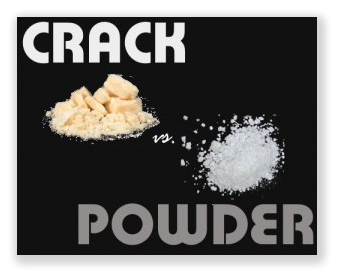
In 2010, Congress passed the Fair Sentencing Act, reducing the 100-1 ratio of crack to powder cocaine to 18-1. Under the old regime, a defendant with 1 gram of crack cocaine was deemed to have 100 grams of powder cocaine. Because sentences vary in proportion to the amount of controlled substance possessed, a defendant (almost always black) with a slight amount of crack was punished much more severely than a defendant (usually white) with a slight amount of powder coke.

The FSA as proposed would have eliminated the disparity altogether, so that the mandatory minimum for a kilo of powder was the same for a kilo of crack. The House passed the bill with a 100-1 ration reduced to 1-1. But when the bill finally passed the Senate, 1-1 has mystically become 18-1. No one could figure out where the 18-1 ratio came from. Careful deliberation? Scientific studies?

sessions170811“We could find no objective proof that crack cocaine was in fact more dangerous than powder cocaine,” said Sen. Richard Durbin (D-Illinois), sponsor of the Senate version of the bill, explaining the rationale behind the original draft. But then-Sen. Jefferson Beauregard Sessions III (R-Alabama) was opposed to changing the ratio at all, believing that the crime rate was falling because more people were being locked away for a long time (as well as thoroughly enjoying the prospect of those dangerous black criminals from the hood being warehoused in federal prisons for decades on end).

The day the bill was to come up for a committee vote, Durbin ran into Sessions at the Senate gym. Durbin recounted, “I said to Jeff, “come on, Jeff. We can’t just stop the conversation and see this bill die in committee.” said Durbin. “If you won’t do this 1-1 deal, what deal will you do?”

Sessions offered lowering 100-to-1 to 25-to-1. Durbin countered, 10-to-1. No dice, Sessions said.

What about 15-to-1?

“I’ll take 18-to-1,” Durbin recalls as Sessions’ response.

“We moved from 100-to-1 to 18-to-1 because of a conversation in the Senate gym, that is literally how it happened,” said Durbin.

violent160620A further lesson, this one on what influences legislators. It does not matter how many success stories arise from people who got out early because of the First Step Act’s retroactivity for crack defendants. The public will be reminded endlessly of the one failure.

Stories last week continued to highlight Joel Francisco, released on a sentence reduction last spring, who is a fugitive after allegedly stabbing a man to death in a Providence, Rhode Island, hookah lounge. The Providence Journal again noted that “the life sentence was reduced to time served under a bipartisan criminal justice reform law signed by President Trump in December.”

The conservative American Thinker was more graphic:

Cmdr. Thomas Verdi, the deputy chief of the Providence Police Department, who was familiar with Francisco, warned federal officials that the ‘crown prince of the Almighty Latin Kings’ gang… had a ‘propensity for violence…” At the news of his release, Verdi expressed his doubts about Francisco’s rehabilitation. He was right. Last Wednesday, Francisco, 41, stabbed 46-year old Troy Pine to death.

It only takes one failure, and a compliant news media, to poison the public on sentencing reform.

An opinion piece in The Hill this week, however, tried to put the Francisco matter in context: 

[I]f Francisco is guilty of this crime, he is the exception not the norm. Thousands of individuals are being released from custody under the First Step Act, and many more who have worked hard to prove their rehabilitation stand to benefit in the months to come. While it’s still too early to assess how many of these individuals will commit a new offense, there has hardly been a widespread spike in crime.  

The criminal justice system is not perfect; there will always be cases where someone returns to crime after re-entering society. The only way to guarantee that this doesn’t happen – the fear-filled, totalitarian way – is to imprison everyone who commits a crime for life. The pragmatic, limited-government way is to continue reforming the criminal justice system until we’ve achieved a balanced measure of accountability and rehabilitation.

Peoria, Illinois, Journal Star, Sen. Dick Durbin recalls how he and Jeff Sessions struck deal on Fair Sentencing Act in Senate gym (Oct. 10, 2019)

Providence Journal, Heartbroken father urges son, accused of fatal Providence stabbing, to turn himself in (Oct. 9, 2019)

American Thinker, Trump-supported early prison release law draws blood (Oct. 10, 2019)

The Hill, Don’t give up on the First Step Act (Oct. 17, 2019)

– Thomas L. Root

Too Many Questions, Too Few Commissioners – Update for October 16, 2019

We post news and comment on federal criminal justice issues, focused primarily on trial and post-conviction matters, legislative initiatives, and sentencing issues.

DENIAL HIGHLIGHTS JUDICIAL SPLIT ON COMPASSIONATE RELEASE

compassion160208A key provision of the First Step Act allows federal courts to reduce sentences under the so-called compassionate release statutory provisions of 18 USC § 3582(c)(1)(A)(i) – which establishes an ‘extraordinary and compelling” reason standard – without needing a motion from the Bureau of Prisons. Ohio State University law professor Doug Berman said last week in his Sentencing Law and Policy blog that “if applied appropriately and robustly, this provision could and should enable many hundreds (and perhaps many thousands) of federal prisoners to have excessive prison sentences reduced.”

A decision last week in the Southern District of Iowa denying Les Brown compassionate release illustrates the conundrum. Under 28 USC § 994(t), the Sentencing Commission is directed to define “the criteria to be applied and a list of specific extraordinary and compelling examples” for grant of § 3582(c)(1)(A)(i) motions. The Commission defined four examples, one medical, one due to age, one due to family circumstances, and one catch-all (that “there exists in the defendant’s case an extraordinary and compelling reason other than, or in combination with, the reasons described in subdivisions (A) through (C)).”

Now the problem: The USSC has not updated its definition since the First Step Act passed. Instead, its policy statement still simply guides the Bureau of Prisons (which has traditionally been very resistant to an Sentencing Commission guidance). The new procedure mandated by the First Step Act calls for new guidance, but the Commission remains mute.

noquorum191016Sadly, there’s a reason for the USSC’s quiescence. The Commission cannot amend its policy statement because the agency lost its quorum last December, about two weeks before First Step passed, and it is still two commissioners short of a quorum. The Trump Administration apparently sees the Commission as a backwater for which no urgency exists in nominating replacement commissioners. For the foreseeable future, the Commission remains impotent, and the compassionate release policy cannot not be updated.

Some district courts have concluded this means the Commission lacks any applicable policy statement dictating when a judge can grant compassionate release. These courts have decided that this means the district judge can consider anything — or at least anything the BOP could have considered (whether it did or not) — when assessing a defendant’s motion.

But others have held that First Step merely lets them grant a motion for compassionate release if the BOP Director could have done the same under the guidelines and the old Program Statement. These courts hold that judges may not stray beyond the four bases listed in USSG §1B1.13.

Sentencestack170404Last week’s ruling by Senior Judge Robert Pratt is a thoughtful opinion about compassionate release, issued in response to defendant Les Brown’s motion to reduce his 510-month sentence. That sentence was pumped up by a 300-month second 18 USC §924(c) sentence, one that could no longer be imposed since passage of the First Step Act. While Judge Pratt finds that “much about Defendant’s situation is extraordinary and compelling,” he concluded “the Court cannot exercise its discretion to grant release at this time.”

The Judge calculated that even if First Step let him retroactively reduce the second § 924(c) sentence from 300 months to 60 months (which the Act doe not permit), Les would still face a total of 210 months in prison. As of now, he has served only 167 months, “a long stretch by any measure, and perhaps more than appropriate for Defendant’s crimes. Regardless, because Defendant would still be in prison under modern law, any sentencing disparity created by § 924(c) stacking does not, at least yet, provide an ‘extraordinary and compelling reason’ for compassionate release.”

Judge Pratt suggested that Les could come back at 210 months to make his argument. For what it’s worth, I believe that by then, Congress will have revisited the issue and made the § 924(c) sentencing change retroactive, just as it did with the Fair Sentencing Act’s changes to crack minimums.

Prof. Berman complained that “Judge Pratt refuses to use the legal tool available to him to reduce Brown’s sentence, and so Brown is now still slated to serve nearly another 30 years in prison(!) that neither Congress nor any judge views as in any way justified by any sound sentencing purposes.” He is correct. However, until higher courts resolve the conundrum of the missing USSC guidance (or the Commission regains a quorum, and fixes the statement on its own), the present confusion is going to work to the detriment of a lot of inmates.

United States v. Brown, 2019 U.S. Dist. LEXIS 175424 (SD Iowa Oct. 8, 2019)

– Thomas L. Root

6th Circuit Fleshes Out Ineffective Assistance on Plea Deals – Update for October 15, 2019

We post news and comment on federal criminal justice issues, focused primarily on trial and post-conviction matters, legislative initiatives, and sentencing issues.

6th CIRCUIT ISSUES FASCINATING INEFFECTIVE-ASSISTANCE DECISION ABOUT BAD ADVICE ON PLEA DEALS

Ttakethemoney191015ell me if this sounds familiar: a defendant is charged with a crime. His or her court-appointed attorney discourages making any plea deal with the government, because counsel can win it for sure at trial. At trial, defense counsel completely misunderstands the law, and mangles the defense. Defendant is convicted, and gets hammered.

That’s what played out at the 6th Circuit last week. The Court granted habeas corpus to a Michigan inmate who was convicted of aiding and abetting a robbery-turned-murder. Billy Joe Byrd and his girlfriend Bobbie Sue decided to commit a robbery. Billy Joe got cold feet before the crime, but he gave Bobbie Sue his gun. Bobbie Sue shot a man while robbing his castle. Rather than heading down south with Bobbie Sue, Billy Joe turned himself in.

In Michigan, aiding and abetting a murder carries the same sentence as the murder itself, mandatory life. Billy Joe wanted to make a plea deal, but his court-appointed attorney convinced him that because he had walked away from the crime before it happened, he could not be convicted. He told Billy Joe it didn’t matter even if he gave Bobbie Sue the gun knowing she was going to rob the Gasso, because he did not intend that she do so.

lawyermistake170227Alas, the defense attorney was as wrong as he could be. Michigan requires a defendant claiming abandonment as an affirmative defense to establish “by a preponderance of the evidence voluntary and complete abandonment of a criminal purpose.” In fact a prior Michigan Court of Appeals case, People v. Akins, held that, despite the defendant’s defense that he changed his mind about a robbery, his abandonment defense failed because, among other things, he “gave his gun to [the principal], knowing that it would be used to commit the robbery.”

Bobbie Sue had a better lawyer. She pled to second-degree murder and got 30 years. In fact, she testified against Billie Joe. That’s not in the song.

The 6th Circuit was incredulous that defense counsel met with Billy Joe for a grand total of 60 minutes between indictment and trial. Billy Joe said that during their meetings, the lawyer did not review the sentencing guidelines or explain aiding and abetting or other legal concepts underlying the case. The lawyer “baldly denied these allegations but also testified that he did not remember his conversations” with Billy Joe “precisely” or “particularly.”

In that court, prosecutors wait for defense counsel to request an offer before beginning negotiations. Then, the prosecutor will develop a proposal and consult with the interested parties. The judges in that court rarely reject plea agreements. Billy Joe “was denied the opportunity to accept a lesser charge and more lenient sentence because his trial counsel,” the 6th said, “never initiated plea negotiations with the prosecutor’s office.”

The District Court refused Billy Joe any post-conviction relief, holding that he could not prove he would have taken a plea offer. Besides, the government argued, the 6th Amendment only covers effective assistance when the government makes an offer. Here, Billy Joe never initiated plea negotiations.

billyjoe191015

The 6th Circuit said that did not matter, holding that “in the context of the right to effective assistance of counsel… the absence of a right to be offered a plea or to have it accepted… is beside the point’.” The Circuit said Billy Joe’s lawyer displayed “a shocking lack of comprehension regarding the pertinent law” in the case… A criminal defendant has a right to expect at least that his attorney will review the charges with him by explaining the elements necessary for the government to secure a conviction, discuss the evidence as it bears on those elements, and explain the sentencing exposure the defendant will face as a consequence of exercising each of the options available.”

The Government argued Billy Joe was not prejudiced, because he claimed he was innocent, and so would have gone to trial anyway. The 6th disagreed. Here, the defendant’s “interest in proceeding to trial was rooted in misinformation gleaned from his counsel’s faulty advice, making it an unreliable metric of reasonably probable outcomes.” Defense counsel’s advice to Billy Joe “was erroneous and omitted critical details” about the case. Thus, Billy Joe “lacked the requisite information to weigh the options in front of him, and whatever desire he exhibited before trial is not dispositive of what he would have done if he were properly educated about the charges against him.”

Byrd v. Skipper, 2019 U.S. App. LEXIS 30163 (6th Cir. Oct. 8, 2019)

– Thomas L. Root

Why Be Precise When a WAG will Do? – Update for October 11, 2019

We post news and comment on federal criminal justice issues, focused primarily on trial and post-conviction matters, legislative initiatives, and sentencing issues.

THE COURT HAS HEARD THAT GOVERNMENT EXCUSE ON LOSS CALCULATIONS BEFORE

lollipopcost191011For the countless federal criminal defendants whose sentence is driven by a calculation of the amount of loss their offense caused, the excuse of “close enough for government excuse” has special meaning: all too often, the Government gins up some number – often enough, a WAG – and tells the Court that the precise loss figure cannot be calculated, but here’s a “reasonable estimate.”

And of course, the Government reminds the court that “a district court may accept a ‘reasonable estimate’ of the loss based on the evidence presented.” And the court usually goes along with it.

The loss amount is crucial to the defendant, not only because the he or she is going to be ordered to pay that amount in restitution, but because the Guidelines offense level under USSG § 2B1.1(b)(1) –  and the suggested sentencing range – skyrockets with the amount of estimated loss.

That “reasonable estimate” standard has slid over the years to seemingly permit the government to give a “reasonable estimate” (usually heavy in favor of the government) in virtually any case. Steal candy from a baby? The Government will tell the court that all it can do is estimate that the Tootsie Pop was worth $200,000.

Last week, the 11th Circuit pushed back.

Roberta Sheffield was convicted of running an IRS tax scheme that netted unjustified $1,000 tax refunds to a lot of people. At sentencing, the government produced a spreadsheet showing a loss of $3.46 million. Roberta complained that the spreadsheet contained duplicate entries, but she had no list of what entries were wrong. The government admitted there might be some errors, but argued that the burden was on the defendant to prove the spreadsheet wrong.

The 11th Circuit disagreed. It held that “once the government acknowledged that there was in fact some duplication, it could not carry its burden without correcting the spreadsheet.” The Circuit noted that recent studies show 90% of restitution is uncollectible, and that it was unlikely Roberta and her co-conspirators would ever satisfy the award.

broke191011At oral argument, Roberta asserted that the duplicate entries totaled $136,000. The Court noted that the error amounted “to a mere 4% of the government’s proposed total of $3,461,638. So one may wonder why it is that we are reversing a multi-million dollar restitution order when the result on remand is likely to be approximately the same and payment (at least full payment) is unlikely. The reason is a simple one. Ms. Sheffield has the right not to be sentenced on the basis of inaccurate or unreliable information, and is not required to pay restitution she is not responsible for.”

United States v. Sheffield, 2019 U.S. App. LEXIS 29502 (11th Cir. Oct. 1, 2019)

– Thomas L. Root

I Feel The Earth Move Under My Feet – Update for October 9, 2019

We post news and comment on federal criminal justice issues, focused primarily on trial and post-conviction matters, legislative initiatives, and sentencing issues.

SEISMIC DEVELOPMENTS AT TAFT

The Bureau of Prisons announced last week that it is closing Taft Correctional Institution, a government-owned prison run by a private contractor, on Jan. 31, because foundation settlement problems in buildings used for education and recreation would cost $100 million to repair, money the BOP says it does not have.

quake191010Taft, which has a low-security facility housing mostly inmates with immigration detainers and a satellite camp, is within 10 miles of the San Andreas fault. Current BOP population statistics show 1,653 at Taft.

By the end of the week, House Minority Leader Kevin McCarthy (R-California), had asked the BOP to suspend moving any inmates from Taft to other facilities, complaining that the “Bureau has so far refused to share detailed information regarding this decision and supporting materials, other than limited information included in the original deactivation notification.” In a letter to BOP Director Kathleen Sawyer Hawk and Attorney General William Barr, McCarthy called for “an immediate suspension of any activities related to the deactivation of the Taft Correctional Institution.”

Unconfirmed reports indicated that Taft administration told inmates last week that in response to McCarthy’s request, no inmates would be transferred for now. However, that embargo did not last long. Sources report that the first wave of staff layoffs, effective after Thanksgiving, were issued Tuesday. Inmates are already being transferred to other institutions, and plans reportedly are to transfer all of the low-security inmates by the end of November.

Taft, California, Midway Driller, Taft Correctional Institution to close Jan. 31 (Oct. 1)

Taft, California, Midway Driller, Congressman says BOP has “refused to provide full accounting” for closing federal prison (Oct. 7)

Bakersfield, California, KBAK-TV, Congressman McCarthy calls on DOJ and BOP to suspend Taft’s prison closure (Oct. 4)

– Thomas L. Root

Dept. of Low Expectations – Update for October 8, 2019

We post news and comment on federal criminal justice issues, focused primarily on trial and post-conviction matters, legislative initiatives, and sentencing issues.

ONE BILL GETS REPORTED FROM ONE COMMITTEE, AND EVERYONE THINKS HE’S GOING HOME

release191008A few readers complained last week that I had not reported the House Judiciary Committee’s vote that sent H.R. 4018 to the House floor. H.R. 4018 is a bill that would modify the Elderly Offender Home Detention Program (34 USC § 60541(g)(5)) to let those over-60 year old prisoners qualify for home detention after doing two-thirds of their net sentence rather than their gross sentence.

Currently, to qualify for the First Step Act’s expanded EOHD program, you must be 60 years old and have served two-thirds of your whole sentence. In other words, if you were sentenced to 100 months, you have to serve 67 months before you go home on home detention, and then you stay in detention until you reach 85 months, when you are released.

H.R. 4018, a single-sponsor bill, would qualify a 60-year old prisoner after he or she did two thirds of the net sentence. If you were sentenced to 100 months, you get out after 85 months with good time. H.R. 4018 would put you in the EOHD with two thirds of 85 months. Thus, you would go home after 57 months, and stay on home detention until 85 months.

longodds191008The House Judiciary Committee reported the bill favorably on Sept. 10 by a 28-8 vote. Nevertheless, Skopos Labs – which tracks federal legislation – gives the bill a 3% chance of becoming law. The legislation, with only 10 House co-sponsors, had little chance of being brought up for a Senate vote even before the impeachment talk ramped up. Recall how the First Step Act, with the House passing a very pro-prisoner version, barely made it to the Senate floor. That bill, with over 40 Senate co-sponsors and President Trump lobbying for passage, finally passed as a well watered-down measure in the closing hours of the Senate.

I did not mention H.R. 4018 for the same reason I did not mention the proposed Prohibiting Punishment of Acquitted Conduct Act of 2019, introduced Sept. 26 by Senators Chuck Grassley (R-Iowa) and Dick Durbin (D-Illinois). The bill would prohibit federal courts from considering acquitted conduct at sentencing, defining ‘acquitted conduct’ to include “acts for which a person was criminally charged and adjudicated not guilty after trial in a Federal, State, Tribal, or Juvenile court, or acts underlying a criminal charge or juvenile information dismissed upon a motion for acquittal.”

Grassley, who is Senate president pro tempore, said, “If any American is acquitted of charges by a jury of their peers, then some sentencing judge shouldn’t be able to find them guilty anyway and add to their punishment.” Currently, the Guidelines are written to run up the sentence with acquitted conduct, and judges do it all the time.

mcconnell180219This bill, S.2566, already has five co-sponsors, two Democrats and three Republicans. Grassley has a lot of horsepower in the Senate leadership. Yet, like H.R. 4018, it has no more than a ghost of a chance of passage. Senate Majority Leader Mitch McConnell (R-Kentucky), controls what bills reach the Senate floor for a vote. He has been an opponent of any prison reform, and only brought First Step to a vote because of White House pressure. Now, with President Trump soured on criminal justice legislation and preoccupied with re-election and impeachment, there won’t be any White House support for bringing any criminal justice measure to a Senate vote.

Stories like this don’t help: Last Friday, the Providence, Rhode Island, Journal reported that Joel Francisco, released from a life sentence for crack because of the First Step Act, is wanted for stabbing a man to death in a hookah bar. Remember Wendell Callahan? The Sen. Tom Cottons (R-Arkansas) of the world are always gleeful to have a poster child against sentencing reform like this fall into their laps.

H.R.4018 – To provide that the amount of time that an elderly offender must serve before being eligible for placement in home detention is to be reduced by the amount of good time credits earned by the prisoner (reported favorably by House Judiciary Committee, Sept. 10)

S. 2566: A bill to amend section 3661 of title 18, United States Code, to prohibit the consideration of acquitted conduct at sentencing (Introduced Sept. 26)

Providence, Rhode Island, Journal, He was released early from prison in February. Now he’s wanted for a murder on Federal Hill (Oct. 4)

– Thomas L. Root

Courts Start to Limit Rehaif Relief for 922(g) Defendants – Update for October 7, 2019

We post news and comment on federal criminal justice issues, focused primarily on trial and post-conviction matters, legislative initiatives, and sentencing issues.

COURTS START FLESHING OUT REHAIF

gunknot181009Two courts last week did their best to limit the damage caused to the government By (and the benefit accruing to defendants from)  the Supreme Court’s June 21 decision in Rehaif v. United States. Rehaif held that in an 18 USC § 922(g) prosecution, the defendant had to know he or she was a member of a class prohibited from possessing a gun – such as an alien in the US unlawfully or, more commonly, someone convicted of a felony), and know that he or she was in possession of a firearm.

In both cases, the defendants raised Rehaif as a supplement to an already-briefed appeal, because Rehaif was decided after briefs in the cases had bee filed. And both courts of appeal ruled that whether Rehaif applied was subject to “plain error” analysis, because the issues had not been raised in the district courts.

Under Federal Rule of Criminal Procedure 52(b), an issue not raised below can be brought up on appeal only if (1) there was an error, (2) that was obvious, (3) affected the defendant’s substantial rights, and (4) “seriously affected the fairness, integrity, or public reputation of judicial proceedings.”

In the 8th Circuit case, before trial, the defendant called his girlfriend from jail, and they agreed she would claim ownership of the gun. The Circuit said that the call, as well as the fact he had previously served a 78-month federal drug sentence, showed he knew that he had been convicted of a crime punishable by a sentence of more than one year.

errorA160425While the trial court erred in not instructing the jury that the defendant had to know he was a felon, the 8th said, the defendant could not show a “reasonable probability that, but for the error, the outcome of the proceeding would have been different.” For that reason, the Court said, “any error in not instructing the jury to make such a finding did not affect the defendant’s substantial rights or the fairness, integrity, or public reputation of the trial.”

In a second decision issued last week, the 1st Circuit ruled that under the “plain error” standard, a defendant who had pled guilty to a felon-in-possession charge could not “show a reasonable probability that, but for the purported error, he would not have pled guilty.” The defendant conceded he had previously pled guilty to a state crime punishable by more than a year in prison, and he did not dispute that state law required a judge to make sure that a defendant knows the maximum possible sentence when entering a guilty plea. Under the circumstances, the 1st said, the defendant could not show that he would have gone to trial if he had been properly instructed.

Both cases are a little puzzling. Knowing you were convicted of a crime carrying more than a year in prison is only the start of the Rehaif analysis. The defendant must know he or she is in a prohibited class. In the definitions that govern § 922(g), set out in 18 USC § 921(a)(20), there are several significant exceptions to what may otherwise seem a straightforward question crime punishable by a sentence of over a year. For example, if the sentence of more than a year pertained “to antitrust violations, unfair trade practices, restraints of trade, or other similar offenses relating to the regulation of business practices,” it is not considered to be an offense disqualifying a defendant from gun possession. If the defendant has had his or her civil rights restored by the state, he or she is not disqualified. These definitions are not affirmative defenses, but rather integral to the meaning of the “crime punishable by imprisonment for a term exceeding one year” language of § 922(g)(1).  

noteasy191007The Rehaif analysis seems to me to be a little more complex than what the 1st and 8th applied in these early decisions, a rather binary approach in which you either were or were not convicted of a crime punishable by imprisonment for a term exceeding one year. I suspect that as the lower-court jurisprudence fleshes out the meaning of Rehaif, the complexities will be developed.

A final note: A number of petitions for writ of certiorari pending several months, the Solicitor General has been advising the Supreme Court that due to Rehaif’s holding that “the mens rea of knowledge for that crime applies both to the defendant’s conduct and to defendant’s status,” the Court should grant pending petitions for a writ of certiorari, vacate the decisions below, and remand the cases for further consideration in light of Rehaif.

United States v. Hollingshed, 2019 U.S. App. LEXIS 29707 (8th Cir. Oct. 3, 2019)

United States v. Burghardt, 2019 U.S. App. LEXIS 29731 (1st Cir. Oct. 3, 2019)

Memorandum for Government, Stacy v. United States, Case No. 19-5383 (filed Aug. 30, 2019)

– Thomas L. Root

It Wasn’t a Lie, Just a “Mishandled” Communication – Update for October 4, 2019

We post news and comment on federal criminal justice issues, focused primarily on trial and post-conviction matters, legislative initiatives, and sentencing issues.

MDC BROOKLYN’S PROBLEMS EXISTED LONG BEFORE LAST JANUARY

Last January’s power outage at MDC Brooklyn did not cause the heating problem that left inmates freezing in their cells, according to a report issued last week by the Dept. of Justice Inspector General. Instead, heat issues at the MDC had been a continuing problem well before the January 2019 fire that caused a partial power outage.

freeze191004Prison officials had known that the heating problem was a longstanding issue that had never been fixed. The heat problems were due to a lack of equipment to monitor temperatures in the jail, which reached as low as 59 degrees a week before the power outage and often went above 80 degrees even in the winter months, the report found.

The investigation also found that prison officials mishandled the power outage.

As half a dozen judges and advocates suspected in the days after the outage, inmates were left trapped inside without access to their lawyers or information about why they couldn’t visit with family members, the report found. “This is particularly problematic in view of the facility’s population of pre-trial detainees, some of whom may have required daily access to counsel to prepare for trial,” Inspector General Michael Horowitz said. Prison officials also didn’t communicate with the legal counsel, relatives and the public and mismanaged two medical issues that happened during the outage, the report said.

liar151213The IG’s report was immediately criticized by some commentators. The MDC warden at the time, Herman Quay, was accused of lying about conditions during the outage to the public, to the media and even to the U.S. Attorney. He has since been promoted and a new warden was installed at MDC.

The Intercept complained that the report “relies heavily on the accounts of the very officials who presided over the crisis, draws minimally from the experiences of the people who endured it, and seems more preoccupied with the episode as a public relations blunder than as a humanitarian disaster. The report does not address the chronic deception in jail officials’ statements during and after the crisis.”

“This report confirms that there have been longstanding management problems at MDC that must be rectified,” said Rep. Nydia Velázquez (D-Brooklyn).

In a response to the investigation, Politico reported, the BOP said it will complete an upgrade to its heating, cooling, and ventilation equipment. It also agreed to begin giving inmates sweat suits and thermal underwear as part of their standard-issue clothing package until all the heating problems are resolved.

DOJ Office of Inspector General, Review and Inspection of Metropolitan Detention Center Brooklyn Facilities Issues and Related Impacts on Inmates (Sept. 26)

Politico, Investigation finds widespread infrastructure, leadership failures at Brooklyn federal jail (Sept. 26)

The Intercept, Inspector General Report Treated Freezing Federal Jail As A PR Blunder Rather Than A Humanitarian Disaster (Sept. 28)

– Thomas L. Root

Trump’s Not Feeling the Love from First Step Act – Update for October 3, 2019

We post news and comment on federal criminal justice issues, focused primarily on trial and post-conviction matters, legislative initiatives, and sentencing issues.

TRUMP SOUR ON CRIMINAL JUSTICE REFORM

When President Trump started planning his reelection last spring, White House senior adviser Jared Kushner told his father-in-law he should highlight last year’s passage of the First Step Act. Kushner reiterated the positive selling points of that bill, but Trump wasn’t interested. He complained and told Kushner he didn’t think his core voters would care much about a bipartisan deal.

angrytrump191003Trump “is telling people he’s mad” at how criminal justice reform has panned out, according to a person close to the president. “He’s saying that he’s furious at Jared because Jared is telling him he’s going to get all these votes of all these felons.”

Politico reported that unidentified White House officials congressional aides and friends of the president, say that Trump no longer sees criminal justice reform as a résumé booster heading into 2020.

Ohio State University law professor Doug Berman said in his Sentencing Law and Policy blog last Tuesday that Trump’s change of heart “portends some dark clouds for federal criminal justice reform efforts in the months and perhaps years ahead.” But one White House official said, “It would be difficult to say it’s a change of heart. I don’t think his heart was ever really in it.”

Politico, Trump snubs Jared Kushner’s signature accomplishment (Sept. 24)

Sentencing Law and Policy, Prez Trump has reportedly soured on politics of criminal justice reform after FIRST STEP Act achievement (Sept 24)

– Thomas L. Root