All posts by lisa-legalinfo

SCOTUS May Be Looking at ‘Pill Mill’ Pusher Standards – Update for October 19, 2021

We post news and comment on federal criminal justice issues, focused primarily on trial and post-conviction matters, legislative initiatives, and sentencing issues.

TRIPLE RELIST SUGGEST LIKELY SCOTUS REVIEW OF ‘PILL MILL’ STANDARDS

feelgood211019In Supreme Court-speak, a “relist” is a petition for certiorari that is neither granted nor denied, but rather held over for consideration at a subsequent conference of justices, some with the court issued a “CVSG” (a “call for the views of the Attorney General”). A petition is usually “relisted” because of debate among the justices as to its merit. With only four votes required for grant of certiorari, being “relisted” substantially increases the chances that a petition will be granted, and the case set for briefing. 

According to one academic study, a petition in a non-pauper case (in which the petitioner is able to pay the usual $300 filing fee) “is over 46 times more likely to be granted following a CVSG.” Every relisted case is back to be considered another time at the next conference.

Last week, SCOTUS set three petitions – all of which raise the same question – for a second relist. The Court will consider whether to hear the trio at its next conference, set for October 29th. If certiorari is granted, it could alter felony drug distribution cases involving physicians.

Currently, a physician can be convicted of dispensing controlled substances in violation of 21 USC 841(a) if the dispensing is “outside the usual course of professional practice” or “for other than a legitimate medical purpose. ” In Naum v. United States and Coonce v. United States, the question raised is whether the government may merely prove it was either one – “outside the usual course of professional practice” – or the other – for other than a legitimate medical purpose – but not necessarily both.

In Ruan v. United States, the question is related. To ensure that physicians are not convicted for merely negligent conduct, courts generally permit doctors to advance a “good faith” defense. Ruan asks whether a physician alleged to have prescribed controlled substances outside the usual course of professional practice may be convicted under 841(a)(1) without regard to whether, in good faith, he or she “reasonably believed” or “subjectively intended” that his prescriptions fall within that course of professional practice.

Naum v. United States, Case No 20-1480 (cert pending)
Coonce v. United States, Case No 20-7934 (cert pending)
Ruan v. United States, Case No 20-1410 (cert pending)

– Thomas L. Root

BOP Adoption of Rules for Earned Time Credits Delayed – Update for October 18, 2021

We post news and comment on federal criminal justice issues, focused primarily on trial and post-conviction matters, legislative initiatives, and sentencing issues.

BOP IS RUNNING OUT THE CLOCK ON EARNED TIME CREDIT IMPLEMENTATION

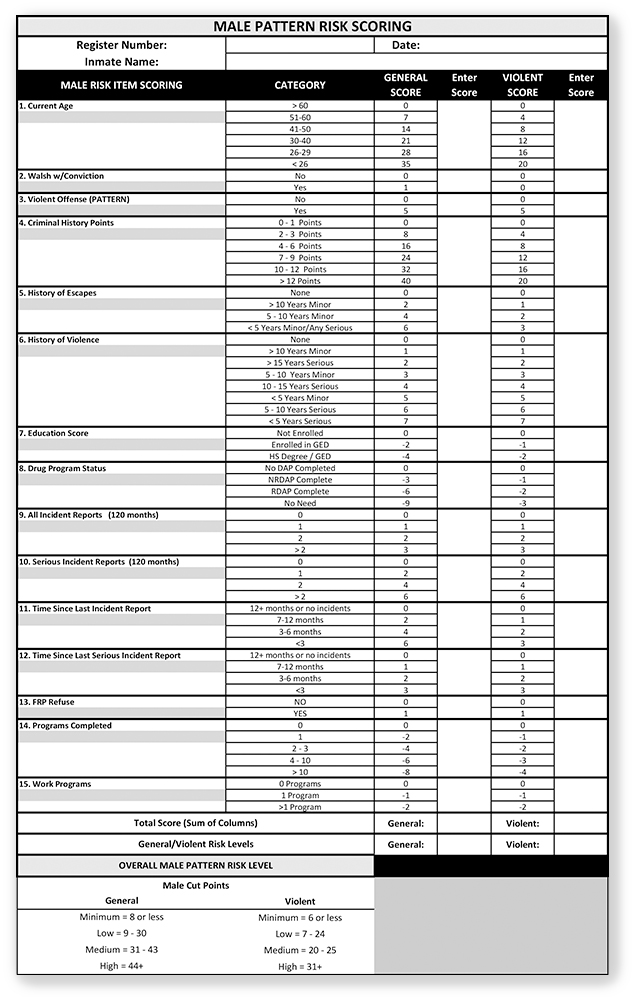
slowwalking210226Criminal justice advocates and inmates alike cheered the passage of The First Step Act, legislation that (among other things) directed the Bureau of Prisons to grant earned-time credits to inmates who successfully complete evidence-based recidivism reduction programs (EBRRs) or so-called productive activities.

First Step made it sound like Christmas. When an inmate had completed 30 days of successful programming, he or she can get 10 to 15 days of credit, depending on PATTERN score. The credits can be used to increase the amount of time awarded for halfway house or increased home confinement at the end of a sentence. Up to 12 months of credits can be swapped for early release from custody, with the time added to supervised release.

But the devil’s in the details, and the BOP was quick to bedevil the earned-time credit program with those details. Inmates were buzzing at the of 2018 with visions of credit being awarded for programs in which they were already enrolled. Some thought that inmate employment as pedestrian as hallway orderly would qualify as a “productive activity.” Others were counting up the number of adult continuing education (ACE) classes they could take on topics as varied as creative writing or the plays of Shakespeare. Still others were figuring out how many courses they had completed prior to First Act passing, and wondering how to get retroactive credits for those.

devil180418The first detail to smack inmates in the face was the effective date of the program. As soon as it was clear that nothing was happening right away, everyone started looking at July 2019, when the PATTERN program was unveiled, as the date before which no credits would be awarded. Then the start became January 2020, when PATTERN was adopted in final form, and the BOP rolled out its list of EBRR-qualifying programs (omitting most of the ACE programs people had anticipated would count toward credits) and limiting “productive activities” to a precious few.

After January 2020, the BOP continued to deny credits to inmates. A few inmates have sued to have their credits awarded – starting with Rabbi Aryeh Goodman, an inmate at Fort Dix – seeking credits they said they had earned and demanding shortened prison sentences in the process. That was when some sharp-eyed analyst at the BOP argued that First Step did not require the award of any PATTERN earned credit until a two-year phase-in period under the statute has expired, which was January 15, 2022.

That argument got shot down. Courts have overwhelmingly found “no evidence in the statutory framework for delaying application of incentives earned by all prisoners during the phase-in program until January 15, 2022, the final date when BOP must complete the phase-in with respect to ‘all prisoners’.” (About the only inmate to lose this argument was former Trump lawyer Michael Cohen).

But the real detail – and the one that will gut the program like a fat carp – is First Step’s directive that credits be awarded “for every 30 days of successful participation in evidence-based recidivism reduction programming or productive activities.”  What exactly is a “day?” The BOP has proposed adopting a rule that a “day of successful participation” means eight full hours of programming. That means that a full 240 hours of EBRR programming would be needed to earn 10 days of credit (15 days if you’re a low or minimum PATTERN).  

sisyphus211018An inmate thus would have to program eight hours a day, five days a week, for years in order to earn the 12 months of credit that can be used to cut a year off of incarceration. This assumes that the inmate has no employment (but everyone does) and can schedule multiple programs efficiently, so that one starts as soon as another one ends. With mealtimes, recalls, counts, and callouts – all part of a federal inmate’s day – even an inmate without a job would be lucky to be able to string together six hours a day of time available for taking EBRRs, even if they were available.

On top of all of that, with the BOP practicing augmentation (and with no end to the correctional officer shortage in sight), the availability of teachers on any given day is an open question.

The BOP published a proposed rule almost eleven months ago, on November 25, 2020, that would adopt the 8-hour-a-day “programming day” standard. Over 250 responses were received by the time the public comment period closed on January 25. But today, the BOP is extending even further the rulemaking proceeding, issuing a notice that “upon review of the comments, it is unclear to the Bureau whether commenters had fully considered the issue of whether DC Code offenders in BOP custody are eligible for time credits under 18 USC 3624(d)(4).”

The BOP complains that First Step is ambiguous on this point, going into detail in today’s notice on an issue it dismissed in the initial rulemaking proposal as contrary to the statute.

Who’s kidding whom? The public did not consider the issue because in the original rulemaking notice, the BOP wrote that “an inmate who is in the custody of the Bureau, but is serving a term of imprisonment for a conviction under the law of one of the fifty (50) states, the District of Columbia… or any other territory or possession of the United States is not an ‘eligible inmate’.”

clockwatcher190620So, more than nine months after the comment period ending, the BOP has opened a further 30-day public comment period on the issue it rejected out of hand, and the public thus did not consider. After the additional period closes on November 18, the BOP will at some point issue a final rule. That will no doubt be on or right about January 15, 2022.

The BOP will have thus required 37 months to adopt draconian rules to implement First Step credits. And it will have run out the clock on its 3-year “phase-in” period.

Goodman v. Ortiz, Case No. 20-7582, 2020 U.S. Dist. LEXIS 153874 (D.N.J., Aug. 25, 2020)

Federal Register, FSA Time Credits, 85 FR 74268 (Nov. 25, 2020)

Federal Register, FSA Time Credits, 86 FR 57612 (Oct 18, 2021)

Reuters, U.S. Justice Dept clashes with inmates over credits to shave prison time (Aug 18)

– Thomas L. Root

Mixed COVID News From the BOP – Update for October 15, 2021

We post news and comment on federal criminal justice issues, focused primarily on trial and post-conviction matters, legislative initiatives, and sentencing issues.

BOP OFFICIAL COVID NUMBERS DOWN, BUT THE NEWS ISN’T REALLY THAT GOOD

deadcovid210914As of yesterday, the Bureau of Prisons reported 261 inmate COVID cases, down 20% from a week before. Staff cases were only down 6%, to 455, and COVID was still in 113 of 122 BOP facilities. Inmate deaths now total at least 277, with another death of an inmate who – according to the BOP – had previously “recovered” according to CDC guidelines.

If the BOP is correct – and it always wants people to believe it is – 64% of all inmate deaths in the last seven months have been people who had COVID before and recovered. This is real-life data that refutes the government’s canard in compassionate release filings that if you have already had COVID, you won’t catch it again, and if you do, it won’t be any worse than the prior round.

Other unsurprising but bad news last week: the Journal of the American Medical Association reported that prisons had “consistently higher COVID-19 incidence and standardized mortality rates… relative to the overall US population in the first year of the pandemic. While COVID-19 incidence and mortality rates peaked in early 2021, with a decline since then, “the prison population had several times greater cumulative toll of COVID-19 relative to the overall US population.”

And more: Two real-world studies published last week confirmed that the immune protection offered by two doses of Pfizer’s Covid-19 vaccine drops off after as little as two months. The studies, from Israel and Qatar, published in the New England Journal of Medicine, support arguments that even fully vaccinated people are not nearly as COVID bulletproof as early CDC prognostications made them out to be.

As of last Friday, 66.84% of inmates were vaccinated, up 1.24 points from a week before. But only 55.21% of staff had been vaxxed, and that number was up a paltry 0.46 points from the week before. 

Vaccinesticker211005According to the Department of Justice Inspector General’s survey earlier this year, 63% of the BOP staff reported already been vaccinated or were planning to get vaccinated as soon as possible, by the BOP or otherwise. However, nearly 20% said that they were not sure whether they would get vaccinated and another 18% said they did not plan to get vaccinated at all. But President Biden has ordered that all federal employees get vaccinated, and BOP Director Michael Carvajal issued an internal memo on September 29, 2021, implementing Biden’s order and specifying “you must be fully vaccinated by November 22, 2021, or you will be subject to disciplinary action, up to and including removal from the federal service.”

Brandy Moore, a national union officer for Council of Prison Locals C-33, said there has been a lot of pushback and concern about the mandate for a variety of reasons, including “this was not a condition of employment, flu shots are not mandated, there is limited research on the long-term effects of the shots and inmates are not required to be vaccinated.” She told Government Executive, “The national union is very concerned about the amount of people that have actually said ‘I’m going to retire early, I’m going to quit, I’m going to go somewhere else. I don’t feel like this is a mandate that is constitutional…’ She said she estimated the BOP “may lose 10-20% of our staff,” which is “troublesome” because “staffing is our No. 1 concern” and has been since 2016.

John Butkovich, acting president for the union local representing 450 BOP workers at FCC Florence, told the Pueblo Chieftain that “he fears some correctional officers will quit when COVID-19 vaccinations become mandatory by November 22.

The Fort Worth Star-Telegram reported last Tuesday on the death of Tammy Lamere, the eighth inmate to die from COVID-19 at FMC Carswell. One inmate told the paper that the “hospital unit at Carswell is ‘infected with COVID’.”

plague200406“We are all scared and worried that this is not under control and we are being taken one at a time,” the inmate told the newspaper via email. “We are in trouble here in Carswell… the most vulnerable… and we are dying.” Another said, “In the world, any human sick as she is and with all her medical issues would be hospitalized and supported and cared for,” Blake wrote in an email. “Here they live or don’t. But one thing is promised, you will suffer and be alone.”

BOP Press Release, Inmate Death at FMC Devens (October 5, 2021)

JAMA, COVID-19 Incidence and Mortality in Federal and State Prisons Compared With the US Population, April 5, 2020, to April 3, 2021 (October 6, 2021)

Ft Worth Star-Telegram, Woman’s death from COVID-19 at Fort Worth prison sparks fear of virus resurgence (October 5, 2021)

CNN, Studies confirm waning immunity from Pfizer’s Covid-19 vaccine (October 7, 2021)

Forbes, Federal Bureau Of Prisons Staff 63% Vaccinated But Union Digging In Heels On Mandate (October 6, 2021)

Government Executive, COVID-19 Vaccine Mandate Could Exacerbate Understaffing in Federal Prisons, Union Warns (October 5, 2021)

Pueblo Chieftain, Here’s why morale is reportedly ‘horrific’ at the federal prison complex near Florence (September 30, 2021)

– Thomas L. Root

BOP’s PREA Compliance Questioned… Maybe for Good Reason – Update for October 14, 2021

We post news and comment on federal criminal justice issues, focused primarily on trial and post-conviction matters, legislative initiatives, and sentencing issues.

SENATOR RUBIO DEMANDS MORE BOP SEXUAL ASSAULT INVESTIGATION

No sexual abuse problems here…

sexualassault211014The warden of FCI Dublin, a Bureau of Prisons female facility, has been charged with sexually abusing inmates in a complaint filed in the U.S. District Court for the Northern District of California late last month. According to a statement from the U.S. Attorney, Ray J. Garcia asked two female inmates to strip naked for him, groped one of the inmates, and took and saved pictures of a naked inmate being held in a cell.

The Warden, who – ironically enough, was in charge of training BOP personnel on compliance with the Prison Rape Elimination Act is also accused of trying to stop a victim from reporting the sexual abuse by telling her “that he was ‘close friends’ with the individual responsible for investigating allegations of misconduct by inmates and that he could not be fired.”

He was wrong. Warden Ray was placed on administrative leave in July, and arrested on September 29. He is currently released on bond, something that would be very unlikely to have happened were he merely Peter Pervert living in his mom’s basement.

PREAAudit211014I bring this up to note the effectiveness of the Prison Rape Elimination Act. The last PREA Audit for FCI Dublin to be posted online is dated 2017. The inspector conducting the audit found that “[t]he inmates interviewed acknowledged that they received information about the facility’s Zero Tolerance policy against sexual abuse/sexual harassment immediately upon their arrival to the facility, that staff were respectful, and that they felt safe at the facility.”

Right. I’m sure they feel completely secure. Like, say the inmate known in Warden Ray’s Complaint as “Victim 1.” Here’s a tidbit from the complaint, as recounted by FBI Special Agent Kathleen Barkley:

Victim 1 reported that a fourth incident occurred when the “PREA people” were visiting. I understand Victim 1’s reference to “PREA people,” to be a reference to PREA staff who visited FCI Dublin to assess FCI’s Dublin’s compliance with PREA and to make recommendations regarding their policies and procedures.11 During this incident, and while the PREA staff members were on site, GARCIA told Victim 1 he needed to touch her, took her into one of the changing stalls designed for PREA compliant searches, grabbed her breasts, and briefly grabbed her vagina.

Rather graphic, but it illustrates the high regard in which the BOP staff hold PREA Audits. To be fair, Ray Garcia appears to be an aberration, but then, he’s not the first BOP staffer at Dublin to sexually abuse female inmates. Just ask Ross Klinger, a former BOP correctional officer at Dublin. That is, if his lawyer will let him say anything in advance of his trial…

The foregoing puts an exclamation mark on the letter Senator Marco Rubio (R-FL) sent to BOP Director Michael Carjaval last week, demanding that the BOP conduct further investigations into allegations of sexual assault at the women’s facility – since closed – at FCI Coleman.

PREA211014Rubio wants to know why female inmates were not interviewed as part of the most recent Prison Rape Elimination Act audit, conducted just two days after all female prisoners were moved to other prisons. That’s right. All of the female inmates were packed out on buses to other facilities two days before the audit, which – among other things – was intended to address the climate of sexual abuse that had permeated the Coleman women’s facility.

“This is deeply concerning,” Rubio said, “because it was female inmates who made the allegations of sexual abuse. Female inmates were housed at the facility during the time period from 2018 to 2021 covered by the PREA audit. The allegations made by inmates at FCI Coleman raise serious questions as to the facility’s compliance with PREA and the conduct of its officers.”

Latin Times, Federal Prison Warden In California Charged With Sexually Abusing Inmate (October 1, 2021)

Complaint, United States v. GarciaCase No. 4:21-mj-71517 (filed September 24, 2021)

Press release, Rubio: Bureau of Prisons Must Continue to Investigate Allegations of Sexual Assault at FCI Coleman (Ocober 8, 2021)

– Thomas L. Root

Three Appellate Decisions Make Compassionate Release Even Mushier – Update for October 12, 2021

We post news and comment on federal criminal justice issues, focused primarily on trial and post-conviction matters, legislative initiatives, and sentencing issues.

A SERIOUS COLLISION AT THE “INTERSECTION OF LAW AND SCIENCE”

In yesterday’s Dilbert, the Pointy-Headed Boss complaining, “If I thought data would influence my decision, I wouldn’t let you gather it.”  The Boss should lobby for a seat on the 6th, 8th, or 10th Circuit. He’d feel right at home.

dilbert211012

Compassionate release decisions under 18 U.S.C. § 3582(c)(1)(A)(i) last week from those three courts were overly deferential to district court decisions that are at odds with the facts (the data, as it were).

In the 10th Circuit, Adam Hemmelgarn said his mild asthma, a cyst on his lungs, and an array of physical effects from his prior COVID illness put him at risk if he contracted it again. His district court denied him relief, holding that the fact Adam had contracted COVID once and recovered suggested his medical condition did not place him at high risk of severe illness.

On appeal, Adam pointed to CDC guidance that one could catch a more severe case of COVID even after recovering from a prior infection. But the 10th Circuit, with remarkable circular reasoning, ruled that “the district court’s statement that Hemmelgarn recovered from COVID-19 despite his medical conditions is simply consistent with the view that those conditions do not place him at high risk of severe illness from COVID-19. Thus, this finding of fact is not clearly erroneous.”

sick211012jpgThe holding overlooks Adam’s point. It ignored the CDC warning Adam cited in his brief that “you can contract COVID-19 more than once, with more severity each time.” And of course, the decision ignores the inconvenient fact that in 64% of the 33 cases of BOP inmates whose deaths have been announced since March 1, 2021, the inmates who died of COVID had had previous coronavirus cases and recovered without serious effects (or at least, without effects as serious as dying, which is what happened the second time around).

In the 8th Circuit, Andrew Marcussen’s district court found he suffered from “COPD, hypertension, hyperlipidemia, prediabetes, BPH, GERD, seborrheic dermatitis and obesity.” Despite Andy’s infirmities sounding like a medical school final exam, the district court concluded his “underlying medical conditions, in combination with the COVID-19 pandemic, are not ‘extraordinary and compelling reasons’ for a sentence reduction.” This, the district judge wrote, was because of the “well-controlled nature of Defendant’s COPD and hypertension.”

On appeal, the government conceded that based on CDC guidance, Andy’s COPD and obesity qualified as extraordinary and compelling reasons for a sentence reduction. But the appeals court didn’t care about the DOJ’s admission. Compassionate release “requires a judicial determination of ‘extraordinary and compelling reasons’ based on an inmate’s unique circumstances,” the court said. “That determination is not governed by the Executive Branch, either the CDC’s general pronouncements relating to COVID-19 risks, or a United States Attorney’s ‘concession’. Those are of course relevant opinions, but they do not control the district court’s exercise of discretion.”

The Pointy-Headed Boss couldn’t have said it any better. You wonder where Scott Adams gets his material? One might be forgiven for wondering… if the record does not cabin the court’s discretion, then what does?

Before the district court, the government vigorously argued that Adam’s COPD and high BMI were not extraordinary and compelling reasons. It only changed its mind on appeal. Shouldn’t the district court get a second whack at the issue knowing the government agreed with the defendant? Any lawyer with a bar license on which the ink has dried knows that the government’s position on a matter before the court – especially in a criminal case – has an outsized influence on the court’s perception of an issue. The 8th’s implication that the government’s position had no influence on the district court’s decision is laughable.

More to the point, the issue is not whether Adam’s medical conditions are well-controlled absent Adam catching COVID. Instead, the question is whether obesity and COPD (not to mention everything else) will make matters worse if he does catch COVID. It’s like saying that a heart weakened by multiple heart attacks is well-controlled with meds and a pacemaker, so there’s nothing wrong with the patient running the Boston Marathon.

Finally, the 6th Circuit ruled that the fact that Michael Lemon is vaccinated ought to be ‘game, set, and match’ in denying his compassionate release motion:

“Following full vaccination, it is now well understood, both the likelihood of contracting COVID-19 and the associated risks should one contract the virus are significantly reduced,” the Circuit ruled, citing the CDC. Thus, Mike’s “access to the COVID-19 vaccine substantially undermines his request for a sentence reduction. To that end, we agree with the Seventh Circuit that a defendant’s incarceration during the COVID-19 pandemic — when the defendant has access to the COVID-19 vaccine — does not present an “extraordinary and compelling reason” warranting a sentence reduction… After all, with access to the vaccine, an inmate largely faces the same risk from COVID-19 as those who are not incarcerated. To be sure, inmates in some respects face social distancing challenges distinct from those of the general public (although perhaps not entirely unlike students in dorm rooms, individuals in medical and assisted care facilities, and even residents of densely occupied apartment complexes). But to the extent prisons do offer some unique challenges, the vaccine now significantly reduces the risks associated with COVID-19.”

collision211012The 6th calls this the “intersection of law and science.” But a lot of collisions happen at intersections. This decision comes only a week or so after a CDC report admitted that 70% of vaccinated inmates in a study group last August at an unidentified Texas BOP facility (it was FCI Texarkana) tested positive for COVID-19, not to new mention studies that vaccine life is a lot shorter than first thought.

In short, the evolving science provides scant support for a lot of faith in vaccines. They’re way better than nothing, but not nearly the pandemic antidote the courts say they are.

United States v. Hemmelgarn, Case No. 20-4109, 2021 U.S. App. LEXIS 30221 (10th Cir., October 8, 2021)

United States v. Marcussen, Case No. 20-2507, 2021 U.S. App. LEXIS 30109 (8th Cir., October 7, 2021)

United States v. Lemons, Case No 21-5313, 2021 U.S. App. LEXIS 30267 (6th Cir., October 8, 2021)

Centers for Disease Control and Prevention, Outbreak of SARS-CoV-2 B.1.617.2 (Delta) Variant Infections Among Incarcerated Persons in a Federal Prison — Texas, July–August 2021 (September 24, 2021) 

– Thomas L. Root

ACCA Arguments Show SCOTUS Skepticism – Update for October 11, 2021

We post news and comment on federal criminal justice issues, focused primarily on trial and post-conviction matters, legislative initiatives, and sentencing issues.

READING SUPREME COURT TEA LEAVES ON ACCA

tea160404When I was a young lawyer, I figured out very quickly that it’s dangerous to try to predict the outcome of an appeal case based on the questions asked by the court during oral argument. But I will go out on a limb by predicting that the definition of “occasions different from one another” in the Armed Career Criminal Act is about to become more defendant-friendly.

To qualify for an ACCA 15-year minimum sentence, a defendant has to have three prior convictions for drug or violent offenses that were committed on “different occasions.” Over the years, a number of circuits – including the 6th – have collapsed “different occasions” so that a guy like William Wooden who broke into a self-storage building and stole from 10 units was held to have committed the crimes on “different occasions.”

Last Monday, the Supreme Court strained to answer what Justice Samuel Alito called a “nearly impossible question,” what it means for crimes to be different occasions. Both the government’s and Woden’s interpretation of “occasion” troubled the justices. In Justice Elena Kagan’s words, Bill Wooden’s interpretation of what constitutes an occasion felt “loosey-goosey.” But Justice Brett Kavanaugh suggested the government’s interpretation seemed to defy “common sense intuition.”

BettyWhiteACCA180503

It may not be the parties, but instead the statute. Justice Samuel Alito argued that this was “a nearly impossible question of statutory interpretation because the term ‘occasion’ does not have a very precise meaning.” In the same vein, Justice Sonia Sotomayor suggested the statute might be “so vague” that it is “incapable of rational application.” Justices Clarence Thomas and Amy Coney Barrett wondered if there were Sixth Amendment concerns given that both of the proposed interpretations may require improper judicial factfinding. And Justice Neil Gorsuch pondered what the court is to do if the justices find ambiguity “either way” — does the rule of lenity apply such that the tie breaks in favor of the defendant?

Justice Barrett said that it’s important for a jury to be able to understand when crimes should be considered separate offenses. The difference in terms of criminal activity, she said, is that “it is difficult to let the jury know when this event begins and when it ends.”

Expect a decision in February or March. I predict a near-unanimous court overturning Bill’s sentence, and – in the process – opening the door for some post-conviction ACCA challenges.

Bloomberg Law, Justices Parse ‘Occasion’ Meaning in Career-Criminal Appeal (October 4, 2021)

SCOTUSBlog, A hypothetical-filled argument proves how tricky it is to define an “occasion” (October 5, 2021)

Courthouse News Service, Burglary of many units in one facility poses counting challenge at sentencing (October 4, 2021)

– Thomas L. Root

Hey, Bud, Look What the House Judiciary Committee Lit Up – Update for October 8, 2021

We post news and comment on federal criminal justice issues, focused primarily on trial and post-conviction matters, legislative initiatives, and sentencing issues.

BUT WAIT, THERE’S MORE…

marijuanahell190918We reported last Friday on the House passage of the EQUAL Act. In our glee over the potential redress of the racially disparate crack-to-powder laws, we overlooked the House Judiciary Committee’s approval of the Marijuana Opportunity, Reinvestment and Expungement (MORE) Act, H.R. 3617, on a 26-15 vote.

All Democrats on the Committee supported the bill while all but two Republicans opposed it.

Among other measures, the bill removes marijuana from the Controlled Substances Act, changes that “are retroactive and shall apply to any offense committed, case pending, conviction entered, and, in the case of a juvenile, any offense committed, case pending, or adjudication of juvenile delinquency entered before, on, or after the date of enactment of this Act.

The bill still has to be approved by the House, as well as facing an uphill fight in the evenly-divided Senate. There is no timeline for full House or Senate action.

crackpowder160606Meanwhile, Sen. Richard Durbin (D-IL), Chairman of the Judiciary Committee, Sen. Charles Grassley (R-IA), and others last week introduced the Terry Technical Correction Act, which clarifies that individuals convicted of the lowest level crack offenses before the Fair Sentencing Act passed can apply for its retroactive application under Section 404 of the First Step Act. The same bill was introduced simultaneously in the House by bipartisan cosponsors led by Rep. Jerrold Nadler (D-NY) and Rep. Sheila Jackson-Lee (D-TX).

The bill seeks to amend the text of First Step Section 404 to make people sentenced for crack offenses prior to the passage of the Fair Sentencing Act eligible for sentence reductions even where they were sentenced under 21 USC 841(b))(1)(C), which has no mandatory minimum sentence, thereby undoing the Supreme Court’s Terry v. United States decision of last June. The bill has not yet been scheduled for a committee hearing.

House Judiciary Committee, Chairman Nadler Statement for the Markup of H.R. 3617, the MORE Act of 2021 (September 30, 2021)

H.R. 3617, MORE Act of 2021

Press Release, Senators Introduce Legislation to Correct Scotus Ruling on Retroactivity of Crack Cocaine Sentencing Reform (October 1, 2021)

House Judiciary Committee, Bipartisan Judiciary Committee Members Introduce Legislation to Clarify Retroactivity of Crack Cocaine Sentencing Reform (October 1, 2021)

– Thomas L. Root

Just a Uniform Change Away – Update for October 6, 2021

We post news and comment on federal criminal justice issues, focused primarily on trial and post-conviction matters, legislative initiatives, and sentencing issues.

YOU’RE A LAWBREAKER… AND PRETTY INCONSISTENT, TOO, YOUR HONOR

Inmates often say of the correctional officers – whose conduct is often eminently indictable but for the fact that the COs have badges – that they’re “just a uniform change away” from being inmates themselves. The COs are not alone.

istamendment211006Last week, a Wall Street Journal investigation found that more than 130 federal judges failed to recuse themselves from civil cases that involve companies that they or their family members invest in, in clear violation of federal law. These judges ruled in favor of the companies in two-thirds of the cases, and one judge in Texas had 138 cases where he had a conflict of interest.

“I dropped the ball,” one judge told the Journal when asked about his conflict of interests. Try that excuse at your next sentencing.

Speaking of sentencing, a new analysis by the Transactional Records Access Clearinghouse (TRAC) at Syracuse University identifies federal courthouses where wide judge-to-judge sentencing differences currently occur.

“While special circumstances might account for some of these differences,” the report concludes, “half of the courthouses in the country had median differences in prison sentences of 16 months or more, and average differences of 21 months or more.” This means that depending on which judge a defendant draws, his or her sentence on the same facts would vary by over a year and half, on the average.

judge160222Seven courthouses showed perfect agreement among judges on sentencing, those at Lincoln, NE; Providence, RI; Albany, GA; Ft. Myers, FL; Las Cruces, NM; and El Paso and Del Rio, TX. On the other end, five courthouses showed more than 60 months difference in the median prison sentence handed out across judges serving on the same bench, those at Tampa, FL; Benton, IL; Orlando, FL; Greenbelt, MD; and Philadelphia, PA.

Wall Street Journal, 131 Federal Judges Broke the Law by Hearing Cases Where They Had a Financial Interest (September 28, 2021)

TRAC, Equal Justice and Sentencing Practices Among Federal District Court Judges (September 30, 2021)

– Thomas L. Root

COVID’s Ugly… and Puzzling – Update for October 5, 2021

We post news and comment on federal criminal justice issues, focused primarily on trial and post-conviction matters, legislative initiatives, and sentencing issues.

COVID IN PRISON: WHO TO BELIEVE?

This is not my usual complaint about the BOP’s voodoo accounting for inmate COVID patients (although if cooking the books is a sin, a lot of BOP bean counters had better be pretty busy on Sunday morning). This is a more general head-scratch about how everything we knew about COVID seems, day by day, to be proven wrong.

Vaccinesticker211005How about the one that the vaccine (or a prior bout of COVID) will provide enduring protection? The government loves to trot out the argument that compassionate release due to the dangers of COVID is passe, because the prisoner is either (1) fully vaxxed; or (2) recovered from a prior bout of COVID, and thus naturally immune. It now appears that this chestnut is running headlong into the real world.

Diamonds Are Forever… But Not Vaccines: There is mounting evidence that vaccines are shorter-lived than the government says they are, and having COVID once does not immunize you from getting it again. Reuters reported last Friday that six months after receiving the second dose of the two-shot vaccine from Pfizer, many recipients no longer have vaccine-induced antibodies that can immediately neutralize worrisome variants of the coronavirus. In other words, that Pfizer poke you got in April likely isn’t doing anything for you now.

COVID Ain’t One-and-Done:  As for immunity due to having had COVID once, a review of all of the BOP’s press releases in inmate deaths – available at BOP.gov – since March 1, 2021, 19 of 28 reported deaths (68%) were of inmates who had previously recovered from COVID.

plague200406Let that sink in. More than half of the federal prisoners who died of COVID in the last seven months had already had COVID-19 once, and the prior bout from which they had recovered was not nearly as serious as the second one.

Now back to vaccines: the Centers for Disease Control and Prevention descended on FCI Texarkana last August when an early breakout of COVID-19 Delta erupted. The CDC study found that while 93% of the Texarkana inmates (39 of 42) infected with COVID-19 Delta were unvaccinated, 70% (129 of 185) infected had received both doses of vaccine. Infections were found in 89% of those vaccinated more than four months previously and 61% in those vaccinated in the last two months.

The data are showing CDC scientists (and the rest of us) that immunity from a prior COVID infection or vaccine is far from substantial protection.

BOP Numbers:  The BOP’s COVID numbers fell from 631 inmates and 547 staff on Sept 24 to 480 and 497 last Friday. But COVID is still present in 112 of 122 facilities. Four more inmates died last week. Inmate vaccinations jumped four points to 65.6%. Staff vaccinations still lag, up less than a half point to 54.8%.

antivax211005Staff Shots: A Presidential Executive Order to enforce vaccinations of BOP staff (not inmates) will begin this coming Friday. If staff are not fully vaccinated by Nov 22, they will face employment termination. BOP staff from USP Lewisburg, USP Allenwood, USP Canaan, FCI Schuylkill, and LSCI Loretto picketed last week against the mandate. Forbes reported last week that an Inspector General’s survey of BOP employees show substantial staff hesitancy or resistance to getting the vaccine, and “almost a third of those respondents reported that they have considered leaving the agency.”

COVID Infection is Arbitrary, and So is Compassionate Release: The gross disparities in grant of compassionate release are getting more notice. A CNN report last week noted that “17.5% of compassionate release motions were granted in 2020 and the first six months of 2021, newly released sentencing commission statistics show. But that rate ranged from a low of 1.7% in the Southern District of Georgia, where all but four of 230 motions were denied, to a high of 77.3% in the District of Puerto Rico, where 17 of 22 motions were granted. Judge Charles Breyer, the only current member of the sentencing commission, said in an interview that he thought the lack of updated compassionate release guidelines was exacerbating the wide disparities between districts.” Breyer argued that “You need a national standard,” adding that without one, “it creates a vacuum and it creates uncertainty, and most importantly it creates disparity.”

Just over 40% of motions decided in March 2020 were approved, CNN reported, but that fell to less than 17% in December and about 11% in June 2021. The decline this year came as the number of new coronavirus cases behind bars receded and vaccines became widely available in the prison system.

limp211005At Last, A Reason for Guys to Get Vaxxed: Still wondering about taking the vaccine? A report last week spotlighted mounting evidence that COVID-19 may sabotage men’s sexual health. Men may be six times more likely to develop brief or long-term erectile dysfunction after contracting the virus, according to research published in March. So guys, your reasons for rejecting vaccination are starting to seem… kind of limp.

CDC, Outbreak of SARS-CoV-2 B.1.617.2 (Delta) Variant Infections Among Incarcerated Persons in a Federal Prison — Texas, July–August 2021 (September 24, 2021)

Am Council on Science & Health, Prison Breakout … of the Delta Variant (September 26, 2021)

NCPA.com, Bureau of Prisons’ staff face vaccinate mandate; union picket ensues (September 29, 2021)

Reuters, Science News Roundup: Delta increases COVID-19 risks for pregnant women; Pfizer/BioNTech vaccine antibodies gone by 7 months for many (October 1, 2021)

CNN, Compassionate release became a life-or-death lottery for thousands of federal inmates during the pandemic (September 30, 2021)

Natl Geographic, COVID-19 may impair men’s sexual performance (September 22, 2021)

– Thomas L. Root

Happy New Year! – Update for October 4, 2021

We post news and comment on federal criminal justice issues, focused primarily on trial and post-conviction matters, legislative initiatives, and sentencing issues.

WE’RE BA-A-A-CK…

happynewyear211004… the nine Supreme Court justices will say this morning, the first Monday in October and the first day of the Court’s new year. The high court begins its new term – which lasts until June 30, 2022 but is known as “October Term 2021” – with hearing arguments on one federal criminal issue and granting review to another.

First, the grant of certiorari. Last week at its annual “long conference,” where the Court disposed of over 1,200 petitions seeking review of lower court decisions, the Supremes granted review to a First Step Act case. Back when Congress passed the Fair Sentencing Act of 2010 to reduce the disparity crack and powder cocaine sentences, it did not make the Fair Sentencing Act retroactive to the thousands of crack sentences already imposed.

In Section 404 of the 2018 First Step Act, Congress granted retroactivity at the discretion of the defendant’s sentencing judge, but did not specify any standards for the judge to apply in deciding whether to reduce a sentence. The question raised in Concepcion v. United States is whether, when a court is deciding whether to resentence a defendant under the Fair Sentencing Act, the court must or may consider intervening developments (such as prison record or rehabilitation efforts), or whether such developments only come into play (if at all) only after courts conclude that a sentence reduction is appropriate.

FSAsplit190826

The 3rd, 4th, 10th, and DC circuits have held that district courts must consider all subsequent facts, and not just the changes to statutory penalties, when conducting Fair Sentencing Act resentencings. But in the 1st, 2nd, 6th, 7th and 8th circuits are only required to adopt the revised statutory maximum and minimum sentences for crack cocaine spelled out in the Fair Sentencing Act. In the 5th, 9th, and 11th circuits, district courts are prohibited from considering any intervening case law or updated sentencing guidelines, and are not required to consider any post-sentencing facts during resentencings.

Don’t expect a decision before June 2022.

Now, for today’s argument. The Supreme Court will begin its term hearing argument in Wooden v United States. Defendant Wooden broke into a storage facility and stole from 10 separate storage units many years ago. When he was found in possession of a gun years later, the district court sentenced him under the Armed Career Criminal Act to 15 years, because it found that he committed three violent offenses – the breaking into the 10 storage units – “on occasions different from one another.” The Court of Appeals agreed, arguing that the crimes were committed on separate “occasions” because “Wooden could not be in two (let alone ten) of [the storage units] at once.”

BettyWhiteACCA180503This has long been the worst aspect of the ACCA, itself as well-meaning but lousy law. A number of circuits hold that crimes are committed on different “occasions” for ACCA purposes when they are committed “successively rather than simultaneously.” Other circuits, however, looked beyond temporality and instead considered whether the crimes were committed under sufficiently different circumstances.

The Supreme Court will resolve the Circuit split. A decision is expected early next year, and – if the Court agrees defendant Wooden, a number of people serving ACCA sentences may be filing 28 USC § 2255 or 28 USC § 2241 petitions seeking reduced sentences.

Wooden v. United States, Case No. 20-5279 (Supreme Ct., argued Oct 4, 2021)

Concepcion v. United States, Case No. 20-1650 (Supreme Ct., certiorari granted Sep 30, 2021)

Law360, Supreme Court Will Seek To Solve Crack Resentencing Puzzle (September 30, 2021)

SCOTUSBlog.com, What’s an “occasion”? Scope of Armed Career Criminal Act depends on the answer. (October 1, 2021)

– Thomas L. Root