All posts by lisa-legalinfo

Here Comes the Easter Bunny – Update for February 28, 2023

We post news and comment on federal criminal justice issues, focused primarily on trial and post-conviction matters, legislative initiatives, and sentencing issues.

THE EASTER BUNNY’S WORKING FOR THE BOP


bunny230228I still get asked several times a week about the persistent rumor that the Bureau of Prisons or Joe Biden or Congress or someone is going to give every inmate a time cut because incarceration during COVID was so miserable.

The “someone” is probably the Easter Bunny. I hear that the BOP would be asking the EB to deliver the time cut to every inmate in a nice basket with green plastic grass, jelly beans and a big chocolate rabbit.  Except the BOP cannot…

Because there ain’t no Easter Bunny. And there ain’t no COVID time cut, either. Such a cut has never been proposed, never been debated, and is never happening.

Harder to believe than the part about the Easter Bunny is the part about the BOP having any compassion for inmates… and that includes inmates who have been sexually assaulted by the BOP’s own employees. The New York Times reported last Wednesday that the BOP has rejected the first inmate request that it recommend compassionate release because she had been sexually abused by male employees at FCI Dublin. The reason is sobering.

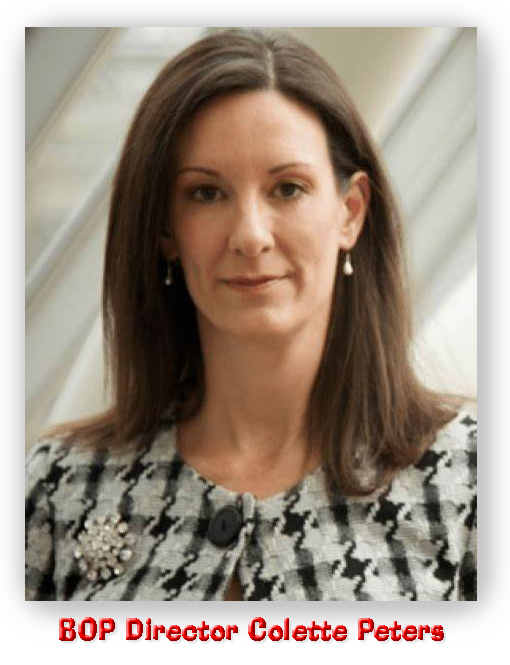
forcedsex161202Last fall, Deputy Attorney General Lisa O. Monaco pressed BOP officials to encourage inmates who have been assaulted by prison employees and might qualify for compassionate release program to apply. Monaco told FAMM that she had ordered the new BOP Director Colette S. Peters, to “review whether BOP’s policy regarding compassionate release should be modified to accommodate female prisoners who had been assaulted by federal employees,” according to the Times.

Ms. Peters has said she has begun to consider requests from inmates who have been abused and are not deemed to be threats to the community if they are granted their release.

In late January, the BOP general counsel denied an application filed by a middle-aged woman who claimed her experience made her eligible for compassionate release. She is among a number of women who have detailed pervasive misconduct during their incarceration. This case – “the first of its kind to make its way through the system — is seen by prisoners’ rights groups as a key test of the department’s commitment to use so-called compassionate release protocols for victims of abuse,” the Times said.

The Times quoted the BOP general counsel as acknowledging that the inmate’s “assertions of being groped and forced to disrobe by male staff members were ‘extremely concerning,’ but described her documentation of those claims as insufficient.”

The Times said that BOP officials familiar with the case have privately said they do not dispute her allegations and think the inmate’s release would not pose a public safety threat.

easterbunny230228The BOP characterized the rejection as “temporary.” The Times said the rejection “reflect[s] a broader struggle by the Justice Department to free inmates abused in federal custody, when appropriate.” 

No doubt the Easter Bunny will be bringing the inmate her approval with the jelly beans.  Except that there is no Easter Bunny. 

New York Times, Justice Dept. Struggles to Carry Out Early Release Program for Abused Inmates (February 22, 2023)

– Thomas L. Root

Supremes Mull Identity Theft – Update for February 27, 2023

We post news and comment on federal criminal justice issues, focused primarily on trial and post-conviction matters, legislative initiatives, and sentencing issues.

GOOD INTENTIONS RUN AMOK?

almaty230227There was a time when the still-nascent Internet was spawning a land-office business in identity theft. Aided by “cyberspace,” hackers, code crackers and slackers had stopped wasting time with all  the chatroom yakkers, and instead were using your personally identifiable information (PII) to get new credit cards in your name. Next thing you know, you had bought a 400,000-tenge set of new tires in Almaty, Kazakhstan, the same day you had a 200,000-peso steak dinner in Ushuaia, Argentina.

This use of an innocent person’s PII to get a bogus line of credit and sticking them with the consequences became known as “identity theft.” And it was perceived as a real problem.  Congress responded with 18 USC § 1028A, the “aggravated identify theft” statute.

Just as the government is loathe to ever let a serious crisis go to waste, the Dept of Justice has  broadly applied the federal identity theft statute to hammer situations that are nowhere close to the hold that all sorts of misconduct that happens to use someone’s name or personal information in the offense is aggravated identity theft.

ushuia230227The statute imposes a two-year mandatory minimum sentence on any person who, “during and in relation to” certain enumerated felonies, “knowingly transfers, possesses, or uses without lawful authority, a means of identification of another person.” And the government loves offenses with mandatory minimums.

Today, the brakes may be applied to § 1028A (lucky we have those new tires). SCOTUS will consider the reach of the statute in Dubin v. United States.

Dr. Dubin, the managing partner of a psychological services company that provided mental health testing to youths at emergency shelters, was convicted of Medicaid fraud for a claim he submitted for a patient’s treatment. The patient had in fact been treated by the practice and no one doubts the Doc had the right to submit the claim. But the government argues that Dr Dubin overbilled for the treatment provided, and that ran afoul of § 1028A.

Dr. Dubin did not commit identity theft in any normal sense. No Argentina steaks, no Kazakh tires. But the statute’s language, the government argues, means that the Doc’s conduct “squarely fits” within the statutory text: As SCOTUSBlog put it, the government contends that “he ‘used’ the patient’s name ‘in relation to’ health care fraud, and he ‘plainly acted’ without ‘lawful authority’ when he committed the fraud.”

words221110Dubin’s lawyers argue that the statutory phrase ‘in relation to’ must be read in tandem with the verb ‘uses.’ Dubin contends that the statute “requires a meaningful nexus between the employment of another’s name and the predicate offense.” Using another’s identity “without lawful authority” requires a showing that the defendant used another’s person’s name “without permission that was lawfully acquired.”

The 5th Circuit ruled for the government, and on rehearing the case en banc, upheld the conviction by a razor-thin 9-8 margin.

Writing in Reason, Berkeley law professor Orin Kerr said that “the stakes are high. A lot of crimes are technically felonies under Title 18 but are pretty low-level felonies, the kind of thing likely to lead to probation or at most a short prison term. But if § 1028A applies, it tacks on a two-year prison sentence. So you could have a probation offense that becomes a two-years-in-jail offense if § 1028A is triggered, with the § 1028A punishment dwarfing the predicate felony punishment.”

SCOTUS Relists Grants Safety-Valve Cert Petition: [Update]:  The Supreme Court granted certiorari to Pulsifer v. United States on February 27.  The case will be argued next fall].

The drug safety-valve statute, 18 USC 3553(f), provides that a sentencing court may ignore drug mandatory minimums if (among other requirements) it finds that the defendant does not have (A) more than 4 criminal history points, excluding any criminal history points resulting from a 1-point offense, as determined under the sentencing guidelines; (B) a prior 3-point offense, as determined under the sentencing guidelines; and (C) a prior 2-point violent offense, as determined under the sentencing guidelines.

safetyvalv200618Pulsifer v. United States and Palomares v. United States ask whether a defendant is ineligible for safety valve relief from the mandatory minimum if his or her criminal history runs afoul of any one of the disqualifying criteria or only if his or her criminal history runs afoul of all three disqualifying criteria, subsections (A), (B), and (C). Circuits are divided on the issue 3-4. John Elwood of SCOTUSBlog predicts that of the two cases, “probably at least one will get the grant.”

Last week, the 4th Circuit joined the debate, holding in United States v. Jones that a defendant has to lose on all three criteria before he or she can be denied the safety valve. The Circuit said, “Ultimately, whether or not this is a prudent policy choice is not for the judiciary to decide: that determination lies solely with the legislative branch. And “the Government’s request that we rewrite 3553(f)(1)’s ‘and’ into an ‘or’ based on the absurdity canon is simply a request for a swap of policy preferences… We cannot “rewrite Congress’s clear and unambiguous text” simply because the Government believes it is better policy for the safety valve to apply to fewer defendants.

Dubin v. United States, Case No 22-10 (oral argument Feb 27, 2023)

SCOTUSBlog.com, Literalism vs. lenity in a case on the scope of federal identity theft (February 24, 2023)

Reason, Thoughts on Dubin v. United States and the Aggravated Identity Theft Statute (February 19, 2023)

United States v. Jones, Case No 21-4605, 2023 U.S. App. LEXIS 3963 (4th Cir., February 21, 2023)

– Thomas L. Root

Friday Couldn’t Come Soon Enough – Update for February 24, 2023

We post news and comment on federal criminal justice issues, focused primarily on trial and post-conviction matters, legislative initiatives, and sentencing issues.

TOUGH WEEK FOR THE BOP

Bad news came in threes for the Federal Bureau of Prisons last week.

badweekA230224First, the BOP announced it is closing the USP Thomson Special Management Unit – described by The Marshall Project as sort of a “double solitary” detention unit for violent inmates – after adverse reports have circulated for months about inmate deaths, suicides and reported sexual harassment by staff and against staff..

The 350 SMU prisoners will be transferred to other prisons. They had come to the Thomson SMU (USP Thomson sits on the Illinois side of the Mississippi River about 125 miles due west of Chicago) after committing disciplinary infractions in facilities around the country, the New York Times reported.

Bureau officials “recently identified significant concerns with respect to institutional culture and compliance with BOP policies” at the high-security facility, which houses about 800 inmates, Randilee Giamusso, a bureau spokeswoman, wrote in an email.

“We believe these issues are having a detrimental impact on facility operations, and the BOP has determined that there is a need for immediate corrective measures,” she added.

badweekB230224Second, on February 14, the U.S. Court of Appeals for the Federal Circuit ruled that BOP employees cannot sue over the government’s denial of hazard pay benefits in connection with their work during the COVID-19 pandemic.

The en banc decision held that under existing Office of Personnel Management regulations governing hazard pay, only federal workers enlisted to work in a laboratory setting with “virulent biologicals” are entitled to enhanced pay for dangerous work not included in their job description.

FCI Danbury workers sued in 2020, claiming they were entitled to hazard pay because they worked in close proximity to inmates infected with COVID-19 and were not provided sufficient personal protective equipment.

badweekC230224Third, the Reason Foundation, which skewered the BOP for reported medical neglect at FCI Aliceville, sued the Bureau under the Freedom of Information Act last week for records about whether women who died at Aliceville and FMC Carswell received adequate medical care.

Reason Foundation, a nonprofit that publishes Reason magazine, is seeking medical reviews of in-custody deaths in two federal women’s

Reason filed a FOIA request with the BOP in May 2020 for inmate mortality reviews at Aliceville and Carswell.

New York Times, Bureau of Prisons Is Closing Troubled, Violent Detention Unit in Illinois (February 14, 2023)

Government Executive, Federal Prisons Employees Aren’t Entitled to COVID Hazard Pay, Appeals Judges Rule (February 16, 2023)

Reason, Reason Files FOIA Lawsuit Against Bureau of Prisons for Inmate Death Records (February 17, 2023)

– Thomas L. Root

Man Bites Dog; 2255 Movants Win A Few – Update for February 23, 2023

We post news and comment on federal criminal justice issues, focused primarily on trial and post-conviction matters, legislative initiatives, and sentencing issues.

PAIR OF 2255 WAIVER RULINGS VALUE SUBSTANCE MORE THAN PROCEDURE

Two appellate decisions last week – from the 4th and 10th Circuits – reminded even the most jaded critics of criminal justice that sometimes fairness can triumph.

robbbq230223In the 4th Circuit, Donzell McKinney and friends robbed a barbeque joint with a gun back in 2011. He pled guilty to Hobbs Act conspiracy and using a gun in a crime of violence under 18 USC 924(c). In the plea agreement, the government dropped the Hobbs Act robbery count. After the 2015 Johnson v United States ruling, Donzell filed a § 2255 motion arguing that the 924(c) count should be vacated.

After over five years of being held in abeyance, Donzell’s district court agreed that he was innocent of the § 924(c) because of the Supreme Court’s 2019 United States v. Davis ruling that conspiracy to commit a violent crime was not itself violent and thus could not support a § 924(c) conviction. But that didn’t help Donzell, the district court ruled, for a bunch of reasons including that his plea agreement waived his right to bring the § 2255, Donzell procedurally defaulted the claim, and anyway, if Donzell had been able to raise the issue back in 2011, the government would not have dismissed the Hobbs Act robbery count but instead would have hitched the § 924(c) charge to that count instead of the conspiracy.

Last week, the 4th Circuit reversed it all, ruling that enforcement of Donzell’s appeal waiver to bar his claim would result in a miscarriage of justice and that he had shown both cause and prejudice for his procedural default.

An appellate court can refuse to enforce an appeal waiver when a sentence is imposed in excess of the statutory maximum or is based on a constitutionally impermissible factor. Among these is the most fundamental reason, where enforcing an appeal waiver would result in a miscarriage of justice. Donzell’s § 924(c) conviction and punishment are for an act that the law does not make criminal. “There can be no room for doubt,” the 4th said, “that such a circumstance inherently results in a complete miscarriage of justice and presents exceptional circumstances that justify collateral relief under 28 USC § 2255.”

Robber160229But, the government protested, Donzell really was guilty of the robbery, and would have pled to it if the government hadn’t agreed to drop it. So he wasn’t prejudiced by the Davis error.

That’s not how it works, the Circuit replied. “Where the record in a case shows that a count of conviction is now invalid, no precedent authorizes a court to then rely on a dismissed count to negate that demonstrated prejudice. Rather, in determining prejudice for purposes of excusing procedural default, the court asks whether it is likely a defendant, had he known of the error, would not have pled guilty to the count of conviction. The court does not look to whether it is likely a defendant, had he known of the error, would not have pled guilty to a dismissed count.”

Fraud170406Meanwhile, in the 10th Circuit, Joe Chatwin pled guilty to bank fraud and a § 924(c), an unusual combination to be sure. Joe’s offenses were pretty prosaic, identity theft, turning a $30 cashier’s check into a $30,000 check that he used to buy an RV from a guy, but he apparently pulled a gun when the Marshals came to arrest him. The 18 USC § 111 assaulting a fed charge was dismissed, but it underlay the § 924(c) conviction.

After Johnson, Joe filed a bare-bones § 2255 that said simply, “police chase not a violent crime.” He later amended after Davis to argue that the district court had relied solely on the § 924(c) residual clause (which Davis held was unconstitutionally vague). The government never argued Joe’s merits, instead moving to dismiss the § 2255 motion because Joe had “knowingly and voluntarily waived his § 2255 rights in a Rule 11(c)(1)(C) plea agreement.”

Lose200615The district court agreed with the government, holding that enforcing the waiver would not be a miscarriage of justice because Joe’s Davis claim was a dead-bang loser. Joe’s appealed, raising for the first time the argument that his collateral-attack waiver must fail because his conviction-based § 2255 motion fell outside the scope of his plea agreement collateral-attack waiver. He argued that his waiver barred any collateral attacks to his sentence but not to his convictions.

The 10th applied “plain error” review to the issue Joe hadn’t argued in the district court, but it agreed Joe was right that the waiver applied only to challenging the sentence, not the conviction. The government argued the error did not affect Joe’s “substantial rights,” that is, it did not change the outcome of the proceeding because Joe would have lost his § 2255 motion anyway.

Plain error in real life...
Plain error in real life…

But because the district court only addressed the motion to dismiss, not the merits of the § 2255 claim, the Circuit held that “the ‘outcome of the proceeding’ here means the outcome of the motion to dismiss—not matters beyond that.” The 10th ruled that Joe “has shown substantial prejudice based on the dismissal of his § 2255 motion. He has shown that the outcome of ‘the proceeding’ would have been different in that the district court could not have dismissed on the issue of the collateral-attack waiver’s scope. Absent plainly erring on the waiver’s scope, the district court could not have dismissed on that ground.”

United States v. McKinney, Case No. 20-6396, 2023 U.S. App. LEXIS 3715 (4th Cir. Feb. 16, 2023)

United States v. Chatwin, Case No. 21-4003, 2023 U.S. App. LEXIS 3889 (10th Cir. Feb. 17, 2023)

– Thomas L. Root

EQUAL’s Back But The Odds of Passage Aren’t Any Better – Update for February 22, 2023

We post news and comment on federal criminal justice issues, focused primarily on trial and post-conviction matters, legislative initiatives, and sentencing issues.

SLEEPY IN WASHINGTON


zero230223I am already getting questions from people wondering what new laws have been passed on meth, cocaine, guns, porn, you name it.

The answer never changes. None. Nada. Zilch.

The sad fact is that we have a new Congress, now only 50 days old. As Politico put it, “the new Congress has accomplished almost nothing so far… The House and Senate have not passed any new laws, the speaker is jostling with Biden over the debt ceiling and the new Congress’ most significant collaboration was agreeing to meet for the State of the Union. The Democratic Senate has held just eight roll-call votes on nominees and approved only one piece of new legislation alongside a host of non-binding resolutions. The House GOP, meanwhile, has rammed through dozens of bills — few, if any, of which have a chance of coming to the Senate floor.”

It’s a preview of the long slog that Washington expects during divided government. And sadly, it’s a long slog that will probably yield as much criminal justice as the last two years, which is to say “none.”

crackpowder160606I reported January 30th that the EQUAL Act was about to be reintroduced. Last Friday, Senators Cory Booker (D-NJ) and Richard Durbin (D-IL), chairman of the Senate Judiciary Committee, along with Representatives Kelly Armstrong (R-ND) and Hakeem Jeffries (D-NY), the House Democratic Leader, announced the reintroduction of the “bipartisan” EQUAL Act (H.R. 1062 in the House, S.524 in the Senate) which would eliminate the federal crack and powder cocaine sentencing disparity and apply it retroactively to those already convicted or sentenced.

Ohio State University law professor Doug Berman wrote in his Sentencing Law and Policy blog last Saturday that “during the last Congress, I became way too optimistic about the prospect of passage of the EQUAL Act to entirely eliminate the federal crack and powder cocaine sentencing disparity. But after the US House voted overwhelmingly, 361-66, to pass the EQUAL Act and after the Senate version secured 11 GOP sponsors, I really thought nearly four decades of a misguided sentencing structure could be coming to an end. But… opposition from some key Republican Senators prevented the bill from getting to the desk of President Biden. I am now inclined to be much less optimistic about the EQUAL Act’s chance in the new Congress.”

Politico, Conservatives gloat as Congress starts off with little to show (February 13, 2023)

Sentencing Law and Policy, Renewed bipartisan effort to end the federal crack/powder sentencing disparity via the EQUAL Act (February 18, 2023)

Press Release, Booker, Durbin, Armstrong, Jeffries Announce Re-Introduction of Bipartisan Legislation to Eliminate Federal Crack and Powder Cocaine Sentencing Disparity (February 17, 2023)

Ripon Advance, Armstrong unveils bill to end federal sentencing disparity for cocaine offenses (February 22, 2023)

– Thomas L. Root

Did DOJ Sandbag McClinton Cert Petition? – Update for February 21, 2023

We post news and comment on federal criminal justice issues, focused primarily on trial and post-conviction matters, legislative initiatives, and sentencing issues.

A COUPLE OF SCOTUS RELISTS COME UP TODAY

relist230221Last week, I reported that the Supreme Court would again take up McClinton v. United States – a case on using acquitted conduct at sentencing – at last Friday’s conference. We won’t know the conference’s outcome until today at 9:30 am EST, but last week, SCOTUSblog.com had an interesting spin on the repeated McClinton relistings.

John Elwood, one of Dayonta McClinton’s lawyers and a regular SCOTUSblog contributor, wrote that McClinton and four other cases raising the same issue “are just sitting there on the court’s docket… [A]s near as we can tell, the court appears to be holding those cases to see whether the US Sentencing Commission acts on a pending proposal to place restrictions on federal courts’ consideration of acquitted conduct at sentencing.”

How come? It seems the Solicitor General wrote to the Court in January, alerting it to the Commission’s acquitted conduct proposal and implying that the Guidelines change would solve the problem, making the grant of McClinton’s constitutional challenge to acquitted conduct superfluous.

inaction230221Dayonta McClinton has argued that the USSC proposal is “woefully inadequate to resolve the issue, but it still may explain the court’s inaction,” Elwood wrote. “Things may become clearer down the road.”

Another new relist, Davis v. United States, raises a fascinating 28 USC § 2255 question: Quartavious Davis got 159 years for a string of armed Hobbs Act robberies. His two co-defendants signed plea deals and got about a tenth of that time. Quart argues his attorney was ineffective by not negotiating the same kind of plea agreement with the government. His district court denied the post-conviction petition, holding that Quart could not prove that he would have gotten a plea deal if his lawyer had advocated for one.

Quart contends it should be enough to show that similarly-situated co-defendants got plea deals, which – he argues – suggests there is no reason the government would not have given him the same benefit. The 11th Circuit disagreed, holding that he could not show prejudice absent making some showing that the government had offered him a plea deal.

catch22-230221The petition raises the Catch-22 that informs a lot of § 2255 post-conviction arguments. Under the case that shaped modern federal habeas corpus claims directed at the constitutionality of federal convictions and sentences – Strickland v. Washington – in order to make a prima facie showing that a movant is entitled to a hearing, the prisoner has to show his or her lawyer goofed, and that but for the goof, there is a reasonable probability that the goof affected the outcome.

Here, Quart has argued that probability favors his claim that the government would have made a plea offer: after all, his two co-defendants – whose culpability was little different than his own – got plea deals. Unsurprising, inasmuch as 94% of federal prosecutions end in plea deals. But the government argues that he could not prove that the government would have made an offer, so he should be denied the very hearing that he needs to prove the government would have made an offer.

Catch-22. To be entitled to a hearing that could prove an element of his claim, the movant must prove the element.

We’ll see whether the Supreme Court is interested in a case that could sharpen the definition of “reasonable probability” as used in Strickland.

McClinton v. United States, Case No. 21-1557 (certiorari filed March 15, 2022)

Davis v. United States, Case No. 22-5364 (certiorari filed August 8, 2022)

Strickland v. Washington, 466 U.S. 668 (1984)

SCOTUSblog.com, Plea bargaining and a high-profile separation-of-powers case (February 15, 2023)

JDSupra, Sentencing Guidelines Amendment Would Preclude Acquitted Conduct from Being Used at Sentencing (January 30, 2023)

– Thomas L. Root

McClinton Redux at Supreme Court – Update for February 17, 2023

We post news and comment on federal criminal justice issues, focused primarily on trial and post-conviction matters, legislative initiatives, and sentencing issues.

IS TODAY THE DAY FOR ACQUITTED CONDUCT REVIEW?

relist230123At its last Friday morning conference on January 21st, the Supreme Court Justices against “relistedMcClinton v. United States rather than decided to review the 7th Circuit decision. The Justices take another whack at it today at the high court’s first certiorari conference in four weeks.

McClinton raises the issue of whether a court can take into account conduct of which a defendant is acquitted by a jury when it sentences the defendant. The Guidelines permit it, although one of the draft amendments proposed a month ago, a change to USSG § 1B1.3 (relevant conduct), proposes to add a provision that holds “related conduct” not to include acquitted conduct.

hammertime200818The McClinton case would go beyond a Guidelines amendment, however, and expressly find the practice of relying on acquitted conduct to be a violation of the 6th Amendment’s requirement that juries, not judges, find facts.  In McClinton, the defendant was hammered at sentencing for a bank robbery in which a death occurred, despite being found not guilty of murder.  His sentence was upheld by a 7th Circuit panel that felt itself bound by the 1997 Supreme Court decision in United States v. Watts.

Even so, in his majority opinion 7th Circuit Judge Frank Easterbrook, a prominent conservative jurist, all but begged the Supreme Court to take up McClinton’s case. “Despite th[e] clear precedent [of Watts], McClinton’s contention is not frivolous,” he wrote for the three-judge panel. “It preserves for Supreme Court review an argument that has garnered increasing support among many circuit court judges and Supreme Court justices, who in dissenting and concurring opinions, have questioned the fairness and constitutionality of allowing courts to factor acquitted conduct into sentencing calculations.”

foodfight230217The fact that McClinton and four similar cases have been relisted by the Supreme Court four times suggests that there is sentiment among some Justices to take up the issue and strident opposition from others to leave Watts alone.

Any petition for certiorari granted from this point through June will be argued next term, beginning in October 2023.

New Republic, When You’re Sentenced for a Crime That Even a Jury Agrees You Didn’t Commit (February 1, 2023)

Sentencing Guidelines for United States Courts, 88 FR 7180, (February 2, 2023)

United States v. McClinton, 23 F.4th 732 (7th Cir. 2022)

McClinton v. United States, Case 21-1557 (petition for certiorari pending)

– Thomas L. Root

Where Underperformance is ‘Success’ – Update for February 16, 2023

We post news and comment on federal criminal justice issues, focused primarily on trial and post-conviction matters, legislative initiatives, and sentencing issues.

BIDEN TOUTS ‘SUCCESSES’ BEFORE SOTU, BUT FAILS TO DELIVER IN SPEECH

success230216The White House touted its policies and accomplishments — including marijuana pardons, drug sentencing reform, harm reduction and enhanced enforcement for fentanyl — ahead of last week’s State of the Union speech, but then proceeded to say nothing in the speech itself about drug policy reform.

The White House promised in a factsheet that the president would “highlight progress” on criminal justice issues during the speech and included a section that directly discussed tackling the “failed approach to marijuana and crack cocaine.” But nothing was said during SOTU about it.

And little wonder. The Biden Administration’s record is one of ‘overpromise, underperform.’ Case in point? For all of the White House hand-wringing about the adverse effect on minorities of the statutory sentencing penalty for crack cocaine being much greater than powder cocaine, the EQUAL Act collapsed due to Senate wrangling at the end of the last Congress.

ineffectiveleaders230216Marijuana reform? Is that what one calls grant pardons to people who aren’t in prison and have convictions for simple pot possession? Or is that one calls the MORE Act, which breezed past the House last session but died in the Senate because Biden couldn’t corral members of his own party who wanted to tinker with it?

President Biden – an old hand at Senate procedure himself – could not get two bills passed the Senate when both had overwhelming support.

successline230216Is this what success looks like?

The Fact Sheet says “the Safer America Plan calls on Congress to end once and for all the racially discriminatory sentencing disparity between crack cocaine and powder cocaine offenses — as President Biden first advocated in 2007 — and make that change fully retroactive. This step would provide immediate sentencing relief to the 10,000 individuals, more than 90 percent of whom are Black, currently serving time in federal prison pursuant to the crack/powder disparity. As an initial step, the Attorney General has issued guidance to federal prosecutors on steps they should take to promote the equivalent treatment of crack and powder cocaine offenses, but Congress still needs to act….”

And Biden needs to lead, not just posture.

leaders230216Biden’s pardon proclamation, which affected several thousand people who’ve committed federal cannabis possession offenses but not a single one in prison, “lifts barriers to housing, employment, and educational opportunities,” the Fact Sheet boasted.

A White House official said Thursday that Biden promises that “every jail and prison across the nation can provide treatment for substance use disorder.” By this summer, he said, the BOP will ensure that each of its 122 facilities are equipped and trained to provide in-house medication-assisted treatment.”

White House, FACT SHEET: The Biden-⁠Harris Administration’s Work to Make Our Communities Safer and Advance Effective, Accountable Policing (February 6, 2023)

Marijuana Moment, White House Touts Biden’s Marijuana Pardons In Preview of State of The Union Speech (February 7, 2023)

WHIO-TV, Biden wants to make opioid antidote as widely available as ventilators, drug official says (February 9, 2023)

– Thomas L. Root
Subject-Matter Jurisdiction Ain’t What You Think – Update for February 14, 2023

We post news and comment on federal criminal justice issues, focused primarily on trial and post-conviction matters, legislative initiatives, and sentencing issues.

SUBJECT-MATTER JURISDICTION IS EASY-PEASY

If there is any post-conviction issue that is as often raised as it is without merit, it’s got to be subject-matter jurisdiction.

In second-grade civics, we 7-year-olds learned that federal courts are courts of limited jurisdiction. As my sainted teacher, Minta Newmeyer, explained to my attentive classmates and me, this means that those courts – creatures of statute – may only hear cases on subjects approved by Congress. Want to take your neighbor to federal court because her magnolia tree drops a mess on your yard every fall?  Tough. Trespass and nuisance are perfectly good common-law claims, but Congress has not authorized federal courts to hear such quotidian bellyaches. For you to hail your pesky neighbor into federal court, you have to raise a cause of action that a federal court is allowed to hear.

easypeasy230214The concept is easy-peasy.  Yet, I see a lot of inmate-written post-conviction arguments made that the federal district court that convicted the prisoner somehow lacked subject-matter jurisdiction to hear the underlying criminal case for one wacky reason or another.

Preparing to win a federal conviction may be as as complex as a nine-course meal, but determining subject-matter jurisdiction for a federal criminal action is as easy as boiling water. Has the defendant been accused of violating a federal criminal statute? Is the case filed in federal district court? If the answer to both questions is ‘yes’, the court has subject-matter jurisdiction.

Prisoners screw this simple concept up all the time. But they aren’t the only ones not to get it. Sometimes the court itself can be fooled, as the 5th Circuit reminded us last week.

Daisy Bleuler and Paulo Murta, both Swiss citizens working in wealth-management firms, are charged with running an international bribery scheme in which U.S. businesses laundered bribes to Venezuelan officials through their Swiss firms. Daisy has never been to the USA. Paulo came over once to Miami but not to the Southern District of Texas (where the indictment was handed up).

Eight defendants were indicted for violating the Foreign Corrupt Practices Act. Two of them – Daisy and Paulo – moved to dismiss on the grounds the court lacked subject-matter jurisdiction. The district court agreed, finding that “the FCPA and money-laundering statute did not apply extraterritorially,” that is, could not be applied to non-citizens’ actions that did not take place in the USA.

Because there was no “direct or undisputed evidence” Daisy had an agency relationship in the United States, the district court found that it lacked jurisdiction to adjudicate the FCPA case. The district judge said the money-laundering counts failed because Daisy did not commit any portion of the offenses “while in the United States”; and no one alleged that Paulo was in the USA “at the time the alleged transactions occurred…”

smj230214The 5th Circuit made short work of what appears to have been a complex district court holding. “In the criminal context,” the Circuit held, “subject matter jurisdiction is straightforward.” Noting that 18 USC § 3231 provides that “the district courts of the United States shall have original jurisdiction… of all offenses against the laws of the United States,” the 5th said, “To invoke that grant of subject matter jurisdiction, an indictment need only charge a defendant with an offense against the United States in language similar to that used by the relevant statute. That is the extent of the jurisdictional analysis: ‘a federal criminal case is within the subject matter jurisdiction of the district court if the indictment charges that the defendant committed a crime described in Title 18 or in one of the other statutes defining federal crimes.”

Whether a statute reaches extraterritorial acts is a defense to a criminal charge, the Circuit said, but it is not a challenge to the district court’s subject-matter jurisdiction.

United States v. Bleuler, Case Nos 21-20658, 2023 U.S.App. LEXIS 3097 (5th Cir. Feb 8, 2023)

– Thomas L. Root

Detainers No Longer Disqualify Some FSA Credit Application – Update for February 13, 2023

We post news and comment on federal criminal justice issues, focused primarily on trial and post-conviction matters, legislative initiatives, and sentencing issues.

FSA CREDIT BLUES

BOP Cries ‘Uncle’ On Detainer FSA Credit: As of a week ago, at least six district courts had granted habeas corpus petitions filed by prisoners denied use of FSA credits because they had detainers.

uncle230213FSA credits, for those folks tuning in late, are credits awarded to federal prisoners under the First Step Act for the prisoners successfully completing Bureau of Prisons programs that have been determined to reduce the risk of recidivism, such as GED classes, anger management, parenting skills, and drug/alcohol rehabilitation.  Prisoners may use the credits to reduce their sentences by up to one year or to get more time in halfway house or home confinement at the end of their sentences.

Despite the fact that Congress wrote detailed instructions into the law about what prisoners were to be excluded from earning FSA credits, the BOP took it upon itself to decide that other classes of prisoners – specifically those with detainers on file from state authorities or federal immigration officials – could not earn FSA credits. Unsurprisingly, a number of inmates filed petitions for habeas corpus with federal courts challenging the BOP’s unauthorized tinkering with the statutory scheme.

Last week, facing the reality that the detailed eligibility requirements Congress wrote into the FSA credit program prevents the BOP from adding its own spin to the standards as a matter of law, the Bureau abandoned its efforts to deny people with detainers the right to reduce their sentence length with FSA credits.

In a supplement to the November 2022 program statement on FSA credits issued last Monday, the BOP issued an updated P.S. 5410.01 deleting requirement that inmates have no detainers or unresolved pending charges, to include unresolved immigration status, in order to use FSA credits to shorten their sentences. Prior to the BOP program statement on FSA credits issued last November, the BOP had ruled that people with detainers or unresolved state charges were ineligible for any FSA credits. In November, the BOP moderated its position, holding that people with detainers could earn FSA credits but not spend them unless they cleared up the detainers.

Last week’s announcement wipes out any BOP resistance to people with detainers getting to apply up to 365 FSA credit to reduce their sentence length by up to a year. The only people ineligible now because of detainers are noncitizens “subject of a final order of removal under immigration laws.” And that is practically no one in the system.

A detainer will still prevent inmates from using FSA credits for halfway house or home confinement. Whether First Step’s detailed exclusions from credit override the BOP’s traditional refusal to give halfway house and home confinement to people with detainers has yet to be decided.

elsa230213PATTERN Recidivism Score Frozen on Prerelease Custody: Last week’s changes also clarify that if a prisoner has had two regular program reviews (which occur annually or more often as a prisoner approaches the end of the sentence) at which the PATTERN score was reviewed before going to halfway house or home confinement, he or she will not be reassessed again. In other words, the recidivism score you take out the prison door with you will remain yours as long as you’re in BOP custody (which you are at halfway house or on home confinement… If you go to prerelease custody before you’ve had two reassessments, however, you’ll be reassessed while you’re in halfway house or home confinement.

This should not be terribly significant unless the BOP is gearing up to start awarding FSA credits for programming and productive activities while in halfway house or on home confinement. The BOP promised this over a year ago, but nothing has happened yet to implement it.

Look Ma, No Hands!: The changes also provide that “FSA Time Credit Assessments (FTC Worksheets) will be automatically uploaded to the Inmate Central File during each auto-calculation. Inmates will be provided a copy of the most recent FTC Worksheet during regularly scheduled program reviews.”

There’s some advantage to taking the input and uploading away from case managers, in that it assures uniformity and correct calculation. On the other hand, as a lot of people have already experienced, it complicates and extends the process for getting errors corrected.

Groundhog Day at DSCC: Speaking of errors, a memorandum from the BOP’s administrator of the Residential Reentry Management Branch issued last week announced yet another nationwide re-calculation of FSA credits over the past weekend.

groundhogday230213The memo predicts “several hundred immediate releases affecting community placements, as well as the need to advance [halfway house and] home confinement dates and initiate new referrals to the Residential Reentry Office.”  Those releases should be happening between this morning and Wednesday.

The automatic calculation of FSA credits was first promised August 1, 2022, then was effective October 1, 2022, only to collapse in a heap of withdrawn credits and miscalculated dates. It was then to be fixed by January 9, and then January 23, and then February 6…

I keep hearing Sonny and Cher singing…

P.S. 5410.01CN, First Step Act of 2018 – Time Credits: Procedures for Implementation of 18 U.S.C. § 3632(d)(4) (February 6, 2023)

BOP, Retroactive Application of First Step Act Time Credits (February 9, 2023)

– Thomas L. Root