‘You Can Earn Them, Just Not Spend Them,’ Said No One To The Senators – Update for January 22, 2024

We post news and comment on federal criminal justice issues, focused primarily on trial and post-conviction matters, legislative initiatives, and sentencing issues.

JUDICIARY COMMITTEE FIRST STEP ACT HEARING IGNORES HALFWAY HOUSE ELEPHANT

Senate Judiciary Committee leader Richard Durbin (D-IL) presided over a hearing last Wednesday commemorating the 5th anniversary of the First Step Act. The testimony was positive, upbeat, and largely useless.

Cake201130“Five years ago, we wrote the blueprint for reimagining rehabilitation and protecting public safety, and now we know by the numbers that it works,” Durbin said to open the proceeding. “Today, I am looking forward to reflecting on what we can achieve… In order to make our system fairer, we must continue to learn from and [build upon] the proven successes of ‘smart on crime’ policies like the First Step Act. We must provide more opportunities for those who are incarcerated to reenter society successfully, reunite with their families, and contribute to their communities.”

Ja’Ron Smith, former Deputy Assistant for Domestic Policy under Trump, noted that the recidivism rate for First Step releasees is about 37% lower than what it was before the Act passed, used to be. Smith said, “For those released under the First Step Act, the rate is just 125. And technical violations – not new crimes – account for a third of that number.”

J. Charles Smith III, president of the National District Attorneys Assn, said First Step “did a great job of differentiating between good people making bad decisions and bad people making bad decisions. The bad people who make bad decisions stay in jail… The good people who made a bad decision, were convicted for it, [and] went to jail for it, are getting rehabilitated and released earlier as well, as they should.”

Steve Markle, an officer with the National Council Of Prison Locals, lauded the Act but said the Federal Bureau of Prisons 20% staffing shortfall (40% among correctional officers) “not only compromises safety by reducing the number of staff available to respond to emergencies but also hinders the provision of programming for the First Step Act. To fully realize the Act’s potential,” he said, “it is crucial to address the critical staffing crisis within the Bureau. The Council believes that the staffing crisis can only be resolved by addressing the pay band issue.”

Not this kind of halfway house...
Not this kind of halfway house…

It fell to Walter Pavlo, who was not a witness at Durbin’s lovefest, to explain a major glitch in First Step Act’s implementation of the evidence-based programming problem. Inmates are motivated to earn credits because those credits can buy up to a year off their sentences and – if any credits are left after the one-year credit -more halfway house or home confinement. But, writing in Forbes last week, Pavlo observed that inmates are being denied the right to spend those credits because “the BOP does not have room in halfway houses to monitor those who have rightfully earned First Step Act credits. The result, thousands of prisoners languish in expensive institutions rather than being placed in community halfway houses.”

Prisoners with many months of First Step halfway house/home confinement credit are being told by halfway houses that they cannot be accommodated. I know of one prisoner awarded his nine months of halfway house/home confinement credit only to be told that the halfway house could only give him a third of that. The Act states in 18 USC 3624(g)(11) that the BOP Director “shall ensure there is sufficient prerelease custody capacity to accommodate all eligible prisoners.” Pavlo writes, “This is a problem that is going to persist unless something is done.”

The BOP’s Residential Reentry Management Branch administrator said in a speech two weeks ago that halfway houses had a “90-day projection of 99% utilization,” meaning, Pavlo said, “that there was no room to place any more prisoners.”

The BOP knew five years ago that it would have to increase halfway house capacity, but doing so is a bureaucratic nightmare. Because the BOP has relied on halfway house staff to monitor home confinement inmates, the capacity crunch has affected home confinement placement as well. A decade ago, the BOP worked with the US Probation Office to get some prisoners monitored on Probation’s Federal Location Monitoring (FLM) to allow some home confinement prisoners to be monitored by Probation rather than halfway houses. But as of now, only 3.6% of home confinement prisoners are on FLM.

The BOP has an Interagency Agreement with Probation which Pavlo says presents “an opportunity to expand FLM in a manner that is both cost-effective and consistent with the evidence-based practices. However, each district court is responsible for participating, or not, in FLM. Getting every district court to coordinate with the BOP has been an issue for years, as the few prisoners in FLM clearly demonstrate.”

release161117FLM costs far less than a halfway house per diem or halfway house-monitored home confinement. However, FLM is managed by each of the 94-odd federal judicial districts. Some participate with the BOP: others do not. Pavlo said a retired BOP executive told him, “I think the BOP would be receptive to expanding the program and it would resolve many of the issues related to capacity for prerelease custody, but the Courts are going to have to help.”

Senate Judiciary Committee, Five Years of the First Step Act: Reimagining Rehabilitation and Protecting Public Safety (January 17, 2024)

Press Release, Durbin Delivers Opening Statement During Senate Judiciary Committee Hearing on the Fifth Anniversary of the Landmark First Step Act (January 17, 2024)

Forbes, The Bureau of Prisons’ Halfway House Problem (January 16, 2024)

– Thomas L. Root

New Year, Old Woes at the Federal Bureau of Prisons – Update for January 19. 2024

We post news and comment on federal criminal justice issues, focused primarily on trial and post-conviction matters, legislative initiatives, and sentencing issues.

BOP: CRIME’S UP, INCENTIVES ARE DOWN

Instances of Federal Bureau of Prisons employees running afoul of the law continue along with staff shortages, even as the agency finds ways to provide additional disincentives to employees’ desire to work.

truecrime240119Former BOP Correctional Officer Quandelle Joseph pled guilty last week in US District Court for the Eastern District of New York to receiving bribes in exchange for providing phones and drugs to prisoners at MDC Brooklyn. The government said Joseph, who began working at MDC in May 2020, “accepted tens of thousands of dollars from inmates in exchange for smuggling narcotics, cigarettes, and cell phones into the MDC… He also warned inmates about upcoming contraband searches at the MDC.”

Last Friday, a former BOP CO at FCI Aliceville (AL) pled guilty to one count of sexual abuse of a ward. In February 2019, the indictment alleged, Smith had sex with a female inmate. He also admitted engaging in a sexual act with another female inmate under his control.

The Marshall Project reported a week ago on the continuing short-staffing at BOP facilities, noting that FCI Florence (CO) was short at least 188 staff members. Senators John Hickenlooper and Michael Bennet told BOP Director Colette Peters a year ago that “fatigue, exhaustion, and low morale have reduced staff productivity and led to more sick leave, retirements, and resignations.” The Marshall Project called the situation “a downward spiral.”

pay240119The BOP had been offering retention pay incentives for employees at prisons hard hit by staffing shortages, but those programs are ending. A week ago, the BOP terminated incentives at USP Thomson (Illinois), and last week announced that officers at USP Canaan (Pennsylvania) will soon see similar cuts.

The American Federation of Government Employees is urging the BOP to reverse course at USP Canaan, which is about to open more units and bring in more inmates, according to AFGE. Without the incentive, the union says, officers may leave their jobs.

understaffed220929

The real cost of the staffing shortfall to prisoners? Obviously, the frequent and repeated facility lockdowns – because confining inmates to their housing units requires fewer BOP employees than normal operations – is the most visible. But last week, I heard from a prisoner who willingly transferred to an institution hundreds of miles farther from his home to enroll in the faith-based Life Connections program. He told me that upon arrival, he found that the Life Connections Program was not running due to shortness of staff and government funding, and no one had any idea when that would change: “I have made the choice to seek change while incarcerated,” he wrote, “signing up for this program. It’s not my fault that they have no staff to run the program and lack the funds to pay outside contractors to facilitate the classes for the purpose of education.”

US Attorney EDNY, Ex-Federal Correction Officer Pleads Guilty to Taking Bribes in Exchange for Smuggling Contraband into Federal Jail in Brooklyn (January 11, 2024)

Trussville AL Tribune, Former Federal Bureau of Prisons Corrections Officer pleads guilty to sexually abusing inmate in his custody (January 12, 2024)

Federal News Network, More Bureau of Prisons pay incentives get death penalty (January 10, 2024)

The Marshall Project, Federal Prisons Are Over Capacity — Yet Efforts to Ease Overcrowding Are Ending (January 6, 2024)

Senators Bennet and Hickenlooper, Letter to Colette Peters (December 5, 2022)

– Thomas L. Root

Mountains of Evidence Trumps Molehills Every Time – Update for January 18, 2024

We post news and comment on federal criminal justice issues, focused primarily on trial and post-conviction matters, legislative initiatives, and sentencing issues.

MORE IS BETTER

By now, everyone knows that for a federal prisoner to win a sentence reduction motion under 18 USC § 3582(c)(1)(A) – known to all by the misleading but convenient shorthand “compassionate release” – he or she must show that extraordinary and compelling reasons exist for the motion (a list of what situations fit this bill may be found in the U.S. Sentencing Commission’s new § 1B1.13(b)) and that grant of the requested reduction is consistent – whatever that means – with the sentencing factors of 18 USC § 3553(a). Such factors include the history of the offense and the offender, the need for just punishment, protection of the public, deterrence, and other considerations.

founderingship240118Unsurprisingly, most federal prisoners seeking compassionate release focus on the “extraordinary and compelling reasons” standard, because it’s easier to quantify, and people generally like to focus more on the bad things currently happening to them than bad things they might have done in the past. Yet as many compassionate release motions founder on the shoals of § 3553(a) as ever die on the “extraordinary and compelling” hill.

While you sit back to drink in the beautiful symmetry of the prior paragraph’s mixed metaphor, consider the strange position that  “post-sentencing rehabilitative efforts” occupy in the compassionate release firmament. Post-sentencing rehabilitative efforts may not be the sole extraordinary and compelling reason for a sentence reduction, but they may be one of several. At the same time, post-sentencing rehabilitative efforts are relevant to the § 3553(a) sentencing factors: good behavior and completion of in-prison programming suggest that the prisoner will not pose a danger to the public and perhaps has already been justly punished so as to correct his or her errant ways.

So what kind of consideration must a district court give evidence of good conduct and programming? The 4th Circuit ruled almost five years ago in United States v. Martin that “where a movant presents substantial evidence of post-sentencing rehabilitative efforts, a district court must provide a more robust and detailed explanation in ruling on a motion for compassionate release.” Last week, the appellate court reminded everyone that for the Martin rule to apply, a movant should remember that more is better.

violent160620Historically, Angel Centeno-Morales had been anything but an angel. Before his current felon-in-possession conviction, he had been convicted of aggravated assault with a deadly weapon, burglary, battery, and several gun and drug offenses. In his current case, he sold meth and threatened people with his gun to discourage cooperation with law enforcement.

While he was locked up, Angel’s wife died of COVID, leaving their young son without a caregiver. He filed for compassionate release, arguing that the death of the primary caregiver for the minor child was an extraordinary and compelling reason for a compassionate release grant.

The district court agreed but denied the compassionate release motion nonetheless based on the § 3553(a) factors. The judge cited that Angel had distributed a lot of meth while on probation, used guns for intimidation and coercion, and had gotten two disciplinary infractions in his six years in prison. The district court held that Angel’s continued incarceration was “necessary to reflect the seriousness of his offenses, protect the public from further crimes, provide for just punishment, promote respect for the law, and provide deterrence.”

angels240118On appeal, Angel complained that the district court violated Martin by not providing enough detail supporting its denial, but the 4th Circuit disagreed. The Martin defendant presented “a mountain of new mitigating evidence that the sentencing court never evaluated,” the Circuit said. “What’s more, the movant in Martin was incarcerated for nearly two decades, became a respected tutor for other inmates, and exhibited such exemplary behavior that correctional staff moved her into a low-security facility.” But district courts must only “set forth enough to satisfy our court that it has considered the parties’ arguments and has a reasoned basis” for its decision. “The district court does not owe every movant for compassionate release a ‘robust and detailed’ explanation on every argument about post-sentencing rehabilitative efforts,” the 4th said.

Angel presented no “mountain” of mitigating evidence that he had become an angel. “He completed just a few vocational courses and received two disciplinary infractions while incarcerated. Importantly, he remains classified as a ‘medium’ security inmate. This is not the kind of exceptional post-sentencing evidence for which Martin would require a ‘robust and detailed’ explanation,” the Circuit held.

United States v. Centeno-Morales, Case No. 22-6607, 2024 U.S. App. LEXIS 310 (4th Cir. January 5, 2024)

United States v. Martin, 916 F.3d 389 (4th Cir. 2019)

– Thomas L. Root

Supreme Court Teeing Up Some Significant Criminal Law Decisions – Update for January 15, 2024

We post news and comment on federal criminal justice issues, focused primarily on trial and post-conviction matters, legislative initiatives, and sentencing issues.

SUPREMES’ JANUARY LOOKING CONSEQUENTIAL FOR CRIM LAW HOLDINGS

alicewordsmeanhumpty231122The first argument of the current Supreme Court term last October, Pulsifer v. United States, ought to be yielding an opinion in the next few weeks. The First Step Actsafety valve” case – that considers whether “and” means “and” or simply “or” – has increased importance for a lot of people who might otherwise qualify for the zero-point sentence reduction under the new USSG § 4C1.1.

A condition of § 4C1.1 is that “the defendant did not receive an adjustment under § 3B1.1 (Aggravating Role) and was not engaged in a continuing criminal enterprise…” So does that mean the defendant is qualified unless he has a § 3B1.1 adjustment AND a CCE conviction? Or is he disqualified if he has a § 3B1.1 OR a CCE violation? There are a lot of § 3B1.1 enhancements out there, but not nearly as many CCE convictions.

Even without the § 4C1.1 angle, Ohio State University law professor Doug Berman said last week in his Sentencing Law and Policy blog that Pulsifer may “prove to be the most interesting and impactful sentencing case from the current SCOTUS Term.”

Meanwhile, other interesting Supreme Court developments are happening largely unseen. Last November, the Court granted review in Erlinger v. United States, a case which asks whether the Constitution requires that a jury (instead of the judge) find beyond a reasonable doubt that an Armed Career Criminal Act defendant’s three predicate offenses were “committed on occasions different from one another.”

May you rest in peace, Betty... stealing America's hearts did not make you ACCA-qualified.
May you rest in peace, Betty… stealing America’s hearts did not make you ACCA-qualified.

(The ACCA, for those who got here late, is a sentencing enhancement contained in 18 USC § 924(e)(2) which provides that the punishment for a felon-in-possession conviction under 18 USC § 922(g) begins with a mandatory 15 years and goes to life imprisonment if the defendant has three prior convictions for serious drug offenses or crimes of violence committed on occasions different from one another. Erlinger explores the collision of those elements with the 6th Amendment: can a judge find the ACCA applies to a felon-in-possession by a simple preponderance of the evidence, or must those elements be found by a jury beyond a reasonable doubt?)

The curious development in Erlinger is that both the Solicitor General and defendant Erlinger agree that after the Supreme Court adopted the current “standard for determining whether offenses occurred on different occasions [set forth] in Wooden v. United States” in 2022, the issue of whether the predicates were “committed on occasions different from one another” implicates a defendant’s Apprendi v. New Jersey rights to have facts that raise the statutory minimum and maximum must be decided beyond a reasonable doubt by a jury.

When both parties in a Supreme Court case agree on how the case should come out, the Court appoints a lawyer to argue the other side. SCOTUS has appointed one in this case, who will file a brief next month opposing the briefs Erlinger and DOJ have already filed.

Erlinger is important not only for the ACCA issue presented but because some on the Court have argued that where an enhanced penalty (like 21 USC § 851 drug enhancements) requires a showing of a prior conviction, due process requires that the fact of the conviction be decided by a jury. The Supremes ruled the other way in the 1998 Almendarez-Torres v. United States decision, a holding that was unaffected by the subsequent Apprendi ruling. Justice Clarence Thomas especially has criticized Almendarez-Torres, believing it is wrong, and the fact of prior convictions should be a jury question. Erlinger may give a holding that is expansive enough to address the Almendarez-Torres holding.

expert160905Last week, the Court heard argument in Smith v. Arizona, addressing whether a defendant’s 6th Amendment right to confront witnesses means that the lab expert who prepared a report on drug purity must be put on the stand to verify the report. Many courts currently permit another expert who did not conduct the test to testify as to drug purity based on the report’s findings.

The  Court seemed sympathetic to Jason Smith, an Arizona prisoner who contends that the expert’s testimony – based on a drug purity test performed by someone who wasn’t present to testify – contravened the 6th Amendment’s confrontation clause, which gives defendants in criminal cases the right to “be confronted with the witnesses against him.”

Finally, the Court will hear the argument tomorrow in Loper Bright Enterprises v. Raimondo, the case that could end Chevron deference – the notion that courts must defer to agency interpretation of statutes and rules. A change in Chevron deference could affect the Sentencing Guidelines, court deference to agency interpretation of gun laws, and court deference to BOP policies, among other changes.

Sentencing Law and Policy, Top side SCOTUS brief now files in Erlinger v. US, the case considering Apprendi’s application to part of ACCA (January 9, 2024)

Almendarez-Torres v. United States, 523 U.S. 224 (1998)

Erlinger v. United States, Case No. 23-370 (S.Ct., awaiting decision)

Smith v. Arizona, Case No. 22-899 (S.Ct., argued January 10, 2024)

SCOTUSBlog, Court appears to favor Arizona man’s confrontation clause claim (January 10, 2024)

Loper Bright Enterprises v. Raimondo, Case No. 22-451 (S.Ct., awaiting argument)

– Thomas L. Root

Prisoners Joining The 16,000-Member Club – Update for January 11, 2024

We post news and comment on federal criminal justice issues, focused primarily on trial and post-conviction matters, legislative initiatives, and sentencing issues.

BIG BOX, SMALL BAUBLE

My email inbox started smoking yesterday with reports from federal prisoners that they were receiving the promised Dept of Justice Office of Pardon Attorney letters informing them that their clemency petitions – many of which had been languishing for years – had been denied. Never year, the letters advised them, because they are welcome to apply again on the new and improved form.

The letter is at once brazen in its misrepresentations and utterly incompetent in its execution. What do I mean?

clemencyltr240111How about this? “Your commutation application was carefully considered, and the determination was made that favorable action is not warranted at this time.” Suddenly, after letting 16,000 or so clemency petitions pile up – although to be fair, most petitions were already piled high on the tables and chairs and floor when she took office – Pardon Attorney Elizabeth G. Oyer had in a few short weeks “carefully considered” all of the thousands of clemency petitions clogging the offices and corridors and made the “determination… that favorable action is not warranted at this time.”

That’s not what DOJ said.

The current Administration inherited an unprecedented backlog of clemency petitions. Soon, the Justice Department will begin issuing letters to petitioners that have not been granted clemency in order to deliver closure to those waiting for answers they deserve. Those receiving letters are welcome to submit new petitions.

No careful consideration. No “determination” that favorable action was not warranted. just delivery of closure and an invitation to start over.

Honesty, which appears to be in short supply at the OPA, would have said, “We’re so overwhelmed with petitions, many of them years old, that we’re just throwing everything out and starting over. If you’re still interested, you’re welcome to file again.”

OPApardonoyer240111And how about “[T]he list of names is published on the Department’s website at www.justice.gov/pardon?” As of January 10, 2024, no such list can be found. So an office so dysfunctional that it can’t even rustle up a list of all of the prisoners and former prisoners whose petitions were bounced – after telling unhappy applicants that the list was online – wants prisoners to believe that their “commutation application[s were] carefully considered.”

Or maybe the OPA doesn’t even care whether petitioners believe the assurance or not.

Sadly, this latest affront is about par for the Biden clemency approach. Sure, clemency seemed to be for sale in the Trump White House, but at least it was available, even if you had to navigate The Donald’s kleptocracy to get one. With President Biden, virtually the only people able to get clemency are the ones no longer in prison.

Which leads me to clemency experts and law profs Rachel Barkow and Mark Osler, who last week accurately described most of President Biden’s December 2023 clemency grants as just a “small gift in a big box,” according to .

Writing in The Hill, Osler and Barkow complained that Biden’s “claim to ‘have exercised my clemency power more than any recent predecessor has at this point in their presidency’ is pure hyperbole, but underneath might be the seed of a truly significant movement towards more meaningful uses of federal clemency.”

First, the hollow gesture: Biden’s pardon of people convicted of simple marijuana possession underwhelms. The Sentencing Commission estimates that more than 6,500 people are covered by the pardon but only 110 people have applied for the pardon so far.

The commutation of sentences of 11 people who were serving extraordinarily long sentences for nonviolent drug distribution offenses is more significant, Barkow and Osler say, but “eleven grants from a backlog of more than 16,000 clemency petitions waiting for action is hardly grounds for applause.”

paperpile240111

A few weeks before, Osler wrote in The Atlantic that federal clemency “has become a certifiable disaster, [having] withered to the point of uselessness and disrepute after decades of neglect, abuse, and administrative bloat. Petitions go through seven consecutive levels of review, wandering through the deeply conflicted Department of Justice — which sought the sentence in the first place — and the office of the White House Counsel. Not surprisingly, given this sticky muck of bureaucracy, a backlog of more than 16,000 pending petitions has built up—a striking number compared with the fewer than 2,000 pending petitions at the start of Barack Obama’s first term as president or the 452 petitions that President Bill Clinton inherited.”

The DOJ has promised a new, more streamlined process, but recalling that Biden – the “most lackluster user of the pardon power in memory [who] has done little beyond granting commutations to people who are already out of prison and pardons to minor marijuana offenders” – is the one making the promise, skepticism is the order of the day.

This week’s form-letter offal only underscores the reason such dubiousness is justified.

The Hill, Biden’s marijuana clemency grants are a small present in a big box (January 1, 2024)

The Atlantic, The Forgotten Tradition of Clemency (December 16, 2023)

– Thomas L. Root

Straight Shooting on Felon-In-Possession – Update for January 9, 2024

We post news and comment on federal criminal justice issues, focused primarily on trial and post-conviction matters, legislative initiatives, and sentencing issues.

HOW ABOUT THOSE “NEW LAWS” ON FELON-IN-POSSESSION?

I had yet another email last week – and there have been a lot of them – asking for information about any “new laws” on 18 USC § 922(g)(1) felon-in-possession.

We need to get some things straight.

dunce240109Remember those high school government classes you skipped? The teacher explained that a new “law” has to be passed by Congress and signed by the president, in this case by the notoriously anti-gun President Biden. When will that happen?

We are now into an election year in which Americans will elect one new president, 435 new members of the House and 33 new senators. Democrat voters, by and large, don’t like guns and hate the 2nd Amendment. Republican voters, by and large, love the 2nd Amendment but don’t think convicted felons should be allowed to do or have anything. Most people (77% of Americans and 92% of Republicans) think the crime rate is rising when, in fact, violent crime dropped 8% last year over 2022, the murder rate has plummeted, and the property crime rate fell 6.3% to what would be its lowest level since 1961.

Less than two years ago, Congress passed the Bipartisan Safer Communities Act as a response to mass shootings at a Buffalo supermarket and a Uvalde, Texas, school. The bill – passed the House 55-45% but was approved in the Senate by a 2-1 margin – tightened background checks, toughened straw-purchaser laws, and increased the maximum for a simple, non-Armed Career Criminal Act felon-in-possession from 10 to 15 years.

So you tell me: who in Congress would vote to walk back felon-in-possession laws so soon after toughening them? Who in Congress would want to face attacks during a reelection campaign that he or she made it easier for criminals to get guns?

If you answered “no one,” you’re pretty close.

Federal law prohibiting anyone with a felony conviction from ever possessing a gun or ammo has only been around since 1961. But among politicians, it is untouchable. Every change to 18 USC § 922(g) in the last 63 years has only increased the classes of people prohibited from having guns or increased the penalties for violating the statute.

gun160711There is action on felon-in-possession, but it’s taking place across the street from the Senate and House chambers at the Supreme Court. Back in June 2022, the Supreme Court ruled in New York State Rifle & Pistol Assn v. Bruen that when the 2nd Amendment’s plain text covers an individual’s conduct, the Constitution presumptively protects that conduct. Only if a statute limiting firearm possession is consistent with “this Nation’s historical tradition may a court conclude that the individual’s conduct falls outside the 2nd Amendment’s ‘unqualified command’.”

Bruen has led to a cascade of 2nd Amendment attacks on 18 USC § 922(g). Most notably, the 3rd Circuit ruled in Range v. Attorney General, an en banc decision last June, that § 922(g)(1) felon-in-possession is unconstitutional as it applies to people convicted of nonviolent felonies. Range came only a week after the 8th Circuit ruled in United States v. Jackson that the § 922(g)(1) felon-in-possession ban remained a lawful limitation on gun possession even after Bruen.

whataburger230703Meanwhile, the government convinced the Supreme Court to take up United States v. Rahimi, a case in which the 5th Circuit ruled that § 922(g)(8) – which prohibits someone subject to a domestic protection order from possessing a gun – was unconstitutional. Oral arguments in Rahimi last fall did not go all that well for the defendant, chiefly because  Zackey Rahimi is a bad actor who threatened to kill his girlfriend, opened fire on a motorist in a road rage incident, and tried to shoot up a What-a-Burger because his friend’s credit card was declined.

Meanwhile, the Range petition for cert, also filed by the government, appears to be on hold pending the Rahimi decision.

Now add to that a petition filed on December 21 by Melynda Vincent, who passed a $492.00 counterfeit check while battling a drug addiction 15 years ago. Melynda sued the government in 2020 for the right to own a gun. The 10th Circuit ruled last fall that Bruen did not change the fact that felon-in-possession was constitutional. The government plans to oppose Melynda’s petition, but the issue – whether a sympathetic nonviolent offender whose crime was committed years ago can constitutionally be denied the right to possess a gun – is much like Bryan Range’s case.

vincent240109Melynda is as ideal a petitioner as Zack Rahimi is a poster child for gun control. Her federal judge gave her probation 15 years ago and challenged her to turn her life around. Melynda did that and more. She earned a bachelor’s degree in behavioral science followed by a master’s degree in social work and a second master’s degree in public administration. She is the founder and executive director of the Utah Harm Reduction Coalition, a nonprofit that works to develop science-driven drug and criminal justice reform policies. She also started the first legal syringe exchange service in the state.

It seems probable that the Supreme Court will try to limit Bruen where public safety is concerned. This makes it likely that the court may limit § 922(g)’s limitations to cases where the defendant’s dangerousness is at issue, which would benefit the Bryan Ranges and Melynda Vincents of the country, as well as any number of federal defendants whose § 922(g)(1) convictions have nothing to do with their perceived risk to public safety.

Vincent v. Garland, 80 F.4th 1197 (10th Cir, 2023)

Vincent v. Garland, Case No. 23-683 (petition for cert filed Dec 21, 2023)

Range v. Attorney General, 69 F.4th 96 (3d Cir. 2023) (en banc)

Garland v. Range, Case No. 23-374 (dist for conference November 17, 2023)

NBC, Most people think the U.S. crime rate is rising. They’re wrong. (December 16, 2023)

Deseret News, She lost her gun rights for passing a bad check. Now she wants the Supreme Court to restore them (December 29, 2023)

– Thomas L. Root

It’s a New Year, and BOP Still Has Big Problems – Update for January 8, 2024

We post news and comment on federal criminal justice issues, focused primarily on trial and post-conviction matters, legislative initiatives, and sentencing issues.

IANUS DOESN’T LIKE THE VIEW ON BOP – IN EITHER DIRECTION

ianus240108You no doubt recall from high school Latin class that the Roman god Ianus (“Janus” if you don’t like classic Latinspeak) had two faces, one looking forward into the future while the other gazes into the past. It’s where we derived “January” for the first month of the new year.

Ianus would not be happy at what his backward-looking face sees in the Bureau of Prisons’ 2022 record:

•  sex abuse-related convictions at FCI Dublin in California, FCI Marianna in Florida, FMC Carswell in Texas and FMC Lexington in Kentucky;

•  Dept of Justice Inspector General reports ripping the BOP for $2 billion in past-due maintenance, for cooking its books on the number of inmates with COVID, and for subjecting inmates at FCI Tallahassee to living conditions that the IG himself said were “something you should never have to deal with;” and

• NPR reporting that the BOP has misrepresented the accreditation of its healthcare facilities while compiling a record of ignoring or delaying medical treatment – especially in cancer care – leading to needless inmate disability and death.

Ianus’s forward-looking face isn’t so happy, either. Last week, NPR reported that while the “CDC says natural deaths happen either solely or almost entirely because of disease or old age,” 70% of the inmates who died in BOP custody over the past 13 years were under the age of 65.” NPR found that “potential issues such as medical neglect, poor prison conditions and a lack of health care resources were left unexplained once a ‘natural” death designation ended hopes of an investigation. Meanwhile, family members were left with little information about their loved one’s death.”

The BOP stonewalled NPR, failing to respond to a Freedom of Information Act request for all mortality review reports generated since 2009 and refusing to provide any official to be interviewed on the report. However, the BOP assured NPR that it has “detailed procedures to notify family members after an inmate’s death.”

That makes us all feel much better.

death200330Not NPR. It remained skeptical, citing the case of Celia Wilson. Celia, sister of Leonard Wilson – who died last April – heard from an inmate that he had collapsed on the walking track and had been taken to the hospital. The first call she got from the BOP came two days later from her brother’s case manager. “He said that my brother is communicating and we think he’s going to be just fine,” Wilson said. “We were so relieved at that point.” But the records his lawyer got from the BOP after he died told a different story. “Celia would say they think that there’s signs of life and maybe vitals are getting better,” Lenny’s lawyer told NPR. “And then we would ask for those medical records and they wouldn’t actually say that.”

Meanwhile, a federal judge in the Southern District of New York last week found that conditions at MDC Brooklyn were not just bad: they were “exceptional[ly] bad,” “dreadful” and an “ongoing tragedy.”

calcutta240108Defendant Gustavo Chavez, age 70, entered a guilty plea to drug offenses. After a guilty plea in a case like his, 18 USC § 3143 requires that a defendant be detained unless “exceptional circumstances” within the meaning of 18 USC § 3145 are found by the court.

Judge Mark Furman held that the “near-perpetual lockdowns (no longer explained by COVID-19), dreadful conditions, and lengthy delays in getting medical care” at MDC Brooklyn constituted “exceptional circumstances.” The judge’s 19-page opinion provided a litany of horrors at MDC Brooklyn, including

[c]ontraband — from drugs to cell phones — is widespread. At least four inmates have died by suicide in the past three years. It has gotten to the point that it is routine for judges in both this District and the Eastern District to give reduced sentences to defendants based on the conditions of confinement in the MDC. Prosecutors no longer even put up a fight, let alone dispute that the state of affairs is unacceptable.

In a class action suit against the BOP by female inmates over sexual abuse, U.S. District Judge Yvonne Gonzalez Rogers began a three-day evidentiary hearing last week in Oakland, California. The plaintiffs claim they endured abuse and sexual assault by BOP staff, including voyeurism, drugging and abuse during medical exams, and rape. Despite being aware of the violence and harassment for decades, the plaintiffs contend, the BOP failed to take action.

Witnesses for the government admitted that “abuse and misconduct… so “rampant” at FCI Dublin that new officials struggled to implement reforms.”

sexualassault211014An FCI Dublin deputy corrections captain said before she took the job in 2022, “here was a lot of misconduct rampant within the institution.” She admitted that before she took the job, multiple prisoners were placed in the SHU (locked up in the special housing unit) after reporting they had been assaulted.

“You say it’s not punitive, but the inmates don’t agree with that,” Judge Rogers said. “If these things were already happening, and you have the same process, how is it any different?”

“I guess we’ve improved as far as what we’ve required,” the BOP captain responded, citing regular meetings and new systems for identifying issues at the prison. She took a tissue to wipe away tears, according to a Courthouse News Service report, saying she wanted to ensure the BOP changed. Of incarcerated women, she said, “They really just want to be heard, they want somebody to listen.”

From cooking the books over inmate deaths to running facilities that mimic the Black Hole of Calcutta to letting rape and sexual abuse run “rampant” in women’s prisons, the BOP is hardly listening to anyone.

NPR, There is little scrutiny of ‘natural’ deaths behind bars (January 2, 2024)

United States v. Chavez, Case No. 22-CR-303, 2024 U.S. Dist. LEXIS 1525  (S.D.N.Y., January 4, 2024)

New York Daily News, Judge says conditions “too dreadful” at Brooklyn fed jail to lock up 70-year-old defendant (January 4, 2024)

Courthouse News Service, Misconduct ‘rampant’ at California women’s prison, deputy corrections captain testifies (January 3, 2024)

California Coalition for Women Prisoners v. BOP, Case No. 4:23-cv-4155 (ND Cal, filed Aug 16, 2023)

If you have a question, please send a new email to newsletter@lisa-legalinfo.com.

– Thomas L. Root

Think Global, Indict Local – Update for January 4, 2024

We post news and comment on federal criminal justice issues, focused primarily on trial and post-conviction matters, legislative initiatives, and sentencing issues.

CRIMINAL CASE VENUE MEANS SOMETHING

Former Congressman Jeff Fortenberry (R-NE) was investigated for a $30,000 illegal campaign contribution funneled to him at a 2016 Los Angeles fundraiser. Two years later, the FBI – which had been running the investigation from its Los Angeles office – had a cooperating witness call Jeff with an FBI agent secretly listening in to tell him that a Nigerian businessman was probably the source of a $30,000 donation that Jeff had gotten at the fundraiser.

nigerianprince240104After that, two Los Angeles-based FBI agents went to Lincoln, Nebraska, to interview Jeff. He denied anyone had ever told him about any illegal foreign contributions to his campaign. Jeff was later interviewed again in his Washington, DC, office, and again denied having been told that any campaign contributions were illegal.

In October 2019, Jeff was charged with three counts related to making false statements to federal investigators. He was convicted by a jury in 2021 and promptly resigned from Congress. In June 2022, he was sentenced to two years’ probation, community service, and a $25,000 fine.

Santa came late for Jeff, but the jolly old elf arrived in a big way. The day after Christmas, the 9th Circuit reversed Jeff’s convictions for lack of venue.

“Questions of venue in criminal cases… are not merely matters of formal legal procedure,” the Circuit said. “They present policy concerns deeply rooted in the Constitution. Article III, sec 2, cl. 3, requires that the ‘trial of all Crimes… shall be held in the State where the… Crimes shall have been committed… This command is reinforced by the Vicinage Clause of the 6th Amendment, which “guarantees ‘the right to… an impartial jury of the State and district wherein the crime shall have been committed.”

The government admitted that Jeff had lied to them in Nebraska and Washington, DC, but claimed that his lies affected an investigation in California, so venue in California’s Central District was proper. The 9th disagreed.

To determine the locus delicti – the location of the crime – the Circuit said, “We look to the essential conduct elements of the offense.” Under 18 USC § 1001, which criminalizes “knowingly and willfully… making any materially false, fictitious, or fraudulent statement or representation,” the essential conduct of the offense is the making of a false statement. Section 1001(a)(2) “does not contain a venue clause, nor is there any language suggesting any ‘essential conduct element’ other than making a false statement,” the 9th said. “It is the act of uttering a false statement that is the criminal behavior essential to liability” under § 1001.

venue240104The Circuit agreed that while the government had to prove materiality, that fact was irrelevant to determining venue. The venue inquiry instead “turns on the action by the defendant that is essential to the offense, and where that specific action took place,” the appellate court held. “Materiality is not conduct because it does not require anything to actually happen. We have previously held that materiality requires only that a statement must have the capacity to influence a federal agency…In other words, the “test is the intrinsic capabilities of the false statement itself, rather than the possibility of the actual attainment of its end as measured by collateral circumstances.”

Jeff is not out of the woods, but the government will have to decide whether it wants to retry him in Nebraska or Washington, DC, where it will have to enlist the interest of the U.S. Attorney in either of those venues to expend resources on a case that will end in probation for a guy who is already a few years out of politics and the headlines.

United States v. Fortenberry, Case No. 22-50144, 2023 U.S.App. LEXIS 34167 (9th Cir. December 26, 2023)

– Thomas L. Root
Clemency: Out With The Old, In With the New – Update for January 2, 2024

We post news and comment on federal criminal justice issues, focused primarily on trial and post-conviction matters, legislative initiatives, and sentencing issues.

THROWING OUT THE LEFTOVERS

Sometime this week, we’ll clean out the refrigerator. We stored our Christmas dinner leftovers eight days ago in Tupperware containers with the best of intentions: we would have several great meals where we could reprise the Christmas feast, remembering that fine meal while being frugal.

throwaway240102But somehow we never get to the leftovers. Finally, this week, we’ll just sigh and decide to throw all of the old leftovers away because they’ve just been sitting around too long. We don’t have the appetite to eat plum pudding over a week later, and we don’t know whether the Christmas goose is still safe to eat, no matter how carefully we stored it.

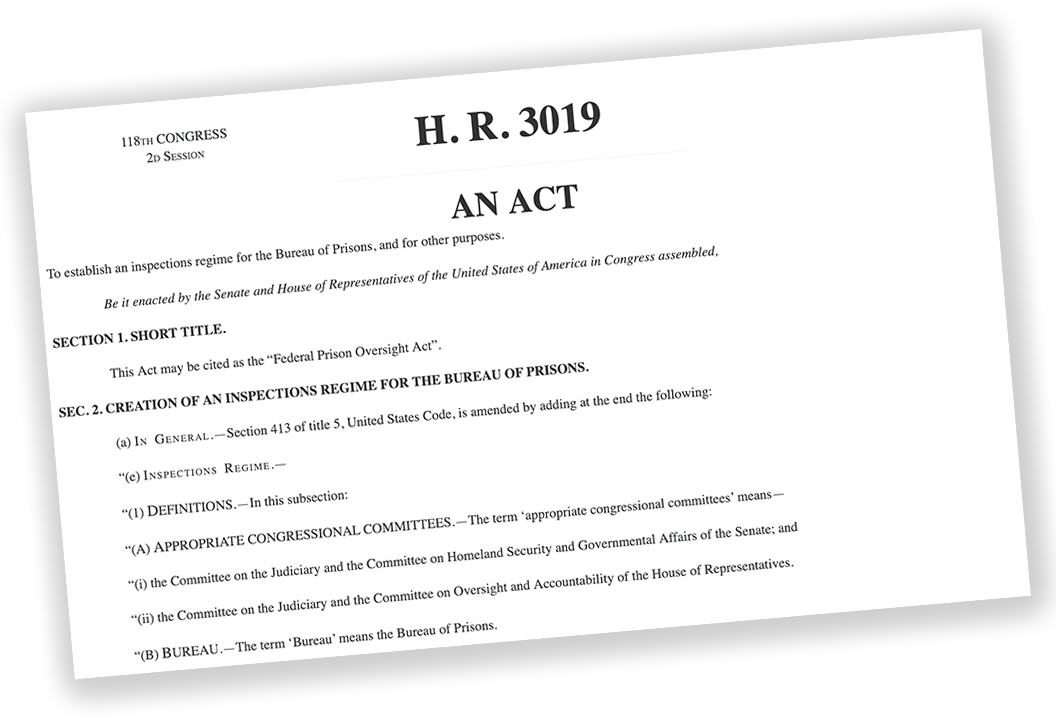
The Biden Administration has its own leftover problem, and like we’ll do in a couple of days, the Dept of Justice is addressing clemency by throwing everything out and starting over. Last week, DOJ – in a time-honored government agency tradition – hailed its good intentions as a cover for its historical failings. The agency announced an all-new initiative on clemency that tacitly admitted its management of the pardon/commutation program over the last 1,079 days or so has been an unmitigated FUBAR.

A DOJ “Fact Sheet” issued last Thursday announced the rollout of a new simplified clemency form that runs eight pages (not including instructions) compared to the old form’s six pages. The 33% expansion isn’t necessarily a bad thing: The new form includes for the first time questions about prison programs completed and details about release plans – logical considerations, perhaps, in a clemency determination and information an applicant previously had to know should be included in an attachment to the form.

The DOJ also promises that it “is taking steps, including providing additional staffing and technical support for the Office of the Pardon Attorney, to reduce the processing times to ensure that clemency petitioners receive answers in a timely fashion.”

So that’s good, not bad, right? Yes, except for the DOJ’s next improvement:

The current Administration inherited an unprecedented backlog of clemency petitions. Soon, the Justice Department will begin issuing letters to petitioners that have not been granted clemency in order to deliver closure to those waiting for answers they deserve. Those receiving letters are welcome to submit new petitions.

do-over240102If a federal prisoner is one of the 18,000 applicants on file, he or she has just won the right to apply for commutation again, using a new form. All that work done on the prior form? All the BOP staff’s work in responding to Office of Pardon Attorney requests for information (and there’s been a lot of that)? Consider it practice…

To be sure, Biden’s DOJ clemency team did inherit an incredible backlog of clemency petitions from President Trump, who inherited an incredible backlog of clemency petitions from President Obama, Still, with Biden’s first (and maybe only) term 75% completed – the current President’s clemency grant rate is the worst in modern presidential history. Unlike all of his predecessors, he has not denied any petitions at all, meaning that the number of backlogged petitions has just gotten bigger.

clemency220418Still, candidate Biden once promised to assemble a “60-person agency independent of the DOJ, composed of people with diverse backgrounds” to review clemency cases. Less than a month into Biden’s term, Politico reported that the White House was seeking suggestions on how to reform the clemency system and deal with the backlog. But even then, some advocates doubted that Biden’s team had a plan for dealing with the backlog.

Ohio State University law professor Douglas Berman, writing in his Sentencing Policy and the Law blog, said at the time:

Regular readers will not be surprised to hear me endorse the sentiments of Cynthia Roseberry, namely that “It’s time. It’s past time.” I also share Mark Osler’s view that this could have and should have been a transition priority for the Biden team. Still, I am not inclined to aggressively criticize the Biden Administration if it currently has advisers and insiders talking to and working with advocates about how to put together a “comprehensive plan” for effective clemency reform. But, as the title of this post is meant to highlight, taking a careful and deliberative process toward grander reform of the entire clemency process should not be an excuse for Prez Biden to hold back entirely on the use of his clemency pen.

football140422Prisoners and their families can probably be forgiven for being skeptical of any Administration promise now that it is going to do anything, where its prior assurances have proven to be hollow.

Lucy. Charlie Brown. Football. C’mon, prisoners, try another kick. The DOJ promises to hold the ball for you this time.

For those more optimistic than I, the new commutation form is available at

https://www.justice.gov/media/892361/dl?inline

DOJ also promises that it “is working to educate the public about how to submit a clemency application in order to demystify the process and help ensure broader and more equitable access.” The only mystery is why we have gone three years into the presidential term of a man who in his first 100 days promised to fix clemency, only to have 18,000 people be told to start over.

DOJ Press Release, Fact Sheet: Justice Department Improvements to the Clemency Process (December 28, 2023)

DOJ, New Clemency Form (December 28, 2023)

Politico, Trump left behind a clemency mess. The clock’s ticking for Biden to solve it. (February 11, 2021)

Sentencing Law and Policy, How about some clemency grants from Prez Biden while his team works on grander clemency plans? (February 11, 2021)

– Thomas L. Root

Last Gift in the Bag: Something For The First Step Act – Update for December 29, 2023

We post news and comment on federal criminal justice issues, focused primarily on trial and post-conviction matters, legislative initiatives, and sentencing issues.

FINALLY, A CANDY CANE FOR THE FIRST STEP ACT (BUT A LUMP OF COAL TO THE BOP)

I end my year-end emptying of Santa’s bag with this: The First Step Act turned five years old last week.


candycane231229I still wonder how the First Step Act ever passed. Back then, back in those dark November and December days in 2018, I was wondering how the bill would make it through the 115th Congress before the session expired. In fact I wrote its obituary several times in those waning days.

Back then, I publicly lamented the bill’s “dumbing down” to appease the Senator Tom Cottons, Josh Hawleys and Ted Cruzs of the world and wondered how quickly prisoners would see any advantages. It didn’t unfold like I thought it would, but then, who saw the pandemic coming?

First Step emerged from Congress leaner and definitely meaner than it started. Changes in 18 USC 924(c) to limit draconian mandatory sentences for successive violations were made nonretroactive. The list of convictions excluded from getting credit for successful completion of programming intended to reduce recidivism got longer and longer.

But for all of the belly-aching at the time, there has not been a piece of criminal justice reform legislation like First Step for at least 50 years. It’s easy to complain about the failings of the bill, largely due to political horse-trading needed to get the measure passed and Federal Bureau of Prisons administrative misfeasance and malfeasance. For the public, it has been an unqualified success. Without it, the federal prison population would be substantially higher than it is today. What’s more important, as The Hill put it last week, “since the First Step Act passed, thousands more people leaving the federal prison system have rebuilt their lives without reoffending — in fact, the federal recidivism rate has dropped by an estimated 37%t since the law was enacted.”

compassion160124What’s more, nearly 4,000 people received retroactive Fair Sentencing Act sentence reductions, over 4,600 people went home on compassionate releases, almost 1,250 elderly offenders went to home confinement under the 34 USC 60541(g)(5) pilot program, and almost 27,000 inmates have gotten earlier release through FSA credits.

As we approach the 2024 elections, some Republican candidates have been grousing about the First Step Act. Florida Gov Ron DeSantis, who voted for First Step as a Congressman in 2018, denounced the bill last summer as a “jailbreak bill” and said he would get it repealed. But last week, Trump published his campaign’s “Platinum Plan” including a commitment to “continue to make historic improvements to the criminal justice system through common sense actions like the First Step Act” with a “Second Step Act.”

One commentator said that “the Act’s positive outcomes, such as significantly lower recidivism rates among those released under its provisions, demonstrate that public safety reforms are not inherently linked to the recent surge in violent crime… On the other end of the spectrum, we find the likes of Chris Christie and Nikki Haley. Their records of reform in New Jersey and South Carolina, respectively, have been lauded as models of successful criminal justice reform.”

lumpofcoal221215One piece of coal fell out of Santa’s bag along with First Step’s candy cane. The coal goes to the BOP for its disingenuous press release last week that said “the Federal Bureau of Prisons is proud of the work accomplished implementing the First Step Act. Including the support and collaboration of our partners and stakeholders, the dedication and hard work of our employees, and the courage and resilience of the AICs [‘adults in custody’ for you Philistines who still think of them as prisoners and inmates]and their families.”

Anyone who recalls the BOP’s approving 36 out of 31,000 compassionate release requests during the pandemic (an average of 1 in 1,000), its mean-spirited and chary November 2020 proposed rules for FSA credits that were rejected only by new leadership in the Dept of Justice just before adoption a year later, and its ham-handed efforts to timely credit and post FSA credits knows that First Step’s successes have been despite, not because, of BOP administration.

The Hill, Five years on, Congress must build on the First Step Act successes (December 21, 2023)

BNN, The First Step Act: A Pivotal Landmark in Criminal Justice Reform and its Political Implications (December 18, 2023)

BOP, Fifth Anniversary of the First Step Act (December 21, 2023)

– Thomas L. Root