All posts by lisa-legalinfo

BOP Does Not Apply 50% Standard to Home Confinement… Except When It Does – Update for April 24, 2020

We post news and comment on federal criminal justice issues, focused primarily on trial and post-conviction matters, legislative initiatives, and sentencing issues.

ARE WE STRAIGHT ON THIS?

Seems like it was only a few days ago that BOP staffers were wandering through quarantine units, telling inmates who had been told that they were a few days from leaving to do the rest of their sentences in home confinement that, “oops, guess we’re wrong, you haven’t done 50% of your sentence yet, so you’re going nowhere.”

flipflop170920The sudden flip-flop in policy, engrafting a new restriction to the criteria for CARES Act home confinement, was cited last Monday in a filing in a Southern District of New York compassionate leave proceeding. The U.S. Attorney, having told the court a few days before that the defendant, Lewis Stahl, was eligible for CARES Act placement, withdrew the advice, telling the court that a new Dept. of Justice directive to the BOP prohibited home confinement placement to anyone who had not served at least 50% of his or her sentence.

Judge Ronnie Abrams was not amused. He promptly entered an order:

The Court is in receipt of the Government’s letter indicating that, in light of “new guidance” just issued to the Bureau of Prisons (BOP) by the Department of Justice (DOJ), the BOP now anticipates that Mr. Stahl is no longer eligible for home confinement or a furlough. Given the fact that the Government previously informed the Court that the BOP had already approved Mr. Stahl’s request for home confinement, and the U.S. Probation Offices in both the Southern District of New York and the Southern District of Florida had already approved his relocation request, the Government is hereby directed to provide the Court with an explanation from the BOP, including by way of affidavit from the appropriate representative, as to how the new DOJ guidance can affect these prior decisions. The Government shall do so no later than 5:00 p.m. on Wednesday, April 22, 2020. The Government shall also file a copy of the new DOJ guidance on the docket by that time. If it still does not have a copy of the new DOJ guidance by 5:00 p.m. on April 22nd, it shall provide the Court with additional details about the guidance including when it went into effect and who it applies to, as well as when it will be submitted to the Court.

On Wednesday, a BOP employee at FMC Devens echoed the government’s claim that an inmate must have served 50% or more of his or her sentence in order to qualify for home confinement placement under the CARES Act, in a declaration filed by the government in a Massachusetts case seeking an injunction to release inmates from the Federal Medical Center due to COVID-19.

confusion200424The government did not get around to responding to Judge Abrams until late yesterday. Before that, the Wall Street Journal reported in the morning that a DOJ spokesman had said on Wednesday “that federal prison officials could consider inmates for early release even if they haven’t yet served half of their sentences, clarifying a shifting policy that has sown confusion across the nation’s prisons and courts in recent days.”

The Journal reported that “Dozens of inmates who had been granted early release as part of an effort to stem the spread of the coronavirus were told this week they hadn’t served enough time to qualify, according to prisoners and court filings. Inmates, prosecutors and federal judges demanded prison officials explain their rules and criteria for releasing inmates during the pandemic.

The DOJ spokesman reportedly said the BOP “intends to expeditiously transfer all inmates to home confinement who were previously referred” for placement, “as long as such transfers aren’t forbidden by law or criteria set forth by Attorney General William Barr. More prisoners are approved for home confinement every day, the spokesman said.”

OK, you have it so far. The 50% standard did not apply, then it did apply, and now it does not apply again.

Then, last night at 5 pm, the U.S. Attorney in the New York case filed a rambling, boilerplate-laden declaration of an FCI Miami associate warden that nowhere directly answered Judge Abrams’ questions. But it did provide this interesting explanation of the BOP home confinement criteria:

[T]he BOP is currently assessing a number of factors to ensure that an inmate is suitable for home confinement including, but not limited to, reviewing the inmate’s institutional discipline history for the last twelve months; ensuring that the inmate has a verifiable release plan; verifying that the inmate’s primary offense is not violent, a sex offense, or terrorism related; and confirming the inmate does not have a current detainer…

[I]n order to prioritize its limited resources, BOP has generally prioritized for home confinement those inmates who have served a certain portion of their sentences, or who have only a relatively short amount of time remaining in those sentences. While these priority factors are subject to deviation in BOP’s discretion in certain circumstances and are subject to revision as the situation progresses, BOP is at this time prioritizing for consideration those inmates who either (1) have served 50% or more of their sentences, or (2) have 18 months or less remaining in their sentences and have served 25% or more of their sentences. As BOP processes the inmates eligible for home confinement under these criteria and learns more about the COVID-19 pandemic and its effect on BOP facilities, it is assessing whether and how to otherwise prioritize consideration.

spincycle200424It is now crystal clear: the 50% standard did not apply until last Monday, at which time it did apply until Wednesday, after which time it did not apply until yesterday, at which time it sort of applies (50% plus people are “prioritized,” whatever that means to the BOP).

At least all of that is resolved.

The Wall Street Journal, Confusion Hampers Coronavirus-Driven Inmate Releases (Apr. 23)

United States v. Stahl, Case No. 18 Cr. 694 (SDNY), Declaration attached to letter filed by U.S. Attorney (April 23, 2020)

Grinis v. Spaulding, Case No. 1:20cv10738 (D.Mass.), Declaration attached to Respondents’ Omnibus Response, Dkt.32-2 (filed Apr. 22, 2020)

– Thomas L. Root
DOJ Moves the Cheese on Home Confinement – Update for April 22, 2020

We post news and comment on federal criminal justice issues, focused primarily on trial and post-conviction matters, legislative initiatives, and sentencing issues.

DEPT OF JUSTICE (NOT THE BOP) MOVES THE CHEESE ON CARES ACT HOME CONFINEMENT

The authority granted to the Federal Bureau of Prisons to designate home confinement for prisoners during the COVID-19 pandemic took another hit yesterday, in an especially callous announcement of additional restrictions that literally stopped some prisoners as they were about to get into cars to return home.

cheese20042wIn an affidavit filed in a Louisiana case against FCI Oakdale earlier this month, an associate warden from that facility reported that the BOP was considering inmates for placement in home confinement without regard to the amount of sentence the inmate had served. Last week, in an undated internal guidance memorandum, the BOP directed staff that if the inmate otherwise met the home confinement criteria, other factors – including the “percentage of time served” – “should be noted, but are not a reason for denial.”

However, as Politico reported last night, BOP staff told inmates in various prisons who had been put into prerelease quarantine almost two weeks ago that the policy had changed. Now, an inmate must have completed 50% of his or her sentence to be eligible for CARES Act home confinement.

FAMM immediately sent a letter to Attorney General William Barr, blasting the BOP for its “downright cruelty.” FAMM president Kevin Ring wrote that for families of inmates “to have the promise of early release snatched away under these circumstances is simply inexcusable. They deserve to know what is happening. Even before yesterday’s outrageous bait-and-switch, we were growing concerned with the BOP’s response to this crisis. We have received numerous reports about case managers and counselors giving incorrect information and contradictory answers to people exploring early release options…”

It turns out, however, that the wrong actor may be getting the blame. In a letter filed in an inmate’s compassionate release motion proceeding on Monday, the U.S. Attorney corrected the government’s previous advice to the court that the inmate was eligible for CARES Act consideration:

The Bureau of Prisons (“BOP”) advised the Government this afternoon that the Department of Justice (“DOJ”) has just issued new guidance to the BOP requiring that an inmate serve at least fifty percent of his or her sentence in order to be eligible for placement on home confinement. Based on the new guidance, the BOP anticipates that Stahl, who has served approximately 23% of his sentence, will not be eligible for home-confinement placement at this time. With respect to Stahl’s application for compassionate release, the BOP has advised that Stahl’s application, which the BOP received on April 3, remains under review and the BOP anticipates reaching a decision on it prior to the expiration of the 30-day period set forth in Section 3582(c)(1)(A).

In a footnote, the government admitted that it “has not yet seen a copy of the new DOJ guidance, but the U.S. Attorney’s Office was advised of it by the BOP today in other cases as well.”

So the culprit is Barr’s DOJ in this one, not the BOP. Assigning blame hardly matters to the hundreds of inmates affected by the sudden change, just as it hardly means that there isn’t plenty of other blame to spread around.

movingtarget200422Yesterday, Forbes magazine blasted the BOP for its muddled handling of the CARES Act home confinement program, complaining that “inmates around the country have been informed by case managers at each facility about the existence of a ‘list’ of inmates that could be sent home to some sort of Home Confinement to complete their prison term. However, the parameters of that ‘list’ and who is eligible has been something of a mystery as have the rumors of mass release of inmates across the country… it just has not happened.”

Forbes noted that one such rumor, that everyone at FCI Otisville camp was going to home confinement, was debunked by a BOP statement:

We would like to clarify the rumor that has recently been circulating about the purported closure of satellite camp at FCI Otisville. This information is not true. The majority of inmates at the satellite camp at FCI Otisville began transferring into the main institution (a medium security facility) … Many of these inmates are minimum security and minimum risk of recidivism, which are qualifications under the Attorney General’s guidance to BOP. Staff at Otisville are currently reviewing all inmates for their suitability for home confinement or furlough. Some of these inmates may not ultimately qualify but by proactively moving the inmates into quarantine now, eligible inmates will be able to release form the institution sooner.

Forbes concluded that “If you are not confused, you should be!” Yes, confused and disheartened. But the blame for moving the 50%-completion cheese apparently lies with DOJ, not BOP.

Politico, Trump administration reverses prisoner coronavirus release policy, advocates say (April 21, 2020)

FAMM, Letter to Attorney General William Barr (April 21, 2020)

United States v. Stahl, Case No. 18 Cr. 694 (SDNY), Letter filed by US Attorney (April 20, 2020)

Forbes, Lack Of Direction From Bureau Of Prisons Showing In Federal Court (Apr 21)

– Thomas L. Root

BOP Rewrites Standards for CARES Act Home Confinement – Update for April 21, 2020

We post news and comment on federal criminal justice issues, focused primarily on trial and post-conviction matters, legislative initiatives, and sentencing issues.

INTERNAL MEMO TOUGHENS CARES ACT HOME CONFINEMENT STANDARDS

slowroll200421A recently-released prisoner complained to a TV station that FCI Butner was “slow-rolling” COVID-19 releases. A 76-year old federal prisoner told the Wall Street Journal that so far has been unable to convince officials to release him despite his age and history of respiratory problems. “It’s like pushing a wet noodle up the hill with your nose,” he said said. An attorney representing the plaintiffs in the FCI Oakdale lawsuit complained last Monday that only three Oakdale prisoners have been given CARES Act releases. The Houston Chronicle said last Thursday that “as the coronavirus crisis raises concerns about mass infections at prisons and jails, few federal prisoners from southeast Texas have cleared the gauntlet for compassionate early release.”

A lot of criticism. And what does the BOP say in its defense?

The BOP says it has been releasing inmates at a prodigious rate, with more than 1,119 sent to home confinement as of last Wednesday. Most recently, the entire population of FCI Otisville camp (111 inmates) was sent to quarantine in preparation for release to home confinement.

But those who suggest that the BOP talks one game while playing a different one might point to an internal guidance memorandum the BOP issued to its staff last week, one that restricts those who can go to home confinement well beyond what Attorney General Barr directed.

bureaucrat200421In an affidavit filed in the Western District of Louisiana, an FCI Oakdale Associate Warden reported that “on April 15, 2020 we received a memorandum from BOP’s Correctional Programs Division, confirming the factors to be used when reviewing and referring inmates for home confinement. These factors remain: 1) Primary or prior offense is not violent; 2) Primary or prior offense is not a sex offense; 3) Primary or prior offense is not terrorism; 4) No detainer; 5) Mental Health Care Level is less than IV; 6) PATTERN… score is Minimum; 7) No Incident Reports in the past 12 months; 8) US Citizen; and 9) have a viable release plan.”

The BOP criteria are more restrictive than what Barr specified in his March 26th and April 3rd memos. Barr only made violence, sex or terrorism disqualifying if any of those was present in the offense of conviction, the crime for which the inmate is now serving time. Plus, Barr did not outright disqualify for an incident report in the past year, or a PATTERN score above minimum. Rather, his memo merely said that such factors “would not [be] receiving priority treatment,” implying that they would be weighed against other factors.

The AG directed the BOP that “in assessing which inmates should be granted home confinement pursuant to this Memorandum, you are to consider the totality of circumstances for each individual inmate, the statutory requirements for home confinement, and the following non-exhaustive list of discretionary factors…” But that would require that the BOP make individualized judgments, and God forbid a bureaucrat would have to make a judgment that could boomerang on him or her.

rachet200421By making any incident report in the last year disqualifying, the BOP places possession of a cellphone (a “107” infraction) on the same plane with grabbing an extra kiss from your spouse in the visiting room (a “409” infraction). By deciding that any prior crime of violence is disqualifying, the BOP equates rioting last year with throwing a punch at a bar 40 years ago. What’s worse, the BOP believes that possessing a gun during a drug offense – even if the gun was never handled or displayed – is a crime of violence.

It’s a great substitute for actually thinking, and it hardly represents considering “the totality of the circumstances,” but it makes things easy for BOP staff. At the same time, it  makes the likelihood of CARES Act home confinement for anyone other than a camper problematical. At FCI Elkton, only six inmates have been approved for home confinement, while 32 medically-eligible inmates have been denied. At Oakdale, of 68 inmates who are 65 years old or older, 75% are ineligible. Only six of the remaining inmates have gone to home confinement.

That 85-year old wheelchair-bound inmate who was convicted of a barroom assault back in 1956? Well, he can take his chances on COVID-19 inside…

WRAL-TV, Raleigh, N.C., Former inmate says Butner officials ‘slow-rolling’ prisoner releases during pandemic (Apr. 14)

WCTI-TV, New Bern, N.C., Ex-Trump lawyer Michael Cohen to serve out prison sentence at home (Apr. 17)

Houston Chronicle, ‘Crammed in’ and terminally ill: Prison officials drag their feet as vulnerable inmates seek release (Apr. 17)

Livas v. Myers, Case No. 20cv422 (WDLa), Declaration of Juan A. Segovia, filed Apr 16, 2020, Dkt 14-1

– Thomas L. Root

Reports Call Results of Bureau of Prisons’ COVID-19 Management “Tragic” – Update for April 20, 2020

We post news and comment on federal criminal justice issues, focused primarily on trial and post-conviction matters, legislative initiatives, and sentencing issues.

COVID-19 CURVE NOT FLATTENING IN BOP

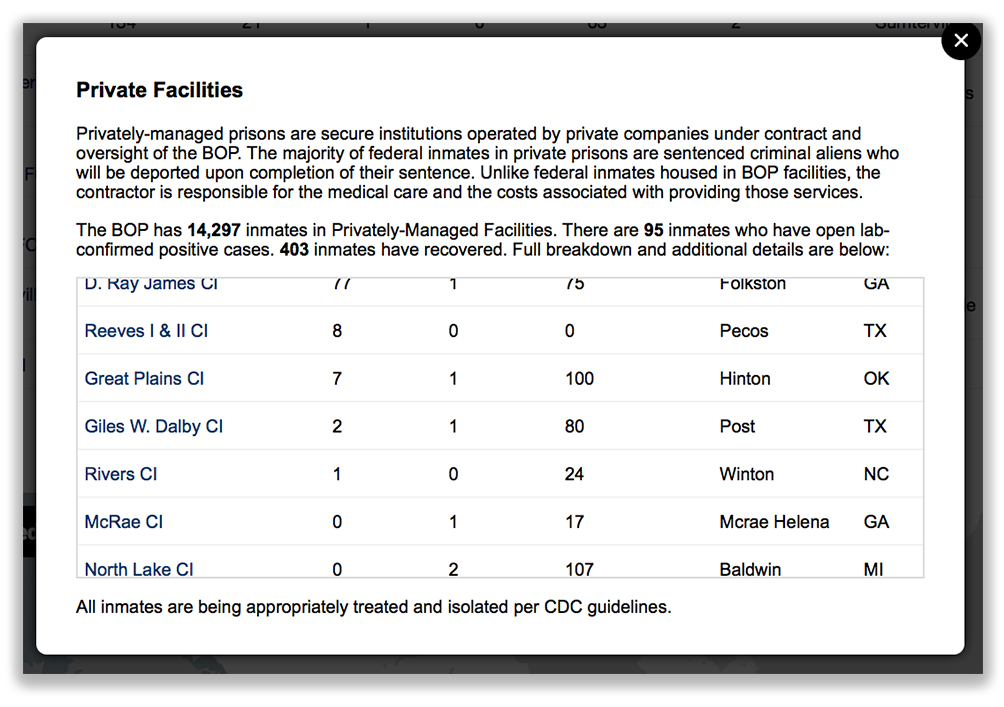
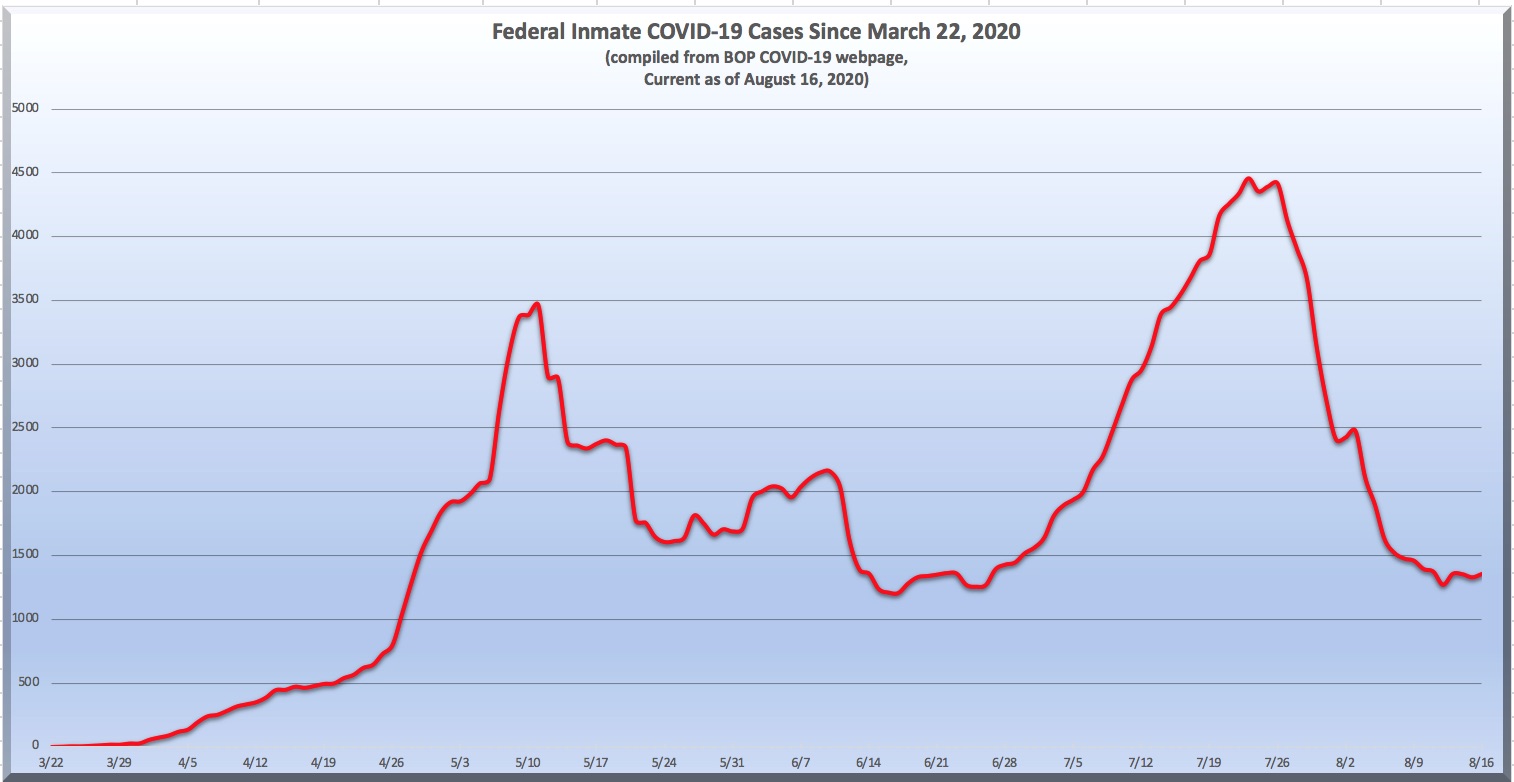
The Federal Bureau of Prisons is now in “Phase 6” of its plan to curb the spread of COVID-19 among its 172,000 inmates housed in 122 institutions. Phase 6 (the BOP prefers the Roman-numeraled “Phase VI” for reasons as obscure as the NFL’s use of such numerals for Super Bowls) looks an awful lot like Phase V… it just lasts longer. This Phase (and the lockdowns) will last until May 18, 2020.

covidcurve200420
Forbes magazine, BOP COVID-19 cases as of April 15, 2020

As Forbes magazine put it last Wednesday, “BOP’s efforts thus far have included halting social and legal visits since the middle of March, screening of inmates, staff and contractors by taking their temperature to measure infection, mobilizing administrative staff to step into front line positions, increase rate of hiring new corrections officers and halting staff training. The results have been tragic.”

As of Sunday night, there are 495 inmates (up 41% from last week) and 305 staff (up 61% from last week) ill with COVID-19 in 45 institutions (more than one-third of all BOP facilities). At least 22 inmates have died, the latest at FCI Terminal Island yesterday. Business Insider reported on Saturday that a BOP case manager from USP Atlanta died last week in her home of COVID-19.

The federal government’s COVID-19 strategy has been to “flatten the curve,” to spread out the spike in coronavirus cases so as not to overwhelm hospital capacity and resources. But, as Forbes notes, no

epidemiologists modeling the crisis ever envisioned the systemic failure that would expose 177,000 inmates housed in multiple institutional clusters, some numbering over 5,000 inmates, to a COVID-19 outbreak. These failures are resulting from a lack of a widespread testing protocol at institutions, the continued transfer of inmates between institutions, the introduction of new inmates who are either arrested or self-surrender and the thousands of staff and contractors that go in and out of these institutions.

The problem that has led to the continuing skyrocketing BOP COVID-19 cases is simple: the BOP has been unable or unwilling to test any inmates “except those who have died or are willing to risk fellow inmate retribution by revealing themselves to be symptomatic. Forbes reports that “more inmates are sick than the BOP is reporting and more inmates are not reporting that they are sick out of fear of being identified as sick.”

covidtest200420This is probably so. As of Sunday night, for example, FCI Elkton reported 50 inmates sick with COVID-19. But last Friday, the BOP admitted in federal court that Elkton has 207 suspected inmate COVID-19 cases, but only had ever received 80 test kits. It has used 37, leaving only 43 on hand. It expects to receive an additional 25 kits a week for the next several weeks. “We have very, very limited amounts of the testing kits,” Brandy Moore, secretary treasurer of the national union that represents correctional officers in federal prisons, was quoted as saying by Mother Jones magazine last week.

At FCC Terre Haute, Indiana, “we have between 2,500 and 3,000 inmates, and we were given four tests,” Steve Markle, another leader of the national union who works at the prison, told Mother Jones in late March. At FCI Oakdale, correctional officers were told to stop testing people and just assume that anyone with symptoms had been infected, according to Ronald Morris, president of the local union there — even though, as shown by the Arkansas state prison experience we cited last Wednesday, plenty of people can be asymptomatic.

statistics170104All of this, Mother Jones reported, “is to say that statistics reported by the Federal Bureau of Prisons are likely massive undercounts. “Our numbers are not going to be adequate because we’re not truly testing them,” Moore said.

Meanwhile, in a filing in the Eastern District of New York on April 9, the BOP admitted that “‘because of the shortage of tests, testing is currently reserved for those meeting’ certain criteria, including the kind of symptoms the inmate is facing, his potential exposure, whether he is high risk and whether he works in a high-contact role such as food service.” Through Thursday, April 16, the number of inmates tested at MCC New York and MDC Brooklyn has risen from 11 to 19. That is out of a combined population of over 2,300 inmates.

The ACLU has filed lawsuits in Louisiana against FCI Oakdale, Massachusetts against FMC Devens, and Ohio against FCI Elkton, seeking to compel release of more inmates because of the virus. “”Devens — one of only seven federal prison medical centers — is a powder keg of potential infection and death from COVID-19, to an even greater degree than nursing homes, cruise ships, and other prisons, sites of some of the most intense clusters of mortality in donegood200420Massachusetts, the United States, and elsewhere in the world,” the plaintiffs’ lawyers wrote in the District of Massachusetts complaint.

“We’re dealing with it just as well as anybody else,” BOP Director Michael Carvajal told CNN a week ago, “and I’d be proud to say we’re doing pretty good.”

Forbes, Federal Bureau of Prisons Institutions Not Showing Any Signs of “Flattening Curve” (Apr 15)

Business Insider, The Federal Bureau of Prisons has confirmed the first staff death linked to the coronavirus, report says (Apr 18)

Wilson v. Williams, Case No. 4:20cv794 (N.D.Ohio), Supplement to Respondents’ Answer, Dkt. 19, filed Apr 18, 2020

New York Law Journal, Brooklyn Federal Lockup Officials Describe ‘Shortage of Tests’ in Newly Filed Documents (Apr 15)

CNN, Exclusive: ‘I don’t think anybody was ready for this Covid,’ says head of federal prisons (Apr 10)

– Thomas L. Root

Meanwhile, Back At The Courtroom… – Update for April 17, 2020

We post news and comment on federal criminal justice issues, focused primarily on trial and post-conviction matters, legislative initiatives, and sentencing issues.

I THINK, THEREFORE I AM…

Watch me write an entire post without ever using the words “coronavirus” or “COVID-19.”

Despite our fixation-in-place with the pandemic, some legal news beyond The CARES Act release to home confinement of Michael Cohen is still being made.

violent170315A 9th Circuit decision last week held that even after the Supreme Court’s United States v. Davis decision last summer, a Hobbs Act armed robbery remains a crime of violence for purposes of 18 USC 924(c)(3)(A). That’s unsurprising: other than the pending 9th Circuit case United States v. Chea, there is hardly a groundswell to declare robberies to be non-violent.

But the 9th went beyond that and held, in a 2-1 decision, that – where a substantive offense is a crime of violence under 18 USC § 924(c)(3)(A) – an attempt to commit that offense is also a crime of violence.

The defendant, who had previously pulled off an armored car heist for a $900,000 score, decided to reprise his success. Unfortunately for him, the FBI had offered a $100,000 reward for information leading to his arrest, a pot of legit money that was enough to convince his sidekick to rat him out.

As the defendant drove toward the armored car garage, he got spooked by too much law enforcement activity in the area, and decided to abort. He was arrested a few days later, and convicted of attempted Hobbs Act robbery and carrying a gun during a crime of violence under 18 USC § 924(c).

The Circuit upheld the conviction, holding:

We agree with the Eleventh Circuit that attempted Hobbs Act armed robbery is a crime of violence for purposes of § 924(c) because its commission requires proof of both the specific intent to complete a crime of violence, and a substantial step actually (not theoretically) taken toward its completion… It does not matter that the substantial step—be it donning gloves and a mask before walking into a bank with a gun, or buying legal chemicals with which to make a bomb — is not itself a violent act or even a crime. What matters is that the defendant specifically intended to commit a crime of violence and took a substantial step toward committing it. The definition of “crime of violence” in § 924(c)(3)(A) explicitly includes not just completed crimes, but those felonies that have the “attempted use” of physical force as an element. It is impossible to commit attempted Hobbs Act robbery without specifically intending to commit every element of the completed crime, which includes the commission or threat of physical violence. 18 U.S.C. § 1951. Since Hobbs Act robbery is a crime of violence, it follows that the attempt to commit Hobbs Act robbery is a crime of violence.

Judge Nguyen dissented, succinctly observing that “as the majority acknowledges, an attempted Hobbs Act robbery can be committed without any actual use, attempted use, or threatened use of physical force. Therefore, it plainly does not fit the definition of a crime of violence under the elements clause. Yet in a leap of logic, the majority nevertheless holds that “when a substantive offense is a crime of violence under 18 U.S.C. § 924(c)(3)(A), an attempt to commit that offense is also a crime of violence.”

Several district courts in the Second Circuit have held that attempted Hobbs Act robberies are not crimes of violence. I suspect this question will ultimately be settled at the Supreme Court.

Ithink200417French philosopher René Descartes famously posited, “Cogito, ergo sum.” For those of you who did not have Emily Bernges for high school Latin, this translates as, “I think, therefore I am.”

The 9th Circuit’s corollary is “I think about violence, therefore I have committed violence.” Somehow, it doesn’t have the same ring to it.

United States v. Dominguez, 2020 U.S. App. LEXIS 10863 (9th Cir., April 7, 2020)

– Thomas L. Root

BOP Extends Quarantine As Questions About Its Competence Continue – Update for April 16, 2020

We post news and comment on federal criminal justice issues, focused primarily on trial and post-conviction matters, legislative initiatives, and sentencing issues.

BOP SAYS IT’S “DOING PRETTY GOOD” ON COVID-19

Coronavirus has swept through the Federal Bureau of Prisons in the past three weeks, leaving over 725 confirmed cases among inmates, at least 16 prisoners dead, and, in the words of CNN, “raising concerns about the government’s handling of the crisis.” In response, the BOP has announced Phase VI of its COVID-19 response, which seems to consist primarily of another month of inmate lockdown.

attaboy200416

Inside some facilities, CNN reported last weekend, inmates have said they are locked in crammed and cramped cells without face masks and enough soap, and guards have grown concerned that they could be spreading the disease to their families. At a prison in Butner, North Carolina, the number of cases jumped by dozens – nearly 400% – earlier this week. At FCI Oakdale, Louisiana, where six inmates have died in recent days, corrections officers had to quell a small uprising with pepper spray on Wednesday, an official at the prison said.

Last weekend, BOP Director Michael Carvajal defended the steps the agency has taken to address the pandemic: “I don’t think anybody was ready for this COVID, so we’re dealing with it just as well as anybody else and I’d be proud to say we’re doing pretty good,”  Carvajal, who was named director in late February, told CNN.

Actually, the correct grammar would be “doing pretty well.” But mangled English is hardly the biggest problem with Mike’s auto-hagiographic assessment.

The Northwest Arkansas Democrat Gazette released emails yesterday in which Arkansas health officials discussed whether the BOP fully understood the “seriousness” of the coronavirus outbreak at the FCI Forrest City federal prison, and whether prison officials were fully cooperating with the mitigation effort. Although Director Mike spun the Centers for Disease Control inspection of FCI Forrest City as being the result of a BOP request for assistance, the released emails show that shortly after the first positive COVID-19 case at the FCI was disclosed on Friday, April 3rd, Dr. Naveen Patil, the Arkansas Department of Health director for infectious diseases, questioned the prison’s efforts and expressed a desire for CDC backup.

testing200413When an Arkansas state inmate came down with the virus, Mother Jones reported yesterday, prison officials immediately tested 48 other inmates in the unit, finding that 46 of them – almost all of whom had no symptoms – were infected. But the BOP’s COVID-19 planning has left the agency with no ability to test.  “We have very, very limited amounts of the testing kits,” Brandy Moore, secretary treasurer of the national union that represents correctional officers in federal prisons, was quoted as saying by Mother Jones.

At FCC Terre Haute, Indiana, “we have between 2,500 and 3,000 inmates, and we were given four tests,” Steve Markle, another leader of the national union who works at the prison, told Mother Jones in late March. At FCI Oakdale, correctional officers were told to stop testing people and just assume that anyone with symptoms had been infected, according to Ronald Morris, president of the local union there — even though, as shown by the Arkansas state prison experience, plenty of people can be asymptomatic.

All of this, Mother Jones reported, “is to say that statistics reported by the Federal Bureau of Prisons are likely massive undercounts. “Our numbers are not going to be adequate because we’re not truly testing them,”  Moore said.

Still, the BOP’s COVID-19 numbers – which the agency promised would be updated every day at 3 pm but which, each day, seems to be reported later and later – were updated after 6 pm last night to report COVID-19 had been confirmed in 449 inmates and 280 staff, spread across 43 BOP facilities. The number is undoubtedly much higher.

data200416Meanwhile, in a filing in the Eastern District of New York yesterday, the BOP admitted that “‘because of the shortage of tests, testing is currently reserved for those meeting’ certain criteria, including the kind of symptoms the inmate is facing, his potential exposure, whether he is high risk and whether he works in a high-contact role such as food service.” Through Tuesday, April 14, the number of inmates tested at MCC New York and MDC Brooklyn remained at 11 (the same number reported the prior Friday).

If you don’t test, you cannot confirm. If you cannot confirm, your data are meaningless.

Perhaps most sobering was a report in the Santa Barbara Independent that an inmate, Efrem Stutson, was released on April 1st and put on a Greyhound bus to San Bernardino by USP Lompoc officials while he had a hacking cough and was so ill “he could hardly hold his head up.” Efrem refused to go to the hospital that night, but the next morning his family insisted. Paramedics wearing protective equipment rushed him to Kaiser Permanente medical center in Fontana. Doctors diagnosed him with COVID-19 and put him in quarantine. No visitors were allowed. Four days later, Efrem died.

His sisters are heartbroken — and furious, the Independent reported. “Why did they release him so sick?” one asked. “They sent him home on his deathbed.”

death200330A USP Lompoc spokesman confirmed that Efrem was released on April 1st. But for “privacy, safety, and security reasons,” he said, he could not comment on Efrem’s medical condition at the time. “All inmates, prior to releasing from the BOP, will be screened by medical staff for COVID-19 symptoms,” he said. “If symptomatic for COVID-19, the institution will notify the local health authorities in the location where the inmate is releasing, and transportation that will minimize exposure will be used, and inmates will be supplied a mask to wear.”

Laura Harris-Gidd, Efrem’s sister, said he wasn’t wearing a mask when she picked him up at the bus station. “I just don’t understand why they would let him out instead of quarantining him and taking care of him,” she said. “I think they’re hiding a lot.”

“We’re dealing with it just as well as anybody else,” BOP Director Michael Carvajal said, “and I’d be proud to say we’re doing pretty good.” Right.

Hold you head up high, Mike.

Northwest Arkansas Democrat-Gazette, Emails detail talks on illnesses at federal prison (April 15)

– Thomas L. Root
BOP Relaxes COVID-19 Home Confinement Standard – Update for April 14, 2020

We post news and comment on federal criminal justice issues, focused primarily on trial and post-conviction matters, legislative initiatives, and sentencing issues.

BOP LOOSENING CARES ACT HOME CONFINEMENT STANDARDS

An affidavit filed last Friday in a class-action lawsuit against the BOP seeking the release of hundreds of high-risk inmates at FCI Oakdale suggests that standards governing which high-risk inmates can go home may be loosening.

release161117The American Civil Liberties Union sued the BOP in the U.S. District Court for the Western District of Louisiana a week ago, claiming the Dept of Justice did not go far enough in a directive issued by Attorney General William Barr to begin releasing vulnerable prisoners to home confinement.

In a filing last Friday, the BOP said it was using seven criteria to place inmates in home confinement under the authority granted to it by Section 12003(b)(2) of The CARES Act: 1) The primary offense is not violent, sex offense or terrorism; 2) the inmate has no detainer; 3) mental health care level is less than IV; 4) the inmate’s PATTERN score is minimum; 5) BRAVO (BOP’s existing risk evaluation tool) score is low or minimum; 6) the inmate has completed at least 50% of sentence; and 7) no disciplinary actions within the past 12 months.

However, the FCI Oakdale Associate Warden said in the affidavit last Thursday that the requirement that the inmate have completed half of his sentence in order to qualify has been dropped. The AW also said that he expected that “the institution may consider expanding the criteria for review” even further.

The affidavit noted that the most common reasons for ineligibility appear to be history of previous violence or sex offenses.

Placement in home confinement, once approved, still requires the release plan be evaluated by the US Probation Office. “In order to facilitate faster removal of approved inmates from the prison facility,” the AW said, “the BOP has provided its Wardens with additional guidance allowing the use of non-transfer furloughs up to 30 days in length in specific circumstances. As inmates are approved for home confinement through the above-described review process, they may also be considered for such a furlough if they meet the criteria.”

prisonhealth200313Meanwhile, as more is being learned about COVID-19, medical conditions that were once considered irrelevant are being reconsidered. The CDC reported last week that hypertension, previously discounted as a risk factor, and obesity “were the most common comorbidities seen in patients hospitalized for COVID-19.” The study found that 50% of the COVID-19 hospitalizations studied while 48% had obesity, about 35% reported chronic lung conditions such as asthma, and diabetes mellitus and cardiovascular disease were seen in 28%.

Notably, the report said, of 580 patients with available race/ethnicity data, 45% were non-Hispanic white, while 33% were non-Hispanic black. A CDC doctor who worked on the study said this suggests “black populations might be disproportionately affected by COVID-19.”

Washington Post, ACLU seeks release of federal prison inmates where 5 died (Apr 6)

Bureau of Prisons, BOP’S COVID-19 INMATE REVIEW UPDATE (filed in Case No. 2:20cv422 (WD La., Apr. 10, 2020)

Medpage, Hypertension, Obesity Common in U.S. COVID-19 Hospitalizations (Apr 8)

Politico, Virus-wracked federal prisons again expand release criteria (Apr 11)

– Thomas L. Root

COVID-19 Numbers Rise, BOP Scrambles – Update for April 13, 2020

We post news and comment on federal criminal justice issues, focused primarily on trial and post-conviction matters, legislative initiatives, and sentencing issues.

THE WEEK IN COVID-19

corona200313A little over two weeks ago, Attorney General William Barr announced that “total of six inmates and four prison staffers have tested positive for COVID-19.” Last week, BOP admitted to 138 inmates and 59 staff sick (with eight fatalities). As of Sunday evening, April 12, the BOP’s updated numbers report 352 federal inmates and 189 federal prison staffers had tested positive.

Two more inmates have died. A 76-year old Oakdale prisoner, died of COVID-19 on Friday, and an 81-year old Butner I prisoner died on Saturday. The total now is ten.

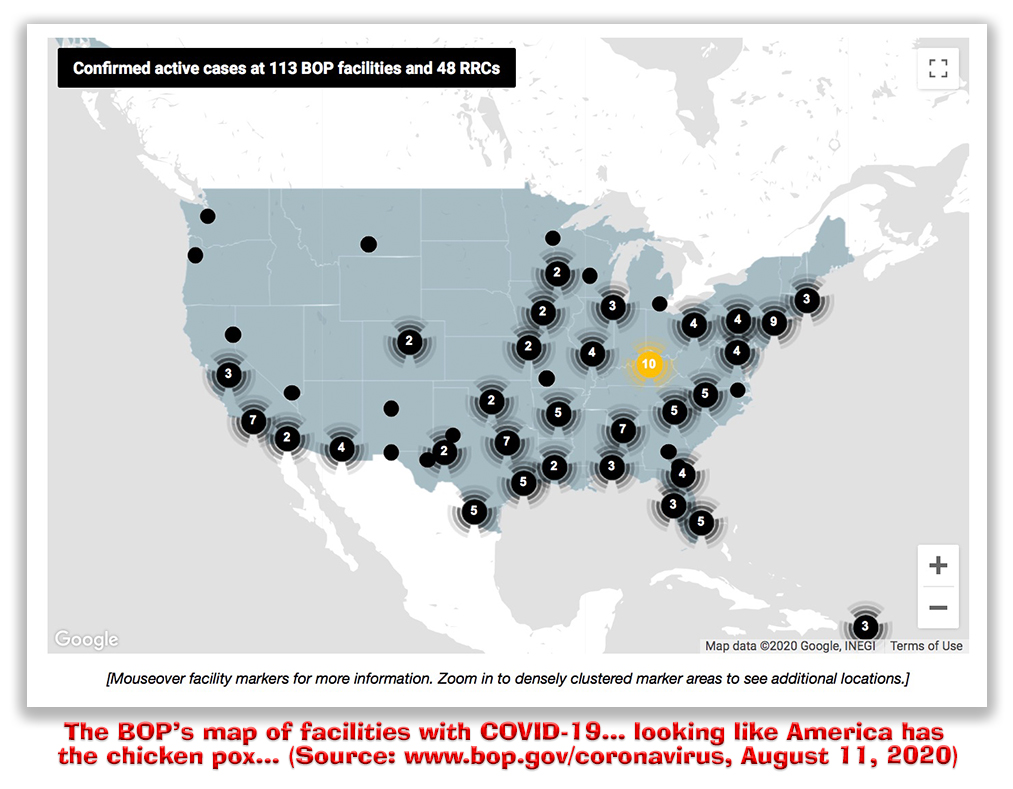
The BOP is reporting that there are now 40 different federal facilities (and nine halfway houses) with positive COVID cases, up from 21 only a week ago.

At the same time, the BOP is moving to send the first wave of vulnerable inmates to home confinement under The CARES Act. A BOP release last week asserted that since Barr issued the March 26 memo “instructing us to prioritize home confinement as an appropriate response to the COVID-19 pandemic, the BOP has placed an additional 886 inmates on home confinement.”

There is substantial basis for taking the BOP’s numbers with a grain of salt. The agency’s COVID-19 resource page updates its numbers daily, but it notes that the numbers include only inmates and staff “who have confirmed positive test results for COVID-19.” The problem is that testing appears not be getting done, and you can count what you don’t test.

testing200413Ten days ago, the US District Court for the Eastern District of New York ordered the wardens at MCC New York and MDC Brooklyn to file twice-weekly reports with the court on the status of COVID-19 testing at the facilities. In a report filed last Friday, the wardens admitted that only 17 inmates (out of a combined population of nearly 2,500) had been tested. Only five tests had been done in the last week.

Seven of those inmates have tested positive for COVID-19, according to the report.

David Patton, Federal Defenders’ executive director, said the number of officially confirmed cases does not comport with reports he’s hearing from incarcerated clients about the apparent spread of COVID-19. “It’s hard for me to quantify how much more robust the testing ought to be, but we certainly receive a lot of reports from clients about people in their units who seem to be quite symptomatic,” Patton said.

At FCI Elkton, the BOP is reporting that only 13 inmates and 14 staff members have tested positive, Joseph Mayle, president of union representing many of Elkton COs, told a Youngstown, Ohio, TV station last Thursday that 67 inmates have either tested positive or are showing symptoms of the virus and that the entire inmate population is being isolated. Plus, he said, 44 inmates have been hospitalized, with 14 on ventilators. Twelve staff members, not the official count of nine, have tested positive, according to Mayle.

pinocchio200413At FCI Danbury, the BOP reported a week ago that fewer than a dozen inmates and only six staff members at the prison had tested positive. On the same day, the Hartford Courant newspaper reported that “inmates claim the number is higher. ‘I am well for now,” an inmate told the Courant on April 2. “It’s ripping through here like crazy. I just got back from medical. I don’t have symptoms. But they have many confirmed cases here. That’s according to medical.”

Sure enough, as of Easter Sunday, the Danbury count had tripled to 37 inmates and 30 staff with COVID-19.

Beyond questions about the accuracy of the BOP’s numbers are complaints about quarantines. In some instances, according to Politico, inmates being quarantined before being sent to home confinement are housed near prisoners being isolated because they’re suspected of having the virus. Politico says that wives of inmates at FCI Cumberland told it the facility is using the facility’s special housing unit – single- or two-person cells where inmates remain locked down for 23 hours daily – to hold both categories of prisoners. “They’re quarantining these healthy inmates with sick inmates that are already down there,” said Angela Sanks, whose husband, Collie, was due out in 2022 and was taken to the SHU for potential release several days ago.

The spouse of an Elkton inmate said her husband, who’s due out of prison in August of next year, was one of 56 inmates whose names were called a week ago to report for quarantine so they could be sent on home confinement. “They were all told: you’re going home,” she said. But on Wednesday, 54 of the men were sent back to their cells. “They told them, sorry, you’re not going anywhere, because they’d approved only two of them to leave.”

pantsonfire160805At MDC Brooklyn, a union official accused officials of transferring inmates with COVID-19 out of quarantine and back into general population only days after they’ve tested positive. BOP officials did not respond to questions about the allegation, according to The Intercept, but the charge was then raised in a court filing by federal public defenders. If the allegation is accurate, it would “call the credibility of the BOP’s representations about the practices at MDC Brooklyn into serious question,” lawyers with the Federal Defenders of New York wrote in a letter to the judge, saying it would “speak to the risk to all the inmates from such practices that are contrary to the CDC’s advice, and in particular the risk to vulnerable inmates.”

In a video address to staff last Friday, BOP Director Michael Carvajal reported that the agency has adequate supplies of personal protective equipment, and was a priority recipient for COVID-19 test kits. He acknowledged that the Centers for Disease Control inspected FCC Forrest City last week, and has been advising FCI Oakdale staff. The Central Office has sent 45 additional COs and a medical support team to Oakdale, and has accepted help from the Ohio National Guard and Army Corps of Engineers at Elkton.

Carvajal said 10 UNICOR factories have pivoted to the manufacturing of masks, nonsurgical gowns, shields, blankets and linens, emergency water and milk supplies and hand sanitizers. He also reported that inmate movement has been cut by 80%, but that there would always be some transfers due to court order.

Georgetown University assistant law professor Shon Hopwood, wrote last week in The Appeal that no one should “look to the DOJ to release enough people to make prisons and their surrounding communities safe.”

proactive200413

“They are always and always have been reactive instead of proactive,” Elkton union official Mayle said.

Sentencing Law and Policy, Latest BOP numbers reveal continued increases COVID-19 cases among federal facilities, inmates and staff (and more releases to home confinement) (Apr. 10)

BOP, Inmate Death at FCI Oakdale I (Apr 10)

BOP, Inmate Death at Butner I (Apr 12)

Law.com, No Coronavirus Tests Since Friday at New York City’s Federal Lockups, Mandated Report Reveals (Apr 7)

Bureau of Prisons, Letter filed in response to Administrative Order 2020-14 (EDNY Apr 9)

Cleveland Scene, The Latest out of Elkton Federal Prison, Where Horror Show Continues Apace (Apr 10)

Hartford Courant, With 20 testing positive for coronavirus, Danbury federal prison ordered to release high-risk inmates to home confinement (Apr 4)

Politico, U.S. prisons’ virus-related release policies prompt confusion
(Apr. 10)

The Intercept, Internal Prison Guard Email Contradicts Government’s Claims To Judges About Containing Coronavirus At Federal Detention Center (Apr. 10)

COVID-19 Video Update: April 10, 2020

The Appeal, Don’t Look To The DOJ To Keep Federal Prisons And Their Surrounding Communities Safe During The Covid-19 Pandemic (Apr 8)

– Thomas L. Root

“Risky Business” for Vulnerable Inmates – Update for April 9, 2020

We post news and comment on federal criminal justice issues, focused primarily on trial and post-conviction matters, legislative initiatives, and sentencing issues.

SO WHO’S ‘AT RISK’?

Attorney General Barr has specifically directed the BOP to screen inmates who “have COVID-19 risk factors, as established by the CDC.” Exactly what are those factors?

prisonhealth200313The CDC has identified people “at high-risk for severe illness from COVID-19” as including

• People 65 years and older

• People with chronic lung disease or moderate to severe asthma

• People with serious heart conditions

• People with immunocompromised conditions, including cancer treatment, bone marrow or organ transplantation, immune deficiencies, poorly controlled HIV or AIDS, and prolonged use of corticosteroids and other immune weakening medications.

• People who are severely obese (body mass index [BMI] of 40 or higher)

• People with diabetes

• People with chronic kidney disease and who are undergoing dialysis

• People with liver disease

Beyond that, the evidence is rapidly developing that factors not listed are having a great impact on coronavirus mortality. The CDC’s weekly mortality and morbidity report for April 3 reported a strong correlation between hypertension and COVID-19 hospitalization. And that’s not all: “Public health departments reported cases to CDC using a standardized case report form that captures information (yes, no, or unknown) on the following conditions and potential risk factors: chronic lung disease (inclusive of asthma, chronic obstructive pulmonary disease [COPD], and emphysema); diabetes mellitus; cardiovascular disease; chronic renal disease; chronic liver disease; immunocompromised condition; neurologic disorder, neurodevelopmental, or intellectual disability; pregnancy; current smoking status; former smoking status; or other chronic disease.”

Ironically, as of early March, hypertension was discounted as a risk factor for coronavirus. Understanding what could raise the risk of COVID-19 is changing as statistics are compiled.

For that matter, the 65+ age standard should not be considered to be a hard cut-off. Studies now show hospitalizations were much higher for ages 54 and higher, and disproportionately high among blacks. In fact, seven of the eight inmates who have died of COVID-19 were 53 or older, and half of them were under 65.

getoutofjail200319The risk to inmates comes from the implementation of authority granted to the BOP under The CARES Act and Attorney General Barr’s memo. The BOP says that “given the surge in positive cases at select sites and in response to the Attorney General’s directives, the BOP has begun immediately reviewing all inmates who have COVID-19 risk factors, as described by the CDC, starting with the inmates incarcerated at FCI Oakdale, FCI Danbury, FCI Elkton and similarly-situated facilities to determine which inmates are suitable for home confinement.” Reports indicate that BOP case managers – who are not trained medical personnel – are identifying the people who should be sent to home confinement.

As of yesterday, the count of BOP institutions with COVID-19 had climbed to 37. The BOP reported 283 inmates with COVID-19. The fine print, however, notes that the count includes only those who have been tested and found positive. This is troubling, inasmuch in a hearing in U.S. District Court for the Southern District of New York last week, “inmates’ counsel was alarmed by the revelation that at MDC Brooklyn, only two other inmates were tested after five staff members and one inmate tested positive, asserting that many inmates with symptoms weren’t being tested and that the lack of testing likely meant that many more people had the virus inside the Brooklyn prison.”

If you don’t test for it, you aren’t going to find it.

Centers for Disease Control and Prevention, Coronavirus Disease 2019 (COVID-19): People Who Need Extra Precautions, People Who Are At Higher Risk

Centers for Disease Control and Prevention, Preliminary Estimates of the Prevalence of Selected Underlying Health Conditions Among Patients with Coronavirus Disease 2019 — United States, February 12–March 28, 2020 (April 3, 2020)

Medpage, Hypertension, Obesity Common in U.S. COVID-19 Hospitalizations (April 8, 2020)

Law360.com, Brooklyn Prison Urged To Settle At-Risk Inmates’ Release Bid (Apr. 9)

– Thomas L. Root

BOP Updates Home Confinement Policy To Catch Up With First Step – Update for April 8, 2020

We post news and comment on federal criminal justice issues, focused primarily on trial and post-conviction matters, legislative initiatives, and sentencing issues.

BOP ISSUES NEW HOME CONFINEMENT PROGRAM STATEMENT

The BOP finally and officially has directed its staff to issue maximum home confinement (10% of sentence up to a max of 6 months, under 18 USC 3624[c][2]). This, of course, was something the BOP was told to do almost 16 months ago by the First Step Act.

home190109Section 602 of the Act amended 18 USC 3624(c)(2) – which authorizes home confinement for prisoners at the end of their sentences for a period not to exceed the lesser of 10% of their sentences or 6 months – to add that “the Bureau of Prisons shall, to the extent practicable, place prisoners with lower risk levels and lower needs on home confinement for the maximum amount of time permitted under this paragraph.”

The need to add the provision is inexplicable. Home confinement, overseen by the U.S. Probation Office for the BOP, costs about $8.00 a day, compared with imprisonment ($102.60 a day) or halfway house ($94.50 a day).  One would think that home confinement would be the first option a BOP case manager would be directed to consider, given the BOP’s chronic shortage of budget and personnel. It’s as close to a win-win as you can get.

But one would be wrong. The BOP has always been focused on halfway house, with the halfway houses then moving its inmates to home confinement as they got to the 10%/six-month eligibility period.

winwin200408Even after passage of the Act, the BOP used the delay in adoption of the PATTERN risk and needs assessment protocol as a basis for not maximizing home confinement. After all, the argument went, no one knows if someone falls into the “lower risk levels and lower needs” category without a PATTERN analysis.

Now that PATTERN is adopted, the BOP is out of excuses.

The April 3rd directive says the BOP interprets Section 602 “to refer to inmates that have lower risks of reoffending in the community, and reentry needs that can be addressed without RRC placement. The Bureau currently utilizes home confinement for these inmates.
Accordingly, staff should refer eligible inmates for the maximum amount of time permitted under the statutory requirements.”

Of course, the BOP’s adherence to First Step’s directive, like the rest of 18 USC § 3624, is exempted from judicial review by 18 USC § 3625. So there is no policing mechanism other than Congressional oversight to ensure that the BOP does what is undeniably in the agency’s own best interest.

Operations Memorandum 001-2020, Home Confinement Under the First Step Act (Apr. 3, 2020)

– Thomas L. Root