SCOTUS Argument Suggests a Narrowing of the ACCA – Update for December 5, 2023

We post news and comment on federal criminal justice issues, focused primarily on trial and post-conviction matters, legislative initiatives, and sentencing issues.

ORAL ARGUMENTS SUGGEST SCOTUS WILL SIDE WITH ACCA DEFENDANTS

The Supreme Court appears to be leaning toward Armed Career Criminal Act defendants who argue that a “serious drug felony” predicate for the 15-year mandatory minimum has to be determined by today’s standards rather than a backward-facing analysis.

drugdealer160922The ACCA directs that someone violating 18 USC § 922(g) by being a felon in possession of a gun or ammo who has three prior convictions for crimes of violence or a serious drug offense, is subject to a sentence starting at 15 years and going up to life in prison. Brown v. United States and Jackson v. United States, cases that were combined for argument because of the common question they raise, focus on “serious drug offense.” The Court heard arguments on the cases the Monday after Thanksgiving.

A “serious drug offense” felony that counts as one of the three predicates qualifying a defendant for the ACCA isn’t listed in the statute. Instead, the definition is based on whether the controlled substance involved is in the federal drug schedules administered by the Dept of Justice. As Justice Kagan put it during the argument, “What’s going to be a controlled substance next year is not necessarily the same as this year.”

Defendant Brown was once convicted of a state marijuana offense that he says no longer qualifies under the current federal drug laws as “serious.” Defendant Jackson makes the same claim about a prior state cocaine conviction. They both argue that whether a prior state drug felony is a “serious drug offense” should be judged by the schedule that exists as of the date of ACCA sentencing, not as of the date of the prior conviction.

Friendlier than it used to be...
Friendlier than it used to be…

Depending on which version of the schedule applies, a state drug conviction may or may not count as a predicate. The defendants gave the justices three options for deciding which schedule applied: the one in force at the time of the state drug offense, the one in force when the defendant committed the 18 USC § 922(g) crime or the one that applied when the defendant was sentenced for the federal gun crime.

The Trace – a gun control advocacy website – noted that for criminal justice reform groups, the Supremes’ 2022 New York State Rifle & Pistol Ass’n v. Bruen decision came with a silver lining, raising doubt about “many of the policies that have fed the country’s mass incarceration crisis… Many criminal justice reformers are not necessarily advocating for more guns or gun ownership… but they also don’t want gun laws applied unfairly or used to target black and brown communities already scarred by the ‘war on drugs’.”

A majority of the justices appeared unlikely to agree with the government that whether a conviction was a “serious drug felony” should be judged at the time of the previous drug conviction. They seemed to agree with Jackson’s attorney that a change in the federal drug schedules seemed to be “in effect” an amendment to the ACCA itself. “So if in effect it’s an amendment of ACCA, why is it treated differently or less exactingly than an actual amendment of ACCA?” Justice Clarence Thomas asked.

Whether the Court will determine that the definition of the prior drug felony is fixed as of the time of the felon-in-possession offense or as of the time of sentencing is a tougher read. That won’t be clear until the opinion issues sometime next spring.

Brown v. United States, Case No. 22-6389 (Sup. Ct, argued November 27, 2023)

Jackson v. United States, Case No. 22-6640 (Sup. Ct, argued November 27, 2023)

New York Times, Justices Search for Middle Ground on Mandatory Sentences for Gun Crimes, (November 27, 2023)

The Trace, Supreme Court Hears Arguments on Mandatory Minimums for Drug Offenses, Gun Possession (November 29, 2023)

Bloomberg Law, Justices Back Criminal Defendants in Firearm Sentencing Rule (November 27, 2023)

– Thomas L. Root

President Vows to Block GOP Plan to Lock Up People Remaining on CARES Act Home Confinement – Update for December 1, 2023

We post news and comment on federal criminal justice issues, focused primarily on trial and post-conviction matters, legislative initiatives, and sentencing issues.

BIDEN THREATENS VETO OF BLACKBURN EFFORT TO CANCEL CARES ACT HOME CONFINEMENT

return161227The White House has threatened to veto a Republican-sponsored Senate resolution that would send about 3,000 federal offenders who were released to home confinement during the COVID-19 pandemic back to prison.

NPR reported yesterday that as early as next week, the Senate could vote on S.J.Res. 47, sponsored by Sen. Marsha Blackburn (R-TN) and more than two dozen other Republican senators. The resolution would negate Dept. of Justice rules that permit over 3,000 federal prisoners sent to home confinement during the COVID pandemic by the CARES Act to complete their sentences at home absent misbehavior.

The resolution is brought under the Congressional Review Act, legislation passed 27 years ago to create a process for Congress to overturn federal agency rules.

Blackburn’s office told NPR that “the COVID national emergency is over, and criminals need to be behind bars, not on the streets.” NPR reported that DOJ says only 27 of the 13,000 prisoners released to extended home confinement during COVID were rearrested or returned to prison custody for committing a new crime.” Blackburn’s office alleges that some of those 27 people “face charges for assault, drugs and human smuggling,” according to NPR, “but analysts who follow the criminal justice system say the people released during the pandemic have a very low recidivism rate – less than 1%, much smaller than the rate for all federal prisoners, according to government statistics.”

Writing three weeks ago in The Hill, Sarah Anderson of the R Street Institute noted that CARES Act home confinement recidivism “is a less than 0.2 percent recidivism rate, which is less than 1/200th of the federal government’s overall self-reported recidivism rate of 43 percent. Put differently, a staggering 99.8 percent of those sent to home confinement under the CARES Act succeeded in establishing and maintaining law-abiding lives outside of federal brick-and-mortar custody. Advocates of public safety and the rule of law should count that as a bonafide win.”

veto231201In a statement of administration policy released Wednesday, the Office of Management and Budget said flatly that President Biden will veto S.J.Res. 47 if it makes it to his desk. OMB cited the extraordinarily low recidivism rate among those released to home confinement and the reduced cost to taxpayers compared to incarceration:

Of the over 13,000 people released to home confinement under the CARES Act, less than one percent have committed a new offense—mostly for nonviolent, low-level offenses—and all were returned to prison as a result. Moreover, since home confinement is less than half the cost of housing someone in prison, this program has saved taxpayers millions of dollars and eased the burden on [Federal Bureau of Prisons] staff so they can focus on the higher risk and higher need people in Federal prison.

Daniel Landsman, Vice President of Policy for FAMM, said, “Our federal prison system is approaching crisis level with understaffing and its ability to properly care for and keep safe both the people who live and the people who work in their facilities… [T]he thought of adding, in one fell swoop, 3,000 or so people back into the population when we’re already struggling to adequately staff and keep people safe just doesn’t make sense to me.”

recividists160314Sen. Cory Booker (D-NJ) issued a policy brief last June that declared “CARES Act home confinement has been a resounding success in safely reintegrating individuals into the community without compromising public safety.”

The effect of a Biden veto would probably be to kill S.J.Res. 47. With the Democrats controlling the Senate and the Republicans having a razor-thin majority in the House, the likelihood of both chambers to rustle up a two-thirds majority to override a Biden veto is extremely remote.

S.J.Res. 47, Providing for congressional disapproval under chapter 8 of title 5, United States Code, of the rule submitted by the Department of Justice relating to Office of the Attorney General; Home Confinement Under the Coronavirus Aid, Relief, and Economic Security (CARES) Act (October 30, 2023)

Reason, Biden Threatens To Block GOP Plan To Send 3,000 People Back to Federal Prison (November 30, 2023)

Reason, 11,000 Federal Inmates Were Sent Home During the Pandemic. Only 17 Were Arrested for New Crimes (August 22, 2022)

Dept of Justice, Office of the Attorney General; Home Confinement Under the Coronavirus Aid, Relief, and Economic Security (CARES) Act, 88 FR 19830 (April 4, 2023)

Office of Management and Budget, Statement of Administration Policy: S.J. Res. 47 – A joint resolution providing for congressional disapproval under chapter 8 of title 5, United States Code, of the rule submitted by the Department of Justice relating to “Office of the Attorney General; Home Confinement Under the Coronavirus Aid, Relief, and Economic Security (CARES) Act” (November 30, 2023)

Sen Cory Booker (D-NJ), CARES Act Home Confinement – Three Years Later (June 23, 2023)

The Hill, The Senate should codify — not reject— CARES Act’s home confinement policy (November 9, 2023)

NPR, Hundreds released from prison during pandemic may be sent back under Senate proposal (November 30, 2023)

– Thomas L. Root

Two IFP/FRP Cases Are Wins for Prisoners – Update for November 28, 2023

1500th-231128We posted our first article on federal criminal justice issues on February 16, 2014, with no real idea where this might lead.  Today, we celebrate our 1500th post on trial and post-conviction matters, legislative initiatives, and sentencing issues.

MONEY, THAT’S WHAT I WANT

Two decisions last week ease the burden for prisoners seeking to get in forma pauperis (IFP) status in civil and criminal cases and to get Inmate Financial Responsibility Program (FRP) withholding changed.

moneythatswhat231128

IFP: First, an explainer. Court’s ain’t free. Even if you decide to represent yourself (largely, a stupid idea we’ll discuss some other time), there are fees and costs. Of course, the decision to go pro se (represent yourself instead of hiring a lawyer) is usually driven by necessity: if you don’t have any money, hiring a mouthpiece is hardly an option.

Federal courts grant in forma pauperis status to people who cannot afford the $402.00 district court filing fee or the $505.00 fee for filing a notice of appeal (and thus starting an appeal). To get IFPstatus, one must file an affidavit setting out income and expenses, assets and liabilities. It’s not automatic: sometimes the affiant has too much in the bank or makes too much. But, as you can imagine, for prisoners making $5.00 a month, IFP is a necessity if they have a civil action – a tort claim, a constitutional violation for crappy medical care, even an appeal of a 28 USC § 2255 motion – to bring.

Alex Rosa sued the Connecticut prison system in federal court, alleging he received constitutionally inadequate medical care. He applied for IFP status because he believed he couldn’t pay the $402 filing fee while paying for the “necessities of life.” The district court noted that Alex reported receiving $1,200 in federal COVID stimulus funds and had an average balance of about $600 over the last six months in his prison account. The district court noted that “[a]s a prisoner, Rosa does not pay for room or board” and could “discern no reason why requiring Rosa to pay the filing fee of $402 would force him to forego the necessities of life or abandon this action.” Rosa complained that he had to send money to his family, but the district court said “that funds Rosa chose to give his mother and son, even if for their essentials, could have instead been used to pay the filing fee in his suit.”

badjudge171016Last week, the 2nd Circuit reversed. An IFP motion “meets 28 USC § 1915(a)’s standard for grant when it demonstrates that the applicant cannot “pay or give security for the costs and still be able to provide himself and dependents with the necessities of life,” the Circuit ruled. To require IFP applicants to “have sworn to contribute to payment of costs the last dollar they have . . . and thus make themselves and their dependents wholly destitute would be to construe the statute in a way that would throw its beneficiaries into the category of public charges.”

IFRP: Criminal defendants are charged at minimum $100.00 for every count of conviction, the so-called special assessment. Beyond that, they are required to pay restitution for victims’ losses and, occasionally, fines and criminal forfeitures.

The Federal Bureau of Prisons runs the IFRP to force inmates to make regular payments toward their court obligations.  I am sure the BOP would quibble with my use of the word “force.” An inmate is not forced to participate, but if he or she refuses, the inmate will be denied FSA credits, will be reduced to being allowed to buy only a handful of items from the commissary, will be denied halfway house or home confinement, will not be able to earn more than a bare subsistence pay of a little more than $5.00 a month, will be housed in the lowest form of housing available, will not be allowed to work outside the fence even if he or she has the appropriate security and custody rating, and will not get a year off as incentive for completing the RDAP drug abuse program.  Read the list, starting at page 11 of the BOP Program Statement.

pooremptypockets231017Eric Sweatt is doing time for bank robbery. He had been paying into FRP while he was working UNICOR, but he got sick and was sent to a BOP medical facility, where – as a patient – he was not allowed to work. Eric declined FRP while he had no income, for which he was punished by BOP rules for FRP refusniks. He then filed a motion under 18 USC § 3664(k) to modify his judgment to halt his restitution payments until he recovered from surgery. If the court said Eric didn’t owe while incarcerated, the BOP could not force FRP on him.

The district court ruled it lacked authority to modify FRP payment plans. Earlier this month, the 7th Circuit reversed.

The 7th observed that Eric did not seek “to alter the fact or amount of restitution or to usurp the BOP’s exclusive authority to impose a pre-release payment plan. He requested only that the court adjust his ‘payment terms’ based on a change in his economic circumstances… In general, district courts lack jurisdiction to modify a sentence, but they can do so when authorized by statute… And as Sweatt pointed out, 3664(k) gives the district court the authority to do what he asked.”

Rosa v. Doe, Case Nos. 21-2628(L), 2023 U.S.App. LEXIS 30785 (2d Cir., Nov. 20, 2023)

United States v. Sweatt, Case No. 23-1752, 2023 U.S.App. LEXIS 29798 (7th Cir., Nov. 8, 2023)

– Thomas L. Root

Rahimi May Drive Supreme Court to Review Range – Update for November 27, 2023

We post news and comment on federal criminal justice issues, focused primarily on trial and post-conviction matters, legislative initiatives, and sentencing issues.

SPECULATION INCREASES THAT SCOTUS WILL REVIEW § 922(g)(1) CONSTITUTIONALITY

danger210211When the Supreme Court heard arguments earlier this month in United States v. Rahimi on whether 18 USC § 922(g)(8) – which prohibits people under a domestic protection order from having guns – violates the 2nd Amendment, Justice Amy Barrett asked the government, “But you’re trying to save, like, the Range issue. So you’re not applying dangerousness to the crimes?”

The New York Times last week expanded on what it called Justice Barrett’s “cryptic” reference for those not following the gun debate: “She was… referring to… Bryan Range, who has challenged a federal law prohibiting people who have been convicted of felonies from owning guns.” Barrett’s reference provides the clearest indication yet that the Court may review Range v. Atty Gen’l (now known as Garland v. Range), the 3rd Circuit en banc decision holding that the felon-in-possession law is unconstitutional as applied to a guy like Bryan Range, who had an old nonviolent felony conviction on his record.

fishinglicense231127Bryan is a far more sympathetic figure than domestic violence defendant Zackey Rahimi, accused of threatening women and being involved in 5 shootings in a 2-month stretch. Bryan’s criminal history, on the other hand, consisted of doing 3 years of probation 25 years ago for making a false statement to get food stamps, with only minor traffic violations and a ticket for fishing without a license since then.

A week ago, the Supreme Court considered whether to grant review in Range – which both the government and Bryan Range’s lawyers want – but the Court has not announced any action on the petition. The government asked the Court to wait on Range until it decides Rahimi. Bryan’s lawyers argued that there was no reason for delay and that the Court should consider both cases in its current term, which ends in June.

But would the Supreme Court grant a second 2nd Amendment case this term? Some believe it would. Writing in the Volokh Conspiracy, a blog by constitutional law professors, Josh Blackmon (South Texas College of Law) said, “Even if Rahimi loses by a lopsided margin, Range could pull out a victory by the same margin from [New York State Rifle & Pistol Ass’n v. Bruen]. Indeed, the Court may be able to split those cases in a way so as not to water down Bruen. The Court could even vacate-and-remand Rahimi in light of Range.”

Last week, Blackmon argued that “in Rahimi, presumably, a majority of Justices will want to write that the 2nd Amendment rights must be taken away from people merely accused of being dangerous, even if they are not convicted, let alone indicted. I think that opinion will be harder to write than one may think.”

manyguns190423In other news, the 4th Circuit ruled last week that Maryland’s handgun licensing law, which featured a 30-day waiting period, a requirement that the applicant submit fingerprints, and completion of a 4-hour handgun course, was unconstitutional. The Circuit held that Maryland has not met its burden to show a ‘historical analogue’ demonstrating that its law falls within a historically recognized exception to the right to keep and bear arms… and it has offered no other historical evidence to justify its law.”

It appears that pressure on the Supreme Court to rule on § 922(g)(1) felon-in-possession’s constitutionality before next June is increasing because of the complexity of the issues raised in Rahimi.

New York Times, The Supreme Court’s Search for a More Attractive Gun Rights Case (November 20, 2023)

Reason, Rahimi, Meenie, Miney, Mo (November 8, 2023)

New York State Rifle & Pistol Assn. v Bruen, 597 US —, 142 S.Ct. 2111, 213 L.Ed.2d 387 (2022)

United States v. Rahimi, Case No. 22-915 (Supreme Court, argued November 7, 2023)

Garland v. Range, Case No 23-374 (Supreme Ct., petition for cert pending)

Md Shall Issue, Inc. v. Moore, Case Nos. 21-2017, 21-2053, 2023 U.S. App. LEXIS 30955 (4th Cir. Nov 21, 2023

– Thomas L. Root

Turkeys Pardoned While 18,000 Wait – Update for November 21, 2023

We post news and comment on federal criminal justice issues, focused primarily on trial and post-conviction matters, legislative initiatives, and sentencing issues.

BIDEN GRANTS PARDONS  – BUT JUST FOR SOME TURKEYS

President Biden bettered his dismal record on granting pardons and commutations yesterday. Unfortunately, the gobbling recipients are not in BOP custody.

pardonturkey231121Two Minnesota turkeys, Liberty and Bell, arrived at the White House in a stretch Cadillac Escalade to receive a pardon from the President in the annual darkly humorous (except to the incarcerated and their families) White House Thanksgiving ceremony. The Washington Post calls a “hollow tradition.”

Although Biden branded it “the biggest edition of this wonderful White House Thanksgiving tradition,” the Post said the “event felt exceedingly breezy and unmemorable — even by turkey-pardon standards.”

The birds hatched in July on a farm near Willmar. Within 150 miles of the farm are nearly 1,500 men and women in BOP facilities, none of whom received pardons or commutations yesterday. Over 18,000 clemency applications are on file at the DOJ (not including the two for the turkeys).

clemency220418Last week, Pardon Attorney Elizabeth Oyer visited FCI Petersburg to provide a series of educational sessions about the federal clemency process. Given the 18,000-application backlog and low number of Biden pardons and commutations granted almost three years into his term, the purpose of the Pardon Attorney’s “initiatives” is unclear. The Pardon Attorney said the visit and prior sessions at Ft Dix, Lewisburg and Aliceville are part of a year-round initiative by her Office “to increase the accessibility and transparency of the clemency process through education and community engagement.”

Better gobbledygook couldn’t have emanated from the happy birds, Liberty & Bell. And they should be happy. Today, without even asking for it, they got something over 18,000 federal prisoners have asked for but not gotten: clemency.

MPR News, Minnesota turkeys headed to White House for presidential pardon (November 17, 2023)

Washington Post, Biden turns 81, pardons turkeys, confuses Britney for Taylor (November 20, 2023)

Prison Policy Initiative, Executive inaction: States and the federal government fail to use commutations as a release mechanism (April 2022)

Dept of Justice Press Release, Readout of Pardon Attorney Elizabeth Oyer’s Visit to Federal Correctional Institution Petersburg (November 15, 2023)

– Thomas L. Root

Two District Courts Find Felon-in-Possession Unconstitutional – Update for November 20, 2023

We post news and comment on federal criminal justice issues, focused primarily on trial and post-conviction matters, legislative initiatives, and sentencing issues.

RUMBLINGS OF 922(g) UNCONSTITUTIONALITY

guns200304Even while the Supreme Court ponders Rahimi – the case that questions whether prohibiting people subject to domestic protection orders from having guns – lower courts are expressing doubts about whether 18 USC § 922(g), the statute prohibiting felons from possessing firearms, remains constitutional after the Supreme Court’s 2022 New York State Rifle & Pistol Assn v. Bruen decision.

The leading decision against unconstitutionality, of course, is Range v. Atty General, a 3rd Circuit en banc decision last June. Range held that § 922(g)(1) was unconstitutional as applied to Bryan Range, who had been convicted of a welfare fraud offense 25 years ago. The government has filed for Supreme Court review in Range and asked SCOTUS to sit on the petition until it decides Rahimi next spring.

At the same time, the 8th Circuit went the other way in United States v. Jackson.

Down in the trenches, however, two federal district courts have held in the last several weeks that the felon-in-possession statute is unconstitutional.

In Chicago, Glen Prince – who the Government said had been robbing people at gunpoint on commuter trains – was arrested late one night while standing on a train platform with a gun. Ten days ago, a district court threw out his pending 18 USC § 922(g)(1) indictment – which alleged that Glen was Armed Career Criminal Act-eligible – as unconstitutional under Bruen.

The court ruled that Bruen did not hold that the Second Amendment categorically protects only law-abiding citizens, despite repeated use of such qualified language as “law-abiding citizens” in the decision. The district judge concluded instead that “the government has not met its burden to prove that felons are excluded from ‘the people’ whose firearm possession is presumptively protected by the plain text of the Second Amendment.

gun160711Because the right of a person with a prior felony conviction to possess a gun is presumptively protected by that Amendment, the court said, Bruen gives the government the authority to prohibit possession only when it can “demonstrate that the statute is part of this nation’s historical tradition of firearm regulation… Where a ‘distinctly modern’ regulation is at issue, the government must offer a historical regulation that is ‘relevantly similar’ and… must determine whether historical regulations ‘impose a comparable burden on the right of armed self-defense and whether that burden is comparably justified’ as the burden imposed by § 922(g)(1).

The “first federal statute disqualifying certain violent felons from firearm possession was not enacted until… 1938,” the court noted, finding “no evidence of any law categorically restricting individuals with felony convictions from possessing firearms at the time of the Founding or ratification of the Second or 14th Amendments.” The district court concluded that § 922(g)(1) “imposes a far greater burden on the right to keep and bear arms than the historical categorical exclusions from the people’s Second Amendment right. The government has not demonstrated why the modern ubiquity of gun violence, and the heightened lethality of today’s firearm technology compared to the Founding, justify a different result.”

Glen’s ACCA count was dismissed.

Meanwhile, in the Eastern District of Pennsylvania, a district court declared § 922(g) unconstitutional as applied to a man convicted of a DUI two decades ago.

Ed Williams had a prior drunk-driving conviction when he was arrested for DUI in Philadelphia 20 years ago. The prior conviction, combined with the fact that his blood alcohol concentration was three times the legal limit, made the second offense “a 1st-degree misdemeanor punishable by up to 5 years in prison.” That was enough to trigger § 922(g)(1), which prohibits guns to anyone convicted of a crime carrying a maximum sentence of over a year in prison (not just felonies).

gunb160201The district court ruled that “[p]rohibiting [Ed]’s possession of a firearm due to his DUI conviction is a violation of his Second Amendment rights as it is inconsistent with the United States’ tradition of firearms regulation. The Constitution ‘presumptively protects’ individual conduct plainly covered by the text of the Second Amendment, which includes an individual’s right to keep and bear arms for self-defense… Protected individuals presumptively include all Americans… The Supreme Court has held that an individual’s conduct may fall outside of Second Amendment protection ‘[o]nly if a firearm regulation is consistent with this Nation’s historical tradition…’”

The district court relied on the fact that the 3rd Circuit had “determined that Bryan Range, who had a qualifying conviction under Section 922(g)(1) for making a false statement to obtain food stamps and who wished to possess firearms to hunt and to defend himself, could not be denied his 2nd Amendment right to possess a firearm due to that conviction.” The judge held that “the narrow analysis in Range also applies to the Plaintiff here.”

United States v. Prince, Case No. 22-CR-240, 2023 U.S. Dist. LEXIS 196874 (N.D. Ill., November 2, 2023)

Williams v. Garland, Case No. 17-cv-2641, 2023 U.S. Dist. LEXIS 203304 (E.D.Pa., November 14, 2023)

WLS-TV, Chicago judge rules statute barring felons from having guns unconstitutional under Bruen decision (November 16, 2023)

Reason, He Lost His Gun Rights Because of a Misdemeanor DUI Conviction. That Was Unconstitutional, a Judge Says (November 15, 2023)

– Thomas L. Root

Government Joins Petitioner In Urging SCOTUS ACCA Review – Update for November 17, 2023

We post news and comment on federal criminal justice issues, focused primarily on trial and post-conviction matters, legislative initiatives, and sentencing issues.

GOVERNMENT SUPPORTS SCOTUS REVIEW OF ARMED CAREER CRIMINAL ACT ISSUE
May you rest in peace, Betty... stealing America's hearts did not make you ACCA-qualified.
May you rest in peace, Betty… stealing America’s hearts did not make you ACCA-qualified.

The Armed Career Criminal Act provides that if convicted felons who possess firearms in violation of 18 USC § 922(g)(1) have three prior convictions for serious drug offenses or crimes of violence (or a mix of the two), they are subject to a 15-year-to-life sentence, with 15 years being the mandatory minimum.  The ACCA statute, 18 USC § 924(e)(2), can only be applied if the defendant has committed the three predicate offenses on different occasions.

Up to now, circuits have been split on whether a judge or a jury had to find that the three occasions were different. Recently, a Supreme Court opinion, Wooden v. United States, established standards for deciding when offenses had been committed on “different occasions.” Now, a pending petition for certiorari asks the Supreme Court to determine whether the Sixth Amendment requires a jury to find (or a defendant to admit) that the occasions really were different.

Surprisingly, the government agrees with the defendant that SCOTUS should hear the case:

Petitioner renews his contention that the 6th Amendment requires a jury to find (or a defendant to admit) that predicate offenses were under the ACCA. In light of this Court’s recent articulation of the standard for determining whether offenses occurred on different occasions in Wooden v United States,  the government agrees with that contention. Although the government has opposed previous petitions raising this issue, recent developments make clear that this Court’s intervention is necessary to ensure that the circuits correctly recognize defendants’ constitutional rights in this context. This case presents a suitable vehicle for deciding the issue this Term and thereby providing the timely guidance that the issue requires.

The Supreme Court considered the petition at its November 9th conference but relisted it for today’s conference. We could know Monday, but there is a decent chance that it will be relisted again.

relist230123Ohio State University law professor Doug Berman, writing in his Sentencing Law and Policy blog, observed that Justice Clarence Thomas “has suggested that he disagrees with the entire prior-conviction exception to Sixth Amendment rights.” In the 1998 Almendarez-Torres v. United States decision, the Supremes held that a court need not have proof beyond a reasonable doubt of prior convictions. Berman suggests that Erlinger could provide the Supreme Court “an opportunity to reconsider that (historically suspect) exception altogether.”

Brief for Government, Erlinger v. United States, Case No 23-370 (October 17, 2023) 

Wooden v. United States, 595 U.S. 360, 142 S. Ct. 1063, 1065 (2022)

Almendarez-Torres v. United States, 523 US 224 (1998)

Sentencing Law and Policy, US Solicitor General supports SCOTUS review and application of Sixth Amendment rights for key issue for applying Armed Career Criminal Act (November 7, 2023)

– Thomas L. Root

Demagoguing Home Confinement – Update for November 16, 2023

We post news and comment on federal criminal justice issues, focused primarily on trial and post-conviction matters, legislative initiatives, and sentencing issues.

SENATE REPUBLICANS SEEK TO CORRAL CARES ACT TERRORISTS

Just when CARES Act prisoners still serving home confinement thought it was safe for them to believe they would remain at home, Sen. Marsha Blackburn (R–TN) has introduced S.J.Res. 47, legislation that would reverse a DOJ rule allowing prisoners on CARES Act home confinement to complete their sentences at home.

caresbear231116On October 30, Blackburn and 26 co-sponsoring Senators introduced the bill under the Congressional Review Act, 5 USC Ch. 8, which would overturn a Justice Department rule allowing some federal offenders to remain under house arrest after the end of the government’s COVID-19 emergency declaration.

“While there are certainly plenty of legitimate issues with the BOP that merit senators focusing oversight on the Bureau, CARES Act home confinement is an example of a program that is working—rehabilitating people while holding them accountable, all while driving down costs and maintaining community safety,” Kevin Ring, vice president of criminal justice advocacy at Arnold Ventures, a private philanthropy group, said.

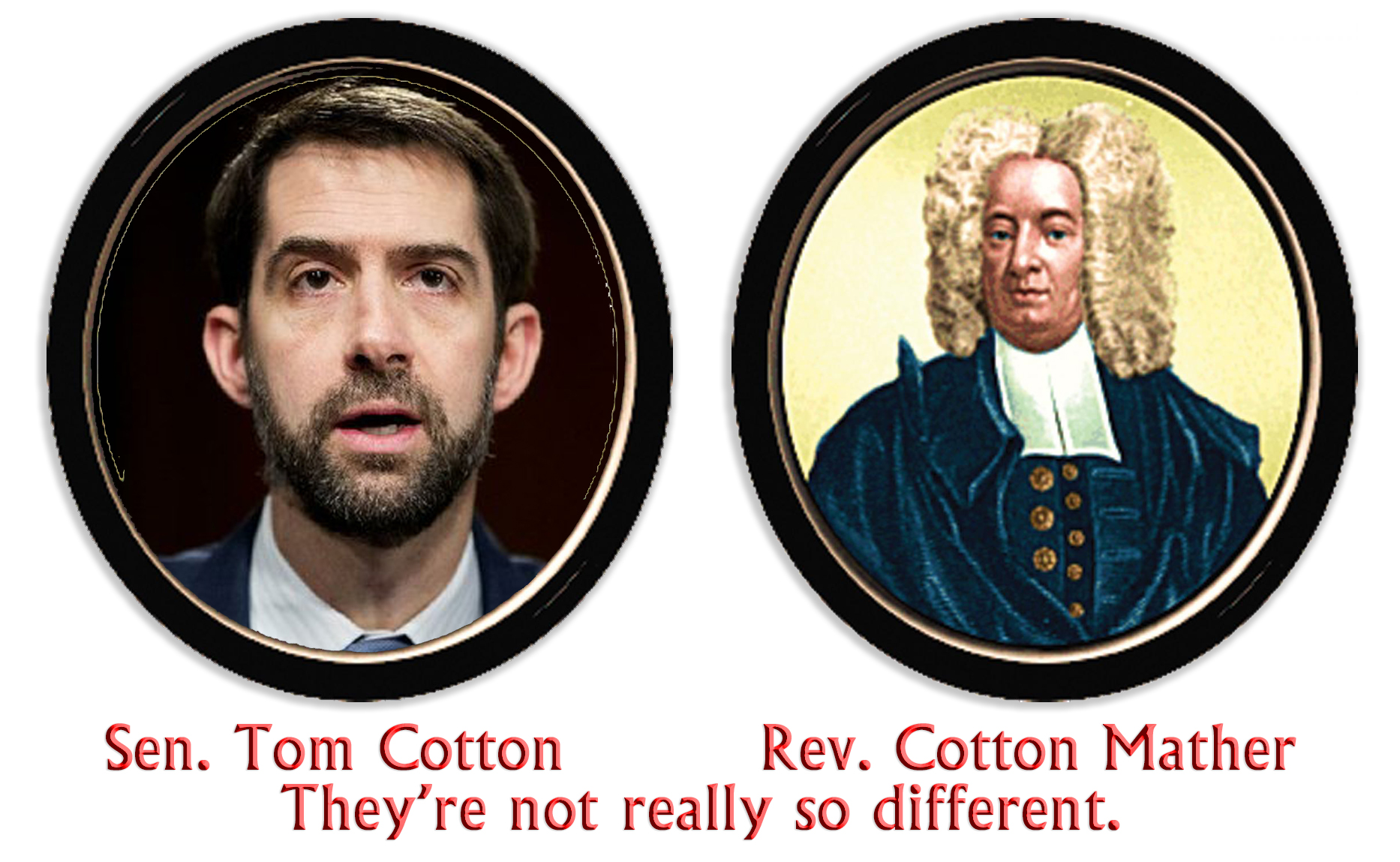
cotton171226Sen. Tom Cotton (R-AR) – whose opposition to the First Step Act was responsible for getting those prisoners with 18 USC § 924(c) convictions excluded from obtaining FSA credits for successfully completing recidivism reduction programs written into the law –declared that extending CARES Act home confinement (especially now that every single federal inmate has been vaccinated or offered the vaccine for COVID-19) “betrays victims and law-enforcement agencies that trusted the federal government to keep convicted criminals away from the neighborhoods that the offenders once terrorized.”

There’s nothing quite as easy to demagogue as crime and punishment.

Never mind that the Bureau of Prisons has refused CARES Act home confinement to anyone convicted of sex crimes, terrorism, violent offenses, or even those who had a violent disciplinary report while in prison. CARES Act home confinees had to have low or minimum security status and be at low or minimum risk of recidivism under the Dept. of Justice PATTERN scoring system.

The Congressional Review Act, which was passed 27 years ago, creates a process for Congress to overturn federal agency rules. In 2017, a Republican-controlled Congress used the CRA to invalidate dozens of Obama-era federal rules. Any member of Congress can introduce a CRA joint resolution of disapproval, which is referred to the relevant Senate or House committee. A CRA resolution must be passed by a majority in both the House and Senate and then signed by the president. If the President vetoes the CRA resolution, Congress can override the veto with a two-thirds majority in both houses.

flyelephantgun231116Given that the Biden Administration pushed the new rule and the Senate is controlled by Democrats, passage of S.J.Res. 47 is doubtful. If it would pass both houses, but Biden vetoes it, there is no chance two-thirds of Congress would override it.

Last week, BOP Director Colette Peters told a House subcommittee that “as of August 31, 2023… less than 0.05% of people [on home confinement] have been returned to custody for committing new crimes.” Given that statistic, S.J.Res. 47 seems a lot like shooting a fly with an elephant gun.

S.J.Res. 47, Congressional disapproval of the rule submitted by the Dept of Justice relating to CARES Act (October 30, 2023)

Reason, Senate Resolution Would Send Federal Offenders Back to Prison 3 Years After Being Released to Home Confinement (November  6, 2023)

National Health Law Program, Congressional Review Act (October 2020)

– Thomas L. Root

BOP Director Plays Chico Marx To House Subcommittee – Update for November 14, 2023

We post news and comment on federal criminal justice issues, focused primarily on trial and post-conviction matters, legislative initiatives, and sentencing issues.

WHO YOU GONNA BELIEVE, ME OR YOUR OWN EYES?


In testimony last week before a House Judiciary subcommittee, Bureau of Prisons director Colette Peters boasted that the agency has “modernized our mission, vision, core values, and strategic framework to formalize our commitment to transformative change… Our diverse and adept workforce champions a modern approach to corrections, where safety, humane environments, and effective reintegration are paramount.”

“[M]odernize[] our… strategic framework to formalize our commitment to transformative change?” Does the BOP use AI to generate bureaucratic mumbo-jumbo, or is this the combined output of a special Central Office committee on obfuscation? A more basic question: does that line even mean anything?

chico231114It apparently doesn’t mean much. A day after Director Peters delivered her bureaucratic buzz-word-laden report to the subcommittee, the Dept of Justice Office of Inspector General dropped a stunning rebuttal to that “safety, humane environments…” part of the Director’s word salad. The OIG’s findings on conditions of the women’s prison ar FCI Tallahassee, juxtaposed with Director Peters’ happytalk, reminded me of the classic Chico Marx line: “Who you gonna believe, me or your own eyes?”

Peters says “safe[]” and “humane.” The OIG report described its surprise inspection last May as “alarming.” 

The inspection report identified “serious operational deficiencies,” with “the most concerning” being “the alarming conditions of its food service and storage operations.” The New York Times reported that the OIG inspectors only “expected to find serious problems endemic to other crumbling, understaffed facilities run by the Bureau of Prisons. What they encountered shocked them: Moldy bread on lunch trays, rotting vegetables, breakfast cereal and other foods crawling with insects or rodents, cracked or missing bathroom and ceiling tiles, mold and rot almost everywhere, roof leaks plugged with plastic bags, windows blocked with feminine hygiene products to keep out the rain, loose ventilation covers that created perfect hiding places for contraband and weapons.”

Tallahasseelunch231114AThe inspection report identified “serious operational deficiencies,” with “the most concerning” being “the alarming conditions of its food service and storage operations.” DOJ Inspector General Michael Horowitz said, “When we go to Tallahassee and we see windows leaking and ceilings leaking onto inmate living space, and we see female inmates having to use feminine hygiene products to keep the water from coming into their space, that’s something you should never have to deal with.”

In as much defense as she deserves after 15 months on the job, Peters did tell the Subcommittee the day before the OIG report was issued that the BOP’s unmet infrastructure needs are dire. She estimated that $2 billion was needed to clear the backlog of repairs and renovations identified as urgent. The Tallahassee Food Service Administrator position, responsible for food safety, had been vacant for two years. As it happened, FCI Tallahassee’s current Food Service Administrator’s first day on the job coincided with the first day of OIG’s inspection.

badexample231114In another embarrassment for the BOP, a federal judge last week ruled that the Alabama prison system, which has been sued by the DOJ for 8th Amendment violations, may inspect four federal prisons as part of its discovery in building its defense in the case. The State apparently intends to show that its prison conditions are no worse than those in the BOP. Alabama requested to inspect the FCC Coleman in Florida, FCI Yazoo City in Mississippi, and USP Atlanta.

House Subcommittee on Crime and Federal Government Surveillance, Oversight of the Bureau of Prisons (November 7, 2023)

New York Times, Justice Dept. Watchdog Describes Unsanitary Conditions at Florida Prison (November 8, 2023)

Dept of Justice Office of Inspector General, Inspection of the Federal Bureau of Prisons’ Federal Correctional Institution Tallahassee (November 8, 2023)

AL.com, Judge rules Alabama can inspect federal prisons to build defense in DOJ lawsuit (November 9, 2023)

– Thomas L. Root

Supreme Court May Walk Back Bruen, But Constitutionality of 922(g)(1) Still Up In The Air – Update for November 13, 2023

We post news and comment on federal criminal justice issues, focused primarily on trial and post-conviction matters, legislative initiatives, and sentencing issues.

HARD CASES MAKE BAD LAW

The Supreme Court appears poised to refine the New York State Rifle & Pistol Association v. Bruen Second Amendment test for the constitutionality of gun laws, adding a “dangerousness” element that – surprisingly enough – may help a lot of people convicted of felon-in-possession crimes.

SCOTUS heard argument last week in United States v. Rahimi, the case that challenged whether subsection (8) of 18 USC 922(g) – that bans people subject to domestic protection orders from possessing guns – is constitutional under the Second Amendment.

Mr. Rahimi fired off a few rounds at a fast-food joint when his friend's credit card was declined.
Mr. Rahimi fired off a few rounds at a fast-food joint when his friend’s credit card was declined.

Defendant Zackey Rahimi was a bad actor. While under a domestic protection order for stalking an ex-girlfriend, he ran amok in December 2020, shooting up houses, blasting away at bad drivers, firing at a police car, and even loosing off five rounds into the air when a credit card was declined at a Whataburger. In short, he was the government’s dream defendant for its position that Uncle Sam has the right to keep some people away from guns.

And the government needed a dream defendant. The Supreme Court’s 2022 Bruen decision adopted a new standard, specifically that when the Second Amendment covers one’s conduct (such as possessing a firearm), the government can limit that conduct only by showing “that the regulation is consistent with this Nation’s historical tradition of firearm regulation. Only if a firearm regulation is consistent with this Nation’s historical tradition may a court conclude that the individual’s conduct falls outside the Second Amendment’s “unqualified command.” Bruen thus superseded the Court’s long-standing practice of allowing the government to weigh its interest in public safety against the possibility of imposing a limitation on Second Amendment rights.

Last week’s argument suggests the Court may write some “public safety” back into the Bruen standard. The government argued that the “destabilizing consequences” of the 5th Circuit’s Rahimi ruling require the Court to uphold 18 USC § 922(g)(8) based on the general tradition of Congress taking guns from people who are not responsible, law-abiding citizens – “for example, people who had been loyal to the British government during the Revolutionary War, felons, and drug addicts,” as Amy Howe put it in SCOTUSBlog.

lawabiding231113But the justices puzzled over what “responsible” or “law-abiding” citizen meant exactly. “Responsibility,” Chief Justice John Roberts told the government, is “a very broad concept.” Justice Amy Coney Barrett agreed that domestic violence is dangerous. But in more marginal cases, she asked, how does the government show that other kinds of behavior are dangerous?

The government argued that “responsibility” is “intrinsically tied to the danger you would present if you have access to firearms.” The government told the Court that it can disarm “dangerous individuals” without violating the  Second Amendment.

Roberts clearly thought Zack had no business possessing a gun: “You don’t have any doubt that your client’s a dangerous person, do you?” he asked Zack’s counsel. Justice Samuel Alito wondered whether Rahimi’s position was that “except for someone who has been convicted of a felony, a person may not be prohibited from possessing a firearm in his home?” Justice Elena Kagan interpreted Rahimi’s position as being that the government had to show a historical regulation “essentially target[ed] the same kind of conduct as the regulation under review” to be constitutional.

Writing in his Sentencing Law and Policy blog, Ohio State University law professor Doug Berman said,

There seems to be a majority of Justices (and perhaps even all the Justices) who are prepared to rework the Bruen originalist approach to the Second Amendment to uphold the federal criminal firearm prohibition in Rahimi. But I… was especially struck by the claim by Rahimi’s lawyer that there were no complete criminal bans on the possession of guns by certain people until 1968. If originalism as a mode of constitutional interpretation really cared about history, that would seem to be a quite significant bit of history for resolving this case.

nickdanger220426The Rahimi issue is whether people subject to domestic protection orders are dangerous. But if SCOTUS focuses on “dangerousness,” that suggests that maybe people disqualified from owning firearms because of prior convictions – like Bryan Range in the 3rd Circuit case now awaiting a decision on certiorari – convicted of nonviolent crimes may still benefit from Bruen.

New York State Rifle & Pistol Association v. Bruen, 142 S.Ct. 2111, 213 L.Ed. 2d 387 (2022)

SCOTUSBlog, Justices appear wary of striking down domestic-violence gun restriction (November 7, 2023)

Sentencing Law and Policy, Some press pieces reviewing SCOTUS argument in Rahimi Second Amendment case (November 7, 2023)

Reason, Only ‘Dangerous Individuals’ Lose Their Gun Rights Because of Protective Orders, the Government Says (November 8, 2023)

– Thomas L. Root