Buyer’s Remorse Wins Confused Defendant a Hearing – Update for April 17, 2019

We post news and comment on federal criminal justice issues, focused primarily on trial and post-conviction matters, legislative initiatives, and sentencing issues.

8TH CIRCUIT FLESHES OUT STANDARD FOR CHANGE-OF-PLEA INEFFECTIVENESS

One of the most-argued issues in post-conviction motions under 28 USC § 2255 is that defense counsel was ineffective. Unsurprisingly, because 94% or so of all federal criminal cases are resolved with a plea agreement and guilty plea, the most popular claim is “buyer’s remorse,” that is, that the defendant would have never pled guilty if his or her lawyer had only properly advised the accused prior to entering into the plea agreement.

buyersremorse190417I have some sympathy for the claim, but not for the obvious reason. Defense attorneys usually are right that the defendant should take a plea, and almost always, they have gotten their client the best deal possible from a chary United States Attorney. The real problems are two-fold: first, the U.S. Attorney has a script used on plea deals, and the script allows for very little negotiating room by the defendant (who, anyway, is totally outgunned by the government’s thundering herd of lawyers, legal assistants, case agents and factotums). Second, the defendant is almost always unschooled in the finer points of federal criminal law and procedure, and is under extraordinary stress as he or she bargains away in freedom, reputation and property to a rapacious and unblinking adversary. That makes misunderstanding and confusion almost inevitable.

By the time the defendant is in front of the judge for a Rule 11 guilty-plea hearing, he or she is committed to the plea deal, and is almost incapable of answering the many questions asked by the judge in any manner other than what the question anticipates and the judge expects.

It’s no wonder that a 2255 movant’s recall of the advice that counsel provided and the answers given at the Rule 11 hearing ends up being warped: it probably seems to the defendant that a different person altogether signed the plea agreement and stood up at the plea hearing.

notlistening190417But arguing that counsel poorly advised a defendant to take a plea and how to respond to the judge at a plea hearing has always been tough. Everyone knows that a defendant listens to his or her lawyer, especially when counsel is the closest thing to a friend a defendant can find in the courtroom. Besides, no one really listens to the judge at the change-of-plea hearing. Yet the defendant’s rote answers to the judge at the guilty plea hearing are invariably used by the court to bludgeon any defendant who later argues about attorney misadvice in a 2255 motion.

On top of that, a defendant has to show that if counsel had advised him or her properly, he or she would have gone to trial. For years, the courts required that the defendant show that going to trial would have been reasonable, regardless of what a defendant may have really intended.

Things improved slightly several years ago with the Supreme decision in Lee v. United States. There, a Korean restaurant owner argued that if his lawyer had told him that deportation was certain, he would have gone to trial even though he was bound to lose. The lower courts denied his 2255 on the grounds that no reasonable person would have changed his mind on the plea, because Lee had no chance of winning. The Supreme Court, however, held that courts could “look to contemporaneous evidence to substantiate a defendant’s expressed preferences,” even where those preferences were objectively unreasonable.

Dilang Dat pled guilty to robbery, but only after rejecting plea agreements that said he would be deported. The agreement he finally signed said “there are or may be collateral consequences to any conviction to include but not limited to immigration.” He agreed to plead based on counsel’s assurance his immigration status would be unaffected. Alas, counsel was terribly wrong, something Dilang learned after his conviction, when his mother’s attempt to renew his green card was denied.

The district court denied Dilang’s 2255 without a hearing, finding that he was warned in his plea agreement there could be immigration consequences. That printed warning was enough, the judge said, to undo his lawyer’s bad advice.

badadvice170201Last week, the 8th Circuit reversed. It observed that Dilang’s background supported his assertion that he was focused on remaining in the country. At the change-of-plea hearing, counsel noted Dilang’s request for prison placement close to his family, and observed that he had no ties to another country. Although Dilang faced around five more years in prison from a conviction on all counts at trial (if two counts had not been dismissed as part of the plea agreement), “deportation is a particularly severe penalty,” the Circuit opined, “which may be of greater concern to a convicted alien than any potential jail sentence.”

Nor did the language in the plea agreement undermine Dilang’s claim. The language said only that he could face deportation, not that he would do so. “A general and equivocal admonishment that defendant’s plea could lead to deportation,” the 8th said, “was insufficient to correct counsel’s affirmative misadvice that [defendant’s] crime was not categorically a deportable offense.”

The Court of Appeals sent the 2255 motion back to the district court for an evidentiary hearing.

Dat v. United States, 2019 U.S. App. LEXIS 10732 (8th Cir. Apr. 11, 2019)

– Thomas L. Root

Texas Robbery Is Kinder and Gentler No Longer – Update for April 16, 2019

We post news and comment on federal criminal justice issues, focused primarily on trial and post-conviction matters, legislative initiatives, and sentencing issues.

5TH CIRCUIT FLIPS, DEFENDANT WINNER IS NOW A LOSER

Last June, we reported that the 5th Circuit had ruled that a conviction for Texas robbery is not a crime of violence under the Armed Career Criminal Act.

Latroy Burris, who was convicted of being a felon-in-possession of a gun under 18 USC § 922(g)(1), was sentenced under the ACCA due to prior convictions for Texas robbery and Texas aggravated robbery. (The ACCA provides that a defendant with three prior convictions for crimes of violence or serious drug offenses must receive a sentence of 15 years to life instead of 922(g)’s usual zero-to-ten years.) Last year, Latroy argued that Texas robbery under § 29.02(a) of the Texas Penal Code was not a crime of violence, and the 5th Circuit agreed.

Afterwards, the government moved for rehearing en banc, and the Court withdrew its Burris decision pending the en banc court’s decision in United States v. Reyes-Contreras, and the Supreme Court decision in Stokeling v. United States, which held that Florida robbery qualified as a crime of violence under the ACCA.crimeofviolence190416

The 5th has now held that Sec 29.02(a)(1) is a crime of violence. It requires that a defendant “cause bodily injury.” Whether “caus[ing] bodily injury” requires the use of physical force under federal law “involves two issues,” the Court said, “(1) the relationship between causing bodily injury and the use of physical force and (2) the degree of force necessary to qualify as a violent felony under the ACCA’s elements clause. The en banc court resolved the first issue in Reyes-Contreras, and the Supreme Court resolved the second issue in Stokeling.”

The Court also concluded that Sec. 29.02(a)(2), which outlaws “robbery-by-threat,” has as an element the attempted or threatened use of physical force. That subsection criminalizes “intentionally or knowingly threaten[ing] or plac[ing] another in fear of imminent bodily injury or death.” The Court said that because Sec. 29.02(a)(1), robbery-by-injury, requires the use of physical force, it necessarily followed that 29.02(a)(2), “threatening to cause imminent bodily injury,” also requires the “attempted use, or threatened use of physical force.”

Latroy Burris’ ACCA sentence was upheld.

United States v. Burris, 2019 U.S.App.LEXIS 10606 (5th Cir. Apr. 10, 2019)

– Thomas L. Root

Justice Dept. Picks First Step Foe to Spearhead Recidivism Risk Standard Adoption – Update for April 15, 2019

We post news and comment on federal criminal justice issues, focused primarily on trial and post-conviction matters, legislative initiatives, and sentencing issues.

HAS DOJ SENT THE FOX TO GUARD THE HENHOUSE?

As we observed last Tuesday, the Dept. of Justice has announced that it had appointed the Hudson Institute, a right-of-center think tank best known for its national security work, to design a risk-assessment tool that must be in place before prisoners can receive earned-time credit for completing BOP programs designed to reduce recidivism.

bog190312

The appointment, required by the First Step Act to be in place by Jan. 21, was only 78 days late.

First Step requires that a prisoner’s risk of recidivism (different from security and custody levels) be assessed before he or she starts programming. The risk can go up or down, depending on the inmate’s progress. The lower a prisoner’s risk, the more credit that can be earned.

However, the Act does not specify how a person’s recidivism risk level should be calculated. Instead, it instructs the attorney general to consult with an “independent review committee” to design the system.

DOJ said that Hudson Institute will host the independent review committee. Hudson has the discretion to appoint committee members, who will work to advise on the shape of the final risk-adjustment tool.

henhouse180307Some lawmakers from both parties who backed First Step Act expressed concern late last week at Hudson’s appointment. “I’m a little bit worried that we just let a fox in the chicken coop here,” Sen. Richard Durbin (D-Illinois) said during a confirmation hearing last week. “This… think tank… published an article entitled, ‘Why Trump Should Oppose Criminal-Justice Reform…’ [and has] now been chosen by the Department of Justice and Trump administration to be part of this so-called independent review system.”

Sen. Mike Lee (R-Utah) described the institute as an “opponent of the First Step Act… I don’t see a lot of good faith in implementing this law right now,” Lee said. “And it’s become increasingly clear to me in the last few days that some Department of Justice officials at least don’t like the First Step Act, and they seem not to care that Congress passed this law and that President Trump signed this into law.”

The Hudson Institute, founded in 1961, is known for its work on national security and foreign policy, though it also focuses on economics and domestic policy. For the First Step Act, it has announced six committee members so far who will develop the risk assessment program, one of whom is Hudson’s chief operating officer, John Walters.

Walters once wrote that it was a “great urban myth” that the country was imprisoning too many people for drug possession and that the 100:1 crack-to-powder cocaine disparity was merely a “perceived,” not a real, racial injustice. In 2015, Walters wrote that the concept of “mass incarceration” was a myth, and that “the great majority of federal prisoners appear to be incarcerated because they were, properly, adjudged guilty and justly sentenced.”

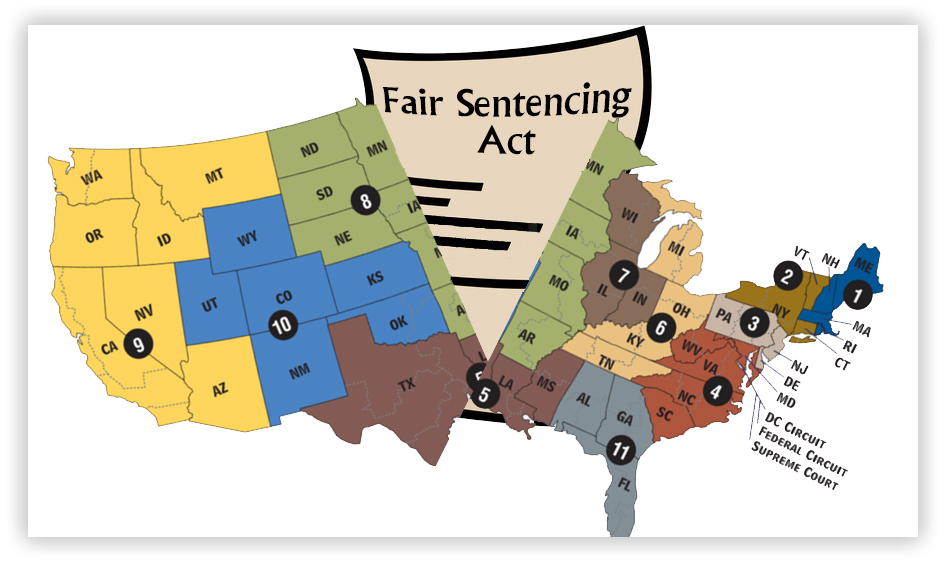
release160523The New York Times reported last Tuesday that First Step’s retroactive application of the 2010 Fair Sentencing Act has already “prompt[ed] 800 sentencing reductions already, according to the Justice Department. Of that group, nearly 650 inmates have been released from prison. Another 22 inmates have received sentencing reductions under a compassionate release program that is part of the law.” It reported last Saturday that since First Step was passed, 10 prisoners of 23 that have so far been deemed eligible have been released under the First Step’s Elderly Offender Home Detention (EOHD) program.

Testifying last Tuesday before the Appropriations Subcommittee of the House Committee on Commerce, Justice, Science, and Related Agencies, Attorney General William Barr promised “to robustly fund and diligently implement [First Step] at the Department.”

If you want to know where the real headwinds to First Step will come from, look no further that last Saturday’s Times. It’s one thing to support criminal justice reform in the abstract. But when it comes to individuals, the Gray Lady makes it clear that her anti-felon “lock-’em-up” biases are every bit as finely honed as Sen. Tom Cotton’s ever were.

unforgivenfelon190415The newspaper breathlessly reported on one inmate released under EOHD: “The First Step Act offered prisoner rehabilitation programs and overhauled sentencing policies that supporters claimed had a disproportionate effect on poor defendants, especially minorities. But one person who benefited from the law was Hassan Nemazee, who was once an investor of enormous wealth and who donated heavily to Democratic political causes.” The Times reported that “Mr. Nemazee was charged in 2009 with orchestrating a scheme that defrauded banks of nearly $300 million,” and it complained that home detention “feels a lot like freedom.”

Once the media start picking at the offenses for which inmates who benefit from First Step were convicted, public outrage will not be far behind.

Washington Free Beacon, “DOJ Taps Conservative Think Tank to Help Implement FIRST STEP Act” (Apr. 8)

Mother Jones, Trump Keeps Celebrating Prison Reform. His Administration’s Latest Move Could Sabotage It (Apr. 11)

New York Times, Justice Dept. Works on Applying Sentencing Law as Critics Point to Delays (Apr. 8)

New York Times, He Committed a $300 Million Fraud, but Left Prison Under Trump’s Justice Overhaul (Apr. 13)

– Thomas L. Root

From the “War Is Peace” Dept.: Rape Is Not Violent, Court Says – Update for April 11, 2019

We post news and comment on federal criminal justice issues, focused primarily on trial and post-conviction matters, legislative initiatives, and sentencing issues.

PAIR OF STATE SEX OFFENSES NOT VIOLENT UNDER ACCA

Two different circuits invalidated two sex state sex offenses as violent predicates triggering the Armed Career Criminal Act.

rape190412The 8th Circuit held that the Illinois offense of aggravated criminal sexual abuse is “facially overbroad” and thus cannot count as an ACCA “crime of violence” predicate. Sexual conduct is defined in the statute as “any intentional or knowing touching or fondling by the victim or the accused…” The Circuit ruled, “Because a defendant can violate this statute by having a child touch him for sexual gratification, an act that does not necessarily require “the use, attempted use, or threatened use of physical force against the person of another,” the statute on its face cannot qualify as an ACCA predicate.”

Meanwhile, the 6th Circuit ruled that Clancy Lowe’s 1985 Tennessee rape conviction could not be a crime of violence, because rape by “force or coercion” included unlawful sexual penetration by someone with “parental, custodial, or official authority over a child less than fifteen (15) years of age.” Such a penetration could be committed without any force or coercion, or even with a willing child under 15. Thus, it could not be a “crime of violence,” and Clancy’s ACCA sentence was thrown out.

Lofton v. United States, 2019 U.S. App. LEXIS 10103 (8th Cir. Apr. 5, 2019)
Lowe v. United States, 2019 U.S. App. LEXIS 9944 (6th Cir., Apr. 4, 2019)

– Thomas L. Root

Government Promise Subject to Change Without Notice – Update for April 10, 2019

We post news and comment on federal criminal justice issues, focused primarily on trial and post-conviction matters, legislative initiatives, and sentencing issues.

LET’S MAKE A DEAL

Tyrone Walker made a plea deal with the government. He pled guilty (without cooperation) to one count of conspiracy to distribute crack in a deal in which the government estimated his sentence exposure to be 108 to 135 months, but noted that the estimate could change if new information became known.

pleadeal180104The government postponed Tyrone’s sentence until after his co-defendant’s trial. When Tyrone was finally sentenced four long years later, the government gave the district court a new estimate, this one being 360 months to life. Tyrone protested, but the government said the new estimate was necessary, based in part on information that arose during the co-defendant’s trial, and that new information excused the government from doing as originally estimated in the plea agreement.

Last week, the 2nd Circuit held the government breached the plea deal. The Circuit ruled that Tyrone’s “reasonable expectations” were violated. The agreement said the estimate could change only if the government discovered new information, and it lacked any language that reserved to the government the right to argue for an upward variance or departure. What’s more, Tyrone’s sentencing hearing was unexpectedly delayed for four years while the Government put his co-defendant on trial, and then, the government attempted to increase his sentence on the basis of information that, although also established at the co-defendant’s trial, “had been well known to the government at the time it negotiated Walker’s plea.”

Finally, the government urged a sentence increase that changed Tyrone’s “exposure so dramatically that we may well question whether he could reasonably be seen to have understood the risks of the agreement.” Tyrone “may well have been on notice that his estimate was subject to change, but he could not have been on notice about this particular degree and kind of change.”

United States v. Walker, 2019 U.S. App. LEXIS 9910 (2nd Cir., Apr. 4, 2019)

– Thomas L. Root

After Partying Last Week, First Step Finally Gets Down to Business – Update for April 9, 2019

We post news and comment on federal criminal justice issues, focused primarily on trial and post-conviction matters, legislative initiatives, and sentencing issues.

FIRST STEP CELEBRATED, BUT WORRIES OVER IMPLEMENTATION REMAIN

Amid questions by some critics about the Administration’s support for the First Step Act, the Dept. of Justice’s National Institute of Justice (NIJ) yesterday announced the selection of the Hudson Institute to host the Independent Review Committee mandated by the Act to develop and implement risk and needs assessment tools and evidence-based recidivism reduction programs for the Bureau of Prisons.

firststepB180814“The Department of Justice is committed to implementing the First Step Act,” a DOJ press release quoted Attorney General William Barr as saying. “The Independent Review Committee plays an important role in that effort by assisting in the development of a new risk and needs assessment system and improvements to our recidivism reduction programming.”

NIJ also announced that it is contracting with outside researchers, including Grant Duwe, Ph.D., Zachary Hamilton Ph.D., and Angela Hawken Ph.D., for  consultation on the DOJ’s development of the risk and needs assessment system under the Act.  Dr. Duwe is the Director of Research for the Minnesota Department of Corrections, and an expert on the development of recidivism risk assessment systems. Dr. Hamilton is an Associate Professor of Criminal Justice and Criminology and the Director of the Washington State Institute for Criminal Justice, and focuses on treatment matching through risk and needs assessment systems. Dr. Hawken is a Professor of Public Policy at the New York University Marron Institute, and is the founder and director of New York University’s Litmus/BetaGov program, which assists in the development and validation of data-driven policies.

The announcement comes on the heels of last week’s White House  “First Step Act Celebration,” which was intended to bring attention to a rare piece of bipartisan legislation President Trump passed last year, and which he plans to highlight on the campaign trail. He also announced plans for a “Second Step Act,” focused on easing employment barriers for formerly incarcerated people.

“We are proving we’re a nation that believes in redemption,” Trump said, describing the “second step” legislation as featuring a $88 million funding request for prisoner social reentry programs. “The ‘Second Step Act’ will be focused on successful reentry and reduced unemployment for Americans with past criminal records, and that’s what we’re starting right away.”

“As president, I pledged to work with both parties for the good of the whole nation,” Mr. Trump said at the East Room gathering, pointing to the legislation as an example of bipartisan work that he said was “so important to me.”

But even as they danced at the White House, several observers expressed skepticism that the now-passed bill will enjoy the Administration’s full support.

money160118The Administration’s budget, released last month, listed only $14 million to pay for the First Step Act’s programs. The law specifically asked for $75 million a year for five years, beginning in 2019. The Office of Management and Budget, however, noted that the bill passed after the budget had already been finalized, and that the White House intended to revisit First Step Act funding.

Ensuring that First Step is adequately funded is crucial to its effectiveness, said Nancy La Vigne of the Urban Institute. “We always recognized that without proper funding, the First Step Act is really nothing more than window dressing,” she said.

Mr. Trump said that “my administration intends to fully fund and implement this historic law.”  On Apr. 2, the White House announced Trump will ask Congress for $147 million to implement First Step, far above the $14 million in the original budget.

risky-business-4fea6b87b70a6First Step requires development of a risk and needs assessment tool to assess inmates and determine what types of programs reduce recidivism and the incentives they would receive. The Dept. of Justice missed the Jan. 21 deadline for forming the committee tasked with developing the risk assessment standard, instead starting the committee formation process only yesterday. The Crime Report said last Monday, “It’s not clear whether the government will meet the July deadline for developing the system.”

Kevin Ring, president of Families Against Mandatory Minimums, says there hasn’t been much clarity from the administration on the status of these measures.

“All the timelines were ambitious, so it’s not surprising that they haven’t met them all,” Ring said. “It’s just it seems to be a bit of a black box. We don’t know what’s taking so long.”

The New York Times today observed that

Putting the law into practice quickly became complicated. The government partly shut down one day after Congress passed the bill and sent it to President Trump to sign into law, and many of the Justice Department employees who would have worked to fulfill it went on furlough. The shutdown, the longest in history, lasted through the end of January.

That has given law enforcement officials just over two months to start carrying out a complicated piece of legislation, a senior Justice Department official said in defending their pace… The criminal justice overhaul was also passed during intense tumult at the top of the Justice Department, which oversees the Bureau of Prisons and would be responsible for carrying out much of the new legislation.

The New York Times, Justice Dept. Works on Applying Sentencing Law as Critics Point to Delays (Apr. 9)

Hudson Institute, Hudson Institute To Host First Step Act’s Independent Review Committee (Apr. 8)

Washington Examiner, Trump announces Second Step Act to help ex-prisoners find work (Apr. 1)

The Crime Report, As White House Celebrates First Step Act, Inmate Risk-Assessment Tool Lags (Apr. 1)

The New York Times, Trump Celebrates Criminal Justice Overhaul Amid Doubts It Will Be Fully Funded (Apr. 1)

NPR, 3 Months Into New Criminal Justice Law, Success For Some And Snafus For Others (Apr. 1)

– Thomas L. Root

District Court Have No ‘Inherent Authority’ to Release Grand Jury Material – Update for April 8, 2019

We post news and comment on federal criminal justice issues, focused primarily on trial and post-conviction matters, legislative initiatives, and sentencing issues.

GRAND JURY RECORD ACCESS FURTHER CURTAILED

A lot of prisoners start preparing for post-conviction filings by filing motions with their district courts demanding grand jury transcripts. And they are always turned down. And they fume and fuss, never appreciating how stout the walls protecting grand jury secrecy really are.

Last week, the D.C. Circuit made getting breach the grand jury-secrecy walls even more daunting.

grandjury190408Let’s start with a simple primer. Grand jury proceedings are secret.

And for good reasons. First, because prosecutors can drag any smell old carcass in from the the grand jury panel, a lot of not-so-accurate dirty laundry belonging to people who never end up being charged with a crime could be aired if the records were open. Second, because there is neither a moderating judge nor defense counsel present at a grand jury, all sorts of scurrilous and inadmissible drivel can be dumped into the record, matters that should never be made public so as to shame the subjects, even if they are guilty of some criminal offense or another. Third, witnesses may be cowed if required to testify against someone who has not been publicly charged for fear that their allegations, even if true, may cost them their reputations, employment or even physical safety.

For those reasons, Rule 6(e) of the Federal Rules of Criminal Procedure severely limits the ability of anyone other than the government (naturally) to access grand jury material. Specifically, a defendant may obtain grand jury records of his or her own proceeding only (1) “preliminarily to or in connection with a judicial proceeding;” or (2) if the defendant is able to show “that a ground may exist to dismiss the indictment because of a matter that occurred before the grand jury.” The second ground is especially circular: in order to obtain any information about the matter before the grand jury, a defendant has to already have information about the matter before the grand jury.

The non-lawyer in us can only be wistful, imagining all of the historically-fascinating information contained in closed grand jury records. Think of the grand jury records relating to the Lincoln assassination, Al Capone, Alger Hiss, the Rosenbergs, the Chicago 8, Watergate… Interesting stuff, if you could get to see it.

Historian Stuart A. McKeever is a guy who wants to see some of it, specifically grand jury records from the 1957 indictment of FBI agent John Joseph Franks, whom Stu figured was involved in making a prominent critic of Dominican Republic dictator Rafael Trujillo disappear. Stu said he needed the grand jury records for a book he’s writing on the critic’s disappearance.

historians190408Stu asked the district court that heard the Franks case to release the grand jury records for their historical interest and merit. His request was not based on any of the exceptions in Rule 6(e)(3)(E) of the Federal Rules of Criminal Procedure, but instead on the district court’s inherent authority to disclose historically significant grand jury matters. The court agreed it had such authority.

Last week, the Circuit Court reversed the district court. It noted that Rule 6(e)(2)(B) prohibits disclosures about grand jury matters “unless these rules provide otherwise. The only rule to ‘provide otherwise’ is Rule 6(e)(3). Rules 6(e)(2) and (3) together explicitly require secrecy in all other circumstances.

“Where Congress explicitly enumerates certain exceptions to a general prohibition,” the Court said, “additional exceptions are not to be implied, in the absence of evidence of a contrary legislative intent… The Rule on its face prohibits such a communication because it does not except it from the general prohibition. It would be most peculiar to [stress] that the exceptions in Rule 6(e) must be ‘narrowly construed,’ yet to hold now that they may be supplemented by unwritten additions.”

McKeever v. Barr, 2019 U.S. App. LEXIS 10061 (DC Cir. Apr. 5, 2019)
<><>

– Thomas L. Root

Jammin’ the Nights (and Days) Away – Update for April 4, 2019

We post news and comment on federal criminal justice issues, focused primarily on trial and post-conviction matters, legislative initiatives, and sentencing issues.

BUSY SIGNAL

In the wake of a test done at FCI Cumberland in January 2018 (post, Feb. 16, 2018), two legislators have introduced a bill to permit the jamming of cellphone signals in prison facilities.

Sen. Tom Cotton (R-Arkansas) and Rep. David Kustoff (R-Tennessee) introduced identical measures, S. 952 and H.R. 1954, late last week.

droppedcall190404The BOP and state prison officials have long sought the ability to jam the signals, saying that cellphones, smuggled into institutions by the thousands by visitors, employees and even by drones, are misused by inmates to carry out commit crimes and plot violence. However, federal law currently prohibits transmitting a radiofrequency signal for the purpose of interference.

There is little opposition to the jamming bill except from some wireless industry groups, which argue that signal-blocking technologies could thwart legal calls.

S. 952 and H.R. 1954, To provide that the Federal Communications Commission may not prevent a State or Federal correctional facility from utilizing jamming equipment (introduced Mar. 28)

Charlotte Observer, Federal bills would let state prisons jam cellphone signals (Mar. 28)

– Thomas L. Root

Fascinating Look At Sentencing Disparity – Update for April 3, 2019

We post news and comment on federal criminal justice issues, focused primarily on trial and post-conviction matters, legislative initiatives, and sentencing issues.

VIVA LA DIFFERENCE

Paul Manafort’s recent sentencing, a combined 90 months in prison, is a miscarriage of justice because it is too high or too low, depending on your political persuasion. But it has focused media attention on federal sentencing policy.

The Transactional Records Access Clearinghouse at Syracuse University has released a “study of judge sentencing differences at 155 federal courthouses across the country” in which “the judge with the lowest average prison sentence was compared with the judge with the highest average sentence at each courthouse.”

TRAC found that half of the 767 federal judges now on the bench serve at courthouses where the average prison sentence differed by at least 23 months depending upon which judge handled the case. Of these, 8.6% serve at six courthouses where the average prison sentence length handed down by judges varies according to judge by more than 48 months.

dice161221

The biggest crapshoot in the system is Orlando in the Middle District of Florida. There, the difference between sentence imposed by the softest judge and the hardest judge is 80 months. Second place is the Greenbelt district court of the District of Maryland, with over 64 months difference among the seven judges serving there.

The TRAC study compares average sentences for each federal judge without controlling for the specific caseloads of these judges, and its authors warn that variations in average sentences could reflect caseload differences as much as judicial differences. But in the full report, TRAC notes that due to “the fairly large number of defendants sentenced by each judge, where there is random assignment of cases to judges then statistically speaking each judge should have closely comparable caseloads so that differences in the nature of the offenses and defendants’ histories are roughly comparable.”

The study has its limitations but Ohio State University law professor Doug Berman wrote in his Sentencing Policy & Log blog that, “still, it is interesting and useful to be reminded statistically of what all federal criminal justice practitioners know well, namely that most judges have their own distinctive and unique approaches to sentencing decision-making.” The study is undoubtedly an important tool for any defense attorney wanting to show sentence disparity.

Sentencing Law and Policy, Interesting new TRAC data on intra-courthouse judge-to-judge differences in sentences (Mar. 24, 2019)

TRAC, Seeing Justice Done: The Impact of the Judge on Sentencing (Mar. 22, 2019)

– Thomas L. Root

The Blame Game – Update for April 2, 2019

We post news and comment on federal criminal justice issues, focused primarily on trial and post-conviction matters, legislative initiatives, and sentencing issues.

‘SODDI’ SOMETIMES IS A GOOD DEFENSE

SODDI190402When the cops figured out that someone was using a computer address registered to Bill Pothier to download child pornography, they raided his apartment. It wasn’t easy: the agents had to pound on the door for 15 minutes before Bill (who was the only one there) admitted them to toss the premises.

Agents found Bill’s laptop sitting on a table in the living room. Forensics showed it had a few prohibited files in some obscure folders, and that was good enough for the government to charge Bill with possession of kiddie porn.

The problem was that two other people – Priscilla Pritchard and Barry Balis – lived in the apartment, too. Bill’s laptop was not password-protected, and only had a single generic user account installed by the manufacturer. Some of Bill’s innocent computer files were on the machine, but so were documents belonging to the two other residents as well as documents from a co-worker at Bill’s office.

Juries do not like kiddie porn or defendants charged with viewing it. For that reason, perhaps, it convicted Bill, who was, after all, the only guy in the courtroom the jury was allowed to blame. But last week, the 1st Circuit reversed Bill’s conviction, giving every defendant – no matter what his or her case is about – a lesson in reasonable doubt. Sometimes, “SODDI” – that is, ‘some other dude did it’ – is a good defense.

Unprotected190402The Circuit said, “The record in this case begins like the first chapter of a detective novel. The criminal act was clear: The laptop contained child pornography. Because the laptop was not password-protected and was found in a common area of the residence, the possible suspects were three: Poth, Pritchard, and Balis, all of whom apparently had access to the residence and, therefore, to the computer. At that point, the record becomes sketchy and the evidence sparse.”

Bill had two other apartments where he spent time, and nothing in the record showed whether the laptop stayed in one place or traveled with him. What’s more, the government did not link the times the porn was downloaded with Bill using the laptop, and neither of the other two residents of the apartment testified.

The government’s theory was that Bill owned and used the computer, so he had to know the porn was there. But to believe that, the Circuit said, the jury would have to believe that after he downloaded child porn, Bill “decided to forgo password protection and then left the laptop in the living room of a residence at which two other people received mail. Furthermore, during the 15 or so minutes when he knew the police were at the door, Bill did not conceal or destroy the laptop or run the file-shredding program that the government presumes he had installed.”

Added to that, the court noted, “the evidence does not reveal whether an innocent user of the computer would have been aware that it contained child pornography. The seven illegal videos contained on the computer at the time of the search were not filed in conspicuous locations, but rather in the recycle bin and in a temporary folder only visible to a user who overrode Microsoft’s default setting.”

blame190402The alternative was that one of the other residents downloaded the porn during one of Bill’s regular absences, and did not password-protect the machine because Bill would have noticed. “And because they were not present when the police came calling, neither of them could have hidden or destroyed the computer, or erased the child pornography, when the need to do so arose.”

“Each scenario is plausible, and though one might debate their relative merits, to settle on one beyond reasonable doubt would require guesswork,” the opinion stated. “And guilt beyond a reasonable doubt cannot be premised on pure conjecture.”

United States v. Pothier, 2019 U.S. App. LEXIS 9003 (1st Cir. Mar. 26, 2019)

– Thomas L. Root