The Prisoners Envy The Turkeys… – Update for November 26, 2019

We post news and comment on federal criminal justice issues, focused primarily on trial and post-conviction matters, legislative initiatives, and sentencing issues.

PARDONS, COMMUTATIONS, SENTENCE REDUCTIONS…

At some point in the next 48 hours, President Trump will likely pardon a pair of turkeys. The turkeys will be given silly names (past recipients have included birds named Mac and Cheese), some children and White House staffers will look on, and there will be forced jokes and stiff laughter.

turkey181128“It’s painful to watch,” Minnesota law professor Mark Osler wrote in the Washington Post last week. “Worse, it mocks the raw truth that the federal clemency system is completely broken. While those two turkeys receive their pardons, nearly 14,000 clemency petitions sit in a sludgy backlog. Many of the federal inmates who have followed the rules, assembled documents, poured out their hearts in petitions and worked hours at a prison job just to pay for the stamps on the envelope have waited for years in that queue.”

Osler and the students in his law school clinic have helped people file clemency petitions for almost a decade. “Many of them are well-deserving,” Osler wrote. “It was rewarding to tell their stories of rehabilitation and hope… [But now,] most of my mail is from people who have already filed a petition. They want to know what is happening, and what else they can do. Too many of them have unrealistic plans — often, and very specifically, the plan is that Kim Kardashian West will help them. Or, as one man put it ‘I’ll take any Kardashian.’ It is true that Kardashian West advocated for Alice Marie Johnson, and that Johnson did get clemency from President Trump. But that is a sample size of precisely one, while thousands wait.”

Meanwhile, a government pleading in a compassionate release motion filed under 18 USC 3582(c)(1)(A)(i) last week provided an object lesson for people seeking to get a sentence cut or home confinement because of illness. Federal prosecutors argued that a claim of dementia filed by Bernie Ebbers, former CEO of Worldcom, was bogus.

The government argued that the 78-year-old Ebbers may not be in as bad shape as indicated in his own filings, citing a note from a prison psychologist who listened in on phone calls between the inmate and his daughter in recent weeks. The daughter has claimed in an affidavit that her father has dementia.

fake191126

“In the calls, he was alert, aware and oriented to person, place, time and situation,” a Bureau of Prisons psychologist is quoted as saying, adding that the inmate was asking about his daughter’s efforts to get him out of prison. The psychologist notes that the inmate has presented a much different persona when he knows he is being observed. “The conversations between him and his daughter were very different than how he presented to this writer during our last encounter on 10/11/19 when he presented to this writer as though he didn’t know he was in a prison nor the date and time,” the psychologist writes.

Remember inmates, the BOP knows more about you than you may think. And what the BOP knows, the government knows, which means the U.S. Attorney knows it too. Rather tautological, but very true.

Many inmates eligible for serving the last one-third of their sentences under the Elderly Home Detention Offender program have complained that their case managers will not even submit an application for them to be a part of the program until they qualify by reaching the two-thirds mark of their sentences. Approval may take six months, meaning that an elderly offender may well miss much of the time he or she could be on home confinement, and the BOP continues to spend $100 a day to house someone who could be confined at home on his or her own dime.

Last week, a reliable inmate correspondent reported that his case manager  said BOP Central Office had issued “new guidance” that Elderly Offender Home Detention packages should be prepared and submitted six months prior to the inmate’s eligibility for the program (age 60 and two-thirds of total sentence completed). This way, he reported his case manager reported, everything will be in place so that the prisoner can leave for home detention on his or her earliest eligibility date.

I have not been able to confirm the report through the BOP yet.

Osler, Let’s Pardon Prisoners, Not Turkeys, Washington Post (Nov. 21)

CNBC, NY prosecutors suggest former WorldCom CEO is faking illness to get out of jail (Nov. 19)

– Thomas L. Root

4th Circuit Drops Two Huge Pro-Defendant First Step/Fair Sentencing Act Opinions – Update for November 25, 2019

We post news and comment on federal criminal justice issues, focused primarily on trial and post-conviction matters, legislative initiatives, and sentencing issues.

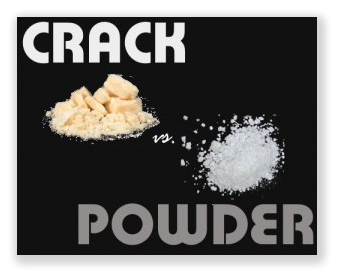
The ever-surprising Fourth Circuit last week handed down two blockbuster opinions on application of the retroactive Fair Sentencing Act of 2010. For those of you new to this blog, the Fair Sentencing Act changed the 100-to-1 ratio of crack to powder cocaine, dropping it to a more (but not completely rational) 18-to-1 ratio. That dramatically affected the sentences of people in federal prison for crack (94% of whom are black), but the change only applied to people who had not yet been sentenced. Those already in prison would continue to languish under the oppressive (and now discredited) sentences.

The First Step Act, passed eight years later, finally extended retroactivity to the Fair Sentencing Act. Finally, people sentenced before August 2010 – the effective date of the Fair Sentencing Act – could get a break. But the devil has been in the details. Last week, the 4th Circuit delivered a reason some federal prisoners might be extra thankful this Thanksgiving season.

THE 4TH CIRCUIT GOES UNITARIAN

One of the perks of writing this newsletter (besides long hours over the weekend and no pay) is that I get to be wrong so often.

After the First Step Act made the Fair Sentencing Act (FSA) retroactive, a lot of people serving supervised release (SR) violations after finishing crack sentences wondered whether they could get their crack sentences reduced even though they had already been served. It seemed to me that the law said “Hell, no”.

Last week, the 4th Circuit said, “Hell, yes.”

Bobby Venable, who was serving an SR violation sentence, filed an FSA sentence reduction motion applicable to his prior crack sentence. Bobby claimed he would no longer face a statutory minimum 10-year term of imprisonment, and he wanted to be resentenced to 63 months. Bobby claimed this sentence would allow the Bureau of Prisons to credit him for overserved time, to be applied to his current term of imprisonment for revocation of supervised release.

The district court summarily denied his motion, holding that because Bobby “has finished his term of incarceration and is currently in custody following revocation of his supervised release[,] no reduction is authorized.”

unitary191125No court of appeals has yet considered whether a defendant on SR can get an FSA reduction for a sentence already served, but the 4th Circuit decided that “the plain language of the relevant statutes and the unitary theory of sentencing” permitted Bobby a reduction. The Circuit said that because Bobby’s original offense was for crack cocaine, “so long as he is serving any part of his sentence for that offense, he is eligible for a reduction. His offense (possession of 12.1 grams of cocaine base) was originally classified as a Class B felony, but under the Fair Sentencing Act’s provisions, it is now classified as a Class C felony. This reclassification corresponds with a lower range of statutory penalties.”

Relying on yet another Johnson case, this one Johnson v United States, a 2000 Supreme Court decision, the 4th “adopted a unitary sentence framework… stating that treating custodial and supervised release terms as components of one unified sentence appropriately recognizes the interdependent relationship between incarceration and supervised release.” The Circuit said Bobby’s “revocation sentence is a component of his underlying original sentence for the drug conviction.” Thus, Bobby “is still serving his sentence for a “covered offense” for purposes of the First Step Act. Thus, the district court had the authority to consider his motion for a sentence reduction, just as if he were still serving the original custodial sentence.”

United States v. Venable, 2019 U.S. App. LEXIS (4th Cir. Nov. 20, 2019)

STATUTORY CHARGE, NOT THE PSR FINDING, COUNT FOR FSA

FSA resentencings have bogged down recently over the issue of what amount of crack should count for resentencing purposes.

Comparativecrack190425

The issue is a simple one: a defendant was charged with distribution of “50 or more grams of cocaine base,” which carries a 10-year sentence. But at sentencing, the presentence report prepared by the U.S. Probation Office goes wild (usually based on the prosecutor’s say-so), and finds the defendant was involved with 1.2 kilos of crack.

When the defendant, twenty years later, goes for resentencing, the district court denies the motion because the 1.2 kilos would still carry a 10-year mandatory minimum under the post-FSA law.

We’ve been waiting for the issue of which one counts – the indictment accusation or the sentencing finding – and last week, we got our first circuit ruling… and it’s a good one.

Ten years ago, Dan Wirsing was charged with possession with intent to distribute more than 5 grams of crack. He struck a plea deal with the government in which he admitted that the crack amount was 60 grams, and he got 188 months.

When Dan filed for a reduced sentence under the newly-retroactive FSA, his district court denied him for being ineligible, because the amount he admitted to – 60 grams – had the same statutory sentence now that 5 grams had before the FSA. Because there was no change in the punishment, the district court said, Dan had nothing coming under the FSA.

Last week, the 4th Circuit reversed. The First Step Act provides that a sentencing court “may… impose a reduced sentence as if sections 2 and 3 of the FSA were in effect at the time the covered offense was committed.” A “covered offense” is “a violation of a Federal criminal statute, the statutory penalties for which were modified by section 2 or 3 of the FSA that was committed before August 3, 2010.”

onething191125It does not matter, the 4th says, what Dan pled to or what the presentence report found or what the district court held at sentencing was the amount of crack involved in the offense. All that matter is that “the covered offense” was changed by the FSA, the 4th Circuit said, and the “covered offense” is what the indictment alleged, nothing more.

Other circuits will weigh in on this, no doubt, but the 4th’s unanimous and well-reasoned 22-page decision is bound to get a lot of deference when other courts decide the issue.

United States v. Wirsing, 2019 U.S. App. LEXIS (4th Cir. Nov. 20, 2019)

– Thomas L. Root

Court Reminds That Some Supervised Release Provisions Are Constitutional Duds – Update for November 22, 2019

We post news and comment on federal criminal justice issues, focused primarily on trial and post-conviction matters, legislative initiatives, and sentencing issues.

SLEEPERS

A 9th Circuit decision last week reminded me that countless defendants have judgments in their cases that contain some sleeper supervised release terms of dubious constitutionality.

sleeper191122Until Guidelines Amendment 803 in November 2016, standard conditions of supervised release included a requirement that a defendant “support his… dependents and meet other family responsibilities,” that he “work regularly at a lawful occupation,” and that he “notify third parties of risks that may be occasioned by [his] criminal record or personal history or characteristics.” Both the 7th and 9th Circuits have struck those standard conditions as being unconstitutionally vague under United States v. Evans, 883 F.3d 1154, 1162-64 (9th Cir. 2018) and United States v. Thompson, 777 F.3d 368, 379 (7th Cir. 2015).

Those conditions still purportedly apply to tens of thousands of prisoners when they are released, and can probably be addressed on or near release with a motion under 18 USC § 3583(e).

United States v. Ped, 2019 U.S. App. LEXIS 34092 (9th Cir. Nov. 15, 2019)

– Thomas L. Root

District Court Cuts Life Sentence for Crack – Update for November 21, 2019

We post news and comment on federal criminal justice issues, focused primarily on trial and post-conviction matters, legislative initiatives, and sentencing issues.

DISTRICT COURT CUTS LIFE SENTENCE FOR CRACK CCE

It has been a difficult ten months for some people seeking reduced sentences under the Fair Sentencing Act. DOJ says that 1,987 people have gotten sentence cuts, but as I noted last week, the government has dug in its heels on many more movants, arguing in many FSA cases that crack prisoners should be dinged with every gram of drug and Guideline enhancement imagined by the presentence report.

That’s why a recent district court FSA decision from the Northern District of New York to reduce a defendant’s life sentence to time served is so heartening.

life161207In 1997, Tommy Walker was convicted of a continuing criminal enterprise and drug conspiracy, and sentenced to life based on a mandatory minimum sentence imposed because the CCE involved more than 300 times the “5 grams or more” quantity of cocaine base penalized in 21 USC 841(b)(1)(B). However, as the court out it, “if the Fair Sentencing Act had been in effect at the time, the quantity of cocaine base penalized in 21 USC 841(b)(1)(B) would have been 28 grams or more,” meaning that to get a life sentence, Tommy would have had to be involved with 8.4 kilograms, far more than the 1.5 kg found in the presentence report.

That did not matter, the government said, because the Sentencing Guidelines enhancements that would have been applied under current law if the mandatory minimum life sentence did not apply put Tommy in the 360-life guidelines sentencing range, so the life sentence should stand.

The court rejected the government analysis, noting that one of the enhancements – maintaining a premises for drug distribution – did not exist when Tommy was sentenced, and anyway, the fact about maintaining a premises “was not an element of the charged crimes and did not affect Defendant’s original sentence, and therefore, he would have had little reason to contest it.”

It helped that Tommy had served more than the minimum sentence under his 292-360 month range, was 62 years old, and had “completed his GED, taken extensive educational courses, and excelled at jobs including electrician, law library clerk, and hospital companion, earning strong endorsements from various prison officials. He has also served as a mentor to other prisoners, who have submitted testimonials on his behalf. In short, Defendant has used his time in custody to better himself and help others.”

rehab160812The district court held that in Tommy’s case, “a reduced sentence is consistent with the purposes of the First Step Act and Congress’s intent to remedy the disproportionate impact of the statutory penalties applied to crack cocaine offenses prior to 2010, and to eliminate the disparity between Defendant and those sentenced thereafter.” The district court sentenced him to 340 months, which was time served, a sentence that reflected “the severity of the crimes committed by Defendant, while recognizing his efforts at rehabilitation.”

Don’t underestimate the power of a good disciplinary record and programming.

Memorandum Opinion and Order, United States v. Walker, Case No. 95-CR-101(NDNY, Oct. 25, 2019)

– Thomas L. Root

Supremes to Hear Another ACCA Case – Update for November 20, 2019

We post news and comment on federal criminal justice issues, focused primarily on trial and post-conviction matters, legislative initiatives, and sentencing issues.

SUPREME COURT GRANT CERTIORARI TO ANOTHER ARMED CAREER CRIMINAL CASE

In the last few years, it’s been a great time to be an armed career criminal. Not really (we don’t recommend doing it at any time), but the Armed Career Criminal Act has been the focus of the Court’s attention both directly (Johnson v. United States, Mathis v. United States and Rehaif v. United States) as well as indirectly (United States v. Beckles, Sessions v. Dimaya and United States v. Davis).

Robber160229A quick primer: 18 USC 922(g) provides that certain classes of people – convicted felons, drug abusers, fugitives, illegal aliens – are prohibited from possessing guns and ammo (the actual items, not just the magazine). If you are convicted of a § 922(g) offense, you face a maximum of 10 years in prison. But, if you have three prior convictions for drug felonies, crimes of violence or a combination of the two, you fall under the Armed Career Criminal Act (18 USC § 924(e)), and your penalty starts at 15 years and goes all the way to life in prison.

Ever since the 2016 Supreme Court decision in Voisine v. United States, most appellate courts have been holding that a crime committed with a mens rea of recklessness was enough to establish the use, attempted use, or threatened use of physical force. Junior Walton discovered 13 bullets in a rooming house that he managed and removed them for safekeeping. He was convicted of possessing ammunition as a felon, in violation of 18 USC 922(g)(1) and sentenced under the Armed Career Criminal Act to 15 years. The application of the ACCA turned on whether one of his past convictions, which could be committed with a mens rea of recklessness, qualified as a violent felony under the ACCA’s force clause.

The district court said it did not. The 6th Circuit, with several dissenting judges, said it did in an en banc proceeding. Last week, the Supreme Court granted cert to Junior on the question of whether a criminal offense that can be committed with a mens rea of recklessness can qualify as a “violent felony” under the ACCA.

The case, which will be decided by the end of June 2020, could further limit the kinds of prior convictions that will support an ACCA sentence. Just in time, too: last week Attorney General William Barr announced a new DOJ initiative, Project Guardian, intended to “increase scrutiny of people convicted of violent felonies or domestic violence, potentially reducing their access to firearms.”

Walker v United States, Case No. 19-373 (cert. granted Nov. 15)

New York Times, Justice Dept. Unveils Gun Plan, Sidestepping a Preoccupied Washington (Nov. 13)

– Thomas L. Root

Smarter Sentencing Act Back In The Senate Hopper – Update for November 19, 2019

We post news and comment on federal criminal justice issues, focused primarily on trial and post-conviction matters, legislative initiatives, and sentencing issues.

SMARTER SENTENCING ACT RE-INTRODUCED IN SENATE
Sen. Mike Lee (R-Utah)

The Smarter Sentencing Act, a bill intended to further reduce drug mandatory minimum sentences, was reintroduced in the Senate last week by Sen. Richard Durbin (D-Illinois) and Mike Lee (R-Utah), both members of the Senate Judiciary Committee. As of the date of this report, we have no bill number to associate with the legislation.

Sen. Richard Durbin (D-Illinois)

A lot of what had been contained in prior versions of the SSA, a bill which has been introduced in every Congress since 2013, was included in the First Step Act. What the current version contains is unclear, because the text of the proposed bill has not yet been released. However, Durbin’s office said “the central remaining sentencing reform in the Lee-Durbin legislation would reduce mandatory minimum penalties for certain nonviolent drug offenses.”

In the last iteration of the bill, S.1933 (115th Congress, 2017-18), the bill proposed an expanded “safety valve” under 18 USC § 3553(f) to allow a court to impose a sentence below the statutory mandatory minimum for an otherwise eligible drug offender who has three or fewer criminal history points. This change was incorporated into the First Step Act. Also, last year’s SSA reduced mandatory minimum sentences for drug offenses specified in 21 USC § 841(b)(1)(A) and (b)(1)(B):

•  from 10 years to 5 years for a first-time high-level offense (e.g., one kilogram or more of heroin),

•  from 20 years to 10 years for a high-level offense after one prior felony drug offense,

•  from life to 25 years for a high-level offense after two or more prior felony drug offenses,

•  from 5 years to 2 years for a first-time low-level offense (e.g., 100 to 999 grams of heroin), and

•  from 10 years to 5 years for a low-level offense after one prior felony drug offense.

The First Step Act incorporated the life-to-25 year and the 20-to-15 year reductions, but not the remainders.

Additionally, last year’s SSA made existing mandatory minimums inapplicable to a defendant who functions a courier; and establishes new, shorter mandatory minimum prison terms for a courier.

The current version of the Smarter Sentencing Act “gives federal judges the authority to conduct individualized reviews to determine the appropriate sentences for certain nonviolent drug offenses,” Durbin said in a press release.

BILL-DOA191120Lee said, “The SSA will give judges the flexibility and discretion they need to impose stiff sentences on the most serious drug lords and cartel bosses, while enabling nonviolent offenders to return more quickly to their families and communities.”

The bill is cosponsored by ten Democratic senators, including three presidential contenders, making the likelihood it will pass in the Senate virtually zero.

The Justice Roundtable, Durbin, Lee Reintroduce Smarter Sentencing Act (Nov. 16)

– Thomas L. Root

Unjust Sentence is an “Extraordinary and Compelling” Reason for Sentence Reduction, District Court Says – Update for November 18, 2019

We post news and comment on federal criminal justice issues, focused primarily on trial and post-conviction matters, legislative initiatives, and sentencing issues.

DISTRICT COURT GRANTS SENTENCE REDUCTION BECAUSE OF “INJUSTICE” OF ORIGINAL SENTENCE

Since the First Step Act passed 11 months ago, a number of observers (me included) have predicted that changes in the 18 USC § 3582(c)(1)(A)(i) sentence reduction procedures that let a defendant petition the district court directly if the Bureau of Prisons failed to do so could be the most consequential provision in the new law.

Sentencestack170404Last week, a district court in Nebraska granted a sentence reduction filed by a defendant whose whopping 895-month sentence for drug trafficking and three stacked 18 USC § 924(c) counts. As you recall,  § 924(c) conviction adds a consecutive sentence of at least five years for using or carrying a gun during a drug or violent crime, increasing to a minimum 25 years for a subsequent offense. Due to poor draftsmanship, the statute has been applied so that if a defendant sold pot while carrying a gun on Monday, did it again on Tuesday and again on Wednesday, and then was caught, he or she would face maybe 41 months or so for the pot sales, but a mandatory additional time of five year, 25 years and 25 years, for a whopping 58 years plus in prison. The First Step Act clarified the statute, so that the 25 year subsequent 924(c) offense had to be committed after conviction for a prior offense.

However, to appease the Sen. Tom Cottons (R-Arkansas) of the world, the First Step change was not retroactive. That left a lot of people stranded with unconscionable sentences. People like Jerry Urkevich.

The government opposed Jerry’s sentence reduction motion, arguing that just because he could not have gotten more than 368 months after First Step passed does not make his sentence reduction motion argument “extraordinary and compelling” (as required by the statute). Furthermore, the government argued, even if the defendant’s sentence were cut, he would still have about half of it to serve, making his motion “premature.”

extraordinary191118The court rejected the government’s arguments, noting that the list of “extraordinary and compelling reasons” in Guideline 1B1.13 Note 1 that justify a sentence reduction is not exclusive. Instead, there is a catch-all provision providing that there can be an “extraordinary and compelling reason” other than medical, age or family. That, the judge said, allows a court to consider § 3553(a) factors, as well as criteria in the Sentencing Commission’s policy statement.

Although the Sentencing Commission has not amended 1B1.13 since First Step passed, the court said it “infers that the Commission would apply the same criteria, including the catch-all provision… and that this Court may use Application Note 1(D) as a basis for finding extraordinary and compelling reasons to reduce a sentence.” Here, the court said, a reduction in sentence was warranted by “the injustice of facing a term of incarceration forty years longer than Congress now deems warranted for the crimes committed.”

The court also rejected the government’s strange and unsupported argument that a sentence reduction cannot be granted unless it results in immediate release. “If this Court reduces the defendant’s sentences on [two 924(c) counts] to 60 months each, consecutive,” the judge wrote, “he will not be eligible for immediate release. His sentence would total 368 months, and he would have served somewhat more than half that sentence. Nonetheless, the Court does not consider the Motion premature. A reduction in the sentence at this juncture will help the defendant and the Bureau of Prisons plan for his ultimate release from custody and may assist him in his pending efforts to seek clemency from the Executive Branch.”

In his Sentencing Law and Policy blog, Ohio State University law professor Doug Berman wrote, “I have made much of a key provision of the First Step Act which now allows federal courts to directly reduce sentences under the (so-called compassionate release) statutory provisions of 18 USC § 3582(c)(1)(A) without awaiting a motion by the Bureau of Prisons. I see this provision as such a big deal because I think, if applied appropriately and robustly, this provision could and should enable many hundreds, and perhaps many thousands, of federal prisoners to have excessive prison sentences reduced.)”

While not precisely a matter of § 3582(c) sentence reduction, the Washington Post reported last week that hundreds of relatives of murder victims, current and former law enforcement officials and former judges have signed letters urging the Trump administration to call off plans to resume federal executions next month.

death170602The letters, signed by current and former officials across the justice system as well as 175 relatives of murder victims, plead with President Trump and Attorney General William P. Barr to stop the executions, which Barr announced last summer that the Trump administration would resume on Dec. 9. The Justice Dept. said five executions were scheduled in the next two months and that more would follow.

Victims’ relatives — the largest single group to sign the letters — denounced the death penalty process as wasteful and something that only extends their grieving. “We want a justice system that holds people who commit violence accountable, reduces crime, provides healing, and is responsive to the needs of survivors,” they write. “On all these measures, the death penalty fails.”

United States v. Urkevich, 2019 U.S. Dist. LEXIS 197408 (D.Neb. Nov. 14, 2019)

Sentencing Law and Policy, Another District Court finds statutory sentence reform among “extraordinary and compelling reasons” for reducing sentence by 40 years under 18 U.S.C. § 3582(c)(1)(A) (Nov. 16)

Washington Post, Hundreds of victims’ relatives, ex-officials ask Trump administration to halt federal executions (Nov. 12)

– Thomas L. Root

Not Quite A Felon Yet… – Update for November 13, 2019

We post news and comment on federal criminal justice issues, focused primarily on trial and post-conviction matters, legislative initiatives, and sentencing issues.

REHAIF REVERSES UNSENTENCED-FELON-IN-POSSESSION CASE

gunknot181009Chris Davies pled guilty to a pair of Iowa felonies. Before he was sentenced, he was caught with a gun.

Last week, the 8th Circuit relied on Rehaif v. United States to reverse the 18 USC § 922(g) conviction for being a felon in possession of a gun.

Chris had argued that he wasn’t a felon, because he had not been sentenced for the Iowa felonies yet. The Circuit rejected that claim, holding he was convicted when his guilty plea was accepted.

But whether he knew he was a convicted felon was something else. The government argued Chris acknowledged when he pled guilty to the Iowa felonies that he understood that each carried a maximum sentence of up to five years. The government said that proved Chris knew he was in a class of people not allowed to have guns.

idontknow170718The 8th disagreed, holding that while Chris knew he had pled guilty to the Iowa felonies, the facts “do not show that he knew he had been convicted of the Iowa felonies. In other words, the facts indicate he knew the offenses to which he was pleading guilty would ultimately qualify him to be charged as a felon in possession of a firearm, but there is no evidence that he knew when he possessed the firearms… before his sentencing that he had been convicted of those crimes. Indeed, it seems reasonable that someone in Chris’s position, after pleading guilty, might nevertheless think he could possess firearms because he had not yet been sentenced.”

United States v. Davies, 2019 U.S.App.LEXIS 33483 (8th Cir. Nov. 8, 2019)

– Thomas L. Root

DOJ Works to Undermine Fair Sentencing Act in Name of ‘Fairness’ – Update for November 12, 2019

We post news and comment on federal criminal justice issues, focused primarily on trial and post-conviction matters, legislative initiatives, and sentencing issues.

THIS COMES AS NO SURPRISE

strict191112The Department of Justice is interpreting the First Step Act in a way that keeps more inmates serving crack sentences behind bars longer, even as President Trump touts his administration’s role in passage of First Step, the law that made crack-cocaine sentence relief available to pre-Fair Sentencing Act defendants.

The Washington Post report last week confirmed what most people already know (and what Reuters reported several months ago), that DOJ is arguing that a defendant’s sentence length, when resentenced under the Fair Sentencing Actshould be based on the amount of crack cocaine that his or her Presentence Report found the defendant actually possessed or trafficked, rather than the amount stated in the indictment and which the jury found or the defendant pled. The Post reported that federal prosecutors have made the argument in hundreds of cases.

The distinction is crucial. The amount of crack specified in the indictment must be proven by the government to a jury. The presentence report, on the other hand, is a loosey-goosey collection of the prosecution’s version of the offense and all of the collected but unsubstantiated law enforcement gossip about the defendant that makes him or her look even worse than reality does. The standard of proof is low, the procedures amorphous, and the judge all too willing to not decide evidentiary disputes because they simply do not matter to the court in the sentencing process.

looseygoosey191112As a result, while a defendant may have been found guilty of the offense in the indictment, for instance, distribution of more than 50 grams of crack, the presentence report may cite “reliable sources” who say the defendant possessed maybe a gram a week for two years. The presentence report does some simple addition, and a total of 730 grams results.

The Post said DOJ was even seeking to reincarcerate some people already released under the retroactive FSA. One targeted former inmate was Gregory Allen, who appeared at a White House event in April to celebrate passage of the law. President Trump even called Greg to the microphone.

Before the White House event, prosecutors had lost their bid to keep Allen behind bars. Even as the President asked Greg to speak, the government was appealing its loss. DOJ dropped its appeal about two weeks after Greg’s appearance.

A DOJ spokesman defended the department’s First Step interpretation in an interview with the Post. He said DOJ’s position was justified because prosecutors in years past didn’t need to prove large amounts of drugs to obtain long prison sentences. Under today’s sentencing regime, prosecutors would likely charge the offenders with having larger drug quantities, DOJ hypothesizes. “The government’s position is that the text of the statute requires courts to look at the quantity of crack that was part of the actual crime,” the spokesman argued. “This is a fairness issue.”

Judges have rejected the DOJ interpretation in a majority of cases reviewed by the Post. But at least five federal judges have agreed with the DOJ interpretation, and others have withheld judgment until appeals courts decide the issue.

In the weeks after the bill became law, many AUSAs allowed inmate petitions for early release to go unchallenged. Then, at the direction of the DOJ, prosecutors began to reverse course, court records show. In March, AUSA Jennifer Bockhorst of ND WVa asked federal judges to place a hold on more than two dozen applications for relief, some of which she had not previously opposed. She wrote that she expected to oppose at least some of those applications based on new guidance from the Justice Department.

Some of the people who helped write the legislation also disagree, including Brett Tolman, a former US attorney in Utah. He notes that the First Step text does not explicitly instruct courts to consider the actual amount of crack an offender allegedly had. “This is not a faithful implementation of this part of the First Step Act,” Tolman told the Post. “At some point, they figured out a way to come back and argue that it wouldn’t apply to as many people.”

Rep. Jerrold Nadler (D-New York), chairman of the House Judiciary Committee, accused DOJ at a congressional hearing last month of “trying to sabotage” the law by interpreting it in this way.

Attorney General Barr has reportedly worried that early releases of inmates under the law will increase crime. Anonymous officials told the Post that Barr is concerned the administration will be blamed if crime increases.

A great example of the kind of blame the AG hoped to duck is illustrated by the person of Rhode Island defendant Joel Francisco, released earlier under First Step this year after 14 years into a life sentence for selling crack. We previously reported he was on the run after being charged with a murder. He has since been arrested, and last week, CNN made his crime a national story.

Also last week, a routine resentencing in Connecticut made national headlines, when Joel Soto’s 17-year sentence was cut to time served, under the lurid headine, “‘Joe Crack’ asks for reduced sentence in drug case.”

“More than 4,700 inmates have been released from prison under the law since its signing late last year,” CNN reported, “and federal officials believe Francisco is the first among them to be accused of murder. While an outlier, his case is raising questions and resurfacing concerns from detractors of the legislation.”

cotton190502This case is upsetting but it’s not a surprise,” said Sen. Tom Cotton (R-Arkansas), one of First Step’s biggest critics on Capitol Hill. “Letting violent felons out of prison early as the First Step Act did leads to more crime and more victims.”

Other lawmakers who supported the bill called the incident a tragedy, but hoped that it wouldn’t stand in the way of more progress. “If you’re looking at reforming the criminal justice system you cannot pick an individual criminal act to then raise the question as to whether or not you do reforms to the system,” said Rep. Karen Bass (D-California), a member of the House Judiciary Committee and the chair of the Congressional Black Caucus.

None of this should surprise anyone. Despite the First Step Act rhetoric, The New York Times reported last week that despite bipartisan calls to treat drug addiction as a public health issue rather than as a crime — and despite the legalization of marijuana in more states — arrests for drugs increased again last year. Such arrests have increased 15% since Trump took office.

Washington Post, Crack cocaine quantities at issue as DOJ opposes some early releases under First Step Act (Nov. 7)

ABA Journal, Crack cocaine quantities at issue as DOJ opposes some early releases under First Step Act (Nov. 8)

CNN, He was one of the first prisoners released under Trump’s criminal justice reform law. Now he’s accused of murder (Nov. 9)

Newport News, Virginia, Daily Press, ‘Joe Crack’ asks for reduced sentence in drug case (Nov. 2)

The New York Times, Is the ‘War on Drugs’ Over? Arrest Statistics Say No (Nov. 5)

– Thomas L. Root

Inmate FTCA Medical Complaints Don’t Need Expert Affidavits, Two Circuits Say – Update for November 11, 2019

We post news and comment on federal criminal justice issues, focused primarily on trial and post-conviction matters, legislative initiatives, and sentencing issues.

“THE LAW, IN ITS MAJESTIC EQUALITY…

anatole191111… forbids the rich as well as the poor to sleep under bridges, to beg in the streets, and to steal bread,” so goes a famous 19th-century quotation. Seldom was that better illustrated than in Federal Tort Claims Act cases brought by prisoners for medical malpractice.

There was a time I thought that complaints about poor health care in the Federal Bureau of Prisons system could be written off to inmate kvetching. After all, inmates do not want to be where they are, and beyond complaining about the alleged lousy criminal justice system that put them where they are, prisoners naturally complain about every aspect of prison – food, correctional officers, recreational opportunities – that they can conjure. But without a doubt, the principal complaint is that the BOP healthcare system is a disaster.

But I have seen too many cases where this is true. In my estimation, the problem is not that the healthcare itself. When the BOP decides that treatment is needed, that treatment is pretty good (chiefly because the specialists brought in are not government doctors, but local practitioners). As I have written about before, the difficulty is in convincing the people who populate the BOP healthcare establishment that care is needed to begin with.

drquack191111Those healthcare people usually conclude, as a first line of defense, that an inmate is malingering. I have worked on cases of a guy with a hump that erupted on his shoulder the size of a grapefruit, who asked about it for months only to have BOP physician assistants tell him (without a biopsy) that it was merely a benign lipoma. When the healthcare people grudgingly consented to have it looked at by an outside surgeon, the inmate quickly began chemotherapy, surgery and radiation – in that order – for the liposarcoma it was. I have worked on cases where inmates went blind because the BOP refused to send him for an outside vision test, which would have showed ocular hypertension, and where an inmate lost a leg to diabetes because healthcare staff argued he was lying about what was diabetic neuropathy.

When a prisoner suffers from poor healthcare, he or she may sue for medical malpractice under the Federal Tort Claims Act. An FTCA med-mal suit must be brought after making an administrative claim on a prescribed Department of Justice form, and is governed by the substantive malpractice law of the state in which the care was given or withheld.

As every first-year law student learns, in federal civil procedure – at least where the action is in federal court because of a diversity of citizenship of the parties – federal procedural law (the Federal Rules of Civil Procedure) is followed by the substantive law of the state is followed. While an FTCA action is not a diversity case, courts have ruled that the Federal Rules of Civil Procedure apply nonetheless.

And there’s the rub. In an effort to cut down on worthless med-mal claims, most state rules require that when the complaint is filed, it must be accompanied by an affidavit of an expert that the plaintiff’s cause of action has some merit. This requirement means that inmates have to pony up $2,500 to $5,000 right from jump to hire an expert in order to avoid having their FTCA claims dismissed as soon as they are filed.

witness191111That seems fair, right? After all, the requirement applies to all med-mal plaintiffs. The rich and poor alike are required to come up with thousands of dollars in order to even get a foot in the door. Anatole France would be proud – what “majestic equality!”

Last week, two circuits said otherwise. In the 6th Circuit, Dennis Gallivan had surgery while at FCI Elkton. He says the procedure was botched, and left him permanently disabled. Dennis sued under the FTCA.

The district court held that Ohio Civil Rule 10(D)(2) governed. That rule requires a person alleging medical negligence to include a medical professional’s affidavit stating that the claim has merit. Dennis didn’t have such an affidavit (or the spare $2,500-plus needed to get one), so his FTCA suit was thrown out.

Last week, the 6th Circuit reinstated Dennis’ complaint. The Federal Rules do not require such an affidavit, and thus are inconsistent with Ohio’s rule. This inconsistency is important, the Court said, because the Supremacy Clause of the Constitution means that federal rules displace inconsistent state rules, and federal rules govern the FTCA’s application.

Ironically, one of the government’s arguments against Denny’s position was that a 7th Circuit decision, Hahn v. Walsh, had previously held that a state rule requiring an affidavit could coexist with the federal rules that did not require such an affidavit. The 6th rejected that argument, only about 48 hours after a 7th Circuit decision held that Hahn did not apply to the FTCA.

The 7th addressed 735 ILCS § 5/2-622, a state statute that requires the plaintiff in a medical-malpractice suit to file an affidavit stating that “there is a reasonable and meritorious cause” for litigation. . The plaintiff needs a physician’s report to support the affidavit’s assertions. Like the 6th Circuit, the 7th held that because Federal Rules of Civil Procedure 8 did not require such an affidavit, the Illinois statute was inconsistent, and thus did not apply to an FTCA complaint.

accessdenied191111The 7th observed that “a prisoner may have insuperable difficulty obtaining a favorable physician’s report before filing a complaint, so if a complaint not accompanied by an… affidavit is defective, many a prisoner will be unable to litigate a malpractice claim. But if a prisoner or other pro se plaintiff has until the summary judgment stage to comply with the state law, information obtained in discovery may allow a physician to evaluate the medical records and decide whether there is reasonable cause for liability.”

These cases are significant. They do not suggest that a prisoner will not need an expert: every med-mal case sooner or later requires one or more. But it does mean that a prisoner can get to the discovery stage of the proceeding, and have a greater likelihood of getting a tort lawyer to pick up the case and expenses, than he or she did before.

Gallivan v. United States, 2019 U.S.App.LEXIS 33304 (6th Cir. Nov. 7, 2019
Young v. United States, 2019 U.S.App.LEXIS 32944 (7th Cir. Nov. 4, 2019)

– Thomas L. Root