Government Promises To Behave – That Settles That! — Update for December 17, 2019

We post news and comment on federal criminal justice issues, focused primarily on trial and post-conviction matters, legislative initiatives, and sentencing issues.

WE’RE THE GOVERNMENT, YOU CAN TRUST US

trust191217In what probably did not shock any inmate reader of this newsletter, the Dept. of Justice inspector general issued a report last week that the FBI’s four applications for Foreign Intelligence Surveillance Act search warrants for Trump foreign policy advisor Carter Page contained 17 significant errors, including one where an FBI lawyer altered a document relied on to extend the search warrant, thus inverting its meaning. The IG found that had the document not been altered, Page’s contacts with the Russians would have been seen in a “much different light,” one that suggested the contacts were proper.

“We concluded that the failures… represent serious performance failures by the supervisory and non-supervisory agents with responsibility over the FISA applications,” the report says. “These failures prevented (the Justice Department) from fully performing its gatekeeper function and deprived the decision makers the opportunity to make fully informed decisions. Although some of the factual misstatements and omissions we found in this review were arguably more significant than others, we believe that all of them taken together resulted in FISA applications that made it appear that the information supporting probable cause was stronger than was actually the case.”

FBI defenders have argued that “the FBI and Justice Department are extraordinarily careful and meticulous in how they present evidence to the FISA court, which is no rubber stamp,” according to NBC News. If that is so, imagine how sloppy and conniving the FBI must be on run-of-the-mill search warrants, which seldom get much scrutiny from the judges who sign them.

laugh191217The FBI says it will institute reforms, an announcement that will make everyone feel better. Meanwhile, you can continue to trust the agency as a thoroughly professional organization of highly-trained professionals dedicated to protecting you and your family, while scrupulously observing the civil rights of the accused.

That’s a lot like the BOP.

Back in 2010, the warden at ADX Florence began banning Prison Legal News as “detrimental to the [facility’s] security, good order or discipline” under 28 CFR 540.71(b). PLN sued under the 1st Amendment, the 5th Amendment and 5 USC § 706(2) of the Administrative Procedure Act. After PLN sued, the warden folded like a cheap suit, distributing the 11 banned publications, revising ADX’s institutional policies, and issuing a declaration from its current warden that the old policy would not be reinstated. PLN didn’t believe it, and asked for a court ruling on its claims.

Based on these actions, the BOP moved for summary judgment, arguing that PLN’s claims were moot or not ripe. PLN filed a cross-motion for partial summary judgment on its constitutional and 706(2) claims. The district court agreed with the BOP that PLN’s claims were moot, and dismissed the case.

Last Friday, the 10th Circuit agreed, holding that the BOP had made “clear the [BOP’s] allegedly wrongful behavior could not reasonably be expected to recur.”

Ipromise191217Of course not. Never happen again.

By the way, in early November, the warden at FCI Herlong banned email newsletters on legal matters, “because the Bureau has determined that such communication is detrimental to the security, good order, or discipline of the facility, or might facilitate criminal activity.”

NBC News, The FBI’s warrant system for spying on Americans is a mess, the IG report shows (Dec.10)

Prison Legal News v. Fed. Bureau of Prisons, 2019 U.S.App. LEXIS 36955 (10th Cir. Dec. 13, 2019)

– Thomas L. Root

8th Circuit Says Indictment, Not PSR, Controls Crack Resentencing Eligibility – Update for December 16, 2019

We post news and comment on federal criminal justice issues, focused primarily on trial and post-conviction matters, legislative initiatives, and sentencing issues.

ANOTHER CIRCUIT HOLDS FSA RESENTENCING DEPENDS ON FACTS IN INDICTMENT, NOT IN THE PSR

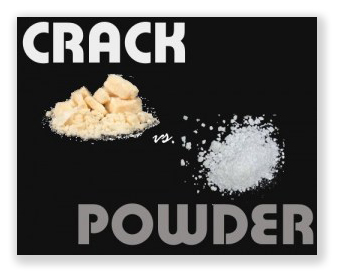
The tide is slowly turning in favor of defendants for crack cocaine resentencings arising from Fair Sentencing Act (FSA) retroactivity, authorized a year ago (minus five days) in Section 404 of the First Step Act. A few weeks ago, the 4th Circuit held that eligibility for a sentence reduction depended on the amount of crack specified in the indictment, not what the court found at sentencing. Last week, the 8th Circuit reached a similar conclusion where the defendant had been charged with 50 grams of crack, but sentenced for 150 kilos of powder.

Back before the turn of the millennium, Maurice McDonald was charged with distributing more than 50 grams of crack, and convicted of distributing about 57 grams of cocaine base. When Maurice committed the offense in 1999, the statutory penalty for 57 grams of crack was 10 years to life in prison. He was sentenced to life in prison, but that was cut to 30 years in a prior Guidelines 2-level reduction. After First Step made the FSA retroactive, the statutory range for Maurice’s conviction fell to 5 to 40 years.

crackpowder191216

But the district court denied Maurice’s sentence reduction motion, because his 360 month-to-life Guidelines sentencing rang was based on the presentence report’s having found him responsible for distributing more than 150 kilos of powder cocaine. Because his sentence was driven by the 330 lbs. of powder described in the PSR, the district judge reasoned, Maurice was not eligible for a reduction under the retroactive FSA.

The 8th Circuit disagreed. Instead, it held, Maurice’s offense of conviction  is a “covered offense” under First Step Act Sec. 404 because (1) it is a violation of a federal statute specifying crack cocain; (2) the statutory penalties for that statute were modified by the FSA; and (3) the offense was committed before August 3, 2010. Consequently, Maurice was eligible for a sentence reduction on his count of conviction.

crackpowder160606The 8th wrote, “It is true, as the district court noted, that McDonald’s base offense level under the Sentencing Guidelines was based on more than 150 kilograms of powder cocaine, not cocaine base. But this Guidelines calculation does not change the fact that he was convicted… for distributing cocaine base in violation of 21 USC 841(b)(1)(A)(iii). The First Step Act applies to offenses, not conduct… and it is McDonald’s statute of conviction that determines his eligibility for relief.”

The Circuit explained that a district court considering a motion for reduced crack sentence under the First Step Act “proceeds in two steps. First, the court must decide whether the defendant is eligible for relief under Sec. 404. Second, if the defendant is eligible, the court must decide, in its discretion, whether to grant a reduction. That the court might properly deny relief at the discretionary second step does not remedy any error in determining ineligibility at the first step.”

lawnotjustice190213In a recent Southern District of Texas case, a district court denied a defendant a First Step Sec. 404 sentence reduction because of the weight of the crack found in the PSR, rather than what was alleged in the indictment. The defendant moved for reconsideration, explaining in detail that the weight of authority nationwide is trending in the direction of holding that it is the indictment, not the PSR, that governs eligibility for a sentence reduction.

Remarkably, the district court conceded the point, holding that “in the interest of justice and a spirit of ‘judicial comity’, the Court follows the majority of courts that have addressed this issue, determining that the eligibility under Sec. 404(a) turns on the offense not the defendant’s conduct. Therefore, the defendant’s motion for reconsideration is granted, finding that he is eligible for a reduced sentence under the Fair Sentencing Act.”

United States v. McDonald, 2019 U.S. App. LEXIS 36661 (8th Cir. Dec. 11, 2019)

United States v. Steptoe, Case No. 4:02-CR-688 (SD Tex., Nov. 6, 2019)

– Thomas L. Root

Handful of Interesting Criminal Issues at Supreme Court – Update for December 11, 2019

We post news and comment on federal criminal justice issues, focused primarily on trial and post-conviction matters, legislative initiatives, and sentencing issues.

INTERESTING TIMES AT SUPREME COURT

interesting191212Banister: The Supreme Court last week heard oral arguments in Banister v. Davis, the case that asks whether a motion to amend a judgment denying a 28 USC § 2255 motion under F.R.Civ.P. 59(e) constitutes a second-or-successive § 2255 for which prior permission from the court of appeals is necessary under 28 USC § 2244.

Since the 2005 Gonzalez v. Crosby decision, a F.R.Civ.P. 60(b) motion to set aside a § 2255 judgment has almost always been considered a second-or-successive § 2255 motion for which prior permission from the court of appeals is necessary. In the last few years, some courts of appeal have also held that even the lowly F.R.Civ.P. 59(e) motion to amend a judgment denying a § 2255 motion, which postpones the deadline for filing a notice of appeal, is a second-or-successive § 2255.

This has created a conundrum for § 2255 movants. If you file a Rule 59(e) motion in a § 2255 case, it delays your deadline for appealing. But if the court treats the 59(e) as a second-or-successive § 2255, it will not delay the appeal deadline. Often, by the time you find out the court is treating it as a second-or-successive, your appeal deadline will likely have passed.

By the end of last week’s argument session, there appeared to be at least six votes for the conclusion that prisoner Greg Banister’s Rule 59(e) motion was not a “second-or-successive” habeas petition. And although that result may not ultimately change the outcome of Greg’s quest for collateral post-conviction relief, it would avoid a significant narrowing of appeal rights for federal post-conviction relief.

Holguin-Hernandez: When a defendant asks for a lower sentence than the judge ultimately imposes, does the defendant have to object to the judge’s sentence after it is announced in order to preserve the issue for appellate review?

kabuki191212It always seemed foolish to me that after vigorously arguing a sentencing issue, only to have the court rule against you, you were compelled to renew your objection after the sentence was imposed. It was sort of kabuki theater that served no purpose other than to create a procedural trap for appellants whose trial lawyers had missed making the magical incantation. F.R.Crim.P. 52(b) provides that an error not brought to the trial court’s attention may be reviewed only for “plain error.” On the other hand, Rule 51(b) explains that a “party may preserve a claim of error by informing the court – when the court ruling is made or sought – of the action the party wishes the court to take.”

Yesterday, the Supreme Court heard argument in Holguin-Hernandez v. United States to resolve a circuit split about exactly how these two rules play out against each other in federal sentencings. Holguin-Hernandez raised several claims under 18 USC § 3553(a) at sentencing, and then then appealed his additional 12-month sentence, arguing that it was unreasonable because it was “greater than necessary to effectuate the sentencing goals of … § 3553(a).” But the 5th Circuit held that because Mr. Holguin-Hernandez “failed to raise his challenges in the district court, our review is for plain error only.”

This might look like simple clear error. After all, Mr. Holguin-Hernandez surely did “raise his challenges” below – the court noted that “there is a circuit split” on the appropriate standard of review. In fact, the 5th Circuit has applied the rule that a defendant must register an objection to a sentence after it is imposed since its 2007 decision in United States v. Peltier.

Arguing for Mr. Holguin-Hernandez, attorney Kendall Turner agreed with my view (not that she cited me or anything, but any time a Supreme Court litigator and I make the same cogent argument, I feel good). She pointed out that Rule 51 plainly “tells parties how to preserve claims of error for appeal,” and “[t]here’s no need to tell the court twice.” There is no “practical merit” to a requirement that the defendant must again say “I object,” and, as Turner noted in rebuttal, the “[n]ine courts of appeals” that do not require a repeated objection “show that the Fifth Circuit’s rule is not necessary to the effective functioning of courts.” She emphasized the government’s agreement with this view, and said that the amicus was “tr[ying] to defend the judgment below on alternative grounds” – grounds that Justice Elena Kagan later pointed out are not “what the question presented is.”

slamdunk191212Post-argument commentators suggest the outcome is pretty cut-and-dried. The issue is not whether Mr. Holguin-Hernandez will carry the day, but rather – as Justice Sotomayor asked – how the Court will write its opinion to provide clear guidance to litigants.

Mojica: I am watching a petition for certiorari that is getting some traction. By now, it is clear that a conspiracy to commit a violent crime is not does not support an 18 USC § 924(c) conviction for use of a gun in a crime of violence. Post-conviction attorney Brandon Sample has filed a petition for certiorari arguing that the Supreme Court should resolve the question of whether aiding and abetting a crime of violence, which can be done without committing an act of violence, will support an 18 USC § 924 conviction.

This case has consequences for the crime of attempting to commit a crime of violence as well, and seems to be a logical extension of the implicit United States v. Davis holding last June that a conspiracy to commit a violent crime is not itself violent.

SCOTUSBlog, Argument analysis: Justices seem likely to side with Texas prisoner in important habeas case (Dec. 6)

SCOTUSBlog, Argument preview: Court likely to rule that a defendant preserves appellate challenge to length of sentence merely by arguing for lower one, but precise wording of opinion will be important (Dec. 11)

Mojica v. United States, Case No. 19-35 (Pet. for Certiorari, filed July 2, 2019)

– Thomas L. Root

A Nod Is Not As Good As A Wink in Habeas Corpus – Update for December 10, 2019

We post news and comment on federal criminal justice issues, focused primarily on trial and post-conviction matters, legislative initiatives, and sentencing issues.

2241 PETITION IS SELDOM A SUBSTITUTE FOR A 2255

island191211I would be writing this newsletter from the beach of my own Caribbean island if I had a dime for every guy who tells me he wants to file a petition for habeas corpus under 28 USC § 2241 petition because his 28 USC § 2255 habeas motion has already been denied. It just doesn’t work like that, as the 8th Circuit reminded a defendant last week.

Some quick history: “habeas corpus” is convenient shorthand for “writ of habeas corpus,” which is a judicial command to jailer to produce the “body,” that is, produce the prisoner in court and show by what right that person is being detained. The right was crucial back in the day when the King could jail anyone for anything and hold the prisoner without ever bringing him to court. The right of habeas corpus was so universally assumed to exist that the Constitution only mentions it as an exception, permitting the president to suspend habeas corpus during time of war. The only presidents to actually do that were Lincoln, Grant and FDR.

habeas191211Congress has passed statutes to regulate the use of habeas corpus. Under 28 USC § 2255, a Federal prisoner may challenge the lawfulness of his or her conviction or sentence. If it is the lawfulness of the detention being challenged – for example, how the Bureau of Prisons calculates the termination of a sentence – then a petition for habeas corpus under 28 USC § 2241 is filed.

The law places severe limitations on when a § 2255 motion may be filed, and whether a second one may be filed at all. Some prisoners think that to get around these § 2255 limitations, all they need to do is file a § 2241. Not so.

Chris Lee had been released from a prior federal sentence, and was serving a term of supervised release (sort of like parole) when he picked up some new fraud charges. The judge hearing the SR revocation gave Chris 35 months, but said that the time would be concurrent with anything he got on the new charges. But a different judge handling the new case gave him 57 months, and ordered it would be consecutive with the 35 months he got on the supervised release revocation.

Chris filed a § 2255 motion with his revocation judge, asking that the SR sentence be vacated and then reimposed so that as the later sentence, the BOP would have to run it concurrent regardless of what the 57-month sentence said. But he did not file the § 2255 motion on the right form, so the SR court sent it back for him to fix and refile.

But Chris did not do that. Instead, he filed a § 2241 petition in the district where he was locked up, arguing the BOP was wrong to run the sentences consecutively where the SR sentence said it was to be concurrent. The district where he filed said that the remedy he sought was really one available in a § 2255 motion, and sent it back to his SR judge, who held that the BOP’s interpretation was reasonable and therefore denied the petition.

habeasB191211Last week, the 8th Circuit denied it for a completely different reason, holding that it lacked subject-matter jurisdiction to hear the appeal unless Chris could show that “the remedy under § 2255 would be inadequate or ineffective.” This showing — required by the § 2255(e) “savings clause” — is tough to make. A § 2255 remedy is not inadequate just because a petitioner has already used up his one shot at a § 2255, or where the petitioner was unaware of his claim when the § 2255 was filed, or even if no § 2255 has ever been filed and the time to do so has passed.

Here, Chris failed to show that he was unable to pursue his desired relief by filing a § 2255 motion with the sentencing judge. Had the sentencing judge been persuaded by Chris’ arguments, the Circuit said, he could have had his sentence vacated. Had the sentencing judge denied his petition, he could have appealed that decision. But what he could not do is “forgo a decision on a § 2255 petition in the sentencing court in favor of pursuing a § 2241 petition somewhere else.”

Lee v. Sanders, 2019 U.S. App. LEXIS 35853 (8th Cir Dec. 3, 2019)

– Thomas L. Root

BOP Faces Serious and Ugly Suit for Sexual Assault of Female Inmates – Update for December 9, 2019

We post news and comment on federal criminal justice issues, focused primarily on trial and post-conviction matters, legislative initiatives, and sentencing issues.

BOP RUNS SMACK INTO #METOO

A year ago, The New York Times published a scathing story of the sexual harassment suffered by female BOP officers and workers at the hands of male BOP employees. Given the detailed allegations by BOP female employees of not just harassment, but of a culture of tolerance and coverup by BOP management, no one should be surprised that allegations of charges of much uglier sexual abuse of female inmates and heavy-handed official coverup would someday bubble to the surface.

BOPsexharassment191209At the time, The Times said women who report harassment “face retaliation, professional sabotage and even termination,” while the careers of many male BOP harassers and their protectors flourish. The new charges, that the BOP staff protected male employees from criminal charges and impeded required audits under the Prison Rape Elimination Act, are even more detailed, comprising the inevitable result of a much greater mismatch of power between abuser and victim.

handson191209Last week, 14 current and former BOP inmate women, ranging in age from 30 to 56 and nearly all first offenders, jointly sued the federal government over sexual abuse they alleged they endured at the women’s federal prison camp at Coleman and at FCI Tallahassee, both in Florida. Seven of the plaintiffs are still incarcerated, but all of them sued in their actual names, despite what they allege is an official Coleman policy of punishing any female inmate making a sexual harassment claim by housing her in a nearby county jail while her allegations are being “investigated.”

The 78-page lawsuit, filed by Atlanta law firm Adams & Reese  in the Middle District of Florida, sets out in graphic detail charges ranging from verbal harassment and threats to groping to rape, and alleges not just that women who complained were punished but that the institution even interfered with the law firm’s investigation of the charges.

In what the Miami Herald called “stark, chilling detail,” the lawsuit describes how female inmates were lured into private offices or sheds with no surveillance cameras, stalked relentlessly by male correctional officers until they were forced to submit. Some officers would even display computer screens showing the women the exact location of their families, a pointed message that their relatives could be targeted if the women didn’t cooperate. Some of the accused officers, all of whom are fully identified in the lawsuit, have resigned or taken early retirement (with immunity from prosecution for the actions they admitted to, according to Bryan Busch, the plaintiffs’ attorney.

coleman191209B

“The prison certainly did not want this to come out so they suppressed any sort of allegations that were made, and did not conduct complete and full investigations,” Busch said.

The Prison Rape Elimination Act was enacted by Congress to require that facilities adopt a zero-tolerance approach to rape and sexual abuse. The PREA specifies, among other things, that institutions undergo annual audits to ensure their compliance with its terms. The lawsuit alleges that female inmates who had complained about sexual abuse were routinely made unavailable for interview by PREA inspectors by the institution’s transferring of them to another prison facility before auditors arrived. “By transferring victims of sexual abuse,” the complaint alleges, Coleman “shields itself from legitimate investigation and suppresses complaints by punishing the victims.”

The BOP is sued by inmates all the time, but this one really feels different. First, the lawsuit is a Golanda of detail, 78 pages of well-pled facts. It is brought by a law firm that does not appear to be a windmill-tilter, but instead focuses primarily on securities and business litigation (but with experience in prisoner abuse cases). The plaintiffs seem reasonably well funded and not dependent on a jailhouse lawyer for representation.

zerotolerance191209Most important, if the details in the lawsuit are correct, the BOP already investigated many of the officers and promised them immunity from criminal charges in exchange for full confessions. Thus, the agency’s personnel records on the officers involved probably contains a wealth of evidence of both the sexual abuse and the coverup.

Sen. Dianne Feinstein, a member of the Senate Judiciary Committee, has shown great interest in treatment of female BOP prisoners. Perhaps more of a concern to the BOP should be the popularity of the #MeToo movement, which focuses on male dominance in matters of sexual harassment.

The Beaubrun lawsuit (Rachelle Beaubrun, a recently-released prisoner, is the lead plaintiff) represents the most serious attack to date on the alleged sex abuse culture at the BOP. This suit has the potential to end a lot of BOP careers and disrupt BOP management culture at women’s facilities throughout the system.

Beaubrun v United States, Case No. 5:19-cv-615 (M.D.Fla. complaint filed Dec. 3, 2019)

Miami Herald, Rape is rampant at this women’s prison. Anyone who complains is punished, lawsuit says (Dec. 4)

The New York Times, Hazing, Humiliation, Terror: Working While Female in Federal Prison (Nov. 17, 2018)

– Thomas L. Root

Presidential Pardon Gobbled Up, But Not By Inmates – Update for December 5, 2019

We post news and comment on federal criminal justice issues, focused primarily on trial and post-conviction matters, legislative initiatives, and sentencing issues.

TURKEY (BUT NO PRISONERS) PARDONED

Predictably, President Trump pardoned a North Carolina turkey named Butter last week, but that was the extent of his Thanksgiving week clemency.

presidential_pardon_thanksgiving_tile_coasterNevertheless, the Washington Examiner reported that many people with long federal sentences told it they hope Trump will make good on pledges to free inmates. Trump publicly asked three former prisoners last month for “a big list” of people to release. He said he was enduring his own injustice with impeachment proceedings.

“Give me the right ones… and as soon as you can, OK?” Trump said. “Because you know some great people that are going to be there for many, many years.”

“In November 2017, I wished I was Drumstick or Wishbone. Then in 2018 I wished I was Peas or Carrots,” said Alecia Weeks, a 42-year-old mother almost halfway through a 30-year sentence for dealing crack cocaine. Weeks said, “So far, the answer is, ‘Maybe, if I were a turkey.’ So, this year, I’m begging [Trump], ‘Gobble Gobble, please have mercy on me and my son! We will be forever grateful and make you proud.’”

Clemency advocates see Trump’s embrace as motivated in part by his own sense of persecution, beginning with special counsel Robert Mueller’s Russia investigation. But some note that the issue, pushed by his son-in-law Jared Kushner, has potential electoral significance, winning the enthusiasm of minority voters, some of whom now openly sympathize with Trump.

“President Trump is making ‘AMERICA GREAT AGAIN,’ and his message has reached so many of us inside prisons where I have been the past 31 years as a first offender,” wrote another prisoner, who was sentenced to 40 years for dealing crack. “It would be a great honor to personally thank President Trump if I were one of the chosen few to receive the same mercy as the two lucky turkeys that are guaranteed free range every year for the balance of their lives.”

Prosecutors find out how the other half lives...
Prosecutors find out how the other half lives…

Meanwhile, a number of prosecutors – who send people to prison every day but have never set foot inside an institution – are joining an initiative signed by about 40 of the nation’s most progressive district attorneys. The prosecutors are committing to visit prisons themselves, to send their staffs to do the same, and to incorporate such visits into mandatory training and job expectations.

Miriam Krinsky, executive director of the group Fair and Just Prosecution (FJP), that heads up the effort, said prosecutors have a special obligation to see the correctional system since they control the “front door” to the justice system. She hopes such visits broaden prosecutors’ perspectives and inform decisions on sentencing, bail and alternatives to incarceration. “No prosecutor should be putting people in places they haven’t seen or walked through,” Krinsky said.
Prosecutors signing on to the initiative include several state attorneys general and a number of local prosecutors. Thus far, no federal prosecutors have signed on.

Washington Post, The annual turkey pardon is one of the few norms President Trump has kept alive (Nov. 26)

Washington Examiner, ‘Maybe if I were a turkey’: Prisoners beg Trump to pardon them for Thanksgiving (Nov. 26)

Washington Post, They send people to prison every day. Now, they are pledging to visit (Nov. 25)

– Thomas L. Root

Not Every Inconsistency Is Perjury – Update for December 4, 2019

We post news and comment on federal criminal justice issues, focused primarily on trial and post-conviction matters, legislative initiatives, and sentencing issues.

LIAR, LIAR, PANTS ON FIRE

liar151213Defendants filing 2255 motions often like to complain that the government allowed perjured testimony, which of course violates due process under the Supreme Court case, Napue v. Illinois. But Napue issues can be hard to win.

Last week, the 4th Circuit reminded defendants of just how hard. On direct appeal, Don Bush argued that a government witness had lied on the stand, and the government knew it.

Napue held that “a conviction obtained through use of false evidence, known to be such by representatives of the State, must fall under the Fourteenth Amendment.” And the same result holds when the government, although not soliciting false evidence, allows it to go uncorrected when it appears.” A meritorious Napue claim requires “a showing of the falsity and materiality of testimony.”

Here, the Circuit said, Don’s Napue claim failed. Witness McDunce perjured himself on direct examination that he first engaged in drug transactions with Don in 2013. On cross-examination, he asserted the transactions began in 2011. On redirect examination, however, Don’s lawyer clarified any confusion that could have arisen regarding the timeframe of McDunce’s drug dealings with Don.

Even if McDunce’s testimony contained inconsistencies, the Circuit said, they would not support a Napue claim. Mere inconsistencies in testimony by government witnesses do not establish the government’s knowing use of false testimony.

United States v. Bush, 2019 U.S. App. LEXIS 35555 (4th Cir. Nov. 27, 2019)

– Thomas L. Root

Is Another Gundy in the Wings? – Update for December 3, 2019

We post news and comment on federal criminal justice issues, focused primarily on trial and post-conviction matters, legislative initiatives, and sentencing issues.

CHANGE IN THE WIND?

change191203The Supreme Court narrowly upheld a law last June that, in the dissenting words of Justice Neil Gorsuch, “hand[ed] off to the nation’s chief prosecutor the power to write his own criminal code.” Last week, Justice Brett Kavanaugh spoke up in support of Gorsuch.

The June ruling in Gundy v. United States, a case that centered on the Sex Offender Registration and Notification Act, required convicted sex offenders to register, check in periodically in person, and share personal information with the authorities. SORNA gives the Attorney General “the authority to specify the applicability of the requirements of this subchapter to sex offenders convicted before the enactment of this chapter.” In other words, Congress gave the AG a blank check when it came to dealing with the estimated 500,000 individuals whose convictions predate SORNA’s passage.

And that’s the issue, one that reaches far beyond SORNA: the delegation of legislative authority to a government agency. Gorsuch thought SORNA combined the lawmaking powers of Congress with the law enforcement powers of the executive, and then gave those combined powers to a single federal official. For the Supreme Court to let that outcome stand, Gorsuch argued, marks “the end of any meaningful enforcement of our separation of powers.”

Blank Bank and Credit Union cheque with space for your copy.Kavanaugh took no part in Gundy, leaving some court watchers to wonder abOut how he might have ruled. He answered that question last week in a statement on denial of certiorari in Paul v. United States, another separation of powers case. Kavanaugh praised “Justice Gorsuch’s scholarly analysis of the Constitution’s nondelegation doctrine” in Gundy, noting that this “thoughtful” dissent “raised important points that may warrant further consideration in future cases.”

The future case has yet to arrive at the Supreme Court, but Kavanaugh’s statement nevertheless is good news for people suffering when the Bureau of Prisons interprets good time statutes, RDAP statutes and the First Step Act to achieve tortured results that are now accepted without question by courts.

Reason, Kavanaugh Joins Gorsuch in Fight To Revive Nondelegation Doctrine (Nov. 25)

Paul v. United States (Kavanaugh, J., concurring), 2019 U.S. App. LEXIS 35706 (Supreme Ct., Nov. 25, 2019)

– Thomas L. Root

Winning the Appointed Counsel Lottery – Update for December 2, 2019

We post news and comment on federal criminal justice issues, focused primarily on trial and post-conviction matters, legislative initiatives, and sentencing issues.

3RD CIRCUIT ISSUES REMARKABLE INEFFECTIVE-ASSISTANCE DECISION

When prisoners file post-conviction motions, such as the motion under 28 USC § 2255, they are not entitled to appointed counsel under the Sixth Amendment. However, if their claims seem on their face to be sufficiently meritorious, the courts often appoint lawyers to help them in an evidentiary hearing or on appeal.

lottery191202How the courts select counsel to appoint varies from district to district and circuit to circuit. What does not vary is the relatively small amount of compensation paid for the lawyers’ work.

This is where the appointed counsel lottery comes in.

Usually, a solo practitioner or small firm is appointed, and the amount of time those appointed attorneys can devote is limited by the pedestrian need to make a living. If the hours you bill are what will put food on next month’s table, you are motivated to spend no more time on the appointment than fees available for compensation. It’s a fact of life.

A few times in my career, I have seen the occasional prisoner have appointed to him or her a lawyer at one of the “big law” firms – law partnerships with hundreds of lawyers and a culture of providing every client with a quarter-million dollar defense, regardless of whether the client is Megacorp International or Peter Pauper. I recall one defendant in Indiana calling me to report the court had appointed some lawyer from Washington, D.C. to represent him, at a firm named Jones Day or something like that.

“My friend,” I said, “you just won the lottery.”

(For the uninitiated, I note that Jones, Day, with over 2,500 lawyers and offices around the world, is one of the top grossing firms on the planet. Wikipedia describes it as “one of the most elite law firms in the world”).

And what a difference unlimited resources made for the Indiana defendant.

Just as big a win is when a top-ranked law school has a driven law prof and a gaggle of smart law students working in a practicum. Law students are allowed to provide representation in some cases, under guidance of a licensed attorney-professor. I know a vigorous pro se inmate with a complex legal question to whom a Georgetown University professor and her students were assigned by the D.C. Circuit. The representation he got could not have been purchased for $300,000.

Today, we consider lottery winner Peter Sepling. Pete pled guilty to importing gamma butyrolactone (GBL), a schedule I analogue drug. His lawyer cut a good deal, one that would let him get sentenced without application of a Guidelines career offender enhancement.

But while on bond, Pete got busted for conspiracy to import methylone, another Schedule I drug.

methylone191202Pete cut a deal on the new charge where he would not be prosecuted for the methylone, but instead, it would be factored into the sentence he would get in the GBL case. This is where the fun started.

The Guidelines do not contain any offense level for methylone. Pete’s presentence report compared methylone to methylenedioxymethamphetamine (MDMA), commonly known as ecstasy. The Guidelines holds ecstasy to be pretty bad stuff, equating a unit of that drug to 500 units of marijuana. Consequently, the District Court started its sentencing determination using this 500:1 ratio. In Pete’s case, this converted to 5,000 kilos of pot. The net result was that his Guidelines sentencing range of 27-33 months soared to 188-235 months.

Pete’s lawyer did not object to the methylone-ecstasy comparison, or to the sentencing range. Nor did he file a sentencing memorandum. At sentencing, defense counsel admitted to the court that he had “never heard of methylone… until Sepling got rearrested,” and that he had attempted to learn about the drug from the government. Counsel further explained that the government “tried to educate me… as Mr. Sepling tried to educate me. My understanding of the drug, which is very little, is that drug is – Spellman will explain to the Court – it’s like a watered down ecstasy.”

For its part, the Government also knew next to nothing about methylone.

At his attorney’s request, Pete told the Court methylone is “like ecstasy. If ecstasy is a ten… this stuff is six and lasts about an hour and a half.”

mdma191202The Court admitted it did not know anything about methylone, either, but observed that “in any event, it’s a controlled substance. It’s mind altering. It affects people’s behavior. It’s not a good thing. So I will consider that.” The Court varied downward from the Guidelines, but still gave Pete 102 months, telling him “you’ve committed a serious crime here, and it’s — in particular the methylone and that you put people in harm’s way.”

Pete filed a post-conviction motion under 28 USC § 2255, complaining that his lawyer failed to investigate methylone, and if he had, he would have found that the comparison to ecstasy was way overblown. The district court turned him down, finding that counsel’s performance was not ineffective because, “although sentencing counsel acknowledged that he knew little about methylone, he appropriately likened the drug to a ‘watered down ecstasy’” and “counsel’s characterization of the drug was consistent with Petitioner’s statements at sentencing.”

duke191202Then, Pete’s fortunes changed. On appeal the 3rd Circuit assigned a Duke University law school professor and three Duke law students working in the school’s appellate advocacy clinic to represent Pete. The Blue Devil counselors-in-training pulled out all the stops. Last week, they bulldozed the 3rd Circuit – in a remarkable decision – into reversing the district court, finding that Pete’s lawyer was ineffective, and holding that Pete was prejudiced by it.

The Circuit initially noted that Pete’s lawyer made the first question – whether his representation fell below the standards required of attorneys – an easy one to answer. At sentencing, the attorney admitted he knew nothing about methylone, and he made it clear that he had done nothing to educate himself, despite having a clear duty to do so. The decision cites several scientific studies and court decisions that were available to him, all of which found that methylone is much less serious that ecstasy. The 3rd said that “properly prepared counsel could have made a strong argument, grounded in readily available research, that methylone is significantly less serious than MDMA.”

In other words, the 3rd Circuit said that Pete’s lawyer was ineffective for not arguing that the Guidelines’ 500:1 ratio was flawed, and should be ignored by the sentencing court. Ineffectiveness for failing to attack the Guidelines for being wrong is a holding without precedent.

The district court denied Pete’s § 2255 motion in part because defense counsel’s description of methylone was good enough, and that Pete himself testified as to its effects as sentencing. The 3rd Circuit blew that justification apart:

Rather than doing any research into the pharmacological effect of methylone in order to competently represent his client and inform the District Court’s application of the Guidelines table, Sentencing Counsel relied upon his client to explain the effects of methylone. Sentencing Counsel thus “decided to outsource to Sepling any discussion of methylone at the hearing.”

Still, lawyer ineffectiveness is only one-half of the equation. If a lawyer screws the pooch, but the defendant ends up being none the worse for the blunder, there is (in the words of Strickland v. Washington, the Holy Grail of ineffective assistance of counsel) no prejudice.

stupidlawyr191202After having read hundreds of 2255 decisions over the past 25 years, I was sure what was coming. Pete was sentenced far below his Guidelines range. Normally, a court would hold that because Pete got a downward variance sentence well under his guidelines, he could not possibly have been prejudiced by his lawyer’s failures.

But instead, the 3rd Circuit quite properly said the below-guidelines sentence was irrelevant to whether Pete was prejudiced:

A significant variance from an arguably high and inaccurate guideline sentence is not a gift. The District Court expressed a desire to base Sepling’s sentence on the seriousness of distributing methylone. It is impossible to review the transcript of the sentencing proceeding without concluding that the District Court did not have sufficient information to assess the actual seriousness of methylone. We therefore cannot dismiss the very real possibility that the court may have been amenable to a further downward variance based upon evidence specific to methylone’s reduced effect as compared to MDMA… Because Sentencing Counsel’s dereliction put the District Court in a position where it was literally ‘flying blind’ at sentencing, there was no way for a district court to know if the sentence imposed was the least serious penalty consistent with the Court’s objective in imposing the sentence.

This is an astounding case. I salute Duke Law (and sorry about the Stephen F. Austin thing).

United States v. Sepling, 2019 U.S. App. LEXIS 35706 (3rd Cir. Nov. 29, 2019)

– Thomas L. Root

So You Had a Bad Day… Dr. Hawk Sawyer – Update for November 27, 2019

We post news and comment on federal criminal justice issues, focused primarily on trial and post-conviction matters, legislative initiatives, and sentencing issues.

THE BOP’S TERRIBLE, HORRIBLE, NO GOOD, VERY BAD DAY

Tuesday, November 19, was no kind of day for the BOP.

lazyguard191127First, two BOP correctional officers on duty the morning financier Jeffrey Epstein, in pretrial detention for sex charges, killed himself last summer were indicted under 18 USC 1001 for having faked records that they performed Special Housing Unit inmate counts overnight and one count of conspiracy to defraud the United States for good measure. The New York Times reported one CO was catching up on sports news and looking at motorcycle sales on a government computer, while the other spent time shopping online for furniture. For a couple hours, they slept.

Attorney General William Barr said the suicide was the result of “a perfect storm of screw-ups,” numerous irregularities at MDC New York that gave Epstein the chance to take his own life.

At the same time the indictments were being announced, BOP director Kathleen Hawk Sawyer got grilled by the Senate Judiciary Committee about the Epstein debacle, a mess she was brought out of retirement to fix. She admitted that issues such as officers sleeping on the job have been an ongoing problem. “We’ve been monitoring the cameras… at every one of our institutions to determine how well and how effective our staff members are doing their rounds,” Sawyer said. “We have found a couple of other instances [of guards napping on the job] and we’ve immediately referred those to the inspector general’s office.”

Sawyer also told the Committee that FBI investigators are looking into whether a “criminal enterprise” may have played a role in Epstein’s death.

risk160627The Committee also criticized the proposed PATTERN risk assessment tool which is to be adopted in its final form by the end of November. Sen. Richard Durbin (D-Illinois) complained that PATTERN is “so fundamentally unfair, that it cannot stand without challenge.”

In a PATTERN test run, Durbin said, 29% of white inmates were deemed to be high-risk for returning to prison compared with 59% of black inmates. “Part of the problem is the tool doesn’t distinguish between a traffic stop and a murder conviction,” Durbin said. “It simply measures the risk that someone will be arrested or return to the federal system, and an arrest is not a new crime. A conviction is a new crime.”

The New York Times, Guards Accused of Napping and Shopping Online the Night Epstein Died (Nov. 19)

The Crime Report, Federal Prison Guard Napping Called Ongoing Problem (Nov. 20)

Associated Press, AG Barr: Epstein’s death was a ‘perfect storm of screw-ups’ (Nov. 22)

– Thomas L. Root