All posts by lisa-legalinfo

Biden Says Trump Got It Right on CARES Act Home Confinees Going Back to Prison – Update for July 29, 2021

We post news and comment on federal criminal justice issues, focused primarily on trial and post-conviction matters, legislative initiatives, and sentencing issues.

BIDEN DOJ AGREES CARES ACT REQUIRES HOME CONFINEES TO RETURN TO PRISON, BUT ALL IS NOT LOST

comeback201019In a dying gasp last January, Donald Trump’s Dept of Justice Office of Legal Counsel interpreted § 12003 of the CARES Act to mean that anyone sent to home confinement during COVID-19 had to return to prison a month after the official state of emergency for the pandemic ends, according to officials.

Since taking office, President Biden’s administration has come under pressure from FAMM, other activists, and lawmakers – including Senate Judiciary Committee Richard Durbin (D-Illinois) and Sen Charles Grassley (R-Iowa) – to revoke the memo. But last week, The New York Times reported the Biden DOJ has concluded that the January memo correctly interpreted the law.

The COVID state of emergency is not expected to end this year, in part because of the rise of the Delta variant. “But the determination means that whenever it does end,” The Times said, “the department’s hands will be tied.”

The Times said several Administration officials “characterized the decision as an assessment of the best interpretation of the law, not a matter of policy preference.” But that didn’t slow the barrage of criticism.

backstab160404“We took President Biden at his word that he wanted to reduce mass incarceration, but this choice, to send thousands back to prison, would be doubling down on the worst parts of his legacy,” Holly Harris, president of Justice Action Network, said. “It’s time for President Biden to keep his promise, and keep these people home.” The Hill complained that “Biden and Attorney General Merrick Garland could have rescinded that policy.” Lauren-Brooke Eisen, director in the Brennan Center’s Justice Program, said, “No public interest is served in having this group of individuals reincarcerated.”

The Justice Action Network and the Brennan Center both noted that Biden campaigned heavily on criminal justice reform last year.

“On the campaign trail, President Biden vowed to take bold action to reduce our prison population, create a more just society, and make our communities safe. He said he believed in offering second chances,” Eisen said.

Forbes said, “The position of both administrations seems odd when the program has been such a success… Of the 20,000 on home detention (CARES Act plus those on home confinement because they were near the end of their prison term) there had only been 20 individuals returned to prison institutions as a result of violations. That’s a 99.9% success rate.”

interpretation210729I think the critics are missing the point. The fact that the Biden DOJ thinks the prior OLC legal analysis of the CARES Act is solid has no effect on what policy the Administration will follow. If anything, the criticism Biden is taking over last week’s Times story makes it more likely than not that Biden or Congress will find some means of keeping CARES Act people on home confinement.

The New York Times, Biden Legal Team Decides Inmates Must Return to Prison After Covid Emergency (July 19, 2021)

The Hill, Biden administration criticized over report that it is not extending home confinement for prisoners (July 20, 2021)

Forbes, Biden Administration Signals That Federal Inmates On Home Detention Will Return To Prison (July 20, 2021)

The Crime Report, Prisoners Freed During COVID are ‘Twisting in the Wind,’ say Reformers (July 23, 2021)

– Thomas L. Root

No Vax, No Love, 7th Circuit Says – Update for July 27, 2021

We post news and comment on federal criminal justice issues, focused primarily on trial and post-conviction matters, legislative initiatives, and sentencing issues.

ANTI-VAXXERS GET NO COMPASSION, 7TH CIRCUIT SAYS

District Courts have been struggling with what to do with prisoners seeking compassionate release under 18 USC § 3582(c)(1)(A)(i) because of COVID-19, now that vaccines are generally available. You might think all of this is akin to perfecting buggy whips, what with the COVID pandemic over with, but the virus has a way of sticking around like that dinner-party guest who just won’t leave.

antivax210727The BOP numbers of sick inmates are climbing again, with 214 sick as of last night. More ominous: three weeks ago, the number of BOP institutions with COVID present had fallen to a 13-month low of 64. As of last night, it had shot up to 84. Something tells me COVID behind the fence is soon to become an issue again.

Other numbers you should know: 53.9% of federal prisoners had been vaccinated. A good number of those who have not taken the vaccine still have § 3582(c)(1)(A)(i) compassionate release motions pending. Last week, the 7th Circuit warned them that they may have nothing coming.

Brian Broadfield filed a compassionate release motion, claiming his medical conditions made him susceptible to COVID-19. His district court denied him, finding that a prior weapons conviction made him a danger to the community. That was error: Brian had no prior weapons conviction. But when he appealed, and asked the 7th Circuit to remand the case, the appeals court declined.

“A remand would be appropriate only if reconsideration could produce a decision in Broadfield’s favor,” the 7th said, “and it could not. When Broadfield filed his application for compassionate release, and when the district judge denied it, COVID-19 was a grave problem in America’s prisons, where people cannot engage in social distancing. Today, however, effective vaccines are available.”

Brian said he had refused to get vaccinated because he feared an allergic reaction, but he did not show he had ever had such a reaction before. Even if he had, the Circuit said, “the policy statement provides that prisoners with a history of allergic reactions to vaccines will receive extra evaluation before vaccination and additional observation afterward.”

coffee210521(An aside: That policy and $3.75 will get you a Starbucks frappe menu. Dr. Homer Venters – an epidemiologist who, among other positions, has been designated by the U.S. District Court for the Central District of California to inspect FCI Lompoc – reported to that Court that

[i]t is apparent that BOP has performed well in their efforts to secure, distribute and offer COVID-19 vaccine, a significant accomplishment… there appears little effort focused on engaging staff and incarcerated people about their questions or concerns regarding the vaccine. In speaking with the leadership, it was clear that they view the periodic, mass offering of the vaccine as more than adequate. They reported no efforts to identify and follow up with high-risk patients who refused vaccination, and stated several times that because those people would be re-offered again at a later time, in the same manner as before, that the process was adequate. This is consistent with the reports of patients themselves, many of whom reported that despite having questions about the vaccine and their own health issues, these questions were not addressed during the vaccine offer or afterwards. The CDC has entire toolkits and guidance documents designed to increase vaccine update, but the basic foundation of these efforts is engaging with patients; ‘By taking time to listen to their concerns and answer their questions, we can help people become confident in their decision to be vaccinated.’ The approach of BOP Lompoc not only fails to engage with patients, it has a paradoxical effect of creating a pool of extremely high-risk unvaccinated patients. Many of these high-risk patients were initially offered the vaccine 3 or 4 months ago, and the insistence by BOP leadership that their very valid and predictable questions and concerns go unaddressed during this time significantly increases the risk of preventable death from COVID-19.

[Note: Hyperlink to CDC guidance not in Dr. Venters’ statement – I added it]. In other words, any prisoner with questions about the vaccine had better not hope for any wise counsel from the quackery that is BOP Health Services. End of aside.)

sthup210727The 7th concerned itself only with the policy statement, not with its execution. It ruled that “for the many prisoners who seek release based on the special risks created by COVID-19 for people living in close quarters, vaccines offer relief far more effective than a judicial order. A prisoner who can show that he is unable to receive or benefit from a vaccine still may turn to this statute, but, for the vast majority of prisoners, the availability of a vaccine makes it impossible to conclude that the risk of COVID-19 is an ‘extraordinary and compelling’ reason for immediate release.”

Ohio State law professor Doug Berman said in his Sentencing Law and Policy blog, “Critically, by using the phrase “the vast majority of prisoners,” this final sentence still suggests that, at least for a few prisoners, the risk of COVID-19 can still provide an “extraordinary and compelling” reason for compassionate release. Even more important may be whether lower courts might read this paragraph to mean that COVID risks cannot be combined with other factors to make out extraordinary and compelling reasons. Even if COVID risks are low for the vaccinated, they are not zero and so should be, as I see it, still a potential contributor to assessing what qualifies as an extraordinary and compelling reason when combined with other factors.”

United States v, Broadfield, Case No 20-2906, 2021 US App LEXIS 21580 (7th Cir. July 21, 2021)

Second Report of Dr. Homer Venters, ECF 239, filed May 12, 2021, in Torres v. Milusnic, Case No. 20-cv-4450 (C.D.Cal.)

Santa Barbara Independent, Doctor ‘Extremely Concerned’ About Low Vaccination Rate Among Lompoc Prisoners (, May 20, 2021)

Bureau of Prisons, COVID-19 Vaccine Guidance: Federal Bureau of Prisons Clinical Guidance (Jan. 22, 2021)

Sentencing Law and Policy,  Seventh Circuit panel states (in dicta?) that vaccine availability “makes it impossible” for COVID risks to create eligibility for compassionate release (July 22, 2021)

– Thomas L. Root

The Law’s Still Majestic… – Update for July 26, 2021

We post news and comment on federal criminal justice issues, focused primarily on trial and post-conviction matters, legislative initiatives, and sentencing issues.

“THE LAW, IN ITS MAJESTIC EQUALITY…

… forbids the rich as well as the poor to sleep under bridges, to beg in the streets, and to steal bread,” so goes a famous 19th quotation. If you recall it, you have either read The Red Lily (which is unlikely) or remember that I’ve used the quotation before.

quackdoc210707It’s just that the observation is so apt, especially where prisoners try to bring Federal Tort Claim Act cases alleging medical malpractice by the quackery that is BOP healthcare.

In an effort to cut down on worthless medical malpractice (“med-mal”) claims, most state procedural rules require that such a claim be accompanied by an expert’s affidavit attesting that the plaintiff’s cause of action has some merit. If you’re the average man or woman on the street, and you watch mid-day game shows, you have already lined up a lawyer who will take your case for a 40% cut of the winnings. So it’s no problem: your lawyer has a compliant expert who will provide an affidavit swearing that some imbecile medical provider cut off your right leg and attached it to your ear.

But if you happen to be in prison, you’ve got a couple of hurdles to jump. First, finding a personal injury lawyer who wants to devote her time and money (yeah, PI lawyers front the expenses of the trial, which may hit six figures in some instances) is tough. As hard as it is to believe, juries do not have a lot of sympathy for federal prisoners who say they were hurt by lousy doctoring. Second, the biggest components of damages are lost earnings and medical costs. Inmates have no medical costs (except for the occasional $2.00 health service co-pay) or any lost earnings.

Because damages are what fire up a jury to award big bucks, the personal injury bar does not see inmate cases as being worth much.

pay210708‘No lawyer’ means that inmates have to pony up $5,000 right from jump to hire an expert, in order to get the affidavit they need to avoid having their FTCA claims thrown out.

Seems fair, right? After all, the requirement applies to all med-mal plaintiffs, rich and poor alike. The guy left in a wheelchair by a negligent truck driver, being represented by some megafirm needs an expert. So does an inmate making 25¢ an hour, Equality realized!

A couple of years ago, the 6th and 7th Circuits ruled that the Federal Rules do not require such affidavits, and thus are inconsistent with state rules. The Supremacy Clause of the Constitution holds that federal rules displace inconsistent state rules, and the FTCA expressly holds that federal rules govern its application.

notapply210726Last week, the 4th Circuit followed the 6th and 7th, holding that a West Virginia law requiring medical certifications before filing med-mal suits does not apply to FTCA actions. “About half of all states similarly demand that medical malpractice plaintiffs secure some sort of early support from a qualifying expert,” the Circuit said. “But there is now a growing consensus that certificate requirements like West Virginia’s do not govern actions in federal court, because they conflict with and are thus supplanted by the Federal Rules of Civil Procedure… We agree, and hold that failure to comply with West Virginia’s MPLA is not grounds for dismissal of Pledger’s federal-court FTCA action.”

Pledger v. Lynch, Case No 18-2213, 2021 U.S. App. LEXIS 21587 (4th Cir, July 21, 2021)

– Thomas L. Root

Yes, We’re Back From Vacation… and the House Has Been Busy – Update for July 23, 2021

We post news and comment on federal criminal justice issues, focused primarily on trial and post-conviction matters, legislative initiatives, and sentencing issues.

HOUSE JUDICIARY COMMITTEE PASSES EQUAL ACT ON TO FULL HOUSE

The House Committee on the Judiciary approved the Eliminating a Quantifiably Unjust Application of the Law (EQUAL) Act (HR 1693) on Wednesday by a 36-5 vote, making the measure the leading contender for the first criminal justice reform bill to be passed by the 117th Congress.

crackpowder191216

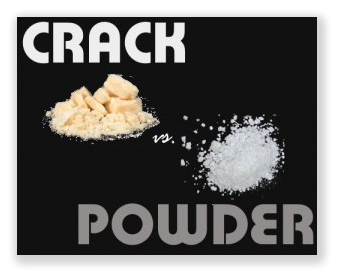
The EQUAL Act would eliminate the federal crack and powder cocaine sentencing disparity and retroactively apply it to those already convicted or sentenced. The sentencing disparity between crack and powdered cocaine, at one point as high as 100 to 1, helped fuel the mass incarceration epidemic; 77.1% of crack cocaine trafficking offenders were Black, whereas most powder cocaine trafficking offenders were either white or Hispanic, according to a Fiscal Year 2020 report from the USSentencing Commission.

Even under the Fair Sentencing Act of 2021, which was intended to reduce the ratio to 1:1, compromises made to satisfy certain troglodytes in the Senate (yes, Jefferson Beauregard Sessions III, we’re talking about you) imposed an 18:1 ratio. That ratio meant that while one must be convicted of a crime involving 500 grams of cocaine to qualify for a minimum five-year sentence, a mere 28 grams of crack is enough to earn a defendant the same sentence.

The EQUAL Act was introduced earlier this year by Senators Cory Booker (D-New Jersey) and Richard Durbin (D-Illinois), as S.79. Beyond getting rid of the disparity, the bill would entitle those previously convicted of drug offenses to request a sentence reduction (which, like prior retroactive sentencing changed) would permit the sentencing judge to exercise discretion on granting or denying a lower sentence.

“For over three decades, unjust, baseless and unscientific sentencing disparities between crack and powder cocaine have contributed to the explosion of mass incarceration in the United States and disproportionately impacted poor people, Black and Brown people, and people fighting mental illness,” Booker said.

congress210723For those readers who skipped government class in high school, HR 1693 must still be voted on by the House of Representatives, just as the Senate version (S.79) – while receiving a lot of happy talk during a June 22 hearing – must be passed out of Committee and then put on the full Senate’s calendar. As of today, the measure is not on the Senate Judiciary Committee executive meeting calendar. As FAMM put it in an email blast yesterday, “The EQUAL Act goes to the full House of Representatives for a vote next, and then must be passed by the Senate and signed by President Biden before it can become law. The fight isn’t even close to over yet.”

House Judiciary Committee, Markup of H.R. 1693 (July 22, 2021)

Brooklyn Eagle, House Committee Passes EQUAL Act (July 22, 2021)

Regina, Saskatchewan, Leader-Post, U.S. politician wants everyone to ‘get real’ and admit weed doesn’t enhance performance, except maybe for hot dog eating (July 22, 2021)

– Thomas L. Root

Some Short Notes From the News – Update for July 15, 2021

We post news and comment on federal criminal justice issues, focused primarily on trial and post-conviction matters, legislative initiatives, and sentencing issues.

THE SHORT ROCKET

rocket190620
A couple of short takes from last week’s news (and one update to yesterday:

Pardon Me: The June 2021 Federal Sentencing Reporter was devoted entirely to the presidential pardon power. In one essay, the authors found that of President Trump’s 238 clemency grants, only 25 (11%) were recommended by the DOJ Pardon Attorney.

New York magazine reported last week that Trump’s 238 clemency grants was a 50-year low. While Biden has hinted he’ll started granting clemency next year (before the midterm elections), the magazine was skeptical:

“The appearance of being “soft on crime,” and the possibility that someone you free re-offends in some politically inopportune way, makes it hard for presidents to rationalize pardoning people or commuting sentences with any regularity… The effect is that clemency has become really unusual. And when something is unusual, each decision becomes freighted with dramatic significance and scrutinized to the nth degree.”

Meanwhile, law professors Rachel Barkow (New York University) and Mark Osler (University of St. Thomas School of Law) sounded the alarm this week that contrary to its campaign pledges, the Biden Administration is poised to resume the errors of the past.

Inexplicably, however, the Biden administration… wants to leave clemency under the control of the Justice Department. Doing so will undermine the administration’s stated hope of achieving criminal justice reform and reducing racial bias in the federal system….

In conversations with activists, the administration has, at most, expressed some desire to use the pardon power before the 2022 midterm elections. That tells us two things, both dispiriting: that this is a low priority for the president, and that the administration does not yet have a handle on how this all could work. That’s far too long for reforms that don’t need congressional approval and when there is a backlog of petitioners who have waited too long for justice.

Federal Sentencing Reporter, Vol 33, Issue 5, After Trump: The Future of the President’s Pardon Power

Lawfare, Trump and the Pardon Power (July 6, 2021)

New York Magazine, When Will Joe Biden Start Using His Clemency Powers? (July 5, 2021)

The New York Times, We Know How to Fix the Clemency Process. So Why Don’t We? (July 13, 2021)

DOJ Inspector General Calls Out BOP on Faith-Based Support: A report issued last week by the DOJ Office of Inspector General found that a 30% shortage in BOP chaplains as well as “a lack of faith diversity” among the chaplaincy staff “leaves some inmate faith groups significantly underrepresented,” causing “many institutions to rely on alternative religious services options, such as inmate-led services.”

religion191230

The IG said “One particular concern was the potential for an inmate to use a religious leadership role to engage in prohibited activities or as a method to obtain power and influence among the inmate population.” The report concluded that “in the absence of a fully staffed and diverse chaplaincy, BOP institutions are unable to adequately administer their religious programs, prompting many BOP institutions to turn to alternatives that pose enhanced risks, such as inmate-led services and reliance on minimally vetted volunteers.”

DOJ, Audit of the Federal Bureau of Prisons’ Management and Oversight of its Chaplaincy Services Program (July 7, 2021)

readup210715Read Up on EBRRs: The BOP has issued a Program Statement on how staff is to determine inmate programming needs. This is important, because – contrary to the rumor mill, so-called inmate.com – earned time credits (ETCs) are only awarded for completion of approved programs that address needs previously identified by BOP staff. The new program statement guides you on how to get needs identified that will lead to ETCs.

PS 5400.01, First Step Act Needs Assessment (June 25, 2021)

– Thomas L. Root

A Little Bias Never Hurt Anyone – Update for July 14, 2021

We post news and comment on federal criminal justice issues, focused primarily on trial and post-conviction matters, legislative initiatives, and sentencing issues.

HIT THE ROAD, JUDGE


I would retire today if I only had a dime for every defendant who ever asked how to get his or her judge thrown off the case for bias. Or even just a nickel for everyone who has filed an unsuccessful motion to do just that.

Dick and Judy Brocato owned a lawn care company. Over a three-year period, they concealed about $1.7 million of business income from the IRS.

Oh, the calumny! Working hard, earning an honest buck, and then not telling your Uncle Sam so that he can lop off his share! Well, whatever… they were charged with tax fraud.

maserati210714

At trial, Judy tried to explain where she had come up with a $9,000 down payment for a Maserati. She said she had gotten it from her dead mother’s estate. The government did not pursue the explanation, but the judge did. During a sidebar before closing arguments, the judge told the Brocatos’ attorney not to argue in closing that the $9,000 came from Judy’s mom, because the judge’s staff had conducted an “Internet search” and found mom’s obituary. “The transaction with the Maserati occurred in 2013 and it appears from the obituary of her mother that she died in 2015,” the judge said, “so, I don’t think she would have gotten money in 2013 from her mother’s estate. The Court takes a very dim view of perjury in proceedings; so, you need to keep that in mind.”

The jury found them guilty.

bias210714That was in February. Months later, as sentencing approached, the sleuthy district judge acted on her own to order up a certified copy of mom’s death certificate. At that point, the Brocatos had had enough of a courtroom that seemed to have two prosecutors but zero judges. They filed a motion to recuse the judge.

The judge, of course, denied the motion, determining that detailing her staff to help the prosecutor attack the Brocatos’ case was perfectly fine. She later sentenced both Dick and Judy to 33 months, the low end of their Guidelines sentencing range.

A recusal motion is a tough sell. Remember, defendants may come and go, but the judges all belong to the same club, and have long-standing professional and personal relationships. It is simply an acknowledgment of reality to recognize that there is a strong judicial predisposition against recusing a colleague.

So it was here. Last week, the 5th Circuit agreed the judge’s actions were improper, but that she had not shown bias.

Not everything can be described as bias or partiality within the meaning of the recusal statutes, 28 USC § 144 and § 455(a), the 5th said. “Rather, the concept of bias connotes a favorable or unfavorable disposition or opinion that is somehow wrongful or inappropriate… because it rests upon knowledge that the subject ought not to possess…” A judge is not generally required to recuse herself for bias – even if the judge may think the defendant is pond scum – when the judge’s “knowledge and the opinion it produced were properly and necessarily acquired in the course of the trial.”

nancydrew210714Of course, the bias in this case, such as it might be, came from information acquired outside of the trial. “We do not in any way condone Internet searches concerning a witness’s credibility, or any type of similar investigation by court staff into factual matters.” the Circuit said. “This sort of ex parte fact-gathering is improper. Such activity has the potential to raise reasonable questions concerning impartiality, and it should not occur. We also find the district judge’s use of the term ‘perjury’ regrettable in light of the context in which the inconsistent testimony was identified.”

So was the 5th about to lay out Judge Nancy Drew? Hardly. “With that said, however, we think that a review of all of the facts and circumstances in this case dispels any reasonable doubts created by staff’s improper Internet search or the judge’s use of the word ‘perjury’.”

The Circuit found it significant that the Brocatos did not move to recuse the Judge until six months after she first raised the perjury matter, and that they both got 33 months, the bottom of the Guidelines advisory 33-41 sentencing range, with no obstruction-of-justice enhancement. The defendants’ only argument was that they might have gotten a below-Guidelines sentence but for the bias, and the 5th said that reason wasn’t enough to show they had been prejudiced.

Both of these excuses are perilously close to make-weight arguments. Make no mistake: filing a motion to recuse is a nuclear option. The Brocatos showed commendable discretion in letting the judge’s charge conference “perjury” revelation slide, and only decided that they had to push the button when the judge started assembling her own sentencing evidence. And as for the bottom of the Guidelines sentences without any enhancement for perjury, Judy hardly got any break.

taxreturn200401Unfair or not, there is often a sentencing discount for the wife, if for no other reason than she’s a girl, and old habits die hard. Likewise, for tax offenses, the likelihood that a defendant will get a sentence below the Guidelines range is more than a mere hope: the Sentencing Commission’s 2020 Sourcebook reports that over 70% of tax fraud sentences (Guideline § 2T1.1) vary downward from the sentencing range, making it more likely than not that the Brocatos would have gotten a break but for the judge’s bias.

That she stayed within the Guidelines is hardly surprising: the Judge knew by sentencing that her investigative frolic was bound to be raised on appeal, and that within-Guidelines sentences and no whisper of the “p” word at sentencing were all that might save her decision on recusal.  But it is utterly disingenuous for the appellate court to dismiss the likelihood of a downward variance as not a significant reason for recusal.

United States v. Brocato, Case No 20-40624, 2021 U.S. App. LEXIS 20449 (5th Cir., July 9, 2021) (per curiam)

– Thomas L. Root

Sure You’re Innocent, But WHY Are You Innocent? – Update for July 12, 2021

We post news and comment on federal criminal justice issues, focused primarily on trial and post-conviction matters, legislative initiatives, and sentencing issues.

JUST SAYING IT DOESN’T MAKE IT SO

smile210712Sam Abram had a brief but prolific career as a bank robber, an occupation that Sam found to be more rewarding if he employed a smile and a gun rather than a smile alone. When the FBI nabbed him, Sam was convicted of the robberies and – for good measure – as a convicted felon in possession of a gun, a violation of 18 USC § 922(g).

Sam was convicted, lost on appeal, and then lost again on a post-conviction 28 USC § 2255 motion. Several years later, the Supreme Court held in Rehaif v. United States that to be convicted of being a felon-in-possession, the defendant had to actually know he was a member of a class of people prohibited from possessing a gun. In Sam’s case, Rehaif said he had to know he was a convicted felon at the time he possessed the gun.

Generally, a § 2255 motion is the only way to mount a post-conviction challenge to an unlawful conviction or sentence, but 2255 motions are pretty much one-to-a-customer. If you have already filed one § 2255 motion, you must get permission from the Court of Appeals to file a second one, and getting permission is tough. Under 28 USC § 2244, you must either show you have discovered new evidence you couldn’t have feasibly found before – evidence that would have been a home run with the jury – or that the Supreme Court had handed down a constitutional ruling made retroactive on appellate review.

Rehaif was a reinterpretation of a statute that virtually all of the Federal circuits had gotten wrong, but because it was a decision of statutory construction rather than a decision that 18 USC § 922(g) was unconstitutional, Sam couldn’t get leave to file a new § 2255 motion.

savings180618But § 2255 has a “savings clause,” § 2255(e), which lets people in Sam’s position file a traditional 28 USC § 2241 habeas corpus petition when a § 2255 motion “is inadequate or ineffective to test the legality of his detention.” And a § 2255 motion is “inadequate or ineffective” if “(1) the § 2241 petition raises a claim that is based on a retroactively applicable decision; (2) the claim was previously foreclosed by circuit law; and (3) that retroactively applicable decision establishes that the petitioner may have been convicted of a nonexistent offense.”

Sam filed a § 2241 petition, arguing that his § 922(g) conviction should be thrown out because his indictment never alleged he knew he had been convicted of a prior felony, and, by the way, he was actually innocent in that he didn’t know about his convicted-felon status. The district court shot down his § 2241 petition, and last week, the 5th Circuit agreed.

The Circuit said that Sam had to provide some evidence or argument supporting that he may have been convicted of a nonexistent offense. That requirement is “particularly important in the Rehaif context,” the 5th said, because “[c]onvicted felons typically know they’re convicted felons” (a Kavanaugh quip from last month’s Supreme Court decision, Greer v. United States). The Circuit said, “if a defendant was in fact a felon, it will be difficult for him to carry the burden… of showing a reasonable probability that, but for the Rehaif error, the outcome of the district court proceedings would have been different.”

innocent210712All Sam did was assert he was actually innocent, which was nothing more than parroting the standard for a “savings clause” § 2241 petition. Where a prisoner just does that – without providing some evidence or argument supporting his claim that he was unaware of his relevant status – then, the Circuit ruled, “he has failed to demonstrate that he is entitled to proceed under § 2255(e)’s savings clause.” And thus, a substantive defect in the prisoner’s showing becomes a procedural defect as well.

Abram v. McConnell, Case No. 20-30199, 2021 US App. LEXIS 20174 (5th Cir. July 7, 2021)

– Thomas L. Root

A Couple of ‘Shorts’ – Update for July 9, 2021

We post news and comment on federal criminal justice issues, focused primarily on trial and post-conviction matters, legislative initiatives, and sentencing issues.

GRANDMA GOES HOME AS ADVOCATES BEAT UP BIDEN ON HOME CONFINEMENT

short210709FAMM, the American Civil Liberties Union, and the Justice Action Network last week called on President Biden to use his clemency authority to prevent about 4,000 people now on CARES Act home confinement from being sent back to prison when the pandemic ends.  Nothing new there. But then, into the middle of this brouhaha stepped the Bureau of Prisons.

A month ago, Gwen Levi, a Baltimore grandmother who had been sent to home confinement under the CARES Act, was returned to prison by the BOP.  Her offense was “escape.” In the BOP, that means that she was taking a computer class, and during class, she turned off her phone. The halfway house called to check on her whereabouts, but she did not call back until after class. For that, she went back to prison for another eight years.

The BOP didn’t reckon on the media outcry. After all, who doesn’t like grandmas? The Washington Post trumpeted, A grandmother didn’t answer her phone during a class. She was sent back to prison.” USA Today blared, “‘Scared and confused’: Elderly inmate sent home during COVID is back in prison after going to computer class.” A grandmother didn’t answer her phone during a class in Baltimore. The Mayor of Baltimore issued a statement complaining that

Following Gwen’s early release from prison last year, the 76-year-old chose to rewrite her story by volunteering for advocacy organizations around Baltimore. But while grace is a rare occurrence, judgment in America flows abundantly. Gwen recently made national headlines after being sent back to prison for failing to answer her phone during a computer class. This lack of patience and empathy was wrong…

Last Tuesday, Gwen’s district court judge granted her compassionate release.
levi210709

However, the media hue-and-cry may be having an effect. Every movement needs an icon, and Gwen may be it. For months advocacy groups have been asking Biden to address the issue, resulting from a Trump DOJ Office of Legal Counsel memo holding that CARES Act home confinees should be sent back to prison once the COVID-19 emergency ended. Biden has not withdrawn the memo, despite bipartisan calls for the Administration to do so.

Maybe now, the issue will get traction.

Rep. Bonnie Watson Coleman (D-N.J.), who led a letter of 28 House Democrats in April calling for the policy to be rescinded, “is disappointed he hasn’t officially extended the home confinement program,” a spokesperson said. Other advocates are considering it a misstep for Biden to not discuss the program as part of the administration’s crime portfolio.

A BOP spokeswoman said, “This will be an issue only after the pandemic is over. The president recently extended the national emergency and the Department of Health and Human Services has said the public health crisis is likely to last for the rest of the year.” The White House revisits the emergency declaration every three months, leaving the former prisoners in a constant state of limbo. The next deadline is later this month.

“This is not a heavy lift for the Biden administration. All these people were moved out of prison because Trump officials felt it was safe enough for them to go home, said Holly Harris, president and executive director of Justice Action Network. “What more political cover does President Biden possibly need? Lawmakers and advocates from both sides of the aisle agree: it’s time for President Biden to grant clemency to these men and women so they can fully connect with their families, secure jobs, and move on with their lives. Anything less is unconscionable.”

ABA Journal, Judge rules for grandma on home confinement after arrest for not answering calls during computer class (July 7, 2021)

ACLU, Bipartisan Organizations Call on President Biden to Immediately Prevent Thousands on Home Confinement From Being Sent Back to Federal Prison (June 28, 2021)

The Hill, Biden faces criticism for not extending home confinement for prisoners (June 26, 2021)

New York Times, Thousands of Prisoners Were Sent Home Because of Covid. They Don’t Want to Go Back (June 27, 2021)

BORDEN NOTCHES ITS FIRST COLLATERAL WIN

Kristen Brenner was convicted of being a felon in possession of a gun in violation of 18 USC § 922(g)(1). Because of her prior convictions, the government sought to get Krissy a minimum 15-year Armed Career Criminal Act sentence. Her district court refused the government, however, agreeing with Krissy that her Tennessee reckless aggravated assault conviction (related to impaired driving) was not a crime of violence.

Reckless, maybe... but not c a crime of violence,
Reckless, maybe… but not a crime of violence,

The government appealed, but the case was held in abeyance pending the Supreme Court decision in Borden v. United States. After that June 10 decision held that crimes that could be committed with a “reckless” intent did not fit the “crime-of-violence elements” definition, the government moved to dismiss its appeal in Krissy’s case.

Last week, the 6th Circuit dismissed the government appeal. “Because we apply the law as it currently stands, Borden controls Brenner’s case. Borden analyzed the very statute under which she was convicted, which refers to a person ‘recklessly committing an assault’… Under Borden, that mens rea is insufficient.”

United States v. Brenner, Case No 19-5647, 2021 US App LEXIS 19657 (6th Cir. July 1, 2021)

– Thomas L. Root

BOP Healthcare: No Experience Required – Update for July 7, 2021

We post news and comment on federal criminal justice issues, focused primarily on trial and post-conviction matters, legislative initiatives, and sentencing issues.

BOP HEALTHCARE TAKES IT ON THE CHIN

The Bureau of Prisons’ healthcare system took some hits last week.

BOPkickme210707First, from the “Crime Pays – If The Victim is the BOP” department: NaphCare – a private company that boasts it offers “proactive, preventative medical and mental health care providing community-standard of care in jails and prisons” – demonstrated how to defraud the BOP without consequence. NaphCare overbilled the BOP by “submit[ing] inflated claims for evaluation and management services.” And, after stealing at least $690,000 from the BOP, not only are there no criminal prosecutions, but NaphCare’s contract continues without interruption. All it has to do is pay it back.

Try that one with the judge on your next fraud indictment.

The Dept. of Justice announced last week that it had settled a False Claims Act proceeding against NaphCare by agreeing that the company could pay back $694,000 without admitting that it had done anything wrong. The “anything wrong” was a scheme whereby its employee physicians occasionally did not indicate the type of service performed on an inmate when they completed onsite visit sheets. When that happened, a NaphCare employee would fill in a code for a more expensive medical service and bill the BOP accordingly.

The scam went something like this: the NaphCare doc treats Ira Inmate for an ingrown toenail but fails to code it on his report turned into the home office. A NaphCare staffer sees the blank, and inserts the code for “heart transplant.” NaphCare charges a bit more for heart transplants.

The government caught NaphCare pulling the grift at USP Terre Haute and USP Victorville. The settlement agreement suggests NaphCare did it elsewhere, too, and has to report other improperly-billed costs within 90 days. In other words, the $694,000 at two facilities may just be the tip of the iceberg.

As an old law partner of mine liked to say, “no thief steals only once.” Or twice, in this case.

quackdoc210707So how do you run a billing scam on the nation’s chief law enforcer? Well, when the BOP’s healthcare system run by a former correctional officer without healthcare credentials, it is apparently not that hard. The Marshall Project reported Thursday that the senior official responsible for overseeing health care, safety, and food service in all of the BOP’s 122 facilities is Michael Smith. Mr. Smith (don’t call him “Dr.”) is a community college dropout who started his career as a CO in 1997. Smith directs three national program areas: medical, environmental and safety compliance/occupational health, and food service.

“I would seriously question his understanding of science, but he was a nice guy,” said Bill Axford, union president at FMC Rochester, where Smith previously worked as an associate warden, told The Marshall Project. Axford said when he once raised concerns with Smith that radon, an odorless radioactive gas that can cause lung cancer, could pose a danger to parts of the prison, Smith initially dismissed the potential threat, telling Axford that “radon’s not real.” Axford said that on another occasion, Smith told him that sunscreen, not the sun, caused skin cancer.

Junk Science210707Union leaders, prison health care workers, and advocates for prisoners’ rights said it is troubling that the people leading the BOP Health Services Division during the COVID-19 crisis lacked medical licenses. Nearly 50,000 federal prisoners tested positive for COVID-19 as of last week, and at least 258 have died. The BOP came under fire last year from politicians and union leaders for pressuring guards to come to work sick, failing to follow its own pandemic plan, and buying knock-off N-95 masks. “They spent $3 million buying UV portals,” one official added. “They said these killed the coronavirus — but they weren’t FDA-approved.”

“This is why our agency is broken,” said Joe Rojas, a national union leader who works at FCC Coleman. “You have people who are unqualified and you have a medical pandemic, but the leadership has zero medical background.”

“A great many of the people who ever had COVID, they were never tested,” complained Dr. Homer Venters, a former chief medical officer of the New York City jail system who inspected health conditions in prisons around the country over the past year, some as a court-appointed expert. “In most prisons, it ran through these places like wildfire.”

One man housed at a low-security federal prison compared the BOP’s public data to what he was seeing inside. At least half of his unit fell ill, he said, but the Bureau’s data didn’t reflect that.

“For the first year of the COVID, they never tested anybody in my institution unless they had a fever,” an unidentified BOP prisoner told the Associated Press. “The easiest way to not have a positive at your institution is to not test anybody.”

Sitdown210707In the pandemic’s early days, the AP said last week, testing within the BOP was limited, and staff members at some prisons were told there was no need to test inmates. The DOJ Inspector General found that, at some facilities, inmates who tested positive were left in their housing units for days without being isolated.

The concern is not just academic. The highly transmissible COVID-19 Delta variant is now in every state, and is set to cause another COVID-19 surge. The Atlantic last week said, “Vaccinated people are safer than ever despite the variants. But unvaccinated people are in more danger than ever because of the variants. Even though they’ll gain some protection from the immunity of others, they also tend to cluster socially and geographically, seeding outbreaks even within highly vaccinated communities.”

COVIDvaccine201221As of last Friday, 53.5% of inmates and 52.0% of staff were vaccinated. One BOP union official, who has not taken the vaccine yet, said, “I don’t trust the agency. I’m not putting my health and safety in the hands of the BOP.” As for the unvaccinated inmates, Dr. Venters told the district court hearing litigation over FCC Lompoc that many inmates who had refused the vaccine “reported that despite having questions about the vaccine and their own health issues, these questions were not addressed during the vaccine offer or afterward… The CDC has entire toolkits and guidance documents designed to increase vaccine update, but the basic foundation of these efforts is engaging with patients… Many of these high-risk patients were initially offered the vaccine 3 or 4 months ago, and the insistence by BOP leadership that their very valid and predictable questions and concerns go unaddressed during this time significantly increases the risk of preventable death from COVID-19.”

Dept. of Justice, Prison Health Care Provider Naphcare Agrees to Settle False Claims Act Allegations (June 25, 2021)

Settlement Agreement between DOJ and NaphCare (June 25, 2021)

The Marshall Project & NBC News, Prisons Have a Health Care Issue — And It Starts at the Top, Critics Say (July 1, 2021)

Chicago Sun-Times, Despite COVID’s spread in prisons, there’s little to suggest they’ll do better next time (June 30, 2021)

The Atlantic, The 3 Simple Rules That Underscore the Danger of Delta (July 1, 2021)

Second Report of Dr. Homer Venters, Docket 239, Torres v. Milusnic, Case No 20-cv-4450 (C.D.Cal.), filed May 12, 2021

– Thomas L. Root