All posts by lisa-legalinfo

Will Biden and the Easter Bunny Let Everyone Go Home? – Update for November 29, 2021

We post news and comment on federal criminal justice issues, focused primarily on trial and post-conviction matters, legislative initiatives, and sentencing issues.

MYTHBUSTERS

Cake201130Today, the LISA Newsletter began its 7th year of weekly publishing for federal inmates. Our first newsletter – sent on Sunday, November 29, 2015 – went to 13 inmates. Readership has grown a little since then: this week’s newsletter was sent last night to over 8,000 subscribers, both in and out of prison.

At the same time, we have made over 1,125 posts, all of which – thanks to the miracle of the Internet – are available on this site.

To celebrate, I’m going to take today to bust some of the best inmate myths coming into my e-mailbag:

questionmark211129

Question: Have you heard this 65% rumor that’s going around that Biden has supposedly signed into law and goes into effect at the beginning of next year? ~ JH

Answer: No, JH, not true. The “65% law” rumor has been around for as long as there have been sentencing guidelines. Before 1988, courts sentenced defendants to very general terms of years, often five years or 10 years. How long you actually served was up to the parole board. Under the parole board guidelines, you would do at least 1/3 but not more than 2/3 of your sentence. The exact point at which you would be paroled depended on the parole board guidelines, which were sort of like the current sentencing guidelines, although not nearly as detailed.

easterbunny210916The 65% rumor may be based on the maximum amount of time (2/3) one would serve under an “old law” sentence. Starting in 2003, Congresswoman Sheila Jackson Lee (D-Texas) introduced a bill at the beginning of each Congress to release certain federal inmates at 2/3 of their sentence. The bill would always be referred to the House Judiciary Committee, where it would die without ever being considered.

People who talk about how Congress should “bring back parole” suffer from a dangerous form of amnesia. The parole board was arbitrary and mean-spirited, providing minimal due process protections that make Guidelines sentencing look fair and loving by comparison. Currently, there is no “65% law” bill pending in Congress. Such a bill is unlikely ever to get serious consideration unless the guidelines are abandoned, and parole is reinstituted.

questionmark211129

Question: We have heard the Federal Bureau of Prison Nonviolence Reform Act of 2021 passed both House and Senate about 5 days ago; is this true? This says you must have attained age 45, no violent charges, and no discipline at the institution. I hope it has passed both as my Mother said but nobody else’s family can find where it has passed. Did Mother “jump the gun”? ~ NP

Answer: Sorry, NP, Mom “jumped the gun.” This rumor blends some provisions of a couple of old bills introduced five years ago that never went anywhere and died at the end of the two-year Congress in which they were proposed. There are no such bills pending now, let alone being reported by House or Senate committees. And nothing is named the “Federal Bureau of Prison Nonviolence Reform Act of 2021″ or anything close to it.

questionmark211129

Question: I heard that an inmate was granted compassionate release but the prison somehow canceled it. I do not have the case number, however, I can give you the particulars of the case. The case was in 2003, in Central Islip, New York, and the defendant, Samuel Torres, was sentenced to 30 years in prison for drugs, weapons, and arson. If you could see why the motion was granted but then from what I hear, canceled… ~ RM

compassionaterelease190517Answer: “Compassionate release” is the popular but misleading term for a sentence reduction under 18 USC § 3582(c)(1)(A)(i). It is a resentencing by the court. The BOP has no authority to “cancel” a sentence reduction by the court. The sentence is what the court says it is – not what the BOP may want it to be.

(By the way, the case you referred me to does not exist).

questionmark211129Questions: I’ve been hearing that Biden is talking about giving us inmates up to a year off for Covid. Is there any truth to that at all? ~ MS

Is there any truth to this gossip about people locked up during covid will get 10-18 months off their sentence?? ~ ML

Hello, have you heard anything about non-violent offenders getting an 18-month time cut for the pandemic? ~ AC

Answer: Biden has said nothing of the such. No one else has said anything of the such. The COVID-19 Safer Detention Act (S.312 and H.R. 3669), pending in both the House and Senate, have been favorably reported by the respective Judiciary Committees, but neither has come to a floor vote. Skopos Labs – which handicaps legislation – gives the bills only a 3% chance of passing.

elderly180517The bills change the Elderly Offender Home Detention (EOHD) program to make people 60 or older eligible when they have served 2/3 of their good-time adjusted sentence, not their total sentence. The bills also give people turned down for EOHD placement the right to ask a court for that placement instead, much like compassionate release works now, and requires during the pandemic that any inmate with a COVID risk factor be deemed to have an extraordinary and compelling reason for a sentence reduction under 18 USC 3582(c)(1)(A)(i). Finally, the bills cut the exhaustion waiting period from 30 to 10 days as long as the pandemic emergency lasts.

No one proposes cutting sentences across the board because of COVID.

questionmark211129Question: I have heard about a reform bill that is supposed to have a 2-point reduction for federal inmates and/or mandatory minimums going down. Please tell me there is truth to this.

Answer: Only sort of.  S.1014 – the First Step Implementation Act of 2021 – has been reported to the Senate floor by the Judiciary Committee. The bill would make the reductions in mandatory minimums for drug and gun offenses granted in § 401 and 403 of the First Step Act retroactive. This would let people with life or 20-year mandatory sentences under 21 USC § 841(b)(1)(A) move for a reduction of sentence, as well as people with stacked 18 USC § 924(c) sentences, seek reductions from their sentencing judges using the same mechanism as the crack defendants used under First Step Section 404.

Remember that a 2-point reduction in the Guidelines is made by the Sentencing Commission, not by statute, so such a change would come from the Sentencing Commission. The Sentencing Commission, now down to a single member, has not had a quorum to enable it to meet since First Step passed in 2018.

questionmark211129Question: When will the Senate vote on the EQUAL Act?

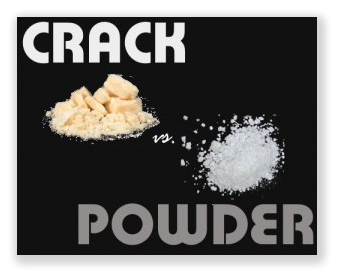
crackpowder160606Answer: The EQUAL Act, which reduces crack cocaine penalties to be the same as powder cocaine penalties, passed the House of Representatives on Sept 28. However, there is no requirement that the Senate act on a bill passed by the House at any certain time, or even at all.

The Senate only has 10 more work days left this year. With the battle over Biden’s $2 trillion Build Back Better bill, just passed by the House, now looming in the Senate, the chance any criminal justice bill will be voted on this year is highly remote.

S. 312 – COVID-19 Safer Detention Act
H.R. 3669 – COVID-19 Safer Detention Act
S.1014 – First Step Implementation Act of 2021
H.R. 1693 – EQUAL Act

– Thomas L. Root

The COVID Calm and BOP Staff Vax Noncompliance – Update for November 24, 2021

We post news and comment on federal criminal justice issues, focused primarily on trial and post-conviction matters, legislative initiatives, and sentencing issues.

JUST A COVID LULL?

deadcovid210914The BOP’s official inmate COVID numbers continued to fall last week, ending Friday at 95 ill inmates, a 34% decrease from the week before. Ominously, however, staff cases increased by 4% to 263. COVID remains in 92 facilities, down only two from a week before.

But in the last few days, things have turned around (and not in a good way). As of last night, 107 inmates were ill, 258 staff were sick, and COVID was present in 100 facilities (82% of all BOP prisons).

The BOP reported one additional inmate death last week, but it was from last July (and apparently escaped the Bureau’s notice). Ruben Castillo, who had had COVID before he arrived at the BOP, died of what the Bureau said were “post-COVID cardiac complications.” Yet the courts and government continue to argue that inmates who have had COVID don’t face any continuing risks.

As of last Friday, 70.2% of inmates were vaccinated. But with the November 22 deadline for BOP staff vaccinations now having passed, only 65.7% have gotten the shot, according to BOP statistics, up just 1.3 points from last week. This compares to a systemwide vax rate of 90% for federal workers.

So those noncompliant BOP staffers will be fired now, right?

noodle211124Well, that was the story once. But now, the punishment has gone from 40 lashes with a cat-o’nine-tails to 30 lashes with a soggy spaghetti noodle. NBC reports that “for those who haven’t met the requirement or requested a medical or religious exemption, the federal government will continue an “education and counseling process, followed by additional enforcement steps over time if needed’,” quoting a White House official.

White House press secretary Jen Psaki said the administration doesn’t “anticipate facing any governmental operational disruptions due to [the vaccine] requirement and in fact, the requirement will avoid disruptions, in our view, in our labor force because vaccinations help avoid COVID.”

The U.S. reported a seven-day average of nearly 95,000 new COVID infections last Thursday, up 31% over the past two weeks. “I’ve been predicting a pretty bad winter wave again, and it looks like it’s starting to happen,” Peter Hotez, the dean of the National School of Tropical Medicine at Baylor College of Medicine, said last week. “There’s just too many unvaccinated and too many partially vaccinated [people].”

COVIDvaccine201221That “too many” number apparently includes inmates, too. Although a much larger percentage of federal inmates have been jabbed than staff,  a former prisoner-turned-writer for Biz News last week argued that opposition by prison staffs to “vaccine mandates highlights an illogical situation that has developed with little discussion: To date, neither the federal government nor any state or municipality has officially mandated the jab for their incarcerated populations. That doesn’t make sense: Prisoners, who are at higher risk for infection and death than corrections officers, aren’t required to get vaccinated while corrections officers, who are at lower risk, are being told they must get vaccinated.”

Expect more of those arguments. In New York City, where the mayor has ordered all city corrections staff to be vaccinated, union chief Benny Boscio complained last week that “it is extremely hypocritical to mandate our officers be vaccinated, while there is no mandate for the inmates in our custody…”

Except where the mandate neither has teeth nor much effect.

BOP, Inmate Death at FCI Stafford (November 17, 2021)

CNBC, Covid cases rise yet again in U.S. ahead of Thanksgiving holiday (November 19, 2021)

The Hill, Experts predict an alarming surge of US COVID-19 cases this winter (November 18, 2021)

NBC News, Administration expects 95% compliance with federal worker vaccine mandate (November 23, 2021)

Washington Post, Federal workers can be fired for refusing vaccination, but must show up to work until their cases are determined, new guidance says (September 17, 2021)

Stat News, Vaccine mandates should cover the incarcerated, too, not just prison guards and workers (November 18, 2021)

Corrections1, NYC correction officers refusing to get COVID shots despite looming mandate (November 17, 2021)

– Thomas L. Root

5th Circuit Parses Heck v. Humphrey – Update for November 23, 2021

We post news and comment on federal criminal justice issues, focused primarily on trial and post-conviction matters, legislative initiatives, and sentencing issues.

WHAT THE HECK? CIRCUIT RULES ADVERSE PRISON DISCIPLINARY DECISION DOES NOT BLOCK SUIT

heck211123State prisoner Darvin Santos sued prison officers for using excessive force against him in violation of his constitutional rights. The alleged excessive force was used during an altercation between Darvin and officers that resulted in his being found to have violated a laundry list of prison rules.

The district court granted summary judgment for the correctional officers, holding that Darvin’s claims were barred by Heck v. Humphrey.

lobster211123Heck, a 1994 Supreme Court case, holds that a defendant can’t sue officials for damages for investigative or prosecutorial violations of rights incident to a prosecution, unless he or she could prove that the conviction or sentence had been reversed on direct appeal, expunged by executive order, declared invalid by a state tribunal authorized to make such a determination, or called into question by a habeas corpus decision. This means, for example, that if the cops smash down my door without a warrant and find evidence that I have been importing under-length lobsters, which evidence is used to convict me, I cannot do my time and then sue for money damages because of the illegal search. Heck thus prevents a lot of costly and frivolous litigation.

Darvin’s district court extended Heck to a disciplinary proceeding, holding that unless he could show the disciplinary proceeding resulting from the incident where the excessive force was used had been overturned, Heck barred his lawsuit.

As a general proposition, this holding is pernicious. The standard of evidence for a criminal conviction – reasonable doubt – provides some protection against a defendant having been railroaded into a conviction that prevents a later civil action judged under the more relaxed “preponderance of the evidence” standard. But the standard of evidence for a prison disciplinary hearing is the laughably slight “some evidence” standard. That is, as the Supreme Court puts it, there only has to be “some evidence” to support the charge:

Instead, due process in this context requires only that there be some evidence to support the findings made in the disciplinary hearing. Although the evidence… might be characterized as meager, the record [only cannot be] so devoid of evidence that the findings of the disciplinary board were without support or otherwise arbitrary.

sunwest211123I have “some evidence” that the sun’s going to rise in the west tomorrow. Holding that a prisoner’s right to vindicate a civil rights violation because of a kangaroo-court prison disciplinary hearing found him or her guilty on such a gossamer evidentiary standard is downright dangerous.

Last week, the 5th Circuit reversed Darvin’s dismissal, but not for the reasons I prefer. Rather, the 5th noted that Heck is not “implicated by a prisoner’s challenge that threatens no consequence for his conviction or the duration of his sentence.” Instead, a claim is barred only if granting it “requires negation of an element of the criminal offense or proof of a fact that is inherently inconsistent with one underlying the criminal conviction.”

Here, the 5th said, it isn’t clear from the record whether any of Darvin’s claims were barred by Heck. Darvin was found guilty of nine rules violations, but only one – a charge of “aggravated disobedience” – might be inconsistent with his claims. As for that one, the Circuit said, the disciplinary report “does not currently permit that inference.”

Furthermore, the disciplinary sanctions imposed (except for loss of good-conduct time) only bear on the circumstances of confinement rather than on the duration. A decision that imposes such sanctions (like loss of telephone privileges, access to commissary, and the like, for a period of time) are not barred by Heck, the Circuit said.

Santos v. White, Case No. 20-30048, 2021 U.S. App. LEXIS 34120 (5th Cir., November 17, 2021)

– Thomas L. Root

Biden Pardons Turkeys But No Prisoners – Update for November 22, 2021

We post news and comment on federal criminal justice issues, focused primarily on trial and post-conviction matters, legislative initiatives, and sentencing issues.

BIDEN ISSUES FIRST PARDONS… NO HUMANS MAKE THE LIST

turkey211122There was no shortage of complaints from criminal justice reform advocates last Friday as President Biden “pardoned” two turkeys with the rather vegan names of “Peanut Butter” and “Jelly” in a White House ceremony.

“Peanut Butter and Jelly were selected based on their temperament, appearance, and, I suspect, vaccination status,” Biden said. “Yes, instead of getting basted, these two turkeys are getting boosted.”

But when a reporter asked whether he would be pardoning “any people in addition to turkeys,” Biden treated the question as a joke. “You need a pardon?” the president quipped. He didn’t reply to a follow-up question about marijuana prisoners as he walked away from assembled journalists.

turkeyb161123The turkeys may not get roasted, but the President isn’t so lucky. Law professor and clemency expert Mark Osler wrote in the Minneapolis Star-Tribune that “those of us who work in the field of clemency are left with a bitter taste in our mouths. Biden’s pardon of those turkeys represents the first time he has shown any interest at all in clemency. The problem isn’t just that Biden isn’t granting any clemency, it’s that he isn’t denying any, either. Following the lead of his predecessor, former President Donald Trump, Biden is just letting requests sit.”

Osler cited the 18,000 pending clemency petitions – 16,000 more than when Obama took office – and the danger CARES Act people may be sent back to prison when the pandemic ends, as “two genuine crises unfolding in federal clemency.”

A few days earlier, Interrogating Justice complained that

President Joe Biden campaigned heavily on justice reform, including with the federal Bureau of Prisons. He acted swiftly after his inauguration by terminating private prisons that housed federal inmates. However, since then, there has been virtually nothing. Various justice-reform groups have called out the president for his apparent lack of action. Points of frustration start with the increased population of federal prisons, the BOP’s inept handling of the pandemic, the failure to apply First Step Act time credits and most recently the question of granting clemency to all prisoners who are at home confinement under the CARES Act. And these are just a few of the many issues that plague the BOP.

turkeyprison161114The Minneapolis Post argued that “

While campaigning for president last year, however, Biden promised sweeping changes to the criminal justice system. And Biden could not have been more clear that he was committed to reform — promising, “as president” to “strengthen America’s commitment to justice and reform our criminal justice system. Then Biden got elected. And he’s been busy with other things…”

The Hill called it Biden’s “do-nothing” approach to clemency, which

he seems to have delegated entirely to the DOJ… Most of the Democratic candidates for president endorsed this change because the DOJ had proven itself incapable of handling clemency impartially and efficiently for decades… So why doesn’t Biden take clemency away from DOJ and create the kind of advisory commission that President Ford used to aid him in processing a similar backlog of petitions from people with convictions for draft evasion during the Vietnam War? The only apparent answer is that Biden does not want to look like he is interfering with DOJ. But clemency should never have been in DOJ in the first place. It is there by historical accident — no state gives clemency decision-making power to the same prosecutors who bring cases in the first place because of the obvious conflict of interest problem it poses.

New York Times, Boosted, Not Basted: Biden Pardons 2 Turkeys in Thanksgiving Tradition (November 19, 2021)

New York Post, Biden laughs off question about clemency for humans before pardoning turkeys (November 19, 2021)

Minneapolis Star-Tribune, When it Comes to Human Pardons, Thanks for Nothing (November 19, 2021)

Interrogating Justice, The Biden Administration Has Gone Quiet on Justice Reform at the BOP (November 15, 2021)

Minneapolis Post, When will Biden make good on his promise to reform criminal justice? (November 15, 2021)

The Hill, Biden can’t let Trump’s DOJ legacy stifle reform (November 17, 2021)

 Thomas L. Root

Durbin to Carvajal: ‘Drop Dead’ – Update for November 18, 2021

We post news and comment on federal criminal justice issues, focused primarily on trial and post-conviction matters, legislative initiatives, and sentencing issues.

BOP, ALREADY A ‘HOTBED OF ABUSE’, DITHERS WHILE INMATES SUFFER, INSPECTOR GENERAL SAYS

Turkeys may not be the only creatures with heads on the chopping block.

dropdead211118US Senate Majority Whip Dick Durbin (D-Illinois), chairman of the Senate Judiciary Committee, last Tuesday publicly demanded that Attorney General Merrick Garland fire Federal Bureau of Prisons Director Michael Carvajal, who was appointed during the Trump Administration.

Durbin’s call came after the Associated Press reported that since the beginning of 2019, over 100 federal prison workers have been arrested, convicted or sentenced for crimes, including the warden of FCI Dublin – a women’s prison in central California – indicted for sexual abuse, an associate warden at MDC Brooklyn charged with killing her husband last August, guards taking cash to smuggle drugs and weapons, and supervisors stealing property such as tires and tractors.

The Associated Press said its investigation revealed that the BOP “is a hotbed of abuse, graft and corruption, and has turned a blind eye to employees accused of misconduct. In some cases, the agency has failed to suspend officers who themselves had been arrested for crimes.” While the BOP workforce amounts to one-third of Dept of Justice personnel, its employees account for two-thirds of the criminal cases against DOJ workers in recent years. Of 41 DOJ employee arrests this year, 28 were of BOP employees or contractors.

The AP report was too much for Durbin, who said,

Director Carvajal… has overseen a series of mounting crises, including failing to protect BOP staff and inmates from the COVID-19 pandemic,failing to address chronic understaffing, failing to implement the landmark First Step Act, and more. It is past time for Attorney General Garland to replace Director Carvajal with a reform-minded Director who is not a product of the BOP bureaucracy.

choppingblock211118On Wednesday, the DOJ Inspector General put an exclamation point on Durbin’s well-justified rant. An IG report found that three years after passage of the First Step Act, the BOP has yet to implement one of the linchpins of the legislation, to reduce recidivism by giving prisoners incentives to successfully certain educational programs and productive activities. The primary holdup? BOP management and union staff have been unable to come up with ground rules for meetings to discuss how the educational and incentives programs should be implemented.

Remember how the 1968 Paris Peace Talks were stalled for months over whether the table over which “official conversations” would be held should be round or rectangular? Yeah, this has been something like that. BOP’s national union won’t conduct formal policy negotiations on Zoom, but rather demanded in-person negotiations. BOP management refused. The disagreement has resulted in a lack of formal policy negotiations for a period of 20 months, which has stalled the development of more than 30 BOP policies, about half of which were created or revised because of First Step.

The First Step Act requires the BOP to provide Evidence-Based Recidivism Reduction (EBRR) programs and productive activities to all inmates in its custody no later than January 15, 2022. The BOP has taken the position that this means that no credits need be awarded until then. No one believes that. In litigation, even the United States Attorney’s Offices defending the BOP have abandoned that tortured interpretation of the Act. The IG’s report said:

In August 2021, the BOP told us that the [First Step Act] contemplates a phased-in approach to time credit implementation and requires that all inmates be assigned to programming based on their assessments no later than January 15, 2022. As a result, the BOP stated that “implementation of time credits is fully permissible as a phased approach.” While we agree that the FSA affords the BOP a 2-year phase-in period to provide all inmates with EBRR programs and productive activities, we also note that the phase-in statute makes no reference to delaying the use of incentives and rewards, including time credits. Instead, the statute states that by January 15, 2020, the BOP “may offer to prisoners who successfully participate in such programs and activities [with] incentives and rewards.”

As a result of the BOP’s failure to talk to its union, as many as 60,000 inmates have not properly received earned-time credits for successful completion of First Step Act’s recidivism programs, the Department of Justice inspector general found. “We are concerned that the delay in applying earned time credits may negatively affect inmates who have earned a reduction in their sentence or an earlier placement in the community,” the report stated.

unsupervised211118Inmates around the country have filed petitions for habeas corpus against the BOP, demanding credit, with mixed results. Even now, the BOP stands firm. The courts are wrong. The US Attorneys are wrong. And, the latest, the Inspector General is wrong:

BOP disagrees with OIG’s characterization of the agency’s delayed implementation of FSA requirements… Although the COVID- 19 pandemic has created unprecedented challenges for the federal government, BOP has taken significant steps in implementing the FSA’s requirements, consistent with the FSA’s phased approach, and has complied with all mandatory statutory guidelines to-date.

Happy Thanksgiving, Director Carvajal. Use some of the long weekend to dust off your resume.

Press release, Durbin Calls On AG Garland To Dismiss BOP Director Carvajal (November 16)

Associated Press, Workers at federal prisons are committing some of the crimes (November 14, 2021)

Associated Press, Durbin calls for Garland to remove federal prisons director (November 17, 2021)

Forbes, Office of Inspector General Critical of Federal Prison Implementation of First Step Act (November 17, 2021)

ABC, DOJ finds Bureau of Prisons failed to apply earned time credits to 60,000 inmates (November 17, 2021)

Dept of Justice, Office of Inspector General, Management Advisory Memorandum 22-007 (November 16, 2021)

– Thomas L. Root

A (Sentencing) Army of One – Update for November 16, 2021

We post news and comment on federal criminal justice issues, focused primarily on trial and post-conviction matters, legislative initiatives, and sentencing issues.

JUDGE BREYER TELLS BIDEN HE’S LONELY ON THE SENTENCING COMMISSION

Senior District Judge Charles Breyer, who sits on the U.S. District Court for the Northern District of California, is the last man standing.

lastman211116The U.S. Sentencing Commission’s lone remaining member last Thursday called upon President Biden to act now to nominate enough new commissioners to put the Commission back in business so it can help implement the 2018 First Step Act.

“I would be surprised and dismayed if nominees are not sent to the Senate by the early part of next year,” Judge Breyer said in an interview with Reuters.

The U.S.S.C. lost its quorum after the December 2018 meeting, which ironically enough occurred just about a week before First Step was signed into law. Judge Breyer said the lack of quorum meant the Commission could not provide guidance on how to implement the law, creating a “vacuum” in which judges inconsistently decide whether inmates under the measure can secure compassionate release amid the COVID-19 pandemic.

noquorum191016“Some people were granted compassionate release for reasons that other judges found insufficient,” he said. “There was no standard. That’s a problem when you try to implement a policy on a nationwide basis.” The Commission’s outdated Guideline 1B1.13, ignored by most circuits but used as a bludgeon by others, was perhaps the primary mischief-maker, but with no quorum, the U.S.S.C. was powerless to fix things.

Judge Breyer said that was aware that nominees are currently being vetted. The White House had no immediate comment.

Ohio State University law professor Doug Berman has been beating the drums in his Sentencing Law and Policy blog to revitalize the USSC for several years. So far, no one – including the “criminal justice reform” President Biden – has listened.

Reuters, U.S. sentencing panel’s last member Breyer urges Biden to revive commission (November 11, 2021)

Sentencing Law and Policy, Should I give up hoping Prez Biden will soon make long-needed nominations to US Sentencing Commission? (October 24, 2021)

– Thomas L. Root

Fecklessness Is No Legal Strategy, 1st Circuit Says – Update for November 15, 2021

We post news and comment on federal criminal justice issues, focused primarily on trial and post-conviction matters, legislative initiatives, and sentencing issues.

SOMETIMES THE DIFFERENT DRUM IS POUNDING OUT THE WRONG BEAT

diffdrummer211115Sandy Flores-Rivera was one of 46 people charged with a drug-trafficking conspiracy. At trial, most of the evidence against Sandy and her co-defendants came from three cooperating witnesses, all of whom fingered Sandy and helped the government present non-testimonial evidence.

After the jury returned guilty verdicts against Sandy and the other defendants, the government belatedly disclosed some pretrial documents created by a cooperating witness. One was a letter to the lead prosecutor, in which the witness described himself as the government’s “best cooperator: “I promised you to do everything you said and I have done it to the point that you know how this has gotten, we have more than we expected, more evidence and more strength for the case…” Another document consisted of notes that the cooperating witness kept of conversations he had with other cooperators while they were in prison together, in which he had encouraged them to testify. Finally, the government disclosed a note showing the FBI knew the cooperating witnesses were talking to each other in jail.

Of course, the government’s failure to disclose this evidence – which suggested the cooperating witnesses were singing a version of the “truth” they thought would be most pleasing to the authorities who controlled their fates – was a slam-dunk violation of the constitutional requirement of disclosure enshrined in Brady v. Maryland.

[Remember Brady? Brush up on it here]

Sandy and the other defendants moved for a new trial under Rule 33(b) of the Federal Rules of Criminal Procedure due to the Brady violation, but the district court turned them down. On appeal, the other defendants again raised the Brady violation, and this time someone listened: the 1st Circuit granted those other defendants new trials because the court found it was “reasonably probable that the impeachment evidence would have caused the jury to acquit” them.

lawyerjoke180807Sandy’s lawyer, however, marched to a different drummer: he didn’t bother raising the Brady issue in Sandy’s appellate brief, but rather argued a couple of loser claims that hadn’t even been preserved in the lower court record. Those issues ran into what the 1st Circuit called “a stone wall of controlling precedent.” In fact, the Circuit even pointed out in amazement that Sandy’s counsel had joined in the new trial motion at the district court but inexplicably “did not renew the argument despite his clear awareness of his ability to adopt a co-appellant’s arguments in a consolidated case… since he reserved his right to do so in Sandy’s opening brief.”

After losing her appeal while her co-defendants won theirs, Sandy filed a post-conviction motion under 28 USC § 2255 claiming her attorney rendered ineffective assistance on appeal. Last week, the 1st Circuit agreed.

The Circuit said the government’s case against Sandy “depended quite heavily on the largely uncorroborated testimony of the three cooperators. Hence, she would have prevailed on the Brady issue just like her co-defendants had she raised the issue. And for that reason, she establishes prejudice under Strickland.”

Appellate counsel performs deficiently, the Circuit said, when he or she “ignor[es] issues that are clearly stronger than those presented.” Forgoing an argument is not a reasonable strategic decision when there is no downside to objecting to an error or when the omitted argument would not “detract from” but would rather “build upon” another challenge.

feckless211115“Here,” the 1st ruled, “any reasonable attorney handling Flores-Rivera’s appeal would have known of the Brady claim’s availability even after a cursory review of the district court docket and the arguments offered by Flores-Rivera’s co-defendants… Appellate counsel opted to forgo an obviously serious, preserved Brady claim in favor of two dubious plain-error challenges, one of which was foreclosed by binding precedent. That choice resembles rejecting a lifeboat in favor of two lily pads… Fecklessness is not a strategy.”

Flores-Rivera v. United States, Case No. 18-1963, 2021 U.S. App. LEXIS 32404 (1st Cir. Oct 29, 2021)

– Thomas L. Root

Freaky Friday – Update for November 12, 2021

We post news and comment on federal criminal justice issues, focused primarily on trial and post-conviction matters, legislative initiatives, and sentencing issues.

NEWS OF THE WEIRD

What’s Done is Done: In the 1st Circuit, Junito Melendez was denied a First Step Act § 404 sentence reduction under the Fair Sentencing Act (FSA). Junito finished his prison sentence in 2007 and got off supervised release three years later. Unfortunately, after ten years as a free man, he is now facing a new drug conspiracy charge.

goingback211112Therein lies the problem. Junito was released from his prior 109-month sentence within 15 years of the current conspiracy charge, so he faces a mandatory 10-year minimum sentence under 21 USC § 841(b)(1)(B). But if the prior sentence were to be changed consistent with the FSA, his release date would have been much earlier, and it would thus have fallen well more than 15 years before the current case. Had that been the case, he’d be facing no mandatory minimum now.

The 1st Circuit turned him down, holding that the word “release” in 21 USC § 802(57), which defines a “serious drug felony,” focuses on the “historical facts of a defendant’s sentence when determining whether § 802(57)‘s definition is met.” Regardless of what a different, shorter sentence might have yielded, the historical fact is that Junito was released in 2007. What’s more, the Circuit said, “Congress used the phrase ‘serious drug felony’ in the statute, signaling its intent for the backward-looking language of § 802(57)… to apply to the 10-year mandatory minimum.”

There just ain’t no shortening a sentence that’s already completely in the past tense.

I Should Have Been Watching Him While He Was Watching Me: Jason Sheppard, on supervised release after a drug sentence, discovered that his girlfriend had developed a cozy “personal relationship” with his probation officer, one Jeff Sciarrino. That’s one way to keep tabs on your supervisee, we suppose.

[Read the salacious details here]

Needless to say, the discovery did not enhance Jason’s relationship with his girlfriend. They broke up over her cheatin’ heart.

breakingup211112In his grief, Jason moved for early termination of supervised release under 18 USC § 3583(e), arguing that the breakup “was negatively impacting his rehabilitation, thereby undermining any utility in continued supervision.” Jason made the rather obvious claim to the district court that “the probation officer was never concerned with [his] rehabilitation and appears to use his position for his own personal interests.”

The district court denied Jason’s motion, and last week the 3rd Circuit agreed. It held the District Court acted within its discretion to conclude that  Probation Officer Sciarrino’s amorous misconduct “has little to do with whether Sheppard should continue under the supervision of a different officer.”

The Circuit criticized the District Court, however, for holding that the PO’s misconduct “actually undermines” Jason’s motion for early termination, because the upset may interfere with Jason’s mental health treatment.” The Circuit said, “the District Court’s order includes an inference that Sheppard is responsible not only for his own conduct, but also must shoulder any and all negative repercussions from the misconduct of his probation officer. This inference is improper… when evaluating a motion for early termination, a district court, particularly in the absence of holding an evidentiary hearing, may not impute a probation officer’s alleged improper actions to a defendant serving a term of supervised release, so as to justify continued (or additional) rehabilitative oversight.”

Nevertheless, the Court was not very happy with the U.S. Probation Office:

A probation officer’s communications of such a “personal” nature with an assigned defendant’s significant other are not only entirely inappropriate and unprofessional, but they also undermine the primary objective of supervised release – i.e., “to facilitate the integration of offenders back into the community rather than to punish them.” It also challenges the role of probation officers as trusted government officials who, in performing their duties, are “supposed to have in mind the welfare of the probationer…” In Sheppard’s case, his probation officer implicated Sheppard’s personal life in his own — and to such a degree that, according to Sheppard, it caused him to break up with his live-in girlfriend, with whom he considered to be in a “lifelong commitment.” If this is not the antithesis to assisting Sheppard in transitioning back into the community, and having his “welfare” in mind, we do not know what is.
supervisedleash181107In all candor, I am constrained to note that even when Probation Officers act appropriately, they provide little benefit to supervisees beyond what Probation Officer Lothario provided to Jason. Supervised release is largely a snare for the unwary supervisee, with a sorry record of violating about one of three post-release folks entrusted to the Probation Office’s care.

United States v. Melendez, Case No 20-1575, 2021 U.S.App. LEXIS 31858 (1st Cir., October 22, 2021)

United States v. Sheppard, Case No 20-3088, 2021 U.S.App. LEXIS 32722 (3d Cir., November 3, 2021)

– Thomas L. Root

Supreme Court Adds Drug, Bivens Cases to Docket – Update for November 10, 2021

We post news and comment on federal criminal justice issues, focused primarily on trial and post-conviction matters, legislative initiatives, and sentencing issues.

SCOTUS TO HEAR BIVENS, ‘PILL MILL’ CASES

policeraid170824Fifty years ago, the Supreme Court ruled in Bivens v. Six Unknown Agents of the Federal Bureau of Narcotics that a person could sue federal agents and employees for violating his or her constitutional rights, even when there was not a specific law authorizing such a suit. (Bivens had its genesis in agents kicking down the door to Webster Bivens’ apartment, searching it and arresting him on drug charges, all without a warrant. The charges were later dismissed, and Webster was held to have the right to sue the agents for money damages arising from their violation of his 4th Amendment rights.

Since then, the Supreme Court recognized Bivens claims for damages for violations of the 4th, 5th and 8th Amendments, but in 2017 froze things by holding in Ziglar v. Abbasi that “expanding the Bivens remedy is now a disfavored activity.”

Last Friday, the justices agreed to decide in whether a Bivens remedy should be available to the owner of an inn on the US-Canada border who complained a Border Patrol agent violated both his 1st and 4th Amendment rights, while declining to reconsider Bivens itself.

feelgood211019The Court also granted certiorari in Ruan v. United States and Kahn v. United States, consolidating those cases to decide whether when the government prosecutes a doctor under 21 USC § 841 for issuing a prescription outside “the usual course of professional practice,” the government must also prove that the doctor knew or intended that the prescription be outside the scope of professional practice. The Court will also decide whether a “good faith” defense protects doctors who have an honest but mistaken belief that they have issued professional practice.”

Those cases relate to so-called pill mills, where doctors allegedly dispense opioids to patients much too freely to feed addictions rather than for a medical purpose. The Supreme Court will consider where the line is to be drawn between doctor discretion – especially in experimenting with pain management techniques – and garden-variety illegal drug dealing.

Egbert v. Boule, Case No 21- 147 (certiorari granted November 5, 2021)

Ruan v. United States, Case No 20-1410 (certiorari granted November 5, 2021)

Kahn v. United States, Case No 20-5261 (certiorari granted November 5, 2021)

– Thomas L. Root

POTUS Pot Pardons Possible, CRS Says – Update for November 9, 2021

We post news and comment on federal criminal justice issues, focused primarily on trial and post-conviction matters, legislative initiatives, and sentencing issues.

COULD BIDEN USE BLANKET CLEMENCY ON POT OFFENDERS?

A Congressional Research Service report issued last week concluded that if President Joe Biden’s easiest path to fulfilling his goal of getting the federal government out of marijuana regulation business is to use his clemency power.

marijuana160818While the study concluded that Biden could not lawfully deschedule marijuana as a controlled substance, it nevertheless said the President has substantial control over how the law is enforced and may use his clemency authority at any time “after an offense is committed: before the pardon recipient is charged with a crime, after a charge but prior to conviction, or following conviction. The power is not limited to pardons for individual offenders: the President may also issue a general amnesty to a class of people.”

In addition, the Report notes, “the President could direct the Department of Justice to exercise its discretion not to prosecute some or all marijuana-related offenses. Although DOJ generally enjoys significant independence, particularly with respect to its handling of specific cases, the President has the authority to direct DOJ as part of his constitutional duty to ‘take Care that the Laws be faithfully executed’.”

The CRS is Congress’s public policy research institute, working primarily for members of Congress and their committees and staff on a nonpartisan basis.

Meanwhile, an article in Inquest last week observed that “there is deeply rooted legal precedent for presidents to use their authority to grant clemency to large classes of people. Presidents have deployed this authority to advance the public welfare, whether following a war or in response to unjust punishments, or simply to help heal a nation torn by crisis… Broad clemency has been issued by presidents George Washington, John Adams, James Madison, Abraham Lincoln, Theodore and Franklin Delano Roosevelt, Harry Truman, Lyndon B. Johnson, Gerald Ford, and Jimmy Carter.”

A lot of people are hoping to see this on the news...
A lot of people are hoping to see this on the news…

Noting that “the federal system… is the single largest incarcerator in the nation,” the article argued “ President Biden can lead by example, embracing categorical clemency as a tool to mitigate the system’s structural injustices… The president can act by issuing categorical clemency through a proclamation to a class of people based on two categories of eligibility: Personal characteristics or membership in a certain group, or shared circumstances. Such a proclamation should contain a presumption that all people who fit the criteria announced by the president will have their sentences commuted unless the DOJ can prove an articulable and current threat of violent harm.”

Of course, all of the foregoing supposes the President will use his clemency power at all. The Administration has thus far said not to expect pardons or commutations prior to late next year.

Congressional Research Service, Does the President Have the Power to Legalize Marijuana? (November 4, 2021)

Inquest, Mass Clemency (November 2, 2021)

– Thomas L. Root