
We post news and comment on federal criminal justice issues, focused primarily on trial and post-conviction matters, legislative initiatives, and sentencing issues.

3RD CIRCUIT REFINES RIGHTS FOR FELONS-IN-POSSESSION
 The 3rd Circuit broke new ground on felon-in-possession reform with its Range v. Atty General decision two years ago. Last week, the appellate court handed down two decisions that cemented the developing standard that it is only dangerousness, not the existence of a prior felony, that permits disarming someone under 18 USC § 922(g)(1).
The Circuit upheld the § 922(g)(1) against a man with a conviction stemming from a 24-year-old carjacking but ruled that the ban could not be applied to another man based on prior drunk-driving convictions.
James Bost pled guilty to terroristic threats, criminal conspiracy, false imprisonment and simple assault in Pennsylvania state court following a 2002 carjacking. He was later indicted for being a felon in possession after police caught him with a gun. James argued that § 922(g)(1) violated the 2nd Amendment as applied to his case.
The 3rd said that people like James who were convicted of crimes demonstrating “a risk of physical violence from misusing guns can be disarmed before that risk becomes a reality.”
In a different case, the Circuit held that applying § 922(g)(1) to Edward Williams violated the 2nd Amendment. Ed had prior convictions for drunk driving in the early 2000s. One of those convictions carried a maximum sentence of 5 years, which triggered felon-in-possession (although he only did 90 days in home confinement).
The 3rd ruled that § 922(g)(1) cannot be applied to people whose prior felony offenses did not involve violence or threats indicating a risk of misusing firearms consistent with the 2nd Amendment. Nothing in Ed’s prior convictions involved conduct that suggested the public was at risk that Ed was likely to misuse guns.
One troubling argument we’re sure to see again is the Government’s claim that the case should be dismissed because Ed now can file with DOJ to have his rights restored under 18 USC § 925(c). The 3rd rejected the notion that Ed had some duty to exhaust his administrative remedy first:
The scant chance of an invitation to apply for restoration under § 925(c) does not displace our decisional duty, as Williams presents an actual controversy ripe for adjudication…The United States reasons that since Williams can patiently await discretionary relief from the Justice Department, he faces no present harm (from, say, prosecution under § 922(g)(1)). That is a curious conception of our 2nd Amendment right and one that, in any event, does not fit the facts… Nor will we dismiss Williams’s case under the administrative exhaustion doctrine. Congress has imposed no such requirement and no principles of “sound judicial discretion” support holding a constitutional right in abeyance while the Government gradually comes into compliance.
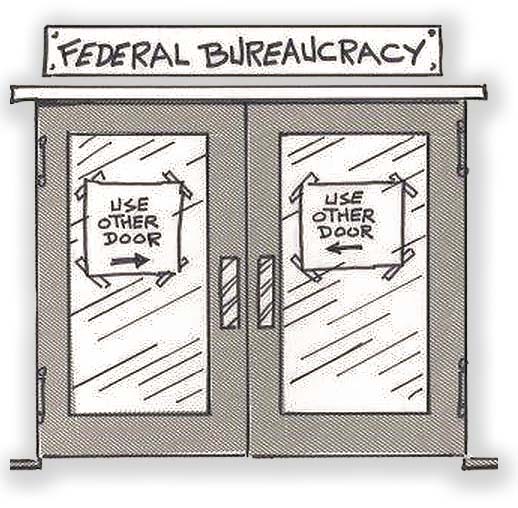 The idea that because the DOJ may decide you’re entitled to have guns again is a substitute for enforcing your constitutional rights is a dangerous notion. Constitutional rights protect people from Government overreach. Suggesting that the 2nd Amendment depends on Government permission turns a right into a privilege that can be given or taken by bureaucratic whim.
United States v. Bost, Case No, 24-1719, 2026 U.S. App. LEXIS 31138 (3d Cir. October 13, 2026)
Williams v. Attorney General, Case No. 24-1091, 2026 U.S. App. LEXIS 31148 (3d Cir. October 13, 2026)
~ Thomas L. Root