Tag Archives: meth

Sentencing Commission Builds Us Up, Disappoints Again – Update for April 20, 2026

We post news and comment on federal criminal justice issues, focused primarily on trial and post-conviction matters, legislative initiatives, and sentencing issues.

BRINGING FORTH A MOUSE

The US Sentencing Commission held its long-anticipated April meeting last Thursday, taking up weighty proposals to reduce the methamphetamine purity guidelines and to bring some sense to the career offender label.

It brought forth a mouse.

No changes in meth, no changes in career offender status…. Everything that was adopted passed quickly and unanimously. Everything that was abandoned disappeared without comment, like one of those old-time Kremlin photos where the image of a newly-disfavored apparatchik was crudely cut out of an official photo.

Writing in the Sentencing Matters substack, Jonathan Wroblewski (a 35-year veteran of the Dept of Justice and long-time ex officio member of the Sentencing Commission) summed up last week’s meeting:

With expectations high, the Commission’s 2024–25 and 2025–26 amendment years ended in April 2025 and again last Thursday with short, opaque public meetings — genuinely unbecoming given the importance of the issues at stake and the extensive process leading up to them. The Commission voted on some of the published amendment proposals but not on others. It offered no explanation for the consequential choices it made and the actions it took. It was a profound disappointment in transparent policymaking.

As has become its habit, the Commission held a short and seemingly scripted meeting in which nothing was discussed, nothing was debated, and nothing was explained. Like the backlog of guidelines for which retroactivity was proposed in 2024 and 2025 – only to die without further mention – the guideline amendments that were rejected simply disappeared.

The proposed amendments that made it through the Commission’s process include

  • addition of new paths for offenders to get credit for presentence rehabilitative efforts.
  • increased emphasis on the availability of sentences eligible for probation, home confinement and split sentences.
  • restructuring of the loss table for economic crimes to account for inflation over the past decade.
  • elimination of the sophisticated means enhancement, and
  • a new enhancement to account for the non-economic harm suffered by victims of economic crimes.

The only drug guideline change to be adopted was a boost in fentanyl-related sentencing levels, adopted to implement the HALT Fentanyl Act of 2025 (HR 27). Apparently, for all of the options proposed to moderate the meth guidelines, the Commission decided to do nothing. I say “apparently” because, as usual, the USSC provided no explanation why some proposals did not make the cut.

The abandonment of the “career offender” proposal is troubling. The Sentencing Reform Act of 1984 directs the Commission to ensure that “career offenders” receive sentences near the statutory maximum. The Commission’s definition of what constitutes a career offender, however, has caught many defendants in the net whose criminal histories do not suggest “career criminal” by any stretch of the imagination.

The change in the “career offender” guidelines would have abandoned the current “categorical approach” to what prior convictions were crimes of violence or drug offenses, substituting instead a list of federal and state crimes that apply. Burglary would no longer apply, felonies of any kind for which the defendant served less than 90 days would not apply, and defendants would have a chance to show that some crimes of violence should not count because their conduct was completely nonviolent.

Forget that change.

Last December, the Commission asked for public comment on options to change the methamphetamine guidelines. One proposal is to simply eliminate the Guidelines distinction among a meth mixture, meth (actual), and high-purity ice. All meth would be scored the same. An alternative option would be to keep the distinctions in the current meth Guidelines but offer reductions for people who had minor roles, who qualified for the 18 USC § 3553(f) safety valve, or who were involved only because of family relationships or duress.

Forget that change, too.
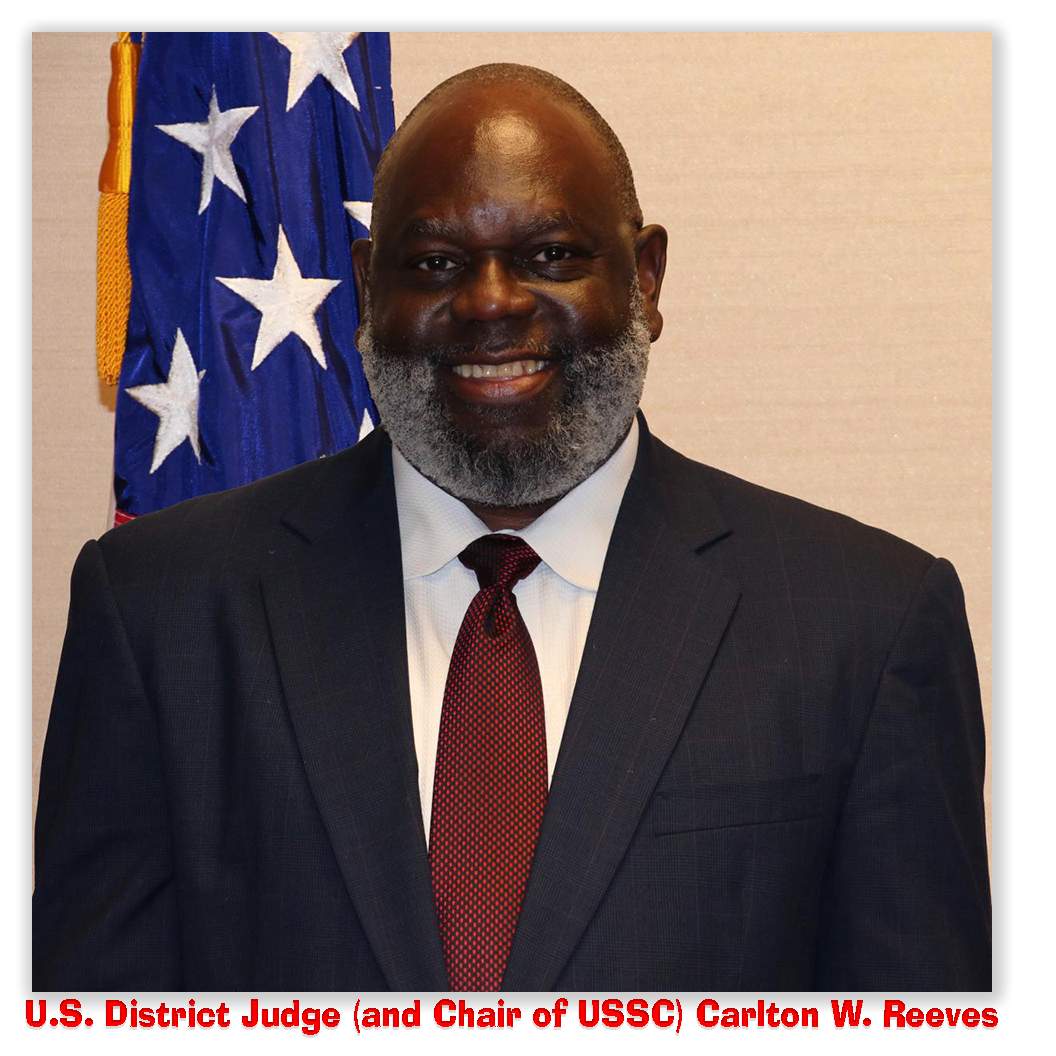
The commission, chaired by U.S. District Judge Carlton Reeves (SD Mississippi), currently has five voting members, with two empty seats. During President Trump’s first term, the Commission lost its quorum. Trump appointed people so far outside the mainstream – such as Eastern District of Virginia US District Judge Henry “Hang “Em High” Hudson – that even a Republican-controlled Senate wouldn’t confirm them. The upshot was that the Commission went five years without being able to amend the Guidelines until President Biden appointed new members.

Ohio State University law professor Doug Berman, writing in his Sentencing Law and Policy blog, said, “In the end, though, the amendments voted on today are more fairly described as modest rather than major. I am generally inclined to want to celebrate the ‘less is more’ character of today’s amendment. And yet, with the Commission’s very future a bit uncertain given current and possible future Commissioner vacancies…”

Professor Wroblewski asks the thoughtful question: “So, as we pass the end of the 2026 statutory guideline amendment window and head to the end of the terms of two more of President Biden’s commissioners, what are we left with?”

The nutshell answer? Lost opportunities.

USSC, Reader-Friendly Proposed Sentencing Amendments (April 16, 2026)

Sentencing Matters, The Failure of President Biden’s Sentencing Commission (April 20, 2026)

Law 360, Sentencing Commission Votes To Enact Modest Reform Agenda (April 16, 2026)

National Law Journal, ‘No Longer One Size Fits All’: Tweaks to U.S. Sentencing Guidelines May Ease White-Collar Penalties, Cut Litigation (April 17, 2026)

HR 27, HALT Fentanyl Act of 2025

Sentencing Law and Policy, After lots of major proposals, US Sentencing Commission adopts some modest guideline reforms (April 16, 2026)

~ Thomas L. Root
Sentencing Commission to Adopt Proposed Amendments On Thursday – Update for April 14, 2026

We post news and comment on federal criminal justice issues, focused primarily on trial and post-conviction matters, legislative initiatives, and sentencing issues.

HERE COME THE NEW GUIDELINES

The US Sentencing Commission has set a meeting for Thursday, April 16, to adopt proposed amendments for the coming amendment cycle.

The Sentencing Reform Act requires that any proposed Guidelines amendments be sent to Congress by May 1. The Commission typically adopts its slate of amendments in April. Congress then has 6 months to vote down any amendment it doesn’t like. If Congress does nothing (which it has done all but once in the SRA’s 36-year history), the amendments will become effective on Nov 1.

For many prisoners, the most important proposed change would be the options to modify the methamphetamine guidelines. One proposal (Option 1) is to simply eliminate the Guidelines distinction among a meth mixture, meth (actual), and high-purity ice. All meth would be scored the same.

An alternative option (Option 2) would be to keep the distinctions in the current meth Guidelines but offer reductions for people who had minor roles, who qualified for the 18 USC § 3553(f) safety valve, or who were involved only because of family relationships or duress.

For theft and economic crimes, the Commission rolled out a proposal to raise the loss tables (which drive the offense level) by an average of 40%, both to simplify application and to adjust for inflation (which was done last 11 years ago).

In a separate proposal, the USSC seeks comment on a proposal to “simplify” the USSG § 2B1.1 loss table by reducing it from 16 levels to 7, with jumps of 4 points for each level. Additionally, the Commission suggests a new USSG § 2B1.1 enhancement to reflect noneconomic harm to victims, such as physical, psychological harm, emotional, and reputational damage, or invasion of privacy.

More interesting is a USSC request for comment on redefinition of the “sophisticated means” enhancement set out in § 2B1.1(b)(10). Currently, “sophisticated means” is widely applied by courts to virtually any economic offense more complex than stealing from a Salvation Army kettle. The Commission seeks to return the “sophisticated means” enhancement to what was originally intended, “committing or concealing an offense with a greater level of complexity than typical for an offense of that nature” and provide further guidance for courts to use when determining whether conduct fits the definition.

Also up for consideration are proposals to expand the sentencing ranges that should be eligible for probation, home confinement, and “split sentences” (half in prison, half on home confinement). More significant are proposed changes in the Guidelines governing whether someone is considered a “career offender,” a label that dramatically increases the advisory sentencing range a defendant faces. The Sentencing Reform Act of 1984 directs the Commission to ensure that “career offenders” receive sentences near the statutory maximum. The Commission’s definition of what constitutes a career offender, however, has caught many defendants in the net whose criminal histories do not suggest “career criminal” by any stretch of the imagination.

None of the proposed amendments will apply to people already sentenced unless the Commission holds a separate proceeding to decide whether retroactivity should apply to any of the amendments.  The Commission has asked for comment on retroactivity in this amendment cycle, but while several amendments have been proposed for retroactivity since 2024, no decision has been made. The Commission has said that it wants to examine the procedure it employs to determine retroactivity, but so far, it’s been like the weather – everyone talks about it but no one does anything about it.

US Sentencing Commission, Public Notice of Meeting

~ Thomas L. Root

Sentencing Commission Proposes Drug Table, Meth, Supervised Release Changes – Update for January 27, 2025

We post news and comment on federal criminal justice issues, focused primarily on trial and post-conviction matters, legislative initiatives, and sentencing issues.

‘ICE’ MAY BE MELTING

In December, the United States Sentencing Commission announced proposed Sentencing Guidelines amendments for public comment on the sweeping if rather tedious topics of guideline simplification, criminal history, firearm offenses, circuit conflicts and retroactivity. 

drugdealer250127At the time, Sentencing Commission Chairman, Judge Carlton W. Reeves (Southern District of Mississippi) hinted that the USSC could be announcing some additional proposed amendments this month.

Last Friday, the Commission provided an upbeat end to a tough week for federal criminal justice, proposing defendant-friendly amendments to Guidelines on supervised release, the drug quantity tables, and enhanced offense levels for “ice” and pure methamphetamine.

The draft amendments, released for public comment, also propose cracking down on distribution of drugs laced with fentanyl as well as an increased enhancement for packing a machine gun during a drug crime.

The biggest surprise is a proposed change to adopt one of three options, any of which would reduce the top base offense level for drug quantity in the Guidelines. A Guidelines sentence for a drug offender is driven by the weight of the drugs attributed to him or her.  If Tom the Trafficker, with no prior convictions, was involved in a cocaine conspiracy that sold 1,000 lbs of cocaine (10 lbs. a week) over two years – even if he only sold an 8-ball a day five days a week for two years (about 4 lbs) – his Guidelines base offense level would be 38 with a sentencing range starting at 20 years in prison.

The three options the Sentencing Commission is considering would drop the levels in the drug quantity table to Level 30, 32 or 34 instead of the current 38.  At Level 30, our hypothetical Tom would be looking at an advisory sentencing range of 8 years instead of 20.

The Commission said it “has received comment over the years indicating that [Guideline] 2D1.1 overly relies on drug type and quantity as a measure of offense culpability and results in sentences greater than necessary to accomplish the purposes of sentencing.”

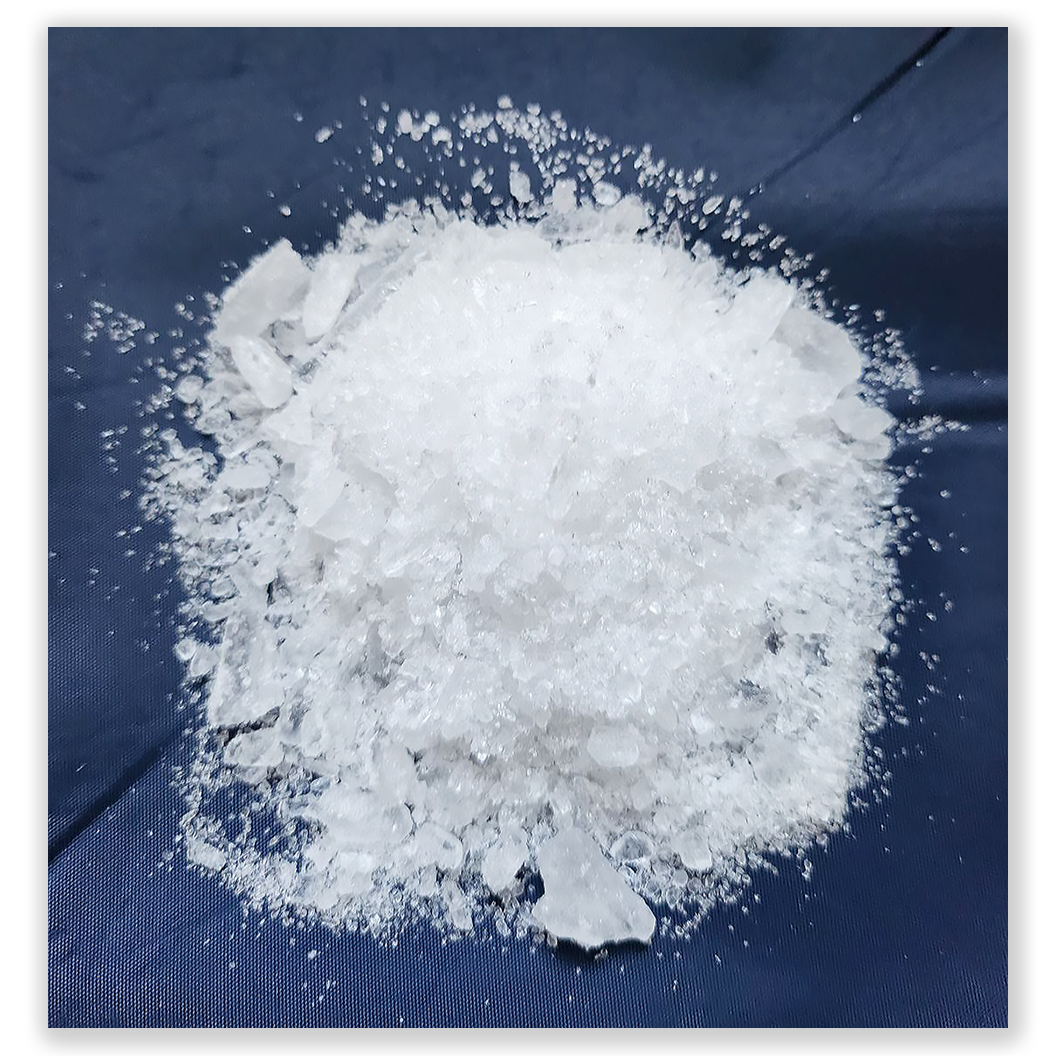
meth240618The second proposed amendment would essentially wipe out the drug quantity table’s 10-to-1 focus on meth purity and eliminate any enhanced penalty for crystal meth, known as “ice.” Commission data show that in the last 22 years, the offenses involving meth mixtures has remained steady while the number of offenses involving “meth (actual)” and “ice” have risen substantially. A recent Commission report found that today’s meth is “highly and uniformly pure, with an average purity of 93.2% and a median purity of 98.0%.”

In other words, if all meth is pure, applying the higher base offense level for pure meth becomes the norm rather than the exception. This is a drug-crime equivalent of the Lake Wobegon effect, humorist Garrison Keilor’s representation that in Lake Wobegon, all the children are above average.

The meth purity change could decrease Guideline base offense levels by up to 4.

A note: Judge Reeves, wearing his district court hat instead of USSC hat, wrote a thoughtful opinion two years ago in which he refused to apply the purity enhancement on the same grounds that the Commission cites now as a rationale for changing the Guidelines.

supervisedleash181107The other significant change is to supervised release, which would dramatically reduce the cases in which it is added to the end of a sentence. Among its many changes – focused on making supervised release more about rehabilitation and less about punishment – the proposed amendment would also adopt inmate-friendly standards for early termination of supervised release, making getting off supervised release after a year much easier to do.

The Sentencing Commission proposal says nothing about whether the drug quantity table reduction or meth changes – if they are adopted – would be retroactive. Retroactivity would be decided in a separate proceeding, and the USSC is in the middle of a painful re-evaluation of when and whether retroactivity should be allowed.

For now, the proposed amendments will be out for public comment until March 3, 2025, with reply comments due by March 18, 2025. The Commission will decide what it will adopt as final amendments by May 1, and those will become effective (absent Congressional veto) on November 1, 2025.

US Sentencing Commission, Proposed Amendments to the Sentencing Guidelines (Preliminary) (January 24, 2025)

– Thomas L. Root

More Rumors – How Many Can You Identify as True? – Update for October 24, 2023

We post news and comment on federal criminal justice issues, focused primarily on trial and post-conviction matters, legislative initiatives, and sentencing issues.

RUMORS II – TAKE OUR INMATE.COM RUMOR QUIZ

In prison, “inmate.com” is an information site of almost mythical status. It’s omniscient, omnipresent, omnivorous, and almost always, always wrong.

Unsurprisingly, there really is an inmate.com, although it bears no resemblance to the ethereal website of legend.

legend231023On November 1, the Guidelines amendments proposed last April will become effective. Under 28 USC § 994(p), amendments proposed by May 1 must become effective by November 1 unless Congress votes otherwise. Congress has not done so, and with the House in turmoil and no apparent Senate interest in stopping the amendments, the amendments will be effective in eight days.

Somehow, in the 35 years we’ve had the Sentencing Guidelines, the date of “November 1” has taken on a mystical, legendary quality. This year’s no different, as my email inbox continues to be stuffed with questions about what may happen ten days from now.

trueorfalse231024Take our true-or-false test to see how current you are on the latest November 1st rumors now being featured on  Inmate.com (the mythical one, not the penpal site):


(1) True or false: On November 1, the meth guidelines will be lowered by doing away with the “ice” enhancement.

FALSE. A district judge in SD Mississippi refused a few months ago to enhance for meth purity. It happens that this Judge is also Chairman of the Sentencing Commission, but nothing has been proposed on meth, let alone passed.

(2) True or false: On November 1, a new law will go into effect making 18 USC 924(c) prisoners eligible for FSA credits.

FALSE. The only way for 924(c) people to get FSA credits would be for Congress to amend the First Step Act. There is no proposal in front of either the House or the Senate to do that.

(3) True or false: On November 1, Congress is going to do away with the crime of conspiracy.

FALSE. Such a proposal, if anyone were daft enough to propose it, would never even make it to a committee hearing.

(4) True or false: On November 1, Biden is going to give all federal prisoners a year off of their sentences because of how miserable it was to be locked up for COVID.

FALSE. No one has even suggested such a thing, let alone seriously proposed it.

(5) True or false: On November 1, the new 65% law is going into effect.

FALSE. There ain’t no 65% law, never has been a 65% law, and probably never will be a 65% law.

(6) True or False:  On November 1, the Time Reduction Fairy will appear to magically commute your sentence to ‘time served.’

FALSE, but no more false than all the other November 1 rumors.

timereductionfairy231003Do you detect a trend here? This year, more happens on the 1st of November than All Saint’s Day… but not much. A couple of Guideline amendments go into effect and become retroactive. That’s good. Another one – compassionate release – will help a lot of people. But nothing will come out of Congress, nothing from the White House, very little from the BOP, and just the predictable annual amendment list from the Sentencing Commission.

And thus it will ever be.

– Thomas L. Root