Tag Archives: clemency

Legislators Tackle Clemency Reform – Update for May 24, 2022

We post news and comment on federal criminal justice issues, focused primarily on trial and post-conviction matters, legislative initiatives, and sentencing issues.

HOUSE SUBCOMMITTEE EXPLORES FIX FOR CLEMENCY MESS

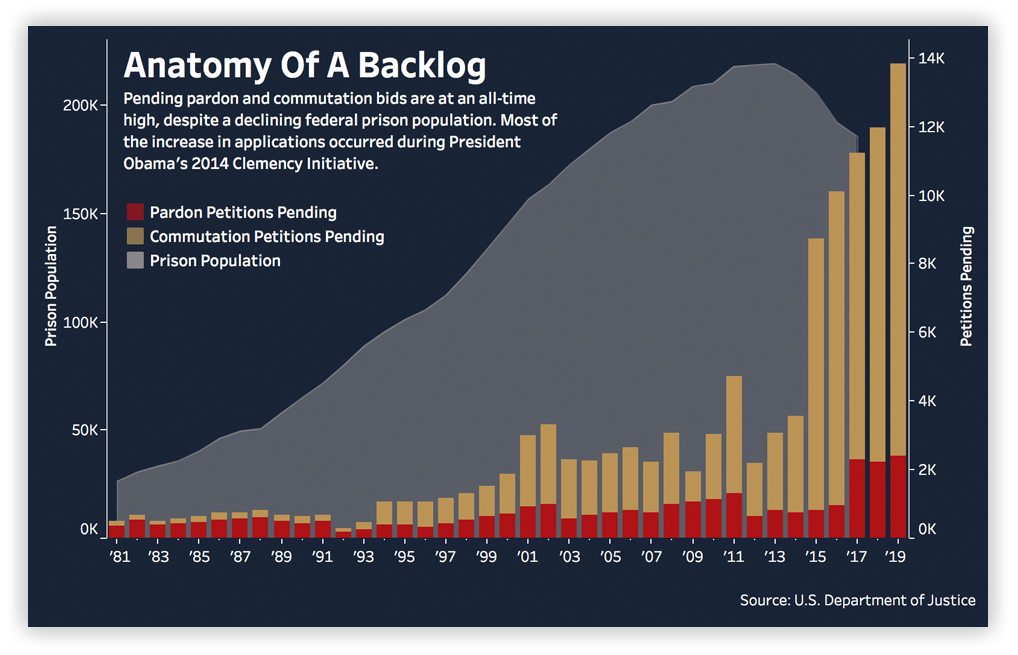
A subcommittee of the House Judiciary Committee last Thursday grappled with the jammed-up federal clemency process, in which an estimated 17,400 petitions await Presidential consideration.

clemencypitch180716The Subcommittee on Crime, Terrorism & Homeland Security heard from a spectrum of witnesses – from a former Mississippi US Attorney who argued the Dept of Justice’s “policies with regard to review of clemency petitions are correct: clemency should only be granted in extraordinary circumstances and exercised rarely” – to clemency experts who deconstructed the convoluted process in academic detail.

In opening remarks, Subcommittee Chair Rep. Sheila Jackson Lee (D-TX) said that Congress should encourage presidents to routinely use clemency powers, tools she called “useful… not just to correct individual injustices but to overcome “misguided policies that led to mass incarceration.”

Rep Ayanna Pressley (D-Mass) urged passage of a bill she is sponsoring – the Fair and Independent Experts in Clemency Act (or “FIX Clemency Act”), H.R. 6234. That measure would replace DOJ’s Office of Pardon Attorney with an independent clemency board, made up of nine people appointed by the President. The Board would send pardon and commutation recommendations directly to the president.

Clemency expert and law professor Mark Osler testified that what was once a relatively simple clemency system has grown “and metastasized until the process came to include seven distinct actors, each with their own interests and biases, acting sequentially. Today, a clemency petition will be considered in turn by the staff of the Pardon Attorney, the Pardon Attorney, the staff of the Deputy Attorney General, the Deputy Attorney General, the staff of the White House Counsel, the White House Counsel, and finally by the President.”

“The absurd inefficiency of seven reviewers seeing a petition only after a predecessor is done — rather than simultaneously as part of a board — is striking,” Osler said. “On top of that, baked into this system is negative decision bias; reviewers know they can get in trouble only for a bad “yes,” which incentivizes ‘no’s.’ It is seven valves, all spring-loaded shut, on the same pipe.”

clemency220418Law professor Rachel Barkow, a clemency expert and former member of the US Sentencing Commission, told the Subcommittee that “there are now more than 18,000 people waiting for a response to their petitions, many of whom have been waiting for years. It is hard to overstate the level of mismanagement responsible for this unconscionable backlog. These people deserve answers to their petitions, yet the administration has done nothing to suggest it has any grasp of the urgency of the situation.”

Barkow said, “The view inside DOJ… is that pardon attorneys should ‘defend the department’s prosecutorial prerogatives” and that “the institution of a genuinely humane clemency policy would be considered an insult to the good work of line prosecutors.” In light of this view, she said, “there is a strong presumption at DOJ that favorable recommendations should be kept to an absolute minimum.”

pardonme190123The grant rate for commutations and pardons across presidencies has been low in recent years compared to the rates for most of the nation’s history. Trump granted 2% of the petitions he received, Obama granted 5%, George W. Bush granted 2%, Clinton granted 6%, George H.W. Bush granted 5%, and Reagan granted 12%. This contrasts with Carter’s grant rate of 21%, Ford’s rate of 27%, and Nixon’s rate of 36%. “Between 1892 and 1930,” Barkow said, “27% of the applications received some grant of clemency.”

House Subcommittee on Crime, Terrorism & Homeland Security, Oversight Hearing on Clemency and the Office of the Pardon Attorney (May 19, 2022)

Statement of Professor Rachel E. Barkow, New York University School of Law, House Judiciary Comm, Subcomm on Crime, Terrorism, and Homeland Security (May 19)

Statement of Professor Mark Osler, University of St. Thomas, House Judiciary Comm, Subcomm on Crime, Terrorism & Homeland Security (May 19, 2022)

UPI, House panel weighs reforms for clemency amid backlog of 17,000 petitions (May 19, 2022)

– Thomas L. Root

EQUAL Act Runs Into Some Competition in Senate – Update for April 29, 2022

We post news and comment on federal criminal justice issues, focused primarily on trial and post-conviction matters, legislative initiatives, and sentencing issues.

BACK TO WORK FOR CONGRESS

Congress is back in session after Easter/Passover/Ramadan break, and the drumbeat continues for the EQUAL Act, even as insurrection against the favored bill brews.

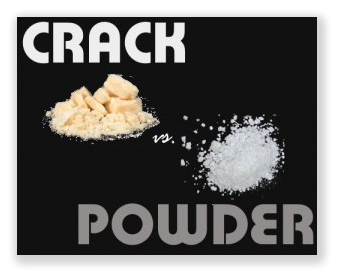
crackpowder160606As noted earlier this week, the DOJ threw a plug in for EQUAL as part of its PATTERN report to Congress. It wasn’t alone. Last week, The Hill editorialized that “April is Second Chance Month and an opportunity to think deeply about the real purpose of incarceration — and of penal systems more broadly. Is the purpose to dehumanize those who transgress? Or is it to protect communities and preserve or restore justice within them?… The EQUAL Act… addresses the sentencing disparity in our federal justice system involving penalties for crack and powder cocaine offenses, which has resulted in unintentional racial disparities and significantly higher federal prison populations. The law was intended to reduce the harm of crack cocaine possession, distribution and consumption. The validity of its original intention may be debated, but it has been proven to have unacceptable consequences.”

Writing in the Washington Examiner, former congressman Doug Collins said, “it’s no surprise that law enforcement is spearheading” the EQUAL Act… Roughly 90% of those serving time for crack offenses at the federal level are black, which means they serve vastly longer prison sentences than those convicted of powder cocaine offenses, even though the substances are chemically similar and equally dangerous. According to the country’s most respected law enforcement leaders, eliminating this disparity would help police officers build trust with communities of color, especially in urban areas where law enforcement finds it difficult to cultivate sources to investigate murders, shootings, and other violent crimes.”

Screwup190212However, proving that nothing in this world is such a slam-dunk that Congress cannot screw it up, the Start Making Adjustments and Require Transparency in Cocaine Sentencing Act (shorthand, “SMART Cocaine Sentencing Act” – an obvious competitor to the EQUAL Act – was introduced in the Senate yesterday. SMART, sponsored by Senators Roger Wicker (Mississippi), Charles Grassley (Iowa), Mike Lee (Utah) and Lindsey Graham (South Carolina), all Republicans – reduces the current 18:1 crack-to-powder ratio to 2.5:1 instead of EQUAL’s 1:1.

The nasty part of SMART is that for people already convicted under 18:1, there would be no retroactivity unless the Attorney General “certified” to the court that the sentence should be reduced. Given the Dept. of Justice’s traditional antipathy to the many prisoners seeking First Step Act Section 404 reductions, this is yet another example of turning the keys to the henhouse over to the fox.

Sen. Grassley explained the thinking behind SMART:

Separate legislation has been introduced in the Senate to completely flatten the differences between sentences for crack cocaine and powder cocaine offenses. This approach does not account for the differences in recidivism rates associated with the two types of cocaine offenses. According to a January 2022 analysis from the U.S. Sentencing Commission (USSC), crack cocaine offenders recidivate at the highest rate of any drug type at 60.8 percent, while powder cocaine offenders recidivate at the lowest rate of any drug type at 43.8 percent. Raising additional public safety concerns, USSC data reveals that crack cocaine offenders were the most likely among all drug offenders to carry deadly weapons during offenses. These statistics show the need for a close look at all available government data before we consider an approach to flatten sentencing for crack and powder cocaine offenses.

The MORE Act, which would decriminalize marijuana, has passed the House of Representatives. Whether it will pass in the US Senate, where all 50 Democrats and at least 10 Republicans would need to support it, is unclear. Maritza Perez, Director of National Affairs at Drug Policy Alliance, told The Grio last week it will be a “hard sell.” As reported, the Senate will be considering its own bill that Perez said focuses on less on decriminalization and more on a regulatory and tax framework for the sale and use of cannabis.

White House press secretary Jen Psaki said a week ago Wednesday that President Biden “remains committed” to honoring his campaign pledge to release “everyone” in federal prison for marijuana, claiming that he believes “no one should be in jail because of drug use.”

marijuanagrow220429Psaki did not provide a timeline. “I don’t have an update here. We are continuing to work with Congress. But what I can say on marijuana is we’ve made some progress on our promises. For instance, the DEA just issued its first licenses to companies to cultivate marijuana for research purposes after years of delay during the prior administration… Additionally, the president’s continuing to review his clemency powers, which is something he also talked about on the campaign trail and he certainly remains committed to taking action on.”

Of course, shortly after this, the President did grant some clemencies, although relatively few to marijuana offenders. More clemencies have been promised, albeit vaguely.

The Hill, Justice for some is no justice at all — we must change our criminal justice system (April 22, 2022)

The Grio, Advocates say legalizing cannabis would restore justice for Blacks, but can Washington get it done? (April 20, 2022)

Washington Examiner, Take the next step on the First Step Act (April 20, 2022)

NY Post, Biden ‘committed’ to freeing inmates with marijuana convictions, Psaki says (April 20, 2022)

S.__ (no number yet), SMART Cocaine Sentencing Act

Sen. Charles Grassley, Senators Introduce Bill To Reduce Crack-Powder Sentencing Disparity, Protect Communities From Criminals Most Likely To Reoffend (April 28, 2022)

– Thomas L. Root

The President Grants Clemency, Leaves Fox in Henhouse – Update for April 28, 2022

We post news and comment on federal criminal justice issues, focused primarily on trial and post-conviction matters, legislative initiatives, and sentencing issues.

BIDEN GRANTS CLEMENCY TO 75 PRISONERS

obtaining-clemencyPresident Biden’s announcement of three pardons and 75 commutations last Tuesday receive the expected accolades from the media, which generally like anything Biden does and – in this case – were undoubtedly relieved that no one on the list appeared to be a friend of Joe, a friend of a friend of Joe, or a favored cause of some celebrity who had booked private time with Joe.

The press, if not the public, is still suffering from a little PTSD (“Post-Trump Stress Disorder”). It is somewhat of a relief to see clemency not being used as a political carrot or to be scoring cheap political points.

USA Today said, “The individuals granted clemency came at the recommendation of the Department of Justice’s pardon attorney, according to senior Biden administration officials who briefed reporters about the announcement. It marks a return of a practice that was largely bypassed by former President Donald Trump, whose clemency requests often came through close aides.”

A return to normalcy? Maybe. Not a political act? “Not so fast!” Lee Corso might say.

Filter magazine reported that “Biden’s move appears to be the result of lobbying from a celebrity-connected network of clemency activists, such as Weldon Angelos, a former cannabis prisoner who counts Snoop Dogg among his friends. It carries over a troubling Trump trend for this unique and in practice, arbitrary, presidential power: People with celebrity backing are more likely to receive mercy, while others who are similarly situated don’t.”

clemency170206Recall that the White House said last year that Biden was reforming clemency, and would start granting pardons and commutations in the fall of 2022. So what happened? As CNN explained, President Joe Biden decided to mark “Second Chance Month” by “commuting the sentences of 75 people serving time for nonviolent drug offenses, issuing full pardons for three individuals who the administration says have worked toward rehabilitation and unveiling new actions aimed at easing the transition back to normal life for the formerly incarcerated.” The New York Times said, “Mr. Biden’s top aides described the use of presidential power as part of a broader strategy to overhaul the criminal justice system by relying less on prison to punish nonviolent drug offenders and using employment programs to help prevent the formerly incarcerated from returning to prison.”

I agree with Ohio State University law professor Doug Berman, who said in his Sentencing Law and Policy blog that “though I am still a bit salty that it took Prez Biden 15+ months in office before using his clemency pen, I am pleasantly surprised to see a large number of grants and many commutations to persons serving lengthy terms for drug offenses.” Prof Berman noted what I too thought was an anomaly: 40% of the commutation recipients were female. Only about 7% of the BOP inmate population are women.

Other interesting numbers: While the clemencies were widely seen as addressing marijuana convictions, this was not the case at all. Only 7% of the commutations were for a marijuana-only offense, and 12% for offenses that included marijuana. However, 40% of the commutations were for offenses involving methamphetamines, 28% involved cocaine powder, 12% involved crack, and 5% involved heroin. The meth number is especially interesting, in that Congress has shown not just uninterest, but outright hostility to meth offenses. (In the First Step Act, for example, methamphetamines, and heroin are singled out for exemption from eligibility for earned time credits under some circumstances).

Notably, no one who got a commutation had any fentanyl on his or her case.

While Biden noted that “many” of the people receiving commutations “have been serving on home confinement during the COVID-pandemic,” two inmates serving life and one whose life sentence was cut to 240 months in 2014 were among the commutation grants.

Still, this appears to be a nice start. Seventy-five of the 18,000+ clemency petitions on file have been granted. The White House has hinted that more is to come. So why am I complaining?

same160613It’s just this: The New York Times reported that “Mr. Biden based his decisions on clemency petitions sent to the Justice Department, which then made recommendations to the president, according to the White House.” On the campaign trail, Biden promised sweeping changes to criminal justice, including clemency. Previously, we had seen promising signs that Biden was going to cut the Dept of Justice out of the clemency process. DOJ prosecuted and locked up the prisoners to begin with. Having DOJ serve as the gatekeeper for clemency – an act of political grace, not a legal process – is akin to putting the fox in charge of selecting chickens to be released from the henhouse.

Now, about a year after Biden promised a review and possible restructuring of the clemency process, we’re back to the same-old-same-old. I’m not disappointed for the 75 who got clemency… just the 18,000 left behind.

White House, Clemency Recipient List (April 26, 2022)

USA Today, Biden pardons three felons, commutes sentences of 75 others, in first use of clemency powers (April 26, 2022)

CNN, Biden will commute or pardon sentences of 78 non-violent people. Here are a few to know (April 26, 2022)

The New York Times, Biden Uses Clemency Powers for the First Time (April 26, 2022)

Sentencing Law and Policy, Prez Biden finally uses his clemency pen to grant three pardons and 75 commutations (April 26, 2022)

Marijuana Moment, Biden’s first act of cannabis clemency (April 27, 2022)

Filter, Biden’s Clemency Announcement Falls Far Short (April 27, 2022)

– Thomas L. Root

Biden Makes Former Public Defender DOJ Pardon Attorney – Update for April 18, 2022

We post news and comment on federal criminal justice issues, focused primarily on trial and post-conviction matters, legislative initiatives, and sentencing issues.

NEW BLOOD IN THE PARDON OFFICE

clemency220418It only took him 15 months, but President Joe Biden has taken baby steps on addressing clemency by appointing a new Dept of Justice Pardon Attorney. Elizabeth G. Oyer, the first permanent Pardon Attorney in six years (everyone else was “acting” without official appointment), formerly served as Senior Litigation Counsel to the Office of the Federal Public Defender for Maryland.

Oyer, a Harvard law graduate, has “represented indigent defendants at all stages of proceedings in federal district court [and] handled a wide variety of criminal cases, ranging from complex fraud to drug and gun offenses, as well as violent crimes,” law prof Mark Osler, a national expert in clemency law, said last week on Twitter.

“It means something that Prez Biden has actually filled this slot,” Ohio State University law prof Doug Berman said last week in his Sentencing Law and Policy blog. “It’s also significant – and positive – that he has given a career defender an important job in the Department of Justice.”

Don’t expect miracles, however. Osler warns that the problem of the 18,000-petition backlog “may not have been the Pardon Attorney, but the bureaucracy that takes up the petitions after they are evaluated by the pardon attorney,” referring to review by the Attorney General and White House. There are over 18,000 pending petitions, many of them now years old (including unresolved petitions from the Obama administration). “It’s a mess,” Osler wrote. “We just know what kind of mess, or where the mess is located. The whole thing needs reform.

chickens160208In last week’s blog, Berman argued again that the federal clemency process should be removed from DOJ, noting the FIX Clemency Act (H.R. 6234), introduced four months ago, that would set up an independent clemency authority to review applications. GovTrack, a website that tracks legislation, gives the bill a 2% chance of passing.

Berman warns that “a full 15 months into his administration, Prez Biden has not granted a single pardon and has not granted a single commutation. With more than 18,000 applications pending, not to mention many low-risk, COVID-vulnerable persons released to [CARES Act] home confinement, it ought not be that hard to find at least a handful of “non-violent and drug” offenders who deserving of clemency… Whomever is in charge of the matters at DOJ, where these is a clemency will there is surely a clemency way. As of now, though, it does not appear that Prez Biden really has much of a clemency will.”

Twitter, Biden Administration has appointed a Pardon Attorney (April 14, 2022)

Sentencing Law and Policy, Justice Department has new Pardon Attorney who is a former public defender … which means …? (April 15, 2022)

DOJ, Meet the Pardon Attorney (April 12, 2022)

H.R. 6234, FIX Clemency Act

– Thomas L. Root

Clemency: No One Here But Us Turkeys – Update for December 13, 2021

We post news and comment on federal criminal justice issues, focused primarily on trial and post-conviction matters, legislative initiatives, and sentencing issues.

CLEMENCY CRITICISM RISES AS CHRISTMAS APPROACHES

Business Insider noted last week that “at this point in his presidency, Joe Biden has pardoned just two sentient beings: Peanut Butter and Jelly, 40-pound turkeys from Jasper, Indiana.”

turkey211122Not that prior presidents have done much better. Trump, by contrast, had pardoned three at this point in his presidency: two turkeys and one former sheriff. Clinton, Obama, and George W. Bush all waited until at least their second year in office before granting clemency to a human being.

That’s not because Biden can’t find candidates. About 17,000 petitions are pending, 2,000 of which have been filed in the past year.

Last week, Kevin Ring of FAMM, Sakira Cook of the Leadership Conference on Civil and Human Rights, and others met with White House staff to turn up the pressure. The meeting appears to have been frustrating for Ring. During an NPR roundtable last week on criminal justice reform, he noted that Biden has thus far even resisted clemency for CARES Act detainees. “To me, it’s a bellwether,” Ring said. “Because if the administration won’t address this and address it immediately, I don’t know what hope we can have that other things are going to get done.”

NPR noted that the BOP population has increased by about 5,000 since Biden took office.

Progressives in the House of Representatives, unhappy with a clemency system they say is too slow and deferential to prosecutors, last week proposed the creation of an independent panel they hope would depoliticize and expedite pardons.

clemency170206The “FIX Clemency Act,” HR 6234, was introduced last Friday by Rep. Cori Bush (D-Missouri), Vice Chair of the House Judiciary Subcommittee on Crime, Rep. Ayanna Pressley (D-Mass), and Rep. Hakeem Jeffries (D-NY). The bill calls for a nine-person board that would be responsible for reviewing petitions for clemency and issuing recommendations directly to the president. The recommendations would also be made public in an annual report to Congress. At least one member of the panel would be someone who was previously incarcerated.

That might work… if you could convince the President to appoint anyone to it. Last week, Law360 went after Biden for having yet to nominate anyone to the U.S. Sentencing Commission, which is “keeping a potentially key player in justice reform on the sidelines, according to legal experts.”

The article points out that the USSC “hasn’t had a full roster of seven commissioners for nearly half a decade and has lacked the minimum four commissioners needed to pass amendments to its advisory federal sentencing guidelines since the beginning of 2019.” As a result, an agency whose job is to evaluate the criminal justice system’s operations and potentially drive reform has been taken off the field, Law 360 quoted Ohio State University law professor and sentencing expert Doug Berman as saying.

noquorum191016The USSC currently has only one voting member, Senior U.S. District Judge Charles Breyer, who will have to leave next October, regardless of whether anyone has been named to the Commission or not.

During another NPR roundtable last week, NPR reporter Asma Khalid said of criminal justice reform, “You know, I cover the White House. And I will say, I don’t see this as really being an issue at the forefront, at least not from what I’ve heard publicly from them.”

The leadership vacuum is perhaps best reflected in rudderless Congressional action. Last September, the House of Representatives attached the Secure and Fair Enforcement (SAFE) Banking Act to its version of the National Defense Authorization Act. The SAFE Act would shield national banks from federal criminal prosecution when working with state-licensed marijuana businesses, and was widely seen as opening the door to marijuana reform. Last Tuesday, the final NDAA bill text was released without SAFE Banking Act language.

Many would say Biden has not enjoyed a legislative honeymoon, even while owning both houses of Congress. Maybe it’s only a legislative cease-fire, but whatever it is, the 11-month armistice is unlikely to hold for more than another year until Republicans retake at least one chamber. And with Americans’ perception that crime in their local area is getting worse surging over the past year, there will be less interest in criminal justice reform as the mid-terms approach.

Business Insider, Despite promises, Biden has yet to issue a single pardon, leaving reformers depressed and thousands incarcerated (December 8, 2021)

NPR, Criminal justice advocates are pressing the Biden administration for more action (December 9, 2021)

HR 6234, FIX Clemency Act (December 9, 2021)

Press Release, Bush, Pressley, Jeffries Unveil FIX Clemency Act (December 10, 2021)

Law360.com, Biden’s Inaction Keeps Justice Reform Group Sidelined (December 5, 2021)

NPR, No One Has Been Granted Clemency During Biden Administration (December 9, 2021)

Cannabis Wire, SAFE Banking Scrapped from NDAA Despite Major Push (December 8, 2021)

Gallup poll, Local Crime Deemed Worse This Year by Americans (November 10, 2021)

– Thomas L. Root

Biden Pardons Turkeys But No Prisoners – Update for November 22, 2021

We post news and comment on federal criminal justice issues, focused primarily on trial and post-conviction matters, legislative initiatives, and sentencing issues.

BIDEN ISSUES FIRST PARDONS… NO HUMANS MAKE THE LIST

turkey211122There was no shortage of complaints from criminal justice reform advocates last Friday as President Biden “pardoned” two turkeys with the rather vegan names of “Peanut Butter” and “Jelly” in a White House ceremony.

“Peanut Butter and Jelly were selected based on their temperament, appearance, and, I suspect, vaccination status,” Biden said. “Yes, instead of getting basted, these two turkeys are getting boosted.”

But when a reporter asked whether he would be pardoning “any people in addition to turkeys,” Biden treated the question as a joke. “You need a pardon?” the president quipped. He didn’t reply to a follow-up question about marijuana prisoners as he walked away from assembled journalists.

turkeyb161123The turkeys may not get roasted, but the President isn’t so lucky. Law professor and clemency expert Mark Osler wrote in the Minneapolis Star-Tribune that “those of us who work in the field of clemency are left with a bitter taste in our mouths. Biden’s pardon of those turkeys represents the first time he has shown any interest at all in clemency. The problem isn’t just that Biden isn’t granting any clemency, it’s that he isn’t denying any, either. Following the lead of his predecessor, former President Donald Trump, Biden is just letting requests sit.”

Osler cited the 18,000 pending clemency petitions – 16,000 more than when Obama took office – and the danger CARES Act people may be sent back to prison when the pandemic ends, as “two genuine crises unfolding in federal clemency.”

A few days earlier, Interrogating Justice complained that

President Joe Biden campaigned heavily on justice reform, including with the federal Bureau of Prisons. He acted swiftly after his inauguration by terminating private prisons that housed federal inmates. However, since then, there has been virtually nothing. Various justice-reform groups have called out the president for his apparent lack of action. Points of frustration start with the increased population of federal prisons, the BOP’s inept handling of the pandemic, the failure to apply First Step Act time credits and most recently the question of granting clemency to all prisoners who are at home confinement under the CARES Act. And these are just a few of the many issues that plague the BOP.

turkeyprison161114The Minneapolis Post argued that “

While campaigning for president last year, however, Biden promised sweeping changes to the criminal justice system. And Biden could not have been more clear that he was committed to reform — promising, “as president” to “strengthen America’s commitment to justice and reform our criminal justice system. Then Biden got elected. And he’s been busy with other things…”

The Hill called it Biden’s “do-nothing” approach to clemency, which

he seems to have delegated entirely to the DOJ… Most of the Democratic candidates for president endorsed this change because the DOJ had proven itself incapable of handling clemency impartially and efficiently for decades… So why doesn’t Biden take clemency away from DOJ and create the kind of advisory commission that President Ford used to aid him in processing a similar backlog of petitions from people with convictions for draft evasion during the Vietnam War? The only apparent answer is that Biden does not want to look like he is interfering with DOJ. But clemency should never have been in DOJ in the first place. It is there by historical accident — no state gives clemency decision-making power to the same prosecutors who bring cases in the first place because of the obvious conflict of interest problem it poses.

New York Times, Boosted, Not Basted: Biden Pardons 2 Turkeys in Thanksgiving Tradition (November 19, 2021)

New York Post, Biden laughs off question about clemency for humans before pardoning turkeys (November 19, 2021)

Minneapolis Star-Tribune, When it Comes to Human Pardons, Thanks for Nothing (November 19, 2021)

Interrogating Justice, The Biden Administration Has Gone Quiet on Justice Reform at the BOP (November 15, 2021)

Minneapolis Post, When will Biden make good on his promise to reform criminal justice? (November 15, 2021)

The Hill, Biden can’t let Trump’s DOJ legacy stifle reform (November 17, 2021)

 Thomas L. Root

POTUS Pot Pardons Possible, CRS Says – Update for November 9, 2021

We post news and comment on federal criminal justice issues, focused primarily on trial and post-conviction matters, legislative initiatives, and sentencing issues.

COULD BIDEN USE BLANKET CLEMENCY ON POT OFFENDERS?

A Congressional Research Service report issued last week concluded that if President Joe Biden’s easiest path to fulfilling his goal of getting the federal government out of marijuana regulation business is to use his clemency power.

marijuana160818While the study concluded that Biden could not lawfully deschedule marijuana as a controlled substance, it nevertheless said the President has substantial control over how the law is enforced and may use his clemency authority at any time “after an offense is committed: before the pardon recipient is charged with a crime, after a charge but prior to conviction, or following conviction. The power is not limited to pardons for individual offenders: the President may also issue a general amnesty to a class of people.”

In addition, the Report notes, “the President could direct the Department of Justice to exercise its discretion not to prosecute some or all marijuana-related offenses. Although DOJ generally enjoys significant independence, particularly with respect to its handling of specific cases, the President has the authority to direct DOJ as part of his constitutional duty to ‘take Care that the Laws be faithfully executed’.”

The CRS is Congress’s public policy research institute, working primarily for members of Congress and their committees and staff on a nonpartisan basis.

Meanwhile, an article in Inquest last week observed that “there is deeply rooted legal precedent for presidents to use their authority to grant clemency to large classes of people. Presidents have deployed this authority to advance the public welfare, whether following a war or in response to unjust punishments, or simply to help heal a nation torn by crisis… Broad clemency has been issued by presidents George Washington, John Adams, James Madison, Abraham Lincoln, Theodore and Franklin Delano Roosevelt, Harry Truman, Lyndon B. Johnson, Gerald Ford, and Jimmy Carter.”

A lot of people are hoping to see this on the news...
A lot of people are hoping to see this on the news…

Noting that “the federal system… is the single largest incarcerator in the nation,” the article argued “ President Biden can lead by example, embracing categorical clemency as a tool to mitigate the system’s structural injustices… The president can act by issuing categorical clemency through a proclamation to a class of people based on two categories of eligibility: Personal characteristics or membership in a certain group, or shared circumstances. Such a proclamation should contain a presumption that all people who fit the criteria announced by the president will have their sentences commuted unless the DOJ can prove an articulable and current threat of violent harm.”

Of course, all of the foregoing supposes the President will use his clemency power at all. The Administration has thus far said not to expect pardons or commutations prior to late next year.

Congressional Research Service, Does the President Have the Power to Legalize Marijuana? (November 4, 2021)

Inquest, Mass Clemency (November 2, 2021)

– Thomas L. Root

Clemency Should Be ‘Easy Lift’ For Biden, Some Say – Update for October 1, 2021

We post news and comment on federal criminal justice issues, focused primarily on trial and post-conviction matters, legislative initiatives, and sentencing issues.

BIDEN CARES ACT CLEMENCY CALLED INADEQUATE

We know a little more about the Biden Administration’s plan to solicit commutation applications from some CARES Act prisoners on home confinement, and as more is known, the criticism is mounting.

clemencypitch180716A few weeks ago, the Department of Justice started sending out commutation applications to about 1,000 people (about one out of four those on CARES Act home confinement). Biden is targeting people who have been convicted of a drug offense and have four years or less remaining on their sentences, directing them to apply to DOJ’s Office of the Pardon Attorney.

Last week, The New Republic observed that “Biden is wedded to an inefficient process that’s created a backlog of close to 16,000 petitions. The administration is going out of its way to frame its approach as the opposite of Trump’s chaotic one, which bypassed the Justice Department and freed people seemingly based on the president’s whims.” The New York Times reported last spring that Biden intends to “rely on the rigorous application vetting process,” as opposed to Trump’s approach, “empowering friends, associates and lobbyists to use their connections to the president, his family and his team to push favored requests to the front of the line…”

clemencybacklog190904

But the need to rely on the DOJ pardon system doesn’t sit well with some. Last week, Amy Povah, founder of the Can-Do Clemency Project, told Forbes, “President Biden has been handed an easy political gift. There are 4,000 inmates functioning in society, obeying the laws, bonding with family and held accountable for their past actions. There is no better group vetted to be given clemency than this group of CARES Act inmates… If those at home under CARES Act don’t all qualify to stay there, I’m concerned that we’re dealing with an overly conservative mindset, not consistent with the will of those who voted for President Biden.”

“This should be an easy lift for the Biden administration,” law professor Mark Osler, a former Assistant U.S. Attorney, told The New Republic. “They were handed a carefully vetted group of people who even Attorney General Barr thought should be out in society.”

Osler said the system Biden wants to rely on doesn’t work. “The fact that their commitment to a broken process is going to undermine this is really disappointing,” Osler told TNR. He has long argued that clemency cases should be taken away from DOJ. Before a case makes it to the President, Osler said, “the first thing the pardon attorney’s staff do is seek out the opinion of the local prosecutor and then give that opinion substantial weight. What do you think is going to happen?”

clemency170206No one is saying whether special considerations will be applied to CARES Act home confinees, allowing them to skip DOJ Pardon Attorney review and that office’s embarrassing backlog of cases. FAMM president Kevin Ring complained last week that outside of what they’ve seen in the media, no one knows what Biden plans. “It’s a crazy lack of transparency,” Ring said. “Friday afternoon, there’s a phone call to BOP halfway houses saying, this person should fill out a clemency petition in the next couple of days. Who? Why? What [are] the criteria?”

Unsurprisingly, the pressure remain high for Biden to do more. A week ago, five members of the Maryland congressional delegation wrote to Attorney General Merrick Garland and BOP Director Michael Carvajal, asking for reconsideration of the Trump-era legal opinion (which the Biden DOJ has agreed with) that CARES Act people have to return to prison after the COVID-19 emergency passes. And last Friday, three national law enforcement organizations – the Law Enforcement Leaders to Reduce Crime & Incarceration, Law Enforcement Action Partnership, and Fair and Just Prosecution — wrote to the President to urge him “to use your clemency power to ensure that all people successfully placed on home confinement under the CARES Act do not return to full custody.”

While all of the attention seems to be on CARES Act people, any focus on a re-do of the DOJ pardon system will ultimately benefit prisoners whether still in prison or at home.

Forbes, Biden Considering Options To Avoid Returning Federal Inmates To Prison Post Covid-19 (September 19, 2021)

The New Republic, Biden’s Conservative Vision on Clemency (September  21, 2021)

Maryland Congressional Delegation, Letter to Attorney General (September 17, 2021)

Law Enforcement Action Partnership, Letter to President Biden (September 24, 2021)

– Thomas L. Root

Clemency Tips – Update for September 23, 2021

We post news and comment on federal criminal justice issues, focused primarily on trial and post-conviction matters, legislative initiatives, and sentencing issues.

YOU’RE STILL LOCKED UP – SHOULD YOU FILE FOR CLEMENCY?

writing160425On Monday, I wrote about the Biden clemency initiative. And I have gotten questions about it, principally this one: What should you do if you’re not in the cohort of 1,000 people on CARES Act home confinement that Joe purportedly has asked to submit a clemency request?

Write one anyway. Like the lottery people say, you can’t win if you don’t buy a ticket. The commutation forms and instructions are available online. You probably should get your application in the hopper anyway, doing your best to show that you’re non-violent, show rehabilitation during your incarceration, and explain why your situation is similar to the 1,000 prisoners invited to file or otherwise praiseworthy.

Some pointers:

A commutation petition is not the time to say this...
A commutation petition is not the time to say this…

(1) No one cares about your innocence: Explaining that you’re actually innocent or that you were convicted by bad lawyering, corrupt courts, or cheating prosecutors is a bad idea. No one in the Administration wants to hear that, even if it happens to be so. The commutation process wants to hear about your remorse and rehabilitation, not about how you may have been done wrong. Clemency is an act of executive grace, completely discretionary and utterly unreviewable. Imagine that you have a gun with only one bullet. This shot absolutely has to count. Whining about your judge or lawyer fires your one bullet right into your foot.

(2) Truth counts:  Maybe the “gun with one bullet” analogy isn’t such a good one. You want to demonstrate that Gandhi has nothing on you when it comes to non-violence, but don’t sugar-coat things. If you were a hot-blooded young gun in your past, admit that and explain how you’ve aged out of it, found a spiritual path, whatever. But be truthful about your history. Glossing over prior conduct figuring that no one in Washington will examine your past in too much detail is not a winning strategy. Betting on the other side being lazy or incompetent is no plan.

(3) Reach for the possible, not the ideal. You want a pardon. Of course you do. Everyone would love to have his or her federal crime wiped off the books. But, if history is a guide, pardons are for celebrities – political or otherwise – or, if you’re a little guy, for people with decades-old offenses and a history since conviction that should make them Time’s Person of the Year. You want a pardon, sure. But that ain’t gonna happen. File for a commutation, which does not forgive your crime, but says that you’ve been punished enough and should have the rest of your sentence commuted.

So how should you write your petition? Attorney Brandon Sample has posted tips on writing clemency petitions at clemency.com. (Brandon’s site contains a lot of good information, and invites you to contact him – which is not to say that hiring Brandon or another attorney who knows the process is a bad idea: it’s a very good idea, especially if you have a decent shot at getting some traction from the Biden initiative).  

Speaking of lawyers, Margaret Colgate Love – who was U.S. Pardon Attorney during the George H.W. Bush and Bill Clinton administrations – has written a lot on clemency and is available for hire as well.

There are other effective legal advocates out there, too. I have just mentioned two whose work for which I have respect.

obtaining-clemencyWhile not attorneys for hire, the people at Amy Povah’s Can-Do Foundation – focused on clemency for non-violent drug offenders –have posted some tips on applying for clemency or (and this is important) getting friends or family to write in support. Some of Can-Do’s information is a little dated, having been written during the Wild West days of Trump clemency, but there are nuggets of good advice on the website.

Finally, while its focus is slightly different (or perhaps larger than just clemency), Attorney Brittany Barnett’s Buried Alive project has worked on some high-profile commutation as part of its work on drug life-without-parole sentences. Alice Marie Johnson, one of President Trump’s most deserving commutations (and later, pardons), was represented by Barnett.

Dept. of Justice Pardon Attorney website

Brandon Sample, Clemency Resources

Margaret Colgate Love, Clemency Resources

Can-Do Foundation, Clemency Resources

Buried Alive Project

– Thomas L. Root

Biden Proposes Clemency Lite – Update for September 20, 2021

We post news and comment on federal criminal justice issues, focused primarily on trial and post-conviction matters, legislative initiatives, and sentencing issues.

ADMINISTRATION TROTS OUT COMMUTATION PLAN THAT IS OPAQUE AND TINY

clemencypitch180716President Biden’s administration last week announced something that looks like a clemency plan, only much smaller. Last Monday, White House spokesman Andrew Bates said the Administration “will start the clemency process with a review of non-violent drug offenders on CARES Act home confinement with four years or less to serve.”

Those who have been invited to apply fall into a specific category: drug offenders released to CARES Act home confinement who have four years or less on their sentences. Neither the White House nor the Dept of Justice would say how many people have been asked to submit commutation applications or whether it would be expanding the universe of prisoners who would be considered.

However, according to news reports, about 1,000 home confinees – about 25% of the people on CARES Act home confinement – are included in the batch the White House wants to review. Weldon Angelos, who was pardoned for a marijuana conviction by President Donald Trump last year and works with the current administration on criminal justice reform, told Marijuana Moment that about 1,000 people were asked to report to their designated halfway houses to fill out the clemency form in recent days.

Udi Ofer, the ACLU’s deputy national political director, said he was troubled by the possibility that the White House was cleaving off CARES Act recipients into those deserving commutation and those who didn’t, arguing that the Bureau of Prisons, in originally releasing inmates under the CARES Act, had already made a determination between those who posed a threat of violence and those who didn’t.

clemency170206“We are worried that the White House is viewing this issue too narrowly and unnecessarily restricting the category of people being asked to apply for clemency,” Ofer told Politico.

Others disagree that then BOP’s decisions on home confinement – which have largely been delegated to 122-odd executive officers at BOP facilities – are a consistent or reliable indicator of who should get clemency. “It’s not clear how the Bureau of Prisons chose people for this home confinement program, which raises the question of whether it’s fair to give a special benefit to these folks not available to those who have filed clemency petitions sometimes years ago and have been patiently waiting,” said former DOJ Pardon Attorney Margaret Love.

Biden’s limited clemency plan appears not to be enough for some lawmakers. Last Friday, 28 House Democrats called on Biden to commute the sentences of all 4,000 CARES Act home confinees, as well to establish a review board for pending clemency petitions.

“We urge you to use your authority as President to immediately commute the sentences of the 4,000 people who, under the [CARES Act], are currently on home confinement and at risk of being sent back to federal prison, and further, to create an independent clemency board to review the more than 15,000 pending clemency petitions,” the letter, spearheaded by Reps. Cori Bush (Missouri), Bonnie Watson Coleman (New Jersey), Pramila Jayapal (Washington), and David Trone (Maryland), said.

The President had announced in May that he would tackle clemency in 2022.

noplacelikehome200518A BOP spokesperson told The Hill last week that the agency is focused on the “expanded criteria for home confinement and taking steps to ensure individualized review of more inmates who might be transferred… The BOP and the [Department of Health and Human Services] continue to explore all potential authorities that could be exercised after the end of the pandemic to help address this issue.”

Politico, Biden starts clemency process for inmates released due to Covid conditions (September 13, 2021)

CNN, Administration to start clemency process for some federal inmates on home confinement due to Covid conditions (September 13, 2021)

Marijuana Moment, Biden Administration Asks Prisoners with Certain Federal Drug Convictions to Apply for Clemency (September 13, 2021)

The Hill, Democrats urge Biden to commute sentences of 4K people on home confinement (September 17, 2021)

– Thomas L. Root