Tag Archives: biden

Trump Rumored to Plan Marijuana Rescheduling – Update for December 15, 2025

We post news and comment on federal criminal justice issues, focused primarily on trial and post-conviction matters, legislative initiatives, and sentencing issues.

TRUMP TO LOOSEN POT SCHEDULING?

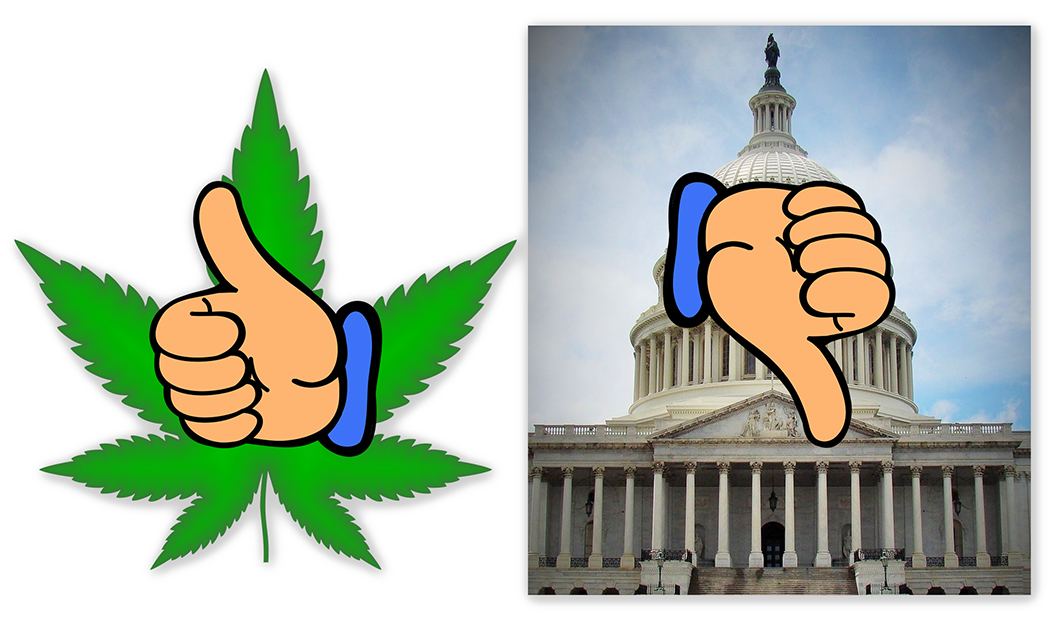
You may recall that President Joe Biden made a big deal about rescheduling marijuana from a Schedule I controlled substance to Schedule III. This de-escalation of weed would have loosened a lot of the Controlled Substances Act restrictions and might have led to changes in mandatory minimum sentences and easing of marijuana Guidelines.

Biden didn’t get it done by the end of 2024 as promised, and his departure from the White House seemed to have brought the effort to a standstill.

President Trump ruminated about easing pot regulation this past summer. Late last week, rumors exploded in Washington that President Trump is expected to issue an executive order as soon as today that would allow for reclassification of marijuana, a White House official (who remained anonymous because he was not authorized to speak about it) told reporters.

Trump is expected to push the government to reduce regulation of the plant and its derivatives to the same level as some common prescription painkillers and other drugs, the Washington Post reported. The anticipated executive order is expected to direct federal agencies to pursue reclassification, the people said.

Reclassification will not decriminalize marijuana, but it would ease barriers to research and may drive Congress and the Sentencing Commission to reconsider sentence levels for the drug.

Although the President cannot reclassify pot by executive order, he can direct the Dept. of Justice to cancel a pending administrative hearing and issue the final rule.

The Post said that in a call last Wednesday between Trump and House Speaker Mike Johnson (R-LA), Johnson expressed skepticism about the plan, but Trump “ended the call appearing ready to go ahead.”

CNBC, Trump expected to sign executive order to reclassify marijuana as soon as Monday, source tells CNBC; pot stocks surge (December 12, 2025)

Washington Post, Trump seeks to cut restrictions on marijuana through planned order (December 11, 2025)

~ Thomas L. Root

Flattery, Politics, Money – It’s What a Pardon Requires – Update for December 11, 2025

We post news and comment on federal criminal justice issues, focused primarily on trial and post-conviction matters, legislative initiatives, and sentencing issues.

LESSONS FOR CLEMENCY APPLICANTS – CONTACTS AND MONEY HELP

President Donald Trump’s clemencies continued last week with beneficiaries including former congressman Henry Cuellar (D-TX) and his wife, and entertainment venue developer Tim Lieweke, accused of rigging bids for a $375 million basketball arena built for the University of Texas. None had gone to trial yet.

Trump claimed on Truth Social that the Cuellars’ bribery prosecution was the result of his speaking out against former President Joe Biden’s immigration policy. As for Lieweke, the pardon came after his lawyer, former Rep. Trey Gowdy (R-SC) (who hosts a Fox News program), sold Trump on the pardon while playing a round of golf with him.

“There’s nothing conventional about Trump’s pardoning,” said Margaret Love, former U.S. pardon attorney. “You don’t know whether he’s got a personal interest in the case, whether [it is] because of the nature of the offence — he’s concerned with bribery and financial crimes convictions.”

This year, roughly 10,000 federal prisoners have filed clemency petitions through the Office of Pardon Attorney. Only 10 of those have been granted. In previous administrations, OPA filtered a select few pardon applications to the president, and presidents only occasionally circumvented that process. With Trump, OPA seems to be where clemency petitions go to die. So how does an inmate get a leg up?

    • First, as Axios reported last week, “serious criminal conduct matters far less than whether the defendant pledges loyalty, flatters the president or aligns with his ideological project.” Honduran president Juan Orlando Hernández, pardoned the week before, wrote a fawning letter calling Trump’s accomplishments “historic” and gushing that “Mr. President, you and I also shared something deeper, a profound love for our countries. We are men of faith, patriots, willing to risk our lives for the safety of our people.”
    • Second, blame Biden. Trump said that Henry Cuellar had been prosecuted by Biden because he objected to Biden’s “open border” policies. The Honduran President complained that his case was brought “only because the Biden-Harris DOJ pursued a political agenda to empower its ideological allies in Honduras…”
    • Third, hire the right people. The Honduran President got Trump buddy Roger Stone to convince the President to issue the pardon. Lieweke had hired Gowdy’s law firm for representation in the criminal case.
    • Fourth, money always helps. Beyond paying people with presidential access, donating to a Trump cause may help. Last April, Trump pardoned Paul Walczak for tax crimes after Walczak’s mother attended a $1-million-per-person fundraiser at Mar-a-Lago.

New York Times columnist Sam Sifton wrote last week that “with Trump, it often comes down to winning him over — or at least his family or closest advisers. And because there are many ways to get in his good graces — donating to his political committees, helping fund the construction of the White House ballroom, having one of his friends vouch for you — there is a cottage industry of lawyers and lobbyists seeking to exploit those avenues.”

Saikrishna Prakash, a University of Virginia law professor who writes about the presidential pardon power, said last week that Trump is “enamored with this power precisely because it’s unchecked.”

Politico, Henry Cuellar will seek reelection as a Democrat after Trump pardon (December 3, 2025)

Wall Street Journal, A Round of Golf Changed Trump’s Tone on the Concert Industry (December 6, 2025)

Wall Street Journal, Trump’s Pardon for Cocaine Juan (December 2, 2025)

Axios, Trump wields pardons as purest form of power (December 3, 2025)

Financial Times, ‘Why are we letting this guy go?’ Donald Trump’s pardons upend US justice system (December 5, 2025)

New York Times, Who Gets a Presidential Pardon? (December 4, 2025)

~ Thomas L. Root

Deja Vu All Over Again – Update for December 8, 2025

We post news and comment on federal criminal justice issues, focused primarily on trial and post-conviction matters, legislative initiatives, and sentencing issues.

TRUMP TRIES TO VOID BIDEN CLEMENCIES

I have previously reported that last Tuesday, President Trump wrote on his inaptly-named “Truth Social” that he was declaring an untold number of President Biden’s clemencies to be of “no further force or effect” because Trump said the proclamations had been signed with an autopen as opposed to being “directly signed by Crooked Joe Biden.”

(Trump’s reference to Biden as “crooked” has a certain ‘pot calling the kettle black‘ quality to it, but we’ll leave that alone for now).

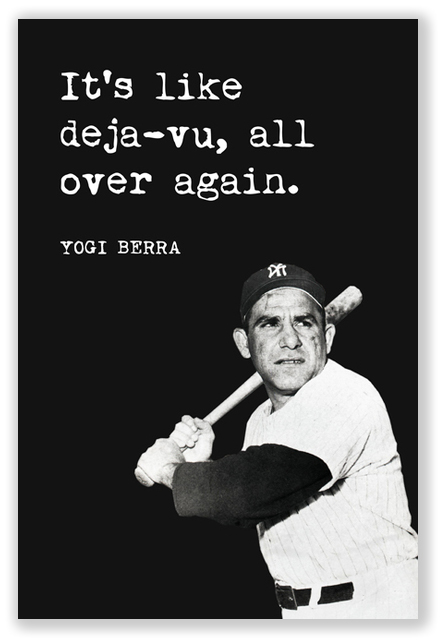
Forgive me for reprinting the portions of this post you may have already read. I built on last Thursday’s content for LISA’s newsletter to federal prisoners and their families published last night, and it seemed to me that there was enough new content to warrant a partial repost. Like the great philosopher Yogi Berra said, “It’s deja vu all over again.”

Tuesday night, Trump ranted on Truth Social that he was voiding all pardons and commutations that were signed by Biden with an autopen:

“Any and all Documents, Proclamations, Executive Orders, Memorandums, or Contracts, signed by Order of the now infamous and unauthorized “AUTOPEN,” within the Administration of Joseph R. Biden Jr., are hereby null, void, and of no further force or effect. Anyone receiving “Pardons,” “Commutations,” or any other Legal Document so signed, please be advised that said Document has been fully and completely terminated, and is of no Legal effect.”

Trump has often claimed that Biden used the autopen, a mechanical device that allows signatures without a person using their hand, because of the former president’s physical and mental frailty. Biden issued 4,245 acts of clemency during his four years in office, more than any other US president since the start of the 20th century, according to Pew Research Center. Before leaving office last January, he issued several pardons — including for family members — and commuted sentences for about 1,700 drug offenders.

No one has reported whether Biden used an autopen to sign any of the pardons or commutations, but that has not deterred Trump from claiming he did.

Most of the clemencies were commutations rather than pardons. Biden only issued 80 individual pardons, but he did issue “pardons by proclamation” which affected entire classes of people. The pardons by proclamation included one for former military service members convicted of violating a ban on gay sex and people convicted of certain federal marijuana nontrafficking offenses.

David Super, a constitutional and administrative law professor at Georgetown University, told Government Executive last spring that “the Constitution does not require signatures for pardons. It simply says the president has the power to pardon.”

“So if President Biden wanted to simply verbally tell someone they’re pardoned, he could do that. It wouldn’t have to be in writing at all,” he said. “Administratively, of course, we want things in writing… but there’s no constitutional requirement.”

If Trump were to try to rearrest someone who received clemency in order to return them to prison, legal experts predict the actions would be unlikely to stand. “I can’t imagine the court saying that it wasn’t a valid pardon because of the autopen issue,” Stanford University Law School professor Bernadette Meyler told The Daily Signal. “Biden made statements regarding these pardons, so it would be hard to show that they weren’t a decision of the President.”

To reverse the pardons, DOJ would have to act, and the courts would have to resolve the question. “If Biden never authorized it, it’s an invalid pardon anyway,” Paul Kamenar, counsel for the National Legal and Policy Center, explained.

Ironically, Trump’s recent pardon of people “for conduct relating to support, voting… or advocacy for or of any slate or proposed slate of Presidential electors… in connection with the 2020 Presidential Election” is so vague and limitless that it could apply to thousands of people. In an Eastern District of Pennsylvania case of a man accused of voting both in Pennsylvania and Florida back in 2020 (he says he voted for Trump in both places), the defendant has moved to dismiss the indictment by claiming the pardon applies to him, too.  The Dept of Justice has argued in that case that it’s up to Attorney General Pam Bondi and Pardon Attorney Edward Martin to decide who, and which possible crimes, Trump actually meant to cover.

Politico reported last week that there’s neither historical nor modern precedent for a president to delegate his pardon power to subordinates on a pardon this vaguely worded. In fact, it is remarkably similar to what Trump has accused Biden of having done.

Other clemency issues will be more difficult to litigate if it means reincarceration or returning old penalties, said John Malcolm, director of the Meese Center for Legal and Judicial Studies at The Heritage Foundation.

“This is totally unprecedented territory,” Malcolm told The Daily Signal. “Normally pardons and grants of clemency, for example, are not subject to challenge since a president’s pardon power is plenary.”

“Here, the issue will be litigated when Trump takes some action that runs contrary to what Biden did–such as seeking to reincarcerate someone who was pardoned or granted clemency or setting an execution date for one of the 37 death row inmates whose sentences Biden commuted–and then we’ll see what a court does,” Malcolm added.

Trump’s move is a key first step. “The bigger threat that President Trump has brought to the public’s attention is the idea of unelected staffers exercising power they don’t have,” Stewart Whitson of the Foundation for Government Accountability told The Daily Signal. “It could be at the behest of a well-funded organizations or even foreign funding pushing unelected bureaucrats to act.”

Newsweek, Trump Says All Pardons, Commutations Signed by Biden Autopen ‘Terminated’ (December 2, 2025)

Government Executive, Trump says he is voiding Biden executive actions signed with autopen (December 1, 2025)

Stanford Law School, Why Trump Can’t ‘Void’ Biden’s Pardons Because of Autopen (March 17, 2025)

Government’s Opposition to Defendant’s Motion to Dismiss the Indictment (ECF 23), United States  v. Weiss, Eastern District of Pennsylvania, filed November 28, 2025

Politico, DOJ claims it has the power to decide who gets Trump’s sweeping 2020 pardon (December 4, 2025)

Daily Signal, What’s Next After Trump Voids Biden Autopen Orders? (December 4, 2025)

~ Thomas L. Root

I Really Do Hate To Say ‘I Told You So’ – Update for December 4, 2025

We post news and comment on federal criminal justice issues, focused primarily on trial and post-conviction matters, legislative initiatives, and sentencing issues.

TRUMP TRIES TO VOID BIDEN CLEMENCIES

On Tuesday, I warned that President Trump wrote last week on the inaptly-named “Truth Social” that he considered “[a]ny document signed by Sleepy Joe Biden with the Autopen, which was approximately 92% of them,” to be of “no further force or effect.” Trump said he was overturning all the executive orders under the Biden administration and “anything else that was not directly signed by Crooked Joe Biden.”

I speculated that “anything else” might include clemencies, but that Trump had not yet tried to void any of them. But that was Tuesday morning. On Tuesday night, Trump ranted on Truth Social that he had voided all pardons and commutations that were signed by his predecessor, President Joe Biden, with an autopen:

Any and all Documents, Proclamations, Executive Orders, Memorandums, or Contracts, signed by Order of the now infamous and unauthorized “AUTOPEN,” within the Administration of Joseph R. Biden Jr., are hereby null, void, and of no further force or effect. Anyone receiving “Pardons,” “Commutations,” or any other Legal Document so signed, please be advised that said Document has been fully and completely terminated, and is of no Legal effect. Thank you for your attention to this matter!

Trump has repeatedly claimed without citing any evidence that Biden’s use of the autopen, a mechanical device that allows signatures without a person using their hand, resulted from the former president’s physical and mental frailty. Biden issued a record 4,245 acts of clemency during his four years in office, more than any other US president since the start of the 20th century, according to the non-partisan Pew Research Center. It is not known whether Biden used an autopen to sign pardons.

Before leaving office in January, Biden issued several pardons — including for family members he said he wanted to shield from politically motivated investigations — and commuted sentences for a number of nonviolent drug offenders. Trump, known for his criticism of political rivals, has repeatedly seized on Biden’s use of the autopen to sign official documents during his presidency.

Most of the clemencies were commutations rather than pardons. Biden only issued 80 individual pardons, but he did issue “pardons by proclamation” which affected entire classes of people. The pardons by proclamation included one for former military service members convicted of violating a ban on gay sex and people convicted of certain federal marijuana nontrafficking offenses.

David Super, a constitutional and administrative law professor at Georgetown University, told Government Executive last spring that “the Constitution does not require signatures for pardons. It simply says the president has the power to pardon.”

“So if President Biden wanted to simply verbally tell someone they’re pardoned, he could do that. It wouldn’t have to be in writing at all,” he said. “Administratively, of course, we want things in writing. It makes things a lot simpler, but there’s no constitutional requirement.”

If Trump were to try to prosecute or arrest someone who received clemency in order to return them to prison, legal experts predict the actions would be unlikely to stand. “I can’t imagine the court saying that it wasn’t a valid pardon because of the autopen issue,” says Stanford University Law School professor Bernadette Meyler. “Biden made statements regarding these pardons, so it would be hard to show that they weren’t a decision of the President.”

Of course, as he has already demonstrated, Trump is unlikely to shrink from trying to reimprison someone simply because no one believes his power extends to such an action.

Newsweek, Trump Says All Pardons, Commutations Signed by Biden Autopen ‘Terminated’ (December 2, 2025)

Government Executive, Trump says he is voiding Biden executive actions signed with autopen (December 1, 2025)

Time, Why Trump Can’t ‘Void’ Biden’s Pardons Because of Autopen (March 17, 2025)

~ Thomas L. Root

Most Recent Pardons Don’t Bode Well For Federal Clemency – Update for December 2, 2025

We post news and comment on federal criminal justice issues, focused primarily on trial and post-conviction matters, legislative initiatives, and sentencing issues.

PARDONS FROM THE SUBLIME TO THE WEIRD

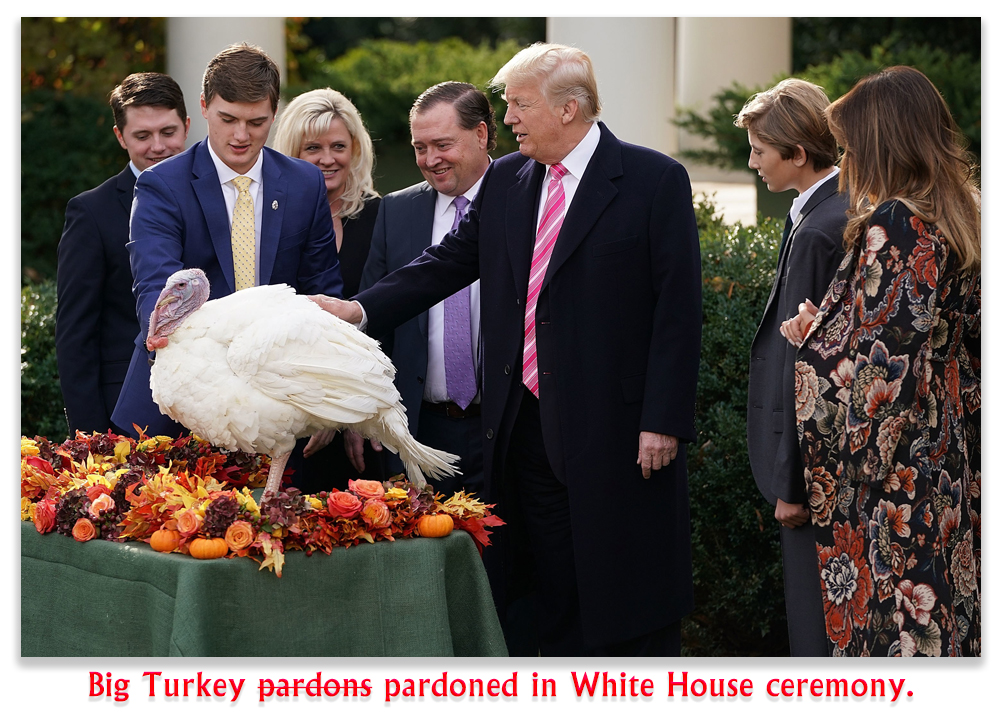
President Trump conducted the annual turkey pardon on the Tuesday before Thanksgiving, sparing “Waddle” and “Gobble” from the processing house.

At the same time, he extended the pardon to the Peach and Blossom, the two turkeys President Biden pardoned last year. Trump contended that Biden’s pardon of the birds was invalid because it was signed with an autopen instead of by Biden himself.

“The turkeys known as Peach and Blossom last year have been located, and they were on their way to be processed, in other words to be killed, but I stopped that journey and I am officially pardoning them,” Trump said.

Last Friday, Trump wrote on Truth Social: “Any document signed by Sleepy Joe Biden with the Autopen, which was approximately 92% of them, is hereby terminated, and of no further force or effect. The Autopen is not allowed to be used if approval is not specifically given by the President of the United States.” 

Trump also said that he has now overturned all the executive orders under the Biden administration and “anything else that was not directly signed by Crooked Joe Biden.”

Unless it’s an autopen doing the signing

It is not clear what “anything else that was not directly signed by Crooked Joe Biden” might include, such as clemencies. However, any notion that pardons might be excluded was undercut by Trump’s comments during the turkey pardon. Trump has previously suggested that Biden’s clemencies were illegal, but he has not yet tried to void any of them. His recent actions suggest that such an attempt is not out of the question.

Trump continues to issue clemencies one at a time, even where doing so contradicts his policies. In a Saturday social media post, Trump said that drug cartels present one of the most pressing dangers to the USA, saying in a social media post that airspace above and surrounding Venezuela should be considered “CLOSED IN ITS ENTIRETY.”

But this pronouncement followed Trump’s Friday social media announcement of a pardon for Juan Orlando Hernández, former president of Honduras, who was convicted of drug trafficking charges and has 35 years to go on his 45-year federal sentence.

The New York Times said, “The two posts displayed a remarkable dissonance in the president’s strategy, as he moved to escalate a military campaign against drug trafficking while ordering the release of a man prosecutors said had taken “cocaine-fueled bribes” from cartels and “protected their drugs with the full power and strength of the state — military, police and justice system.”

Trump said he had issued the pardon to Hernández because “they gave him 45 years because he was the president of the country — you could do this to any president on any country.”  Trump said that friends had alerted him to the wrongs done to Hernández: “Many people that I greatly respect” had told him Hernández had been “treated very harshly and unfairly.”

“Why would we pardon this guy and then go after Maduro for running drugs into the United States,” wrote Sen. Bill Cassidy (R., La.) on X. “Lock up every drug runner! I don’t understand why he is being pardoned.”

Meanwhile, just in case you think Trump’s pardon czar Alice Marie Johnson has gone dormant, she said in a Thanksgiving social media post that Trump had commuted the 7-year sentence of a private equity executive who had served less than two weeks for his role in what prosecutors described as a $1.6 billion scheme that defrauded thousands of victims.

David Gentile reported to prison on November 14th and suffered horribly in a minimum-security camp for nearly two weeks before being released on Thanksgiving Eve, according to the BOP. Alice Johnson said that she was “deeply grateful to see David Gentile heading home to his young children” and called it an “act of mercy.”

A White House official used the old refrain of “Biden something something,” suggesting that the Biden administration’s Ponzi scheme claim against Gentile’s company – good enough to convince a unanimous jury – was nevertheless “profoundly undercut by the fact that GPB had explicitly told investors what would happen… At trial, the government was unable to tie any supposedly fraudulent representations to Mr. Gentile.” The White House official spoke on condition of anonymity due to not being authorized to speak on the topic.

Ironically, we have always advised people seeking clemency that arguing the unjustness of their conviction was strongly disfavored.  Apparently, that’s the case no longer.

ABC News, Trump’s turkey pardoning turns political, but Waddle and Gobble are spared (November 25, 2025)

NBC, Trump ‘cancelling’ Biden executive orders signed by autopen (November 28, 2025)

New York Times, In Announcing Pardon of Drug Trafficker While Threatening Venezuela, Trump Displays Contradictions (November 29, 2025)

Wall Street Journal, He Was Convicted of Running a Narco State. Now Trump Plans to Pardon Him. (December 1, 2025)

Reuters, Trump frees former GPB Capital CEO after Biden admin’s Ponzi scheme sentence (November 30, 2025)

X.com, Alice Marie Johnson – All Grace (November 27, 2025)

~ Thomas L. Root

Bureau of Prisons Slipping on ICE – Update for November 25, 2025

We post news and comment on federal criminal justice issues, focused primarily on trial and post-conviction matters, legislative initiatives, and sentencing issues.

THAT GIANT SUCKING SOUND…

Remember H. Ross Perot? During his unsuccessful third-party bid for president in 1992, he warned that the “giant sucking sound” we all heard was the sound of jobs going to Mexico.

It turns out that Bureau of Prisons director William K. Marshall III is hearing one of his own, the sound of BOP correctional officers quitting for the gold-plated working conditions of Immigration and Customs Enforcement.

Last week, Pro Publica reported that “ICE has been on a recruiting blitz, offering $50,000 starting bonuses and tuition reimbursement at an agency that has long offered better pay than the federal prison system. For many corrections officers, it’s been an easy sell.”

By the start of November, the BOP had lost at least 1,400 more staff this year than it had hired, according to ProPublica. “We’re broken and we’re being poached by ICE,” one union official told ProPublica. “It’s unbelievable. People are leaving in droves.”

The exodus comes amid shortages of critical supplies. Staffers told Pro Publica that some facilities had even stopped providing basic hygiene items for officers, such as paper towels, soap and toilet paper.

Fewer corrections officers result in more lockdowns, less programming, fewer health care services for inmates, greater risks to staff, and more grueling hours of mandatory overtime. Prison teachers and medical staff are being forced to step in as corrections officers on a regular basis.

In a video posted last Wednesday afternoon, Deputy Director Josh Smith said that the agency was “left in shambles by the previous administration” and would take years to repair. Staffing levels, he said, were “catastrophic,” which, along with crumbling infrastructure and corruption, had made the prisons less safe.

He also frankly appraised the agency’s approach to the First Step Act:

The First Step Act was sabotaged by the Biden DOJ and BOP.  They have mismanaged millions meant for FSA implementation – building a time credit calculator that has never worked right – and FSA programming required by the law never materialized. Instead, they hired an outside contractor that blocked every outside program submitted by some of the most impactful faith-based organizations. They only approved internal BOP classes, and, despite spending hundreds of millions of dollars, the BOP still only added 100 halfway house beds in six years… all while reentry services division lost over 90 critical positions.

They diverted hundreds of millions of First Step Act funding into non-FSA programming and unrelated projects that they just labeled ‘FSA.’ This mismanagement squandered taxpayer money and undermined public safety. Lockdowns and collective punishment have become knee-jerk reactions… BOP has been consistently voted the worst place to work in all the federal government… This is the hand that we’ve been dealt, a Bureau on the brink scarred by decades of failure…

The so-called One Big Beautiful Bill Act, signed into law on July 4th, could offer some financial support for the agency’s staffing woes, as it will route another $5 billion to the BOP over four years — $3 billion of which is specifically earmarked to improve retention, hiring and training. Yet exactly what the effects of that cash infusion will look like remains to be seen: Pro Publica reported that the “Bureau declined to answer questions about when it will receive the money or how it will be spent.”

Pro Publica, “We’re Broken”: As Federal Prisons Run Low on Food and Toilet Paper, Corrections Officers Are Leaving in Droves for ICE (November 20, 2025)

BOP, Video Message from the Deputy Director: A Bureau on the Brink (November 19, 2025)

~ Thomas L. Root

‘Hell’ vs. Truth on Federal Clemency – Update for November 24, 2025

We post news and comment on federal criminal justice issues, focused primarily on trial and post-conviction matters, legislative initiatives, and sentencing issues.

GIVING ‘HELL’ TO THE CLEMENCY POWER

President Harry S Truman’s supporters liked to shout, “Give ‘em hell, Harry!” at his rallies. However, as Truman explained it, ‘I never did give them hell. I just told the truth, and they thought it was hell’.”

I once again heard from a reader last week that some of the guys at his facility thought I was too negative about President Trump. Seven years ago, I wrote glowingly about his support for the First Step Act, still the most consequential piece of criminal justice reform legislation in the last 30 years. But Trump has done nothing for federal criminal justice reform since then, and that’s the truth. To my critics, it just seems like ‘hell’.

‘Hell’, you ask? Minnesota constitutional lawyer Marshall Tanick last week aptly described the hellscape of Trump clemencies:

In addition to the unconditional pardons issued on the first day of his current term to all 1,500-plus January 6th rioters, as he promised during the campaign, with Floridians comprising the largest state group, and the 77 more recently to white collar election denier operatives, the president has issued more than 1,600 pardons and commutations of sentences this year. Nearly all of them, with a few exceptions like star baseball player Darryl Strawberry, have been given to political supporters and financial donors to his campaign or their relatives or those with business interests aligned with the president and his family. Most of them were charged and many convicted of massive fraudulent schemes.

A transparent theme has been political leanings, as reflected in his explanation for commuting the seven-year sentence of mendacious Republican former Congress member George Santos after serving a puny four months. The president said he released the discredited New Yorker from confinement because he did “ALWAYS VOTE REPUBLICAN,” as if that is the criterion for the exercise of presidential lenity.

Still waiting for your pardon or commutation? You probably don’t fit the criteria. Not like Dan Wilson, a man who – perhaps alone in American history – has received two presidential pardons in a single year. Wilson, a Kentucky militia member who joined the Capitol riot on Jan. 6, 2021, was indicted for that and as a felon-in-possession under 18 USC § 922(g)(1) for the guns agents found when they searched his home on a J6-based search warrant.

Trump had already erased Wilson’s felony conviction for his role in the riot when he issued his Inauguration Day pardon for all of the 1,500 participants in the attack. But Wilson remained in prison because the federal court concluded that the pardon was limited to J6 conduct and did not extend to separate crimes. Dan still had three years to serve for the 922(g)(1).

Last week, Trump quietly pardoned Wilson for the felon-in-possession count, reasoning that “because the search of Mr. Wilson’s home was due to the events of January 6, and they should have never been there in the first place…” according to a White House official.

In a separate action, Trump pardoned Suzanne Ellen Kaye for having threatened to shoot federal agents if they came to her house to question her about January 6th. The White House said her case was “clearly a case of disfavored First Amendment political speech being prosecuted and an excessive sentence.”

Meanwhile, if you were not at the January 6th riot, your clemency application will sit at the Office of Pardon Attorney. As I noted last week, only 1% of Trump’s clemencies this year went through the OPA.

‘But wait,’ you say. ‘You don’t have to be a rioter or election denier to get a pardon.’ Right you are. Just last week, Trump also pardoned Joseph Schwartz, a nursing home magnate who was sentenced last April to 36 months in prison for failing to pay $38 million in payroll taxes withheld from employees’ earnings. Schwartz hired a couple of right-wing lobbyists, paying them $960,000 to secure a pardon. Although Trump’s own interim US Attorney at the time, Alina Habba, said last April the offense deserved prison time (recommending a shocking 12 months and a day sentence), Trump signed off on the pardon. Schwartz walked out of FCI Otisville camp last week after serving three months.

A White House official, asked by the Washington Post whether Trump or others in the White House or Justice Department had met with Schwartz’s lobbyists, responded with a statement:

No one from White House Counsel nor [White House pardon czar] Alice Johnson met with the individuals named. Either way, the President is the final decision-maker on all pardons, and any one spending money to lobby for pardons is foolishly wasting funds.

Uh-huh.

I’m not alone in criticizing Trump’s gross abuse of clemency (at the expense of federal prisoners who deserve thoughtful consideration if not outright grant of commutation or pardon). Law professor Mark Osler, a national clemency expert, wrote last week on Sentencing Matters Substack:

These are hard days for people like me who believe that the pardon power is an essential part of the Constitution and a beautiful machine that embodies one of our primary national virtues: a belief in second chances. While clemency has been subjected to sharp criticism before (most recently, in the wake of Bill Clinton’s shady pardon of fugitive financier Marc Rich), the wave of criticism now — most often turning on President Trump’s grants to loyalists, celebrities, and business associates — has sometimes included outright calls to simply get rid of the federal pardon power.

Conservative writer Jonah Goldberg wrote last week that

[t]he president has some unique powers… including the sole, final authority to grant pardons. Pardons cannot be reviewed or repealed by Congress or the courts. It’s time we changed that—and the only way to do so is by amending the Constitution.

There are two reasons for getting rid of the president’s power to pardon. The first is the grotesque abuses of that power by Presidents Trump and Biden. In his first term, Trump issued a series of egregious pardons for, among others, lackeys, war criminals and political allies.

Biden then issued blanket and preemptive pardons for his family and various political allies… and a raft of other pardons and commutations that Biden allegedly just outsourced to ideologues on his staff.

Back in office in 2025, Trump has outdone Biden and himself. He launched his second term by granting mass pardons to the goons who beat police with flagpoles and stormed the Capitol on his behalf on January 6, 2021. Since then, he’s pardoned a rogues’ gallery of donors, partisan allies, and people with business ties to him or his family…
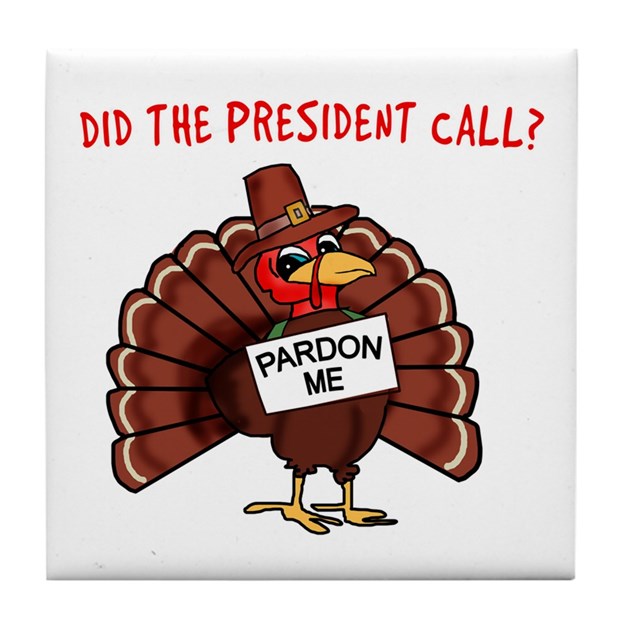
This coming week, the White House will pardon two turkeys out of the 219 million to be slaughtered in the US over the next 12 months. That puts a turkey’s odds of clemency at about 1:110 million. Sadly, for federal prisoners without money or political ties to the Trump Administration, the odds are not much better.

I’m for any president, regardless of party, who properly uses the clemency power to correct injustice. That has not been Trump in 2025. 

Just truth. Not hell.

Naples News, Presidential pardon process needs to be changed (November 20, 2025)

Washington Post, The case of a felon who paid lobbyists nearly $1 million to seek a Trump pardon (November 22, 2025)

Politico, Trump re-pardons a Jan. 6 defendant to erase unrelated gun conviction (November 15, 2025)

NPR, Trump issues two pardons related to Jan. 6 investigation (November 15, 2025)

Sentencing Matters Substack, A Terrible Use of a Beautiful Machine (November 17, 2025)

Los Angeles Times, Instead of Addressing Injustice, Pardons Only Pervert Justice (November 19, 2025)

USA Today, You can choose the names of turkeys to get a presidential pardon. Here’s how. (November 22, 2025)

~ Thomas L. Root

Jailer Trump Sends Former Death Row Prisones to Supermax – Update for October 17, 2025


We post news and comment on federal criminal justice issues, focused primarily on trial and post-conviction matters, legislative initiatives, and sentencing issues.

PRESIDENT TRUMP MAKES BOP DESIGNATION DECISIONS

Among the last clemencies made by President Biden before leaving office were his commuting the sentences of 37 BOP death row inmates to life. Hours later, newly installed President Trump ordered that the life sentences of these men be made into what the Wall Street Journal called “a living hell.”

Based on the order Trump had Attorney General Pam Bondi issue, the BOP officials canceled plans to transfer most of the inmates to mainline prisons. Instead, Acting Deputy Attorney General Emil Bove III executed Bondi’s order, directing that all but a few prisoners requiring medical facilities be designated to ADMAX Florence, which the Wall Street Journal called “the harshest institution in the federal system.”

The Journal said that Aaron Reitz, then an assistant attorney general, led a roundtable with the families and said he was disappointed that the cells “have windows to see daylight.” He suggested that prison food was too good for these men. “I’ve got no problem with gruel.” he said. “If made right, it’s a nutritious all-in-one meal.” Later in an interview, Reitz said, “If you’re not going to be killed lawfully at the hands of the state, well, your prison sentence is going to be hard as hell.” 

The Journal reported that “while the president’s authority to grant clemency for federal crimes is virtually unfettered, the power to impose vengeance via prison assignments isn’t clear.”

Attorney General Pam Bondi said Trump wanted to “ensure that they spend the remainder of their lives in conditions consistent with the egregious crimes they committed.” David Fathi, director of the National Prison Project at the ACLU, which represents 21 of the inmates, said that none of the prisoners qualified for ADX placement under the BOP’s Program Statement 5100.08, Inmate Security Designation and Custody Classification Manual. ‘None of our plaintiffs were designated for ADX,” he said. “Under Attorney General Bondi, all of our plaintiffs have been slated for ADX, not because of a security risk but to inflict maximum suffering.”

“People should be very concerned about the president and attorney general’s disregard for the law in this case,” Fathi said. “Today, it may be people who are very unpopular. Tomorrow, it could be anybody.”

Wall Street Journal, Biden Spared 37 Killers From Execution. Trump Ordered Up a Lifetime of Torment (October 11, 2025)

Bureau of Prisons Program Statement 5100.08 CN-2, Inmate Security Designation and Custody Classification Manual (March 5, 2025)

~ Thomas L. Root

Pardon Industry Grinds On Although Trump’s Not Signing – Update for August 27, 2025

We post news and comment on federal criminal justice issues, focused primarily on trial and post-conviction matters, legislative initiatives, and sentencing issues.

PARDON OUR MESS

Senior Dept of Justice officials were left scrambling to interpret sweeping clemency orders that former President Joe Biden approved for thousands of federal prisoners in his final days in office, and they criticized the White House for falsely portraying the releases as limited to “nonviolent” offenders, according to internal emails revealed last week.

The records show that former Associate Deputy Attorney General Bradley Weinsheimer raised alarms immediately after Biden issued three autopen-signed warrants on Jan. 17, covering nearly 2,500 federal prisoners.

In a January 18th message to the White House and the DOJ Pardon Attorney, Weinsheimer wrote that one warrant granting clemency for “offenses described to the Dept of Justice” was so vague it could not be lawfully carried out.

Weinsheimer suggested that Biden provide “a list as to each inmate listing the offenses that are covered by the commutation.” He said Biden needed to clarify the “meaning of the warrant language” so the DOJ could implement it “in the manner intended by the President.”

Weinsheimer also pushed back against White House statements that the clemency recipients were only “non-violent drug offenders,” according to the emails. “In communication about the commutations, the White House has described those who received commutations as people convicted of non-violent drug offenses,” Weinsheimer wrote. “I think you should stop saying that because it is untrue or at least misleading.”

The clemency list included a prisoner who had killed a mother and her 2-year-old child to protect his drug business, another whose enforcer tortured an informant with a butane torch, and a Gangster Disciples member implicated in multiple murders and kidnappings.

Despite Weinsheimer’s warning, the White House promoted the mass commutations as relief for “non-violent drug offenses” and as the largest clemency action ever.

Biden later said he approved broad categories of inmates, leaving details on how to apply those standards to staff. The revelations come amid multiple probes by the Trump administration into Biden’s use of his autopen – a machine that automatically signs the President’s name to documents – for key decisions.

Meanwhile, President Trump – who at the start of his second term was as busy as Biden ever was with a clemency pen– has not granted a pardon or commutation in almost three months.

Trump granted multiple pardons every month from January through May (and, of course, did a massive clemency grant on Inauguration Day for the January 6th rioters). You may remember that at the time, Trump’s pardon of 1,500 J6ers was described in news accounts as a “last-minute, rip-the-bandage-off decision.”  In fact, one White House advisor said that as Trump’s team wrestled with the issue, “Trump just said: ‘F -k it: Release ’em all.'”

However, despite rumors to the contrary, Trump has gone “full stop” on commutations and pardons since the end of last May.

At the time, media reports said that more clemency grants were expected “in the coming days.” So what happened?

Writing in Sentencing Law and Policy last week, Ohio State law professor Doug Berman wondered whether some of the pundit criticism around the last group of grants may have had some impact on how Trump is thinking about clemency action.

No one can be sure, but the pardon industry continues apace, with reports still being published about some people spending millions to buy access to the President for clemency. Last week, I had two prisoners separately say that the rumor mill reports a big commutation/pardon push in a month. I consider that to be myth. With a major push against supposed gangs rampaging in Washington, DC, Trump is not likely to think this is a good time to let some people out of prison.

Bloomberg Law, How a $30 Million Pardon Scheme Failed Before It Got to Trump (August 18, 2025)

New York Times, Flattery, Lobbyists and a Business Deal: Crypto’s Richest Man Campaigns for a Pardon (August 9, 2025)

Washington Examiner, Biden ignored DOJ warnings over legally flawed autopen pardons (August 19, 2025)

Axios, “F–k it: Release ’em all”: Why Trump embraced broad Jan. 6 pardons (January 22, 2025)

New York Post, Biden DOJ ripped White House over clemency grant to ‘non-violent offenders’: ‘Stop saying that because it is untrue’ (August 19, 2025)

~ Thomas L. Root

Biden Drug Clemencies Were Sloppy, DOJ and Courts Say – Update for February 5, 2025

We post news and comment on federal criminal justice issues, focused primarily on trial and post-conviction matters, legislative initiatives, and sentencing issues.

BIDEN DRUG COMMUTATIONS ANGER DOJ PARDON ATTORNEY

On his final Friday in office, President Joe Biden commuted the sentences of nearly 2,500 inmates serving lengthy prison terms, saying he wanted to return people serving disproportionately long sentences for nonviolent drug offenses to their communities.

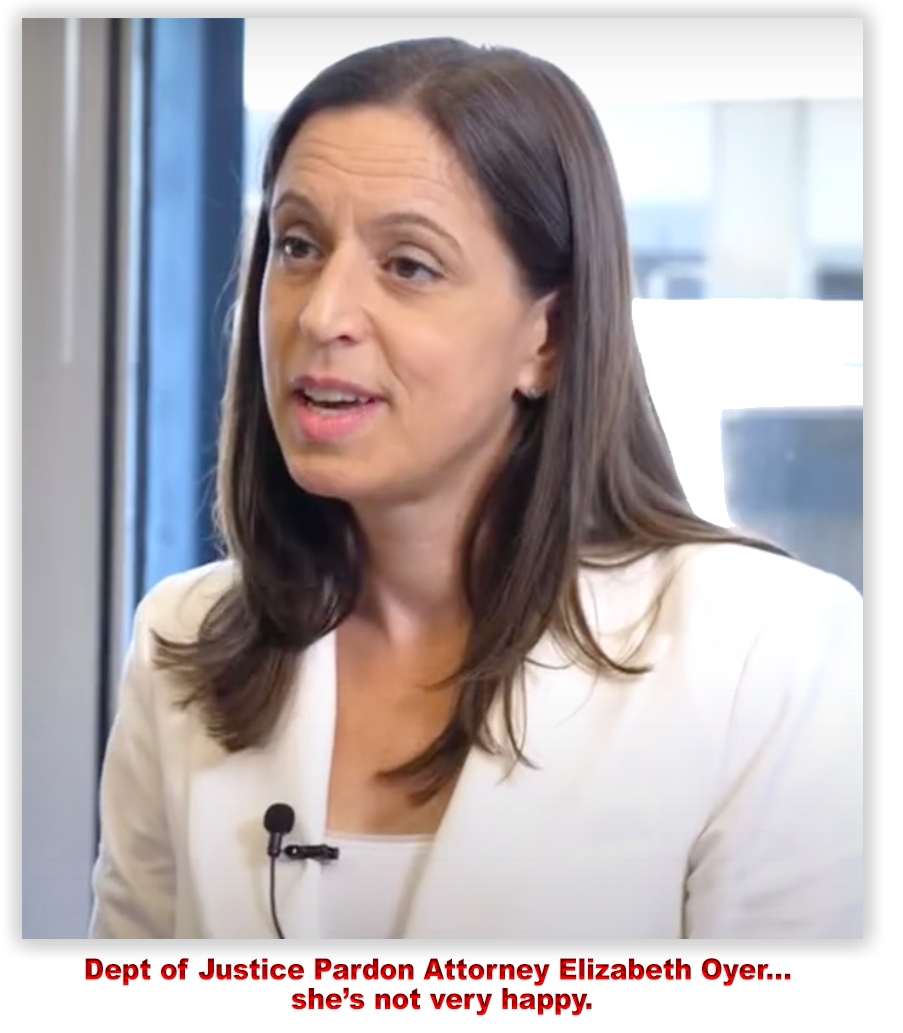
Last Sunday, the Wall Street Journal reported that only 258 of those receiving commutations, about 10% of the total, had been recommended by Dept of Justice Pardon Attorney Elizabeth Oyer.

oyer250205Biden’s list included “individuals with violent backgrounds who otherwise wouldn’t meet the department’s standards for recommendation for receipt of clemency,” according to a January 18th internal DOJ email written by Oyer to dismayed and angry DOJ colleagues. “While I am a strong believer in the possibility of second chances through clemency, the process by which yesterday’s action was carried out was not what we had hoped and advocated for,” Oyer wrote in the email – labeled “confidential and law enforcement sensitive” – that was leaked to the Wall Street Journal. She added: “I understand that some of the clemency grants are very upsetting.”

The Journal reported that the 2,490 names were compiled by a team of about a half-dozen lawyers from the White House Counsel’s Office, offenders selected primarily because they had been sentenced for trafficking in crack cocaine rather than powder cocaine. Federal law considers one gram of crack to equal 18 grams of powder – despite the fact that the stoichiometry for conversion of powder to crack is about 1.12:1 – and that 18:1 ratio was a reduction from a 100:1 powder-to-crack ratio that existed prior to the Fair Sentencing Act being passed in 2010.

crack-coke200804The effect of the legislatively imposed ratio has been that prior to 2010, crack sentences were about two-thirds longer than powder sentences (when adjusted for other factors). The Fair Sentencing Act, while ameliorating the disparity, neither reached the 1:1 ratio some critics sought nor retroactively corrected sentences already imposed when it was passed. Not until the First Step Act was passed in 2018 was a mechanism established that permitted people serving time for crack offenses to seek retroactive application. While the Sentencing Commission has not reported how many retroactive application requests were granted, courts granted a 2014 Guidelines 2-level retroactive amendment to only about 55% of the people applying for it.

Biden wanted to make a splash on his way out of office, perhaps to help erase his history as the architect of the Violent Crime Control and Law Enforcement Act of 1994. He directed his White House team to rule out individuals at high risk for recidivism and people who had used a gun in connection with their drug crimes “or engaged in other egregious conduct including the selling of drugs near a school,” according to the Journal.

Oyer’s email said that the DOJ’s input was minimal. “This action was not carried out in consultation with the Office of the Pardon Attorney and there was little coordination with the Department,” she wrote. She said the White House included commutation for people who DOJ specifically rejected while omitting hundreds of people who DOJ recommended.

A perfect example: In a highly unusual decision from US District Court Judge Gary Brown last week, the Eastern District of New York jurist ordered one of the defendants whose sentence was commuted in the January 17th order to be brought before the court when he is released next month to have his conditions of supervised release thoroughly repeated to him.

badboy200219Carl Andrews, according to the courts that have heard his cases, was a bad dude. When brought up on the charges for which he is now doing time, Carl already had 17 prior convictions for assault, larceny, resisting arrest, criminal contempt and drug possession, In his current case, he was first charged with “sex trafficking by force, fraud or coercion” and only later had crack distribution counts added.

The Court noted that if Carl had been “convicted of the sex trafficking charges, he would have faced a fifteen-year mandatory minimum. The Government, however, was willing to accept the sentence imposed—approximately nine and a half years—in satisfaction of all charges, even though the sex trafficking charges appeared readily provable. Thus, Mr. Andrews received a sentence lower than that required by current law.”

violent160620Judge Brown’s court had found previously that Carl “used his access to crack cocaine to exploit one victim’s addiction to further profiteer from prostitution activities,” a determination that the Second Circuit upheld on appeal. Judge Brown wrote, “Additionally, the victim credibly testified that, on multiple occasions, the defendant threatened violence to ensure her continued participation in the defendant’s exploitation. Moreover, he used other coercive techniques, including, as [a] judge in the Southern District noted, ‘exploit[ing] her addiction and poverty and emotional fragility to induce her to sell her body for profit’. Thus, the charges and evidence against this defendant involved far more than non-violent drug violations.”

Judge Brown clearly found Biden’s grant of clemency to Carl inexplicable:

While history may judge the wisdom of these actions, this Court may not. However, this case, and others like it, spotlight the problems that invariably arise when a president’s unreviewable pardon authority is deployed impetuously, resulting in careless execution of the president’s directives.

In this matter—involving sex trafficking, narcotics distribution and perjury—the grant of executive clemency seems inconsistent with its purported rational[e]. This Court must abide by this action, while exercising its responsibility regarding the vestige of the sentence imposed, i.e., oversight of the defendant during a four-year period of supervised release.

*     *     *

Given this record, it is hard to classify the defendant as a “deserving individual…” Certainly, the traditionally rigorous review process would have revealed these facts, and even an abbreviated procedure would have counseled against the exercise of the former President’s pardon authority in this case—and others like it.”

angryjudge190822Judge Brown believes that “in light of the commutation of his sentence, the defendant should be reacquainted with the conditions of supervised release.” One would like to be a fly on the wall in that courtroom when Carl is hauled in front of Judge Brown next month for an ear full of what the Judge thinks of his release after fewer than five years in prison on a 9-½ year sentence.

Wall Street Journal: Biden Commutations Angered His Own Justice Department (February 2, 2025)

United States v. Andrews, Case No. 20-CR-546, 2025 U.S. Dist. LEXIS 15067 (E.D.N.Y. Jan. 28, 2025)

– Thomas L. Root