All posts by lisa-legalinfo

Performing in the Right Venue – Update for March 1, 2018

We post news and comment on federal criminal justice issues, focused primarily on trial and post-conviction matters, legislative initiatives, and sentencing issues.

LISAStatHeader2small
VENUE IS ROCKIN’ DOWN THE HIGHWAY

Venue – whether the court in which your case is being heard in is the proper one – is a poorly understood criminal procedural requirement. It hardly counts for a thing in civil practice, and a lot of people figure it is equally insignificant in criminal law.

The right venue is not just a good idea... it's the law.
The right venue is not just a good idea… it’s the law.

They would be wrong. I once had a former Asst U.S. Attorney, a guy who tried some pretty high-profile cases, dismiss my concern about venue in a tax evasion case. The defendant was accused of conspiracy to evade taxes in the Eastern District of Pennsylvania, but he lived in another. For good measure, the indictment included seven “filing false tax return” counts. The problem was that he had prepared the tax returns at his home in Oregon, and mailed them to the IRS at an address in California.

I argued that there was no venue in Pennsylvania for the false return counts. The former AUSA, who was on the defense team, said I was wasting my time. He told me, “Venue’s nothing. No one ever gets counts dismissed over venue.” Two weeks later, the seven false return counts were thrown out for lack of venue. That district court understood venue.

king160307Criminal venue is not a mere affirmative defense. It is a constitutional right under the 6th Amendment. Generally speaking, it’s good to be king. King George III knew that, and understood one of the many perks (besides the cool crown and flashy robe) was that when someone committed a crime against him, he could haul the defendant’s sorry butt halfway around the world to try him. Georgie’s abuse of English criminal venue law was one of the enumerated grievances in the Declaration of Independence, which accused G-III of “transporting us beyond Seas to be tried for pretended offenses.”

When the Constitution was drafted, the conventioneers had not forgotten their ire at the Crown’s criminal venue mischief. They included a provision in Article III, Sec. 2 of the United States Constitution that “Trial of all Crimes . . . shall be held in the State where the said Crimes shall have been committed; but when not committed within any State, the Trial shall be at such Place or Places as the Congress may by Law have directed.” And for good measure, the 6th Amendment provides that, “in all criminal prosecutions, the accused shall enjoy the right to a speedy and public trial, by an impartial jury of the state and district wherein the crime shall have been committed, which district shall have been previously ascertained by law…”

But as the 2nd Circuit case showed us last week, there are a lot of ways to engage in venue mischief. Tom Holcombe was convicted in the Southern District of New York of violating the Sex Offender Registration and Notification Act for failing to update his registration when he moved from New York to Maryland. SORNA makes it a crime for a sex offender who is required to register and who travels in interstate commerce to knowingly fail to register or update a registration to report the new residence.

Venue is easy to determine when someone is arrested on the corner for selling drugs. It is more complex when a crime is continuing through more than one district. If you are hauling a truckload of cocaine from LA to New York, you can be indicted in any of the 15 districts you drive through. The continuing offenses statute says venue for crimes that begin “in one district and completed in another, or committed in more than one district, may be… prosecuted in any district in which such offense was begun, continued, or completed.”

Tom argued that his SORNA offense did not occur until he got to Maryland and failed to register. But the 2nd Circuit said it began in the Southern District of New York, from which his travel began. “The offense begins where the interstate journey begins,” the court said, “regardless of whether the defendant had already formed an intent to violate the statute when the interstate travel began… Venue turns on “where physical conduct occurred, and not where criminal intent was formed.”

familyc161025The decision suggests that venue becomes one of those Family Circus “wandering Billy” cartoons. If Billy is born in Bangor, moves to Boston as a child, goes to Baltimore for college, takes a job in Boise, Idaho, and finally ends up in Bakersfield (where he robs a bank), did he commit a Travel Act violation that can be tried in California, Idaho, Maryland, Massachusetts and Maine? He did not intend to rob the bank when mom and dad moved with the toddler to the Bay State, or the freshman matriculated in Maryland, or took a job in Boise. But when he formed the intent is irrelevant, the 2nd said, because an element is interstate travel, and that started when baby Billy crossed the line from Maine into New Hampshire.

The Court should have told the U.S. Attorney to send the whole mess to Maryland. The SORNA violation would have easily been proven there. Instead, as we see all too often, the Court needlessly expended its resources and bent a constitutional right rather than tell the AUSA to go packing.

United States v. Holcomb, Case No. 16-1429 (2nd Cir. Feb. 23, 2018)

– Thomas L. Root

LISAStatHeader2small

Bringing Sentencing Reform to a Vote – Update for February 28, 2018

We post news and comment on federal criminal justice issues, focused primarily on trial and post-conviction matters, legislative initiatives, and sentencing issues.

LISAStatHeader2small
MITCH RAP

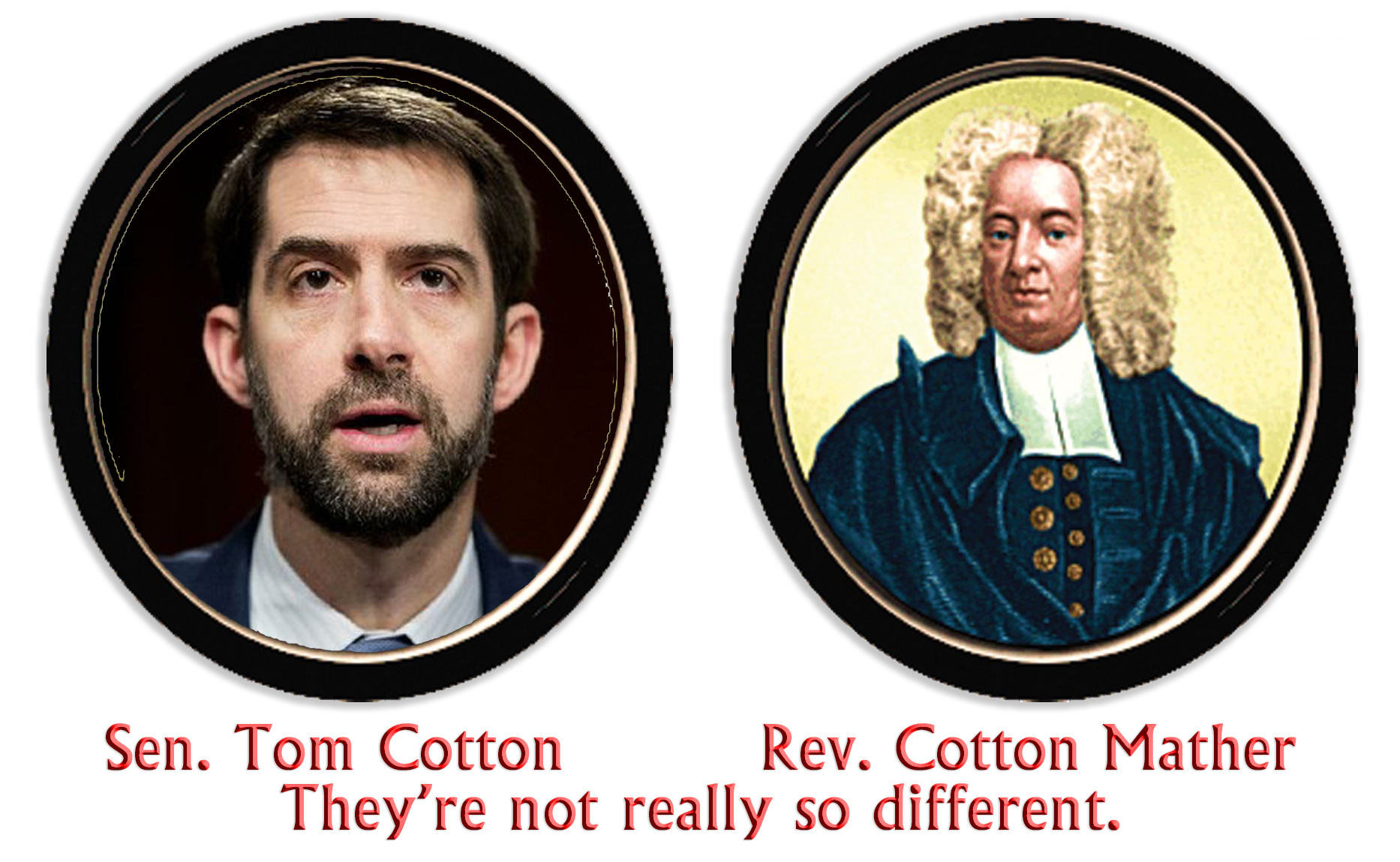
mcconnell180219It seems pretty clear to everyone that the biggest hurdle to passage of the Sentencing Reform and Corrections Act of 2017 is not getting enough Senate votes. There are plenty of those supprting passage. Instead, the trick will be convincing Senate Majority Leader Mitch McConnell (R-Kentucky) to schedule the bill for a vote to begin with.

The hurdles were raised a few notches yesterday, when the White House  said it sees no path forward for SRCA17’s  reduction of mandatory minimum prison sentences, instead throwing its support behind measures aimed at reducing recidivism rates.

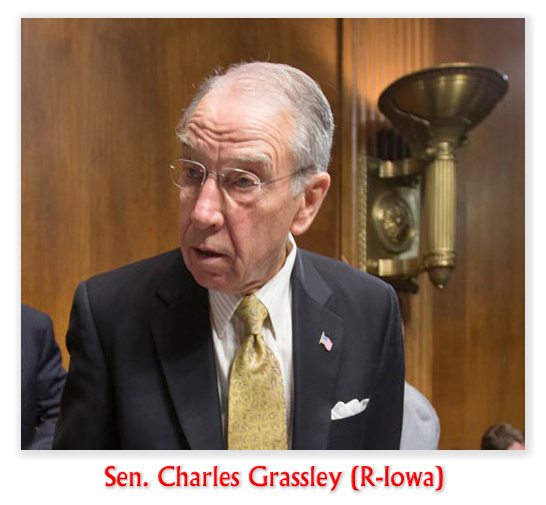
“The conclusion we reached was that, at this time, it’s appropriate for us to go forward with prison reform,” The Hill quoted a senior administration official as saying. The White House’s position, while hardly unexpected, represents a major setback for Senate Judiciary Committee Chairman Charles Grassley (R-Iowa), who has been working to move SRCA17 – which is S.1917 – through Congress after it stalled last session.

Just last week, Salon.com reported, “There’s a real chance this bill could pass Congress with a strong bipartisan majority, but advocates for criminal justice reform fear that Senate Majority Leader Mitch McConnell, will never let it get that far. The issue causes real conflict within the Republican Party, especially in the age of Donald Trump. With the 2018 midterms just ahead, McConnell may not want to exacerbate intra-party tensions by allowing debate, still less a vote, on a bill that Attorney General Jeff Sessions has portrayed as soft on crime.

mitch180228Tufts University in Boston has set up Criminal Justice Reform Phone Bank to federal officials regarding SRCA17. The goal of the calls is to pressure Senate leadership to bring the bill to a vote on the senate floor within a prompt time. Max Hornung, a senior and co-organizer of the event, said he worried that McConnell would delay the floor vote for an extremely long time in order to kill off momentum for the bill.

A regular reader suggested that we provide McConnell’s office address, so that inmates and their families can rap with Mitch, to urge him to bring SRCA17 to a vote. McConnell’s Washington office address is 317 Russell Senate Office Building, Washington, DC 20510. Your people can call his office at (202) 224-2541, send him a fax at (202) 224-2499, or go online to send him an email at

https://www.mcconnell.senate.gov/public/index.cfm/contact

The Hill, White House deals blow to Grassley’s criminal justice bill (Feb. 27, 2018)

The Tufts Daily, Criminal Justice Reform Phone Bank targets federal, local bills (Feb. 23, 2018)

Salon, Biggest obstacles to prison reform? Donald Trump and Mitch McConnell (Feb. 21, 2018)

– Thomas L. Root

LISAStatHeader2small

Meatloaf Was Right – Update for February 27, 2018

We post news and comment on federal criminal justice issues, focused primarily on trial and post-conviction matters, legislative initiatives, and sentencing issues.

LISAStatHeader2small
TWO OUTTA THREE AIN’T BAD…

twoouttathreeb161026Under the Armed Career Criminal Act, a defendant convicted of possession of a firearm as a convicted felon would see his or her sentence increase from a 0-10 year range to a 15-year-to-life range if he or she had three prior convictions for crimes of violence or serious drug offenses. Any who could possibly object? It makes perfect sense that we would want to get these gun-wielding lifetime lowlives off the streets for a long time.

Likewise the Sentencing Guidelines, which jack up the sentencing ranges for what it calls “career offenders,” people getting convicted of drug or violent crime offenses with only two qualifying priors of much the same flavor as the ACCA predicates. Think of Guidelines “career offenders” as “ACCA Lite.” Nevertheless, who among us law-abiding citizens would not want to see these no-goodniks safely behind bars for a long time?

But things seldom work out in practice the way they sound in a Capitol Hill soundbite. The prosecutors ran with it, and so we had people getting the ACCA label for prior offenses of drunk driving or walking away from a halfway house. We personally know one guy who broke into a barbershop one night, and – while he was there – went to the door leading to the attached beauty shop. Hr got bupkis in the burglary, but 10 years later, the prosecutors counted it as two burglaries (which are categorically “crimes of violence”) not one. Another guy sold drugs for a week nine years before, and did a year of state time. But he pled guilty to three counts, selling a dime bag each day for three days in a row. The court called that three serious drug offenses, not one, and he got 15 years.

But the ACCA and “career offender” Guidelines have been mangled by defendants, too. A “crime of violence” has to be defined, and – as we have explained before – that’s not always easy. But surprisingly enough, it’s not always simple to figure out what a “serious drug offense,” is, either. The statute says it’s either (1)  an offense under the federal Controlled Substances Act with a max sentence of 10 years or more; or (2) an offense under state law “involving manufacturing, distributing, or possessing with intent to manufacture or distribute, a controlled substance” with a max of 10 years or more. It looks straightforward, but it is not.

drugdealer180228After the Supreme Court’s 2016 Mathis decision, defendants are not just looking for crimes of violence that are too broad for the ACCA and Guidelines career offender enhancement. The statute defines a prior state offense as involving “manufacturing, distributing, or possessing with intent to manufacture or distribute.” But state statutes sometimes include “transporting” or “offering to sell” in their definitions, and those are broader than the ACCA/Guidelines definition. Thus, defendants seek to invalidate state drug convictions for being too broad.

Corey Jones tried that, arguing that his Illinois drug conviction did not count toward Guidelines career offender status, because it applied not just to controlled substances and counterfeit drugs, but to controlled substance analogs, too. He argued the CSA only applied to two of those – controlled substances and counterfeit drugs – making his prior under 720 Ill.Stat. 570/401 too broad. Two outta three, he argued, was bad.

Last week, the 8th Circuit turned him down, holding that two outta three ain’t bad. While 21 USC 841 (the defining offense statute in the CSA) does not mention analogs, Title 21 USC 802(32)(a)  defines analog (albeit spelled “analogue”) and Sec. 813 provides “that a controlled substance analogue shall, to the extent intended for human consumption, be treated, for the purposes of any Federal law as a controlled substance in schedule I… Differences in spelling notwithstanding, we find no material distinction between the term “analog” as used in 720 Ill.Stat. 570/401 and the federal term “analogue” as used in Sec. 813. We therefore conclude Jones’s two prior Illinois convictions categorically qualify” for career offender status.

 United States v. Jones, Case No. 17-1710 (8th Cir. Feb. 21, 2018)

– Thomas L. Root

LISAStatHeader2small

Hark, the 5th Circuit Makes the Herrold Angels Sing – Update for February 26, 2018

We post news and comment on federal criminal justice issues, focused primarily on trial and post-conviction matters, legislative initiatives, and sentencing issues.

LISAStatHeader2small
5TH CIRCUIT’S EN BANC HERROLD DECISION SURPRISES, BUT DOESN’T DISAPPOINT

The 5th Circuit handed down the long-awaited United States v. Herrold decision last week, an 8-7 cliffhanger that held by the narrowest of margins that Texas’s burglary statute was too broad to serve as a crime of violence predicate for an Armed Career Criminal Act sentence.

The importance of the decision can hardly be overstated. Texas has more people than 48 of the 50 states, and it logs over 115,000 burglaries a year. What’s more, the grounds used by the Herrold court to invalidate the burglary statute could easily resonate in many other states with similar statutes.

burglary160502The Texas burglary statute provided that anyone who entered a building or habitation intending to commit a felony, or who remains concealed in a building or habitation with the intent to commit a felony, had committed a burglary. Herrold argued that the statute could not count as a burglary under the ACCA’s “enumerated offenses” clause, because it defined burglary more broadly than the ACCA’s general burglary. First, “habitation” was defined to include RVs, campers and other vehicles turned into living quarters. Second, generic burglary requires that the burglar enter the building with the intent to commit a crime. The Texas statute calls it burglary when someone enters a building for perfectly innocent reasons, but decides later to commit a felony.

The general belief was that the Herrold court would invalidate the Texas statute as an ACCA predicate, and that the vote would not even be close. After all, the Supreme Court had been clear in Mathis that a burglary statute that defined a building as including vehicles was too broad for the ACCA. But the Herrold court didn’t bite on the vehicle part of the definition. It ruled that including just vehicles that had been turned into living quarters might not make the statute too broad, and decided to save that question for another day.

juryduty180226The Herrold court first concluded that all of the subsections of Texas Penal Code 30.02(a)(3) were indivisible. The government found all sorts of cases where Texas courts called the various subsections of the statute “elements,” and argued that this meant the statute was divisible, and thus, even if one subsection was too broad, the other ones were not. But the Circuit cited Texas cases that held a jury did not have to be unanimous as to which subsection of the statute a defendant violated, concluding those cases settled the issue. “Mathis… demanded certainty. It demanded that we find rulings of the kind” it relied on —rulings that may definitively answer the question of divisibility. We are bound to examine how a state treats its own statute using the materials that the Supreme Court said speak with sufficient certainty on the matter.”

Because the Texas burglary statute is not divisible, if any one part of the statute is too broad for the ACCA, the whole statute fails. And fail it does. The Herrold court said that general ACCA burglary was after common burglars. “The ACCA’s definition of generic burglary requires unlawful or unprivileged entry into, or remaining in, a building or structure, with intent to commit a crime,” the Court said. “Both the Supreme Court’s language and its sources suggest that this constitutes a contemporaneity requirement: to be guilty of generic burglary, a defendant must have the intent to commit a crime when he enters or remains in the building or structure. Subsection 30.02(a)(3) contains no textual requirement that a defendant’s intent to commit a crime contemporaneously accompany a defendant’s unauthorized entry… Because of this fact, it is broader than the ACCA’s generic definition.”

Stealing a burger is not an ACCA-qualified "burger-lary."
Stealing a burger is not an ACCA-qualified “burger-lary.”

The dissent was sharp, complaining that “the effect of the majority opinion, in addition to unsettling established precedent, is to render all burglary convictions in the second-most populous state in the country nullities as far as the ACCA is concerned.” The 4th has ruled the opposite on the Texas statute, and 6th Circuit has gone the other was on a similar Tennessee statute. The 8th Circuit, on the other hand, agreed with Herrold’s holding in construing a Minnesota statute.

All this means that the issue Herrold raises, which is important to ACCA and career offender defendants across the country, could well end up in the Supreme Court.

United States v. Herrold, Case No. 14-11317 (5th Cir. Feb. 20, 2018)

 – Thomas L. Root

LISAStatHeader2small

Pell Grants for Prisoners May Return – Update for February 23, 2018

We post news and comment on federal criminal justice issues, focused primarily on trial and post-conviction matters, legislative initiatives, and sentencing issues.

LISAStatHeader2small
PELL GRANTS FOR PRISONERS COMING BACK?

For the first time in over 20 years, Congress is seriously weighing whether to reinstate Pell grants for locked-up students, a move that would restore a federal lifeline to the nation’s cash-strapped prison education system.

education180205Senator Lamar Alexander (R-Tennessee), chairman of the Health, Education, Labor and Pensions Committee, said last week the committee would consider including federal financial aid grants for prisoners in the current reauthorization of the Higher Education Act. This would represent a recognition of education as a centerpiece of prison reform. The grants would be used to cover the cost of college courses taught in prisons, online or both.

Congress banned Pell grants for prisoners in 1994, amid complaints that inmates should not be treated to education aid that could be spent on other programs. Since then, the short-sightedness of not using education to lower recidivism rates became clear to politicians on both sides of the aisle.

In 2015, the Education Department ran an experimental program that allowed 12,000 incarcerated students to be eligible for the financial aid. “Most prisoners, sooner or later, are released from prison, and no one is helped when they do not have the skills to find a job,” Sen. Alexander said in a statement. “Making Pell grants available to them in the right circumstances is a good idea.”

Key conservative leaders who favor prisoner rehabilitation are likely to back the proposal. Betsy DeVos, secretary of education, has called reinstating Pell grants for inmates “a very good and interesting possibility.” In his State of the Union address, President Trump cited overhauling the United States’ prisons to “help former inmates who have served their time get a second chance.” Charles G. and David H. Koch, the billionaire conservative activist brothers, have poured millions into a partnership with the Texas Public Policy Foundation to start a program, to rehabilitate the nearly 700,000 prisoners estimated to be released this year.

recividists160314The national recidivism rate is 43.3% within three years, but higher education has a real impact on reducing that rate. A widely cited study conducted by the Texas Department of Criminal Justice found that higher education reduced recidivism to just 13.7% for formerly incarcerated individuals who earned an associate’s degree, 5.6% for those earning a bachelor’s degree, and less than 1% for those earning a master’s degree.

New York Times, Senate Leaders Reconsider Ban on Pell Grants for Prisoners (Feb. 15, 2018)

Big Island Now, Sen. Schatz Introduces Education Act for Incarcerated (Feb.14, 2018)

– Thomas L. Root

LISAStatHeader2small

Government May Freeze Money Needed for Lawyer to Satisfy Restitution – Update for February 22, 2018

We post news and comment on federal criminal justice issues, focused primarily on trial and post-conviction matters, legislative initiatives, and sentencing issues.

LISAStatHeader2small
GOVERNMENT SAYS “WHAT’S YOURS IS MINE,” AND COURT AGREES

govttheft180223It has long been the case that the Government would freeze a defendant’s criminally-derived assets even before trial, crippling his or her ability to pay for a defense. The theory – not a bad one – is that the assets obtained from bank robbery, drug dealing, and stock frauds never really belonged to the defendant to begin with, because it was illegally obtained. Of course, the theory does not explain why that money suddenly belongs to the government, instead of the people who lost it to theft, fraud or illegal drugs… but that is a question for another day.

Restitution was another matter. Restitution to victims is paid out of a defendant’s assets other than those obtained by crime. Every inmate who has to pony up $25.00 a quarter to IFRP knows that. Many years after release, defendants continue to pay restitution out of paychecks, inheritances and even social security.

But the requirement that restitution be paid never interfered with a defendant’s right to use his or her legally-obtained cash to hire the lawyer of his or her choice – until now.

Last week, the 5th Circuit ruled in a white-collar case that once defendant Bob Scully was convicted, the government held a lien over all of his property to see that restitution was paid, even if the lien prevented him from hiring the appellate attorney of his or her choice.

mine180223The Court said, “precedent strongly suggests that the Government’s lien against the untainted funds outweighs any Sixth Amendment right Scully has to them… The Government’s lien on Scully’s funds is superior to Scully’s alleged Sixth Amendment interest in using them to pay appellate counsel… Scully no longer has any equity interest in the untainted funds he wishes to use for appellate counsel. He has no Sixth Amendment entitlement to use the Government’s money to pay for appellate counsel, ‘even if those funds are the only way that he will be able to retain the attorney of his choice.’ Further, it is established that a defendant is not entitled to ‘representation by an attorney he cannot afford…’ Scully does have a constitutional right to be represented by counsel for his first appeal of right, and court-appointed counsel are readily available if he qualifies as indigent.”

United States v. Scully, Case No. 17-50223 (5th Cir., Feb. 14, 2018)

– Thomas L. Root

LISAStatHeader2small

Supremes Say Guilty Plea Does Not Rule Out Constitutional Challenge – Update for February 21, 2018

We post news and comment on federal criminal justice issues, focused primarily on trial and post-conviction matters, legislative initiatives, and sentencing issues.

LISAStatHeader2smallSUPREME COURT HAS CLASS, BUT NO DIMAYA

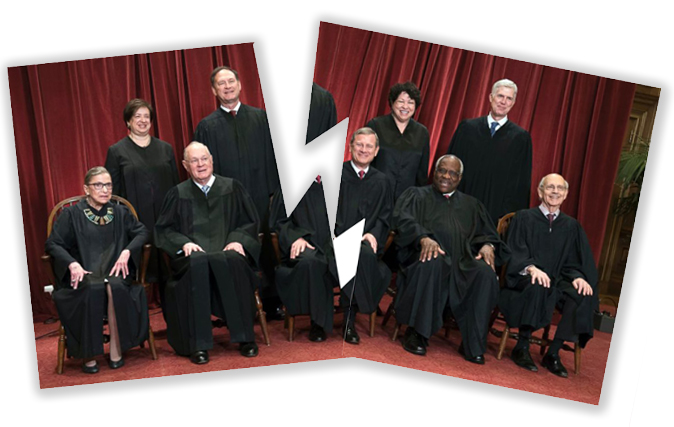
The Supreme Court handed down four opinions this morning, but the long-awaited Sessions v. Dimaya decision, which will address the broader application of the 2015 Johnson vagueness holding on “crime of violence” was not among them.

class180221Today, SCOTUS held in Class v. United States that pleading guilty to a federal crime does not prevent a defendant from challenging the constitutionality of the statute on appeal. A federal grand jury indicted petitioner, Rodney Class, for possessing guns in his locked jeep on the grounds of the United States Capitol, a violation of 40 USC 5104(e)(1). He signed a plea agreement that set forth several categories of rights that he agreed to waive, but said nothing about his right to challenge the constitutionality of the statute on direct appeal. The D.C. Circuit Court of Appeals held Class could not appeal the statute’s constitutionality under the 2nd Amendment, because by pleading guilty, he had waived all constitutional claims.

The Supreme Court reversed, holding in a 6-3 opinion that a guilty plea, by itself, does not bar a federal criminal defendant from challenging the constitutionality of his statute of conviction on direct appeal. The Court said that “where the claim implicates ‘the very power of the State’ to prosecute the defendant, a guilty plea cannot by itself bar it.” Here, Class neither expressly nor implicitly waived his constitutional claims by pleading guilty. A guilty plea, the Court said, does not bar a direct appeal in these circumstances.

So when will we see Sessions v. Dimaya? No one outside of the Justices themselves know the answer. If the Court has any opinions to issue next week, those will happen on Tuesday or Wednesday.

Class v. United States, Case No. 16-424 (Supreme Court, Feb. 21, 2018)

– Thomas L. Root

LISAStatHeader2small


Running Out of Prison Industry Workers? – Update for February 21, 2018

We post news and comment on federal criminal justice issues, focused primarily on trial and post-conviction matters, legislative initiatives, and sentencing issues.

LISAStatHeader2small
THE HARVEST IS GREAT, BUT THE LABORERS ARE FEW AT BOP, DOJ

USA Today reported last week that hundreds of secretaries, teachers, counselors, cooks and medical staffers were tapped last year to fill CO posts across the BOP because of acute officer shortages and overtime limits. The assignments, known as “augmentation,” were made despite warnings that the assignments placed unprepared employees at risk.

harvest180221As recently as last July, a House committee told the agency to “curtail its over-reliance” on augmentation, once reserved only for emergency operations. Instead, the practice has become common at some institutions where even s plumbers, electrical workers, budget analysts and commissary staffers have been patrolling prison yards and filling officer vacancies in maximum-security units. “While BOP reports that there is a higher incidences of serious assaults by inmates on staff at high and medium security institutions than at the lower security facilities, to meet staffing needs the BOP still routinely uses a process called augmentation whereby a non-custody employee is assigned custody responsibilities,” the Senate Appropriations Committee reported last summer.

The BOP told USA Today that all employees are regarded as “correctional workers first.”

Worker shortages abound, and not just at BOP. The Washington Post reported last week that the sudden departure of the Justice Dept’s No. 3 official is adding to the turmoil at an agency already lacking permanent leaders for important divisions.

Help-Wanted180221Associate Attorney General Rachel Brand resigned, reportedly because she did not want to be sucked into the Robert Mueller Russia investigation, to take a position in Walmart’s legal department. Meanwhile, Attorney General Jefferson Beauregard Sessions III is blaming a single Republican senator, Cory Gardner of Colorado, for blocking confirmations of key figures, including the head of DOJ’s criminal divisions, over Session’s memo lifting Obama-era protections for states that have legalized marijuana.

Twelve U.S. Attorney picks still await confirmation, and 36 more have yet to be nominated. That’s a problem for DOJ, because, as an ex-official put it, “if someone is perceived as temporary and doesn’t have the full legitimacy that comes with Senate confirmation, they are less able to successfully advocate the interests and positions of their agency to the rest of the government.”

USA Today, As federal prisons run low on guards, nurses and cooks are filling in (Feb. 13, 2018)

Washington Post, Official’s departure adds to strain of vacancies at Justice (Feb. 13, 2018)

– Thomas L. Root

LISAStatHeader2small

Federal Prisoners are Nuts – Update for February 21, 2018

We post news and comment on federal criminal justice issues, focused primarily on trial and post-conviction matters, legislative initiatives, and sentencing issues.

LISAStatHeader2small
THIS IS CRAZY –

nuts180221A Government Accountability Office report to Congress issued last week found that about two-thirds of BOP inmates with a serious mental were locked up for drug crimes (23%), sex offenses (18%), weapons charges (17%), or robbery (8%). Seriously mentally ill people are about twice as likely to be incarcerated for sex offenses, robbery, or homicide/aggravated assault as people without serious mental illness, and were incarcerated for drug and immigration offenses at about half or less the rate of inmates without serious mental illness.

System-wide, for fiscal year 2016, BOP spent about $72 million on psychology services, $5.6 million on psychotropic drugs and $4.1 million on mental health care in residential reentry centers.

GAO, Information on Inmates with Serious Mental Illness and Strategies to Reduce Recidivism (Feb. 14, 2018)

– Thomas L. Root

LISAStatHeader2small

A Miss Becomes a Hit: Shooting at House Is Not a Violent Crime – Update for February 20, 2018

We post news and comment on federal criminal justice issues, focused primarily on trial and post-conviction matters, legislative initiatives, and sentencing issues.

LISAStatHeader2small
HE SHOOTS, BUT MISSES…

gunb160201At some point in his reckless past, Daryl Higdon pumped a few rounds into somebody’s house. The somebody was there at the time, but no one was hurt. Maybe Daryl was a lousy shot. Maybe he was just sending a message. Maybe he didn’t know the house was occupied, and was just being stupid.

Well, we can all agree that whatever else, he was being stupid. But – even if we haven’t shot up the neighbor’s place – who among us hasn’t been stupid once or twice our lives? Or even more?

Years later, when Daryl was caught with a gun (which, as a convicted felon, he was not supposed to have), he was sentenced under the Armed Career Criminal Act. The ACCA requires that a defendant have three prior crimes of violence or controlled substance offenses. Daryl’s three priors (we don’t know what the other two were) included the North Carolina conviction for discharging a firearm into an occupied structure.

Regular readers of this blog know that since Mathis v. United States and Johnson v. United States, a lot of crimes that might intuitively seem to us to be violent are nonetheless not “crimes of violence” as the term is used in the ACCA. Whether busting a few caps into somebody’s castle was a crime of violence is what the 6th Circuit took up last week, and while Daryl may have missed what he was shooting at many years ago, he sure hit the target last week.

The North Carolina crime of discharging a firearm into an occupied structure has as its elements (1) willfully and wantonly discharging (2) a firearm (3) into property (4) while it is occupied, and (5) while having reasonable grounds to believe the property might be occupied. When Daryl got his ACCA sentence, the district court counted the shooting offense as a crime of violence “even if no one was actually struck, [because] the defendant fired a bullet toward a location where he knew or believed another person to be.’”

violent170315The 6th Circuit said that was not good enough. The ACCA requires that a prior be “a crime of violence,” not just a violent crime. For Daryl’s prior to be a COV, he just did not have to be reckless. As well, force had to be used “against the person of another.” As to that requirement, the 6th said, “it matters very much whether the person was actually struck.” Otherwise, the appellate court said, “by the government’s logic, a defendant who intentionally fired a gun at someone would be guilty of murder even if he missed.

No matter how reckless Daryl had been in shooting at the house, the Circuit said, because no one was hit, discharging a firearm into an occupied structure was not a crime of violence under the ACCA.

United States v. Higdon, Case No. 17-5027 (6th Cir., Feb. 13, 2018)

– Thomas L. Root

LISAStatHeader2small