We post news and comment on federal criminal justice issues, focused primarily on trial and post-conviction matters, legislative initiatives, and sentencing issues.
CALLS FOR CLEMENCY REFORM CONTINUE
In a recent opinion piece in The Hill, Cynthia Roseberry – an ACLU official who worked on the Obama clemency initiative – called for turning the pardon and commutation process over to a White House-level commission.
“The clemency process,” she argued, “must be completely independent of the system employed to incarcerate millions of people. A first step is an independent commission with representation from all stages of the criminal justice system, including those who are formerly incarcerated, prosecutors, defense lawyers, corrections experts, and members of the public with appropriate resources to review the inevitable deluge of petitions from the masses. Independence would ensure that one actor could not put a thumb of the scales of justice, as is the case in our current system, where the same person who prosecuted the case in the Department of Justice has this power.”
As a real-world illustration of the problem, a bipartisan group of Congressional representatives last week wrote to the Acting Pardon Attorney, asking her to use her “authority when reviewing requests for clemency to consider individual criminal sentences that are significantly harsher than the original sentence offered by the prosecuting attorney in exchange for a guilty plea.”
The letter cited the “trial penalty,” the harsher sentence imposed when a defendant rejects a plea offer and goes to trial. The letter complained that “[t]he trial penalty results in a significantly longer prison sentence than those imposed on more culpable defendants who voluntarily waive their constitutional right to a jury trial,” and is used “to deter people from exercising their 6th Amendment right to a trial.”
The letter asked the Office of Pardon Attorney, when reviewing clemency petitions, to determine from the prosecutors what sentencing offers were made and rejected. The difference between the offer and what was ultimately imposed “should be considered in clemency petitions by the President.”
In other words, an office of the very agency that offered the plea deal, and then advocated for a very harsh sentence when the deal was rejected, should not urge the President to grant clemency to a prisoner based on the agency’s own conduct.
Sure is lucky there’s no conflict of interest here.
We post news and comment on federal criminal justice issues, focused primarily on trial and post-conviction matters, legislative initiatives, and sentencing issues.
A DISTINCTION WITH A DIFFERENCE
Clint Rumley had amassed quite a record by the time he was convicted of being a felon in possession of a gun under 18 USC 922(g)(1). He had over 20 prior state convictions, with five of them eligible predicate crimes of violence or drug offenses that would let the district court sentence him to a minimum 15 years under the Armed Career Criminal Act. Clint’s presentence report identified four of the prior convictions as supporting the ACCA sentence enhancement, one more than the minimum three priors called for by the ACCA.
When Johnson v. United States – a 2015 Supreme Court case that substantially narrowed what crimes could be considered crimes of violence – came along seven years into Clint’s 15-year sentence, he filed a post-conviction motion under 28 USC § 2255 to have his ACCA sentence set aside. The district court agreed with Clint that two of the four predicate convictions identified in the presentence report no longer counted, and vacated his 15-year sentence. But when Clint was resentenced, the new PSR noted that one state conviction not previously relied on for as qualifying as an ACCA predicate should have been counted against him. That conviction, plus the two priors that remained crimes of violence under the ACCA, got Clint resentenced to 15 years.
Clint appealed, relying on a 4th Circuit decision, United States v. Hodge. Hodge held that the government was not allowed to oppose a 28 USC 2255 motion raising Johnson claims by arguing that a prior conviction that had not been designated during the sentencing proceeding should have been counted as an ACCA predicate. But last week the 4th Circuit said Hodge was different, and upheld Clint’s new 15-year sentence.
In Hodge, the Circuit ruled, “we explained that defendants have a right to adequate notice of the government’s plan to seek an ACCA enhancement and of the convictions that may support that enhancement” (typically done by listing the supporting convictions in the PSR). When the government opposed a § 2255 motion by arguing that there were other convictions that could have been used to support an ACCA, the Circuit said, it shifted the burden of proof: while “at the sentencing the government has the burden of proving the defendant has three prior ACCA-qualifying convictions… on collateral review, the defendant has the burden of proving that the convictions supporting his ACCA enhancement are infirm.”
The Hodge concerns, however, do not arise in a full resentencing like the one Clint got. ‘The court conducted a full sentencing hearing, at which it received evidence and made findings of fact,” the Circuit said. Unlike Hodge, Clint “had adequate notice of the designated predicate convictions, giving him a full opportunity to challenge them. Moreover, the 2019 sentencing proceeding was conducted under the burdens of proof applicable in every sentencing, and our review is conducted under direct appeal standards, rather than on standards applicable to review of collateral proceedings.”
We post news and comment on federal criminal justice issues, focused primarily on trial and post-conviction matters, legislative initiatives, and sentencing issues.
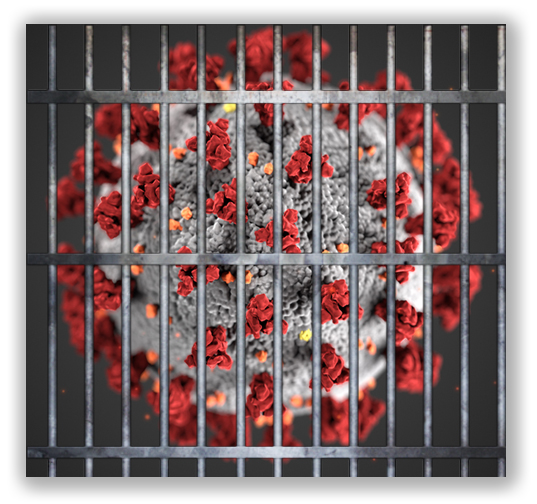
UNDER PRESSURE, BOP ROLLS OUT CORONAVIRUS PLAN
As of Sunday night, the novel coronavirus (COVID-19) has sickened over 169,000 people worldwide. More than 6,500 people have died. Confirmed cases in the US exceed 3,750, with over 69 deaths.
A week ago, the Bureau of Prisons began using a screening tool that includes question about whether inmates or staff members have traveled through any risk countries, had close contact with anyone diagnosed with COVID-19 or been in areas with the virus within two weeks. The tool also assessed possible symptoms, including fever, cough and shortness of breath, the Associated Press reported.
The New York Daily News reported last Monday that the local Federal Defenders organization presented the BOP with “a five-step plan… to handle coronavirus, including a comprehensive testing protocol and requesting that no new inmates be housed at the jails without being tested for the virus first.” The Defenders were focused on the troubled MCC New York – where Jeffrey Epstein died – and MDC Brooklyn, which together hold about 2,300 inmates.
Also on Monday, 15 Democratic senators sent BOP Director Michael Carvajal a letter expressing concern about a possible COVID-19 outbreak in federal prisons. “Over 175,000 individuals are incarcerated in federal prisons and jails, and thousands of incarcerated people, their families and friends, and correctional staff move in and out of federal prisons every day,” according to the March 9 letter. “The unconstrained spread of coronavirus in federal prisons and jails endangers the federal prison population, correctional staff and the general public.”
By Thursday, the BOP addressed mounting concern from lawmakers, union officials and criminal justice advocacy groups that federal prisons aren’t equipped to manage a spread of coronavirus in the prison population. Rep. Jerrold Nadler (D-New York), chairman of the House Judiciary Committee, added to the pile-on with a letter to Attorney General William Barr that demanded answers on BOP preparedness for the inevitable spread of COVID-19 to federal facilities. Nadler said he was “especially concerned because the incarcerated and justice-involved populations contain a number of groups that may be particularly vulnerable to COVID-19. In particular, health conditions that make respiratory diseases more dangerous are far more common in the incarcerated population than in the general U.S. population.”
The BOP told the largest federal correction officers union during a meeting on Thursday that it was poised to announce major steps to deal with the challenge. Joe Rojas, a regional union official, said, “The Justice Department needs to be proactive instead of reactive.” Rojas said there have already been scares in BOP facilities in Seattle and Miami.
Then, the BOP announced Friday afternoon that it was canceling visitation for 30 days, curtailing legal visits, suspending inmate transfers, and suspending use of volunteers and non-essential contractors. Additionally, the Bureau said it will modify “operations to maximize social distancing and limit group gatherings in our facilities. For example, depending on the facility’s population and physical layout, the institution may implement staggered meal times, recreation, etc. These modifications will be reevaluated in 30 days.”
Nevertheless, union officials and inmate advocates warn that the combination of chronic understaffing, a new leave policy and the realities of coronavirus quarantines could lead to the first nationwide federal prison lockdown since 1995. Aaron McGlothin, head of the local union at FCI Mendota in California, said, “You’ve got to understand we’re in a prison — there’s nowhere to go,” he stressed. “If somebody comes down sick, what are you going to do? Everybody’s going to get sick.”
Union officials are also questioning a BOP leave policy issued in an internal memo last Monday. The policy says staff who contract the coronavirus and have symptoms must use sick leave to self-quarantine. The memo said it follows guidance from Office of Personnel Management, which advises the federal government workforce on leave policies. Union officials, however, complain the policy discourages those who have the virus from staying out as long as necessary.
BOP prison employees receive about 13 days of sick leave a year. But the Centers for Disease Control and Prevention recommends 14 days of isolation for those who only have been exposed and says those who are sick should remain quarantined until medically cleared, which could be much longer.
That means most BOP employees would have to borrow time they had not yet accrued if they do get sick. And even then, it might not cover the full time needed to get better and no longer be contagious. “I wouldn’t want to give them any excuse or reason to come back in before they’re ready,” said Rick Heldreth, the local union president at FCI Hazelton. That’s in contrast to BOP guidance for those who have potentially come in contact with the virus but have no symptoms: They are allowed to use administrative “weather and safety” leave for up to 14 days.
“Everybody is saying, what the hell does this mean? If you have the symptoms? If you don’t have the symptoms?” said Rojas. “It’s just a mess.”
Conditions could deteriorate to a lockdown or mass outbreak situation, Rojas said. It’s been more than 24 years since the entire BOP was locked down. At that time, inmates were fed in their rooms and all recreational activities were canceled following a series of prison unrest incidents in 1995.
We post news and comment on federal criminal justice issues, focused primarily on trial and post-conviction matters, legislative initiatives, and sentencing issues.
Yesterday, Rep. Jerrold Nadler (D-New York), chairman of the House Judiciary Committee, wrote to Attorney General William Barr, demanding answers to 14 questions about BOP preparedness for the inevitable spread of COVID-19 to federal facilities. Nadler said he was “especially concerned because the incarcerated and justice-involved populations contain a number of groups that may be particularly vulnerable to COVID-19. In particular, health conditions that make respiratory diseases more dangerous are far more common in the incarcerated population than in the general U.S. population.”
The New York Daily News reported on Monday that the Federal Defenders – an organization of public defense attorneys who represent indigent defendants (the vast majority of criminal defendants in the federal system) – presented “a five-step plan they want the federal Bureau of Prisons to implement to handle coronavirus, including a comprehensive testing protocol and requesting that no new inmates be housed at the jails without being tested for the virus first.” The Defenders were focused on the troubled Metropolitan Correctional Center in Manhattan and the Metropolitan Detention Center in Brooklyn, which together hold about 2,300 inmates and pretrial detainees. The defense attorneys say there is a “lack of information and planning” relating to the disease in the facilities.
WXIN-TV, Indianapolis, reported yesterday that COVID-19 has spread to a central Indiana county jail correctional officer. Last week, ABC News reported that “Coronavirus suddenly exploded in China’s prisons last week, with reports of more than 500 cases spreading across five facilities in three provinces. Earlier this week in Iran, 54,000 inmates were temporarily released back into the country amid virus fears.” The Marshall Project has reported that it is only a matter of time before the virus reaches BOP facilities.
To minimize spread, the Centers for Disease Control and Prevention suggests avoiding close contact with people who are sick, covering your mouth with a tissue when you cough or sneeze, disinfecting frequently-used surfaces and washing your hands or using alcohol-based hand sanitizer. But these recommendations run up against the reality of prison life. Access to toilet paper or tissues is limited, there is no alcohol-based sanitizer, and you live on top of hundreds of people, meaning a virus like COVID-19 will spread like a prairie fire.
“COVID-19 will remind us of a central hypocrisy in our approach to health behind bars,” The Hill reported last week. “We’ve built the world’s largest collection of jails and prisons, and kept the health services in these places remarkably separate from the rest of our national health systems. The CDC, state departments of health, the Joint Commission and other bodies that promote evidence-based care in our hospitals, ambulatory care clinics and nursing homes are largely absent in these settings. As a result, management of this pandemic will be harder and less effective for incarcerated people, their families and staff in these institutions.”
“Time is of the essence to avert a public health catastrophe in the United States’ prisons and jails,” Nazgol Ghandnoosh, senior research analyst for The Sentencing Project toldNewsweek on Tuesday. “Protecting incarcerated people during a contagious health
crisis by expediting releases would reduce the burden on prison staff of caring for the very ill and reduce demand for limited hospital resources which are shared with the broader public.”
We post news and comment on federal criminal justice issues, focused primarily on trial and post-conviction matters, legislative initiatives, and sentencing issues.
WE’VE GOT THE SHORTS…
Arson: In a decision approving filing a second-or-successive 2255 motion, the 6th Circuit last week held that because United States v. Davis is retroactive, a defendant who was convicted of 18 USC 844(i) arson and an 18 USC 924(c) use of a destructive device (a Molotov cocktail) could challenge the 924(c) conviction.
The 6th said the defendant’s “924(c) conviction was premised upon his use of a destructive device in furtherance of the 844(i) offense… The question is whether 844(i) has as an element the use, attempted use, or threatened use of physical force against the person or property of another… Arson under 844(i) does not appear to qualify as a crime of violence under 924(c)(3)(A) because it can be committed against “any building… used in interstate or foreign commerce,” including one owned by the arsonist… That means defendant’s 924 conviction must have been based on 924(c)(3)(B), which Davis invalidated…”
In re Franklin, 2020 U.S. App. LEXIS 6672 (6th Cir. Mar, 3, 2020)
Waiver: The defendant pled guilty to violating 18 USC 924(c) for brandishing a firearm during a crime of violence — theft from a firearms dealer under 18 USC 922(u). He filed a 2255 motion claiming after United States v. Davis, a 922(u) violation no longer counts as a crime of violence. But his plea agreement included the waiver of his right to contest the conviction and sentence “on any ground, including any claim of ineffective assistance of counsel unless the claimed ineffective assistance of counsel relates directly to this waiver or its negotiation, including any appeal… or any post-conviction proceeding, including but not limited to, a proceeding under Title 28, United States Code, Section 2255…”
Last week, the 7th Circuit ruled this collateral-attack waiver was valid and barred a Davis challenge to the conviction and sentences.
Fair Sentencing Act: The Defendants were sentenced for crack offenses under 21 USC 841(b)(1)(A) prior to the Fair Sentencing Actof 2010. After the First Step Act passed, they applied for sentence reductions. The government; argued they were not eligible because the amounts of crack they were found to have been involved with at sentencing were so great that their sentence exposure did not change.
The U.S. District Court for the Eastern District of New York last week held that the defendants were eligible. It held that “the weight of authority supports Defendants’ interpretation. “[T]he majority of district court cases in this Circuit” have found “that a defendant is eligible for relief under the First Step Act based upon his offense of conviction, as opposed to his actual conduct… Decisions from other circuits also favor Defendants’ interpretation. See United States v. White, 2019 U.S. Dist. LEXIS 119164 (S.D. Tex., July 17, 2019) (collecting over 40 cases across the nation that agree with defendants’ interpretation of ‘covered offense’).”
The EDNY court said it “joins the chorus of district courts to hold that eligibility under… the First Step Act is based on the crime of conviction and not a defendant’s actual conduct. Both defendants were convicted of violating 21 USC 841(b)(1)(A), the statutory penalties for which were modified by theFair Sentencing Act. They are both therefore eligible for a sentence reduction under the First Step Act.”
ACCA Recklessness:The Supreme Court last week granted certiorari to a case asking whether an offense that involves physical force that is used recklessly – that is, conduct undertaken with a conscious disregard of a substantial and unjustifiable risk – is a crime of violence for Armed Career Criminal Act purposes.
A prior case asking the same issue was recently dismissed after the defendant/petitioner died.
We post news and comment on federal criminal justice issues, focused primarily on trial and post-conviction matters, legislative initiatives, and sentencing issues.
BOP HAS A BAD WEEK
Last week was a trial by fire for new BOP Director Michael Carvajal. But as an old custody hand, the Director probably found the issues were hardly new.
First, the Dept. of Justice Inspector General issued a report last Tuesday criticizing the BOP for failing to adopt policies to safeguard against serving potentially contaminated food to inmates, a problem that led the agency to buy substandard products (like $1 million worth of adulterated meat, including whole cow hearts that were labeled “ground beef”). The IG faulted the BOP for not having “a protocol in place to ensure its food supply is safe” and failing to “properly document or communicate food vendor quality issues.”
“The BOP should develop a quality assurance plan… to mitigate the risk that a vendor could deliver a substandard product,” the IG wrote.
Two days later, a shakedown at MDC New York – the prison already on the ropes for letting Jeffrey Epstein kill himself last summer – turned up vast quantities of contraband, including a loaded gun, inside the facility.
The Associated Press reported that the discovery “marked a massive breach of protocol and raised serious questions about the security practices in place at the Bureau of Prisons, which is responsible for more than 175,000 federal inmates, and specifically at the jail, which had been billed as one of the most secure in America.” Three BOP officials told the AP that the US Attorney has opened a criminal investigation into potential misconduct by COs, focusing on the flow of contraband into the lockup uncovered during the search for the gun.
We post news and comment on federal criminal justice issues, focused primarily on trial and post-conviction matters, legislative initiatives, and sentencing issues.
TWO APPELLATE DECISIONS, ONE UP, THE OTHER DOWN, ON BRADY
Two different circuits ruled on Brady issue claims last week, with quite different results.
A primer: The idea that the prosecution in a criminal case ought to provide the defense with any evidence that tends to exonerate the accused seems pretty reasonable, indeed, a constitutional imperative. But until the 1960s, if the government had four witness statements that said that the victim was attacked by a 4-foot tall female bald albino, and only one statement accusing a 6’6″ black man with dreadlocks down to his waist, prosecutors were free to hide the short albino statements in its files, and just use the dreadlock witness at trial.
But in 1962, the Supreme Court held in Brady v. Maryland that in a criminal case, the prosecution must turn over all evidence that might exonerate the defendant (exculpatory evidence) to the defense. Since then, “Brady material” has become the legal shorthand for any evidence that, had it been disclosed to the defense, raises a ‘reasonable probability’ that the outcome of the case would have been different. A ‘reasonable probability,’ as any post-conviction remedy fan can recite, is “a probability sufficient to undermine confidence in the outcome.”
Now back to the live action: Last week, the 6th Circuit reversed the conviction of Dr. Richard Paulus, a cardiologist who had been convicted of healthcare fraud. The government claimed he had performed heart stent procedures that were unnecessary. Government experts who looked at his medical records concluded that up to 50% of his procedures were not called for by the patient’s condition.
This became the government’s business, of course, because most of those procedures were performed on “OK boomers” like the undersigned, and were paid for by Medicare.
Pat Brady – Roy Rogers’ comical sidekick back in the 1950s – had nothing to do with Brady v. Maryland, which is deadly serious for many defendants.
When the government’s concerns about Dr. Paulus first came to light, the hospital where he worked brought in its own experts to determine whether it owed Medicare a refund. Its experts studied 1,049 heat stent procedures performed by Doc Paulus, and found that 75 operations were unnecessary. Because the hospital and Dr. Paulus were on the “outs” by then – with a full-blown investigation targeting the Doc – the hospital did not share its study with him.
As trial approached, the government told Dr. Paulus’s lawyers the hospital had offered to reimburse on 75 cases, but it did not tell them that a full 1,049 files had been examined. This was significant: at trial, the government’s expert, who had studied many fewer Paulus procedures, testified that up to half of the operations were unnecessary. The hospital’s expert found an “error rate” of less than 8%.
The irony is that the government wanted to give the study to the defense before trial, because the government believed it was Bradymaterial. But the hospital claimed the study was privileged, and the district judge held – after a hearing that excluded the defense – that the study was inadmissible and could not be given to the defense.
Dr. Paulus’s lawyers discovered the contents of the complete study after the trial. Last week, the 6th Circuit reversed, in a decision that sharply criticized the judge’s use of an ex parte proceeding that shut out the defense. On appeal, the government claimed the study was not Brady material after all, because the Doc could have discovered the full study on his own. After all, the government said, Dr. P knew about the 75 cases the hospital said were faulty, and he could have asked the hospital how big the sample was, or subpoenaed the hospital, or something.
The 6th disagreed. “Brady does not allow the State simply to turn over some evidence, on the assumption that defense counsel will find the cookie from a trail of crumbs,” the Court said. The evidence was material, because instead of a 50% error rate (which implied the Doc was intentionally doing needless operations), there might be a 7% rate, taken from a bigger sample. That “wasn’t an error rate,” The Wall Street Journal said last weekend, “but a ‘disagreement in medical judgment rate’.”
The 6th Circuit acted last Thursday, and Dr. Paulus was released from prison the next day.
Meanwhile, things did not go as well for Steve Mason. Being tried for a drug conspiracy, Steve faced one of his former conspirators, now testifying for the government. Before trial, the US Attorney obtained a letter it believed its witness, Ned James, had written, that claimed Ned was going to “lie on everybody” in order to get off. Ned denied writing the letter, but he failed a polygraph. While a government handwriting expert said the letter had not been written by Ned, Ned’s former cellmate, Jazz, said Ned had written it, But Jazz got released from jail and promptly died of a drug overdose. Willie Walker, another co-conspirator, said Jazz had written the letter, too, but Willie took the 5th Amendment and refused to testify at trial.
The government withheld the letter until the very start of the trial. The defense wanted to use it, but the judge said it could not bring up Ned’s failed polygraph.
On appeal, Steve claimed the government breached its Bradyobligations. Steve argued that if his lawyers had gotten the letter earlier, maybe they could have found proof Ned had written it.
The DC Circuit disagreed. By the time the government discovered the letter, Jazz had already died, so the defense could not have interviewed him. The Circuit wrote that “mere speculation is not sufficient to sustain a Brady claim… Hypothesizing that certain information, had it been disclosed to the defense, might have led defense counsel to conduct additional discovery that might have led to some additional evidence that could have been utilized is disfavored… The argument that an earlier disclosure might have led Mason to uncover other promising leads is simply too speculative to undermine our confidence in the outcome of the trial.”
We post news and comment on federal criminal justice issues, focused primarily on trial and post-conviction matters, legislative initiatives, and sentencing issues.
COMPELLING REASON NEED TO REQUIRE PSYCH DRUGS ON SUPERVISED RELEASE
Dan Lovato was convicted of a drug trafficking offense, and – in a special condition of supervised release – he was required to take all medications that may be prescribed by his psychiatrist, and to demonstrate compliance through random blood tests.
As an end note to an otherwise unsuccessful appeal, Dan argued the district court committed plain error in ordering the supervised release special condition without making any particularized findings supporting the condition. The Court of Appeals agreed, based on its decision last year in United States v. Malone, and threw out the condition. In Malone, the Circuit held that when a court imposes a special condition that invades a fundamental right or liberty interest, it must justify the condition with compelling circumstances. A defendant on supervised release, it held, has “a significant interest in avoiding the involuntary administration of psychotropic drugs.”
“Conditions that touch on significant liberty interests are qualitatively different from those that do not,” the Malone court said, “and their heightened requirement of particularized findings and compelling circumstances is well established… When ‘stock’ special conditions are proposed and the defendant does not object, it is easy to overlook the constitutional implications at stake. But even when the defendant does not object, the district court must ensure that its conditions conform to the Constitution.”
We post news and comment on federal criminal justice issues, focused primarily on trial and post-conviction matters, legislative initiatives, and sentencing issues.
FEMALE PRISONERS PUNISHED MORE OFTEN FOR LESS, REPORT SAYS
The U.S. Commission on Civil Rights last week released a report finding that many incarcerated women experience physical and psychological harms disproportionate to those suffered by male inmates, with insufficient respect for their constitutional rights.
The report concluded that incarcerated parents permanently lose parental rights at higher rates than parents whom courts find to have neglected or abused their children but are not incarcerated; that despite the Prison Rape Elimination Act, sexual abuse and rape remain prevalent against women in prison; and that incarcerated women are often given disproportionately harsh punishments for minor offenses compared to incarcerated men, leading to time spent in segregation and loss of good-time credits for minor violations of prison regulations, and disproportionately harsh punishment for offenses such as “being disorderly.” Men, on the other hand, tend more often to be punished for violence.
“What we saw was that women themselves are substantially more likely [than men] to be subject to disciplinary practices for minor infractions,” says USCCR chair Catherine Lhamon. “Those minor offenses include “being what’s called insolent, or disobeying an order, or swearing.” An NPR/Medill School of Journalism study in 2018 found that women were disciplined at more than twice the rate of men for minor prison rule infractions.
The USCCR report found that prison officials, supervisors, and correctional officers are inconsistently trained on the prevalence of disproportionate punishment of incarcerated women and evidence-based disciplinary practices.
We post news and comment on federal criminal justice issues, focused primarily on trial and post-conviction matters, legislative initiatives, and sentencing issues.
HOLGUIN-HERNANDEZ BRINGS FORTH A MOUSE
Last year, when the Supreme Court granted review in Holguin-Hernandez v. United States, many commentators had high hopes that the high court would relax the requirements for people seeking appellate review of sentence reasonableness. After all, it has been almost a decade since the Court last spoke on the subject.
But that was not to be. Last week, the Court found for the defendant while saying about as little as possible.
The defendant was sentenced to 60 months for pot distribution, and because he was on supervised release from a prior drug offense, a revocation sentence of an additional 12 months. The defendant argued the sentence was unreasonably high, but his attorney did not renew the objection after the sentence was pronounced (a ritualistic requirement imposed by a number of circuits). Because of that oversight, the 5th Circuit only reviewed the reasonableness argument under the relaxed “plain error” standard, and affirmed the longer sentence.
The Supremes held for the defendant. “Petitioner’s district-court argument for a specific sentence (nothing or less than 12 months) preserved his claim on appeal that the sentence imposed was unreasonably long,” Justice Breyer wrote. “A party who informs the court of the ‘action’ he ‘wishes the court to take…’ ordinarily brings to the court’s attention his objection to a contrary decision. That is certainly true where, as here, the defendant advocates for a sentence shorter than the one actually imposed… A defendant who, by advocating for a particular sentence, communicates to the trial judge his view that a longer sentence is ‘greater than necessary’ has thereby informed the court of the legal error at issue in an appellate challenge to the substantive reasonableness of the sentence.”
Unfortunately, the hyper-technical circuit policy that lets a defendant argue for hours against imposition of a Guideline enhancement, but holds that if he or she does not make a further objection after the judge decides to add the enhancement anyway, the argument is forfeited, applies to a lot of sentencing issues besides reasonableness. The Court provided a lot of persuasive arguments against the policy, but stopped short of throwing it out for issues other than sentence reasonableness.


 “The clemency process,” she argued, “must be completely independent of the system employed to incarcerate millions of people. A first step is an independent commission with representation from all stages of the criminal justice system, including those who are formerly incarcerated, prosecutors, defense lawyers, corrections experts, and members of the public with appropriate resources to review the inevitable deluge of petitions from the masses. Independence would ensure that one actor could not put a thumb of the scales of justice, as is the case in our current system, where the same person who prosecuted the case in the Department of Justice has this power.”
 In other words, an office of the very agency that offered the plea deal, and then advocated for a very harsh sentence when the deal was rejected, should not urge the President to grant clemency to a prisoner based on the agency’s own conduct.














 Unfortunately, the hyper-technical circuit policy that lets a defendant argue for hours against imposition of a