All posts by lisa-legalinfo

You Can’t Get Whatever You Need at Aliceville’s Health Services – Update for July 7, 2020

We post news and comment on federal criminal justice issues, focused primarily on trial and post-conviction matters, legislative initiatives, and sentencing issues.

REASON MAGAZINE MAULS FCI ALICEVILLE HEALTHCARE

Reason.com, a libertarian magazine and website, published a lengthy investigative piece last month shredding the quality of healthcare the Federal Bureau of Prisons provides female inmates at FCI Aliceville.

prisonhealth200313The article is detailed and deeply researched. At one point, it cites the compassionate release of inmate Angela Beck last year. U.S. District Judge Catherine Eagles (Middle District of North Carolina) found that the BOP made Angela wait two months for imaging after she first found lumps in her left breast. Then she had to wait eight months for a biopsy, which confirmed the cancer, and two more months for surgery. By that time, the cancer had spread to her lymph nodes, requiring a radical mastectomy. Five more months passed before Beck’s first appointment with an oncologist, who determined that it was too late to begin chemotherapy at that point.

Judge Eagles wrote that the neglect Angela suffered “likely reached the level of a constitutional violation,” and that if she remained in BOP custody, she would continue to face “a substantial likelihood of substandard medical care for her life-threatening disease.”

The government, of course, opposed release, arguing that Angela’s “medical issues,” that is, the appalling negligence, “d[id] not qualify as a terminal medical condition or debilitated medical condition.” Judge Eagles thought otherwise, and released Angela so she could get some decent care at home.

Reason noted that although its article focused on Aliceville, “this story could have been written about any number of prisons or jails. Medical neglect of incarcerated people is a problem across the country on federal, state, and local levels. It’s a national disgrace—the kind people prefer to ignore. Prison officials downplay or hide the scope of it, there is a high bar for inmates trying to bring Eighth Amendment lawsuits challenging prison conditions, and the public by and large pays little attention to what happens behind prison walls.”

sam200707

The magazine received a message about an inmate being taken to Health Services with chest pains. “My friend told me that that lady today in medical kept saying, ‘I am going to die, I am going to die’,” the message continued. “And she did … but did she have to?”

The article said, “That’s a question Reason has been asking for the last year, and a question the BOP appears to have no interest in answering.”

Reason, These Women Received a Death Sentence for Being Sick In Prison (June 30, 2020)

United States v.  Beck, 425 F. Supp. 3d 573 (MDNC, 2019)

– Thomas L. Root

7th Circuit OKs Rehaif Relief Where Issue Is “Complex” – Update for July 6, 2020

We post news and comment on federal criminal justice issues, focused primarily on trial and post-conviction matters, legislative initiatives, and sentencing issues.

AIN’T SEEN NUTHIN’ YET

guns200304With the exception of the Fourth Circuit (which is a story for another time), courts of appeal agree that people convicted of being “prohibited persons” in possession of a gun have to meet the F.R.Crim.P. 52(b) “plain error” standard to raise the Supreme Court’s Rehaif case on appeal where they did not do so at trial.

That’s pretty relevant, because until Rehaif was handed down a year ago, no one was raising the issue at trial.

“Plain error” means you have to show that the trial court erred, that the error was plain (or obvious), that it affects your substantial rights, and that the error seriously affects the integrity of the justice system. In Rehaif cases, this means that the defendant had to show that there was a reasonable probability he or she would not have entered a guilty plea or been convicted if the error had not occurred.

To do this, the courts look at how likely it was the defendant would have known he or she belonged to a class of people not allowed to have guns. Sometimes that’s pretty easy to figure out: the defendant knew he or she had previously served more than a year for some prior crime. In that case, it’s hard for a defendant to argue he did not know that he had been convicted of a crime carrying a sentence of more than a year.

But what if the prohibited class the defendant belongs to is not all that clear? Bob Triggs’ kid made some stupid social media posts that suggested shooting up his school, so the police checked to be sure the boy had no access to firearms. In the process, they found that Bob – who had a few hunting rifles – had a 10-year old domestic battery misdemeanor. A conviction for a misdemeanor crime of domestic violence is as disqualifying for gun possession as a prior felony under 18 U.S.C. § 922(g)(9).

manyguns190423Bob said he had no idea he couldn’t have a gun, and he surrendered the rifles to the police. They turned it over to the U.S. Attorney (who rarely sees a case unworthy of throwing the might of the United States government at the hapless defendant), and Bob got indicted for a § 922(g) offense.

(In another world, the cops would have said, “Gee, Bob, now you know you can’t have guns,” and would have turned his rifles over to  the someone to sell them and given Bob the proceeds. But this is America, the world’s leading incarcerator of citizens. We just had to prosecute this hapless guy).

After Bob got convicted, Rehaif – which held that a defendant had to know that he or she was a member of a group prohibited from possessing a gun – was decided, and Bob raised it on appeal under the “plain error” standard. The 7th Circuit agreed the district court’s conviction of Bob without proof he knew he was in a prohibited class was an error, and it was pretty obvious.

The Circuit said to establish prejudice from the Rehaif error, Bob had to show a “reasonable probability that he would not have pleaded guilty had he known of the government’s burden to prove” he knew of the error.

“Many prosecutions under § 922(g) involve violations of… the felon-dispossession provision, which prohibits firearm possession by any person ‘who has been convicted in any court of a crime punishable by imprisonment for a term exceeding one year,’ the 7th said. “Under this simple definition, a defendant will have difficulty establishing prejudice from a Rehaif error because the new knowledge element is quite easy to prove, especially when the defendant previously served more than a year in prison… A defendant in that situation ‘will face an uphill battle to show that a Rehaif error in a guilty plea affected his substantial rights’ because the new understanding of the knowledge element doesn’t materially change the guilty-plea calculus.”

guns170111But what constitutes a misdemeanor crime of domestic violence, the Circuit ruled, is a very complex thing. “Given the comparative complexity of this definition,” the 7th Circuit said, “the guilty-plea calculus changes. Rehaif improves Triggs’s trial prospects, giving him at least a plausible argument that he was unaware that his 2008 battery conviction is a crime of this nature.”

The 7th Circuit may yet rue the day it held that 922(g)’s complexity gave a defendant a plausible reason to believe he was allowed to own guns. The definition of “crime punishable by imprisonment for a term exceeding one year” seems pretty straightforward until one reads the pretzel-like definition set out in 18 USC § 921(a)(20). It turns out that sometimes a crime is not a “crime” and a two-year sentence does not exceed one year, and other state laws having nothing to do with disqualifying crime turn it into an offense that doesn’t count.

So the 7th says that § 922(g)(9)’s complicated? You ain’t seen nothin’ yet.

United States v. Triggs, 2020 U.S. App. LEXIS 20542 (7th Cir. July 1, 2020)

– Thomas L. Root

FSAction – Update for July 1, 2020

We post news and comment on federal criminal justice issues, focused primarily on trial and post-conviction matters, legislative initiatives, and sentencing issues.

A PASSEL OF FAIR SENTENCING ACT RULINGS

Last week brought a pile of rulings on retroactive Fair Sentencing Act motions brought under Section 404 of the First Step Act.

bullet200702

(Skip this if you know what I’m talking about). The Fair Sentencing Act of 2010, of course, is the law that changed how defendants with crack (cocaine base) were punished. Back in the paranoid days of the late 1980s, crack was considered to be the scourge of the inner cities, terribly addictive compared to powder cocaine, dirt cheap and sold by people who were crazily violent and armed with an arsenal that Kim Jong Eun would envy. Congress responded thoughtfully by passing the Anti Drug Abuse Act of 1988, which mandated punishment for crack dealers as though they had sold 100 times as much powder cocaine. Really. 100:1. Selling crack that weighed no more that a .22 cal. bullet (the pointy lead thing, not the whole cartridge) was akin to selling a half-pound of cocaine powder.

Congress was right about one thing. Crack was a plague of the inner cities, because users could by enough to induce a high for a lot less than cocaine powder. What this meant was that the people who sold it were overwhelmingly black. The net effect of the ADA was to hang horrific sentences on blacks, while their white suburban counterparts who peddled powder faced much lighter sentences for essentially selling the same amount of drug.

Think I’m kidding? Proper cooking of powder cocaine ( to that I suggest you try this at home) should yield about 89%. That is, one kilo of coke powder should give you about 9/10th kilos of crack. Under the ADA, sell the powder and get five years (63 months minimum sentencing range under the then-current Guidelines). Cook the powder and sell the crack, and your minimum sentencing range would be 235 months.

Subsequent studies debunked the myth that crack was ore addictive than powder, and that crack distribution occasioned more violence than powder sales. But the law persisted until 2010, when Congress passed the FSA. The FSA cut the penalties from a ratio of 100:1 down to 18:1.  The 1:1 people tried their hardest, but some compromise was needed to pass the Senate. Likewise, the FSA proponents had to give up their hope it would be retroactive to people serving long sentences already. To appease the troglodytes in the Senate, retroactivity was jettisoned, too.

In the First Step Act, Congress finally made the FSA retroactive. Under Section 404 of First Step, a person serving a crack sentence imposed before the FSA could apply for a sentence reduction, which the judge could grant or refuse to grant as a matter of discretion. (End background – you may resume reading).

presence200701Tony Denson, a federal prisoner, appealed the district court’s order reducing his crack sentence under Sec. 404. Without a hearing, the district court granted Tony’s motion, cutting his 262-month sentence to 188 months. The reduction was less than what Tony anticipated, so he appealed, arguing the district court erred by not holding a hearing.

The 11th Circuit shot him down, holding that under Federal Rules of Criminal Procedure 43, Tony’s presence was not required in a § 3582(c) proceeding, and that’s all a Sec. 404 resentencing is. The Circuit joined the 5th and 8th Circuits in holding that a defendant has no right to a hearing on a Fair Sentencing Act resentencing.

In the 8th Circuit, a district court denied Jonair Moore’s Sec. 404 motion, holding that he had dealt in too much coke and crack (11 kilos of powder, 1.2 kilos of rock) for the court to want to cut his time. Also, the judge said, Jon had obstructed and used a gun in the drug crimes, so his 230-month sentence seemed right.

Jon appealed, arguing that on a Sec. 404 resentencing, the judge had to apply the 18 USC § 3553(a) sentencing factors to any decision. The 8th disagreed.

Section 404 is permissive,” the Circuit ruled. “A district court ‘may’ impose a reduced sentence. Nothing in this section shall be construed to require a court to reduce any sentence under the section.” Furthermore, the 8th said, Sec. 404 nowhere mention the § 3553 factors: “When Congress intends to mandate consideration of the section 3553 factors, it says so,” the panel wrote, citing 18 USC §3582(c)(2) (stating a court may impose a reduced sentence after considering the factors set forth in section 3553(a)…) In the First Step Act, Congress does not mandate that district courts analyze the section 3553 factors for a permissive reduction in sentence.”

Meanwhile, the 4th Circuit issued an explanation for its earlier order than Al Woodson be resentenced. Al was sentenced under 21 USC 841(b)(1)(C) for distribution of 4 grams of crack. Subsection 841(b)(1)(C) had no mandatory minimum sentence. Ten years later, Woodson filed a motion for a reduced sentence First Step Act Sec. 404, believing he was eligible for relief because he was convicted for a crack cocaine offense prior to 2010. The district court denied his motion on the ground that Sec. 404 does not apply to crack offenders sentenced under 841(b)(1)(C).

crackpowder191216

The 4th disagreed. It held that the FSA modified 841(b)(1)(C) by altering the crack cocaine quantities to which its penalty applies. Before the FSA, 841(b)(1)(C)’s penalty applied only to offenses involving less than 5 grams of crack cocaine. Because of the FSA, the penalty in Subsection 841(b)(1)(C) now covers offenses involving between 5 and 28 grams of crack cocaine as well.

The scope of 841(b)(1)(C)’s penalty for crack cocaine is defined by reference to 841(b)(1)(A) and (B): 841(b)(1)(C) imposes a penalty of not more than 20 years for crack trafficking offenses “except as provided in subparagraphs (A) [and] (B).” Thus, by increasing the drug weights to which the penalties in 841(b)(1)(A)(iii) and (B)(iii) applied, the Circuit held, Congress also increased the crack cocaine weights to which 841(b)(1)(C) applied, too.

United States v. Denson, 2020 U.S. App. LEXIS 19636 (11th Cir. June 24, 2020)

United States v. Moore, 2020 U.S. App. LEXIS 19616 (8th Cir. June 24, 2020)

United States v. Woodson, 2020 U.S. App. LEXIS 19700 (4th Cir. June 24, 2020)

– Thomas L. Root

Lord, Save Us From Parents… – Update for June 30, 2020

We post news and comment on federal criminal justice issues, focused primarily on trial and post-conviction matters, legislative initiatives, and sentencing issues.

FATHER KNOWS BEST

Seldom is a defendant is such a mess that the advice of his family or friends cannot make things worse. That’s what happened to David Day.

David faced a messy white-collar case, one that could easily yield a Guidelines sentence of more than 90 months. His public defengoodlawyer160314der was top-drawer (as full-time public defenders usually are): she could assess a loser of a case, and she did, negotiating a government offer for a 51-month sentence.

But parents always want the best for their kids. Although David was in his mid-30s, his Dad figured prominently in planning his defense. And Dad, who had seen all of the relevant TV shows,  figured a court-appointed lawyer couldn’t possibly be any good. He convinced David to reject the offer, and then to dump his PD in favor of hiring two lawyers Dad knew, both whom could smell a fee and thus told David he could easily beat the case.

Things went downhill fast.

After the new lawyers collected their fee, paid over several months (by Dad), they entered their appearance in the case. The government generously re-offered the 51 month deal, but the new lawyers – without ever opening the case files, which they had not yet bothered to pick up from the public defender – told David to reject 51 months and go to trial.

toast200630A few weeks later, the new lawyers finally picked up the files and read the discovery. For the first time, they could see that David was toast. They convinced him to plead, but by then there was no deal. He entered an open plea, which is a plea to the whole indictment without any deal whatsoever. When all the dust settled, David got 92 months.

David filed a 28 USC § 2255 post-conviction motion, arguing the hired lawyers were incompetent for telling him to reject the plea offer without having first read the file. That seems like a pretty basic blunder. But David’s trial judge didn’t think so. She denied the § 2255 motion without a hearing, holding that even if the lawyer had done that, David could not show he was prejudiced by their mistake, because the government’s offered plea agreement would not have bound the court to a particular sentence, so there was no guarantee the judge would have sentenced David to 51 months.

Last week, the 7th Circuit reversed. The proper inquiry, the Circuit said, is not whether the sentencing court is bound by a plea agreement, but whether it is reasonably probable that the court would have accepted its terms and that the resulting sentence would have been less than the one that was actually imposed.

The 7th complained that the “judge’s prejudice analysis also overlooks the practical realities of plea negotiations. Few court observers would contend that the government’s views as reflected in its plea stipulations and Guidelines recommendations have no influence on a judge’s real-world sentencing decisions… Judges usually follow the nonbinding recommendation in Rule 11 type B agreements in part because they know that not accepting prosecutors’ sentencing recommendations will hamper plea negotiations in future cases. Why would prosecutors offer nonbinding plea agreements — and defendants accept them—if they count for nothing in the sentencing decision?

dumblawyer180108The government weirdly warned the Circuit that ruling in David’s favor would produce “absurd results” by encouraging defendants to engage incompetent attorneys. Of course they would: it makes perfect sense to hire a dummy and get slammed with a lot of time, so that you can roll the dice on your less-than-10% chance that you can win your § 2255 a few years down the road.

Ask David. He’s already served all but 12 months of his 92-month sentence. No doubt he’s happier to have his rights vindicated after he’s done the time he would not have had if he had stuck with his public defender.

The Court, with regal understatement, wrote the government argument “strikes us as an entirely unrealistic concern.”

Day v. United States, 2020 U.S. App. LEXIS 19640 (7th Cir. June 24, 2020)

– Thomas L. Root

Congress Lurching Toward Easing Compassionate, Elderly Offender Release? – Update for June 29, 2020

We post news and comment on federal criminal justice issues, focused primarily on trial and post-conviction matters, legislative initiatives, and sentencing issues.

COVID-19 SPURS LAWMAKERS, CDC

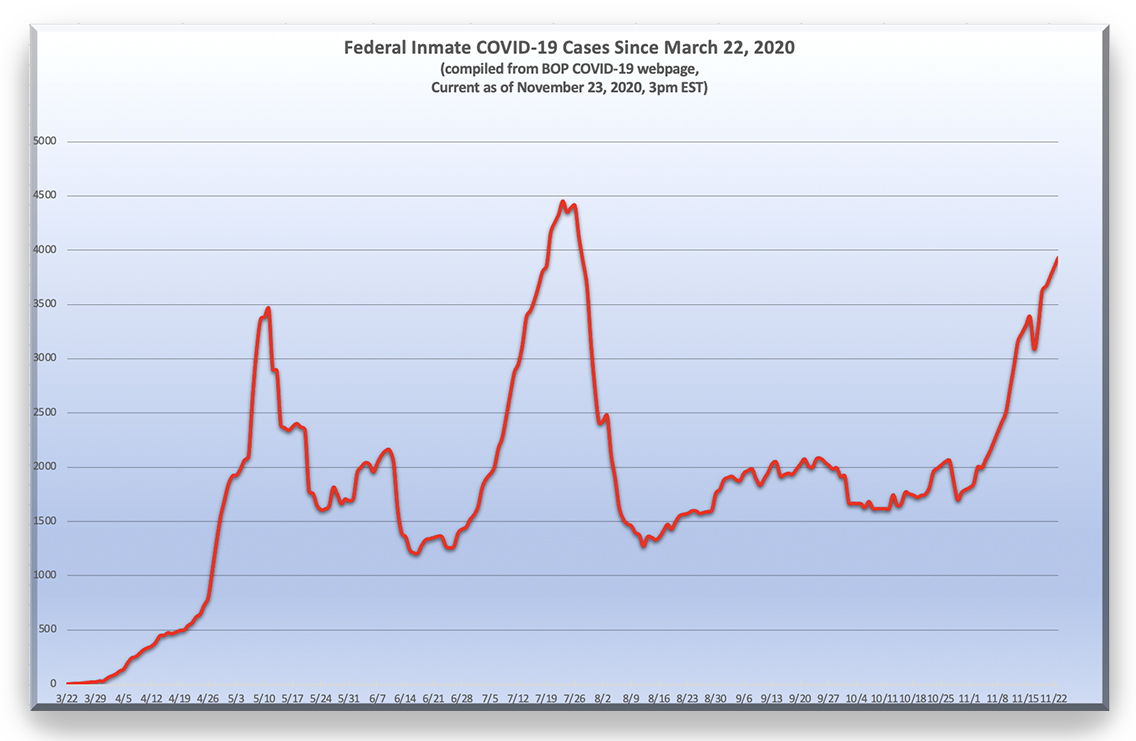
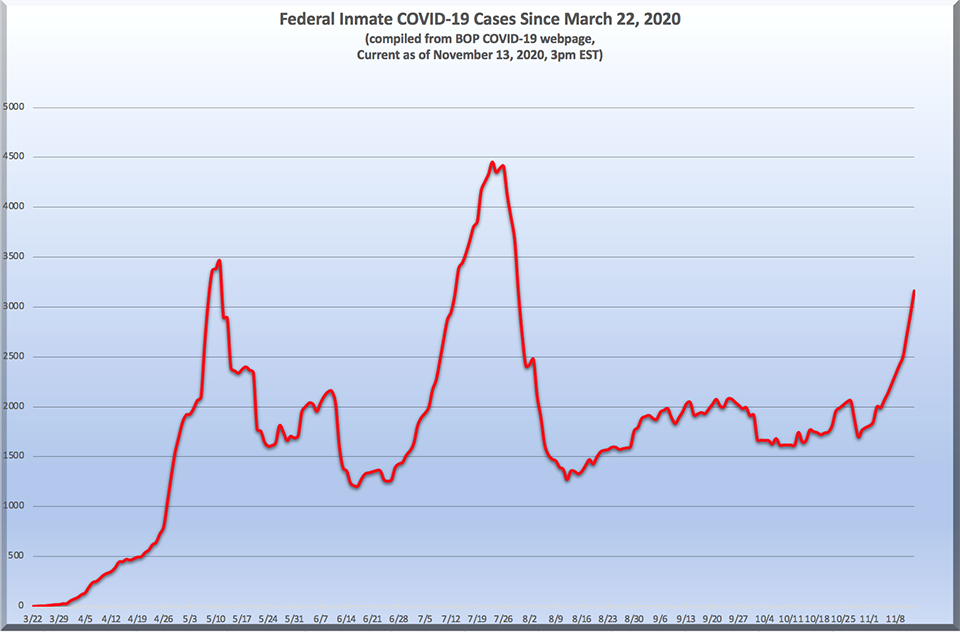
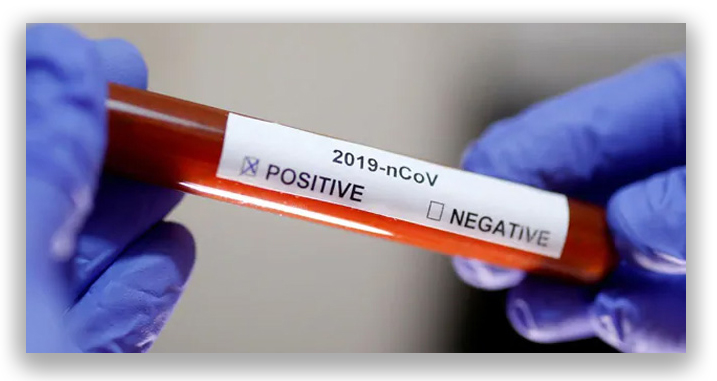
corona200313Last week’s upsurge in COVID-19 cases nationally has begun to translate to an increase in Federal Bureau of Prisons inmates with coronavirus. A number that had dwindled last week to 1,256 by last Thursday shot back up to 1,429 as of last night. The inmate death count is 93, with COVID-19 present on 71 prison compounds throughout the BOP system (57% of all facilities).

As of yesterday, the BOP had tested 21,400 inmates, up about 12% from last week. The Bureau is still showing about 30% of inmates tested as positive for COVID-19, and it has only tested about now out of six inmates.

The noteworthy developments in COVID-19 last week, however, were not viral, but rather legislative and medical.

Legislative: Senators Richard Durbin (D-Illinois) and Charles Grassley (R-Iowa), principal authors of the First Step Act, last week jointly introduced S.4034, bipartisan legislation to reform the Elderly Offender Home Detention (EOHD) Program and compassionate release.

Sen. Charles Grassley (R-Iowa)
                  Sen. Charles Grassley (R-Iowa)

EOHD, authorized by First Step as part of 34 USC § 60541(g), permits the BOP to place prisoners who are 60 years old or older, convicted of non-violent offenses, and with good conduct in home detention for the remainder of their sentences. Compassionate release, expanded by First Step, permits a court to reduce a prisoner’s sentence for extraordinary and compelling reasons, pursuant to 18 USC § 3582(c)(1).

S.4034, dubbed the COVID-19 Safer Detention Act, would reform the EOHD and compassionate release by:

• Clarifying that the percentage of time an inmate needs to qualify for EOHD should calculated based on an inmate’s net sentence, including reductions for good time. Currently, the BOP charily calculates it as two-thirds of the total sentence, not two-thirds of the 85% of the sentence the inmate actually serves. This change has already passed the House by voice vote in HR 4018, which las been languishing in the Senate since last Christmas;

• Cutting the percentage of time an inmate must serve to qualify for  EOHD from two-thirds of the sentence to one-half;

• Making “old law” federal prisoners (those convicted prior to 1988) eligible for compassionate release;

• Making DC offenders housed in BOP facilities eligible for EOHD;

• Making denial of EOHD release subject to court review; and

• Providing that during the pandemic, COVID-19 vulnerability is deemed a basis for compassionate release, a statutory change that would prevent the government from trying to convince courts (and some have been convinced) that the pandemic is hardly extraordinary; and

• Shortening the period prisoners must wait for judicial review for elderly home detention and compassionate release from 30 to 10 days. Currently, there is no judicial review of a BOP denial of EOHD, and inmates must ask the BOP to file for compassionate release on their behalf, and wait 30 days for an answer before filing themselves.

Sen. Richard Durbin (D-Illinois)

It is unclear whether the bill will pass, but sponsorship by a Democrat and Republican increases its odds. Hamodia reported that the bill “will likely be attached it to another bill, such as a stimulus bill or the police-reform bill currently being crafted by Sen. Tim Scott (R-S.C.)”

Medical: The other COVID-19 major development last week was medical. Last Thursday, the Centers for Disease Control and Prevention in Atlanta released updated COVID-19 guidelines to adjust the ages and expand the health problems that could make people more likely to have severe complications. The move comes amid the rising number of younger patients and new studies that show the effects of certain conditions.

The new CDC guidelines are crucial for prisoners, because courts determine whether movants for compassionate release qualify according to whether the inmates have one or more of the CDC risk factors.

First, the CDC walked back the “65 and over” risk factor, which many judges have interpreted as being a hard number, denying any health-concern consideration for a 64-year old but treating a 66-year old prisoner as knocking on death’s door.

death200330Instead, CDC highlights that all ages could catch the coronavirus but effects of the infection may get worse as people get older. “There’s not an exact cutoff of age at which people should or should not be concerned,” Jay Butler, the CDC’s deputy director of infectious diseases, said in a news briefing.

Of more relevance to prisoners, the CDC has found that risks associated with obesity start at a much lower level. The CDC had held that only the morbidly obese (body mass index of 42+) were at risk. Now, the CDC says anyone with a BMI of 30 or more is at risk.

Under the old standard, a 50-year old 6-foot tall man would have to weigh 310 lbs. to be at risk. Now, the same guy only has to tip the scales at 225 lbs. to exceed a 30 BMI.

Other conditions CDC identified as elevating COVID-19 risk included chronic kidney disease, COPD, weaker immune system due to organ transplant, heart conditions, sickle cell disease, type 1 and 2 diabetes, asthma, dementia, cerebrovascular diseases, cystic fibrosis, high blood pressure, liver disease, pulmonary fibrosis, and an inherited blood disorder known as thalassemia. The CDC also added pregnancy to the list.

A number of inmates have been denied compassionate release because judges decided their risk factors – such as hypertension and dementia – did not match the risk factors on the prior CDC list. There is no statutory limitation to the number of times an inmate may file for compassionate release (other than the judge’s ire, perhaps), meaning that the changing COVID-19 risk landscape offers prisoners a new shot at release.

COVID-19 Tracker: The Marshall Project is running a state-by-state COVID-19 prison tracker website, which includes “Federal” as a category. The site charts total cases, inmates and staff currently sick, deaths, and new cases by date.

S.4034, COVID-19 Safer Detention Act (introduced June 22, 2020)

Hamodia, New Senate Legislation Expands Early Release (June 23)

CDC, People of Any Age with Underlying Medical Conditions (June 25, 2020)

Medical Daily, CDC Updates Guidelines On Coronavirus Risk Factors (June 26)

The Marshall Project, A State-by-State Look at Coronavirus in Prisons (June 25)

– Thomas L. Root

Mistakes Were Made… and Tough Luck to You, Ezralee – Update for June 26, 2020

We post news and comment on federal criminal justice issues, focused primarily on trial and post-conviction matters, legislative initiatives, and sentencing issues.

9TH CIRCUIT SAYS COURTS MUST KEEP THE OLD ERRORS IN FSA RESENTENCING

You’d think that if a court had a chance to fix an old mistake when it resentenced someone, the judge would welcome the opportunity to do it right. You would be wrong.

mistake170417Ezralee Kelley was sentenced in 2006 on a crack distribution charge, with a sentencing range of 262-327 months due to her being a Guidelines “career offender.” After the First Step Act made the 2010 Fair Sentencing Act (FSA) retroactive, she filed for a reduced sentence.

A word about “career offenders”: Back many, many years ago, I was in the Air Force. It being the dawn of the recreational drug era, we all had to fill out a questionnaire about our drug use (or abstinence). Being smart airmen (no women in our unit back then), we all knew how much the brass would appreciate our candor, so we lied like a president on Twitter.

What struck me about the questionnaire was its categories. If you admitted to a single dalliance with controlled substances, you were classified as an “experimenter.” If you admitted to two or more uses of controlled substances, you were a “chronic abuser.” While how many drug abuse events were necessary to rank one as a “chronic abuser,” we were all pretty sure that number was a lot larger than two. Nevertheless, the categories were useful, because it informed us of the Air Force’s view of drug abuse. If we were to admit to “getting high,” we had better be talking about flying an airplane.

USAF200626Chapter 4B of the Guidelines is like that. If you have two prior convictions for a drug trafficking offense or crime of violence, or a mix, the Guidelines calls you a “career offender.” Under the Guidelines, a career offender’s offense level automatically shoots into low earth orbit (usually a 37) and your criminal history is deemed to be Category VI (which is the max).  If you sold me 50 lbs of pot, and you had two prior pot-selling convictions – federal or state – you could easily have a Criminal History score of II and a Guidelines Level of 12 (USSG. § 2D1.1(c)(12) for you technical folks). Your sentencing range would be 24-30 months, a veritable vacation.

But because of your two prior state felony convictions  – even if you only got probation for those – you would be a Guidelines career offender. Your offense level would shoot up to a 32 and your Criminal History category to VI. Your sentencing range would be 210-262 months (that’s 17.5 years to almost 22 years).

Like the Air Force “chronic abuser,” your two prior flirtations with the law (even if they were 14 years before), just turned two years in a federal prison camp into almost two decades in a place with guards with guns and razor wire.

(The foregoing is a mere illustration: you could not sell me 50 lbs of marijuana, because I have never, never even once used the stuff. Just check my Air Force questionnaire response if you doubt me.)

In today’s case, Ezralee’s youthful indiscretions had netted her two prior Washington state convictions for drugs. When she got a federal crack distribution case, she was “careered out,” as they say, and got a fearsomely long sentence. But when First Step made her eligible for an FSA reduction, she hoped to hit a home run.

bettethanezra200626A few years ago, the 9th Circuit had ruled that the some of Ezralee’s Washington state convictions used back in 2006 to make her a career offender do not count toward career offender. As a result, Ezralee said, she should be resentenced without the career status, which should drop her from 262-327 to a 51-month range.

The district court ruled that, mistake or not, it could not reconsider on an FSA resentencing whether she was a career offender.

neverhappened200626Last week, the 9th Circuit agreed. The Circuit explained that First Step permits the court to sentence as if parts of the FSA had been in place at the time the offense occurred, not as if every subsequent change in the law benefitting the defendant had occurred. In an FSA resentencing, the 9th said, the district court has to apply the laws that existed when the defendant’s crack offese was committed, only adding the FSA’s statutory reductions.

Thus, Ezralee’s new sentence assumed only that the FSA was in existence, resulting in a recalculated Guidelines range of 188 to 255 months. The Court gave her 180 months at resentencing.

United States v. Kelley, 2020 US App LEXIS 18834 (9th Cir Jun 15, 2020)

– Thomas L. Root

Sentencing Commission Redux – Update for June 25, 2020

We post news and comment on federal criminal justice issues, focused primarily on trial and post-conviction matters, legislative initiatives, and sentencing issues.

TRUMP MAY BE MOVING TO REPOPULATE SENTENCING COMMISSION

USSC170511The U.S. Sentencing Commission, a judicial-branch agency established by the Sentencing Reform Act of 1984, Pub. L. No. 98-473, § 235(b)(3), 98 Stat. 2032 (1984), is responsible for promulgating and amending the Sentencing Guidelines that have profoundly influenced virtually every federal criminal sentence for the past 30 years (and in fact were mandatory from inception until 2005).

But the Commission – which customarily amends the Guidelines annually – has been unable to issue new or amended Guidelines since the end of 2018, because the terms of three of the five USSG members expired at the end of that year. Since then, the President has made one attempt to nominate replacements to the Commission without success. He may be about to try again.

NPR reported last week that the White House has been consulting Capitol Hill and the criminal justice community about four Republican candidates for two of the slots on the Commission, three of them federal judges and the other from the conservative think tank Heritage Foundation.

HudsonA170811Republican candidates include Senior US District Judge Henry Hudson (Eastern District Virginia), a former director of the US Marshals Service known as “Hang ‘Em High Henry” for his work as a local prosecutor. Hudson has a reputation for handing out long sentences. Another is Chief Judge K. Michael Moore (Southern District Florida), also a former director of the Marshals. Eastern District of Kentucky Judge Claria Horn Boom, a favorite of Senate Majority Leader Mitch hudsonB170811McConnell (R-Kentucky), is in the running, as is John Malcolm, director of the Heritage Foundation’s Meese Center for Legal and Judicial Studies and a former AUSA. Malcolm helped then-candidate Trump put together a list of candidates in the event a Supreme Court vacancy opened up. Malcolm has reached out to allies across the political aisle to try to overhaul mandatory minimums.

One of the Commission slots is reserved for a Democrat. The President is proposing 3rd Circuit Appeals Judge L. Felipe Restrepo, a former public defender appointed to the judgeship by President Barack Obama.

NPR, Concerns Mount Over Possible Trump Picks For Influential Crime Panel (June 19)

– Thomas L. Root

11th Circuit Beats Down Fair Sentencing Act – Update for June 24, 2020

We post news and comment on federal criminal justice issues, focused primarily on trial and post-conviction matters, legislative initiatives, and sentencing issues.

11th CIRCUIT APPLIES ‘RULE OF SEVERITY’ TO PARSING FAIR SENTENCING ACT

Every defendant knows that the Rule of Lenity holds that any ambiguity in a criminal statute must be resolved in the defendant’s favor. Defendants can be forgiven if they think that the 11th Circuit follows the opposite rule – call it a “Rule of Severity” – to never miss a chance to parse a statute in favor of the government.

angryjudge190822I wrote a week ago about Supreme Court Justice Sotomayor’s blast at the 11th Circuit’s abuse of the 28 USC § 2244 process to foreclose meritorious direct appeal claims. The 11th is already notorious for eviscerating the § 2255(e) escape clause, a provision which lets defendants file for conviction or sentence relief under 28 USC § 2241 where, for procedural reasons, the § 2255 remedy is unavailable.

In its most recent entry, the 11th last week rejected the combined reasoning of six other circuits by interpreting the Fair Sentencing Act in a way that forecloses relief to many defendants who, had they been convicted in any other circuit, would have gotten relief. In so doing, the Circuit has denied First Step Act Section 404 relief to hundreds of inmates.

Section 404 says a “covered offense” entitled to retroactive FSA sentence reduction is a violation of a Federal criminal statute, “the statutory penalties for which were modified by section 2 or 3” of the FSA. The meaning of “covered offense” depends on what the clause in quotation marks — the “penalties clause” — modifies. Every other circuit to address the question believes that the penalties clause modifies “Federal criminal statute.” That means that if a defendant was sentenced for crack prior to August 2010, he or she is eligible to seek a sentence reduction.

Not the 11th. Instead, the Circuit held if the statutory minimum for the defendant’s sentence under the FSA would not have changed – say, the indictment claimed 40 grams of crack, which would have been a five-year minimum post-FSA as well as pre-FSA – a defendant is not eligible for § 404 relief.

To make matters worse, the 11th held that just because it is a “covered offense” does not necessarily mean that a district court can reduce a sentence. Any reduction must be ‘as if sections 2 and 3 of the Fair Sentencing Act…” The 11th said “the ‘as-if’ requirement imposes two limits relevant to these appeals. First, it does not permit reducing a movant’s sentence if he received the lowest statutory penalty that also would be available to him under the Fair Sentencing Act. Second, in determining what a movant’s statutory penalty would be under the Fair Sentencing Act, the district court is bound by a previous finding of drug quantity that could have been used to determine the movant’s statutory penalty at the time of sentencing.”

jackson200624Four defendants were involved In the case the 11th decided, Jones, Johnson, Allen and Jackson. (I say this because an inmate contacted me a few days ago to complain that I had written about United States v. Jones, but he had heard the 11th had also ruled on the “Allen case,” and what about that one?).  Four defendants, only one awful ruling.

Two of the four defendants had juries that did not make a drug finding. In that case, the Circuit said, the district court’s stratospheric holding at sentencing (287 grams of crack for one guy, 75 kilos of crack for the other) made each ineligible for the FSA.

One can only hope that the defendants will take the lopsided circuit split this case creates to the Supreme Court. For now, it is just another illustration of why the 11th Circuit is an terrible court  in which a defendant can find himself.

United States v. Jones, 2020 US App. LEXIS 18828 (11th Cir. June 16, 2020)

– Thomas L. Root

Death, SWAT and Smokes: A Quick Trip Around the BOP – Update for June 23, 2020

We post news and comment on federal criminal justice issues, focused primarily on trial and post-conviction matters, legislative initiatives, and sentencing issues.

NEWS FROM AROUND THE BOP

Deadly Business: The Dept. of Justice last week set new dates to begin executing federal death-row inmates following a months-long legal battle over the plan to resume executions, which have been on hold since 2003 .

death200623Attorney General William Barr directed the BOP to schedule the executions, beginning in mid-July at USP Terre Haute, of four inmates convicted of killing children. Three of the men had been scheduled to die last year, when Barr ended an informal moratorium on capital punishment.

Congress Queries BOP: House of Representatives Homeland Security Chairman Bennie Thompson (D-Mississippi) last week asked the BOP for details about whether agency officers who helped police the Washington, DC, protest have been quarantined or tested for COVID-19 before returning to work.

Thompson, who joined with Rep. Raja Krishnamoorthi (D-Illinois), Rep. Jamie Raskin (D-Maryland) and Sen. Cory Booker (D-New Jersey), noted that some BOP officials deployed to the protest — part of a display of force demanded by President Trump — came from FCI Petersburg, in Hopewell, Virginia (site of a significant coronavirus outbreak), yet were seen without wearing masks.

IG Out of SORTS with BOP: The DOJ Inspector General last week issued a report last week recommending that BOP Special Operations Response Teams (SORT) be suspended until comprehensive guidelines are developed.

cops200623BOP institutions maintain their own SORTs. A typical Special Operations and Response Teams has 15 members, including an emergency medical treatment specialist, a firearms instructor, a rappel master, a security/locking systems expert, a blueprint expert, and several firearms and tactical planning/procedures experts. As of 2013, the Bureau maintained 44 SORTs involving more than 700 BOP staff. 

The DOJ Inspector General wrote, “SORT members deployed a distraction device munition in a confined space, which was not authorized for use under BOP policy; SORT members deployed real OC spray rather than inert OC spray during a training exercise, allegedly without proper authorization; and SORT members used force, including firing a simunition round, against staff members who were allegedly yelling to the SORT that they were ‘out of role’ and physically vulnerable… BOP policies we reviewed did not clearly specify the types of weapons, less than lethal weapons, and munitions, if any, that are authorized for use during BOP training exercises; and did not provide safeguards to ensure that exercises are conducted safely.”

cigarette200623BOP CO Gets Charged: The US Attorney’s Office for the Middle District of Pennsylvania announced on June 10 that a former correctional officer at FCI Schuylkill was charged on June 9 with bribery and corruption. The criminal information filed by the USAO alleged that between 2011 and 2016, the CO had smuggled tobacco into FCI Schuylkill in exchange for payments by prisoners.

AP, New dates set to begin federal executions (June 15, 2020)

Politico, Dems ask Bureau of Prisons for coronavirus update on staffers who manned protests (June 15, 2020)

DOJ Inspector General, Management Advisory Memorandum of Concerns Identified During Mock Exercises by Federal Bureau of Prisons Special Operation Response Teams (June 18, 2020)

Special Ops Magazine, Special Operations and Response Teams (SORT) (Jan. 2013)

DOJ, Former FCI Schuylkill Correctional Officer Charged In Bribe Scheme to Provide Tobacco to Inmates (June 10, 2020)

– Thomas L. Root

Coronavirus Simmers While BOP Gets Fried – Update for June 22, 2020

We post news and comment on federal criminal justice issues, focused primarily on trial and post-conviction matters, legislative initiatives, and sentencing issues.

COVID-19 AIN’T GOIN’ AWAY

corona200313The New York Times reported last week that “cases of the coronavirus in prisons and jails across the United States have soared in recent weeks, even as the overall daily infection rate in the nation has remained relatively flat.” Certainly, the BOP’s own numbers suggest that little progress has been made in combatting COVID-19 in the BOP, and the stats contain an ominous sign.

Active inmate COVID-19 cases increased 9% to 1,351, but only one additional inmate death was recorded. What should worry the BOP, however, is a 9% increase in facilities reporting active coronavirus cases, from 64 to 70 prisons (well more than half of all BOP facilities). A month ago, the facilities count was 52. Two months ago, it was at 46.

The BOP reports that it has completed nearly 19,000 inmate COVID-19 tests, and one out of three inmates has tested positive. Yet the testing is a mere drop in the bucket: 86% of all federal inmates have yet to be tested.

coronadog200323

A June 18 Marshall Project/VICE News collaboration blasted the BOP’s management of the pandemic. Based on over 100 interviews and reviews of dozens of internal BOP memos, emails, and other documents, the story reported that

•   “staff ignored or minimized prisoners’ COVID-19 symptoms, and mixed the sick and healthy together in haphazard quarantines”;

•   thousands of prisoners being transferred around country in February and early March transmitted the pandemic from prison to prison, according to BOP records;

•   BOP staff felt pressured to report to work after being exposed to sick prisoners;

•  the BOP failed to follow its own pandemic response plan by spacing out prisoners;

•   the agency deliberately limited testing so that it would not have to report positive cases; and

•  prisoner quarantines were set up in “filthy buildings that had been vacant for years or in tents that flooded during rainstorms.”

BOPCOVID-19-200622The report said BOP Director Michael Carvajal refused an interview request, but a BOP spokesperson – while declining to comment on some of the allegations – maintained the agency’s response to the pandemic “was carefully planned and coordinated, and that it took an array of precautions to contain the outbreak.”

New York Times, Coronavirus Cases Rise Sharply in Prisons Even as They Plateau Nationwide (June 16, 2020)

ABC, More than 1 out of 3 tested federal inmates were positive for coronavirus (June 16)

The Marshall Project, “I Begged Them To Let Me Die”: How Federal Prisons Became Coronavirus Death Traps. (June 18)

– Thomas L. Root