Tag Archives: sentencing commission priorities

No Retro, No Concrete Proposals, Sentencing Commission Says – Update for June 18, 2026

We post news and comment on federal criminal justice issues, focused primarily on trial and post-conviction matters, legislative initiatives, and sentencing issues.

SENTENCING COMMISSION WAVES AS ITS CAR CAREENS OFF THE CLIFF

The US Sentencing Commission is down two commissioners (operating with five instead of seven). The terms of two more commissioners expire at the end of this year. Absent quick work by the Trump administration in nominating people that the Senate is willing to confirm (who can forget Trump’s last picks, which included Judge Henry “Hang ‘Em High” Hudson?), we may again have a legally impotent USSC as of January 1, 2027.

When the USSC last lost its quorum in December 2018, five years passed without any amendments being adopted. Trump, in office at the time, apparently saw the Commission as pretty low priority, taking a single stab at populating the Commission and then giving up. It took Biden appointing enough commissioners to fill the chairs again, with the first amendments to the Guidelines since November 2018 adopted in November 2023.

Last week, the Commission published its proposed priorities for the coming year, two broad-brush proposals that are a departure from the specific proposals of years past (such as the methamphetamine tables or theft/fraud loss calculations). Instead, the USSC proposes to undertake an evaluation of the guidelines and federal sentencing practices in light of the Commission’s mission set forth in statute and to “undertake a comprehensive review of the Rules and consider whether any amendments to such Rules may be appropriate to further the agency’s statutory purposes and enhance public engagement with and understanding of the Commission’s work.

This is unmitigated squishiness, much more a navel-gazing existential introspection than a serious consideration of substantive changes in the guidelines to reflect justice or reality.

Ohio State University law professor Doug Berman wrote in his Sentencing Law and Policy blog last week that “[i]t seems increasingly likely that the USSC will be without a quorum for the start of 2027 and maybe for years thereafter. That may explain why we are getting two broad ‘review’ proposed priorities rather than any specifics.”

The Commission last week published a Retroactivity Impact Analysis of Certain 2026 Amendments, which examined three proposed amendments in the 2026 package sent to Congress last month. If two of these Guidelines, the “inflationary adjustments amendment” and the “multiple counts amendment,” were made retroactive, nearly 5,000 federal prisoners would be eligible for an 18 USC § 3582(c)(2) sentence reduction.

But they won’t be made retroactive. The Commission reports that it “has chosen to not solicit public comment or hold a hearing on retroactivity. When the Commission submits amendments to Congress, it may decide to publish an issue for comment and hold a hearing on whether to make some or all of those amendments retroactive… The Commission is not taking these steps for any of the amendments submitted to Congress on April 30, 2026.”

Apparently, three Commissioners supported retroactivity for the inflationary adjustment Amendment to USSG § 2B1.1 (the theft-fraud guideline. Unfortunately,  28 USC § 994(a)(2) requires four votes for Commission action, including on retroactivity.

Prof Berman wrote, “There is a reasonable basis to believe that, had the USSC had a full slate of Commissioners, there likely could have been a fourth vote for making at least the inflationary adjustments retroactive. But even though it seems a majority of the five current Commissioners would have voted for retroactivity, that’s not sufficient because there is a statutory requirement of four total votes for the USSC to formally act.”

USSC, Retroactivity Impact Analysis of Certain 2026 Amendments (June 4, 2026)

Sentencing Law and Policy, US Sentencing Commission requests input on policy priorities while indicating recent guideline amendments will not be retroactive (June 11, 2026)

~ Thomas L. Root

And Now, A Word From Judge Reeves – Update for June 11, 2024

We post news and comment on federal criminal justice issues, focused primarily on trial and post-conviction matters, legislative initiatives, and sentencing issues.

OPEN MIKE NIGHT AT SENTENCING COMMISSION

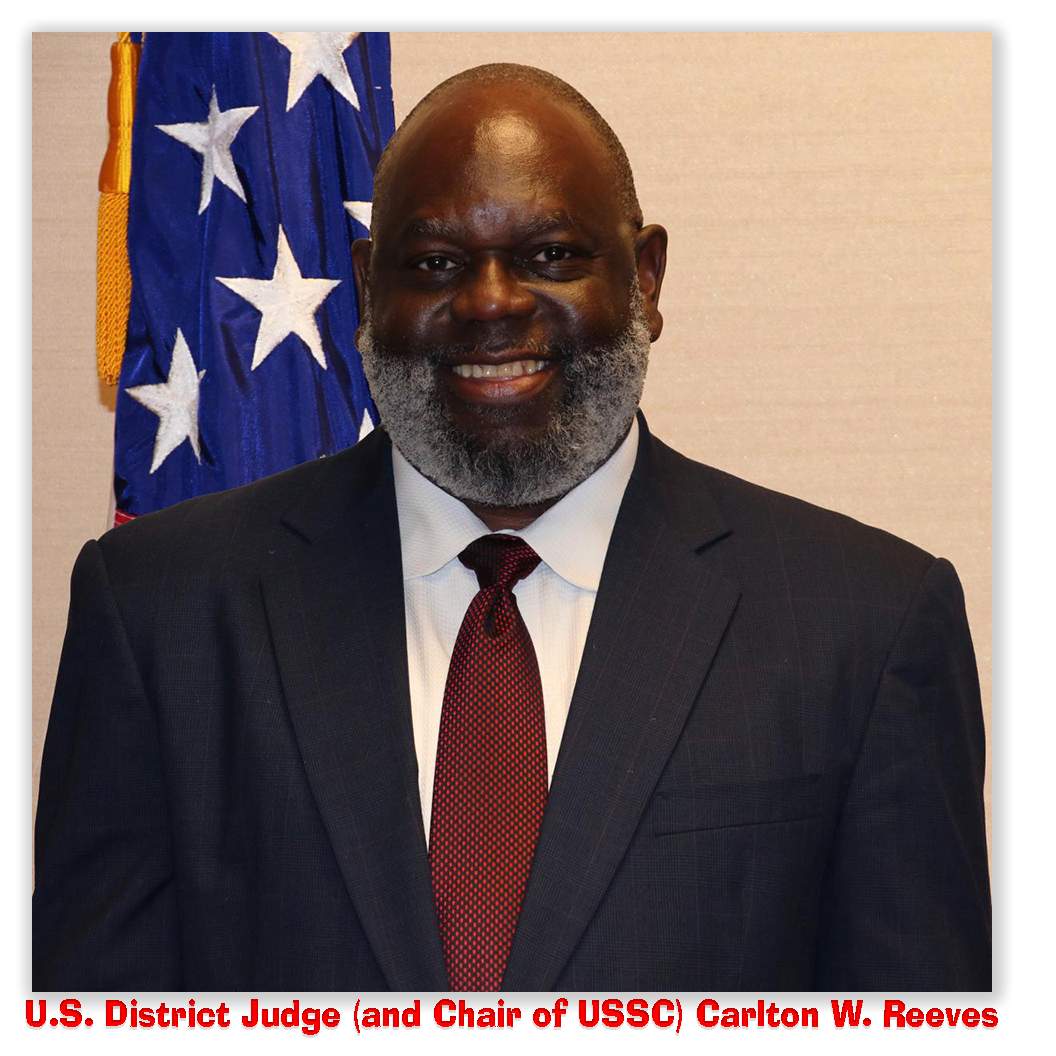
reeves230706United States District Judge Carlton Reeves (Southern District of Mississippi), who happens to also be chairman of the U.S. Sentencing Commission, issued a plea for assistance last week:

I’m writing to ask you for a small favor. Most summers, the Sentencing Commission announces the work we plan to prioritize over the coming year. This summer, to mark the 40th anniversary of the Commission’s creation (and twenty years post-Booker), we’re doing something different. We’re asking people – including you – to tell us what to do this year and in the years to come.

My request is this: please take five minutes of your time to tell the Commission how we can create a fairer, more just sentencing system. Tell us how to revise the Guidelines. Tell us what issues to study or what data to collect. Tell us what workshops to conduct, what hearings to hold, what advisory groups to convene, or what ways the Commission can better serve you. Or even just tell us what big picture issues you’d like us to tackle –or what technical problems you’d like us to look into. Trust me, I know how busy daily lives are, so we’ve made it easy to give us your thoughts.

You can type a paragraph (or even a sentence or two!) into our Public Comment Submission Portal at: https://comment.ussc.gov. If you want to write a letter, you can submit it through the Portal, too, or via snail mail to United States Sentencing Commission, One Columbus Circle, N.E., Suite 2-500, Washington, D.C. 20002-8002, Attention: Public Affairs – Priorities Comment.

The deadline for comments is July 15, 2024.

USSC170511Writing in his Sentencing Policy and Law blog, Ohio State University law professor Doug Berman said last week that “the message from the Commission seems pretty clear: it is prepared to, and is perhaps even eager to, start (re)considering any and all aspects of the federal sentencing system.”

USSC, Proposed Priorities for Amendment Cycle, 89 FR 48029 (June 4, 2024).

USSC, A Request from Judge Carlton W. Reeves, Chair, U.S. Sentencing Commission (June 5, 2024)

Sentencing Policy and Law, US Sentencing Commission sets out broad, general request concerning proposed priorities for 2024 to 2025 amendment cycle (June 6, 2024)

– Thomas L. Root

Sentencing Commission To Take Measure of BOP – Update for August 29, 2023

We post news and comment on federal criminal justice issues, focused primarily on trial and post-conviction matters, legislative initiatives, and sentencing issues.

“HOW ARE WE DOING? PLEASE TAKE THE FOLLOWING SURVEY…

It’s unlikely that the Federal Bureau of Prisons will be asking prisoners that question anytime soon. But someone might.

howwedoing230829At last week’s meeting, the U.S. Sentencing Commission said that in the coming year, it plans to assess how effective the BOP is in meeting the purposes of sentencing listed in 18 USC § 3553(a)(2). Those purposes include the need for the sentence to reflect the seriousness of the offense, to promote respect for the law, to provide just punishment and adequate deterrence, to protect the public and to effectively provide the defendant with needed training, medical care, or other treatment.

The Commission also plans to continue review of how the guidelines treat acquitted conduct for sentencing purposes. The Supreme Court recently denied review in a baker’s-dozen cases asking it to declare the use of acquitted conduct at sentencing to be unconstitutional. Three Justices cited the ongoing USSC study of the issue as a reason to hold off.

Other Commission priorities in the coming year include studying the career offender guidelines, methamphetamine offenses, sentencing differences for cases disposed of through trial versus plea, and sentences involving youthful individuals.

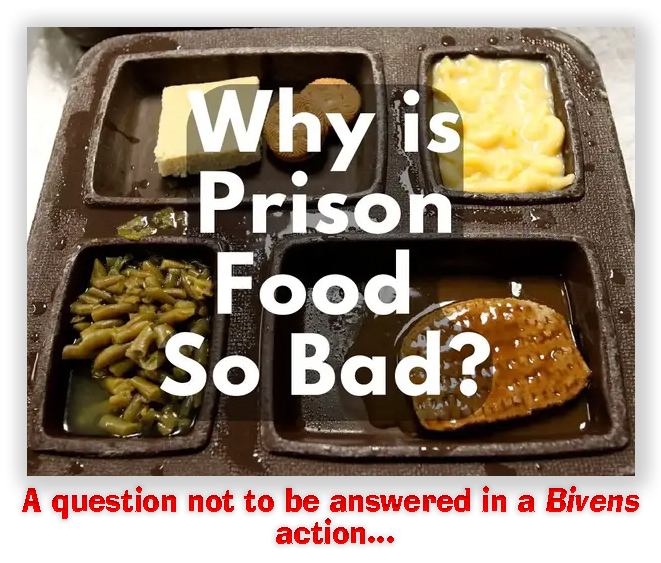
badfood230829Speaking of prisoner satisfaction, inmates should not expect any help if they are unhappy with the chow. Two weeks ago, the 10th Circuit ruled that an inmate claim that the BOP was tampering with the food it served him – in violation of the 8th Amendment’s ban on cruel and unusual punishment – presented a new application of Bivens v. Six Unknown Named Agents of the Federal Bureau of Narcotics. The Circuit said that the existence of alternative remedies (the BOP’s administrative remedy route, no doubt) made a Bivens claim unavailable to the prisoner under last year’s Supreme Court decision in Egbert v. Boule.

Egbert drove a metaphorical legal stake into Bivens‘ heart, as the 10th’s decision in the prisoner food case makes clear. It’s easy enough to cluck one’s tongue over Prisoner Adams’ tainted food claim (like any prison food is edible), but a lot of serious Bivens claims died on Egbert’s hill.

US Sentencing Commission, Final Priorities for Amendment Cycle (August 24, 2023)

Adams v. Martinez, Case No 22-1425, 2023 U.S. App. LEXIS 21369 (10th Cir, August 16, 2023)

Bivens v. Six Unknown Named Agents of Federal Bureau of Narcotics, 403 US 388 (1971)

Egbert v Boule, 142 S.Ct. 1793, 213 L.Ed.2d 54 (2022)

– Thomas L. Root