Tag Archives: DOJ inspector general

BOP Fiddles While Prisons Crumble – Update for May 12, 2023

We post news and comment on federal criminal justice issues, focused primarily on trial and post-conviction matters, legislative initiatives, and sentencing issues.

DOJ INSPECTOR GENERAL SAYS BOP FACILITIES ARE FALLING APART… AND NO ONE KNOWS WHAT TO DO

In a couple of reports issued last week that will surprise few, the Department of Justice Inspector General said the BOP is falling down, and management knows it but pretends otherwise.

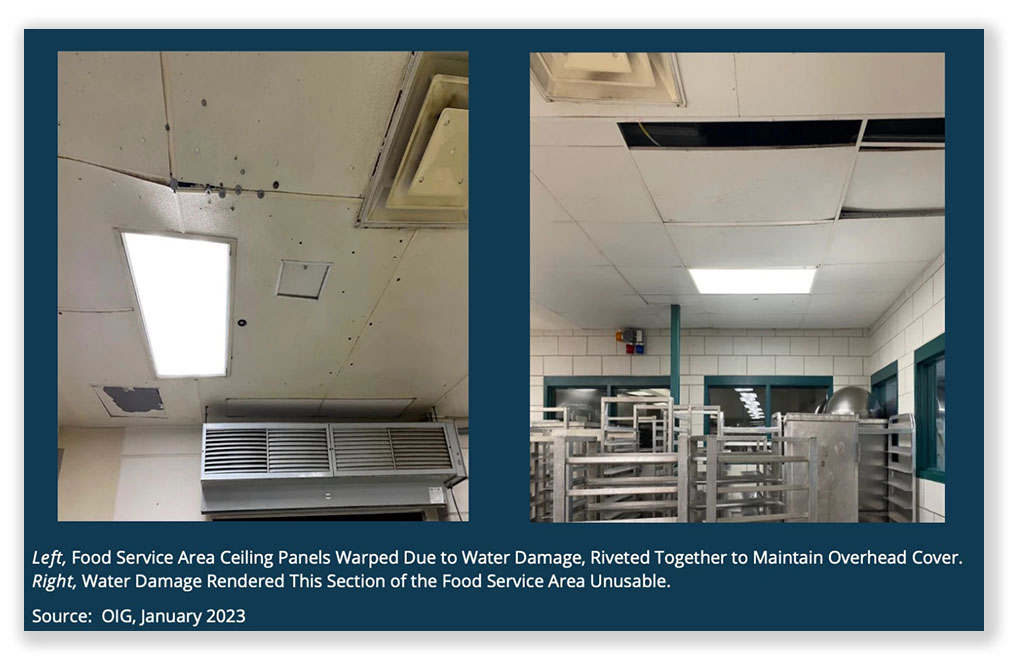
nero230512In the first report, the IG said, “The BOP’s institutions are aging and deteriorating: all 123 of the BOP’s institutions require maintenance, with a large and growing list of unfunded modernization and repair needs, and three of these institutions are in such critical stages of disrepair that they are fully or partially closed.

The report found that the BOP chronically requests much less maintenance money from Congress than it needs. At the same time, Congress has set aside over $1 billion to build two new institutions, “but these funds remain largely unspent, the projects have been in the planning stages for over a decade, and the BOP’s requests each year that Congress cancel one of these projects and rescind the funds—made at the direction of the Department of Justice and the Office of Management and Budget—have not been acted on.”

The second report is more damning. Because of operational deficiencies at USP Atlanta and MCC New York (since closed), the IG set out to “assess how critical issues at BOP institutions are identified, communicated to BOP Executive Staff, and remediated.”

But the BOP Executive Staff told the IG “they had been largely aware of the long-standing operational issues at USP Atlanta and MCC New York and expressed confidence in the BOP’s existing mechanisms to communicate information about operational issues.” In light of the fact the staff knew all about the messes in New York and Atlanta but had done nothing about them, the IG “modified the scope of this review… to focus on [the] causes and the scope of the challenges, their effects on institutional operations, and the Executive Staff’s efforts to remedy them.”

dogandpony230512The IG found that BOP internal audits of facilities were not reliable because everyone knew when the audits were to happen and, predictably enough, put on a ‘dog-and-pony’ show for the inspectors. “Executive Staff members questioned whether the BOP’s overwhelmingly positive enterprise-wide audit ratings reflected actual institution conditions,” the report said. “Validating this concern, we found that the USP Atlanta internal audit conducted in January 2020 rated USP Atlanta’s inmate management efforts as Acceptable despite identifying numerous significant issues.”

Also, the report said, the BOP’s internal investigative staff has insufficient, resulting in a “substantial backlog of unresolved employee misconduct cases.” Not only does the BOP lack adequate staff the IG found, it doesn’t even know “whether the number of staff it represents as necessary to manage its institutions safely and effectively is accurate.”

Finally, the BOP’s “inability to address its aging infrastructure as a foundational, enterprise-wide challenge [limits] its ability to remedy institution operational issues.” In other words, the agency does not have a coherent maintenance plan, but rather just tries to fix problems when they get too serious, resulting in “increasing maintenance costs and, in the most extreme circumstances, having to shutter institutions and relocate inmates because needed maintenance and repairs have resulted in unsafe conditions.”

"Do you miss me yet?" No...
“Do you miss me yet?” No…

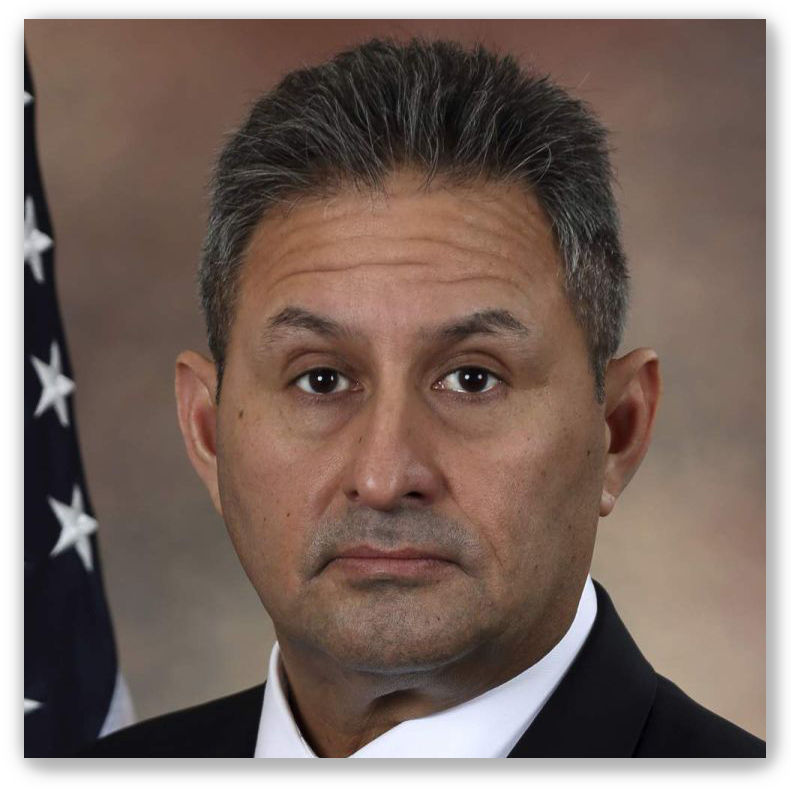
In a written response to a draft of this report, the unlamented former BOP Director Michael Carvajal said the challenges discussed in this report were “long-established” prior to his February 2020 appointment. He added that the executive staff “acknowledged and made attempts to address these issues in some fashion, although they may not have been corrected or completed for various reasons.” Conveniently omitting the fact that in his 30-year tenure with the BOP, he had been everything from a correctional officer to a lieutenant, a captain, a correctional services administrator, an associate warden, a warden, a regional director and Assistant Director in Washington, D.C., Carvajal whined that his appointment and two-year tenure coincided with the onset of COVID-19 and that “responding to the pandemic ‘required prioritization of resources behind life safety’.”

DOJ, The Federal Bureau of Prisons’ Efforts to Maintain and Construct Institutions, Rpt No 23-064 (May 3, 2023)

DOJ, Limited-Scope Review of the Federal Bureau of Prisons’ Strategies to Identify, Communicate, and Remedy Operational Issues, Rpt No 23-065 (May 4, 2023)

BOP, BOP Director Announces Plans to Retire (January 5, 2022)

– Thomas L. Root

DOJ Kicks Post-CARES Act Can Down the Road (A Little) – Update for April 7, 2023

We post news and comment on federal criminal justice issues, focused primarily on trial and post-conviction matters, legislative initiatives, and sentencing issues.

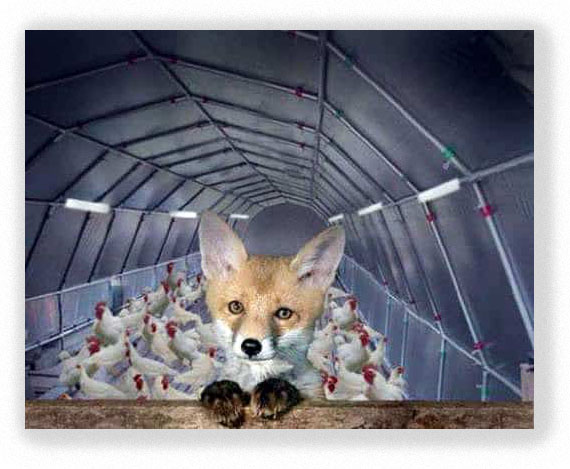
BOP FOX SHOULD GUARD HOME CONFINEMENT HENHOUSE, DOJ SAYS

fox230131Remember when the Trump Administration made that minute-to-midnight announcement that the end of CARES Act home confinement would mean that all those prisoners placed at home would have to return to prison?

Thankfully, the flawed Dept of Justice Office of Legal Counsel opinion was later withdrawn by the Biden Administration. But when a new OLC opinion supplanted the old, the reversal wasn’t total. Rather, DOJ said that some might return, but that would be governed by rules yet to be promulgated.

(Explainer: Under the March 2020 CARES Act, Congress gave the Director of the Federal Bureau of Prisons the authority to send inmates to home confinement at any time, despite the 6-month/10% limitation on home confinement set by 18 USC § 3624(c). The conditions set by the legislation were only two: (1) the national emergency declared because of COVID-19 had to be in effect, and (2) the Attorney General had to determine that COVID-19 was materially affecting BOP operations.)

As an old Administrative Procedure Act hand, I was relieved. “Rules” suggested regulations written after a classic 5 USC § 553 notice-and-comment formal rulemaking. Everyone could argue the merits and demerits of whatever standards were proposed, and the Bureau of Prisons would subsequently be compelled under the Accardi doctrine to follow the rules (something the BOP too often ignores where its own informal rules, policies and program statements are involved).

Last Tuesday, the rulemaking announced last June ended with a detailed report and a new subpart to the BOP’s delegation rule, 28 CFR §0.96.  The new rule, which will affect slightly more than 3,400 people (because the agency is still sending people to CARES Act home confinement for another month), adds a subpart (u), which, alas, contains no substantive limitation on the BOP’s discretion. That, we are promised, is to come.

can230407The can just got kicked down the road.

DOJ says the final rule, reduced to its essence, provides that “the [DOJ] and the [BOP] will work together to develop guidance to explain objective criteria the Bureau will use to make individualized determinations as to whether any inmate placed in home confinement under the CARES Act should be returned to secure custody. Providing the Bureau with discretion to determine whether any inmate placed in home confinement under the CARES Act should return to secure custody will bolster the Bureau’s ability to efficiently manage its resources and nimbly address changing circumstances in the community, in relation to the needs and profiles of individual inmates.”

The BOP? Nimble? If that’s the case, Joe Biden can compete against Simone Biles.

nimble230407Still, DOJ’s report acknowledges that “under typical circumstances, inmates who have made the transition to home confinement would not be returned to a secure facility absent a disciplinary reason. This is because the typical purpose of home confinement is to allow inmates to readjust to life in the community. Removal from the community of those already making progress in home confinement would frustrate this goal, and the widespread return of prisoners to secure custody without a disciplinary reason would be unprecedented and out of step with the reentry-specific goals of home confinement, as mentioned throughout this final rule.”

(My emphasis, not the report’s).

Reuters interpreted the report as directing that “[t]he BOP will still be able to impose ‘proportional and escalating sanctions,’ including a return to prison, on inmates who commit infractions.”  But the report does not exactly say that, and the contents of the report itself do not limit the BOP’s management of CARES Act home confinees at all.  Any such limitations are coming – if at all – in subsequent policy memos and program statements.

Two sets of fun facts are contained in the DOJ report adopting the rule. First, as Ohio State University law professor Doug Berman noted in his Sentencing Law and Policy blog, between March 26, 2020, and January 23, 2023, the BOP placed 52,561 inmates in home confinement. As of January 23, there were 5,597 inmates in home confinement, and 3,434 of those were CARES Act people.

The second has to do with money. Contrary to the oft-repeated inmate trope that the BOP makes money by keeping inmates locked up (something that only be believed if you simultaneously pay your Flat Earth Society dues), keeping people in prison is expensive. The DOJ noted:

Moneyspigot200220Supervision of inmates in home confinement is also significantly less costly for the Bureau than housing inmates in secure custody. In Fiscal Year (“FY”) 2019, the cost of incarceration fee (“COIF”) for a Federal inmate in a Federal facility was $107.85 per day; in FY 2020, it was $120.59 per day. In contrast, according to the Bureau, an inmate in home confinement costs an average of $55.26 per day—less than half the cost of an inmate in secure custody in FY 2020.

Only the government could manage to spend $55.00 a day to keep someone in their own house eating their own food and paying their own bills. Anyone wonder how we have a national debt of over $31 trillion?

Office of the Attorney General, Department of Justice,
Home Confinement Under the Coronavirus Aid, Relief, and Economic Security (CARES) Act (88 FR 19830, April 4, 2023)

Sentencing Law and Policy, Justice Department formally gives BOP discretion to decide who moved to home confinement during pandemic will be returned to federal prison (April 4, 2023)

Reuters, US rule to allow some inmates to stay home after COVID emergency lifts (April 4, 2023)

– Thomas L. Root

“What We Have Here…” – Update for October 27, 2022

We post news and comment on federal criminal justice issues, focused primarily on trial and post-conviction matters, legislative initiatives, and sentencing issues.

… IS A FAILURE TO COMMUNICATE


failuretocommunicate221027We Should Have Told You It Would Be On the Test:
If email is any indication, not only did Federal prisoners receive First Step Act earned-time credits applied well after the credits were promised, but what was delivered was well short of what was reasonably anticipated.

Writing in Forbes last week, Walter Pavlo reported that although BOP Director Colette Peters told the Senate Judiciary Committee during her September 28 testimony that the agency’s new “auto-calc” program was already up and running, “it was not until the week of October 3rd that FSA credits started to be applied. As one prisoner told me, ‘I was expecting a year of credits and I got 4 months. I have no idea what happened’.”

Pavlo said that “what happened is that the calculator still has errors in it. Prisoners who were transferred to a halfway house after receiving an interim calculation of their sentence, were called in and told they would be returning to prison after the new calculation took away their year.”

Pavlo wrote, “One of the main factors that seems to be causing issues is that federal prisoners were told to complete a needs assessment survey when they first entered prison. The survey was part of the FSA in that it was meant to provide an assessment of the types of programs, needs, that the prisoner would address while in prison. The assessment was to be done on-line through an internal computer terminal that prisoners use for email communications with their families… What prisoners were not told was that the survey’s completion was a requirement to initiating the FSA credits. All of the prisoners I spoke to stated that they were never told of the survey’s importance nor could I find information about this in the FSA nor in any directive given to prisoners.”

Pavlo’s report is consistent with email complaints I have gotten from prisoners that no one ever suggested that the needs surveys served any necessary purpose.

Pavlo quoted Emery Nelson of the BOP is quoted as saying, “Completion of the self-assessment survey is only one factor which determines when an inmate begins earning FSA time credits.”

We’re Not Listening to You: The DOJ Office of Inspector General told BOP Director Colette Peters two weeks ago about an aspect of its recent investigation into sexual abuse of inmates by BOP employees that it found troubling.

dontbelieve221027“These concerns arose when the OIG recently inquired of the BOP’s Office of Internal Affairs (OIA)… about a disciplinary action taken by the BOP following an OIG investigation of alleged sexual abuse by a BOP employee. In response to our inquiry, we were told by OIA that, in cases that have not been accepted for criminal prosecution, the BOP will not rely on inmate testimony to make administrative misconduct findings and take disciplinary action against BOP employees, unless there is evidence aside from inmate testimony that independently establishes the misconduct…”

OIG told Director Peters that BOP’s refusal to rely on inmate testimony to make misconduct findings in administrative matters “is inconsistent with the fact that such testimony is fully admissible in criminal and civil cases, and creates significant risks for the BOP in its handling of administrative misconduct matters. Inmate testimony alone has been found sufficient, and with corroborating evidence is often found sufficient, to support criminal convictions of BOP employees, where the evidentiary standard is proof beyond a reasonable doubt. In short, inmates are not disqualified from providing testimony with evidentiary value in federal courts, and there is no valid reason for the BOP to decline to rely on such testimony… where the evidentiary standard is the preponderance of the evidence. In addition, the OIG found that in the context of sexual misconduct cases, BOP policy and federal regulations, specifically those DOJ regulations implementing the Prison Rape Elimination Act (PREA), require the credibility of an alleged victim to be assessed on an individual basis and not be determined by the person’s status as an inmate.”

After the OIG provided the Bureau of Prisons with a draft of its report, BOP quickly denied that it had ever said it didn’t believe inmates as a matter of policy.  The Inspector General was unimpressed:

However, contrary to this assertion, the statements made by the OIA to the OIG as reflected in this memorandum were made by OIA on multiple occasions. Moreover, as described later in this memorandum, we found that in cases where the OIG substantiated BOP employee misconduct relying on inmate testimony the OIA has, on more than one occasion, sent less serious findings to the BOP’s Employment Law Branch (ELB) and the BOP institution where the subject employee works.

So now who doesn’t believe whom?

Forbes, Bureau Of Prisons’ Failure To Communicate First Step Act (October 15, 2022)

DOJ Office of Inspector General, Notification of Concerns Regarding the Federal Bureau of Prisons’ (BOP) Treatment of Inmate Statements in Investigations of Alleged Misconduct by BOP Employees (October 12, 2022)

– Thomas L. Root