Tag Archives: BOP

A Short Rocket of BOP News – Update for July 24, 2025

We post news and comment on federal criminal justice issues, focused primarily on trial and post-conviction matters, legislative initiatives, and sentencing issues.

LAST WEEK AT THE BUREAU OF PRISONS

You’d think that the sole focus of the Federal Bureau of Prisons in the last week had been how to produce celebrity prisoner Ghislaine Maxwell for a Congressional deposition. But from Duluth to Alcatraz, there was a lot else going on as well. Here’s the short rocket…

Marshall Establishes FSA Task Force:   Bureau of Prisons Director William K. Marshall III announced the established of an FSA Task Force at the BOP’s Grand Prairie, Texas, Designation and Sentence Computation Center.

Marshall cited inmate “frustration that their paperwork for home confinement under the First Step Act (FSA) wasn’t being processed by staff despite Director Marshall’s directive to maximize the use of community placement. But at the same time, the staff told [Marshall] that the systems they rely on weren’t always showing the right dates… The majority of staff were doing their best with the information they had, but, unfortunately, they were taking the blame from inmates and families who thought they were dragging their feet. That wasn’t fair to them.”

The task force will identify prisoners in halfway houses who are eligible for home confinement; manually calculate home confinement dates that “stack[] both the FSA and Second Chance Act;” and ‘[r]eview eligible incarcerated individuals inside institutions for additional community placement opportunities.”

Writing in Forbes, Walter Pavlo said, “Having a person serve a portion of their sentence in the community is not something new and has been used for decades by the BOP. However, the Agency has been slow to move inmates after the [First Step Act] was codified… in January 2022. The initiative is part of Director Marshall’s broader strategy of “Leadership in Action,” which has included institutional walk-throughs, direct engagement with frontline staff, and timely operational changes based on what he hears.”

BOP, Director Marshall Launches FSA Task Force (July 14, 2025)

Forbes, Bureau of Prisons Launches First Step Act Task Force (July 14, 2025)

Alcatraz Moves Forward:  Never mind that the price tag has blown through $2 billion to renovate a prison closed for 60 years that only houses 325 prisoners and has no water supply. A visit to Alcatraz Island in San Francisco Bay last week by Attorney General Bondi, Dept of the Interior Secretary Doug Burgum, Marshall, and BOP Deputy Director Joshua J. Smith makes it clear that President Trump’s May musings on social media that he wanted to reopen Alcatraz as a federal prison to “house America’s most ruthless and violent offenders” and remove criminals “who came into our country illegally,” is going to happen.

A BOP press release underscores that reopening Alcatraz is pure symbolism, the fevered dream of President Trump: “Reopening Alcatraz isn’t just about a building, it’s about sending a message: crime doesn’t pay, and justice will be served. If feasible, Alcatraz will stand as a beacon of American resolve, where the most dangerous offenders face accountability. For the public, it’s a promise fulfilled—a stronger, safer America. And for President Trump, it’s a project that will make our nation proud.”

Alcatraz was closed as a maximum-security prison in 1963 after 29 years of operation, because it was too expensive to continue operating. Now managed by the National Park Service, the island is one of San Francisco’s most popular tourist destinations.

BOP, The Rebirth of Alcatraz (July 17, 2025)

NY Times, Trump’s Plan to Reopen Alcatraz Appears to Move Forward With Officials’ Visit (Jul 17)
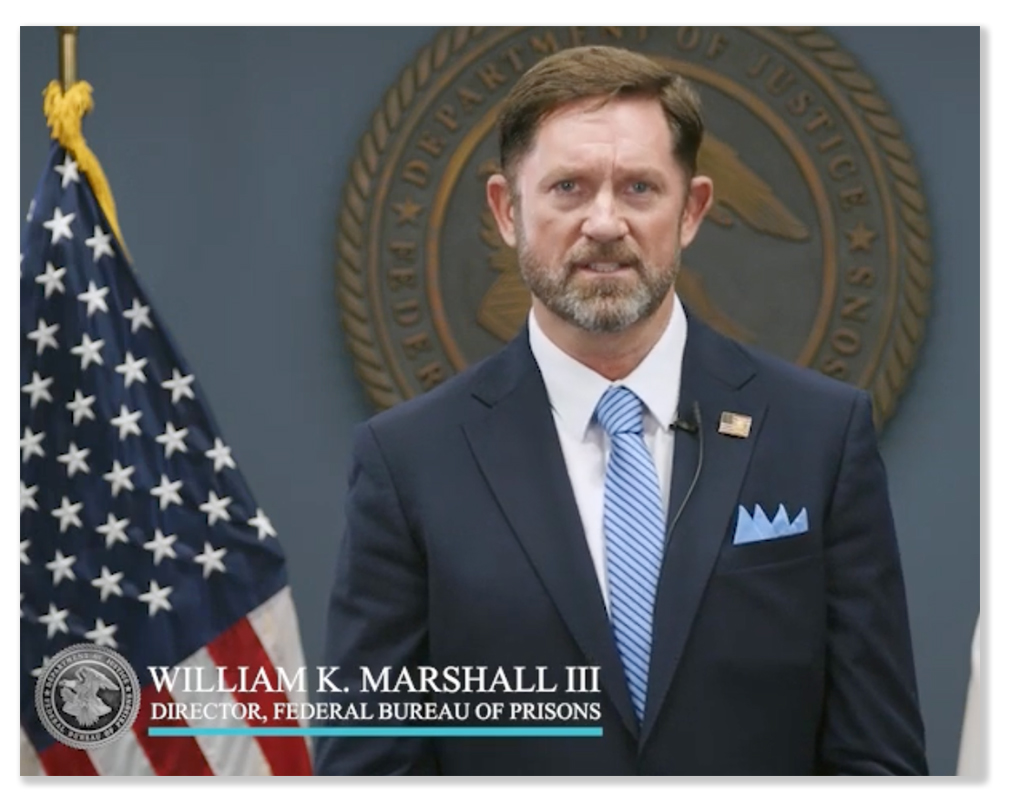
FPC Duluth to Remain Open: Seven months after the then-BOP Director Colette Peters listed FPC Duluth with six other facilities that would be closed because of “aging and dilapidated infrastructure,” new BOP boss William K. Marshall III announced last week after a site inspection that the minimum-security camp “will not be deactivated.”

Currently, there are only about 258 inmates remaining at the facility, but officials anticipate repopulating the camp to its rated capacity of about 800 prisoners. The camp is located on the grounds of the former Duluth Air Force Base.

Minnesota Public Radio, Duluth prison camp to remain open, reversing earlier decision to ‘deactivate’ the facility (July 16, 2025)

ICE Sending Immigrant Detainees to FDC Honolulu, Proposes Using Fort Dix: Under normal circumstances, scoring an all-expenses-paid trip to Hawaii would be a Wheel of Fortune moment.  But these are not normal circumstances.

It turns out that over 70 immigrant detainees, some from as far east as Florida, are being flown to imprisonment at the Federal Detention Center in Honolulu.

The Honolulu Civil Beat quoted one immigration lawyer as saying that a client “was taken into custody in Florida and went to two detention centers there before he was transferred to Louisiana, Arizona and two facilities in California before finally coming to Hawaiʻi.” Attorneys are complaining that the endless moves and distances make consultation with their clients almost impossible.

Homeland Security Secretary Tom Homan said over the weekend that 60,000 immigrants are currently in custody, with plans for 40,000 more.

Still, air conditioning in the Aloha State may be better than a tent in the South Jersey heat. Last week, Secretary of Defense Pete Hegseth approved the use of Joint Base McGuire-Dix-Lakehurst, where FCI Fort Dix is located, to confine immigrants. The Defense Department said detainees would be confined in “temporary soft-sided holding facilities,” suggesting for now that facilities at the aging FCI Fort Dix – located on base grounds – will not be used.

Honolulu Civil Beat, ICE Is Moving Immigrants Arrested On The Mainland To Honolulu (July 16, 2025)

Philadelphia Inquirer, Trump administration plans to hold immigration detainees on South Jersey military base (July 18, 2025)

~ Thomas L. Root
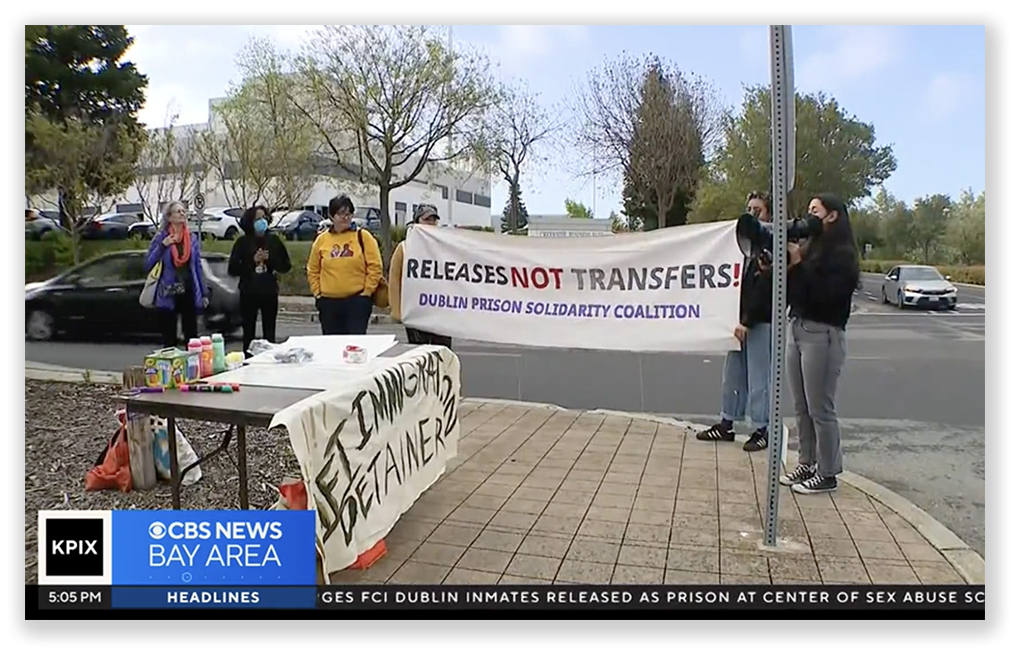
FCI Dublin Is A Neverending Shop of Horrors – Update for July 18, 2025

We post news and comment on federal criminal justice issues, focused primarily on trial and post-conviction matters, legislative initiatives, and sentencing issues.

SAME OL’ SAME OL’, DUBLIN SPECIAL MASTER TELLS COURT

The female prisoners who were subject to sexual abuse at FCI Dublin and whose treatment by the BOP is still be monitored by US District Court for the eastern District of California are still complaining of being sexually assaulted, retaliated against and not getting medical care at more than a dozen federal facilities across the country, according to a report filed by Wendy Still, appointed special master by the court to monitor BOP compliance with the lawsuit’s settlement agreement.

Still, the former chief Alameda County probation department officer, is monitoring the former Dublin inmates with a team that includes a doctor, nurse and a prison rape expert.

“The report found significant deficiencies and affirms much of what survivors of BOP already know,” Kara Janssen, an attorney at Rosen, Bien, Galvan and Grunfeld, told KTVU-TV. “That the problems that came to light at FCI Dublin were symptoms of larger, systemic problems throughout BOP.”

The report, the first monthly report to be issued (covering April 2025), chronicled continued sex abuse, lack of medical care, and retaliation being experienced by former Dublin alums spread throughout the BOP system that began even as they were moved from Dublin in an evacuation under the nose of the District Court that made Saigon in April 1975 look orderly.

Still’s authority to assess BOP care came as part of a 2023 class action lawsuit and subsequent consent decree filed on behalf of about 600 incarcerated women at FCI Dublin, where 10 correctional officers have now been charged with sex crimes; seven of them so far have been found guilty, convicted and sentenced to prison themselves.

There are 305 women in the lawsuit class who are still incarcerated in 15 BOP prisons across the country.

The report’s findings include, for example:

Unprofessional and retaliatory behavior has also been reported on the part of medical providers, nurses, and emergency medical technicians. Providers have been reported to tell Class Members they should feel lucky they are getting care since they are illegal aliens or criminals. Shockingly, it is alleged that providers have also told Class Members that they should not expect special care because they are from “Dublin” and that no amount of “whining to lawyers” will get them care more expeditiously. Lastly, it is not clear that front line providers have retained professional independence and as a result, there appear to be instances when facility protocols or directive outweigh clinical professional judgement.

Meanwhile, the hits surrounding the FCI Dublin “rape club” just keep on coming. On June 26, former BOP employees Jeffrey Wilson and Lawrence Gacad became the ninth and tenth FCI Dublin employees to be charged, charged in the sexual abuse scandel that led to Dublin’s closure in 2024.

KTVU, Sex assault, retaliation complaints still persist across U.S. prisons, special master finds in 1st report (July 2, 2025)

Public Monthly Status Report For Rating Period March 31, 2025 – April 30, 2025, California Coalition for Women Prisoners v FBOP Consent Decree, Case No 4:23-cv-04155  (ND Cal, released June 30, 2025)

Thomas L. Root

BOP’s ‘Big, Beautiful’ Budget – Update for July 17, 2025

We post news and comment on federal criminal justice issues, focused primarily on trial and post-conviction matters, legislative initiatives, and sentencing issues.

MONEY, THAT’S WHAT I WANT

Slate magazine published a piece a week ago complaining that “the Trump administration has thrown the lives of incarcerated people into chaos—especially the more than 150,000 people under the jurisdiction of the Federal Bureau of Prisons.”

Slate admitted that the BOP’s crisis has been “long-standing,” with issues ranging from crumbling infrastructure to sexual assault to severe staffing shortages. However, Slate argued, “incarcerated people and BOP experts say that in just a few short months, the Trump administration has exacerbated this crisis. He has implemented major pay cuts, issued confusing and short-sighted orders, directly targeted vulnerable incarcerated populations, and haphazardly slashed funding for crucial initiatives.”

The Slate article hit the streets only a day after Trump signed the Big Beautiful Bill Act (HR 1)  which passed Congress by the thinnest of margins. But it turns out that the bill may undercut any of the damage that Slate has laid at the President’s feet.

Last week, BOP Director William K. Marshall III issued a video message to staff in which he noted that HR1 “provides $3 billion in staffing support over several years… for hiring of new staff and the salary and benefits for current employees “as well as “”funding for training which will address a critical need of our employees.” The $3 billion will be spread over five years “which equates to approximately $600 million a year through Sep 30, 2029.”

The BBB also provides $2 billion “for the maintenance and repairs” of BOP facilities, which carry a price tag of almost $3 billion but a maintenance budget – before BBB – of about $150 million. Marshall said the $2 billion will be used to “tackle major repair projects that prioritize those that involve life safety security and operational agency. It is a major step forward in reducing the maintenance backlog and enhancing our facilities to meet the standards we expect in our own homes…”

The BBB’s $5 billion is a one-shot funding that will expire September 30, 2029. However, money to meaningfully address crumbling infrastructure and full staffing – which should lead to ending the frequent lockdowns and augmentation that disrupts programming – may benefit prisoners as much as it does staff.

Slate, A Surprise Target of Trump’s Cutbacks Is Devastating One Specific Population (July 5, 2025)

BOP, Director’s Message (July 11, 2025)

HR1, The Big Beautiful Bill Act (July 4, 2025)

Thomas L. Root

Horowitz Leaves DOJ Inspector General Post – Update for July 11, 2025

We post news and comment on federal criminal justice issues, focused primarily on trial and post-conviction matters, legislative initiatives, and sentencing issues.

BOP INMATES LOSE A CHAMPION

DOJ Inspector General Michael Horowitz, one of the only federal government inspectors general to survive President Trump’s January purge, has left his position to become IG of the Federal Reserve.

Bloomberg Law reports that Horowitz’s departure “has former officials and lawyers worried that an era of robust, independent oversight of law enforcement is ending at the worst possible moment.”

Horowitz’s successor will face a growing pile of complaints seeking probes into top DOJ officials and White House efforts to shrink the IG’s budget by 28%. As the DOJ’s largest agency by employees and the second largest by budget (next to the US Attorneys’ offices), the BOP has drawn substantial oversight from Horowitz. Well before the Federal Prison Oversight Act passed, mandating regular inspections of BOP facilities, Horowitz began sending teams to prisons for surprise audits. The IG’s office added detail and official gravitas to many of the complaints that inmates have lodged for years.

Some in the IG and whistleblower communities told Bloomberg Law that they hope Horowitz’s veteran deputy,  William M. Blier, takes over the iG office and maintains “the office’s reputation for bipartisan accountability.” Blier is running things for the time being, but some fear that a new appointee will be a puppet.

“Mr. Horowitz personified a public servant who followed the evidence wherever it led, regardless of political party,” said Tom Devine, legal director at the Government Accountability Project, which represents whistleblowers cooperating with the IG’s office. “He will be sorely missed because he will be the last credible official source of factfinding at the Department of Justice.”

Bloomberg Law, Veteran DOJ Watchdog’s Exit Spurs Fears of Lax Trump Oversight (June 27, 2025)

– Thomas L. Root

Inspector General Blasts BOP Use of Restraints – Update for July 8, 2025

We post news and comment on federal criminal justice issues, focused primarily on trial and post-conviction matters, legislative initiatives, and sentencing issues.

RESTRAINTS KILL, MAIM INMATES THROUGH IMPROPER USE, IG SAYS

The Dept of Justice Office of Inspector General reported in a memorandum last week that BOP policies governing the use of physical restraints on inmates are inadequate.

BOP policy allows the use of restraints to gain control of disruptive inmates, ranging from ambulatory restraints that allow limited freedom of movement to four-point restraints and waist chains that render prisoners immobile from the neck down. Policy dictates that restraints are to be used only as a last resort and never as a method of punishment.

A 2022 Marshall Project/NPR investigation uncovered restraint abuses at USP Thomson. “Specifically,” the report said, “many men reported being shackled in cuffs so tight they left scars, or being ‘four-pointed’ and chained by each limb to a bed for hours, far beyond what happens at other prisons and in violation of bureau policy and federal regulations.” A subsequent  Marshall Project/NPR investigation last December reported on dozens of similar restraint abuse allegations of prolonged shackling and abuse at USP Lee.

The IG said it had received “numerous allegations every year regarding abuse, mistreatment, or injury of inmates in connection with the use of restraints, including four-point restraints.”  Between August 2022 and August 2023, complaints about four-point restraints alone numbered in the “dozens.”

Multiple complaints alleged inmates “suffered nerve damage or other long-term injuries due to the prolonged use of restraints. For example, one inmate suffered long-term scarring and was provisionally diagnosed with carpal tunnel syndrome due to ongoing complaints of wrist numbness after being held in four-point restraints for over 3 days…” The IG said, “[A]nother inmate suffered severe injury requiring the amputation of part of the inmate’s limb after being held in a combination of ambulatory restraints and a restraint chair for over 2 days.”

“The inmate’s injury worsened to the point of needing hospitalization and amputation despite medical checks occurring at time intervals that complied with policy,” the memo stated. “The medical checks were completed by different medical staff who did not discuss the progression of the inmate’s injuries between shifts, and there were no photographs or video recordings to document that a medical check was actually performed and to show the progression of the inmate’s injuries.”

In another case, the IG said, a prisoner was “placed in a restraint chair with restraints on both wrists and both ankles for more than 2 days and then, less than 2 hours after being released from restraints, sprayed by BOP staff with pepper spray following an alleged altercation with a cellmate and placed back in the restraint chair for another approximately 5 hours until being discovered unresponsive.” The autopsy listed the cause of death as “Vaso-Occlusive Crisis due to Sickle Cell Disease Complicating Oleoresin Capsicum Use and Prolonged Restraint Following Altercation.”

The memo recommended improving guidelines and training on the use of restraints, strengthening reporting requirements, and requiring audio and video recording of health checks of inmates in restraints.

DOJ Inspector General, Notification of Concerns Regarding the Federal Bureau of Prisons’ Policies Pertaining to the Use of Restraints on Inmates (June 30, 2025)

The Marshall Project and NPR, How the Newest Federal Prison Became One of the Deadliest (May 31, 2022)


Thomas L. Root

Less than Meets the Eye – Update for June 30, 2025

We post news and comment on federal criminal justice issues, focused primarily on trial and post-conviction matters, legislative initiatives, and sentencing issues.

A TRULY SHORT STACK

A week ago, I reported that BOP Director William K. Marshall III had announced the dawning of a new day in the use of First Step Act credits (FTCs) and the Second Chance Act. Among his several promises was that his new policy “ensures that FSA Earned Time Credits and SCA eligibility will be treated as cumulative and stackable, allowing qualified individuals to serve meaningful portions of their sentences in home confinement when appropriate.”

It turns out that the new memo doesn’t exactly say “cumulative and stackable”. Instead, it directs that “[i]n addition to FTCs for those individuals who have earned less than 365 days of FTCs, staff must also consider adding up to an additional 12 months of prerelease time under the SCA, based on the five-factor review.”

Under the heading “The Rules Are Clear,” a number of institutions last week issued guidance that doubled down on the memo. The “guidance” stated, “For individuals who have earned less than 365 days of FSA time credits towards supervised release, staff must also consider adding up to an additional 12 months of pre-release time under the SCA based on the five-factor review. The FSA Time Credit Worksheet for time under the SCA defaults to and will remain “zero” until your Unit Team inputs the pre-release time as determined based on the five-factor review. The number will range from zero to 12 months.”

Notwithstanding the heading, the only thing “clear” in all of this is the implication that, despite what the Director said, people who have more than 365 FTCs to be used toward prerelease custody will probably not be getting any SCA time whatsoever.

Practically speaking, no one with a sentence of under 46 months will earn any FTCs that go to prerelease custody. That’s because it is only mathematically possible to earn 365 days in a sentence of that length, after being adjusted for good time granted under 18 USC § 3624(b). All of the 46-monthers’ FTCs will be used up in cutting their sentences by 12 months. It will take a sentence of at least 74 months before a prisoner has accumulated more than 365 additional FTCs to be used toward more halfway house or home confinement. So the people with the most time – more than 74 months – being the ones most likely to benefit from the stacking, who will feel the impact of the non-stacking “stacking.”

Much of the problem arises from the tension between First Step and the SCA. Under the “five-factor review” (set out in 18 USC § 3621(b)), inmates are placed in halfway house not as a reward but rather because they need the prerelease custody time to give them “a reasonable opportunity to adjust to and prepare for the reentry.” 18 USC § 3624(c). First Step, on the other hand, treats halfway house/home confinement as a reward for earning FTCs. There’s nothing wrong with either approach, but the problem comes in mixing the two: despite all the fine talk about time being “cumulative and stackable,” the five-factor review applied to someone who is already entitled to 12 months in a halfway house as an incentive under the FSA is very unlikely to need any more than that amount of time there to have “a reasonable opportunity to adjust to and prepare for the reentry.”

The “five-factor review” will and probably should disqualify anyone with 12 months of prerelease custody under the FSA from any additional SCA prerelease time. If 12 months in a halfway house isn’t enough to prepare an inmate for release into the community, then (1) he or she probably is not rated as having a low chance of recidivism to begin with, and thus is ineligible to use any accumulated FTCs; and (2) will not make it in society once released.

I got email from an inmate last week denouncing the institutional guidance as “a very inmate-unfriendly interpretation of how FSA and SCA interact (despite the FSA saying time limits on SCA don’t apply and that FTCs should be in addition to other incentives).” But SCA halfway house was never meant to be an incentive, but rather was intended to be a tool for people who needed the transition time and services of a halfway house.

For now, the Director’s new policy suggests that we’ll see a lot more FSA prerelease time served on home confinement. That’s probably good for the BOP and prisoner alike. However, despite the “stackable and cumulative” talk, there is little reason to think that the “five-factor review” will result in stacked FSA and SCA prerelease custody time than it did before.

BOP, Bureau of Prisons Issues Directive to Fully Implement First Step Act and Second Chance Act (June 17, 2025)

BOP, Memorandum on Use of Home Confinement as a Release Option (June 17, 2025)

BOP, Home Confinement and Pre-Release Placement Updates (June 25, 2025)

– Thomas L. Root

Federal Judge Blocks New BOP Transgender Policy – Update for June 13, 2025

We post news and comment on federal criminal justice issues, focused primarily on trial and post-conviction matters, legislative initiatives, and sentencing issues.

JUDGE BLOCKS BOP TRANSGENDER ORDER FOR NOW

The Supreme Court yesterday handed down three cases of interest to prisoners and their families, and a District of Columbia judge laid the leather to a class action against the Federal Bureau of Prison’s handling of FSA credits. All of that must wait until the weekend for me to digest and write about. For now, I have a decision to write about from last week, in which a federal judge ruled that the BOP cannot withhold gender-transition medical care from inmates identifying as transgender.

Under an Executive Order that President Trump signed on January 20th, the BOP was ordered to withhold any accommodations – from surgery and hormone therapy to access to gender-specific underwear and other commissary items – previously provided to inmates identifying as transgender.

In a 36-page-opinion, US District Judge Royce C. Lamberth (U.S. District Court for the District of Columbia) granted a preliminary injunction against enforcement of the Executive Order and assigned class-action status to the lawsuit, brought on behalf of an estimated 1,028 BOP inmates who are diagnosed with gender dysphoria, a disorder caused by a mismatch between their assigned gender and their perceived gender. The preliminary injunction will remain in place while attorneys for the ACLU and the Transgender Law Center pursue a lawsuit challenging Trump’s executive order.

The Judge wrote that BOP rules adopted in response to the Executive Order seemed likely to be found to be “arbitrary and capricious” in violation of 5 USC § 702(6) and the 8th Amendment. The judge ordered the BOP to continue providing hormone therapy to transgender people as needed, and to restore access to social accommodations such as hair removal, chest binders and undergarments. “The BOP may not arbitrarily deprive inmates of medication or other lifestyle accommodations that its own medical staff have deemed to be medically appropriate,” he wrote.

The ACLU and the Transgender Law Center filed the suit on behalf of one trans woman and two trans men, but the judge made it a class action representing any person incarcerated in federal prison who now needs, or who may in the future need, access to gender-affirming care.

Memorandum Opinion (ECF 67), Kingdom v. Trump, Case No 1:25cv691 2025 U.S. Dist. LEXIS 105237, (D.D.C., June 2, 2025)

Washington Post, U.S. judge halts Trump ban on treatment for 1,000 transgender prisoners (June 3, 2025)

– Thomas L. Root

‘A Uniform Change Away’ – Former BOP Inmate Now BOP Deputy – Update for June 10, 2025

We post news and comment on federal criminal justice issues, focused primarily on trial and post-conviction matters, legislative initiatives, and sentencing issues.

FORMER BOP INMATE NOW BOP DEPUTY DIRECTOR

Some cynical Bureau of Prisons inmates have quipped before that certain BOP employees are “only a uniform change away” from being inmates, an aphorism occasionally proven by convictions of BOP staff for sexual abuse of inmates, bribery, introducing contraband, or general mayhem.

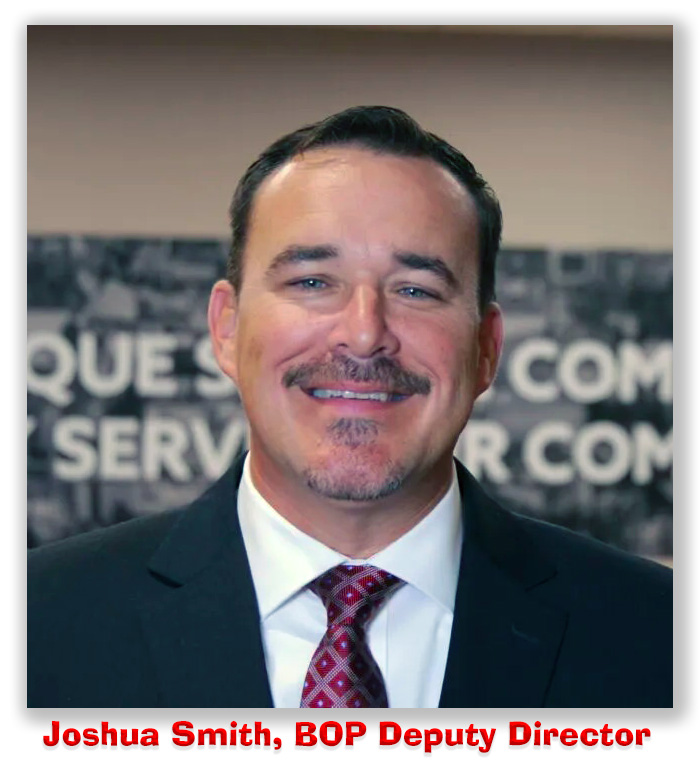
Last week, the cliché was turned on its head… but in a very good way. Joshua J. Smith, a former federal inmate who President Trump pardoned in 2021 for drug trafficking crimes committed more than two decades before, just swapped prison khakis from 20 years ago for a suit and corner office as the BOP’s Deputy Director.

Yeah, I know… a Trump pardon based on merit. That alone is amazing. But who would have ever predicted that someone would be involved with the BOP on both sides of the fence?

Last Thursday, BOP Director William K. Marshall III announced that he was naming Smith, a Tennessee businessman who founded inmate advocacy and rehabilitation nonprofit Fourth Purpose Foundation, as his second in command.

“Josh brings to this role something our agency has never had before at this level, a perspective shaped by lived experience, proven innovation and national impact,” Marshall said in a staff memo. “His firsthand understanding of our facilities — of the tension, the risk and the importance of trust — makes him uniquely positioned to advocate for the resources and reforms front-line staff need to do their jobs safely and effectively.”

Smith entered the BOP as an inmate “at age 21 as an 11th-grade dropout with no plans to exit it any differently than how he entered,” Walter Pavlo wrote in Forbes last week. Smith served five years at FCI Manchester, Kentucky, being released in 2003.

The Fourth Purpose website says Smith “saw the system from the inside, its challenges, its blind spots, and its unrealized potential. While incarcerated, something began to shift. He found faith, discipline, and most importantly, he found a sense of purpose. For Josh, prison wasn’t just a consequence, it became a transformative experience. When he was released in 2003, he walked out determined not to waste a second chance he had been given. He created a plan to stay out of the system. But that sense of purpose followed him. Reentry wasn’t easy, but it shaped his empathy. It helped him understand the barriers people face on the outside and planted the seed of a deeper mission.”

When he was pardoned in January 2021, a Knoxville TV station reported, “Smith started a multi-million dollar company and a non-profit to help former inmates transform their lives.” The residential service company he started, Master Service Companies, grew into a $30 million enterprise with more than 180 employees, many of whom were ex-offenders.

Rabbi Moshe Margaretten, President of the nonprofit Tzedek Association, told Pavlo, “Director Marshall couldn’t have made a better choice. Josh Smith brings a deep moral clarity and transformative vision to the Bureau — grounded in lived experience and a passion for redemption and human dignity. His leadership on reentry is exactly what this moment demands.”

Pavlo wrote, “Smith realizes that real change is only going to occur if he has buy-in from the staff and that may be a challenge. Former Director Colette Peters, also an outsider to the BOP, found change difficult though she did manage to improve hiring and made a number of strides in implementing the First Step Act.”

Nevertheless, Pavlo cheered Smith’s appointment. “The BOP needs change and they need reform. Nothing says reform louder than bringing in someone like Josh Smith who has seen life on both sides of the fence.”

NBC, Former federal inmate pardoned by Trump tapped as Bureau of Prisons deputy director (June 6, 2025)

WBIR-TV, Knoxville businessman Josh Smith awarded Presidential Pardon (Jan 20, 2021)

Forbes, Meet Joshua Smith, New Deputy Director of Bureau of Prisons (June 6, 2025)

– Thomas L. Root

Streamlining How To Get The Horse to Water – Update for June 5, 2025

We post news and comment on federal criminal justice issues, focused primarily on trial and post-conviction matters, legislative initiatives, and sentencing issues.

BILL INTRODUCED TO SPEED BOP CORRECTIONAL OFFICER HIRING

job210830Representatives Glenn Grothman (R-WI) and Elise Stefanik (R-NY) last month reintroduced the BOP Direct-Hire Authority Act (H.R. 3342), legislation intended to alleviate BOP staffing shortages by circumventing Office of Personnel Management procedures that can prolong the onboarding process for new hires to over six months.

Stefanik is chair of the House Republican Leadership Committee.

“One of the main hurdles in President Trump’s effort to reopen Alcatraz will be the ability to quickly hire Correctional Officers,” Grothman said in a press release. “That is why Congress needs to quickly pass this legislation to help the federal prison system which has been understaffed and overwhelmed for years.”

A prior version of the bill was introduced last December as H.R. 6628 but died when the 118th Congress expired at the end of 2024.

horsetowater250606Streamlining the process to hire correctional officers does not alter the desireability of the BOP as a career path. The agency continues to rank at the bottom of federal agencies as an employer, putting up dismal marks on quality of leadership, pay, recognition, and work-life balance. Leading the horse to water could get easier with passage of the BOP Direct-Hire Authority Act, but no one is floating any ideas on how to make the horse drink.

In an unrelated but dramatically illustrative example of the problem, the BOP employees union at FCI Phoenix last week bought a billboard ad near the prison demanding that the warden and regional director be fired.

FCIPhoenix250605The Arizona Republic reported that American Federation of Government Employees Local 3954 has accused prison leadership of failing to protect the lives of the people who work in the prisons.

H.R. 3342, BOP Direct-Hire Authority Act

The Sun, Stefanik supports reintroduction of BOP Direct-Hire Authority Act (May 14, 2025)

Arizona Republic, Phoenix federal prison union members call for warden, regional director to be removed (June 3, 2025)

– Thomas L. Root

Things Are Seldom What They Seem – Update for June 2, 2025

We post news and comment on federal criminal justice issues, focused primarily on trial and post-conviction matters, legislative initiatives, and sentencing issues.

THE OL’ SWITCHEROO

buttercup250602Unless you’re my age (and I am not telling you what that age might be), you’re probably not familiar with Gilbert and Sullivan’s light opera, 19th-century musicals that parodied British life. In H.M.S. Pinafore – perhaps their best-known work – low-class Buttercup pines for the high-born captain of the Royal Navy warship HMS Pinafore. At one point, she tries to hint to the Captain that despite their difference in societal status, they might be able to hook up.

She sings,

Things are seldom what they seem, skim milk masquerades as cream, black sheep dwell in every fold, all that glitters is not gold…

Remember two months ago, when the BOP said no one would get more than 60 days of Second Chance Act halfway house time, only to recant a week or so later? It seemed that the problem had been solved. Unfortunately, as the Bureau of Prisons proved last week, the fix was illusory, as “storks turn out to be but logs” or “Bulls are but inflated frogs.”

A new BOP memorandum issued last week at first seemed to be a wonderful expansion of home confinement, but it in fact strips away SCA rights from prisoners who have been serving the longest sentences.

We have not seen the memo, just a press release. The release provides that home confinement will be “a priority for individuals who are eligible and do not require the structured support of an RRC. RRC placement will be reserved for those with the greatest need.” What’s more, unit teams are directed to “use FSA and SCA Conditional Placement Dates—based on projected Earned Time Credits (FTCs) expected to earn—to guide prerelease planning and ensure accurate and timely referrals.”

More home confinement? Great news, right?

Not really. The new policy does not expand the BOP’s authority to place people on home confinement by even one day. Ever since 2008, the BOP has had the authority to place inmates in home confinement for the final 10% of their sentences (up to a maximum of 6 months) under 18 USC § 3624(c)(2). Six years ago, the First Step Act amended § 3624(c)(2) to direct that the BOP, “to the extent practicable, place prisoners with lower risk levels and lower needs on home confinement for the maximum amount of time permitted under this paragraph.”

Just like Dorothy always had the power to go back to Kansas, the BOP has had the power to send prisoners to home confinement.

However, none of the BOP’s authority meant much up to now. BOP staff largely did not send people directly to home confinement. It was easier to send them to halfway house and then let the halfway house send them on to home confinement and do the monitoring. The halfway houses were glad to do it, because it freed up a bed they could sell for another inmate, and they still got some payment for the inmate they were continuing to monitor.

Suddenly, the BOP has figured out that it can better use the limited number of halfway house beds it has under contract (and save money) by sending low-risk inmates directly to home confinement. It’s the right call, but it doesn’t expand the availability of home confinement one bit. The BOP has no more power to put people on home confinement today than it had a week ago, a month ago, a year ago, or even as of December 21, 2018.

What’s worse is what the memo does NOT say. On Saturday, Walter Pavlo reported in Forbes that “[w]hen asked whether inmates are still eligible for Second Chance Act placement up to 12 months prior to their FSA conditional placement date, as has been the case, the BOP responded, ‘Due to statutory restrictions found in 18 U.S.C. § 3624(c)(1), an individual who has earned 365 days (12 months) of First Step Act credits to be applied to prerelease custody cannot receive additional prerelease time under the Second Chance Act.’”

This means that no one with 730 or more FSA credits will get any SCA halfway house or home confinement. Pavlo wrote, “The BOP’s current stance contradicts its position from just a few months ago, when it stated that stacking First Step Act and Second Chance Act benefits was permissible. Now, without addressing its previous position, the BOP asserts that home confinement under the Second Chance Act is only allowed by law during the final 12 months of a prison sentence.

home210218Additionally, the BOP claims that home confinement under the First Step Act can only be applied when the First Step Act time credits earned are equal to the remaining length of the prison term. This means an inmate cannot apply First Step Act credits to home confinement while also receiving up to 12 months of prerelease custody (6 months in a halfway house and 6 months in home confinement) under the Second Chance Act. For many inmates, this change means they will have to remain in prison for up to a year longer than they had initially expected.”

In the press release, BOP Director William K. Marshall III boasted that “President Trump said he would fight for the forgotten men and women of this country, and the First Step Act proved he meant it. Now, we are ensuring that this reform continues to work—not just as a policy, but as a promise to Americans seeking redemption and a path forward.”

BOP Press Release, Federal Bureau of Prisons Issues Directive to Expand Home Confinement, Advance First Step Act (May 28)

Forbes, Prisoners Set Back By Bureau Of Prisons Home Confinement Expansion (May 31)

– Thomas L. Root