Tag Archives: waiver

Guilty Pleas Are Solid and Eternal – Update for February 10, 2026

We post news and comment on federal criminal justice issues, focused primarily on trial and post-conviction matters, legislative initiatives, and sentencing issues.

DIAMONDS AREN’T FOREVER – BUT PLEA AGREEMENTS ARE

When I was a kid, I learned in grade school that diamonds are formed by immense pressure over immense time, and that humanity would never be able to make diamonds because we couldn’t begin to duplicate nature’s processes.

It turns out that Mrs. McGinnis – my 6th grade teacher – was wrong. The diamond business is being upended because factories can now crank out the glistening lab-grown stones, making diamonds’ rarity commonplace and prices plummet.

So James Bond was wrong, too.  Diamonds are not forever.

Last week, however, two Circuits reminded us that plea deals and guilty pleas last longer and are more solid than any chunk of compressed carbon shining on your beloved’s finger.

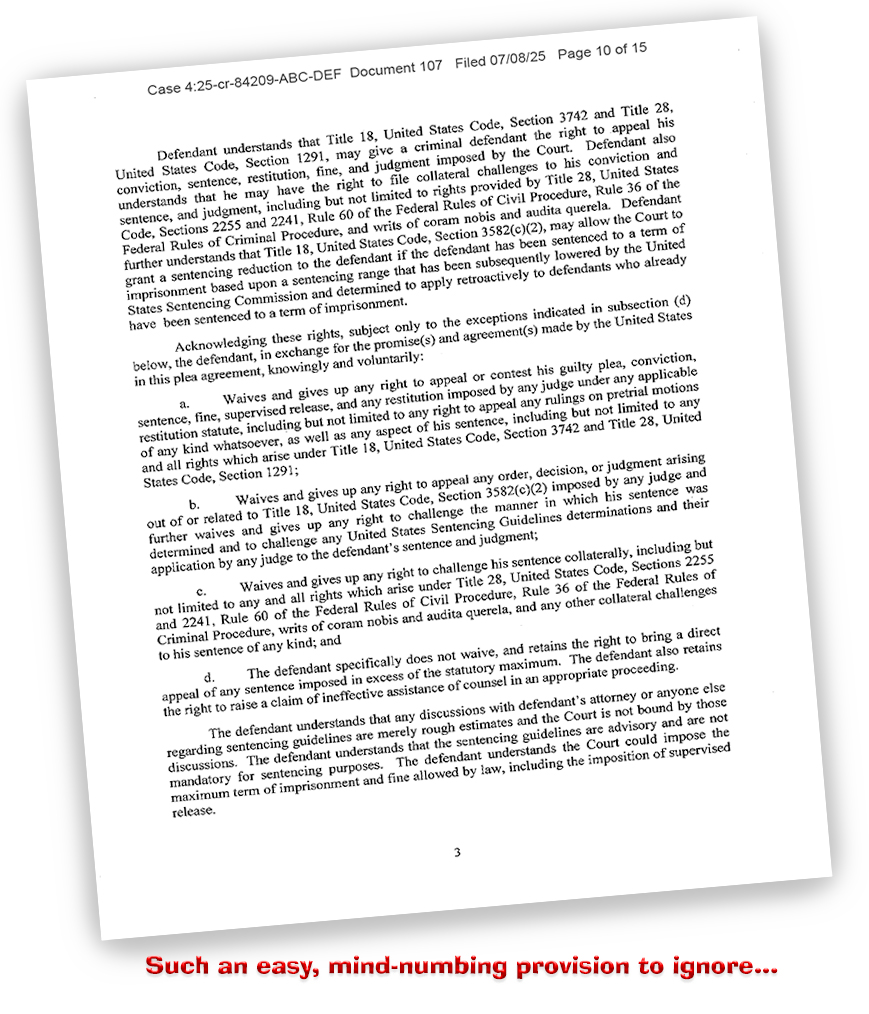
Waivers Are Forever – Brandi Appleton pled guilty to drug distribution and a felon-in-possession charge. Her plea agreement included the usual waiver of her right to appeal the sentence. Although the Guidelines recommended 41 to 51 months given Brandi’s offense level and criminal history, the district court sentenced her to five years of probation due to her difficult childhood, drug addiction, and the fact that she would probably lose her parental rights if she was locked up. The court was impressed by Brandi having completed a residential drug treatment program and her employment history while on pretrial release.

But Brandi’s good fortune didn’t last. Six weeks into the probation, she was arrested for possession of personal use drugs. The court revoked her probation and gave her 44 months.

Brandi appealed the sentence, but last week, the 6th Circuit threw out the appeal because of her plea agreement waiver.

Brandi argued that the waiver no longer counted because the imprisonment was imposed only after a probation-revocation hearing. The 6th, however, ruled that “revocation sentences are part and parcel of the sentence underlying the original conviction, not a freestanding, unrelated sentence.” Brandi’s initial probation depended on compliance with the terms of supervision, so that her “subsequent term of imprisonment following the revocation of probation was a sentence for the same underlying offense addressed in [the] initial sentence. It follows that Appleton’s appeal waiver applies to the sentence imposed at her probation revocation hearing.”

Unlike diamonds, plea waivers are forever.

Answers Are Forever – Steve Boria took medications for sleeping problems and bipolar disorder the night before he pled guilty to a drug conspiracy and gun charge. During the plea hearing, the district court learned that Steve had taken these medications and asked several follow-up questions to confirm that he understood the proceedings and felt “clearheaded.” Steve decided to challenge his conviction and sentence on appeal despite an appeal waiver in his plea agreement, arguing that the district court violated F.R.Crim.P. 11 and his constitutional rights because it did not ask enough about the impact of his medications.

Last week, the 2nd Circuit disagreed. The judge asked what he had taken, when he had taken it, and whether he understood what was going on in court. Steve said he did. The Court said Steve’s “conduct during the plea hearing raised no red flags,” so the district court fulfilled its Rule 11 obligation to “explore on the record defendant’s ability to understand the nature and consequences of his decision to plead guilty” by confirming that Steve understood the proceedings and felt clearheaded.

Steve’s clear answers to the Judge’s clear questions were binding.

Steve’s additional problem was that his lawyer did not object at the time that the Court had not asked enough, so Steve had to show “plain error,” that is, an obvious mistake that raised a reasonable probability that Steve would not have pled guilty but for the alleged error. This is a great example of the reason for F.R.Crim.P. 52(b) “plain error.” If Steve’s lawyer had objected at the time, the judge probably would have postponed the plea hearing, thus solving the medication problem.

United States v. Appleton, Case No. 25-5051, 2026 U.S.App. LEXIS 3687 (6th Cir., February 5, 2026)

United States v. Boria, Case No. 24-1871, 2026 U.S.App. LEXIS 3472 (2d Cir. February 4, 2026)

~ Thomas L. Root
The Fine Print Counts In A Deal With the Devil – Update for February 20, 2024

We post news and comment on federal criminal justice issues, focused primarily on trial and post-conviction matters, legislative initiatives, and sentencing issues.

‘SHUT UP AND SIGN’ LEADS TO A LOT OF BUYER REMORSE

About 95% of all federal indictments end with a plea agreement where the defendant agrees to take a guilty plea in exchange for government promises that often seem evanescent if not illusory. If I had a dime for every prisoner who has told me that he or she only signed because defense counsel said to, I would be writing this on the beach of my private Caribbean island instead of at a desk looking out at February snow in Ohio.

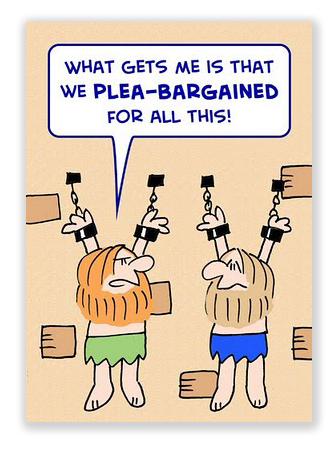
plea161116Two cases decided last week remind all prisoners – including those who have already signed their plea agreements – that in a plea agreement, every promise counts. A defense attorney’s disservice to the client is never greater than when he or she rushes them into signing a “good deal” without first painstakingly walking the defendant through every provision and explaining it in detail.

Eric Rudolph (remember him?) decided to express his political views by blowing up Olympic venues and abortion clinics. The innocents he slaughtered in the process were just icing on his demented cake. After five years on the lam, Eric was caught dining out of a dumpster in Murphy, North Carolina, and was later convicted of one 18 USC § 844(i) arson offense and five companion 18 USC § 924(c) counts for using a firearm (bombs studded with nails qualify under the statute as “firearms”) in the commission of the arson.

Eric’s approach to the plea agreement was unrepentant. He said he had “deprived the government of its goal of sentencing me to death,” and that “the fact that I have entered an agreement with the government is purely a tactical choice on my part and in no way legitimates the moral authority of the government to judge this matter or impute my guilt.”

Uh-huh. Eric’s statement brings to mind old Gus McRae (Lonesome Dove) addressing outlaw Dan Suggs, who was about to be executed with his brother but expressed only hatred and contempt:

Gus McCrae: I’ll say this, Suggs; you’re the kind of man it’s a pleasure to hang. If all you can talk is guff, you can talk it to the Devil.

supermaxcell240220I’m no fan of mandatory life sentences and even less of the death penalty, but it’s amazing how malleable our principles can be when we’re punched in the face with pure-D evil. Eric undeservedly got a life sentence, which he’s spending in the mountains of Colorado (although he never gets to see them from his concrete cell at ADX Florence).

As part of the plea deal he was proud of for depriving the Feds of the death penalty, Eric waived the right to collaterally attack his sentence in any post-conviction proceeding, including under 28 USC § 2255. But because of what the Court disapprovingly calls “the evergreen litigation opportunities introduced by the categorical approach” to § 924(c) litigation,” Eric – who has apparently decided that freedom some day isn’t such a bad goal – has filed two § 2255s so far. Last week, the 11th Circuit turned down his second one as barred by the plea agreement and, in so many words, told Eric to enjoy his place in the mountains for the rest of his life.

In the last few years, courts have applied the Supreme Court’s “categorical” approach to determining whether an offense is a “crime of violence” within the meaning of 18 USC § 924(c)(3)(A), that is, “an offense that is a felony and has as an element the use, attempted use, or threatened use of physical force against the person or property of another.” Even Eric’s district court agreed that after the Supreme Court’s decision in United States v. Davis, his arson offenses were no longer crimes of violence under the federal statute (because one can be convicted of arson for burning down his or her own property). But that didn’t matter, the district court said, because Eric had given away his right to bring a § 2255 motion to correct the error.

Last week, the 11th Circuit agreed. It held that “a plea agreement is, in essence, a contract between the Government and a criminal defendant. And because it functions as a contract, a plea agreement should be interpreted in accord with what the parties intended. In discerning that intent, the court should avoid construing a plea agreement in a way that would deprive the government of the benefit that it has bargained for and obtained in the plea agreement.”

Eric’s plea deal, the 11th said, contained the common waiver of the right to bring a collateral attack on his sentence. But Eric argued that the plea deal only prohibited collateral attacks on the sentence, while his collateral attack was on the § 924(c) convictions.

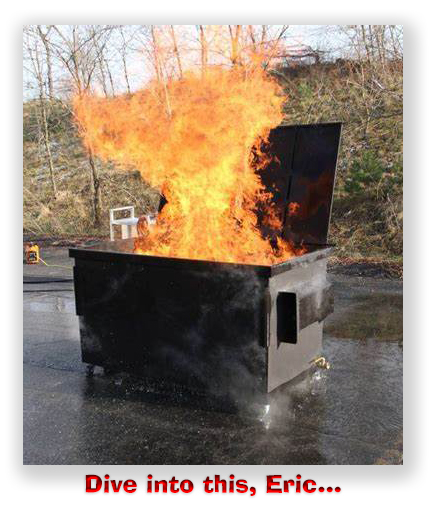
dumpsterfire249220Eric’s argument was a dumpster fire, the Circuit said. “The text of 28 USC § 2255, the history of that same statute, and the habeas corpus right that it codified, all point in the same direction: 2255 is a vehicle for attacking sentences, not convictions.” Starting with the origins of English habeas corpus through the codification of 2255 up to last summer’s Supreme Court Jones v. Hendrix decision (where SCOTUS said “Congress created 2255 as a separate remedial vehicle specifically designed for federal prisoners’ collateral attacks on their sentences”), the 11th concluded that the history, the plain text of the statute “shows the same, as does Rudolph’s requested relief… [His] motions are collateral attacks on his sentences, so his plea agreements do not allow them.”

Winning his § 2255 would have been a huge deal for Eric. The 18 USC § 844(i) conviction carries a maximum 10-year sentence. Each of the § 924(c) convictions carries a maximum of life. Had Eric been allowed to bring the § 2255, he would have gone from his concrete cell straight to walking the streets (something most of his victims would never enjoy again).

*     *     *

Meanwhile, over in Louisiana, Keesha Dinkins – a front-office worker at Positive Change healthcare clinic – was swept up in a Medicaid billing fraud. She didn’t make a dime from the fraud beyond her normal salary, but her lawyer had her sign a plea agreement for 24 months and restitution of $3.5 million.

positivechange240220Despite the deal she made, she argued that she should not be on the hook to share the restitution equally with Positive Change’s owner (who got a lot more time than she did). Last week, the 5th Circuit told her that it was Positive that it would not Change her restitution:

The criminal justice system in this country relies on plea agreements to provide efficient resolutions to criminal cases. Indeed, over 95 percent of federal criminal cases are resolved without trial. It would undermine the principle that plea bargains are contracts to hold that a party can agree to a specific amount of restitution, supported by record evidence, and then in the next breath, challenge an order imposing that exact amount of restitution.

The 5th observed that her plea agreement provided that “Dinkins — not Positive Change — was responsible for the $3.5 million loss.” That is how the judgment will remain.

Rudolph v. United States, Case No 21-12828, 2024 U.S. App.  LEXIS 3278 (11th Cir., February 12, 2024)

United States v. Johnson, Case No 22-30242, 2024 U.S. App. LEXIS 3487 (5th Cir., February 14, 2024)

– Thomas L. Root
‘You Agreed to an Unconstitutional Conviction,’ 2nd Circuit Says – Update for October 26, 2023

We post news and comment on federal criminal justice issues, focused primarily on trial and post-conviction matters, legislative initiatives, and sentencing issues.

‘WAIVING’ JUSTICE GOODBYE

plea161116Resolving criminal cases by a plea deal is more than merely common. In the federal system, 98% of all cases end in a plea agreement where the defendant agrees to plead to one or more counts in exchange for the government usually agreeing to do not much at all. Sure, the defendant usually gets a 2-3 level reduction under § 3E1.1 of the Sentencing Guidelines for “acceptance of responsibility” by pleading guilty.

But often enough, the Government’s concessions are illusory while the defendant’s obligations become onerous.  One of the unexploded mines in the agreement is the waiver.  A defendant will waive the right to appeal the conviction or sentence and to bring a collateral attack on the conviction under 28 USC § 2255.

Such a waiver probably doesn’t seem that unfair, at least where waiving the right to appeal is concerned.  A plea agreement, after all, is supposed to end litigation. But what happens when the conviction to which a defendant agrees proves down the road to be unconstitutional?

hobbsact200218That happened to Derek Cook. Derek (like a number of co-petitioners in his case) pled guilty to conspiracy to commit Hobbs Act robbery – 18 USC § 1951(a) – and using a firearm in furtherance of a crime of violence – 18 USC § 924(c). In exchange for the government’s promise not to bring any more criminal charges, Derek agreed to waive a number of rights, including the right to collaterally attack the convictions and sentences under 28 USC § 2255.

But after the Supreme Court held in the 2015 Johnson v. United States case that the residual clause of the Armed Career Criminal Act was unconstitutionally vague, Derek filed a § 2255 motion in which he correctly argued that his conspiracy charge could no longer be a defined as a crime of violence supporting a § 924(c) conviction. The district court sat on the petition until SCOTUS agreed, definitively holding that, constitutionally, conspiracy could not be the basis for a § 924(c) in the 2019 United States v. Davis decision.

After that, the district court conceded that Derek’s conviction for using a firearm in furtherance of a crime of violence was unconstitutional. But that didn’t matter, the Court said, because Derek had waived his entitlement to a conviction that was constitutional by signing a plea agreement containing his commitment not to file a § 2255 motion.

Last week, the 2nd Circuit agreed. The Circuit wrote that “while we have not yet considered the precise question of whether collateral-attack waivers are enforceable in the wake of Johnson and Davis, we have made clear that such waivers are generally enforceable in the face of evolving judicial precedent… [T]he possibility of a favorable change in the law after a plea is simply one of the risks that accompanies pleas and plea agreements. This principle follows from the fact that plea agreements, like all contracts, allocate risk between the parties – and we are not free to disturb the bargain the parties strike.

pleadeal180104“The enforceability of a collateral-attack waiver,” the 2nd held, “turns on whether the petitioner’s plea was knowing and voluntary, not the nature of any subsequent legal developments… Petitioners counter that they have a due process right not to be convicted of a non-existent offense. But the question is not whether Petitioners have a right not to be convicted of a non-existent offense. It is whether Petitioners have a right to bring a collateral attack when, in exchange for valid consideration, they executed binding plea agreements admitting their criminal conduct and waiving their ability to challenge the resulting convictions. And on that score, our precedent is clear that ignorance of future rights is unavoidable and not a basis for avoiding a plea agreement.”

Cook v. United States, Case Nos. 16-4107 et al, 2023 U.S.App. LEXIS 27383 (2d Cir., October 16, 2023)

– Thomas L. Root
Man Bites Dog; 2255 Movants Win A Few – Update for February 23, 2023

We post news and comment on federal criminal justice issues, focused primarily on trial and post-conviction matters, legislative initiatives, and sentencing issues.

PAIR OF 2255 WAIVER RULINGS VALUE SUBSTANCE MORE THAN PROCEDURE

Two appellate decisions last week – from the 4th and 10th Circuits – reminded even the most jaded critics of criminal justice that sometimes fairness can triumph.

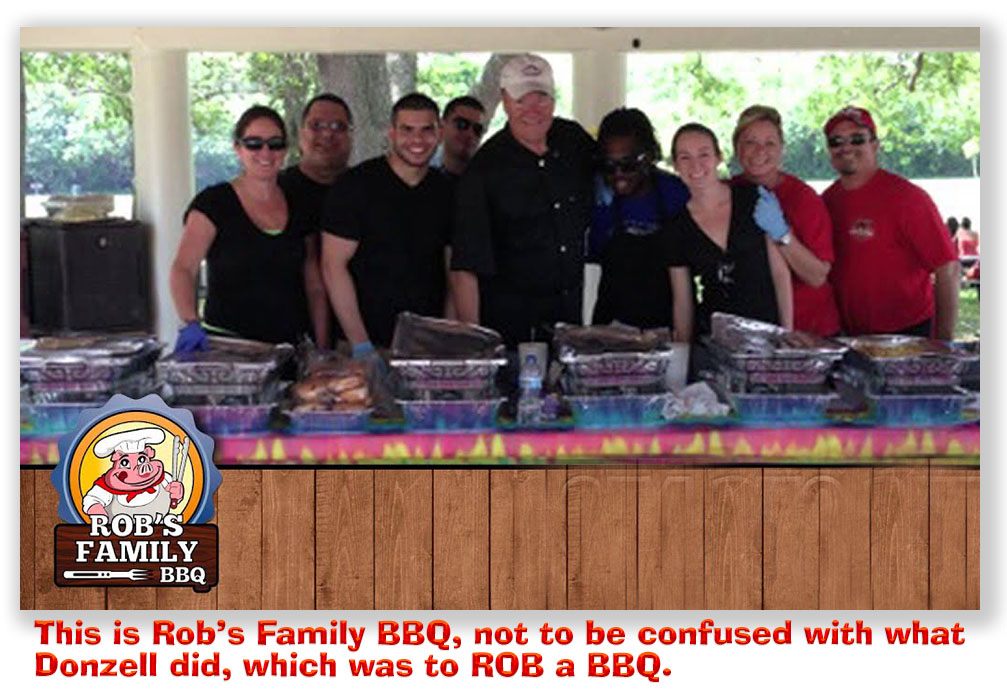
robbbq230223In the 4th Circuit, Donzell McKinney and friends robbed a barbeque joint with a gun back in 2011. He pled guilty to Hobbs Act conspiracy and using a gun in a crime of violence under 18 USC 924(c). In the plea agreement, the government dropped the Hobbs Act robbery count. After the 2015 Johnson v United States ruling, Donzell filed a § 2255 motion arguing that the 924(c) count should be vacated.

After over five years of being held in abeyance, Donzell’s district court agreed that he was innocent of the § 924(c) because of the Supreme Court’s 2019 United States v. Davis ruling that conspiracy to commit a violent crime was not itself violent and thus could not support a § 924(c) conviction. But that didn’t help Donzell, the district court ruled, for a bunch of reasons including that his plea agreement waived his right to bring the § 2255, Donzell procedurally defaulted the claim, and anyway, if Donzell had been able to raise the issue back in 2011, the government would not have dismissed the Hobbs Act robbery count but instead would have hitched the § 924(c) charge to that count instead of the conspiracy.

Last week, the 4th Circuit reversed it all, ruling that enforcement of Donzell’s appeal waiver to bar his claim would result in a miscarriage of justice and that he had shown both cause and prejudice for his procedural default.

An appellate court can refuse to enforce an appeal waiver when a sentence is imposed in excess of the statutory maximum or is based on a constitutionally impermissible factor. Among these is the most fundamental reason, where enforcing an appeal waiver would result in a miscarriage of justice. Donzell’s § 924(c) conviction and punishment are for an act that the law does not make criminal. “There can be no room for doubt,” the 4th said, “that such a circumstance inherently results in a complete miscarriage of justice and presents exceptional circumstances that justify collateral relief under 28 USC § 2255.”

Robber160229But, the government protested, Donzell really was guilty of the robbery, and would have pled to it if the government hadn’t agreed to drop it. So he wasn’t prejudiced by the Davis error.

That’s not how it works, the Circuit replied. “Where the record in a case shows that a count of conviction is now invalid, no precedent authorizes a court to then rely on a dismissed count to negate that demonstrated prejudice. Rather, in determining prejudice for purposes of excusing procedural default, the court asks whether it is likely a defendant, had he known of the error, would not have pled guilty to the count of conviction. The court does not look to whether it is likely a defendant, had he known of the error, would not have pled guilty to a dismissed count.”

Fraud170406Meanwhile, in the 10th Circuit, Joe Chatwin pled guilty to bank fraud and a § 924(c), an unusual combination to be sure. Joe’s offenses were pretty prosaic, identity theft, turning a $30 cashier’s check into a $30,000 check that he used to buy an RV from a guy, but he apparently pulled a gun when the Marshals came to arrest him. The 18 USC § 111 assaulting a fed charge was dismissed, but it underlay the § 924(c) conviction.

After Johnson, Joe filed a bare-bones § 2255 that said simply, “police chase not a violent crime.” He later amended after Davis to argue that the district court had relied solely on the § 924(c) residual clause (which Davis held was unconstitutionally vague). The government never argued Joe’s merits, instead moving to dismiss the § 2255 motion because Joe had “knowingly and voluntarily waived his § 2255 rights in a Rule 11(c)(1)(C) plea agreement.”

Lose200615The district court agreed with the government, holding that enforcing the waiver would not be a miscarriage of justice because Joe’s Davis claim was a dead-bang loser. Joe’s appealed, raising for the first time the argument that his collateral-attack waiver must fail because his conviction-based § 2255 motion fell outside the scope of his plea agreement collateral-attack waiver. He argued that his waiver barred any collateral attacks to his sentence but not to his convictions.

The 10th applied “plain error” review to the issue Joe hadn’t argued in the district court, but it agreed Joe was right that the waiver applied only to challenging the sentence, not the conviction. The government argued the error did not affect Joe’s “substantial rights,” that is, it did not change the outcome of the proceeding because Joe would have lost his § 2255 motion anyway.

Plain error in real life...
Plain error in real life…

But because the district court only addressed the motion to dismiss, not the merits of the § 2255 claim, the Circuit held that “the ‘outcome of the proceeding’ here means the outcome of the motion to dismiss—not matters beyond that.” The 10th ruled that Joe “has shown substantial prejudice based on the dismissal of his § 2255 motion. He has shown that the outcome of ‘the proceeding’ would have been different in that the district court could not have dismissed on the issue of the collateral-attack waiver’s scope. Absent plainly erring on the waiver’s scope, the district court could not have dismissed on that ground.”

United States v. McKinney, Case No. 20-6396, 2023 U.S. App. LEXIS 3715 (4th Cir. Feb. 16, 2023)

United States v. Chatwin, Case No. 21-4003, 2023 U.S. App. LEXIS 3889 (10th Cir. Feb. 17, 2023)

– Thomas L. Root

Butterfly Wings Don’t Beat For Innocence – Update for July 7, 2022

We post news and comment on federal criminal justice issues, focused primarily on trial and post-conviction matters, legislative initiatives, and sentencing issues.

THE BEIJING BUTTERFLY

butterfly220707When mathematician Edward Lorenz first posited the notion that a butterfly flapping its wings in Beijing today could affect the path of a tornado in Kansas three weeks hence, his fanciful illustration became the interface with chaos theory that the average Joe and Jane could understand. Essentially, the butterfly effect is the sensitive dependence on initial conditions in which a small change in one state of a deterministic nonlinear system can result in large differences in a later state.

When a federal defendant is presented with a plea agreement and told by her lawyer that it’s the best deal she can hope for, the fine print is rarely explained. That includes Section 10(b)(1)(A)(iii) on page 12 which says something like “Defendant waives the right to challenge the conviction or sentence under 18 USC § 3742 or on any collateral attack under 28 USC § 2255 or other section, except in cases of ineffective assistance of counsel.”

pleawaiver220707And why not sign it? The defendant is under plenty of stress as she contemplates agreeing to spending a decade in prison, and a lot of that gibberish in the back of the plea agreement means a lot less to her than her attorney’s blandishments that the judge certainly won’t give her more than 48 months.

In chaos theory parlance, the appeal/collateral attack waiver is a pretty small input. Only later does the output become huge.

The Supreme Court left for vacation in time for the 4th of July. Like a fireworks display, the finale was stellar and stunning: abortion, guns, prayer, and the biggest case of all, a decision that may spell doom for the administrative state. But just like many fireworks finales, after the final glowing detonation fades, one straggler rocket goes airborne, with no light but a surprise reverberating boom.

Last Thursday, the Court released its final list of certiorari grants and denials for the term, announcing the one or two cases it will add to next term’s docket while denying a long list of petitions. One of the denials was a guy named Zenon Grzegorczyk (pronounced just the way it sounds). Zenon, a good father, wanted to murder six people whom he blamed for his divorce and for the loss of custody of his child. He hired and paid hitmen to pull it off.

hitman220707Problem was that Zenon, not being an avid news consumer, was unaware that all hitmen available for hire are undercover law enforcement officers, moonlighting for some pocket money. Thus it was in this case. Zenon was promptly charged with murder for hire (18 USC § 1958) and an 18 USC § 924(c) count for using a firearm during and in relation to a crime of violence.

Zenon signed a plea agreement in which, among other things, he waived any right to challenge his murder-for-hire and firearms convictions. He was sentenced to about 18 years.

A couple of years later, after the Supreme Court decided in Johnson v. United States and Sessions v. Dimaya that crimes of violence had to be accompanied by use or threat of force, Zenon filed a § 2255 motion challenging the firearms conviction. Because of his plea agreement, the District Court denied the motion, and the 7th Circuit affirmed. Zenon filed a petition for certiorari seeking Supreme Court review.

Meanwhile, the Supreme Court ruled in United States v. Davis that a conspiracy to commit a violent crime was not itself a violent offense that could support an 18 USC § 924(c) conviction. The government flipped its position, asking the Supreme Court to vacate the 7th Circuit’s judgment because Davis made Zenon actually innocent of the 18 USC § 924(c) conviction. The mechanism is called a “GVR,” because the Supremes grant the petition for certiorari, vacate the lower court’s decision, and remand the case for further consideration, all in one order.

judgeB160229The Supreme Court refused, denying the petition last week. Justice Kavanaugh wrote in a concurrence to the denial that “[b]ecause the 7th Circuit correctly concluded that the defendant’s unconditional guilty plea precluded any argument based on the new caselaw, this Court has no appropriate legal basis to vacate the Seventh Circuit’s judgment.”

What is notable was the spirited dissent written by Justice Sotomayor. She argued that Zenon’s case

falls comfortably within this Court’s longstanding GVR practice… The Solicitor General’s considered concession that 18 USC § 1958(a) is not a “crime of violence” under the elements clause of § 924(c)(3)(A) is an intervening development that has triggered the Government’s agreement to forgo assertion of the procedural bar that proved decisive below. Consequently, there is surely a reasonable probability of a different result on remand: With the Government waiving the procedural bar, Grzegorczyk’s § 924(c) conviction and 5-year sentence should be vacated, and his § 1958(a) sentence reduced by at least 2 years and 7 months. Moreover, given the stakes for Grzegorczyk, as well as the Government’s express consent, this is a case where the marginal cost to judicial efficiency and finality from a remand should yield to solicitude for Grzegorczyk’s rights. “Further proceedings” are therefore “just under the circumstances,” 28 USC § 2106, and the Court should issue a GVR order.

“By denying certiorari rather than issuing a GVR order,” Justice Sotomayor fumed, “the Court allocates the full cost of the Government’s error to Grzegorczyk, who faces over 7½ extra years of incarceration as a result.”

innocent210504What this means, of course, is that actual innocence of a count of conviction will always yield to an oppressive appeal waiver signed in haste by a defendant who is understandably focused on the larger issues in her plea agreement rather than flitting butterfly of a provision, whose wingbeats seem inconsequential at the time but may later spawn a tornado of injustice.

In his concurrence, Kavanaugh suggested that if the government really felt that Zenon was entitled to relief from the five -year 924(c) sentence, “the Attorney General may recommend a pardon or commutation to the President, and the President may pardon the defendant or commute the sentence.”

Like that’s gonna happen

Grzegorczyk v. United States, Case No. 21-5967, 2022 U.S. LEXIS 3273 (June 30, 2022)

– Thomas L. Root

Waive It ‘Goodbye’? – Update for November 5, 2021

We post news and comment on federal criminal justice issues, focused primarily on trial and post-conviction matters, legislative initiatives, and sentencing issues.

ONE AIN’T DONE

oneanddone200616A lot of possible objections or defenses can be waived if they aren’t raised at the right time. If a defendant doesn’t raise an objection to the indictment or venue or speedy trial before the jury is seated, the objections are lost. Rule 12 of the Federal Rules of Criminal Procedure lists a whole bevy of such issues.

Many other rights are often waived if the defendant enters into a plea agreement with the government. Such rights, which have to be specifically and expressly waived in the plea agreement, usually include the right to appeal, the right to file other types of post-conviction challenges, and even – often enough – the right to file requests for documents under the Freedom of Information Act.

A plea waiver is common and enforceable. But the government has to raise the defense of plea waiver in order to get any traction. Let’s say a defendant signs a plea deal with the government that includes a promise not to appeal or bring a collateral attack on a conviction or sentence. Later, she files a habeas corpus motion under 28 USC § 2255 claiming, for example, her lawyer screwed up at sentencing. If the government doesn’t raise the plea waiver as a defense at the time it files its objection to the § 2255 motion, it can’t come back later and assert the defense.

It’s “one and done.”But how long is “done?” Derrick Borden found that out last week. Despite having signed a plea waiver that prevented any post-conviction challenges to his conviction, Derrick filed motion to vacate his 18 U.S.C. § 924(c) conviction after the Supreme Court’s decision in United States v. Davis invalidated the basis for that count. The government, agreeing that the § 924(c) conviction should be vacated, did not raise the plea waiver as an objection.

After the § 924(c) was vacated, Derrick was resentenced. Not liking how that turned out, he appealed the new sentence as being too much. The government raised the plea waiver as a defense to the new § 2255, arguing Derrick had no right to appeal.

Derrick argued that the government – having waived its right to invoke the waiver against his first § 2255 motion – was not allowed to selectively enforce the plea deal, and that the letter it wrote the district court waiving the waiver the first time around should be read to have abandon its right to enforce the waiver for all time.

Waivers160215Last week, the 2nd Circuit turned him down, apparently a bit miffed that Derrick tried to sandbag the government for having done the right thing. “To start, the Circuit said, “consenting to permit Borden to move to vacate his § 924(c) conviction was in Borden’s interest, in the interest of judicial economy, and in the interests of justice… we see no reason to discourage the Government from consenting to the correction of a constitutional error by offering limited relief from an appeal waiver (or waiver of other post-conviction relief) that benefits the defendant.”

The 2nd said the government’s letter let Derrick “obtain precisely the relief he sought. And although courts construe plea agreements strictly against the government, that standard does not necessarily extend to a letter that is not a separate plea agreement upon which the defendant relied in waiving any rights.

United States v. Borden, Case No. 19-4316-cr, 2021 U.S. App. LEXIS 32030 (2d Cir., Oct. 26, 2021)

– Thomas L. Root

Procedure Talks, Substance Walks – Update for June 1, 2021

We post news and comment on federal criminal justice issues, focused primarily on trial and post-conviction matters, legislative initiatives, and sentencing issues.

DOES INNOCENCE MATTER? NOT MUCH.

I had a recent email exchange with a guy who, years after his conviction, believes he has the golden bullet to convince his judge that he should be allowed to withdraw his plea. When I pointed out he had no procedural route for raising the argument, given that he’s known about the issue for years, he responded that all he has to do is convince the judge of the righteousness of his claim, and the procedure will take care of itself.

innocent210504But procedure never takes care of itself. That is to say, procedure rules over substance. Years ago, Professor Henry J. Friendly complained that habeas corpus procedure had gotten so hidebound that a petitioner’s claim that he or she was actually innocent simply didn’t matter. The title of the law review article said it all: Is Innocence Irrelevant: Collateral Attack on Criminal Judgments. Even after Friendly’s now-famous 1970 article, the Supreme Court was unable to untether actual innocence from procedure: in Herrera v. Collinsit held that “a claim of ‘actual innocence’ is not itself a constitutional claim, but instead a gateway through which a habeas petitioner must pass to have his otherwise barred constitutional claim considered on the merits.  In other words, a prisoner who is actually innocent must show a constitutional violation to obtain relief.  As dissenting Justice Blackmun complained, the only principle this position espouses is “the principle that habeas relief should be denied whenever possible.”

Two cases this week reminded the defendants that the righteousness of their causes paled in significance next to the “angels-on-the-head-of-a-pin” arguments over procedure. In an 11th Circuit case, Sandchase Cody (we’ll call him “Sandy”) initially won his § 2255 motion, having proven to the sentencing court that some of his prior state convictions should not count as Armed Career Criminal Act predicates.

But his victory turned to ashes at resentencing. Initially, Sandy had been sentenced to 294 months for drug distribution and a concurrent 294 months for the ACCA charge. But instead of resentencing on both counts, the judge merely cut his ACCA count to 120 months – the statutory max without the ACCA – keeping the 294 months on the drug count.

angels170726“Unfair!” Sandy cried, apparently laboring under the misappreciation that fairness actually mattered. He appealed, arguing he should have been resentenced on both counts. But because the appeal only challenged the resentencing, not his favorable § 2255 decision, Sandy did not ask for a certificate of appealability (COA). He argued to the 11th Circuit that because he was appealing the new sentence – and not the § 2255 decision vacating the prior sentence – a COA was not necessary.

Background: Under 28 USC § 2253, a prisoner may not appeal a “final order in a proceeding under § 2255” unless a circuit justice or judge issues a certificate of appealability, finding that reasonable judges could debate whether the prisoner’s claim has merit. The intent of the COA procedure is to reduce frivolous appeals, just another way that the Antiterrorism and Effective Death Penalty Act has strangled habeas corpus.

Last week, the 11th Circuit dismissed Sandy’s appeal, holding that the COA requirement applies “not only to an appeal from the final order in a proceeding under section 2255 but also to an appeal from an amended criminal judgment, to the extent it raises section 2255 issues.” By contrast, the Circuit said, direct appeal matters that arise after the § 2255 proceeding — for example, an argument that the district court misapplied the sentencing guidelines at a prisoner’s resentencing — do not require a COA. But Sandy complained in his appeal that § 2255 required he get a complete resentencing, not just a resentencing on one count. That was an argument, the 11th said, over the remedies authorized by § 2255. Thus, it was a § 2255 appeal, and it required a COA.

It seems a trifling point, but procedure prevented his argument from being heard.

In the 6th Circuit, on the other hand, the appeals court ruled that a piece of arcane procedure worked for Edres Montgomery. Edres got resentenced under First Step § 404, the retroactive Fair Sentencing Act. But at resentencing, everyone – including Edres’s lawyer – assumed Edres’s Criminal History range was VI (that’s “6” for the Latin-challenged among us).

But it was only a V (that’s a “5”), Edres discovered afterward, so he appealed. The government argued Edres waived his right to appeal it by not objecting at sentencing. This gave the 6th a chance to expound on waiver, forfeiture, and invited error.

A “defendant can only waive a right that he knows of and actively abandons,” the 6th said. When a claim is waived, it is unappealable. “Forfeiture is at the other end of the spectrum… the passive failure to make a timely assertion of a right.” If a defendant forfeits a claim, “Federal Rule of Criminal Procedure 52(b) allows us to consider such unpreserved arguments for plain error.”

errorA160425In the middle is “invited error”, where the defendant contributes in some way to the district court’s error without intentionally relinquishing his rights. Here, Edres invited the error when his own lawyer agreed Edres’s Criminal History was VI. This left Edres “more responsible for the district court’s error than when he merely forfeits an argument, but he had not made the conscious choice to waive the argument.” Thus the appeals court said, “the consequences fall in between those for forfeiture and waiver… [and while] we do not review invited errors as a matter of course, but we are also not foreclosed from reviewing them; instead, we review for plain error when “the interests of justice demand” it.

The Court said that under a Rule 52 “plain error” analysis, the mistake should be corrected.

United States v. Cody, Case No. 19-11915, 2021 U.S. App. LEXIS 16019 (11th Cir. May 28, 2021)

United States v. Montgomery, Case No. 20-1201, 2021 U.S. App. LEXIS 15382 (6th Cir. May 24, 2021)
– Thomas L. Root

A Short Rocket – Update for March 12, 2020

We post news and comment on federal criminal justice issues, focused primarily on trial and post-conviction matters, legislative initiatives, and sentencing issues.

WE’VE GOT THE SHORTS…

rocket-312767Arson: In a decision approving filing a second-or-successive 2255 motion, the 6th Circuit last week held that because United States v. Davis is retroactive, a defendant who was convicted of 18 USC 844(i) arson and an 18 USC 924(c) use of a destructive device (a Molotov cocktail) could challenge the 924(c) conviction.

The 6th said the defendant’s “924(c) conviction was premised upon his use of a destructive device in furtherance of the 844(i) offense… The question is whether 844(i) has as an element the use, attempted use, or threatened use of physical force against the person or property of another… Arson under 844(i) does not appear to qualify as a crime of violence under 924(c)(3)(A) because it can be committed against “any building… used in interstate or foreign commerce,” including one owned by the arsonist… That means defendant’s 924 conviction must have been based on 924(c)(3)(B), which Davis invalidated…”

In re Franklin, 2020 U.S. App. LEXIS 6672 (6th Cir. Mar, 3, 2020)

manyguns190423Waiver: The defendant pled guilty to violating 18 USC 924(c) for brandishing a firearm during a crime of violence — theft from a firearms dealer under 18 USC 922(u). He filed a 2255 motion claiming after United States v. Davis, a 922(u) violation no longer counts as a crime of violence. But his plea agreement included the waiver of his right to contest the conviction and sentence “on any ground, including any claim of ineffective assistance of counsel unless the claimed ineffective assistance of counsel relates directly to this waiver or its negotiation, including any appeal… or any post-conviction proceeding, including but not limited to, a proceeding under Title 28, United States Code, Section 2255…”

Last week, the 7th Circuit ruled this collateral-attack waiver was valid and barred a Davis challenge to the conviction and sentences.

Oliver v United States, 2020 U.S. App. LEXIS 6760 (7th Cir. Mar. 4, 2020)

Fair Sentencing Act: The Defendants were sentenced for crack offenses under 21 USC 841(b)(1)(A) prior to the Fair Sentencing Act of 2010. After the First Step Act passed, they applied for sentence reductions. The government; argued they were not eligible because the amounts of crack they were found to have been involved with at sentencing were so great that their sentence exposure did not change.

crackpowder160606The U.S. District Court for the Eastern District of New York last week held that the defendants were eligible. It held that “the weight of authority supports Defendants’ interpretation. “[T]he majority of district court cases in this Circuit” have found “that a defendant is eligible for relief under the First Step Act based upon his offense of conviction, as opposed to his actual conduct… Decisions from other circuits also favor Defendants’ interpretation. See United States v. White, 2019 U.S. Dist. LEXIS 119164 (S.D. Tex., July 17, 2019) (collecting over 40 cases across the nation that agree with defendants’ interpretation of ‘covered offense’).”

The EDNY court said it “joins the chorus of district courts to hold that eligibility under… the First Step Act is based on the crime of conviction and not a defendant’s actual conduct. Both defendants were convicted of violating 21 USC 841(b)(1)(A), the statutory penalties for which were modified by the Fair Sentencing Act. They are both therefore eligible for a sentence reduction under the First Step Act.

United States v. Pressley, 2020 US Dist. LEXIS 34973 (EDNY Feb 28, 2020)

ACCA Recklessness: The Supreme Court last week granted certiorari to a case asking whether an offense that involves physical force that is used recklessly – that is, conduct undertaken with a conscious disregard of a substantial and unjustifiable risk – is a crime of violence for Armed Career Criminal Act purposes.

A prior case asking the same issue was recently dismissed after the defendant/petitioner died.

Borden v. United States, Case No. 19-5410 (certiorari granted Mar. 2, 2020)

– Thomas L. Root

Waive Your Supervised Release Termination ‘Goodbye’ – Update for August 14, 2019

We post news and comment on federal criminal justice issues, focused primarily on trial and post-conviction matters, legislative initiatives, and sentencing issues.

3RD CIRCUIT USES PLEA WAIVER TO BAR SUPERVISED RELEASE EARLY TERMINATION

pleadeal180104Almost all of the 97% of federal criminal defendants who take guilty pleas do so pursuant to a plea agreement. And these days, most of those plea deals prohibit the defendant from appealing or otherwise attacking the conviction and sentence.

But up to now, no one ever thought waiver extended to supervised release. Instead, it has always been a tenet of faith that a defendant could petition the court under 18 USC § 3583(e)(1) to terminate supervised release after a year if everything had gone well.

Congress decreed that virtually every sentence of incarceration would include a post-release sentence of supervised release. Under supervised release, the post-release defendant is subject to a bevy of reporting, travel, social and financial restrictions, all overseen by a U.S. Probation Officer. On the average, a third of all former prisoners are found by courts to have violated some supervised release requirement. Given the squishy and vague conditions, not to mention the arbitrary power wielded by the Probation Officer, it’s little wonder.

Last week, the 3rd Circuit broke unwelcome new ground, holding that a plea agreement waiver of the right to challenge the sentence in any way extended even past release. Ronald Damon, according to the appeals court, “signed a plea agreement with the United States accepting responsibility for a federal crime. He served time in custody and left prison. Now, having reentered society, he wants a fresh start, free from further oversight by the federal government. So Damon asked to end his term of supervised release a few years early. He offered facts and circumstances justifying his request, and highlighted the hardships imposed by restrictions on his activities. But Damon’s present desires are controlled by a past decision: his contract with the government containing the terms and conditions of his guilty plea. Because his plea agreement precludes challenges to his sentence, and because any shortening of his supervision would amount to a change in his sentence, we will affirm the decision of the District Court.”

Waivers160215The Court said that “in the agreement, Damon waived the right to file any motion or appeal that challenges the sentence imposed… Supervised release is part of the sentence that Damon received… Damon’s motion… questions his original sentence by seeking to shorten the term of his supervised release. By its very nature, it is a challenge to the sentence imposed.”

United States v. Damon, Case No. 18-2444, 2019 U.S. App. LEXIS 23466, 2019 WL 3559045 (3rd Cir. Aug. 6, 2019)

– Thomas L. Root

4th Circuit Holds Plea Agreement Waiver Does Not Block Johnson/Dimaya/Davis Claims – Update for August 5, 2019

We post news and comment on federal criminal justice issues, focused primarily on trial and post-conviction matters, legislative initiatives, and sentencing issues.

DODGING THE WAIVER

190805myopiaA type of myopia common among federal defendants filing post-conviction § 2255 motions is understandable: people get so focused on their substantive issues – the prosecutor lied, the defense attorney slept, the judge was inept – that no one ever asks whether some arcane issue of procedure will defeat his or her claim before the merits are ever reached.

One of the first procedural issues I usually worry about is the waiver. Face it, 97% of federal inmates plead guilty, and almost all of them sign some kind of plea agreement. And almost all plea agreements include a waiver section, in which a defendant waives the right to appeal or to collaterally attack (as in, file a § 2255 motion) the conviction or sentence. There is always an exception in the case of prosecutorial misconduct or ineffective assistance of counsel, but what happens when something like Johnson v. United States or Sessions v. Dimaya or United States v. Davis comes along?

Randall Cornette, convicted of a felon-in-possession charge, challenged his Armed Career Criminal Act sentence. The trial court had relied on some old Georgia burglaries that Randy said could no longer count under Johnson. The government replied that Randy had signed a plea agreement waiver that prevented him from raising a Johnson issue.Waivers160215

Last week, the 4th Circuit ruled that a plea agreement waiver does not prevent a defendant from taking advantage of Supreme Court decisions like Johnson or Davis. The appeals court ruled that an otherwise valid appeal waiver did not bar Randy from now arguing that by imposing a sentence under the unconstitutional residual clause of the ACCA, the district court exceeded its statutory authority to sentence him.

The Court said that an appeal waiver does not preclude a defendant from challenging a sentence “based on a constitutionally impermissible factor” or “a sentence imposed in excess of the maximum penalty provided by statute.” Randy’s sentence challenge is based on the assertion that the district court did not have the statutory authority to impose the sentence under to the residual clause. Because Johnson was made retroactive by the Supreme Court, the Circuit said, “all sentences rendered under the residual clause became unconstitutional. Therefore, Randy’s sentence was imposed in excess of the maximum penalty provided by ACCA.”

The 4th said that this doesn’t mean that a non-retroactive change in the law, like Booker or Alleyne, can be challenged where there is a collateral-attack waiver. But where a Supreme Court case (like Davis, for instance) “announces a substantive rule that applies retroactively, the district court is now deemed to have had no statutory authority to impose [a] sentence,” and a court may review a sentencing challenge “notwithstanding the appeal waiver.”

United States v. Cornette, 2019 U.S. App. LEXIS 22554 (4th Cir. July 30, 2019)

– Thomas L. Root