We post news and comment on federal criminal justice issues, focused primarily on trial and post-conviction matters, legislative initiatives, and sentencing issues.

SENTENCING COMMISSION SET TO ADOPT AMENDMENTS
Some of our friends who publish their own newsletters have predicted 17 of the last two United States Sentencing Commission actions on the so-called first offender proposal. They should be glad that the long wait is just about over. The USSC will hold its April meeting on Thursday, April 12, at which time it is expected to adopt proposed amendments for November 2018, including quite possibly some form of first offender relief.
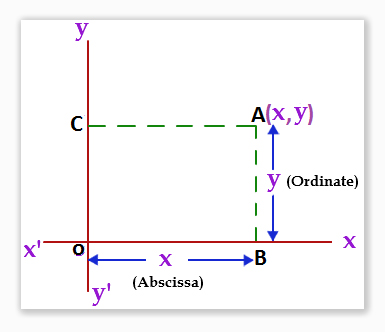 The USSC’s sentencing guidelines are based on a cartesian system with the abscissa being the offense level and the ordinate being the defendant’s criminal history. If you rob a bank, that offense is worth a base offense level of so many points. If you threatened an old lady in the process, that is worth a few more points, but if you confess after being caught, that takes a few points off.
Your criminal history is calculated based on the number, severity and age of prior criminal convictions. A prior drunk driving is not as bad as a felony burglary, and while a 12-year old misdemeanor possession of pot charge isn’t worth anything, a 12-year old felony trafficking in pot is. The result is a Total Offense Level and Criminal expressed in Arabic numbers (such as a Level 22) and a Criminal History Category expressed in Roman numerals (such as a “III”). On the sentencing table that is Chapter 5A of the Federal Sentencing Guidelines, a defendant with a Total Offense Level of 22 and a Crim History Level III would have a suggested sentencing range of 51-63 months.
 Now for the “First Offender” proposal: It is entirely possible to have prior convictions galore and yet be a Criminal History I (the best score you can achieve). The Guidelines define a Crim I as someone with zero or one criminal history point, which means you could have had a couple of heroin distribution felonies in the 1980s, a string of misdemeanor domestic violences between 1990 and 2006, and one minor misdemeanor 2014, and – because of the age of the offenses – be a Criminal History I. Such a defendant is far different from the 55-year old guy who has never even gotten a traffic ticket, but ends up with a tax fraud conviction. Both defendants get the best treatment from the Sentencing Table that’s possible, but one is a genuine virgin while the other has simply mastered the talent of not getting caught. In recognition, the USSC proposed that the Phoebe Snows of the criminal world get bonus points for a prior record that’s purer than Crim I.
Two options for a “First Offender” guideline were floated by the USSC. One was that any defendant with zero criminal history points should be considered a First Offender. The second proposal, a stricter one, was more like an Academy Award for lifetime achievement, and would give bonus points to those with no criminal convictions any time in their past, no matter how old.
 As for nomenclature, the First Offender guideline would adjust a first offender’s Total Offense Level downward. The Sentencing Commission suggested that either all defendants who qualify as “first offenders” would receive a 1-level reduction from their offense level, or perhaps that defendants who qualify as “first offenders” would receive a 2-level reduction if their Total Offense Level was below 16 and a 1-level reduction if it’s above.
After the spate of comments for and against the various proposals (and a few against any First Offender guideline at all) presented to the USSC last month, we’ll see in a few days just how eager the Commission is the Trumpian “law-and-order” atmosphere that overhangs Washington to give any defendant, no matter how deserving, a break.
If it is adopted, the First Offender amendment will not be retroactive – that is, not apply to people already sentenced – unless the USSC holds an additional proceeding to declare it so. In other words, current federal inmates are urged not to fall for pitches from anyone (be it an outside service or a guy in the law library who wants some commissary) to prepare a filing to claim your sentence reduction. While it could happen, it will not be happening soon.
 And, as we all know, the President has nominated some genuine knuckle-draggers to serve on the Commission. If they are confirmed by the Senate, you can likely kiss any chance for retroactivity goodbye.
U.S. Sentencing Commission, Public Meeting – April 12, 2018
– Thomas L. Root

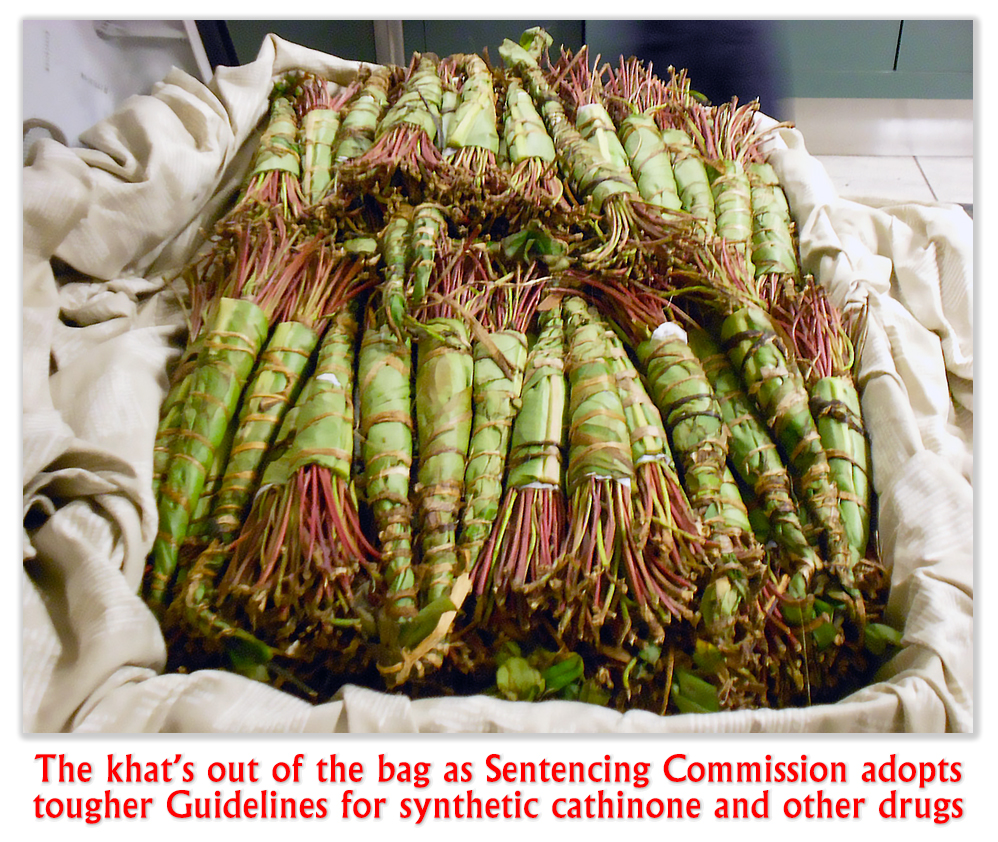 That’s not to say, however, that the Commissioners did nothing. They did vote to update the federal sentencing guidelines to address synthetic drugs. The amendments addressed synthetic cathinone (the active drug in African khat, used in bath salts) and synthetic cannabinoids, including K2. To address fentanyl, the USSC adopted a four-level sentencing enhancement for knowingly misrepresenting or knowingly marketing fentanyl or fentanyl analogues as another substance (a 50% increase in sentence).
 The Commission also adopted a new application note suggesting judges consider alternative sentencing options to prison for “nonviolent first offenders” whose applicable guideline range falls at 8-14 months or less. Eligible defendants must not have any prior convictions and must not have used violence, credible threats of violence, or possessed a firearm or other dangerous weapon in the offense. The alternatives include probation, halfway house confinement and house arrest.