We post news and comment on federal criminal justice issues, focused primarily on trial and post-conviction matters, legislative initiatives, and sentencing issues.

IS BIVENS CREAKING TOWARD AN IGNOMINIOUS END?
 Two Supreme Court developments this past week do not bode well for the future of Bivens v. Six Unknown Named Agents of Federal Bureau of Narcotics.
Bivens, in case you were busy doing something else in 1971 (I was graduating from high school), held that the Constitution implied that people have a private right of action against federal agents, employees, and officials for violations of their rights. A statute – 42 USC 1983 – created a federal right to sue state agents for such violations, but nothing created a similar right where federal employees or agents ran roughshod over your rights.
Bivens arose when federal drug agents kicked down Webster Bivens’ front door searching for drugs. They arrested Web without a warrant, but the drug charges were dismissed by a magistrate judge. Web sued the agents, alleging a violation of his 4th Amendment protection from unreasonable search and seizure.
The government argued that the 4th Amendment does not provide a cause of action for damages but “merely… limit[s] the extent to which the agents could defend the state law tort suit by asserting that their actions were a valid exercise of federal power.” Web Bivens argued that a cause of action could be inferred because constitutional protections would be meaningless without a way to seek a remedy for their violation.
Since the Supreme Court’s 1971 decision, it has upheld the concept of a Bivens action only two other times, once for sex discrimination in a federal employment setting (Davis v. Passman (1979) and once for violation of the 8thAmendment by deliberate indifference to prisoner medical care (Carlson v. Green (1980)). Since 1980, Bivens has been on a long, slow march to irrelevance. Under Ziglar v. Abbasi (2017) and Egbert v. Boule (2022), any claim that is not highly similar to the facts in Bivens (excessive force during arrest), Davis (sex discrimination in federal employment), or Carlson (inadequate care in prison) is a “new context” to which Bivens will not be extended if “there is any reason to think that Congress might be better equipped to create a damages remedy.”
And the Court always thinks that. On Tuesday, SCOTUS held that a Rastafarian prisoner whose dreadlocks were forcibly shaved by prison guards two weeks before his release – despite his showing the guards a court order saying that he was allowed to keep them – could not sue state employees for money.
Louisiana inmate Damon Landor sued under the Religious Land Use and Institutionalized Persons Act, a federal law that requires states to protect the religious rights of individuals in state institutions. Among other provisions, RLUIPA requires prison officials to reasonably accommodate prisoners’ religious beliefs.
In a 6-to-3 vote dividing the court along ideological lines, the majority said federal law did not allow the prisoner, Damon Landor, to sue individual guards in their private capacity for violations of the RLUIPA.
Justice Neil M. Gorsuch wrote the majority opinion, holding that there were limits to Congress’s power to attach strings to the federal money given to state institutions like the Louisiana prison where Damon was held.
Three justices dissented, warning that the court’s decision would leave few options for state prisoners whose religious rights were violated.
The decision is reminiscent of the apocryphal line attributed to President Andrew Jackson about a Supreme Court decision: “John Marshall has made his decision, now let him enforce it.” While probably never said by Jackson, the point is a good one: a law without an enforcement mechanism is toothless.
Speaking of toothless…
Last Monday, the Supremes granted review in a case brought by a nurse facing a $3 million lawsuit over failing to provide medical care to a federal inmate, a case which promises to finally kill off the all-but-moribund Bivens.
Francis Nielsen, who worked at a federal prison in Honolulu, says a lower court incorrectly allowed the case to proceed by expanding precedent on when federal prison inmates can sue officials for deliberate indifference to their medical needs.
Inmate Kekai Watanabe suffered serious injuries when assaulted while in at Honolulu’s Federal Detention Center in 2021. Watanabe said in his lawsuit that he repeatedly requested treatment for severe injuries, but nurse Nielsen only told him to take over-the-counter medication for his pain.
In his petition for review, Nielsen argues that Watanabe should not have a right to sue under Bivens for his injuries. “Preserving what remains of Bivens does little good,” Nielsen wrote, arguing that the doctrine should be overturned. “Bivens is now little more than a ‘zombie.’ It offers only ‘false hope … invit[ing] still more ‘protracted litigation destined to yield nothing.’ And it disserves the interests of civil rights and ‘the public writ large because, absent [Bivens’] formal abrogation, Congress has no incentive to legislate in the space.’”
I cannot help but believe that SCOTUS sees the Nielsen case as the vehicle in which it can finally drive Bivens off a cliff. The New Republic agrees. On Tuesday, it said that Nielsen v. Watanabe “will give the court an opportunity to further narrow… Bivens claims…” The magazine reported:
Taken together, the justices’ position is that Bivens is unacceptable because it is Congress’s responsibility, not the courts’, to create federal causes of action. When Congress does create those claims, however, the justices’ position is that the courts must sharply narrow them through judicially created doctrines like qualified immunity. Judicial power can only make it harder, not easier, for people to hold accountable those officials who violate their constitutional rights.
Bivens v. Six Unknown Named Agents of Fed. Bureau of Narcotics, 403 U.S. 388 (1971)
Religious Land Use and Institutionalized Persons Act
New York Times, Supreme Court Bars Lawsuit After Prison Guards Shaved Inmate’s Dreadlocks (June 23, 2026)
Landor v. Louisiana Dep’t of Corrections & Public Safety, Case No. 23-1197, 2026 U.S. LEXIS 2717 (June 23, 2026)
Davis v Passman, 442 US 228 (1979)
Carlson v Green, 446 US 14 (1980)
Ziglar v. Abbasi, 582 US 120 (2017)
Egbert v. Boule, 596 U.S. 482 (2022)
Courthouse News Service, Supreme Court to review inmate lawsuit over untreated prison riot injury (June 22, 2026)
Nielsen v. Watanabe, Case No. 25-417 (certiorari granted, June 22, 2026)
~ Thonas L. Root

 Aleah Mohammed was arrested for healthcare fraud. A devout Muslim woman, she always wore a hijab, the traditional scarf that covered a Muslim woman’s hair, neck and chest. Her faith prohibited her from being in the presence of strange men without wearing it or letting herself be photographed without wearing the hijab.
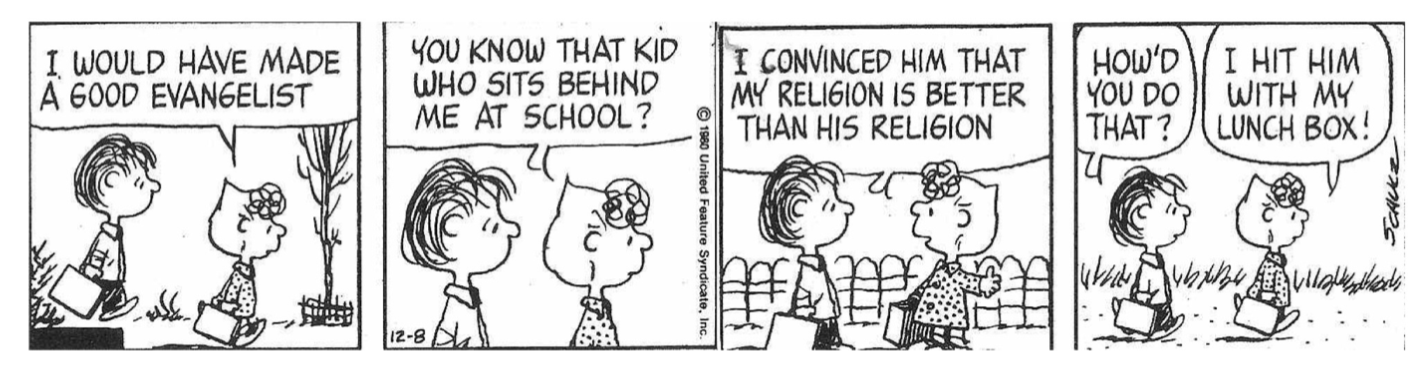 Aleah still has a long way to go to win the case, and any remedy she gets will be limited to her. But a win under the RFRA for any prisoner strengthens the Act’s protection for everyone from Baptists to Buddhists to sweat lodge users to Seventh Day Adventists.