Tag Archives: Cory Booker

Amici Line Up to Support First Step Habeas Right – Update for August 18, 2026

We post news and comment on federal criminal justice issues, focused primarily on trial and post-conviction matters, legislative initiatives, and sentencing issues.

AMICUS BRIEFS SUPPORT USING HABEAS CORPUS TO ENFORCE FIRST STEP

In a post back when the summer lay ahead of us with such promise, I reported that the Supreme Court had granted review in Maxwell v. Thomas. Maxwell seeks to resolve a circuit split over whether an inmate can bring a 28 USC § 2241 habeas corpus claim against the Bureau of Prisons when the First Step Act time credits being denied to him would only give him more time in halfway house or home confinement.

Because some circuits view halfway house and home confinement as a mere change in prison designation while the prisoner remains in the custody of the BOP, they have held that habeas corpus – which they hold must seek release from BOP custody altogether – is unavailable to prisoners who are denied FSA credits to which they are otherwise entitled under 18 USC  § 3632 or denied use of those credits for halfway house or home confinement otherwise allowed under 18 USC § 3624(g)(2). The Supreme Court has granted review in Maxwell to resolve the split among the circuits.

Last week, a blizzard of amicus briefs, from everyone from the National Association of Criminal Defense Attorneys to members of Congress, were filed in Maxwell supporting use of habeas corpus to enforce the right to FSA credits.

Rep Jamie Raskin (D-MD) – the ranking member of the House Judiciary Committee – filed a brief supporting use of habeas corpus to enforce the right to FSA credits. Raskin told the Court that Government Accountability Office “audits have unfortunately documented BOP’s systemic failures to properly apply time credits for prisoners participating in recidivism reduction programs and to track prisoners’ eligibility for transfer to pre-release custody. These failures do not merely inconvenience individual prisoners; they undercut the heart of the incentives-based programs that Congress believed would promote the rehabilitation of prisoners and reduce recidivism. Habeas relief is therefore an important backstop to enforce the system of incentives and rewards on which the success of the First Step Act’s programs hinges. A decision by this Court recognizing the availability of habeas to enforce prerelease transfer would further Congress’s historic, bipartisan objectives in the First Step Act of 2018: promoting rehabilitation and reducing recidivism.”

On the Senate side, Minority Leader Richard Durbin (D-IL) and Judiciary Committee member Senator Cory Booker (D-NJ) argued in an amicus brief that the Supreme Court had previously observed, “Congress clearly knows how to use mandatory language when it so desires [and] [t]he First Step Act’s system of earned time credits for federal prisoners is a perfect example. Congress eliminated the Bureau’s discretion about awarding earned time credits when statutory prerequisites have been met. The text and structure of the statute make this abundantly clear.”

Given that FSA passage was President Trump’s initiative and that it passed with a bipartisan supermajority, the amicus briefs explaining Congress’s intent and disappointment with BOP performance thus far are a helpful addition to the record.

Maxwell v. Thomas, Case No 25-5930 (cert granted June 1, 2026)

Amicus Brief of Rep, Jamie Raskin, Case No 25-5930 (August 12, 2026)

Amicus Brief of Senators Richard Durbin and Cory Booker, Case No 25-5930 (August 12, 2026)

~ Thomas L. Root

Billions for a Presidential Whim – Update for April 17, 2026

We post news and comment on federal criminal justice issues, focused primarily on trial and post-conviction matters, legislative initiatives, and sentencing issues.

MONEY AND WASTE – THE BOP LAST WEEK

The Trump Administration’s Fiscal Year 2027 budget wish list proposes a $1.7 billion increase to the Federal Bureau of Prisons’ current $8.1 billion budget, building on the $5 billion extra funding for prison repair and staffing the BOP got in last summer’s One Big Beautiful Bill Act.

Tucked into the $1.7 billion is $152 million allocated for the first year of costs to rebuild Alcatraz as a high-security federal prison facility, consistent with President Trump’s fixation of the symbolism of Alcatraz for a “tough on crime” administration. Last summer, the BOP trumpeted, “Alcatraz will stand as a beacon of American resolve, where the most dangerous offenders face accountability. For the public, it’s a promise fulfilled—a stronger, safer America. And for President Trump, it’s a project that will make our nation proud.”

We’re always proud to spend billions on a new supermax when we have a perfectly serviceable one in the high plains of Colorado.

The BOP could use some of its money more judiciously, Senator Cory Booker (D-NJ) told the Internet newsroom NOTUS last week. Booker complained that the BOP frequently transfers inmates to halfway houses long past when they are eligible, wasting millions of dollars in interest payments to nonprofits. “And while BOP said it’s making progress on addressing the delays,” NOTUS reports, Booker “said it’s not happening fast enough.”

“At best, this is an infrastructure and process failure; at worst, a blatant disregard for the law and public safety,” Booker, one of the co-sponsors of the First Step Act, said in a statement to NOTUS.

Homeland Security Today, Trump FY2027 Budget Proposes Record Homeland Security Boost, $1.5T Defense Spending Surge (April 5, 2026)

Filter, White House Budget: No Funds for Housing, Some for Reopening Alcatraz (April 9, 2026)

NOTUS, Bureau of Prisons Wastes Millions Holding Inmates It Could Transfer to Halfway Houses (April 7, 2027)

~ Thomas L. Root

$timulus Bill Is Cash-Rich But Justice-Poor – Update for February 22, 2021

We post news and comment on federal criminal justice issues, focused primarily on trial and post-conviction matters, legislative initiatives, and sentencing issues.

IT’S ALL ABOUT THE BENJAMINS

benjamins210222The House of Representatives finally released the text of the new stimulus package last Thursday, the 591-page American Rescue Plan, which includes billions of dollars for vaccine, unemployment benefits, state coffers, small businesses and stimulus checks, not to mention a grab-bag of special interest goodies like $15.00 an hour for the kid assembling sandwiches at the neighborhood McDonalds.

The American Rescue Plan contains something for almost everyone. Almost. For federal prisoners, the bad news is this: unlike the CARES Act (adopted 11 months ago) and the HEROES Act (a House measure last May that never passed the Senate), the American Rescue Plan contains nothing easing compassionate release, fixing the elderly offender home detention plan, or addressing any other criminal justice program.

The good news: inmates will be eligible for the $1,400 stimulus payment, just as they were eligible for the prior $1,200 and $600 payments.

[How to get stimulus payments, old and new]

The reasons that the ARP left out in a criminal justice measures are complex. Primarily, it is because Congress wanted to move rapidly, and the Democrats are pushing hard for Republican support in the evenly divided Senate. The New York Times reports that the House may pass the ARP this week, and the goal is to have President Biden sign the bill by March 14 (when existing federal unemployment money runs out). ARP is all about money, and sponsors want to keep it that way, because as a money bill, ARP has broad public support.

The Biden administration clearly plans some sort of comprehensive criminal justice reform this year. At a townhall meeting in Milwaukee last week, Biden said, “No one should go to jail for the use of a drug. They should go to drug rehabilitation.” The sentencing system should be changed to one that focuses on making sure that there are rehabilitation plans for inmates more generally, Biden said, adding that prison systems should have access to vocational programs that help those behind bars learn the career skills they need to succeed outside of prison.”

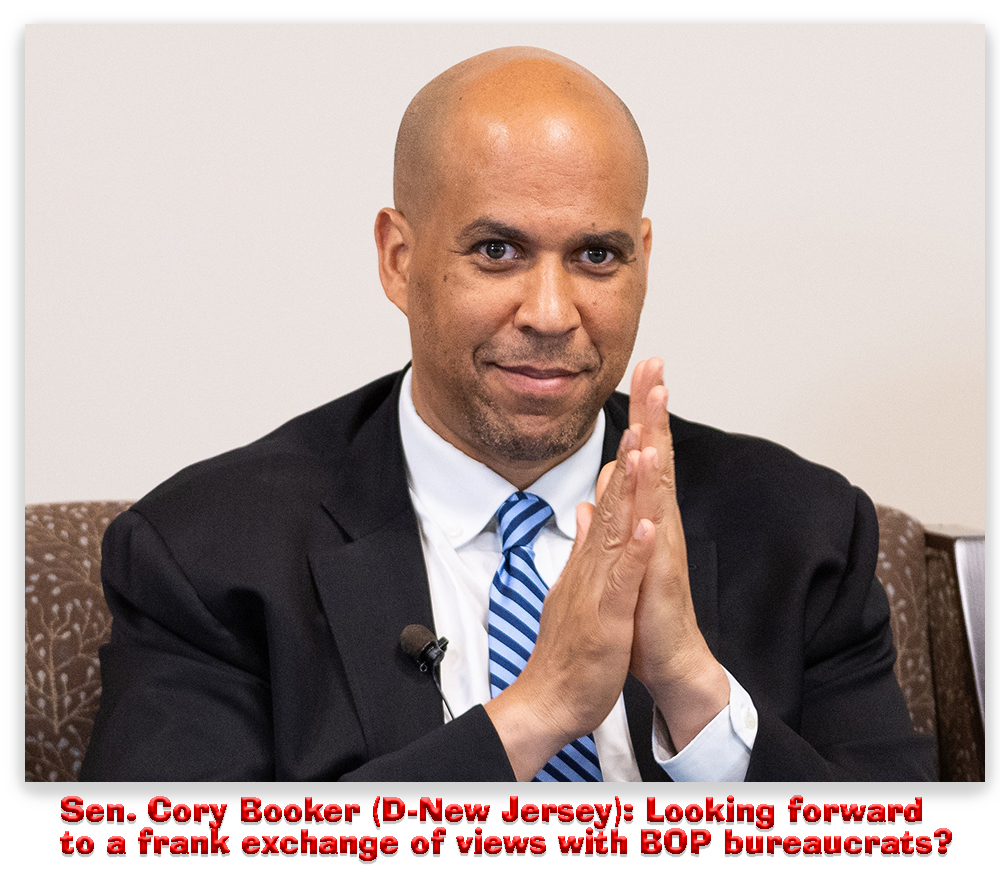
booker210222Meanwhile, Sen. Cory Booker (D-New Jersey) has been picked to chair the Senate Judiciary Committee’s Subcommittee on Criminal Justice and Counterterrorism. The subcommittee’s jurisdiction includes the Dept of Justice Criminal Division; the Drug Enforcement Administration, Bureau of Prisons, Sentencing Commission, and other law enforcement agencies.

This is significant, because a subcommittee chairman controls the subcommittee’s agenda, and can bring substantial pressure – even without writing legislation – on the agencies it oversees. “Our nation’s broken criminal justice system is a stain on the soul of our country, the result of decades of failed policies that have broken apart families and communities and have not made us safer,” Booker said. “I look forward to continuing and strengthening my partnership with Chairman Durbin [Sen Richard Durbin (D-Illinois), chair of the Senate Judiciary Committee] to further advance reforms to our policing and criminal justice system.”

letter161227Finally, interest groups finally have sympathetic ears in Congress and at DOJ. In an open letter to the not-yet-confirmed Attorney General, Merrick Garland, the ACLU urged him “to make clear, on-the-record commitments on five critical issues: mass incarceration; policing; COVID-19 in federal detention; the death penalty; and solitary confinement.” The ACLU asked that the “Trump DOJ’s efforts to thwart Congressional intent behind the FIRST STEP Act of 2018 should also be reversed: DOJ should support application of the Act’s reduced penalties at all sentencings, including resentencings in cases where an illegal sentence was vacated.”

HR -____, American Rescue Plan (reported to the House), Feb 18, 2021

New York Times, Republicans Struggle to Derail Increasingly Popular Stimulus Package (February 19, 2021)

Washington Examiner, Biden: ‘No one should go to jail for the use of a drug’ (February 16, 2021)

NJInsider, Booker to Chair Senate Judiciary Subcommittee on Criminal Justice and Counterterrorism (February 14, 2021)

ACLU, Open Letter to Merrick Garland (February 18, 2021)

– Thomas L. Root