Tag Archives: BOP

Maybe Our Last COVID-19 Post – Update for June 1, 2023

We post news and comment on federal criminal justice issues, focused primarily on trial and post-conviction matters, legislative initiatives, and sentencing issues.

A SHARP POST-MORTEM OF BOP’S COVID RESPONSE

covidneverend220627COVID is largely dead and gone, having been demoted from pandemic to endemic, allowing for a sober review of the BOP’s response. Last week, Stat – a Boston Globe health science publication – ran a statistics-based study of how BOP managed the pandemic. The review wasn’t pretty.

The study found that

•    BOP facilities with high-risk patients didn’t prioritize them –

The study noted that FMC Devens – a medical center – did not vaccinate a single inmate for Covid-19 until Feb 11, 2021 — “almost two months after its counterparts across the federal Bureau of Prisons got started.” Other facilities, including FCI Sandstone and FCI La Tuna, a federal prison in Texas with one of the highest cumulative Covid-19 case rates, didn’t begin vaccinating until February 2021, either. Other facilities appeared to receive shots shortly after the FDA authorized them but only vaccinated a fraction of their residents.

•    Federal prisons weren’t testing residents to prevent outbreaks –

By 2021, tests were widespread and cheap. Despite this, BOP prisons weren’t “even coming close to the CDC’s March 2021 recommendations that prisons should consider, at minimum, testing a random sampling of 25% of their incarcerated population each week.”

•    The BOP’s own accounting of its early Covid response is incomplete –

The BOP lacks data showing how many tests it ran earlier in the pandemic. Records show, for example, that one medical center, MCFP Springfield, did not test any inmates until June 2020. A BOP spokesperson told STAT the BOP “administered COVID-19 tests to the inmate population as early as March 2020” but had no idea how many tests were administered or when.

• A slow booster rollout –

People housed in prisons were among the first eligible for COVID boosters because of their high COVID risk. While several BOP prisons did well mounting quick booster campaigns — FCI Bastrop, a 900-person prison, administered nearly 550 shots in just two months — “booster rates at several prisons were shockingly low, months after additional shots were authorized.”

crazynumbers200519Commentators have complained for several years that the BOP’s COVID stats were deeply flawed, especially because of the agency’s practice of deleting from the total number of inmates who caught COVID people who were subsequently released or transferred to another facility. To this day, no one outside the BOP has any idea of the extent of the pandemic from April 1, 2020, to May 11, 2023.  As of the last day COVID stats were reported, the BOP said it had 43,681 inmates who had recovered from COVID. At its peak, the BOP reported more than 55,000 cases.

The study represents a stark illustration of the poor quality of BOP health services treatment of inmates and sketchy reliability of its data.

Stat, ‘Worse than what we thought’: New data reveals deeper problems with the Bureau of Prisons’ Covid response (May 23, 2023)

DOJ Inspector General, COVID-19 Interactive Data (May 12, 2023) 

– Thomas L. Root

It’s Peters Versus The ‘We Be’s’ At BOP – Update for May 31, 2023

We post news and comment on federal criminal justice issues, focused primarily on trial and post-conviction matters, legislative initiatives, and sentencing issues.

TEN MONTHS IN, COLETTE PETERS’ JOB HAS NOT GOTTEN EASIER

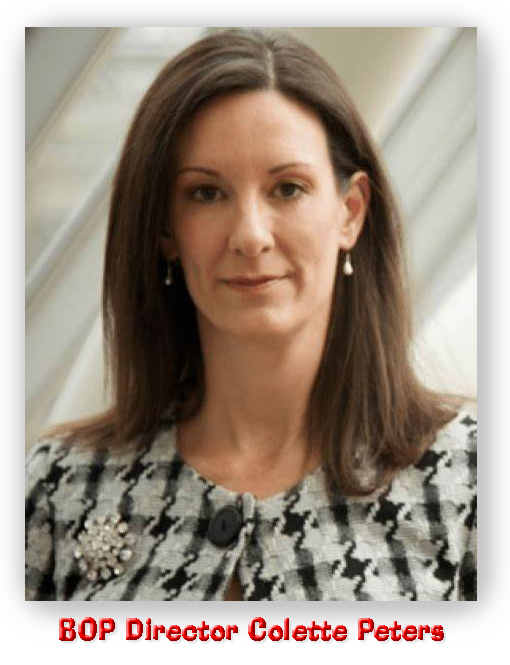
peters220929Last week, Walter Pavlo – usually a strident critic of the Bureau of Prisons – wrote a somewhat hagiographic report on BOP Director Colette Peters’ efforts to change the direction of the agency.

Pavlo reported on the BOP’s late-April conference in Colorado of every warden and regional director in the BOP for a bi-annual meeting in Aurora, Colorado. “As part of the event,” Pavlo recounted, Peters “had those who were formerly incarcerated address the group to be a part of what Director Peters calls ‘Listening Sessions’. We… were provided a stage to speak to this group of corrections executives to talk about the challenges facing the BOP. In looking at the faces of those in the audience, it was a bit of a shock for them to hear from former inmates about how to better run a prison, but such is the new approach by Director Peters, who also promised a listening session from victims of crime as well. At the conclusion of the presentation, the audience politely applauded and Director Peters then rose from her chair to emphasize the importance of the event. Slowly, but surely, those wardens and regional directors also rose to show their appreciation, or their perceived buy-in of the event. Time will tell.”

Last week, Peters told Federal News Network that her greatest challenge is to be at BOP long enough to change the “we be’s” employed by the agency. “’We be’ here when you got here, ‘we be’ here when you leave,” she said. “And what I tell people is that isn’t what happened in Oregon. I was able to stay for ten years. I hope I’m able to have a significant tenure here in order to make that happen. But you are absolutely right. Real change happens, boots on the ground. It’s the wardens that we need to lean into. It’s the captains we need to lean into. It’s the lieutenants that can really, really establish and set that culture.”

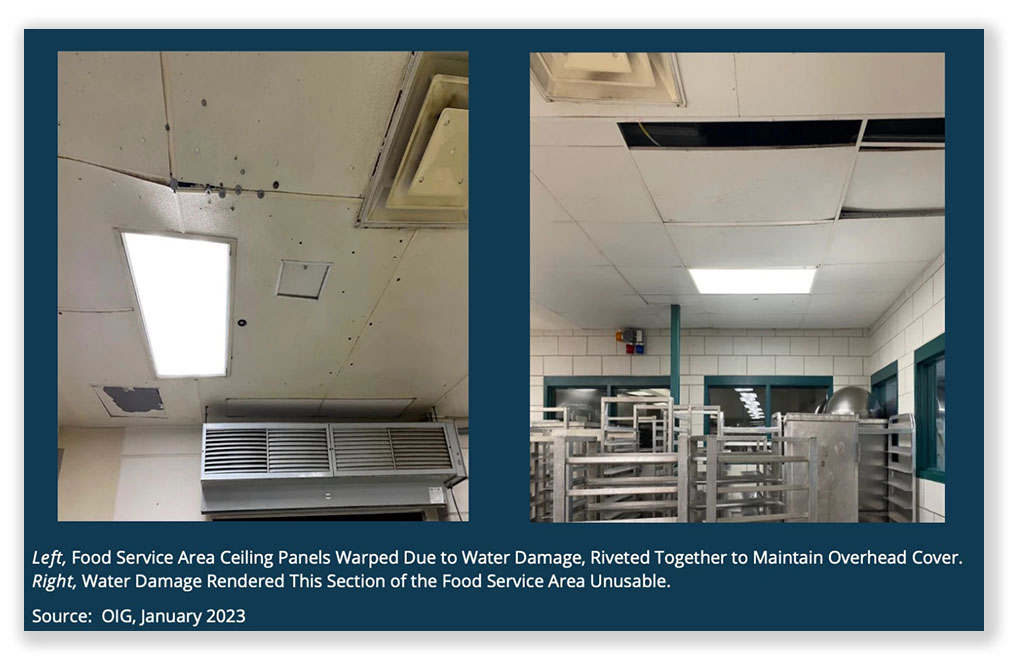
revolvingdoor230531One thing Peters has in abundance is challenges. The DOJ Office of Inspector General reported in May on decaying BOP facilities and just last week told ABC News, “We’re seeing crumbling prisons. We’re seeing buildings that we go into that have actually holes in the ceilings in multiple places, leading to damages to kitchens, to doctor’s offices to gymnasiums. And they’re not being fixed.”

Earlier this month, the Government Accountability Office added the BOP to its ‘H List,’ citing the “BOP’s longstanding challenges managing staff and resources, and planning and evaluating programs that help incarcerated people have a successful return to the community.” The Partnership for Public Service recently issued its annual survey of the best and worst places to work in the government and the BOP ranked dead last among 432 agencies.

sadprison210525The BOP sex abuse scandal continues to fester, but it’s a good sign that the DOJ is being very public about it. Last week, the US Attorney in the Northern District of Florida announced that former recreation CO Lenton Hatten pled guilty to a one-count indictment charging him with sexual abuse of a female inmate at FCI Tallahassee.

Pavlo argues that “Colette Peters is a different leader but she is indeed a leader who is not afraid to establish a new direction for an Agency that is searching for one. Even if those who are in the BOP disagree with Peters’ approach, they all know that the path the Agency is on is not sustainable without change. Director Peters has, for now, the support of Congress, something that her predecessor lacked.”

Forbes, Colette Peters’ Challenge: Change The Culture Of The Bureau Of Prisons (May 22, 2023)

Federal News Network, How BOP Director Colette Peters plans to raise employee engagement (May 26, 2023)

ABC, Inside the crisis of the crumbling federal prison system (May 26, 2023)

US Attorney Northern District, Fla, Former Federal Correctional Officer Pleads Guilty To Sexual Abuse Of An Inmate (May 26, 2023)

– Thomas L. Root

Sort of like ‘Warden, a “60 Minutes” Crew Is At The Sallyport’ – Update for May 19, 2023

We post news and comment on federal criminal justice issues, focused primarily on trial and post-conviction matters, legislative initiatives, and sentencing issues.

DOJ INSPECTOR GENERAL PUBLISHES FIRST REPORT ON SURPRISE INSPECTION OF BOP FACILITY

Another continuing story: Last week, I reported that the Department of Justice Inspector General said the BOP is falling down and the BOP was in institutional stasis.

IG230518The IG said that because of operational deficiencies at USP Atlanta and MCC New York (which has since been closed), its investigators set out to “assess how critical issues at BOP institutions are identified, communicated to BOP Executive Staff, and remediated.”

When the BOP Executive Staff told the IG that management “had been largely aware of the long-standing operational issues at USP Atlanta and MCC New York and expressed confidence in the BOP’s existing mechanisms to communicate information about operational issues.”

Almost as if to say, You want a for instance’?, the IG last week also released a report on its unannounced inspection of the low-security women’s prison at FCI Waseca. The report, resulting from a surprise inspection, uncovered “many significant issues,” according to KSTP-TV, and is “the first unannounced inspection under the DOJ Office of the Inspector General’s new inspections program, which is expected to include inspections at other federal prisons across the country in the coming months.”

The inspection, which occurred in late winter, was performed by a team of nine making physical observations, interviewing staff and inmates, reviewing security camera footage and collecting records. It found that Waseca was operating with only two-thirds of its normal staff complement, and that augmentation was taking a toll on services and operations. “We… identified staff shortages in both FCI Waseca’s health services and psychology services departments which have caused delays in physical and mental health care treatment. Such delays can potentially result in more serious health issues for inmates, create further demands on health care staff and increase the costs of future treatments,” Inspector General Michael Horowitz said.

The IG found

• Significant staffing shortages have cascading effects on institution operations.
• Substantial concerns with numerous blind spots, poor night vision, poor zoom quality, and an insufficient number of cameras.
• Significant challenge limiting the amount of contraband in the institution, specifically drugs.
• Institution management and staff frustration with the amount of time it takes to close a staff misconduct investigation.
• Long inmate program participation wait lists.

waseca230519
The report also documents ‘serious facility issues’ affecting the conditions for inmates, such as pipes leaking next to prisoners’ beds and roof damage leading to unsanitary food services situations.

The IG’s “unannounced inspection” program should give the BOP Central Office – which has long accepted (if not tacitly approved) BOP facility “inspections” which were nothing more than ‘dog and pony’ shows – some sleepless nights.

DOJ, Inspection of the Federal Bureau of Prisons’ Federal Correctional Institution Waseca (May 10, 2023)

Bringmethenews.com, DOJ: Surprise inspection of Waseca women’s prison finds ‘significant issues’ (May 12, 2023)

KSTP, Surprise inspection of Waseca prison uncovers ‘many significant issues,’ DOJ says (May 10, 2023)

– Thomas L. Root

BOP Fiddles While Prisons Crumble – Update for May 12, 2023

We post news and comment on federal criminal justice issues, focused primarily on trial and post-conviction matters, legislative initiatives, and sentencing issues.

DOJ INSPECTOR GENERAL SAYS BOP FACILITIES ARE FALLING APART… AND NO ONE KNOWS WHAT TO DO

In a couple of reports issued last week that will surprise few, the Department of Justice Inspector General said the BOP is falling down, and management knows it but pretends otherwise.

nero230512In the first report, the IG said, “The BOP’s institutions are aging and deteriorating: all 123 of the BOP’s institutions require maintenance, with a large and growing list of unfunded modernization and repair needs, and three of these institutions are in such critical stages of disrepair that they are fully or partially closed.

The report found that the BOP chronically requests much less maintenance money from Congress than it needs. At the same time, Congress has set aside over $1 billion to build two new institutions, “but these funds remain largely unspent, the projects have been in the planning stages for over a decade, and the BOP’s requests each year that Congress cancel one of these projects and rescind the funds—made at the direction of the Department of Justice and the Office of Management and Budget—have not been acted on.”

The second report is more damning. Because of operational deficiencies at USP Atlanta and MCC New York (since closed), the IG set out to “assess how critical issues at BOP institutions are identified, communicated to BOP Executive Staff, and remediated.”

But the BOP Executive Staff told the IG “they had been largely aware of the long-standing operational issues at USP Atlanta and MCC New York and expressed confidence in the BOP’s existing mechanisms to communicate information about operational issues.” In light of the fact the staff knew all about the messes in New York and Atlanta but had done nothing about them, the IG “modified the scope of this review… to focus on [the] causes and the scope of the challenges, their effects on institutional operations, and the Executive Staff’s efforts to remedy them.”

dogandpony230512The IG found that BOP internal audits of facilities were not reliable because everyone knew when the audits were to happen and, predictably enough, put on a ‘dog-and-pony’ show for the inspectors. “Executive Staff members questioned whether the BOP’s overwhelmingly positive enterprise-wide audit ratings reflected actual institution conditions,” the report said. “Validating this concern, we found that the USP Atlanta internal audit conducted in January 2020 rated USP Atlanta’s inmate management efforts as Acceptable despite identifying numerous significant issues.”

Also, the report said, the BOP’s internal investigative staff has insufficient, resulting in a “substantial backlog of unresolved employee misconduct cases.” Not only does the BOP lack adequate staff the IG found, it doesn’t even know “whether the number of staff it represents as necessary to manage its institutions safely and effectively is accurate.”

Finally, the BOP’s “inability to address its aging infrastructure as a foundational, enterprise-wide challenge [limits] its ability to remedy institution operational issues.” In other words, the agency does not have a coherent maintenance plan, but rather just tries to fix problems when they get too serious, resulting in “increasing maintenance costs and, in the most extreme circumstances, having to shutter institutions and relocate inmates because needed maintenance and repairs have resulted in unsafe conditions.”

"Do you miss me yet?" No...
“Do you miss me yet?” No…

In a written response to a draft of this report, the unlamented former BOP Director Michael Carvajal said the challenges discussed in this report were “long-established” prior to his February 2020 appointment. He added that the executive staff “acknowledged and made attempts to address these issues in some fashion, although they may not have been corrected or completed for various reasons.” Conveniently omitting the fact that in his 30-year tenure with the BOP, he had been everything from a correctional officer to a lieutenant, a captain, a correctional services administrator, an associate warden, a warden, a regional director and Assistant Director in Washington, D.C., Carvajal whined that his appointment and two-year tenure coincided with the onset of COVID-19 and that “responding to the pandemic ‘required prioritization of resources behind life safety’.”

DOJ, The Federal Bureau of Prisons’ Efforts to Maintain and Construct Institutions, Rpt No 23-064 (May 3, 2023)

DOJ, Limited-Scope Review of the Federal Bureau of Prisons’ Strategies to Identify, Communicate, and Remedy Operational Issues, Rpt No 23-065 (May 4, 2023)

BOP, BOP Director Announces Plans to Retire (January 5, 2022)

– Thomas L. Root

‘Hey, Abuse Victims, We Didn’t Really Mean It’ – Update for May 11, 2023

We post news and comment on federal criminal justice issues, focused primarily on trial and post-conviction matters, legislative initiatives, and sentencing issues.

SERIOUS STEPS TAKEN TO ADDRESS FEMALE PRISONER ABUSE

justkidding230511Just kidding. Last week, a BOP contractor employee monitoring home confinement inmates who sexually abused a Miami woman on house arrest got a prison sentence one month shorter than his victim’s time on house arrest.

Miami-Dade resident Benito Montes de Oca Cruz, 60, got a 4-month prison sentence for one count of abusive sexual contact, followed by a year of supervised release, four months of which will be on home confinement. His victim was on five months of house arrest at the end of her 51-month sentence when he committed “abusive sexual contact” on her.

Remember when DOJ official Lisa Monaco said that women prisoners who suffered sexual abuse at the hands of BOP employees would be recommended for compassionate release due to their treatment? She was kidding, too. One FCI Dublin victim was denied a compassionate release recommendation last fall, the BOP telling her “that the officers’ cases have not yet been ‘adjudicated…’ [Her attorney] said that prison officials told her to refile her motion, most likely once all the officers are charged or sentenced.”

The inmate has under a third of her sentence to serve – under three years – so the BOP’s “come back next week” directive should run out the clock on her request right smartly.

Sadly, this would be true even if she were doing a life term. One of the abusive COs, aptly if disgustedly known as ‘Dirty Dick,” committed suicide after he learned that he was under investigation for abusing women, according to the woman’s lawyer. “So unless they are planning to do a final adjudication… there will never she will never be able to meet the Bureau of Prisons’ standard.”

Maybe Satan can convene a grand jury somewhere in the fires of hell… 

beatings230511Of course, this begs the question of why the BOP and DOJ themselves cannot turn their considerable investigative powers to determine whether the abuse happened.  The BOP has its own investigative office, the SIS (which stands for “Special Investigative Supervisor”). The DOJ has an inspector general office. To be sure, the BOP doesn’t need to get a criminal conviction against a BOP employee to recommend compassionate release for an inmate victim, either.  But showing any initiative might hurt BOP employee morale by suggesting that abusing inmates was not a perk of working at the BOP.

And after all, how many other sordid tales about ‘Dirty Dick’ would be enough to corroborate that he was a s abuser? E. Jean Carroll only required two…

Last week, the female prisoner filed for compassionate release with her sentencing judge, seeking a sentencing reduction of about 34 and a half months of her 120-month sentence.

Miami Herald, A Bureau of Prisons monitor gets his sentence. He raped a Miami woman on house arrest (April 30, 2023)

KTVU, Dublin prison sex assault survivor seeks compassionate release after BOP denies (May 5, 2023)

– Thomas L. Root

DOJ Issues ‘Speedo’ First Step Act Report – Update for May 9, 2023

We post news and comment on federal criminal justice issues, focused primarily on trial and post-conviction matters, legislative initiatives, and sentencing issues.

DOJ ISSUES FIRST STEP ANNUAL REPORT

The First Step Act required the Dept. of Justice to issue five annual reports describing the implementation of various First Step programs. Last week, the DOJ released its third of the five reports required by law.

skimpysuit230509It reminds me of the old joke about skimpy bathing suits: What they reveal is interesting, but what they conceal is vital. With the end of CARES Act home confinement tomorrow at midnight, perhaps the biggest issues I see arising – judging from the email I get – are FSA credit eligibility, timely posting of FSA credits by the BOP, and the definition of “unstructured productive activities.” The Report is chock-a-block with stats and dense prose, but it falls pretty short in providing much useful information about these three areas.

Eligibility: The Report says that 53% of prisoners have minimum or low recidivism risk. Another 20% are medium risk while 27% are high risk. When the 63-category exclusions from FSA credit listed in 18 USC § 3632(d)(4)(D) are factored in, only 57% of all BOP inmates are eligible for FSA credits. 

For much of that the under-subscription, you can blame Congress, which in its zeal to pass First Step confused the goal of putting prisoners in programs to reduce recidivism  – which is to reduce recidivism – with a reward that should be withheld from some people because of their offenses of conviction. What this means, of course, is that some of the inmates whom society most needs to have rehabilitated – like people who run around with guns committing drug crimes or bank robberies – are the ones being denied incentives for changing their evil ways.

evilways230509Timely FSA Credit Update: Monthly updating of FSA credits for inmates is important for release planning as well as psychologically (it’s easier to be enthusiastic about a program when you can see regular progress: that’s why the airlines keep sending you emails telling you how many frequent flier miles you have amassed). The BOP’s history in tabulating FSA credits and reporting accurate numbers to prisoners is littered with failure.  

Not that you can tell that from the Report. Breezing past history, the Report says that “in August 2022, the Bureau began automatically calculating credits for individuals, which promotes consistency, allows the BOP to provide accurate calculations on a routine basis, and allows individuals in custody to track their time credits and prepare for prerelease from custody.” In fact, the August auto-calc launch was a disaster. The BOP successively promised at the end of September, in October, in mid-November, and at least twice in January 2023 that auto-calc was finally working. I still get emails weekly from different institutions asking me when FSA credits will update for the preceding month.

No Structure to ‘Unstructured Productive Activities’:  The FSA credit program not only awards credits for completing programs. It also rewards participation in “productive activities.”  The BOP has defined what some of those are but also includes a catch-all for ‘unstructured productive activities’, which might include work, adult education classes, independent study or leading an inmate recreation group.

unstructuredanimals230509It might include a lot, sort of like defining mammals as elephants, giraffes, and ‘perhaps all other non-elephants and non-giraffes with mammary glands.  We get the elephants and giraffes part of it, but exactly what else might there be?

The Report does not contribute at all to answering the question of just what an “unstructured productive activity” might be. One line of the Report says, “Moreover, while structured [evidence-based recidivism reduction] programs and [productive activities] with a facilitator-led curriculum are listed in the FSA Programs Guide, other activities, such as work assignments may also be recommended by staff to address individual needs as well as qualify for time credits for eligible individuals in custody.”

“Recommended by staff” without any central guidance seems like a recipe for inconsistency among different facilities, let alone possible favoritism among individual staff and inmates. In other words, it seems that the method of defining what an unstructured PA might be is itself just a little too unstructured.

Just a week ago, a Government Accountability Office manager noted the “BOP remains unable to provide a simple list of ‘unstructured activities’” that qualify for FSA credits… And in terms of what programs that might be made available, like, there are a lot of recidivism reduction programs that just haven’t been evaluated, that haven’t been monitored. So BOP doesn’t really have a good sense for how effective they are.”

Nothing in last week’s Report even acknowledges any of these problems, let alone suggests that it is being addressed.

DOJ, First Step Annual Report – April 2023 (issued May 2, 2023)

Federal News Network, How Bureau of Prisons can escape its own cage (April 25, 2023)

– Thomas L. Root

BOP Oversight Bill Resurrected – Update for May 4, 2023

We post news and comment on federal criminal justice issues, focused primarily on trial and post-conviction matters, legislative initiatives, and sentencing issues.

BILL TO ESTABLISH BOP OVERSIGHT RE-INTRODUCED

A bipartisan group of congressional lawmakers introduced legislation last week to establish a new oversight system for the BOP.

adult220225The Federal Prison Oversight Act (no bill number yet) is sponsored by Senators Jon Ossoff (D-GA), Mike Braun (R-IN), and Richard Durbin (D-IL), in the Senate and Representatives Lucy McBath (D-GA) and Kelly Armstrong (R-ND) in the House. The same legislators sponsored the same legislation when it was introduced last fall, but the measures died at the end of the 117th Congress.

The bills are a response to press reports that exposed systemic corruption in the BOP, several sex abuse scandals involving male BOP staff and female inmates, and increased congressional scrutiny. Ossoff, Braun and Durbin are founding members of the Senate Bipartisan Prison Policy Working Group.

“It’s no secret that BOP has been plagued by misconduct,” Durbin said. “One investigation after another has revealed a culture of abuse, mismanagement, corruption, torture, and death that reaches to the highest levels. And yet it still operates without any meaningful independent oversight.”

investigate170724FOPA would require DOJ to create a prisons ombudsman to field complaints about prison conditions and compel the Department’s Inspector General to evaluate risks and abuses at all 122 BOP facilities. Under the bill, the DOJ Inspector General would conduct risk-based inspections of all federal prison facilities, provide recommendations to address deficiencies and assign each facility a risk score. Higher-risk facilities would then receive more frequent inspections.

The IG would report findings and recommendations to Congress and the public, and the BOP would be required to respond with a corrective action plan within 60 days.

Press Release, Sens. Ossoff, Braun, Durbin Introduce Bipartisan Legislation to Overhaul Federal Prison Oversight (April 26, 2023)

The Appeal, Congress Seeks to Create New Independent Federal Prison Oversight Body (April 26, 2023)

ABC News, After investigating abuse in prison system, senators propose new oversight law (April 26, 2023)

– Thomas L. Root

“Code Blue” At BOP, GAO Says – Update for April 28, 2023

We post news and comment on federal criminal justice issues, focused primarily on trial and post-conviction matters, legislative initiatives, and sentencing issues.

GAO PUTS BOP ON CRITICAL LIST

The Government Accountability Office last week added the BOP to its “high risk” list of “government operations with vulnerabilities to fraud, waste, abuse, and mismanagement, or in need of transformation.”

criticalcondition230428Federal prisons were the only program added to the 2023 list, which is updated every two years. The GAO has seen “good progress in certain areas due to congressional and executive branch actions, but there are still serious, very consequential problems that need to be addressed,” GAO head Gene Dodaro recently told the Senate Homeland Security and Governmental Affairs Committee. “We’re adding management of the Bureau of Prisons, there’s been problems with staffing, which has led to some concerns about inmate and staff safety and also their efforts to evaluate programs that are intended to help deal with the recidivism issue.”

GAO first identified BOP management as an “emerging high-risk issue” in March 2021. Since then, GAO reports, the BOP has addressed 22 GAO recommendations, leaving 28 recommendations still on the table. What’s more, Charles Johnson, managing director of GAO’s homeland security and justice team, told Congress the BOP’s staffing level remains down 15%.

Speaking of management failings, the Associated Press reported last week that an inmate whose death sentence was commuted in 2019 remains housed on death row at USP Terre Haute.

deathrow230428Four years later, AP reported, the BOP has not moved him to a less restrictive unit. Asked about the prisoner’s continued placement on death row, a Dept of Justice official told AP that “the Bureau of Prisons is considering [the inmate’s] designation determination.”  At least the BOP is taking the time to carefully consider whether someone without a death sentence should be housed somewhere other than death row.

AP said that the case “illustrates chronic bureaucracy in the prisons system and the difficulties in getting anyone off death row.”

“How can I not get this guy off death row?” federal defender Monica Foster said in a recent interview. “Well, I did get him off death row. But why can’t I physically get him off death row?”

Meanwhile, after a recent disturbance at FCI Miami, a BOP low-security facility, Miami TV station WTVJ reported, “multiple sources from inside the facility [said] that more than 100 weapons were found…” A prison security expert told the station, “Discovering a hundred weapons in a search following something like this would signal the administration. It would signal me, if I were the administrator, to look into my search processes.”

The station said that a 2019 Occupational Safety and Health Administration report likewise recommended that the BOP “increase number of searches for weapons, cellphones and contraband.”

cellphones230428Last week, the BOP fired a shot across the bow at illegal cellphones, as ubiquitous in prisons as spring flowers in the garden. The U.S. Attorney for the Eastern District of North Carolina said that six inmates housed at three different facilities at the FCC Butner complex have been criminally charged with possession of contraband cell phones.

If convicted, each inmate faces up to an extra year of prison for possessing a cellphone and disqualification for First Step Act credits and the 365 days sentence credit for eligible programming participation.

U.S. Attorney Michael Easley said, “By indicting these six inmates at FCC Butner, we hope to send a clear message to the inmate population that the possession of cellphones will never be tolerated at FCC Butner.”

Govt Executive, Management of the Federal Prisons System Is Added to GAO’s High-Risk List (April 20, 2023)

GAO, Efforts Made to Achieve Progress Need to Be Maintained and Expanded to Fully Address All Areas (April 20, 2023)

AP, Inmate stuck on US death row despite vacated death sentence (April 16, 2023)

WTVJ, Video Shows Disturbance That Led to Lockdown at Federal Correctional Institution in Miami (April 21, 2023)

DOJ, Six Federal Inmates Indicted for Contraband Cell Phones (April 20, 2023)

– Thomas L. Root

Prisoners Not Alone in Hating BOP – Update for April 20, 2023

We post news and comment on federal criminal justice issues, focused primarily on trial and post-conviction matters, legislative initiatives, and sentencing issues.

TAKE THIS JOB AND SHOVE IT

Last year, the Partnership for Public Service ranked the Federal Bureau of Prisons as 431st out of 432 federal agency subcomponents in its 2021 Best Places to Work in the Federal Government Rankings survey.

BOPBestplace230420This year, things got worse. In the Partnership’s 17th annual rankings, the BOP ranked dead last out of the 432 agency subcomponents for calendar year 2022.

The 2022 rankings include 506 federal agencies and agency subcomponents. Rating categories are broken into 17 large agencies, 27 midsize agencies, 30 small agencies and 432 subcomponents.

The BOP’s rankings fell in subcategories for effective leadership, teamwork, pay, recognition, and performance both of agency and work unit.

Federal Times, Social Security Administration ranks as worst federal workplace (April 12, 2023)

Partnership for Public Service, 2022 Best Places to Work in the Federal Rankings (April 11, 2023)

– Thomas L. Root