
We post news and comment on federal criminal justice issues, focused primarily on trial and post-conviction matters, legislative initiatives, and sentencing issues.

SCOTUS GETS BACK TO WORK
This year’s Supreme Court term (known in judicial speak as “October Term 2026”) began last week with some interesting, if below-the-radar, developments.
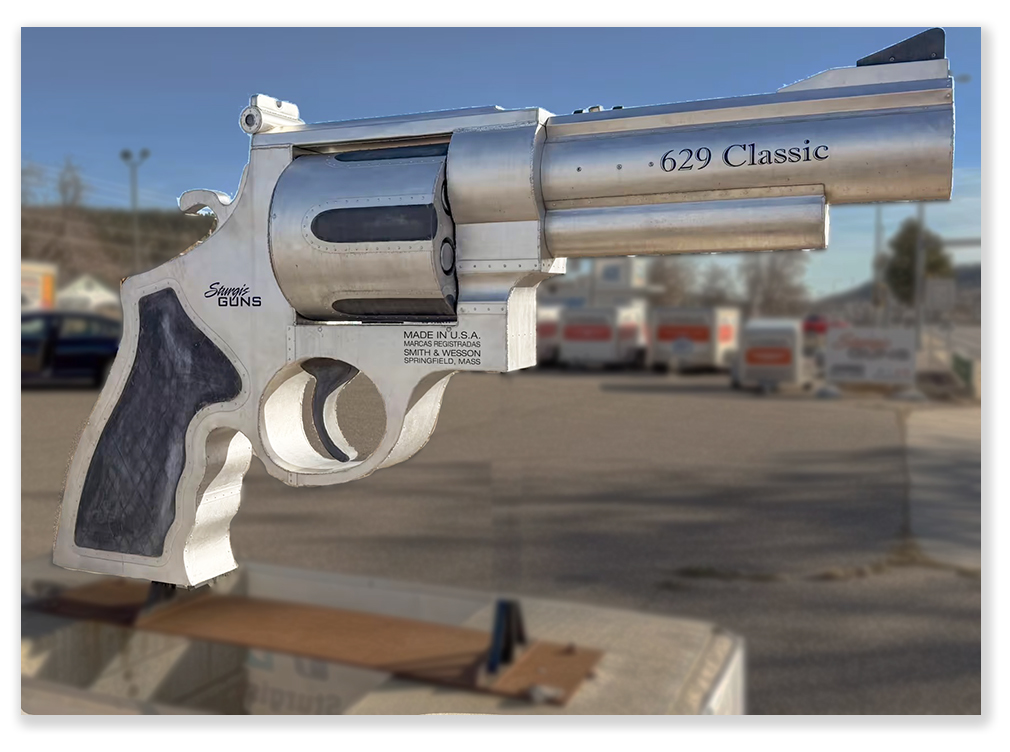 Felon-in-Possession: Last spring, the 5th Circuit declared 18 USC § 922(g)(1) – the felon-in-possession statute – unconstitutional as applied to a defendant whose only prior felony was a state simple drug possession conviction. The Circuit ruled that there was no historical evidence that people possessing contraband that didn’t pose a danger to others were prohibited from owning guns.
The government – which usually gets its way when it wants Supreme Court review – asked SCOTUS to take up the case but hold it until it could apply its ruling in United States v. Hemani, last June’s holding that 18 USC § 922(g)(3) – the subsection that bars “habitual” drug users from having guns – violates the 2nd Amendment as applied to a Texas man who said that he smoked marijuana a few times a week.
The Hemani decision noted that it did not address the federal law “disarming individuals convicted of felonies (often including drug-related ones.” After Hemani, Defendant Hembree urged the justices to leave the 5th Circuit’s ruling in place. “The decision in Hemani does not affect the outcome here,” he wrote in his response to the Government petition for certiorari, because it “says nothing about nonviolent felons being categorically and permanently disarmed.”
Last week, the Supremes agreed, denying the government review of the 5th Circuit decision. This means that the 5thCircuit joins the 3rd (Range v. Attorney General) and the 6th (United States v. Williams, sort of) in holding that § 922(g)(1) can violate the 2nd Amendment as applied to some people whose prior felonies don’t show dangerousness.
United States v. Hembree, 165 F.4th 909 (5th Cir. 2026)
United States v. Hembree, Case No. 25-1219 (Cert denied, October 5, 2026)
 Do The Notes Count? For everyone who ever wondered whether you have to read the footnotes, the Supreme Court will reconsider the 30-year-old Stinson v. United States holding that courts must follow Sentencing Commission commentary that interprets or explains a Guideline “unless it violates the Constitution or a federal statute, or is inconsistent with, or a plainly erroneous reading of, that guideline.”
Stinson made a lot of sense back when courts were required to follow the Guidelines and the Chevron doctrine directed courts to defer to agency interpretation of statutes. But in 2019, in a major test of deference to agencies’ interpretations of their own regulations, the court ruled in Kisor v. Wilkie that courts must defer to an agency’s interpretation of its regulations only where the regulation is genuinely ambiguous on the question at issue.
In Beaird v. United States, the Supreme Court will consider whether Stinson still correctly captures the deference that courts must give to the Guidelines’ commentary. The degree of deference matters because a significant amount of detail about how the sentencing guidelines should be applied is found in the commentary, covering the gamut of federal crimes from fraud to firearm offenses.
The Beaird defendant claims his sentencing was wrongly calculated to include an enhanced base offense level for unlawful gun possession by counting a 17-round magazine attached to the firearm as a “large-capacity magazine.”
The sentencing Guideline applies an enhancement where the firearm has a “large-capacity magazine,” but exactly how large a magazine must be to ne “large capacity” is only defined in the commentary as a “magazine or similar device that could accept more than 15 rounds of ammunition.” That definition sweeps in just about any double-stack auto pistol on the market, including five of the most popular Glocks, Sigs, Smith & Wessons and HKs.
The defendant argues that the commentary, which unlike the guideline itself is not approved by Congress, improperly expands the scope of the guideline. That guideline, he contends, was intended to target only weapons that are exceptionally dangerous or inherently illegal, not industry-standard semiautomatic firearms.
Beaird v. United States, Case No. 25-5343 (argued October 13, 2026)
 BOP Transgender Policy: Lawyers for Bureau of Prisons transgender inmates urged the Supreme Court on Thursday to leave in place a court order that bars the BOP from enforcing a new policy on healthcare that would prevent transgender inmates from obtaining hormone therapy and “social accommodations” (such as makeup, wigs, and padding).
The BOP adopted the policy earlier this year, following President Trump’s February 2025 executive order directing the attorney general to “ensure that no Federal funds are expended for any medical procedure, treatment, or drug for the purpose of conforming an inmate’s appearance to that of the opposite sex.”
Three transgender inmates then went to federal court in Washington, DC, to block the enforcement of the policy. On August 26, Senior US District Judge Royce Lamberth issued an order barring the BOP from implementing the policy, and on September 18, the DC Circuit refused to reverse the order. On September 28, BOP went to the Supreme Court to ask that the order be blocked, complaining that the district court had “substitut[ed] its own policy judgment” for the BOP, “rel[ied] on evidence outside the administrative record… fault[ed] the agency for following presidential directions… [and] denied prison administrators the substantial deference they are due.”
The issue of the temporary order, on the SCOTUS “emergency” docket, will probably be decided next week. Ultimately, a decision on the merits of the underlying case could not just affect transgender inmates but define how much deference courts have to give “prison administrators.”
Trump v. Kingdom, Case No. 26A-416 (application for stay filed September 28, 2026)
~ Thomas L. Root