We post news and comment on federal criminal justice issues, focused primarily on trial and post-conviction matters, legislative initiatives, and sentencing issues.
SUCH A DEAL
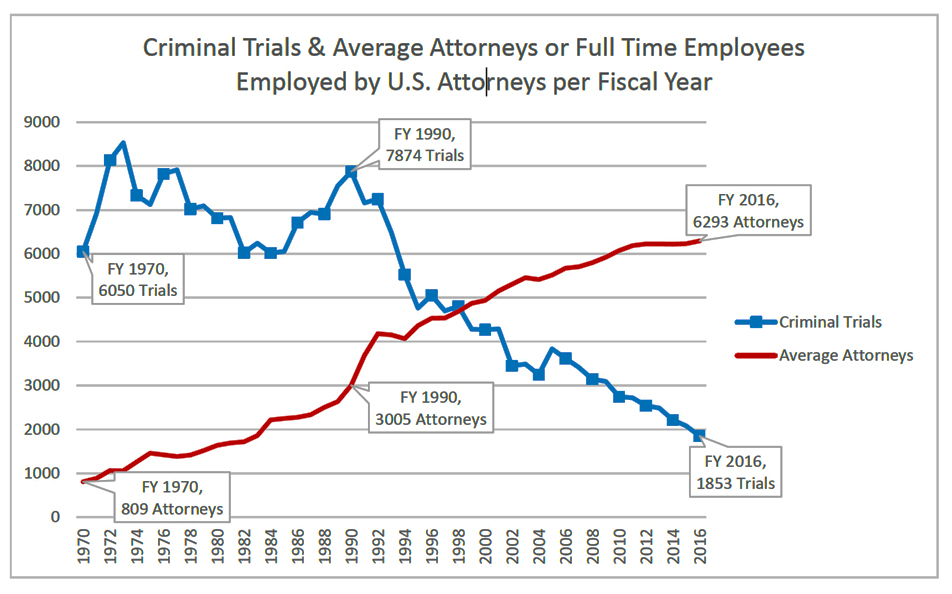
 Plea agreements are a way of life in the federal criminal system. About 97.5% of federal criminal convictions are obtained through guilty pleas, and all but a handful of guilty pleas result from a written plea agreement between the government and defendant.
Surprisingly, there is little uniformity in plea agreements among the 94 federal judicial districts. The U.S. Attorney’s Manual provides some guidance to federal prosecutors, but the form of the agreements varies widely from district to district.
Generally, the Manual states, the government lawyers are permitted to ask defendants, as a condition of entering into a plea agreement, to waive “appeal and… post -conviction remedies to the full extent permitted by law as a component of plea discussions and agreements.”
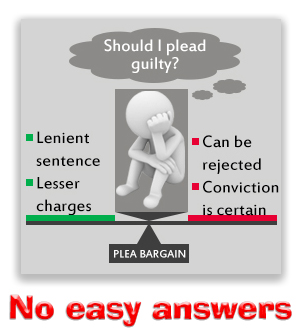
 It’s safe to say that the overwhelming majority of federal criminal defendants will sign and later benefit from a written plea agreement (although in many cases, the benefits of the plea agreement can be illusory, which is a discussion for another day). It’s almost as safe to say that almost all of those defendants will experience buyer’s remorse at some point, usually after they hear the prison door slam shut behind them.
That happened to Hatem Ataya, a Michigan physician who pled guilty to a Medicare fraud scheme in 2015. His plea agreement included an appellate waiver, in which he gave up any right to appeal his conviction or sentence “on any grounds.” Doc Ataya appealed anyway, and the government moved to dismiss the appeal on the basis of the waiver.
 Defendants appeal against the waiver all the time, and the government’s normal response is to seek dismissal of the appeal on the basis of the waiver. In 2016, about 18% of all criminal appeals were bounced on procedural grounds, and most of those were because of valid appeal waivers. But it does not always work this way. In a notable 3rd Circuit outlier decision, the government won the right to resentence a defendant who filed an appeal despite his waiver, under the dubious theory that he had breached the plea agreement by appealing. Given the less-than-user-friendly Justice Department, under the leadership of Jefferson Beauregard Sessions III, watch for more of these vindictive resentencings.
Doc Ataya, however, might be lucky. He claimed that his appeal waiver was not valid, because the court did not inform him of some of the consequences of his plea, including deportation to a hotter, drier place. There’s a rule for a district court to follow when accepting plea deals – F.R.Crim.P. 11 – and in this case, Dr. Ataya argued, the district court missed an important step.
Earlier this week, the 6th Circuit agreed. Holding that it was “not convinced that Ataya entered into the plea agreement as a whole knowingly and voluntarily,” the Circuit referred the case for decision on the merits to “determine whether the plea agreement and the district court adequately informed Ataya of his plea’s consequences, in particular any possibility of denaturalization…”
The 5th Amendment requires that waivers of constitutional rights – such as the right to trial or appeal – must be given knowingly and voluntarily. There was no question Dr. Ataya knowingly waived his appellate rights. “But,” the appellate panel said, “appellate waivers are parts of larger contracts, and they must stand or fall with the agreements of which they are a part… A defendant decides to waive the right to challenge his conviction in light of his understanding of the conviction’s key consequences. If he misunderstands any of those consequences, that undermines the knowingness of the appellate waiver.”
During the hearing at which Dr. Ataya’s guilty plea was taken, the district court did not inform him that the plea agreement required him to pay restitution and a special assessment and to forfeit the fraud proceeds. Rule 11(b)(1)(J)–(L) requires that the defendant be told this. “Perhaps more troublingly,” the Circuit said, “neither the plea agreement nor the district court seems to have mentioned that Ataya, who became a naturalized citizen after the alleged frauds, might face denaturalization as a result of his conviction.”
 One might wonder at this. The defendant held advanced degrees and was an M.D. Plus, he had no fewer than three privately-retained attorneys representing him at trial. It taxes credulity to believe that he walked into the plea agreement not understanding there might be a fine, would definitely be a special assessment ($200.00, about what he’d collect for two office visits from patients), and that he could be deported. But it doesn’t matter if the defendant is represented by David Bois and Neal Katyal. He has to hear it from the court. Because he did not, the Circuit allowed, “it is thus quite possible that Ataya did not grasp some of the consequences of his plea.”
But one good technicality begets another. Sure, the district court failed to “comply with Rule 11(b)’s requirements to a T.” But Dr. Ataya’s lawyers never objected to the error. If they had, of course, the district court would have fixed the mistake right away, so maybe their reticence is understandable. But there’s a catch: without a contemporaneous objection, Dr. Ataya has to do more than show that the district court goofed. He has to show F.R.Crim.P. 52(b) “plain error” on appeal. That requires him to demonstrate “a reasonable probability that, but for the error, he would not have entered the plea.”
That should prove to be a pretty tall order, although he does have the Supreme Court’s recent decision in Lee v. United States to fall back on. Indeed, that may be the reason for the 6th Circuit’s caution (despite the fact the Ataya decision does not mention Lee).
Because that question had not been raised by either the Doc or the government, the 6th Circuit ordered the parties to brief the issue for argument before another panel of the court.
United States v. Ataya, Case No. 16-2611 (6th Circuit, July 17, 2017)
– Thomas L. Root










 Glen filed a petition under