Tag Archives: petersburg

Federal Prisons to Close! (Well, Only Some of Them) – Update for July 2, 2026

We post news and comment on federal criminal justice issues, focused primarily on trial and post-conviction matters, legislative initiatives, and sentencing issues.

BOP RETRENCHMENT ANNOUNCED
The Federal Bureau of Prisons said yesterday that it will close at least six prisons, citing “extreme staffing challenges” and crumbling facilities (leaving something like 113 still running in the system).

The announcement represents the most ambitious plan yet to address both the staffing crisis and the need to clean up years of maintenance neglect. The New York Times calls the closure “the most expansive effort to shut down or consolidate federal prisons in response to funding shortages.” Ironically, BOP Director William K. Marshall III announced the plan three days short of the first anniversary of the signing of President Trump’s One Big Beautiful Bill Act last July 4th, which gave the BOP a $5 billion one-time infusion to add to staff and fix prisons that are falling apart.

The prisons being closed are low-security facilities FCI Beaumont Low (and adjacent minimum-security camp), FCI Big Spring, and FCI La Tuna (all in Texas); FCI Petersburg Low (Virginia); and the already-shuttered FCI Taft, in the California desert north of Los Angeles (closed almost seven years ago). Additionally, the BOP will decommission the minimum-security satellite camp at the Federal Medical Center in Lexington, Kentucky. The highest-population facility affected by the closure announcement is FCI Beaumont Low, with 1,651 inmates in the low-security prison and another 514 in the adjacent camp.

The Agency also said it would change FPC Duluth and FCI Morgantown (both minimum-security facilities) to low-security facilities.

Staff freed from duties at the closed facilities in Beaumont, Petersburg and Lexington will be transferred to other co-located facilities. Some from Big Spring and La Tuna – each at least 250 miles from the next-closest BOP facility – will lose their jobs.

According to an unidentified official at the Council of Prison Locals, which served as the BOP employees’ union until the BOP cut ties with it about a year ago, the union had not been aware of the plan to close the facilities until yesterday’s announcement.

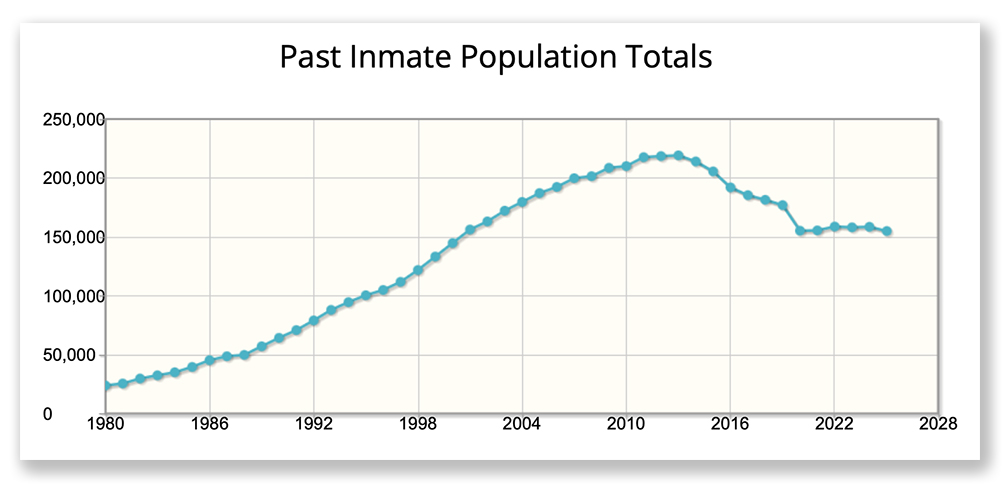
The BOP population swelled nearly tenfold between 1980 (about 25,000 prisoners) and over 219,000 in 2013. The Sentencing Reform Act of 1984, mandatory minimum sentencing laws, and the abolition of federal parole left the system severely overcrowded.

Due in large part to Attorney General Eric Holder’s Smart on Crime Initiative, a policy that reserved the harshest federal penalties for the most serious offenders while reducing the prosecution of some low-level, nonviolent drug cases and later to Trump’s First Step Act, the BOP population has fallen by 30 percent since then.

BOP inmates at the affected institutions only learned that they would be relocated soon to locations not disclosed to them. The closure of these facilities will require the transfer of nearly 4,000 inmates to institutions across the federal system.

Congress observed in the First Step Act that placing prisoners close to their families was not only humane but contributed to rehabilitation. Thus, 18 USC 3621(b) provides that the BOP

shall designate the place of the prisoner’s imprisonment, and shall, subject to bed availability, the prisoner’s security designation, the prisoner’s programmatic needs, the prisoner’s mental and medical health needs, any request made by the prisoner related to faith-based needs, recommendations of the sentencing court, and other security concerns of the Bureau of Prisons, place the prisoner in a facility as close as practicable to the prisoner’s primary residence, and to the extent practicable, in a facility within 500 driving miles of that residence…

Sadly, that provision has more holes than a Swiss cheese factory. Any minimally competent BOP facility designator can easily find an excuse – bed availability, population management, education or medical needs, and the undefined but expansive “other security concerns” – to place a Hawaiian in New Hampshire or a Floridian in California.

To top it off, § 3621(b) provides that “notwithstanding any other provision of law, a designation of a place of imprisonment under this subsection is not reviewable by any court.”

In other words, the provision is utterly toothless.
Writing in Forbes, Walter Pavlo observes that “[d]ecades of correctional research have consistently shown that maintaining family connections is one of the strongest predictors of successful reentry and lower rates of recidivism.”  Good luck with that. Pavlo notes that “[f]or thousands of inmates and their families, a prison closure is not just a change in address. It is a significant disruption to the stability they have worked to build while incarcerated.”

To be sure, Marshall has an unenviable task before him. The BOP has a potful of money for repairs over the next few years, but even that is insufficient for the more than $4 billion in maintenance needed. In announcing the closures, Marshall said, “We are a Bureau that acts. These actions are necessary to address longstanding infrastructure and staffing challenges while ensuring the Bureau remains focused on its core mission of operating safe, secure, and efficient correctional facilities. We will support our workforce throughout this transition and responsibly position the agency for the future.”

BOP, Federal Bureau of Prisons Announces Facility Closures and Operational Changes (July 1, 2026)

The New York Times, Bureau of Prisons Will Close Facilities Housing Thousands of Inmates (July 1, 2026)

Forbes, Bureau of Prisons Announces Multiple Facility Closings Citing Budget (July 1, 2026)

~ Thomas L. Root
BOP Fiddles, COVID Burns – Update for October 14, 2020

We post news and comment on federal criminal justice issues, focused primarily on trial and post-conviction matters, legislative initiatives, and sentencing issues.

HEY, FATSO! YOU’VE GOT COVID-19!

livebutonce201014The Centers for Disease Control and Prevention cranked up its warning about obesity and COVID-19 last week. Last spring, if you had a BMI over 40 (6 feet tall and 295 lbs), you were at risk. At the end of June, that dropped to a BMI of 30+. That made a 6-feet tall guy weighing 221 lbs at risk.

Last week, the link between extra pounds and severe Covid-19 grew stronger as the CDC said that people who are merely overweight, not just the obese, may be at high risk of serious disease from the infection. Now, the risk starts with a BMI of 25. Besides the merely overweight (62% of America), smoking has been added to the risk-factor list.

The BOP, which has provided daily COVID-19 numbers since March 2020, dropped weekend reports a few weeks ago. Last Friday, the agency didn’t bother to update its numbers from the day before. Yesterday.s report had 1,745 sick inmates, 736 sick staff, COVID-19 in 119 institutions (98% of all facilities) and 135 inmate deaths.

The latest to die was Robert Pierce, a 52-year old Big Spring inmate, who fell ill September 18 and died last Friday. Meanwhile, the news media reported COVID-19 increases at USP Allenwood, Petersburg Medium, Raybrook and McDowell.

In a pair of letters to Attorney General William P. Barr and BOP Director Michael Carvajal, Senators Elizabeth Warren (D-Massachusetts) and Richard Durbin (D-Illinois) suggest that the agency’s response to coronavirus outbreaks in federal prisons is failing, and they question the BOP’s reliance on solitary confinement to isolate sick prisoners rather than granting compassionate release.

The Washington Post reported last week that “Federal prisoners, corrections staff, government inspectors and civil rights advocates have complained for months that the BOP’s strategies, when useful, are inconsistently applied. The overall inadequate response is leaving a vulnerable population at risk of infection and creating major vectors for transmission more than seven months into the pandemic.”

The BOP’s COVID death toll “is mounting evidence that efforts to contain the virus within BOP facilities are failing,” Durbin Warren wrote to Barr and Carvajal in one of the Oct. 2 letters, which were viewed by The Washington Post.

plague200406The Post previously reported that prison staff have raised concerns about a lack of personal protective equipment and unsafe workplace conditions — issues that have prompted federal employees to sue the government. According to reports by the DOJ Office of the Inspector General on federal corrections facilities nationwide, persistent staffing shortage has triggered regular lockdowns during the pandemic in which prisoners aren’t allowed out of their cells, are often unable to shower and face more restrictions than if they were in solitary confinement.

Bloomberg, CDC Expands COVID Risk Warning to Include Overweight People (October 8, 2020)

CDC, People with Certain Medical Conditions (October 6, 2020)

BOP, Inmate Death at FCI Big Spring (October 13, 2020)

Harrisburg Patriot, Another big increase in COVID-19 cases at the Allenwood medium-security prison (October 5, 2020)

Roanoke Times, Inmate at federal prison in Petersburg dies of COVID-19; 21 others are infected (October 7, 2020)

Washington Post, Warren, Durbin slam government’s ‘failing’ efforts to contain coronavirus in federal prisons (October 5, 2020)

– Thomas L. Root

Prisons Not Testing Right For COVID, CDC Says – Update for August 26, 2020

We post news and comment on federal criminal justice issues, focused primarily on trial and post-conviction matters, legislative initiatives, and sentencing issues.

BOP LOSING AT WHACK-A-MOLE

whack200602Not quite three months ago, Bureau of Prisons Director Michael Carvajal confidently told the Senate Judiciary Committee, “at this point, we have more recoveries than new infections. And I believe that this shows that we are now flattening the curve.”

What is being “flattened” is the BOP’s response to the pandemic.

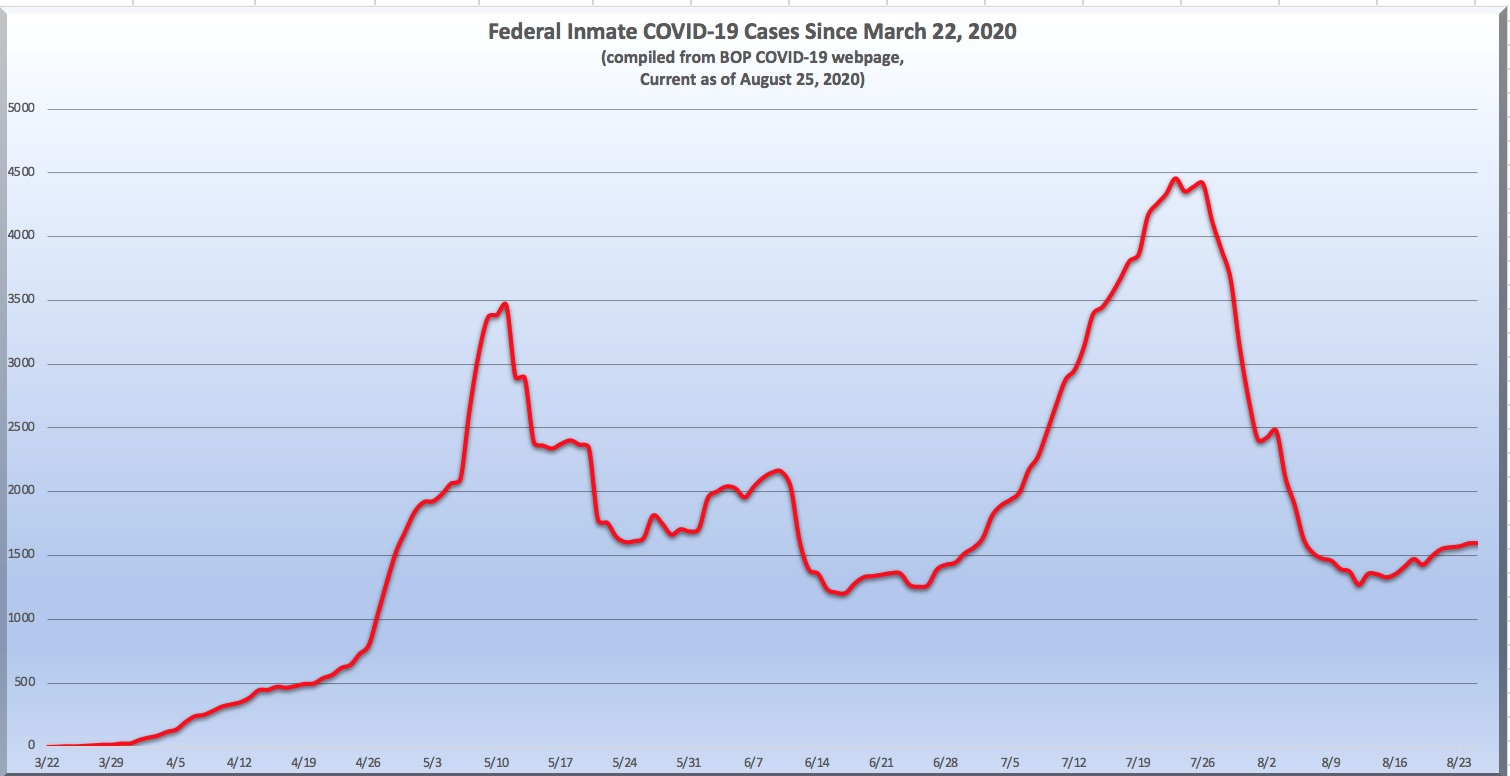
Twelve weeks later – after inmates spiked July 26 at 4,413 – the BOP’s numbers have stopped falling, and in fact increased slightly. As of Tuesday night, 1,597 inmates were sick, up 8% from last week. Sick staff numbered 638, up 11% from a week ago, four more inmates died, bringing the total to 122, and COVID-19 was present in 109 facilities, 89% of BOP facilities.

Complaints continued last week about the BOP’s handing of the pandemic continue, mostly from staff. When the correctional officer union president at USP Thomson (Illinois) found out he was COVID-19 positive, the 20th BOP staffer there to come down with the virus, he told ABC news he had to find an independent testing site on his own. “Testing for staff isn’t available at the prison but they test inmates for COVID-19 at the prison,” ABC quoted him as saying. “Staff also can’t get tested due to being forced to work double 16-hour shifts almost on a daily basis.”

BOPCOVID200826

Meanwhile, the Centers for Disease Control and Prevention issued a study last week that looked at 15 prisons, including five unidentified BOP facilities. The CDC found that mass testing at the facilities “suggests that symptom-based testing underestimates the number of COVID-19 cases in these settings. Mass testing resulted in a median 12.1-fold increase in the number of known infections among incarcerated or detained persons in these facilities, which had previously used symptom-based testing strategies only.” Symptom-based testing, of course, is the preferred BOP approach, in which only inmates with symptoms get tested.

Additionally, the study found that “in two federal prisons, all persons who had tested negative during mass testing events and had subsequently been quarantined as close contacts of persons testing positive were retested after 7 days. At retesting, 20.5% of persons in BOP prison 2 and 26.8% in BOP prison 3 had positive test results.”

As of last night, the BOP had still only conducted enough tests to cover 31% of the BOP population, with 26% of those tests coming back positive.

The failure of symptoms-only testing is illustrated in the whack-a-mole problems the BOP faces. Besides USP Thomson, the BOP is facing outbreaks at FCC Petersburg (Virginia), FDC San Diego and FCI Victorville in California, FCC Coleman (Florida), and FCI Manchester (Kentucky). Numbers are finally dropping at FCI Seagoville and FCI Beaumont (both Texas).

Marketwatch ran a piece last week on the cost to taxpayers of COVID-19 in prisons, noting that “the public understands the urgent need for action. A national survey found that 66% of likely voters, including 59% of those identifying as ‘very conservative,’ believe elected officials should consider measures to reduce overcrowding in prisons and jails. Survey research over many years has shown that most Americans believe the U.S. locks up too many people.”

poorcorresp200826Meanwhile, U.S. Senator Marco Rubio (R-Florida) is not happy, and last week, he let Attorney General William Barr know it. The Miami Herald reported that “nearly nine months after demanding an investigation of allegations of rampant sexual abuse at Coleman Federal Correctional Complex exposed in a Miami Herald story, Sen. Marco Rubio says he still hasn’t gotten a ‘substantive response’. And he is not happy — especially since there is new cause for concern with COVID-19.”

On Thursday, Rubio wrote to Attorney General William Barr to express his “dissatisfaction that the DOJ has not sufficiently responded to inquiries I have made in regard to FCI Coleman” about the allegations. As well, he complained that “my office continues to receive numerous complaints that FCI Coleman staff are not following the CDC’s Guidance for Correctional and Detention Facilities, which — among other measures — recommends BOP officers and inmates wear masks when in close proximity with others. Most concerning, my office has been made aware that facility management may have ordered staff to return to work despite testing positive for COVID-19. I have already requested the BOP take immediate action to address this allegation, and I look forward to the outcome of its investigation.”

ABC News, ‘Who is going to man the prison if everyone tests positive?’ Corrections officer union warns of dual threat facing federal prisons (August 19, 2020)

CDC, Mass Testing for SARS-CoV-2 in 16 Prisons and Jails — Six Jurisdictions, United States, April–May 2020 (August 21, 2020)

Marketwatch, U.S. taxpayers already pay a high price to support America’s giant prison population. Now COVID-19 is costing them even more (August 20, 2020)

Miami Herald, Rubio demands answers from Barr on sexual abuse, COVID response at Florida prison (August 20, 2020)

– Thomas L. Root