Tag Archives: fentanyl

Pot Good, Fentanyl Very Bad – Update for December 23, 2025

We post news and comment on federal criminal justice issues, focused primarily on trial and post-conviction matters, legislative initiatives, and sentencing issues.

TRUMP DOES THE ‘WEAVE’ ON DRUG CRIMES

President Trump is proud of “the weave,” that oratorical puzzlement that sounds to some like Grandpa forgot to take his meds. Last week, Trump tried it on drug policy.

On Monday, Trump signed an executive order declaring fentanyl and its precursors  as “weapons of mass destruction.” Three days later, he signed another order directing federal agencies to reschedule marijuana as a Schedule III rather than Schedule I.

The fentanyl executive order instructs federal agencies, including the Depts of Justice, State, Treasury and Defense, to pursue fentanyl-related crimes more aggressively and to explore military cooperation with civilian law enforcement.

The Atlantic last week reported that while the

WMD designation may not have immediate legal implications for Trump’s military powers, it could potentially change how domestic drug cases are prosecuted. The use of a WMD against people or property in the U.S. carries a maximum sentence of life in prison; if someone dies, prosecutors can argue for the death penalty… That could impose a life sentence on any person who uses drugs laced with illicitly manufactured fentanyl, or anyone who gives drugs laced with illicitly manufactured fentanyl to their friend. As of now, the Trump administration has offered no guidance on how this might play out.

Earlier this year, Attorney General Pam Bondi claimed that the Trump administration’s fentanyl seizures had saved the lives of 258 million Americans — three-quarters of the population of the entire country. However, in September, Trump claimed that “300 million people died … from drugs” in 2024, which would be almost the entire US population, and about five times as many people as died that year from anything anywhere in the world. In fact, CDC numbers show that fentanyl was involved in 42,233 deaths between April 2024 and April 2025.

Drug defendants with fentanyl in their cases probably should not expect any break from this Administration any time soon.

A different story has played out on marijuana, although Trump’s executive order issued last Thursday on weed changes more for the cannabis industry’s bottom line than the architecture of prohibition.

Under the Controlled Substances Act, marijuana is currently placed in Schedule I, a category reserved for substances deemed to have “no currently accepted medical use.” That’s the most restrictive controlled substance category — more serious than where fentanyl is scheduled — and clearly at odds with at least 40 states that have legalized medical marijuana.

Trump’s executive order on Thursday prompts the Justice Department to hasten the rescheduling of marijuana as a Schedule III drug, alongside common prescription medications like Tylenol with codeine.

The Biden administration began rescheduling in the fall of 2022, but left the matter unfinished despite its promise to get it done. Trump’s order — which directs Attorney General Pam Bondi to hasten the process of loosening federal restrictions but does not include a timeline — comes after an intensive lobbying campaign from cannabis business interests.

Although the Wall Street Journal complained that by his executive order, Trump is going “for the Stoner Vote,” the President was lobbied hard by the commercial cannabis industry for the change, due to the banking and tax relief such a reclassification will bring to the business. “I’ve never been inundated by so many people as I have about this particular reclassification,” Trump said.

While Schedule III drugs can legally be prescribed, they still require Food and Drug Administration approval, which marijuana lacks. While, in theory, the order could reduce or eliminate some federal criminal penalties, statutory mandatory minimums would remain unchanged unless Congress amends 21 USC §§ 841 and 960. It is possible that some Sentencing Guidelines would change, but any such modification is several years off and would have to undergo an additional proceeding to become retroactive.

Even under §§ 841 and 960 as now written, federal prosecutors have not prioritized marijuana cases in recent years, especially regarding state-level approved marijuana commerce. As of January 2022, no one in federal prison was doing time solely for simple marijuana possession. Marijuana trafficking cases are down 58% since 2020, according to the U.S. Sentencing Commission.

What might this mean for 18 USC § 922(g)(3), which prohibits users of unlawful drugs from possessing guns? One firearms trade group has reminded its members that “state legalization of marijuana similarly has no effect on legality under 18 USC § 922(g)(3), and possession by a purchaser of a state medical marijuana card should be taken as evidence of unlawful use.”

What’s more, Trump taking a more accepting stance toward marijuana could prompt Congress to revisit the Controlled Substances Act, either by amending it to exempt state-level marijuana legalization regimes or by de-scheduling the drug from federal regulation altogether.

Trump’s order could also impact United States v. Hemani, currently pending in the Supreme Court. Hemani was convicted of a § 922(g)(3) offense, and SCOTUS has been asked to rule on whether disarming marijuana users complies with the 2nd Amendment. A decision is expected by June 2026.

Executive Order, Designating Fentanyl As A Weapon Of Mass Destruction (December 15, 2025)

Executive Order, Increasing Medical Marijuana and Cannabidiol Research (December 18, 2025)

The Atlantic, The New ‘Weapon of Mass Destruction’ (December 16, 2025)

Centers for Disease Control and Prevention, Provisional Drug Overdose Death Counts (September 17, 2025)

U.S. Sentencing Commission, Quick Facts – Marijuana Trafficking (FY 2024) (May 2025)

Roll Call, Press Gaggle: Donald Trump Speaks to Reporters Before Air Force One Departure – September 14, 2025 

The Hill, Trump signs executive order to expedite marijuana rescheduling (December 18, 2025)

CNN, Trump signs executive order expediting marijuana reclassification after lobbying from cannabis industry (December 18, 2025)

The Reload, Analysis: Trump’s Marijuana Moves Unlikely to Immediately Impact Gun Owners (December 21, 2025)

~ Thomas  L. Root
Senate OKs Tougher Fentanyl Enforcement – Update for March 18, 2025

We post news and comment on federal criminal justice issues, focused primarily on trial and post-conviction matters, legislative initiatives, and sentencing issues.

SENATE PASSES TOUGH FENTANYL BILL

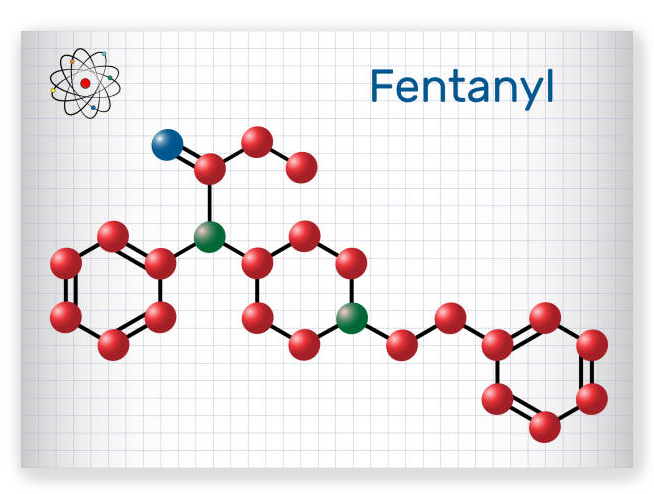
fentanyl210422The Senate last Friday passed S.331, a bill that expands the sweep of the Controlled Substances Act to include within the definition of fentanyl a wide number of analogues of the drug.

Called the HALT Fentanyl Act, the bill would permanently place all copycat versions of fentanyl — alterations of the drug that are often sold by traffickers — on Schedule 1, the Drug Enforcement Administration’s list of most dangerous drugs.

Under current law, certain drugs that are not explicitly designated as controlled substances can be subject to requirements under the CSA. However, to proceed with criminal cases, prosecutors must prove that such drugs meet specific criteria related to chemical structure and psychoactive effects. By placing all fentanyl-related substances in Schedule I, S. 331 would lower the burden of proof in certain cases by removing that requirement, thus increasing the likelihood of conviction. The move would mean an increase in criminal convictions for distributing fentanyl-related substances, according to the Congressional Budget Office.

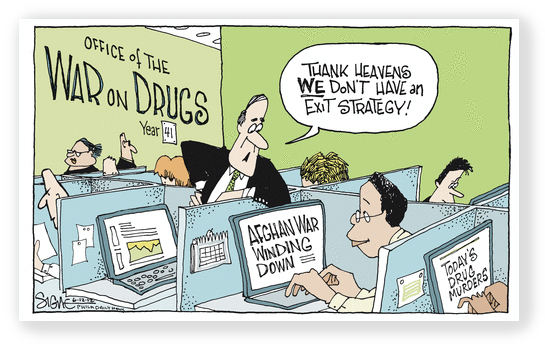
warondrugs211028The 16 nay votes all came from Democrats. One opponent, Senator Cory Booker (D-NJ), said, “Some fentanyl analogues may hold promise as antidotes to opioid overdoses or other medical treatments. By permanently scheduling these substances without more robust exceptions for research, this legislation could stifle innovation in developing life-saving therapies, sacrificing scientific progress for political expediency… It also borrows a page from the War on Drugs playbook that ushered in excessive mandatory minimum sentences under the misguided notion that giving more people harsh prison sentences would somehow reduce the availability of drugs.”

The bill next heads to the House, where a similar version of the bill has already passed with significant Democratic support, showing many in the party are eager to clamp down on fentanyl distribution. House Republicans passed a similar bill in 2023 with dozens of Democrats joining in support, but it languished in the Democratic-held Senate.

The new legislation is consistent with the Dept of Justice’s new criminal charging policy, first announced on the day after President Trump was inaugurated, to emphasize gangs, immigration and fentanyl.

S.331, HALT Fentanyl Act (passed Senate March 14, 2025)

Congressional Budget Office, S.331, HALT Fentanyl Act (March 10, 2025)

PBS, Senate approves bill that would increase penalties for fentanyl traffickers (March 15, 2025)

Sentencing Substack, The Department of Justice’s New Criminal Charging Policies (February 24, 2025)

– Thomas L. Root

You Know, Joe, You Could Be Doing A Lot More… – Update for October 28, 2021

We post news and comment on federal criminal justice issues, focused primarily on trial and post-conviction matters, legislative initiatives, and sentencing issues.

WHO YOU GONNA BELIEVE, JOE BIDEN OR YOUR OWN EYES?

whoyabelieve201214President Joe Biden’s Administration has said all the right things about criminal justice reform, making its inaction or, worse, contrary actions on significant initiatives in Congress (or even in the President’s own Dept. of Justice) frustrating and baffling. So do we believe what we hear or what we see?

But then, the guy so far can’t get his signature infrastructure bill through his own party’s caucus. Maybe I am expecting too much from the septuagenarian chief executive.

Still, what Biden himself could be doing without Congress is addressing the 4,000 inmates on CARES Act home confinement. Those people, according to both Trump’s and Biden’s Dept of Justice, will have to return to prison when the national pandemic emergency ends, which could be as soon as early next year. Recently, 28 House Democrats became the latest to urge Biden to “immediately commute the sentences” of the CARES Act home confinees. The lawmakers also urged the creation of an independent board to review a massive backlog of more than 15,000 petitions seeking clemency.

“Nearly all of those released have thrived since returning home by reconnecting with their families and communities, and by engaging actively in civic life,” David Trone (D-MD) and his colleagues wrote to the president. “Mr. President, with a stroke of your pen you could remove the threat of reincarceration that looms over thousands of people who have already demonstrated their commitment to being productive members of their communities.”

Last week, Kara Gotsch, deputy director at the Sentencing Project, a Washington-based nonprofit focused on injustices in the criminal justice system, said the DOJ’s opinion is “devastating” for those who are staying at home and now face the possibility of being sent back to federal prison. “It is really a shame that the White House and DOJ appear to be standing by that memo issued by the Trump administration,” she said.

The Capital News Service reported Gotsch has been in communication with the Biden administration, asking for grants of clemency for everybody who’s been serving sentences in home confinement, but the White House is considering granting it to only some.

“I think that’s a step in the right direction, but there’s no reason why anyone who has proven themselves to be successful on the home confinement program should be sent back,” she added.

warondrugs211028If the Administration is so concerned about racial disparity, it might urge the Senate to take up the EQUAL Act (S.79). According to the Sentencing Commission, no class of drug is as racially skewed as crack: 79% of sentenced crack offenders in 2009 were black, versus 10% white and 10% Hispanic. Combined with a 115-month average imprisonment for crack offenses versus 87 months for powder offenses, this makes for more African-Americans spending more time in the prison system.

Instead, Biden is pushing a proposal that would enhance sentences for certain synthetic opioids related to fentanyl. A coalition of nearly 100 civil rights and criminal justice reform groups last week warned that the plan will exacerbate racial disparities.

“Since the inception of the war on drugs, African Americans and Latino people have borne the brunt of enforcement-first approaches,” Sakira Cook of the Leadership Conference on Civil and Human Rights, said. She argued that about 70% of defendants charged with fentanyl-related crimes have been minorities.

The Biden Administration defends the initiative as needed to stop the overdose epidemic.

Last week Kristen Clarke, the DOJ’s civil rights chief, highlighted the racial disparities in state juvenile detention systems. “Nationally, black children are over four times more likely to be incarcerated than white children,” Clarke said. “And the disparity is even greater in Texas, where Black children are over five times more likely to be incarcerated.”

Apparently, racial disparities are only important when the states cause them.

NPR, A proposed Biden drug policy could widen racial disparities, civil rights groups warn (October 20, 2021)

Drug Policy Alliance, Letter to Congress (October 22, 2021)

CNN, ‘Big, big shifts’: How Biden’s civil rights pros have reoriented the Justice Department (October 20, 2021)

Southern Maryland Chronicle, Democrats in Congress press Biden to extend COVID-related prisoner releases (October 19, 2021)

– Thomas L. Root

Pressure on Biden Builds On Fentanyl Analog Ban – Update for April 23, 2021

We post news and comment on federal criminal justice issues, focused primarily on trial and post-conviction matters, legislative initiatives, and sentencing issues.

BIDEN FACES EARLY TEST ON COMMITMENT TO MANDATORY MINIMUMS

fentanyl210422In 2018, the Drug Enforcement Agency temporarily placed an entire class of compounds with chemical structures similar to fentanyl on the Schedule 1 list of drugs prohibited by federal law. Fentanyl analogs vary in potency, but even a trace of any of these compounds in a batch of drugs can trigger a lengthy mandatory minimum prison sentence.

Last week, the Government Accountability Office raised concerns that the fentanyl ban could result in people getting long sentences for compounds that are not even harmful or contain trace amounts of fentanyl-related substances. The ban has also made it harder for researchers to study thousands of fentanyl-like compounds, including to make treatments and antidotes for people living with opioid addiction, according to public health groups.

President Biden’s Office of National Drug Control Policy said the administration will work to extend the ban for seven months. Biden likely wants to avoid attacks from conservatives claiming he is “legalizing” a drug that has been so heavily demonized in the media, although allowing the Schedule 1 ban to expire is not really legislation.

Over a hundred justice and public health groups last week urged the White House to let the listing – which enhanced criminal penalties for people involved with the analogS –  expire. Instead, the coalition asked Biden to embrace a public health and harm reduction approach to fentanyl and other opioids, rather than repeating past mistakes of the war on drugs.

warondrug210423“The Biden administration and leaders of Congress are faced with their first major test of criminal justice reform… if they choose to extend this Trump-era policy, it will increase mass incarceration and the over-policing and incarceration of people of color,” said Hilary Shelton, a policy director at the NAACP, during a call with reporters on Monday.

Truthout, Biden Poised to Break a Promise on Mandatory Minimum Sentencing (April 13, 2021)

The Intercept, Biden Looks to Extend Trump’s Bolstered Mandatory Minimum Drug Sentencing (April 12, 2021)

– Thomas L. Root