Tag Archives: fci seagoville

Inspector General Faults BOP Treatment of Dying Inmate – Update for January 13, 2026

We post news and comment on federal criminal justice issues, focused primarily on trial and post-conviction matters, legislative initiatives, and sentencing issues.

REST IN PEACE, FRED BARDELL
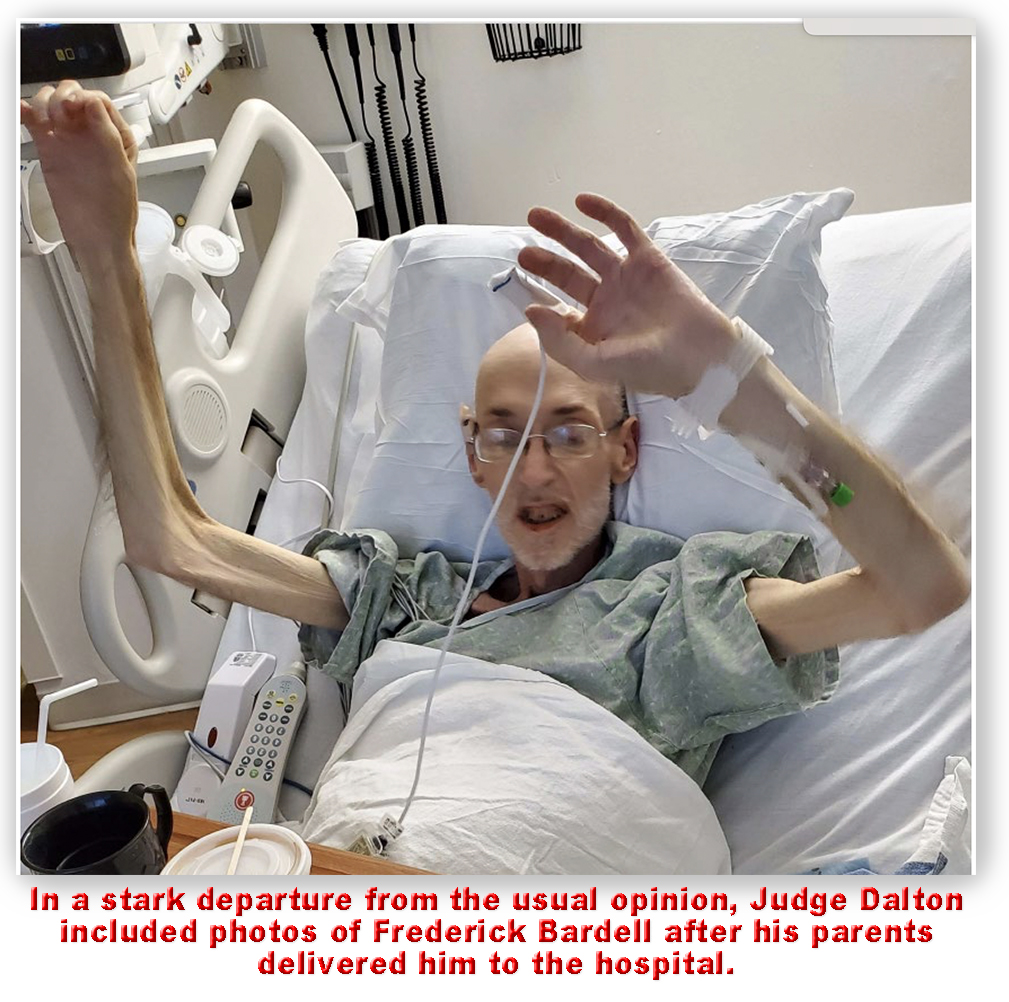
Do you remember Frederick Bardell?

You should not forget him.

Mr. Bardell was a BOP prisoner whose medical and release mistreatment by the Federal Bureau of Prisons were acts, as described by U.S. District Court Judge Roy Dalton (Middle District of Florida) in an October 2022 Order,  “indifferent to… human dignity.”

Fred was housed at FCI Seagoville when he developed an intestinal mass that turned into metastatic colon cancer. Although a BOP medical expert determined that Fred “ha[d] a high likelihood” of having colon cancer “with likely metastasis to the liver,” the BOP did nothing.

An outside specialist said later that if Fred had gotten prompt treatment when the mass was first found, he would have had a 71% chance of recovery. But prompt treatment is simply not how BOP healthcare rolls.

As LISA reported at the time, Fred’s first compassionate release motion (filed under 18 USC § 3582(c)(1)(A)) was denied after the BOP falsely assured the court that Fred could receive adequate care in custody. Judge Dalton later wrote, “As we now know, it was not true that Mr. Bardell could receive adequate care in custody. And, regrettably, his condition was indeed terminal.”

Fred’s second compassionate release motion filed three months later – supported by an affidavit from an oncologist that Fred was likely dying of cancer – was granted. The Court ordered him released as soon as the Probation Office and Fred’s attorney worked out a release plan.

The BOP didn’t wait for a release plan. After forcing Fred’s parents to pay $500 for an airline ticket, the BOP dumped Fred – who by then was “skin and bones, wheelchair dependent, and bladder and bowel incontinent” – on the airport curb without even a wheelchair. Only with the aid of strangers was Fred able to get on the plane, change planes in Atlanta, and arrive, his clothes soaked with blood and feces, in Jacksonville. His parents took him straight to a hospital, where he died nine days later.

Judge Dalton was outraged, holding the Seagoville warden in contempt, not for the negligent medical care but for the heartless way the prison dumped Fred at the airport:

The BOP as an institution and Warden Zook as an individual should be deeply ashamed of the circumstances surrounding the last stages of Mr. Bardell’s incarceration and indeed his life. No individual who is incarcerated by order of the Court should be stripped of his right to simple human dignity as a consequence.

The judge found that the BOP’s actions were “inconsistent with the moral values of a civilized society and unworthy of the Department of Justice of the United States of America.”

A special master appointed by Judge Dalton confirmed that prison officials allowed an incarcerated man to waste away from highly treatable cancer and misrepresented key facts about his health care to a court. After that, the judge referred the matter to the DOJ Office of the Inspector General.

Last week, the Inspector General concluded that “serious failures by multiple levels of staff” at Seagoville led to Fred’s death from colon cancer. The OIG “identified job performance and management failures at multiple levels within FCI Seagoville, from line staff through the Warden. We also identified problems with the BOP’s medical care of inmates, handling of compassionate release requests due to medical circumstances, and handling of compassionate release orders.”

The OIG found that severe understaffing led to six months of delays in scheduling a colonoscopy for Fred, despite symptoms, tests, and scans showing that he likely had advanced colon cancer. As his condition worsened, staff denied his requests for a compassionate release without fully reviewing his medical records and then misrepresented the adequacy of treatment he was receiving to a federal judge. And when that judge finally ordered Bardell’s release, no fewer than nine BOP officials and employees failed to read the court’s order and thus violated the Judge’s directive to wait until a release plan had been approved. The Report said, “The hastiness of the BOP’s handling of Bardell’s release was extremely concerning because the BOP did not take measures to ensure his safe and compassionate transport in light of his medical condition.”

The OIG also said that “the BOP’s handling of Bardell’s request for a reduction in sentence [RIS] was deficient, and the government’s related representations to the Court that there was ‘no indication’ that Bardell could not ‘receive adequate care in custody’ were inconsistent with what we learned during the course of our investigation and review.”

The canard that a compassionate release is unnecessary because there is ‘no indication’ that an inmate cannot ‘receive adequate care in custody’ is one common to government oppositions to medical-condition compassionate release RIS requests. The OIG tears the fig leaf from these representations. In Fred’s case, the Inspector General’s report found,

that the government’s inaccurate representations were the result of the government’s reliance on the BOP’s RIS decision, which we found to be based on a seriously deficient process within the BOP, and [Assistant United States Attorney Emily C. L.] Chang’s honest, although nonexpert, understanding of the limited records provided by the BOP. While we believe that it would have been prudent for Chang to consult with BOP medical professionals, other BOP employees, or other medical experts to better understand the BOP medical records, Bardell’s medical condition, and the BOP’s ability to care for him, we noted that Department procedures in place at the time did not require her to speak with such individuals.

‘It’s so because we say it’s so,’ the BOP says in an ipse dixit run wild…

Those familiar with litigation involving BOP conduct are all too aware of the government’s unquestioning reliance on the Bureau’s ipse dixit pronouncements. Whether the OIG’s implicit doubt that doing so is appropriate will change anything is probably unlikely.

DOJ OIG, Investigation and Review of the Federal Bureau of Prisons’ Conditions of Confinement and Medical Treatment of Frederick Mervin Bardell and Related Representations to the Court, Upon Referral by Senior U.S. District Judge Roy B. Dalton, Jr. (January 6, 2026)

Reason, Inspector General Report Finds Serious Failures Led to an Inmate Wasting Away From Treatable Cancer (January 6, 2026)

New York Times, Judge Holds Prison Officials in Contempt for Treatment of Terminally Ill Inmate (October 13, 2022)

LISA, BOP Mistreatment of Inmate Dying of Cancer Sparks Outrage (October 17, 2002)

~ Thomas L. Root
Has the BOP Just Had Its ‘George Floyd’ Moment? – Update for October 17, 2022

We post news and comment on federal criminal justice issues, focused primarily on trial and post-conviction matters, legislative initiatives, and sentencing issues.

BOP MISTREATMENT OF INMATE DYING OF CANCER SPARKS OUTRAGE

The murder of George Floyd by Minneapolis police officer Derek Chavin captured the nation’s attention and fury like no event in the recent history of policing and race. With an angry opinion from U.S. District Judge Roy Dalton (Middle District of Florida), the late Frederick Mervin Bardell’s tragic mistreatment may do the same for the Federal Bureau of Prisons.

Fred was housed at FCI Seagoville, finishing a 151-month sentence for possession of child pornography, when he developed an intestinal mass that turned into metastatic colon cancer.  As Judge Dalton put it, “Frederick Marvin Bardell was a convicted child pornographer. He was also a human being.”

In November 2020, Fred filed a motion for compassionate release, complaining that he suffered from “unspecified bleeding,” “metastatic liver lesions (suspected cancer),” and “malignancy in his colon.” His medical expert averred that Fred “ha[d] a high likelihood of having cancer of the colon with likely metastasis to the liver.”

medical told you I was sick221017The BOP admitted that Fred has “liver lesions highly suspicious for metastatic disease” but argued that “to date, no one has determined that [his] condition is terminal.” The Government also maintained that there was no indication that Fred could not receive adequate care in custody. Based on the Government’s assurance, the Court denied his November compassionate release motion.

You have to love the construction of the argument. It is not that the BOP is saying it CAN and WILL provide Fred with adequate medical care. Instead, it’s just that Fred can’t prove the BOP is unable to do so. But, as Judge Dalton wrote just two weeks ago, “As we now know, it was not true that Mr. Bardell could receive adequate care in custody, and, regrettably, his condition was indeed terminal.”

Fred filed a second compassionate release motion in February 2021, three months later. The Court granted this motion, which was supported by an affidavit from an oncologist that Fred was likely dying of metastatic colon cancer. The Court ordered Fred released as soon as the Probation Office and Fred’s attorney worked out a release plan appropriate for someone in Fred’s condition.

The BOP didn’t wait for any release plan. In fact, the BOP staff at Seagoville didn’t read the details in the release order at all. Instead, the BOP contacted Fred’s parents and demanded that they fork over $500 for a plane ticket for Fred. As soon as they did, Seagoville sent its inmate driver – who said he was told not to get out of the car – to Dallas-Fort Worth Airport, where Fred – who was “skin and bones, wheelchair dependent, and bladder and bowel incontinent” – was unceremoniously dumped on the curb without help or even a wheelchair.

With the aid of strangers, Fred was able to get loaded into a wheelchair, get on the plane, suffer through a change of planes in Atlanta, and finally arrive in Jacksonville. Fred, “who had a tumor protruding from his stomach and was visibly weak and bleeding, unsurprisingly soiled himself during this not so bon voyage,” the judge wrote.

bardell221017Fred’s lawyer and parents met him at the airport. Fred’s father had to take off his shirt and place it under his son to keep the blood and feces off the car seat. They took Fred directly to a hospital, where he died nine days later. His specialist said that if he had gotten prompt treatment when was first found, he would have had a 71% chance of recovery.

Two weeks ago, Judge Roy Dalton held the BOP in civil contempt for ignoring his release order. The judge was clearly frustrated that he could not do more. In what Reason called “a scathing opinion,” the Judge expressed dismay that “while the sanctions imposed are remedial in nature and restricted by law, the Court admonishes the BOP and [FCI Seagoville] Warden Zook for their blatant violation of a Court Order and sheer disregard for human dignity.” Judge Dalton wrote, “The BOP as an institution and Warden Zook as an individual should be deeply ashamed of the circumstances surrounding the last stages of Mr. Bardell’s incarceration and indeed his life. No individual who is incarcerated by order of the Court should be stripped of his right to simple human dignity as a consequence.”

investigate170724The Court recommended that the Attorney General investigate “the circumstances of Mr. Bardell’s confinement and treatment, the failure of the BOP to respond to his medical needs, and the BOP’s misrepresentations in connection with the compassionate release briefing regarding the seriousness of his condition,” the opinion states. “On a parallel track, the Court retains jurisdiction to continue investigating the circumstances surrounding the truthfulness of the assertions in the Government’s filings as well as Mr. Bardell’s incarceration and release.”

The Judge’s October 4 opinion appears to have gained national attention through an article in Reasonwhich also published accounts several years ago about three deaths from alleged medical neglect at FCI Aliceville.  At the time, Reason noted

The Bureau of Prisons listed the cause of death in all three cases as “natural causes,” according to public records obtained by Reason. That classification, while technically correct, erases the culpability of the agency. It’s like claiming a man accidentally drowned after you refused to throw him a life preserver.

But the agency doesn’t want to talk about what happened. When asked for more information, the BOP public affairs office said the agency “does not disclose the details of an inmate’s death.” The FCI Aliceville public information officer did not return multiple requests for comment. Reason has been waiting for more than a year for additional Freedom of Information Act records concerning these incidents.

sorry190124But in Fred’s case, the BOP’s response was different. BOP Director Colette Peters released a statement offering her condolences to the Bardell family but declining to comment on the specifics of the case because it was the subject of continuing litigation. She promised to cooperate with any investigations into the matter. “My heart goes out to Mr. Bardell’s family, to whom I send my deepest condolences,” Ms. Peters (who was not Director when Mr. Bardell’s mistreatment occurred) said. “Humane treatment of the men and women in Bureau of Prisons custody is a paramount priority. In instances where we have failed at upholding our mission, we are taking steps to find out what happened, how it happened, and how we can prevent it from happening in the future.”

Meanwhile, official attention is being paid to the matter. Senate Judiciary Chairman Richard J. Durbin (D-IL) wrote on Twitter that “the details unveiled in this case are appalling, and may not be isolated.” He called on the Justice Department’s inspector general “to investigate B.O.P.’s treatment of medically vulnerable individuals both while incarcerated and upon their release.”

On Friday, the Justice Department inspector general’s office announced it was opening an investigation into the case.

United States v. Bardell, Case No 6:11-cr-401, 2022 U.S.Dist. LEXIS 181785 (M.D. Fla., October 4, 2022)

Reason, Judge Holds Federal Bureau of Prisons in Contempt for Allowing Man To Waste Away From Untreated Cancer (October 10, 2022)

Washington Post, Judge blasts Bureau of Prisons’ treatment of dying prisoner (October 14, 2022)

New York Times, Judge Holds Prison Officials in Contempt for Treatment of Terminally Ill Inmate (October 13, 2022)

– Thomas L. Root

BOP Whistles a Happy Tune – Update for August 11, 2020

We post news and comment on federal criminal justice issues, focused primarily on trial and post-conviction matters, legislative initiatives, and sentencing issues.

DEATH DOESN’T TAKE A HOLIDAY, BUT BOP SEEKS NORMALCY

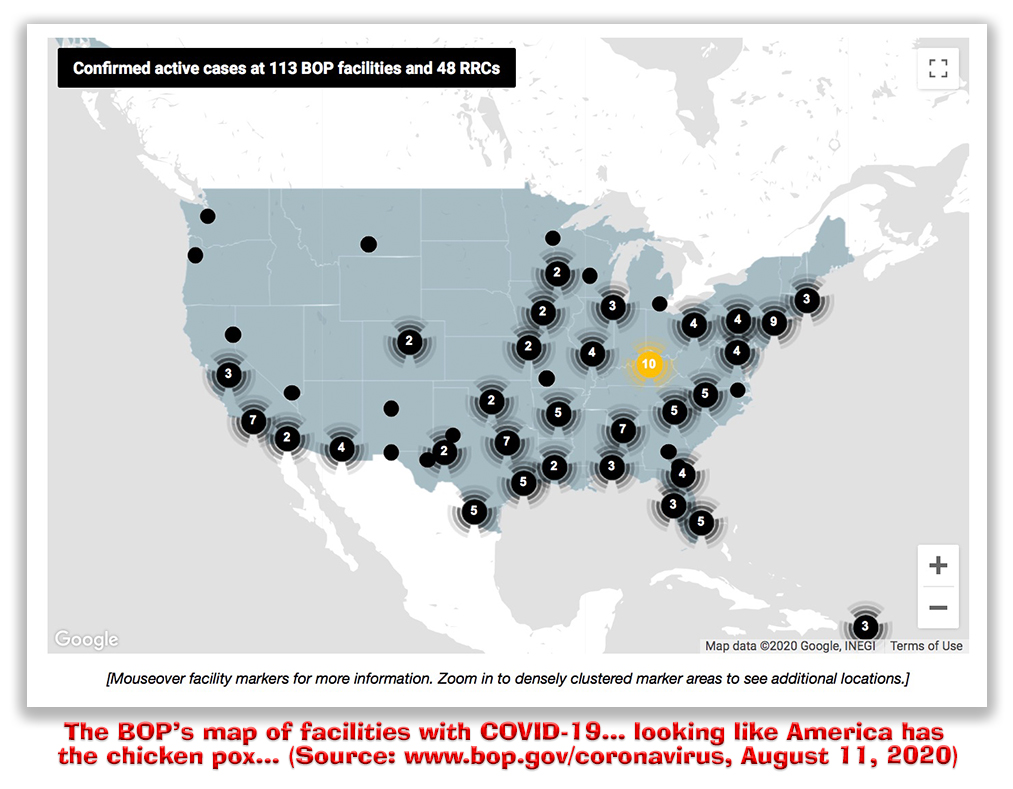
Six more inmates died of COVID-19 last week, bringing the BOP’s death total to 116. Twenty-two have died since July 1. Even while the BOP heralded a drop in the number of sick inmates from 2,476 to 1,395, a reduction of 44%, the number of sick staffers hit 580, an increase of 14% from last week (and all-time high). COVID-9 has now reached a record 114 institutions (93% of all BOP facilities).

whistle200811Still, the BOP bravely whistles a happy tune, seeking a return to normalcy as though it has the virus on the run. The agency announced Phase 9 of its rickety COVID-19 “Action Plan.” Phase 9 relaunches a number of EBRR-sanctioned programming (the programs that earn First Step Act credit), some – like the Residential Drug Treatment Program – to 100% and others to half capacity. UNICOR, the federal prison industry, is to spool up to 80% by September 1 and 100% a month later. Recreation time outside will resume, with limitations on group size and length of rec sessions. Inmate transportation begins again.

Meanwhile, fresh breakouts of COVID-19 were reported at USP Lewisburg (51 ill), FCI Loretto (37 ill), the Victorville, California, prison complex (127), USP Marion (70 ill) and FCI Edgefield (60 ill). Those locations join Coleman, Miami, Elkton, Forrest City, Beaumont, Carswell, Oklahoma City, Three Rivers and scores of other BOP institutions with the virus. CNN last week branded FCI Seagoville as “the hardest-hit federal prison in the United States” where “more than 1,300 of the roughly 1,750 prisoners have tested positive for the virus — a stunning three out of every four inmates.”

Since the beginning of May, when there was only a single coronavirus case at Seagoville, the number of inmates testing positive soared to 1,333, according to BOP. Twenty-eight of the roughly 300 prison employees have also tested positive. The outbreak means that the facility has more coronavirus cases than about 85% of the counties in the US.

covidmap200811The virus has reached FCC Florence (Colorado) and FDC Honolulu as well.

At FCI Miami, in Florida, nearly half of the inmates reportedly have tested positive. Kareen Troitino, the FCI Miami corrections officer union president, told ABC News that the virus was spread by one employee to inmates at the facility and, within a day cases at the facility went from one to four. Troitino says the only protective equipment the BOP issued were surgical masks. “One employee walked into work. He did not show a fever. He passed our screening procedures. He was positive. And that one employee spread it to numerous inmates. And then that’s it. Ever since then, it’s been a disaster.”

Troitino’s union local has sued the BOP and several other federal agencies, seeking hazard pay for at-risk essential workers.

In Washington, D.C., Democratic senators and representatives sponsored legislation in both chambers last Thursday to require the array of agencies that administer the nation’s jails and prisons to collect and report publicly detailed information about the spread of COVID-19 in their facilities. Joe Rojas, southeast regional vice president of the federal prison employees, told ABC News, “The Bureau is the largest agency within the DOJ and there’s no oversight. The BOP director doesn’t even get confirmed he just gets appointed.”

Forbes magazine complained last week that the BOP’s “Phase 9 Action Plan… looks a lot like Phase Eight… which looked a lot like Phase Seven. It begs the question as to whether there is a cohesive plan to address the COVID-19 pandemic that has infected over 10,000 federal inmates and over 1,000 correctional staff… killed 110 inmates and one staff member.”

coronadog200323BOP employees at FCI Tallahassee publicly expressed concern over Phase 9’s inmate transportation. “If we’re going to receive inmates that are positive, if we’re going to be assigned to inmates that have already tested positive it’s pretty shaky from day-to-day,” Yalimany Dudley, CO, told WTXL-TV.

Dr. Kristian Morgan, a nurse at the FCI, said inmates are coming in without being tested beforehand, bringing the virus with them. “We received about eight inmates from the Marshal Service last week. Five of those tested positive as soon as they entered inside the institution when we did rapid testing.”

BOP Memorandum, Coronavirus (COVID-19) Phase Nine Action Plan (August 5, 2020)

CNN, Inside the federal prison where three out of every four inmates have tested positive for coronavirus (August 8, 2020)

KTVT, Inside the Federal Prison Where Three Out of Every Four Inmates Have Tested Positive for Coronavirus (August 9, 2020)

Canon City Daily Record, 3 new cases of COVID-19 in Fremont County; Bureau of Prisons reporting 3 cases (August 3, 2020)

Honolulu Civil Beat, First Hawaii Inmate Tests Positive for COVID-19 Along With 4 Corrections Officers (August 7, 2020)

ABC News, As coronavirus spreads through nation’s jails and prisons, lawmakers demand more transparency on toll (August 6, 2020)

WXII-TV News, ‘We’re Risking Our Lives’: Front-Line Federal Workers Sue For Hazard Pay (August 7, 2020)

Forbes, As Bureau of Prisons Enters “Phase 9” Of COVID-19 Plan, BOP Staff Wonder If There Is A Real Plan (August 7, 2020)

WTXL-TV, FCI Tallahassee employees fear the worst as inmate transportation restarts (August 6, 2020)

– Thomas L. Root