We post news and comment on federal criminal justice issues, focused primarily on trial and post-conviction matters, legislative initiatives, and sentencing issues.

BOP FOX SHOULD GUARD HOME CONFINEMENT HENHOUSE, DOJ SAYS
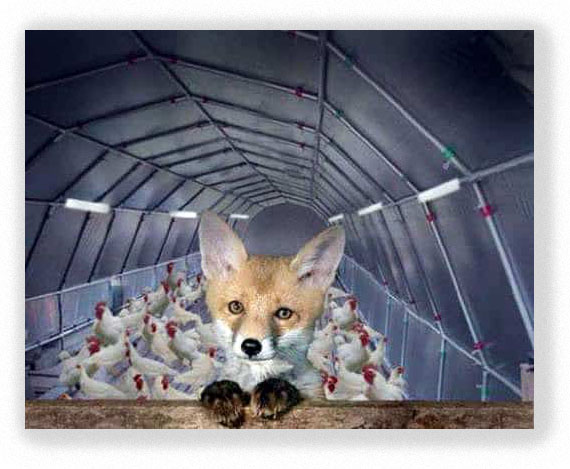 Remember when the Trump Administration made that minute-to-midnight announcement that the end of CARES Act home confinement would mean that all those prisoners placed at home would have to return to prison?
Thankfully, the flawed Dept of Justice Office of Legal Counsel opinion was later withdrawn by the Biden Administration. But when a new OLC opinion supplanted the old, the reversal wasn’t total. Rather, DOJ said that some might return, but that would be governed by rules yet to be promulgated.
(Explainer: Under the March 2020 CARES Act, Congress gave the Director of the Federal Bureau of Prisons the authority to send inmates to home confinement at any time, despite the 6-month/10% limitation on home confinement set by 18 USC § 3624(c). The conditions set by the legislation were only two: (1) the national emergency declared because of COVID-19 had to be in effect, and (2) the Attorney General had to determine that COVID-19 was materially affecting BOP operations.)
As an old Administrative Procedure Act hand, I was relieved. “Rules” suggested regulations written after a classic 5 USC § 553 notice-and-comment formal rulemaking. Everyone could argue the merits and demerits of whatever standards were proposed, and the Bureau of Prisons would subsequently be compelled under the Accardi doctrine to follow the rules (something the BOP too often ignores where its own informal rules, policies and program statements are involved).
Last Tuesday, the rulemaking announced last June ended with a detailed report and a new subpart to the BOP’s delegation rule, 28 CFR §0.96. The new rule, which will affect slightly more than 3,400 people (because the agency is still sending people to CARES Act home confinement for another month), adds a subpart (u), which, alas, contains no substantive limitation on the BOP’s discretion. That, we are promised, is to come.
 The can just got kicked down the road.
DOJ says the final rule, reduced to its essence, provides that “the [DOJ] and the [BOP] will work together to develop guidance to explain objective criteria the Bureau will use to make individualized determinations as to whether any inmate placed in home confinement under the CARES Act should be returned to secure custody. Providing the Bureau with discretion to determine whether any inmate placed in home confinement under the CARES Act should return to secure custody will bolster the Bureau’s ability to efficiently manage its resources and nimbly address changing circumstances in the community, in relation to the needs and profiles of individual inmates.”
The BOP? Nimble? If that’s the case, Joe Biden can compete against Simone Biles.
 Still, DOJ’s report acknowledges that “under typical circumstances, inmates who have made the transition to home confinement would not be returned to a secure facility absent a disciplinary reason. This is because the typical purpose of home confinement is to allow inmates to readjust to life in the community. Removal from the community of those already making progress in home confinement would frustrate this goal, and the widespread return of prisoners to secure custody without a disciplinary reason would be unprecedented and out of step with the reentry-specific goals of home confinement, as mentioned throughout this final rule.”
(My emphasis, not the report’s).
Reuters interpreted the report as directing that “[t]he BOP will still be able to impose ‘proportional and escalating sanctions,’ including a return to prison, on inmates who commit infractions.” But the report does not exactly say that, and the contents of the report itself do not limit the BOP’s management of CARES Act home confinees at all. Any such limitations are coming – if at all – in subsequent policy memos and program statements.
Two sets of fun facts are contained in the DOJ report adopting the rule. First, as Ohio State University law professor Doug Berman noted in his Sentencing Law and Policy blog, between March 26, 2020, and January 23, 2023, the BOP placed 52,561 inmates in home confinement. As of January 23, there were 5,597 inmates in home confinement, and 3,434 of those were CARES Act people.
The second has to do with money. Contrary to the oft-repeated inmate trope that the BOP makes money by keeping inmates locked up (something that only be believed if you simultaneously pay your Flat Earth Society dues), keeping people in prison is expensive. The DOJ noted:
 Supervision of inmates in home confinement is also significantly less costly for the Bureau than housing inmates in secure custody. In Fiscal Year (“FY”) 2019, the cost of incarceration fee (“COIF”) for a Federal inmate in a Federal facility was $107.85 per day; in FY 2020, it was $120.59 per day. In contrast, according to the Bureau, an inmate in home confinement costs an average of $55.26 per day—less than half the cost of an inmate in secure custody in FY 2020.
Only the government could manage to spend $55.00 a day to keep someone in their own house eating their own food and paying their own bills. Anyone wonder how we have a national debt of over $31 trillion?
Office of the Attorney General, Department of Justice,
Home Confinement Under the Coronavirus Aid, Relief, and Economic Security (CARES) Act (88 FR 19830, April 4, 2023)
Sentencing Law and Policy, Justice Department formally gives BOP discretion to decide who moved to home confinement during pandemic will be returned to federal prison (April 4, 2023)
Reuters, US rule to allow some inmates to stay home after COVID emergency lifts (April 4, 2023)
– Thomas L. Root