
We post news and comment on federal criminal justice issues, focused primarily on trial and post-conviction matters, legislative initiatives, and sentencing issues.

SCOTUS SAYS GEOFENCING IS A 4TH AMENDMENT SEARCH
The Supreme Court last week issued its final criminal decision of the current term (called the “October 2025 term,” because that’s when it started), holding that a “geofence warrant” is a “search” under the 4th Amendment and thus cannot be performed without a warrant.
A geofence search is an electronic method for the government to identify who was within a “geofence,” a defined physical area, during a specific period. It is a type of reverse search, used to identify a suspect when none is known, without the data gathered by the warrant. The government defines a limit, such as a half-mile circle from a jewelry store and then issues a demand that companies like Google produce information about cellphones pinging with their technology within a certain area within a particular time period. If three jewelers were robbed over three weeks, a “geofence” warrant for each area fr each of them will identify which cellphones were nearby during the time of each robbery.
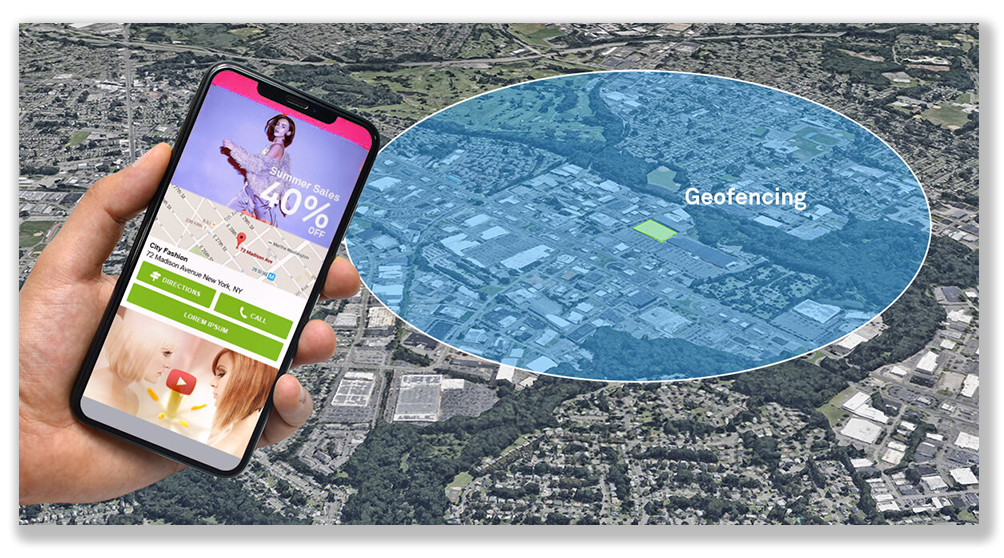
The technique really narrows the number of suspects but also sweeps up location data for thousands of people unconnected to the event being investigated.
Opponents of geofencing argue that the potential for the government to misuse the data, to identify people participating in a protest against ICE, for example, is too great. The government argues that it may gather geofencing data without the need for a search warrant at all.
In Chatrie v. United States, the geofence warrant at issue sent to Google demanded that the tech company search the location histories of every one of its users in order to determine which ones were present in the vicinity of a bank robbery. That information ultimately led to the arrest of Okello Chatrie.
 Okello argued that the geofence warrant was insufficient, that it amounted to “an unconstitutional general warrant [that] compelled Google to conduct a fishing expedition through millions of Google accounts, without any basis for believing that any one of them would contain incriminating evidence.”
Writing for a 6-3 majority, Justice Elena Kagan agreed. “The police conducted a search when they gained access to Location History data,” Kagan wrote. “An individual has a reasonable expectation of privacy in records about his cell phone’s location, and police intrude on that constitutionally protected interest when they demand the information—even though for only a limited time, and from a third-party tech company.”
Justice Neil Gorsuch agreed that Chatrie deserved to win but on the grounds that his “location history data qualifies as his personal property” protected warrantless search by the 4th Amendment.
 Chatrie’s impact is uncertain. University of Pennsylvania law professor Michael Levy wrote last week that “[t]here are other geofence cases around the country, including one from a different federal court of appeals, one from Pennsylvania, and one from Colorado. In every one of them, the police had obtained a search warrant. Police and prosecutors have recognized the requirement for a warrant. Questions such as what the government must show to get such a search warrant, and how large the geofence can be, how long the time interval can be will have to wait for another day.”
Chatrie v. United States, Case No. 25-112, 2026 US LEXIS 2878 (June 29, 2026)
~ Thomas L. Root